

Glendale, CA · July 2020 – February 2021 · Glendale Water & Power / City of Glendale
A flat roof lets you choose the angle. Winter shows you which to change.
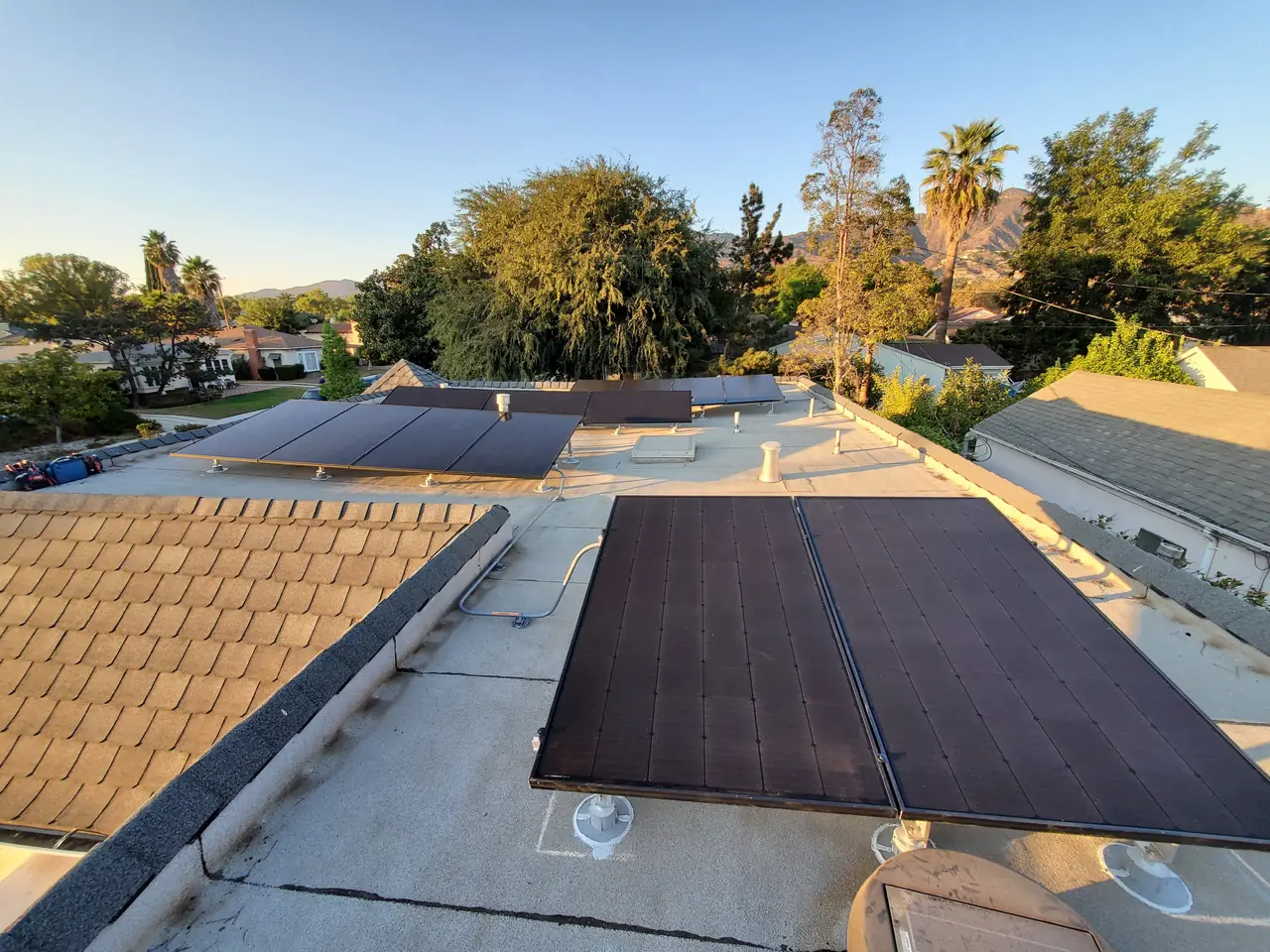
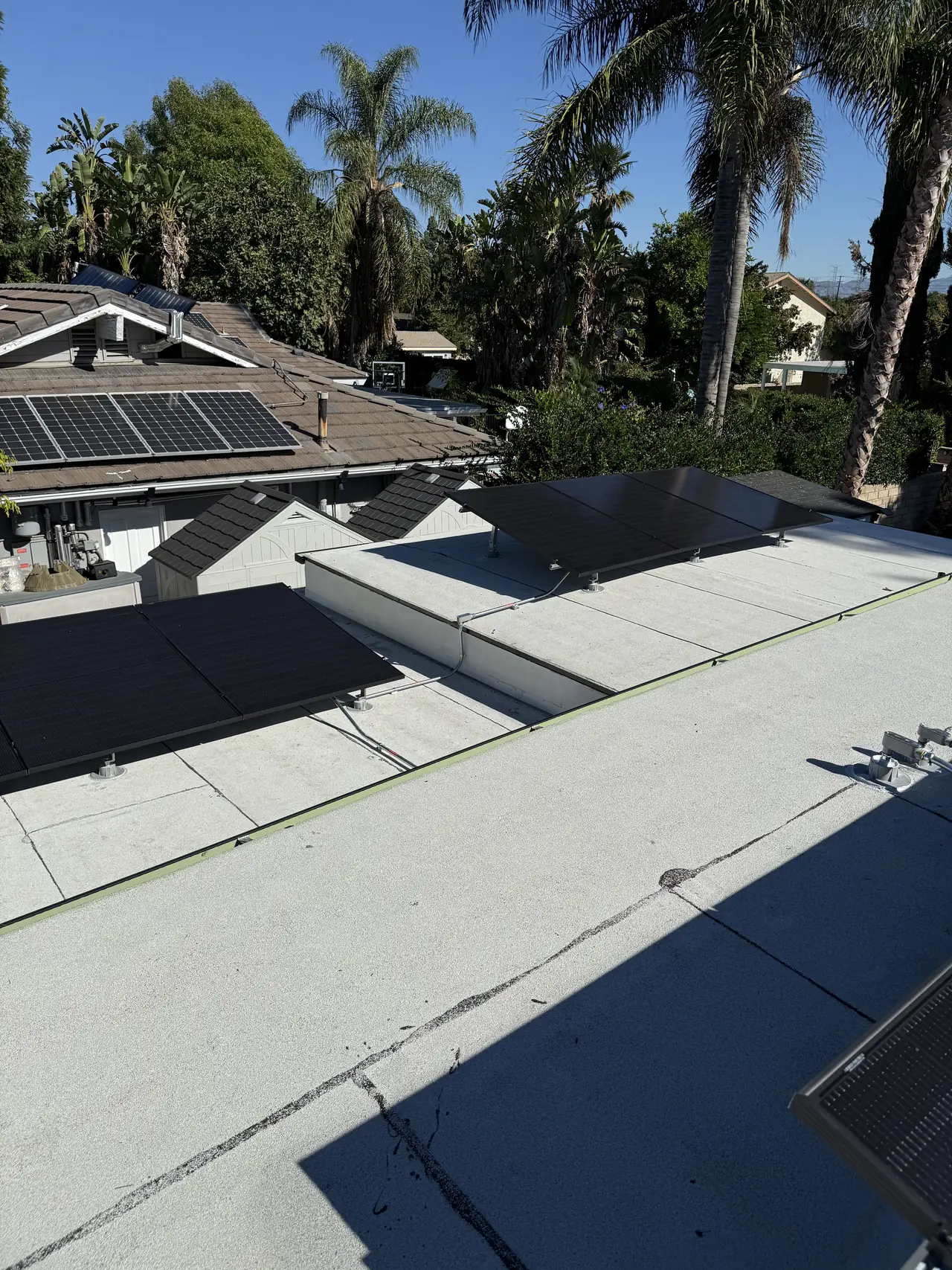
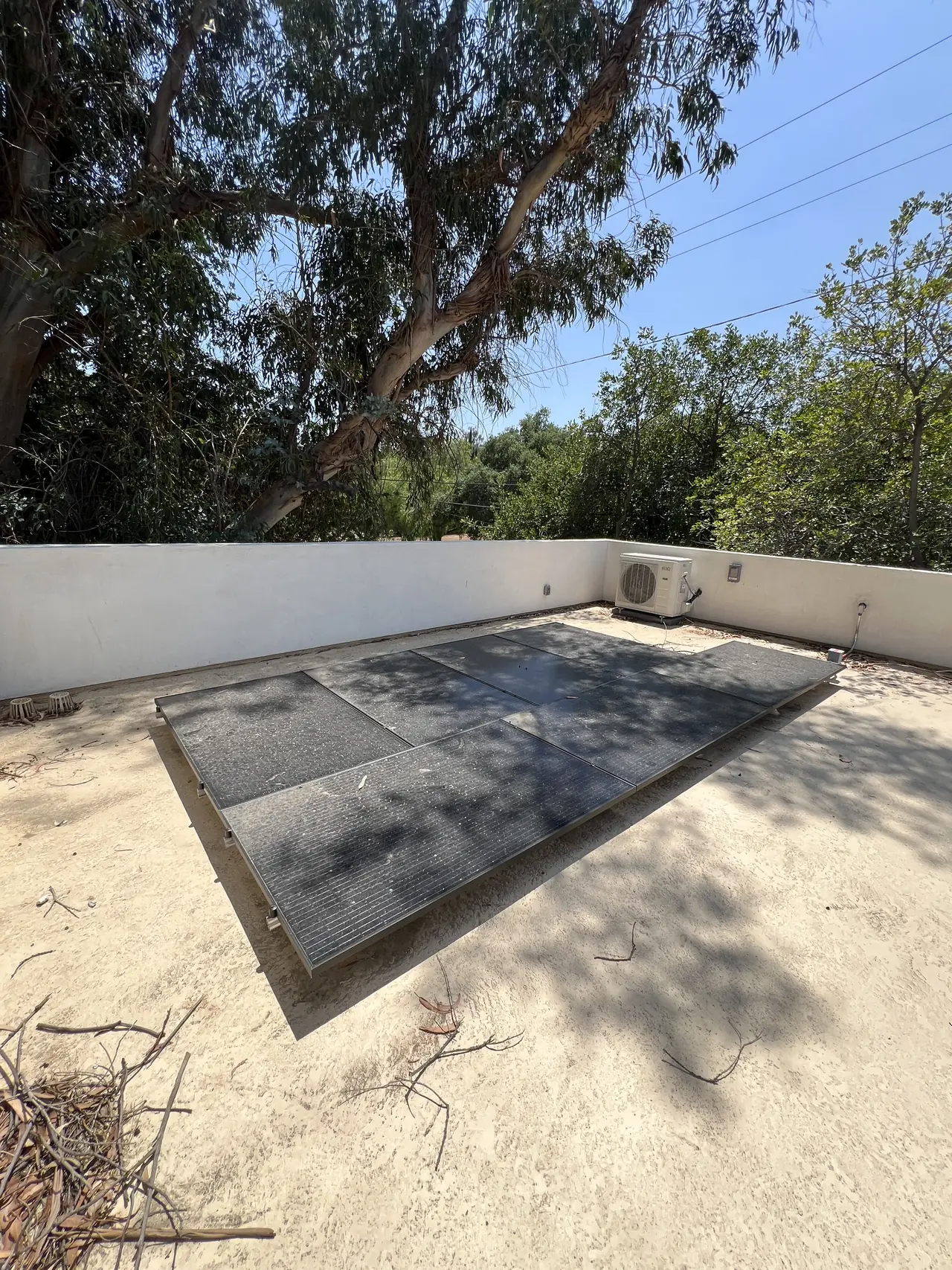
A 1938 Glendale house with a flat built-up roof and no pitch to work with. The modules went up on tilt frames, each with its own microinverter, and the system ran through the fall. In January the monitoring showed two modules lagging the rest, and a morning on the roof put them right.
On a flat roof the array's tilt is a design decision, not something the house hands you, and the mounting has to go through the membrane on sealed, flashed stands. The payoff is that every module can be aimed. The catch is that the aim is only tested in winter: a module clipped by the shadow of the frame in front of it produces normally under a high October sun and falls behind in January. Per-module monitoring is what makes that visible, and a tilt frame is what makes it adjustable.
At a glance
- House
- Built 1938, single story
- Roof
- Flat built-up roof; small pitched sections at the eaves
- Mounting
- Tilt frames on flashed, sealed roof stands
- Modules
- Canadian Solar
- Inverters
- Microinverters, one per module
- Monitoring
- Per module
- Service call
- January 2021 — two modules re-angled
- Utility / AHJ
- Glendale Water & Power / City of Glendale
The story
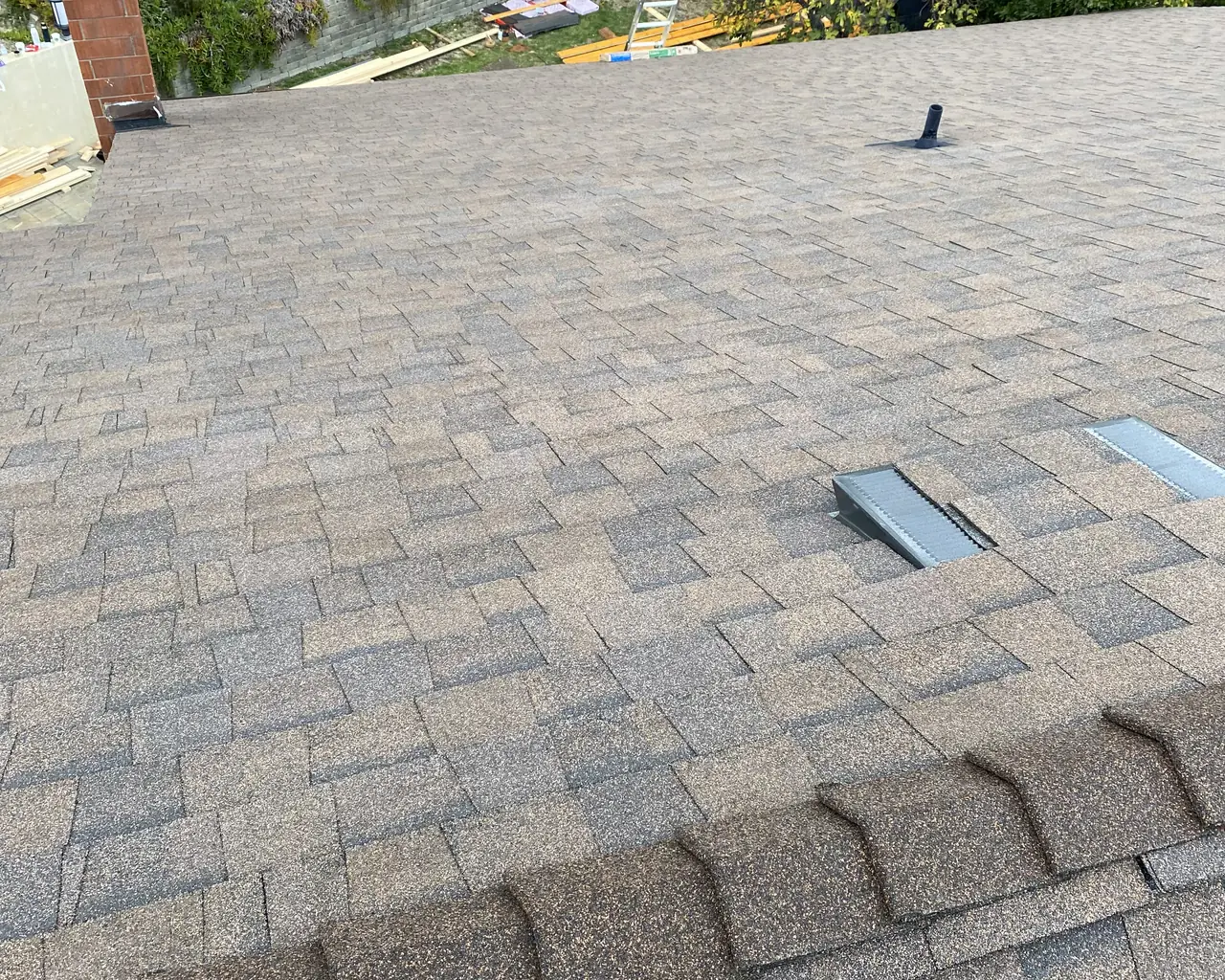
The house was built in 1938 and its main roof is flat: a built-up membrane with a gray surface, a few vents and skylights, and a strip of pitched shingle at the eaves where the original roofline shows. There is no south-facing slope to lay modules on. Whatever angle the array gets, the installer gives it.
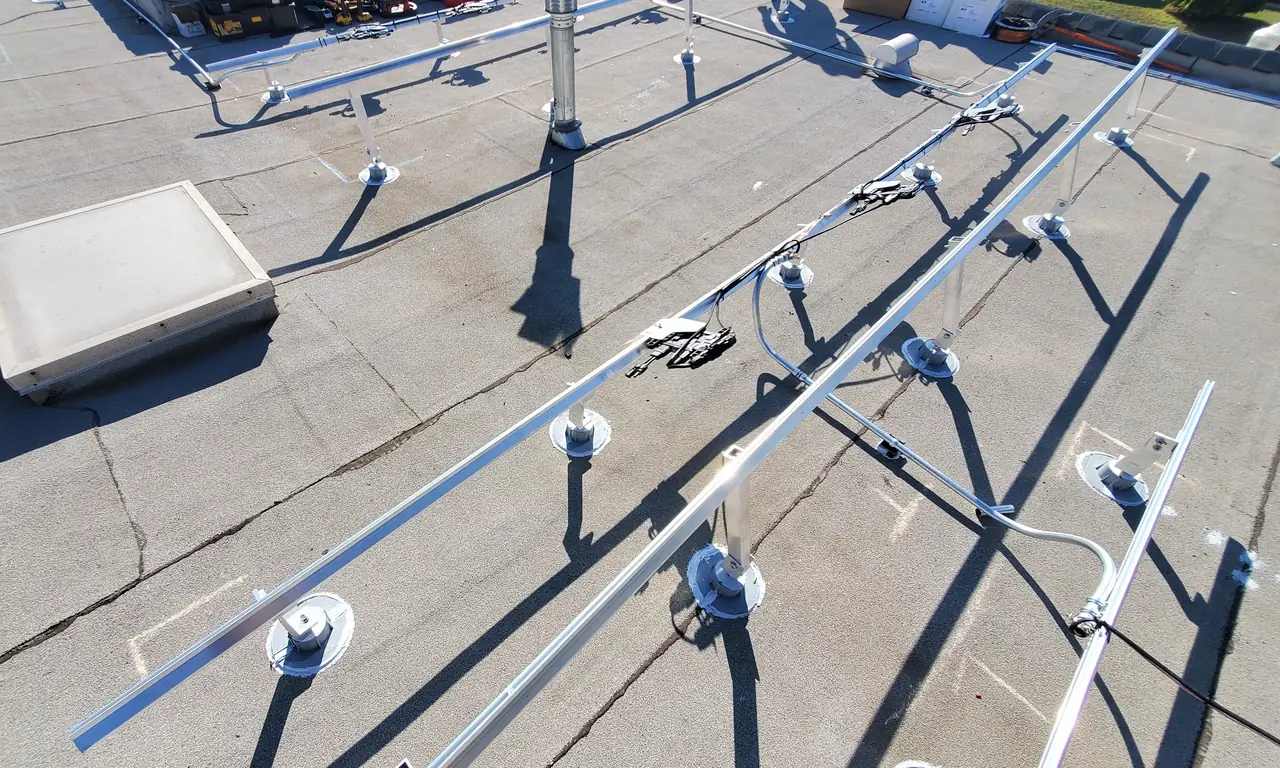
That is the whole character of a flat-roof job. On a pitched roof the modules lie flush and the roof decides how they face. Here the modules sit on tilt frames, so they can be aimed, and the frames stand on posts that pass through the membrane. Every one of those posts is a hole in a roof whose only job is to keep water out, and each one is flashed and sealed before a rail goes near it.
The permit path was Glendale's, and the order is not the one most cities use. The application and the plans go to Glendale Water & Power first, for the utility's signature on the application and its stamp on the drawings, and only then to Building & Safety for plan check. The interconnection agreement came back approved in the middle of September, the permit set followed at the start of October, and the modules went up in the middle of the month.
One question the plans have to answer is worth passing on because it surprises people with older houses: does the home have fire sprinklers? The answer for a 1938 house is almost always no, and the plans have to say so. It is a one-line answer, but it sits on the critical path.
The system ran through the fall without a call. Then in the third week of January the monitoring showed something the roof had not: two modules were producing noticeably less than their neighbors. Not failed — lagging. In October the sun is high enough that a few degrees of tilt make little difference. In January it is low, and a module aimed a little off, or shaded by the edge of the next frame for part of the morning, falls behind.
We wrote to the homeowner on the Monday and went up on the Tuesday morning. The angle of the two modules was changed so they cleared the low sun, and the monitoring has shown every module in line since. From the reading to the fix was one day and one visit.
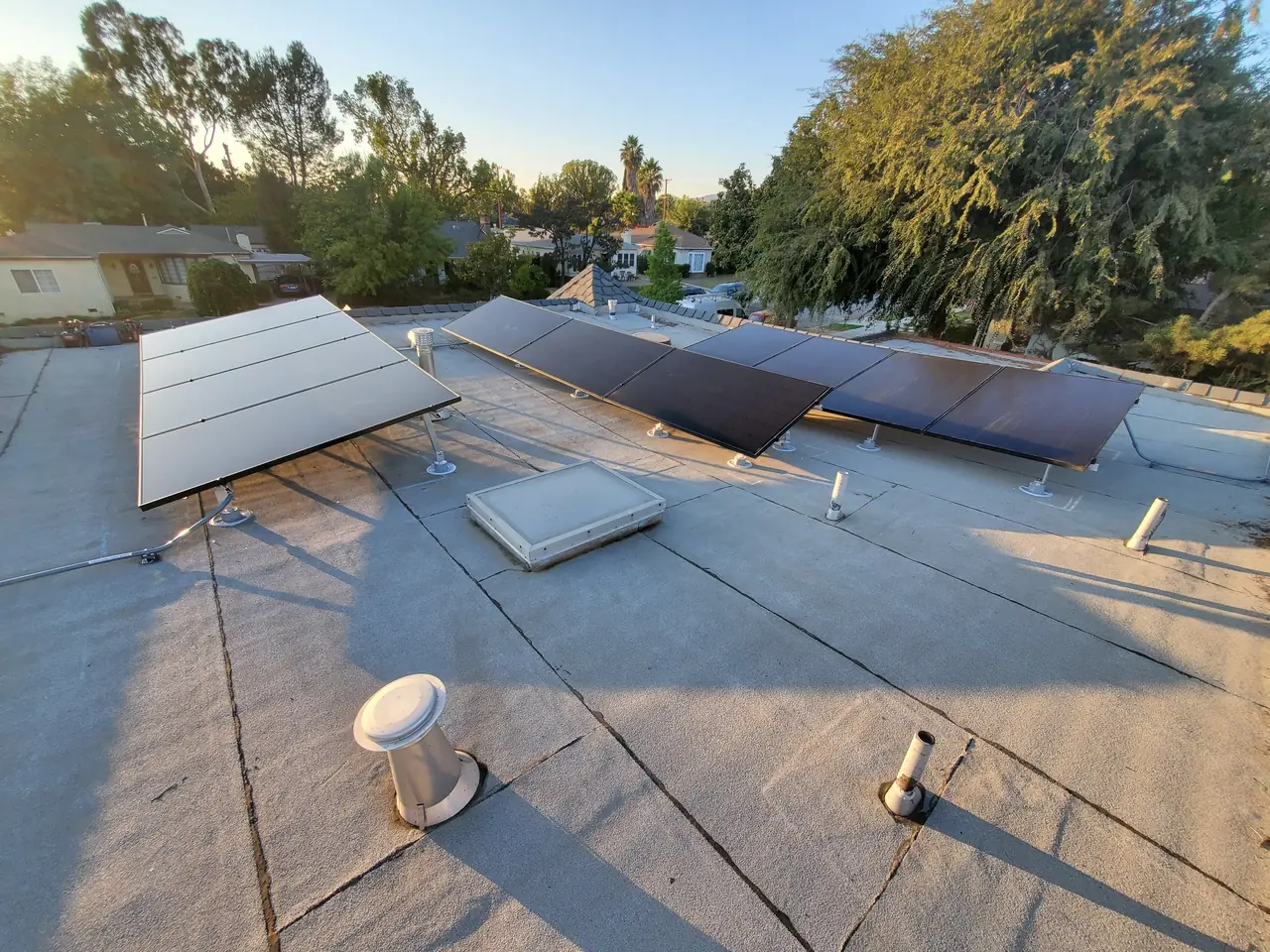
None of this is free. Tilt frames on a flat roof are more work than a flush array on a pitched one: more penetrations, each one a place where the roofing has to be right, and rows that have to be spaced so one does not shade the next in winter. A flat roof hands the installer the aim and the spacing rather than settling them for him. What makes that safe to take on is the monitoring, which turns a winter question into a Tuesday morning.
If your roof is flat, the question for your installer is not only what angle the modules will sit at. It is how the stands go through the membrane, how the rows are spaced for a January sun, and whether the monitoring will show you a single module falling behind.
How it ran
| 22 July 2020 | Application opened with the city: utility review first, then plan check |
|---|---|
| 14 September 2020 | Interconnection agreement approved by the utility |
| 30 September 2020 | Fire-sprinkler question answered for the plan check |
| 1 October 2020 | Permit set received |
| October 2020 | Tilt frames, modules and microinverters installed |
| 18 January 2021 | Monitoring shows two modules lagging; visit arranged |
| 19 January 2021 | Two modules re-angled on the roof |
| 1 February 2021 | Homeowner confirmed all modules producing in line |
Filed in July, installed in October, and one service visit in the first winter.
What we did
- Designed a tilted array for a flat built-up roof with rows spaced for the winter sun.
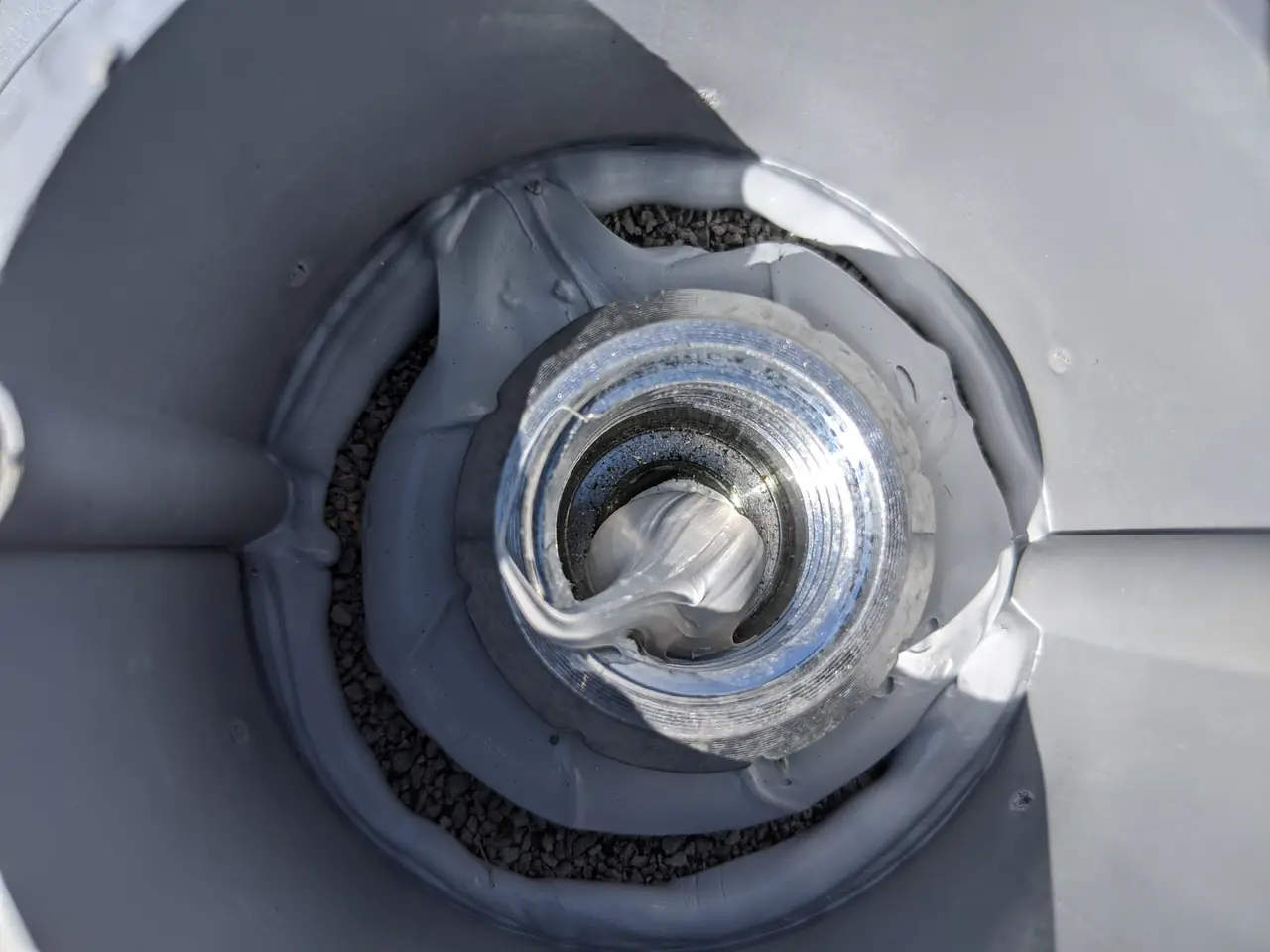
- Set the roof stands through the membrane with flashing collars and sealant at each post (C-39).
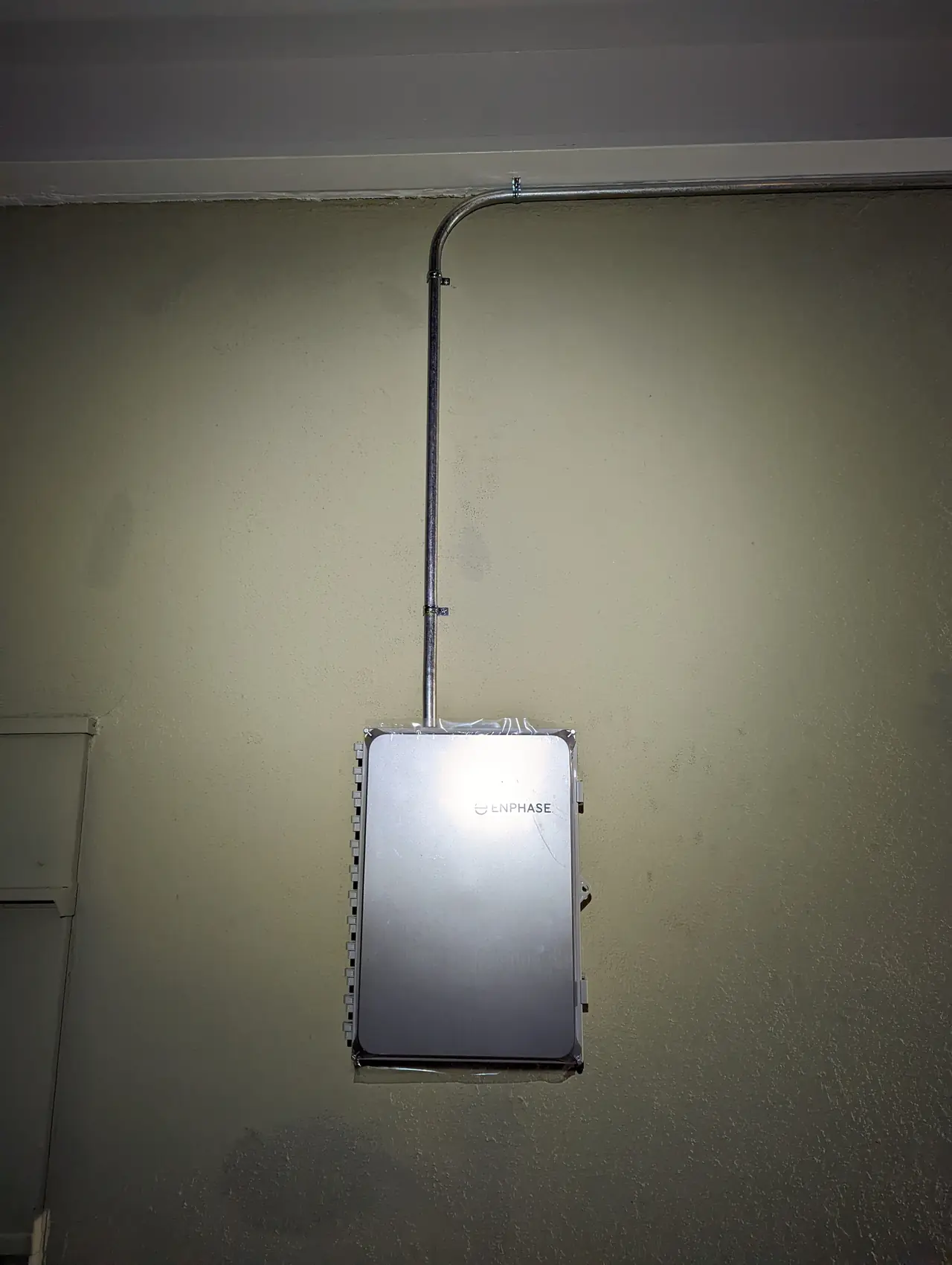
- Installed the modules, microinverters and rooftop conduit runs (C-10).
- Took the application through Glendale Water & Power and then City of Glendale plan check, in the order the city requires.
- Watched the monitoring after commissioning and caught two lagging modules in the first winter.
- Went back and re-angled the two modules within a day of noticing.
System specifications
| House | Single story, built 1938 |
|---|---|
| Roof | Flat built-up membrane, gray surface |
| Mounting | Tilt frames on posts through the membrane, flashed and sealed |
| Modules | Canadian Solar, black frame |
| Inverters | Microinverters, one per module |
| Monitoring | Per-module, online |
| Utility / AHJ | Glendale Water & Power / City of Glendale |
Is your project like this one?
- Your roof is flat or nearly flat and you have been told solar will not work.
- Your house is from the 1930s or 1940s and you worry about holes in the roof.
- You want to know what happens after the system is switched on.
- You are on Glendale Water & Power and want the filing order explained.
- You want per-module monitoring rather than a single inverter reading.
Cali Energy in Glendale
Glendale is its own city with its own municipal utility: permits run through City of Glendale Building & Safety, interconnection through Glendale Water & Power.
Older Glendale neighborhoods have a lot of flat and low-slope roofs from the 1930s and 1940s, and a flat roof changes the solar job: the installer chooses the angle, and the roof membrane has to be penetrated with care.
This installation is on the Glendale projects page alongside the others, and what the work covers is set out on the Glendale service area page.
- License and classifications: CSLB #1032379
- Official reference for this process: Glendale Water & Power — PV interconnection and NEM guide for residential systems under 15 kW CEC-AC
- Official reference for this process: City of Glendale — getting a permit
Frequently asked questions
Can you put solar on a flat roof?
Yes. The modules sit on tilt frames rather than flush on the roof, so the installer chooses the angle and the direction. The frames stand on posts that go through the roof membrane, and each post is flashed and sealed. Rows are spaced so that one does not shade the next when the sun is low in winter.
Why did two modules underproduce?
Because the winter sun sits low, and on a tilted array a module aimed a few degrees off, or clipped by the shadow of the frame in front of it, falls behind its neighbors in the morning. In summer the same two modules were within normal range. Per-module monitoring showed the gap in January, and the fix was a change of angle on those two.
How do you seal the posts on a built-up roof?
Each post sits in a flashing collar that is bonded to the membrane, and the collar is filled and capped with sealant around the post before the rail goes on. The point is that water reaching the post runs off the collar rather than down into the roof. On an older built-up roof this is the part to ask to see.
What is the permit order in Glendale?
Utility first. The solar application and plans go to Glendale Water & Power, which approves the interconnection agreement and stamps the plans, and the building department only opens its plan check after that. Filing with the city first does not save time; the application waits for the utility either way.
What this would look like on your roof
Planning solar in Glendale? Tell us your utility, your roof and what your bill looks like now, and we will model what a system like this would do on your house before you commit to anything.
Or call +1 (323) 844-7777 · Cali Energy, Northridge · CSLB #1032379 (B, C-10, C-39) — design, permits, install and electrical under one licensed contractor.
Related
This timeline reflects this property and this permitting path. Updated September 2026.