

Encino, CA · December 2021 – February 2022 · LADWP / LADBS
Same modules, same roof, different plan set.
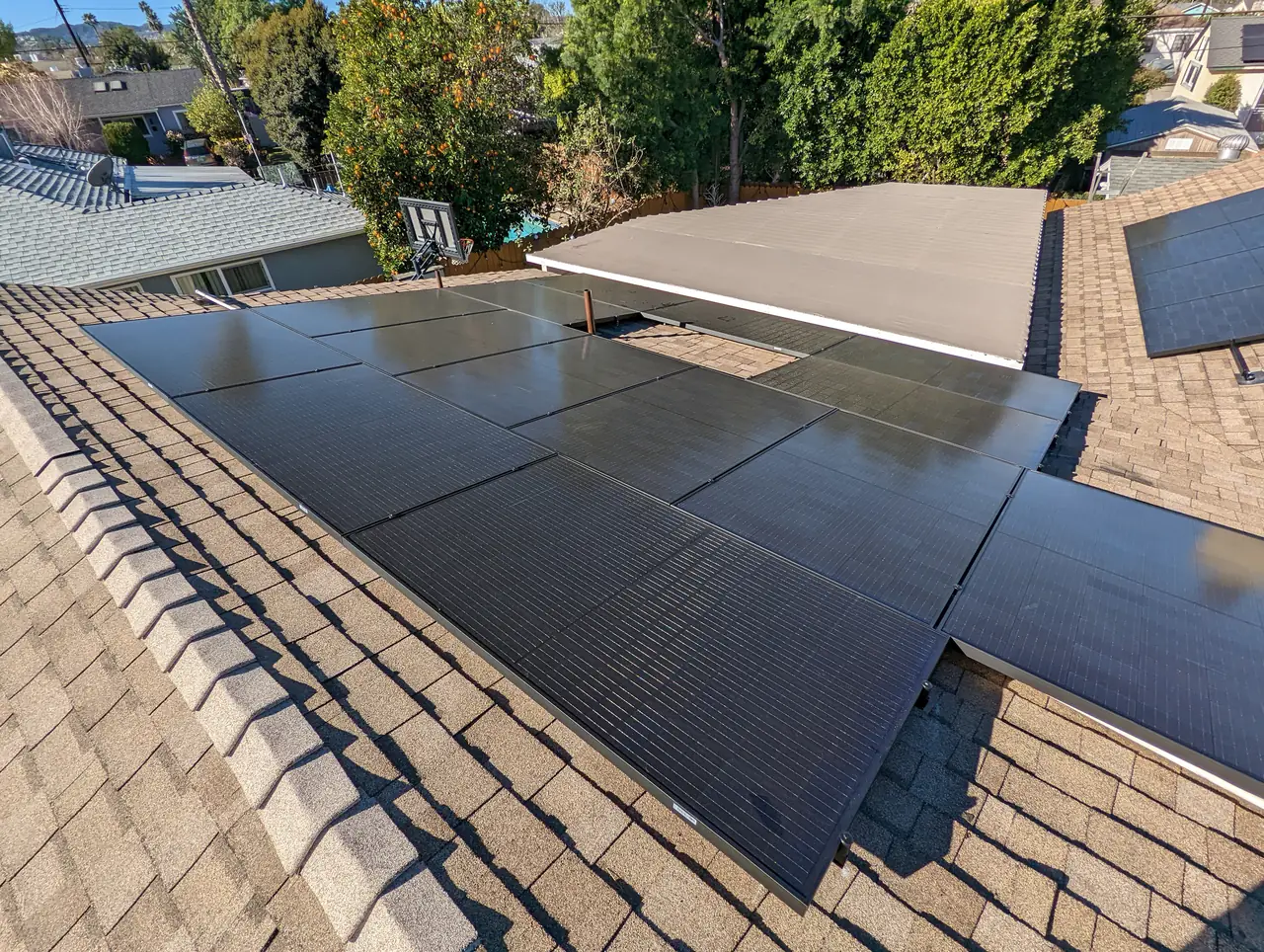
A single-story Encino house on a hip roof, re-covered six weeks earlier, carrying twenty-eight Q CELLS modules at 340 watts each — 9.52 kilowatts. The equipment list named Enphase IQ7 microinverters. The next variant up, IQ7PLUS, would have changed the branch layout and the main breaker with it.
A microinverter's model number carries its continuous AC output, and that number sets how many units may share one branch circuit, how many branches the array needs, and what the array pushes back into the service panel. Change the variant and the branch count changes with it — here, two branches or three — and with the backfeed the question of whether the main breaker has to come down from 200 amps to 175. The modules on the roof look identical either way. The plan set is not.
At a glance
- Array
- 28 × Q CELLS Q.PEAK DUO BLK-G6 340 W — 9.52 kW DC
- Inverters
- 28 × Enphase IQ7, one per module
- Branch layout
- Set by the microinverter variant, not the module
- Roof
- Composition shingle, hip, re-covered 30 squares
- Equipment on the wall
- Enphase combiner with rapid shutdown switch
- Final inspection
- 5 February 2022, passed
- Utility / AHJ
- LADWP / LADBS
The story
The equipment list for this house was ordinary: twenty-eight Q CELLS Q.PEAK DUO BLK-G6 modules at 340 watts — 9.52 kilowatts of them — with one Enphase IQ7 microinverter under each, on a hip roof that had been re-covered six weeks earlier with thirty squares of composition shingle. Nothing in that sentence tells you how the array is wired, and that is the point.
A microinverter is a small inverter bolted to the rail under one module. It takes that module's DC and puts out household AC, which means the array's wiring on the roof is AC wiring: units are strung along a branch circuit, and the branch runs back to a combiner and then to the service panel. How many units can share one branch is arithmetic. Each variant has a continuous AC output rating; the branch conductor and the breaker protecting it have a limit; divide one into the other and you have the number of microinverters per branch.
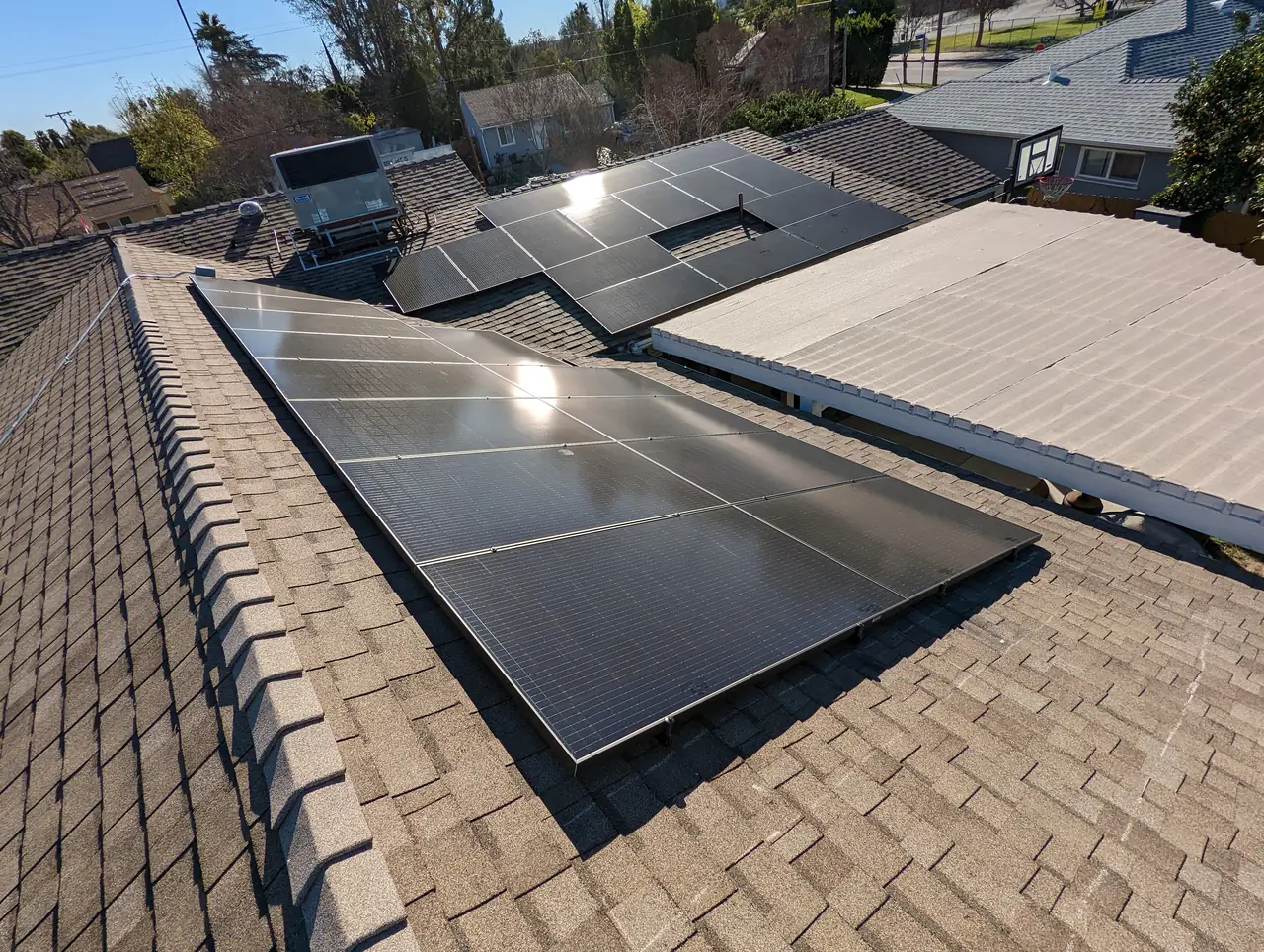
Move one step up the model range — IQ7 to IQ7PLUS — and the output rating goes up with it. Fewer units fit on a branch. Twenty-eight modules that sat comfortably on two branches now need three, which means another run of conductor, another breaker position in the combiner, and a higher total current arriving at the service panel.
That last number is the one that reaches the homeowner. The code caps what a panel's busbar may take from the utility supply and the array together. Push the array's contribution up and the sum can cross the line, and then the main breaker has to come down — on this house, from 200 amps to 175 — to make room. A change in a suffix on the equipment list, four weeks before installation, can end with less utility capacity available to the house.
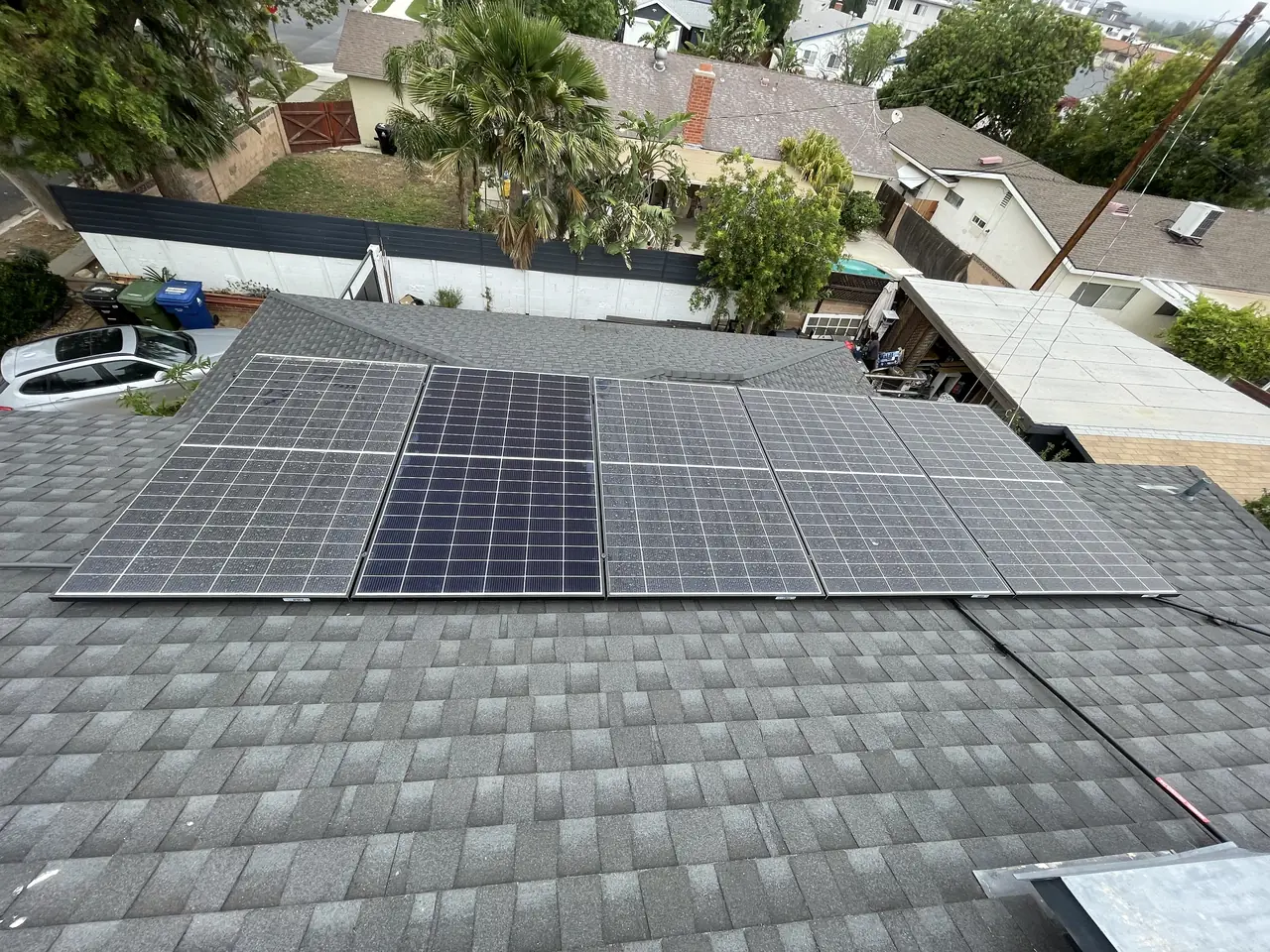
None of this is visible once the array is on. From the street it is twenty-eight black modules on a gray roof. From the plan set it is a different drawing: branch count, conductor size, combiner arrangement, overcurrent protection, and the rating of the main breaker feeding the house. Cali Energy ran that arithmetic against the existing service before the equipment was ordered, which is the only moment it is free to change.
So the questions that belong in every solar proposal, and are missing from most of them. Which exact variant of the inverter — the full model number, not the family name. How many branch circuits does the array need. What is the total backfeed current at the panel, and against what busbar rating. And does anything about my main breaker change as a result.
The build itself was short. The array went up at the end of January, the final inspection was requested on the third of February and passed on the fifth, two days later.
One thing did need a second visit, and it is the most common after-the-fact call in this trade. The gateway that collects production data could not hold a connection: the house router sat at the far end of the building from the equipment wall, and the signal did not carry. The system was producing the whole time. A range extender near the equipment fixed the reporting, and the array has been reporting since.
A note on the limits of equipment choice. The variant that fits two branches instead of three is not automatically better — the higher-output units can matter on a roof where modules are larger or where future capacity is wanted. The mistake is choosing either one without knowing which branch layout and which breaker size come with it.
How it ran
| 14 December 2021 | Roofing permit issued — 30 squares, composition shingle |
|---|---|
| 6 January 2022 | Equipment list set; installation scheduled |
| 14 January 2022 | Plan set reviewed against the branch layout and backfeed |
| 27 January 2022 | Installation |
| 3 February 2022 | Final inspection requested |
| 5 February 2022 | Final inspection passed |
| 8 February 2022 | System reporting and producing |
Nine days from installation to a passed final. This timeline reflects this property and this permitting path.
What we did
- Checked the branch layout and the total backfeed against the service panel before the equipment was ordered (C-10).
- Set out what changing the microinverter variant would do to the branch count and to the main breaker rating.
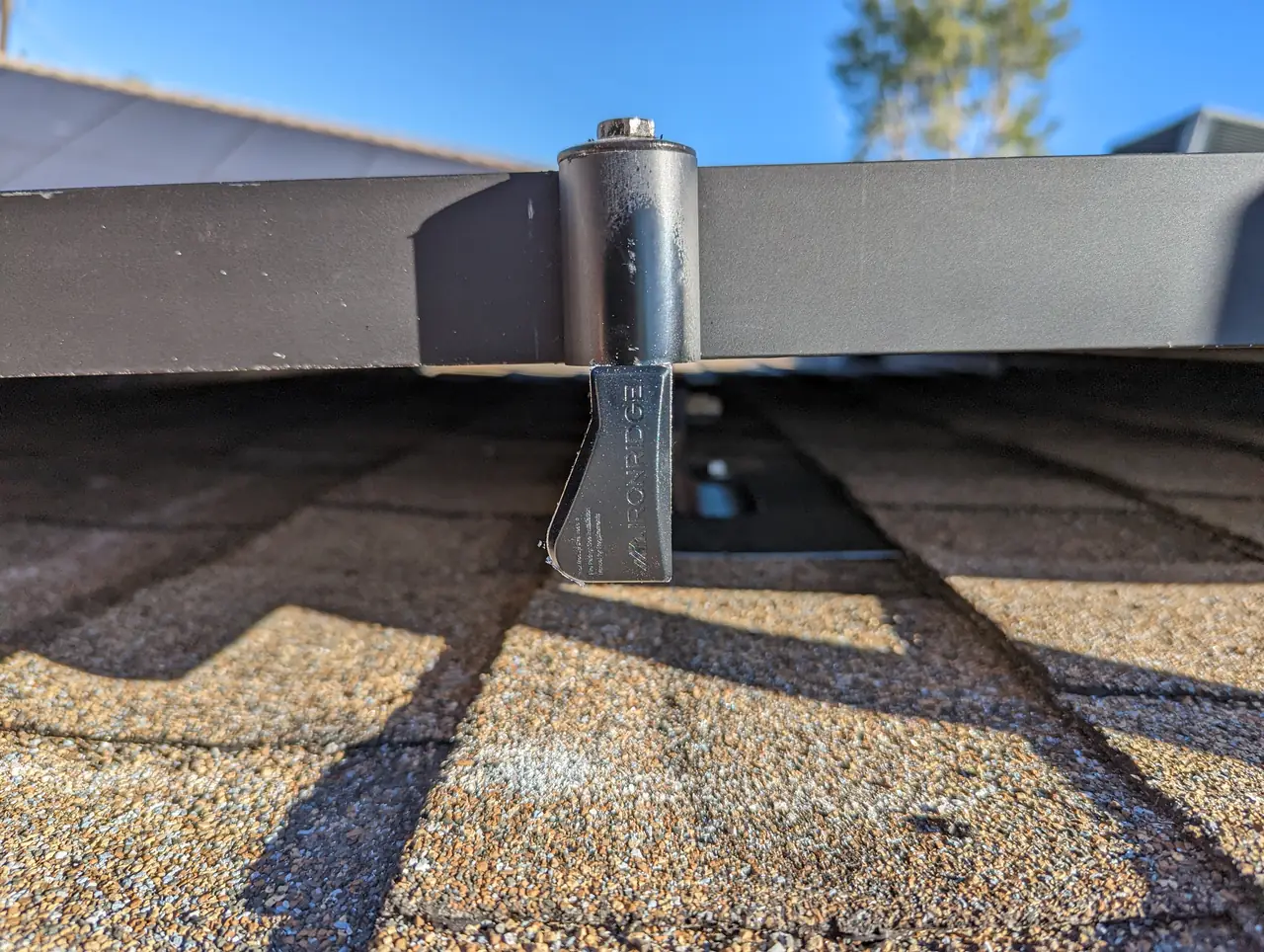
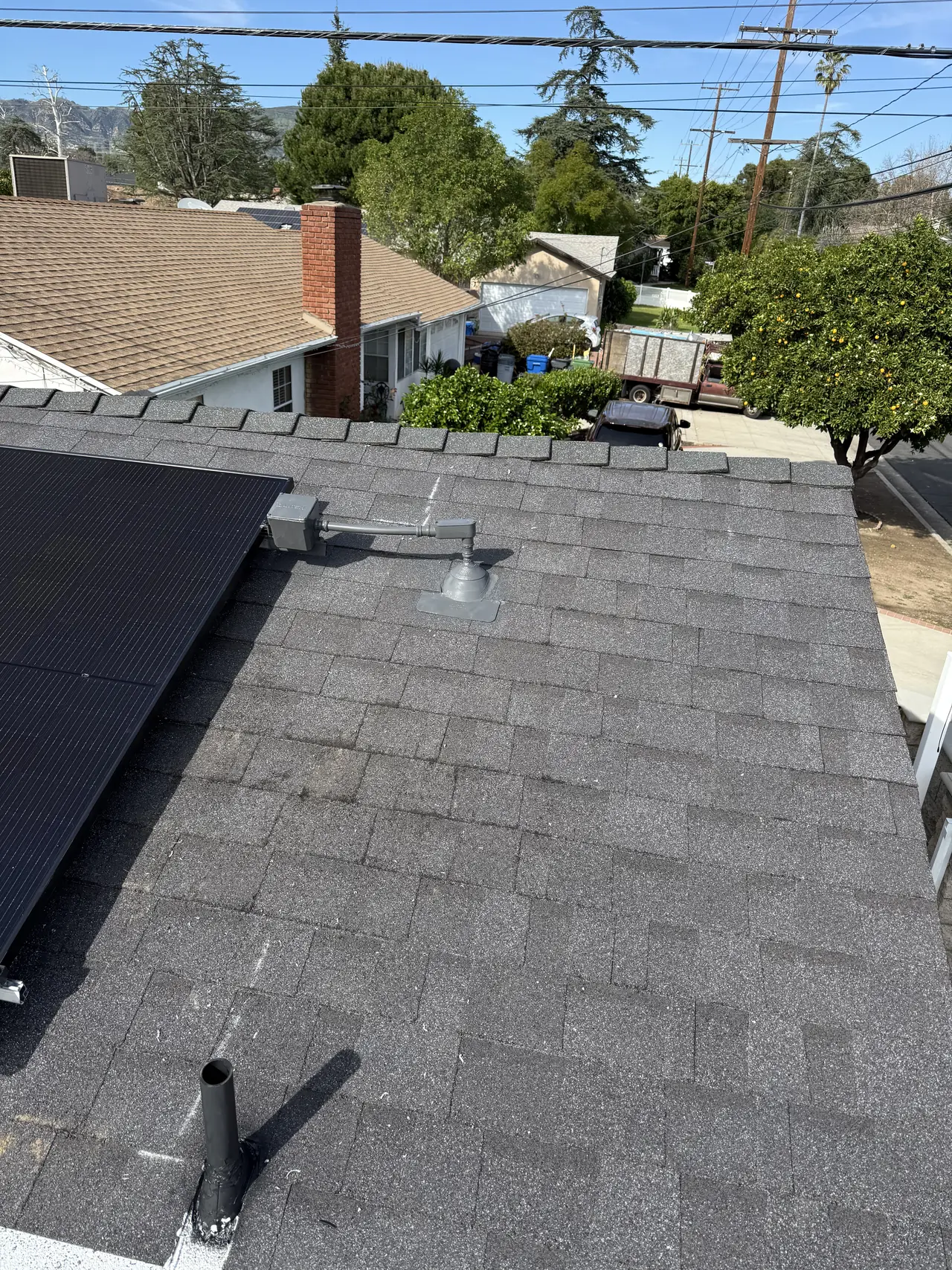
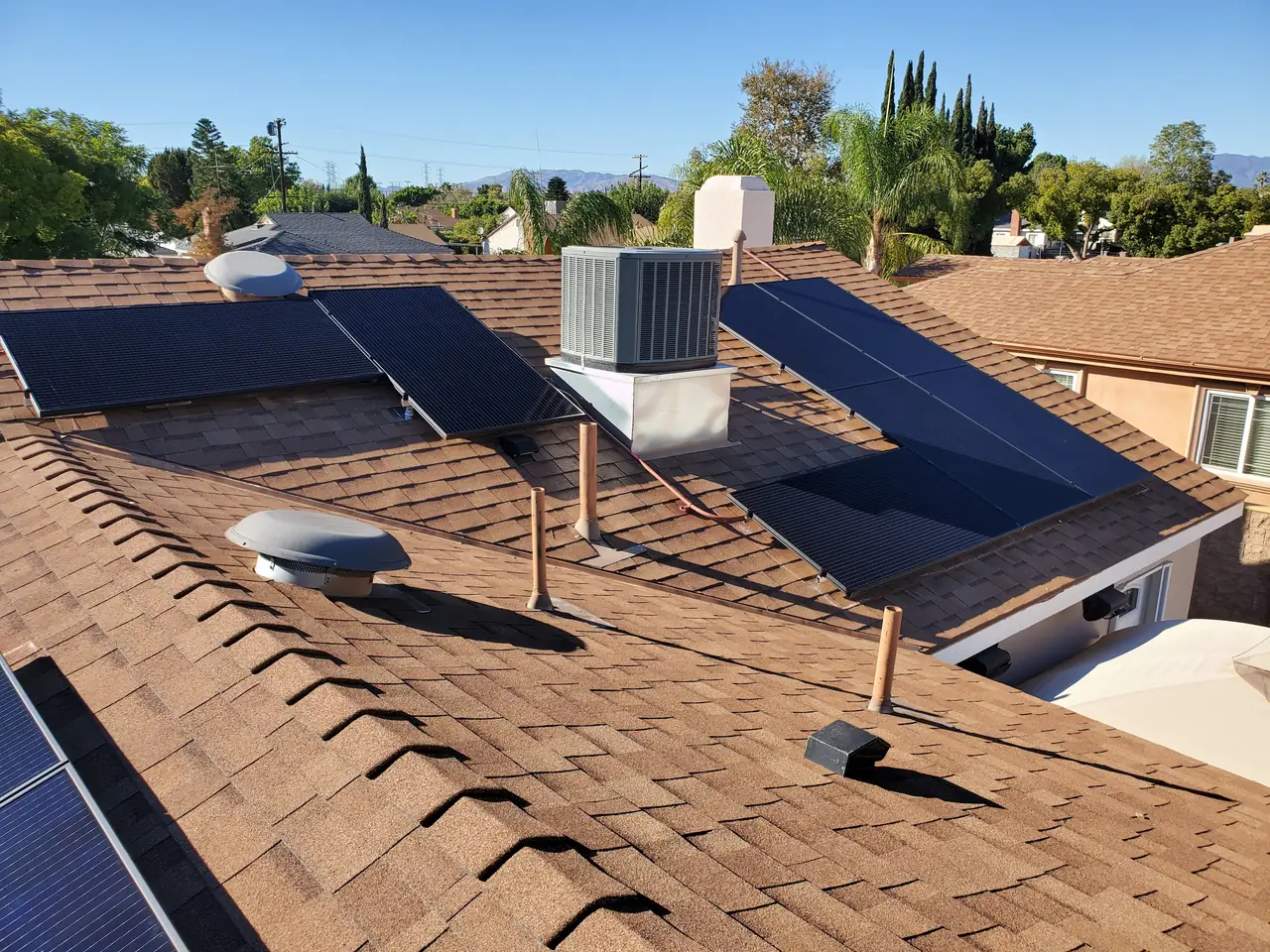
- Installed twenty-eight Q CELLS modules across the planes of a hip roof on rafter-fixed, flashed standoffs (B, C-39).
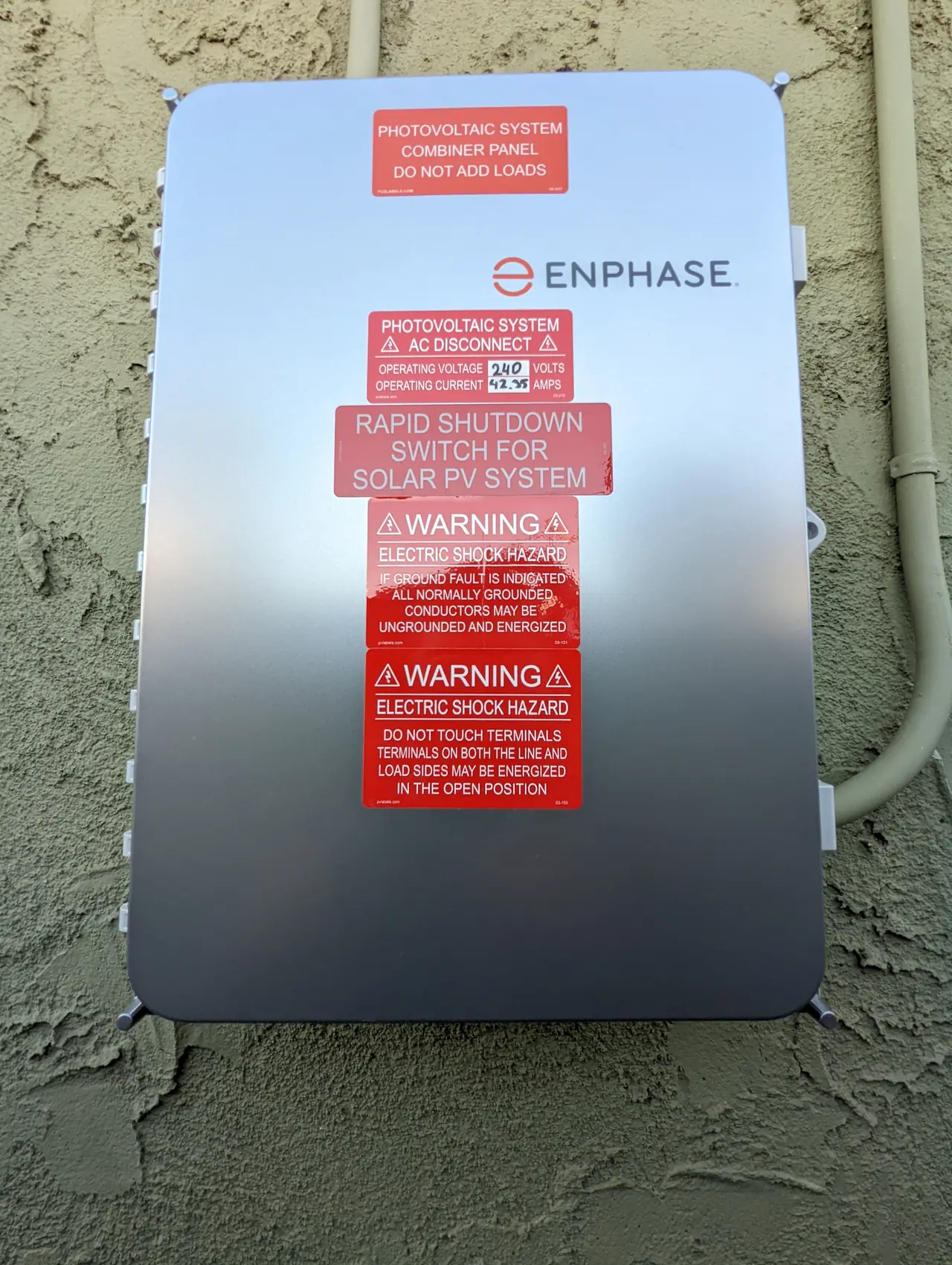
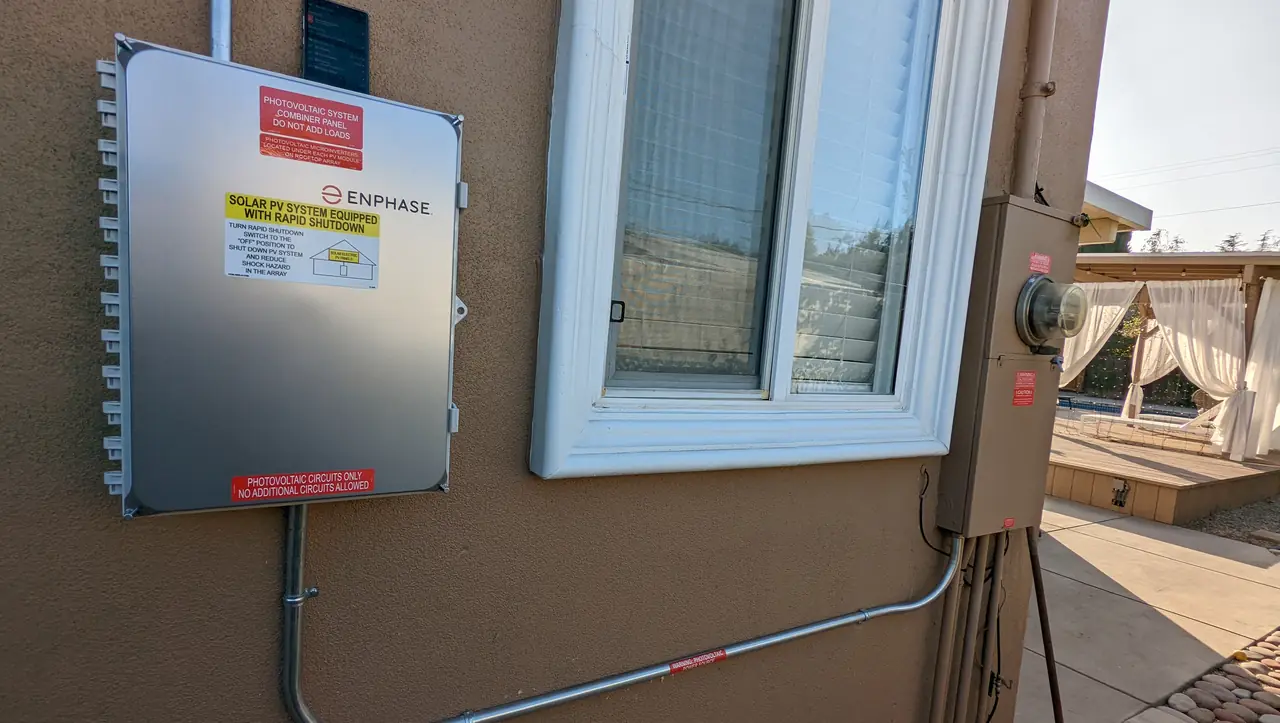
- Mounted the Enphase combiner and rapid shutdown switch on the equipment wall with the labeling the inspection requires.
- Requested the final inspection two days after the array was finished and passed it on the first visit.
- Returned to bring the monitoring gateway online with a range extender.
System specifications
| Modules | 28 × Q CELLS Q.PEAK DUO BLK-G6 340 W — 9.52 kW DC |
|---|---|
| Microinverters | 28 × Enphase IQ7, one per module |
| Branch circuits | Determined by the microinverter variant |
| Roof covering | Composition shingle, 30 squares, Class A |
| Attachment | Rafter-fixed standoffs, flashed into the course above |
| Wall equipment | Enphase combiner with rapid shutdown switch |
| Monitoring | Gateway with a range extender at the equipment wall |
| Utility / AHJ | LADWP / LADBS |
Is your project like this one?
- Your proposal names an inverter family but not the exact model.
- Nobody has told you how many branch circuits your array needs.
- Someone has mentioned changing your main breaker and you do not know why.
- Your roof is a hip with several planes rather than one large slope.
- Your router is at the opposite end of the house from the meter wall.
Cali Energy in Encino
Encino sits inside City of Los Angeles boundaries: permits run through LADBS, interconnection through LADWP.
Most Encino houses were wired for a fraction of today's loads, so the electrical half of a solar project is usually the half that decides the design. Twelve completed Encino projects are documented on our projects page.
This installation is on the Encino projects page alongside the others, and what the work covers is set out on the Encino service area page.
- License and classifications: CSLB #1032379
- Official reference for this process: California Energy Commission — solar equipment lists
- Official reference for this process: LADBS — plan review and permitting
Frequently asked questions
Does Cali Energy install Enphase systems in Encino?
Yes. Enphase microinverters are on most of the Encino arrays Cali Energy builds, and choosing the variant is part of the design rather than a catalog preference: it sets the branch count and the backfeed at the panel. Twelve completed Encino projects are documented on our projects page. Our license is CSLB #1032379.
Does the exact microinverter model matter?
Yes, more than the module does. The variant sets the continuous AC output per unit, which sets how many units share a branch circuit, how many branches the array needs and what current arrives back at the service panel. Two variants with the same modules can produce two different plan sets and two different answers on whether the main breaker has to change.
What is a branch circuit on a microinverter array?
It is the AC run that several microinverters share on their way back to the combiner. The conductor and its breaker set the limit, and the number of units per branch follows from the inverter's output rating. More branches means more conductor, more breaker positions and a higher total current at the panel — all of which belong on the drawing before anything is ordered.
Why would solar change my main breaker?
Because the panel's busbar has a limit on what it can take from the utility supply and the array at the same time. If the array's contribution pushes the sum over that limit, one way back under it is a smaller main breaker — here, 175 amps instead of 200. It costs the house some available capacity, which is why it should be a decision rather than a surprise.
My system is on but the app shows nothing. What is wrong?
Usually the network, not the solar. The gateway that collects production data needs a connection to the house router, and on a long single-story house the signal often does not reach the equipment wall. On this project a range extender near the equipment solved it. The system had been producing normally the whole time it was not reporting.
What this would look like on your roof
Planning solar in Encino? Tell us your utility, your roof and what your bill looks like now, and we will model what a system like this would do on your house before you commit to anything.
Or call +1 (323) 844-7777 · Cali Energy, Northridge · CSLB #1032379 (B, C-10, C-39) — design, permits, install and electrical under one licensed contractor.
Related
This timeline reflects this property and this permitting path. Updated September 2026.