

Brentwood, CA · April – December 2021 · LADWP / LADBS
Brentwood: the azimuth check on a many-sided roof.
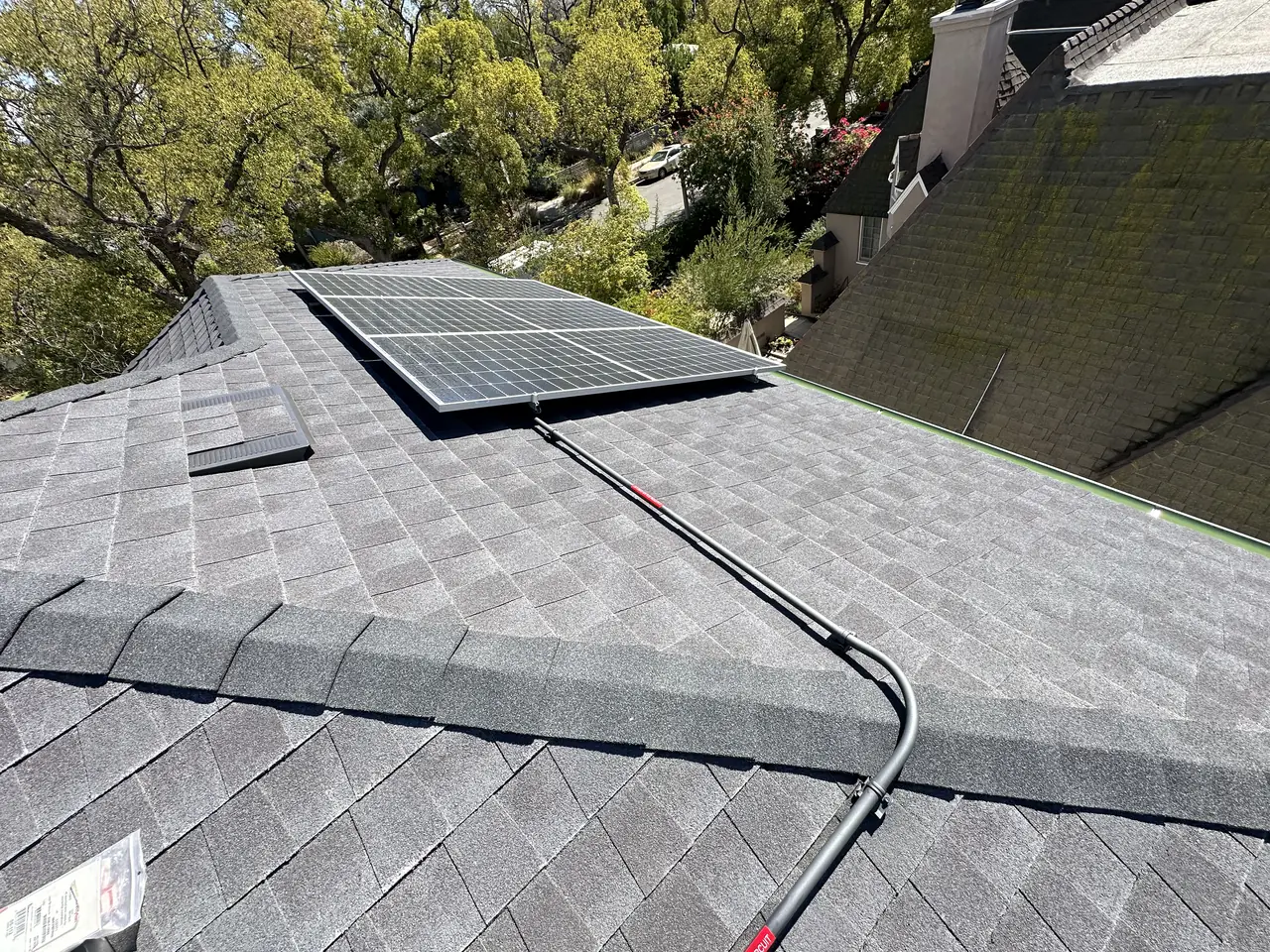
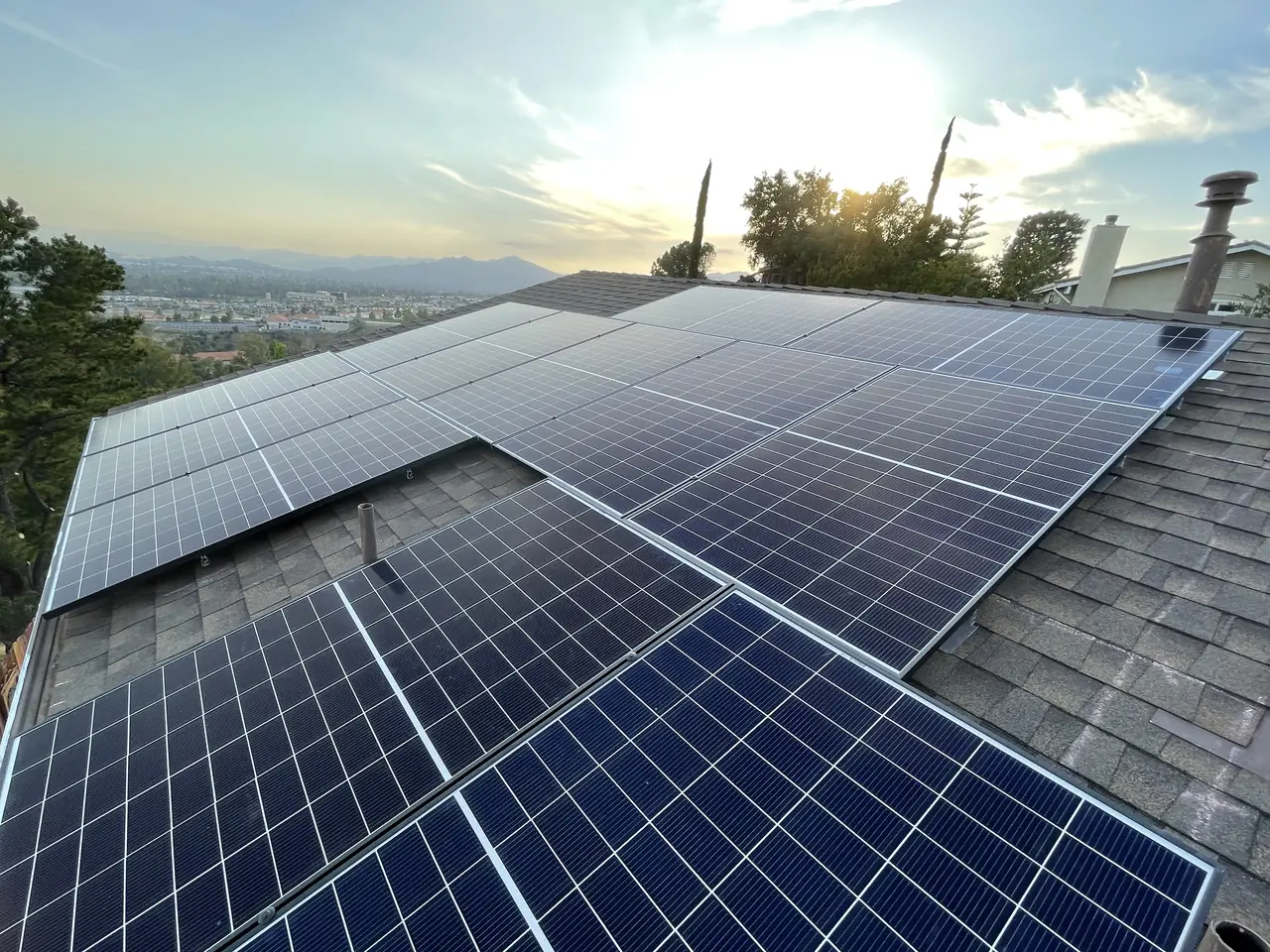
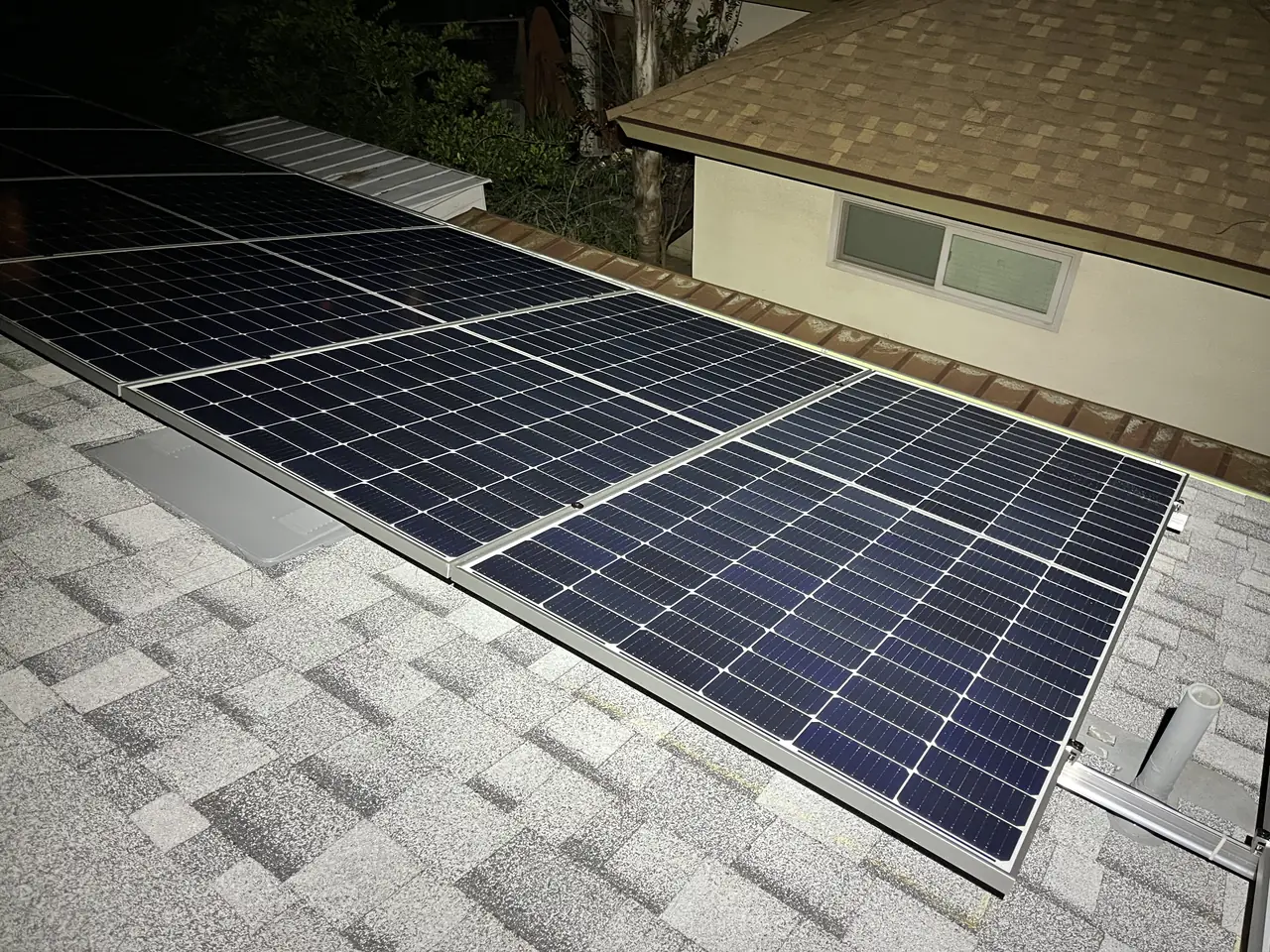
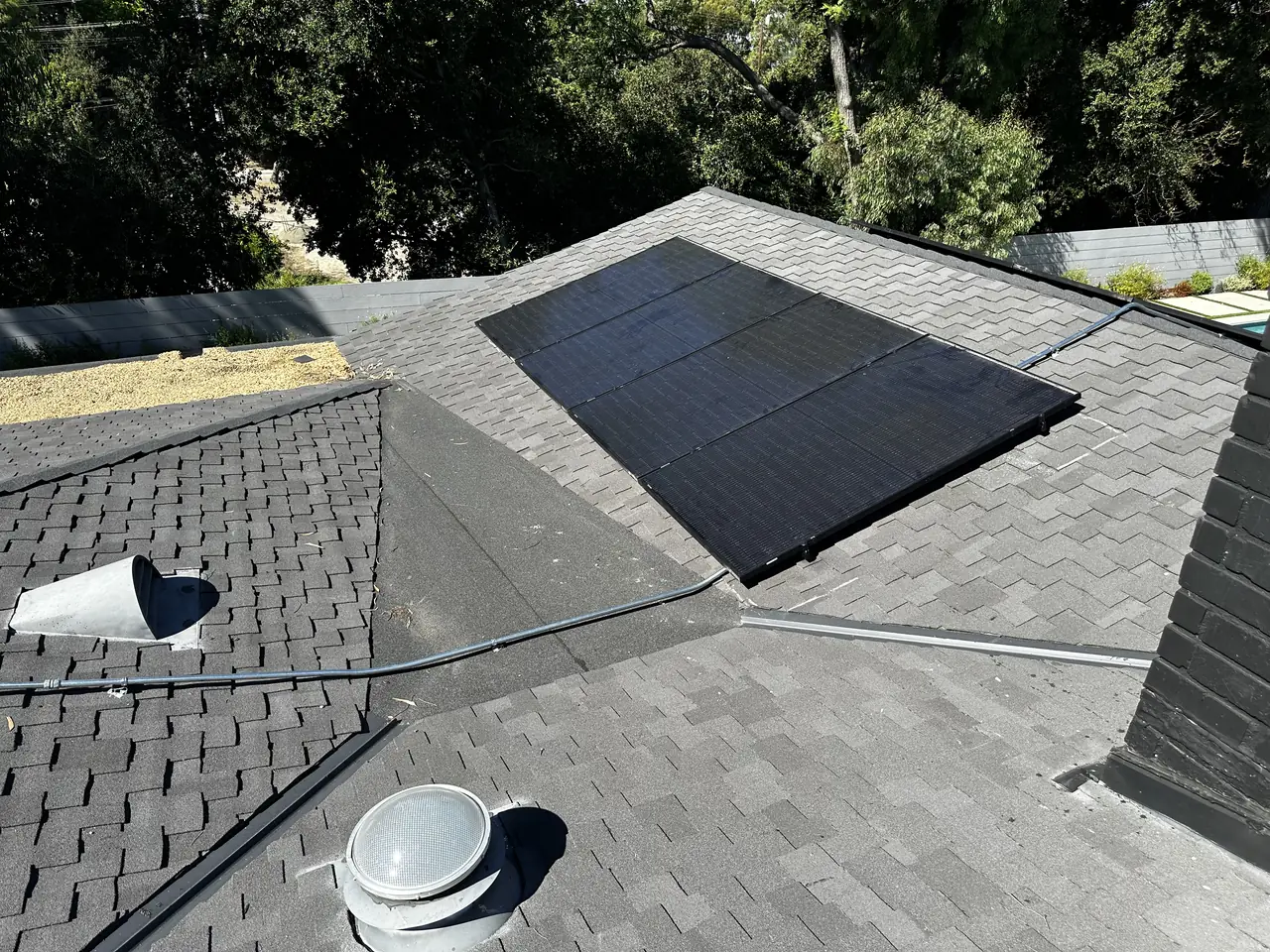
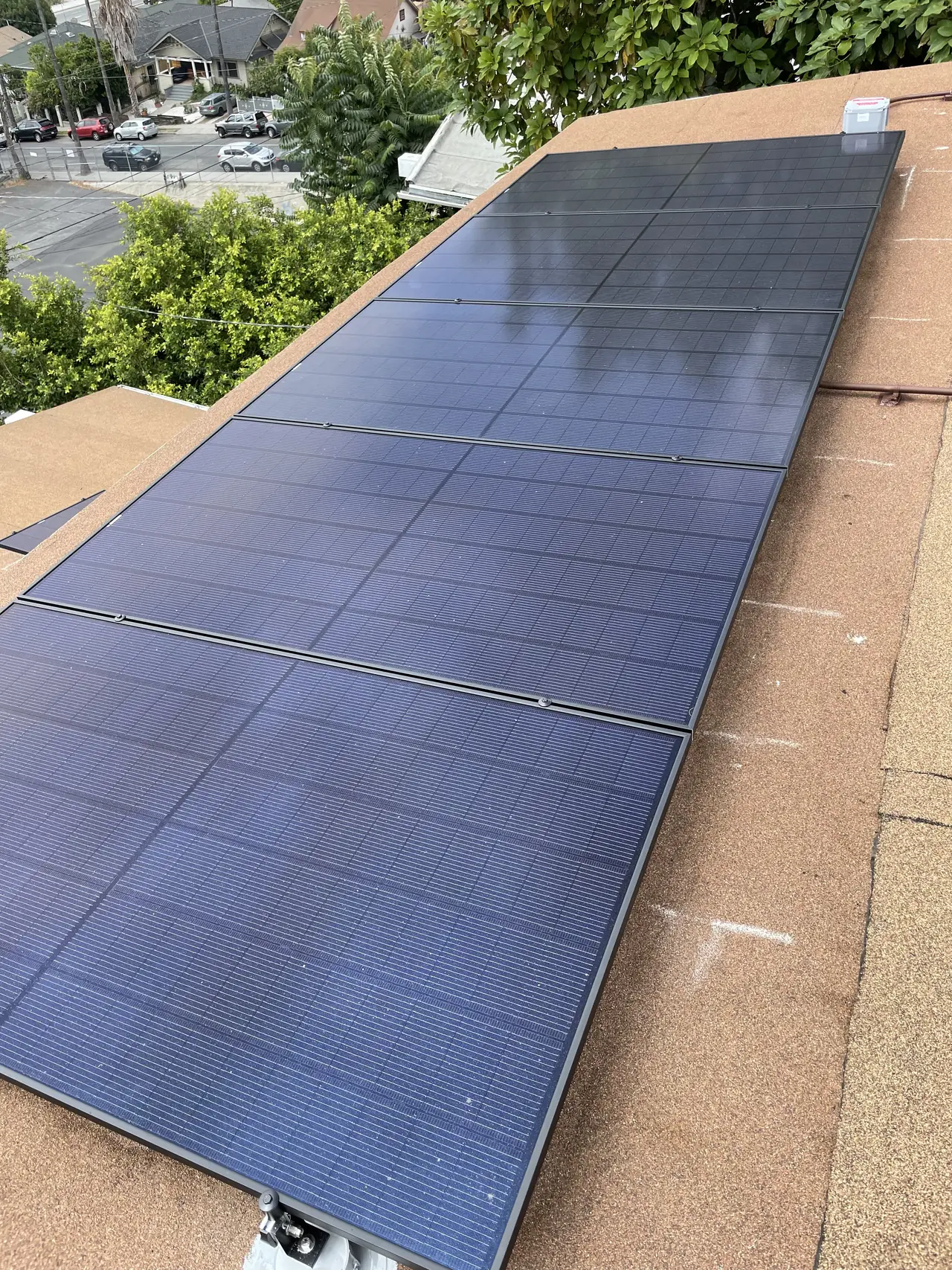
Fifty-four modules across a large, many-sided roof. Every group gets checked against the house before anything is signed, and on this one the check earned its keep.
Every production estimate is built from the orientation of each group of panels, and on a roof with many faces those orientations are entered one group at a time. Get one wrong and the number at the bottom of the proposal is wrong with it, and no homeowner can check a production figure by eye. Cali Energy reviews the model group by group against the actual house before a design goes out; on this 19.98 kW Brentwood project in Los Angeles that review moved two sub-arrays onto the right azimuth before anything was signed.
At a glance
- System
- 19.98 kW
- Array
- 54 modules, 370 W each
- Checked group by group
- Before the design went out
- Re-modeled on review
- 13 modules, before signature
- Plan set revisions
- Nine, over three months
- Utility / AHJ
- LADWP / LADBS
The story
A large Brentwood roof, broken into a lot of faces, fifty-four modules and just under twenty kilowatts. The design went through several rounds before it became a contract, and two of those rounds are worth setting out.
The first was about module size. The question was whether to move from three hundred and seventy watt modules to four hundred and forty-five watt ones — physically larger, at roughly the same price per watt. Committing to that meant going back to the roof and measuring the faces again, not adjusting a drawing, so that is what it took. Fewer, larger modules is often the better system; it is also the change that most often stops working on a roof made of small planes.
The second was the orientation.
On review, two groups of panels — three in one, ten in the other — had been modeled facing northeast. They belonged on a southwest face. Thirteen modules out of fifty-four, pointed at the opposite quarter of the sky from where they actually were.
This is the single most consequential error a solar proposal can contain, and it is almost invisible. Everything else on the page looks right: the module count is right, the system size in kilowatts is right, the equipment is right, the layout drawing looks like the roof. Only the production number is wrong, and nobody can check a production number by eye.
The direction of the error matters too. In this climate a southwest face carries the afternoon, which is the part of the day when the electricity is worth the most. A northeast face takes the morning and is done early. Mixing the two up in a model produces a number that is confidently, specifically wrong — and it is wrong on the single figure a homeowner uses to decide.
So the fix is not complicated and it is worth doing on any proposal you are handed. Ask for the orientation of each group of panels, not the system as a whole. On a simple roof there is one group and it takes ten seconds. On a roof like this one there are five or six, they were entered by hand, and that is where the mistake lives. Then stand outside and check them against the actual house.
It was corrected, the agreement was signed at the end of July, and the drawings went into plan preparation. That stage took three months and nine revisions — the interrupting rating on the single-line diagram, the model number of a load center, an added site photograph. None of those are interesting on their own. Together they are what the gap between a signed agreement and a permit is usually made of, and it is worth knowing that the gap is normal rather than a sign something is wrong.
The system was commissioned and the warranty certificate went to the owner in December.
Cali Energy designed, permitted and installed this 19.98 kW array in Brentwood, Los Angeles.
How it ran
| 14 April 2021 | First layout issued for the roof |
|---|---|
| 3 May 2021 | Larger modules considered; a fresh site visit required before they could be committed to |
| 6 May 2021 | Review finds two sub-arrays — thirteen modules — modeled facing northeast instead of southwest; design corrected |
| 30 July 2021 | Agreement signed — 54 modules, 19.98 kW |
| August – November 2021 | Plan set through nine revisions: interrupting rating, load center model number, a missing site photograph |
| December 2021 | System commissioned; warranty certificate issued to the owner |
Eight months from the first layout to a commissioned system. The part that decided what it was worth happened in the first month.
What we did
- Reviewed the model group by group instead of accepting the total.
- Found and corrected thirteen modules on the wrong azimuth before signature.
- Declined to commit to larger modules without going back to the roof.
- Carried the plan set through nine revisions to an issued permit.
- Commissioned the system and issued the warranty certificate to the owner.
System specifications
| System | 19.98 kW |
|---|---|
| Modules | 54 × 370 W |
| Inverter | String inverter with monitoring |
| Roof | Large, multiple faces |
| Design correction | 13 modules re-modeled from northeast to southwest |
| Plan preparation | Nine revisions across three months |
| Utility / AHJ | LADWP / LADBS |
Is your project like this one?
- Your roof has several faces and your proposal shows one production number.
- You want to know how to check a solar estimate you cannot verify by eye.
- Somebody has offered to swap your modules for larger ones.
- Your project has been signed for months and the permit has not issued.
Cali Energy in Brentwood
Brentwood is City of Los Angeles on the Westside, permitted through LADBS and interconnected through LADWP. The roofs here are large and broken into many faces, which is exactly the condition under which a modeling mistake is easiest to make and hardest to see.
This installation is on the Los Angeles projects page alongside the others, and what the work covers is set out on the Los Angeles service area page.
- License and classifications: CSLB #1032379
- Official reference for this process: CSLB — Solar Smart
- Official reference for this process: California Energy Commission — solar equipment lists
Frequently asked questions
How do I check the production estimate on a solar proposal?
Ask for the orientation of each group of panels rather than the system as a whole, then compare those to the actual house. On a simple roof there is one group and the check takes seconds. On a roof with several faces the orientations were entered one group at a time, by hand, and that is where errors live — invisible on the page because everything else still looks correct.
Does which way panels face really change the result?
Substantially. In Southern California a southwest face carries the afternoon, when electricity is worth most; a northeast face takes the morning and finishes early. A model that has one confused with the other produces a specific, confident number that is wrong, and production is the one figure on a proposal a homeowner cannot verify by looking at it.
Are bigger panels always better?
Not on a roof made of small planes. Higher-wattage modules are physically larger, so a face that fits four of one size may fit three of the next, and the larger system on paper becomes the smaller one on the roof. The change is worth making only after somebody measures the actual faces again, not by editing a drawing.
Why does a permit take months after the agreement is signed?
Because the plan set goes through revisions, and each one is small: an interrupting rating on the single-line diagram, a model number for a load center, an added site photograph. This Brentwood set took nine revisions across three months. That is ordinary rather than a warning sign, though it is rarely explained to the owner in advance.
Does Cali Energy design larger systems in Brentwood, Los Angeles?
Yes. This Brentwood project was 19.98 kW across fifty-four modules on a multiple-face roof, permitted through LADBS and interconnected through LADWP. Roofs of that shape are where design review matters most, because the array is really several small arrays and each one has to be right on its own.
What this would look like on your roof
Planning solar in Brentwood? Tell us your utility, your roof and what your bill looks like now, and we will model what a system like this would do on your house before you commit to anything.
Or call +1 (323) 844-7777 · Cali Energy, Northridge · CSLB #1032379 (B, C-10, C-39) — design, permits, install and electrical under one licensed contractor.
Related
This timeline reflects this property and this permitting path. Updated September 2026.