

Woodland Hills, CA · March 2022 – January 2023 · LADWP / LADBS
A battery decided how this Woodland Hills array was wired.
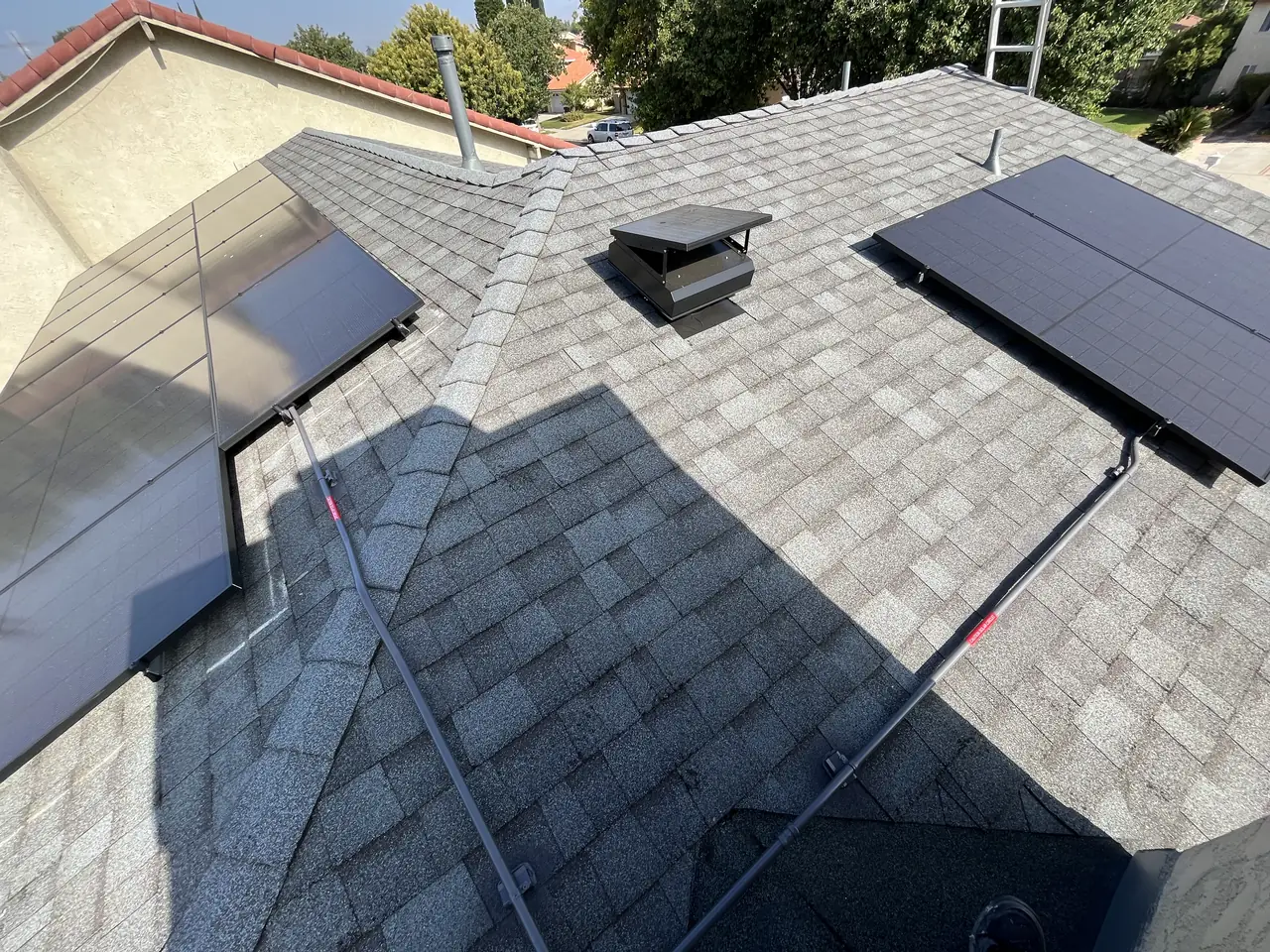
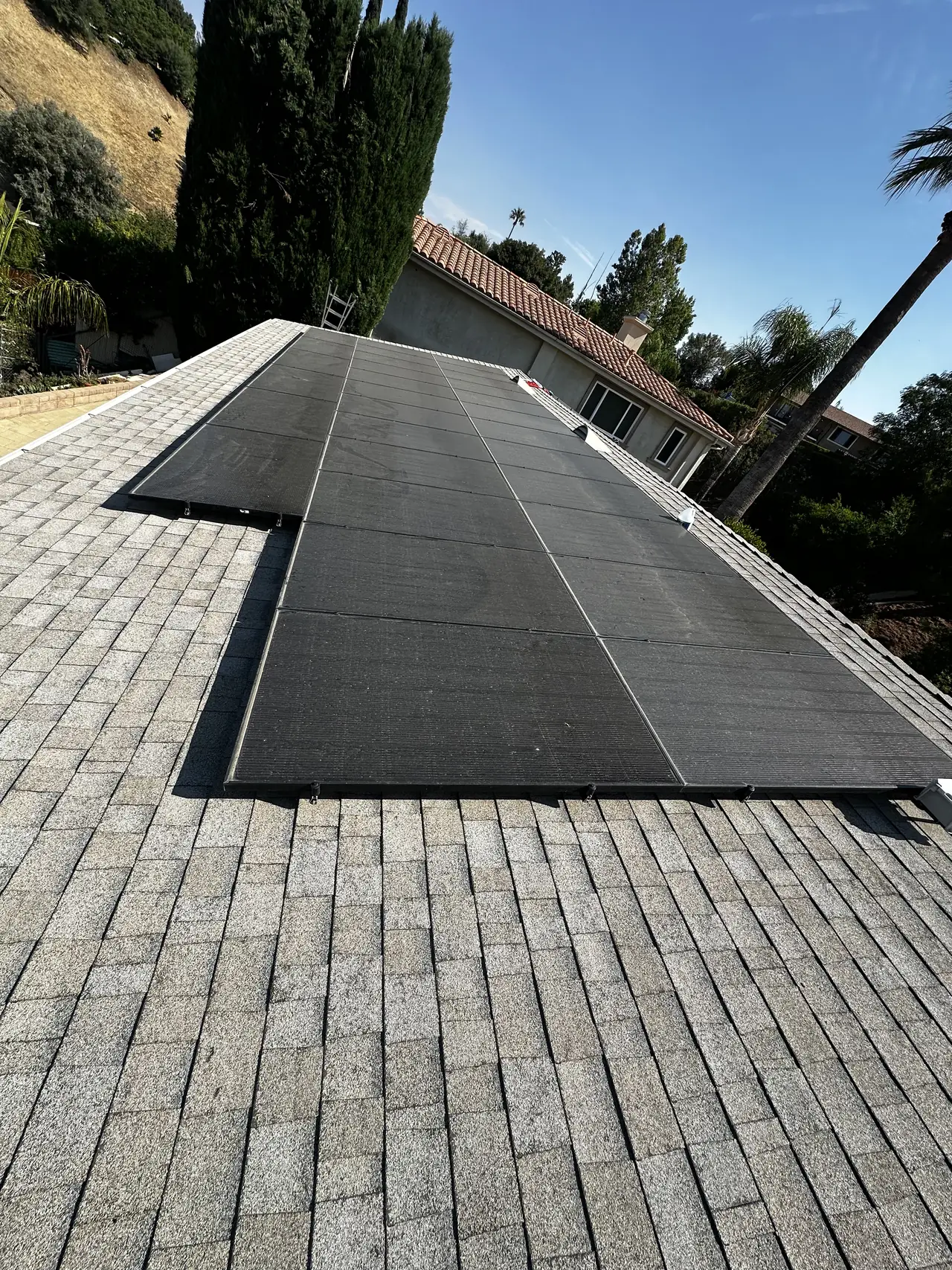
Twenty-six modules, twenty-six microinverters and one battery on a Woodland Hills house. The battery is not an accessory bolted on at the end. It reached back into the roof layout, into the plan set, and into a utility process that runs alongside the solar one rather than inside it.
A battery changes three things about a solar project. It sets the array topology, because a single battery unit supports a limited number of microinverters and the surplus has to be split onto a branch that is shed during a backup event. It adds a separate utility track, with its own information sheets, its own site inspection and its own photograph package, so a system can pass city final inspection and still be nowhere near release. And it makes the plan set load-bearing, because removing one feature from it quietly changes what the battery can carry. Cali Energy designed, permitted and carried this Woodland Hills system through all three.
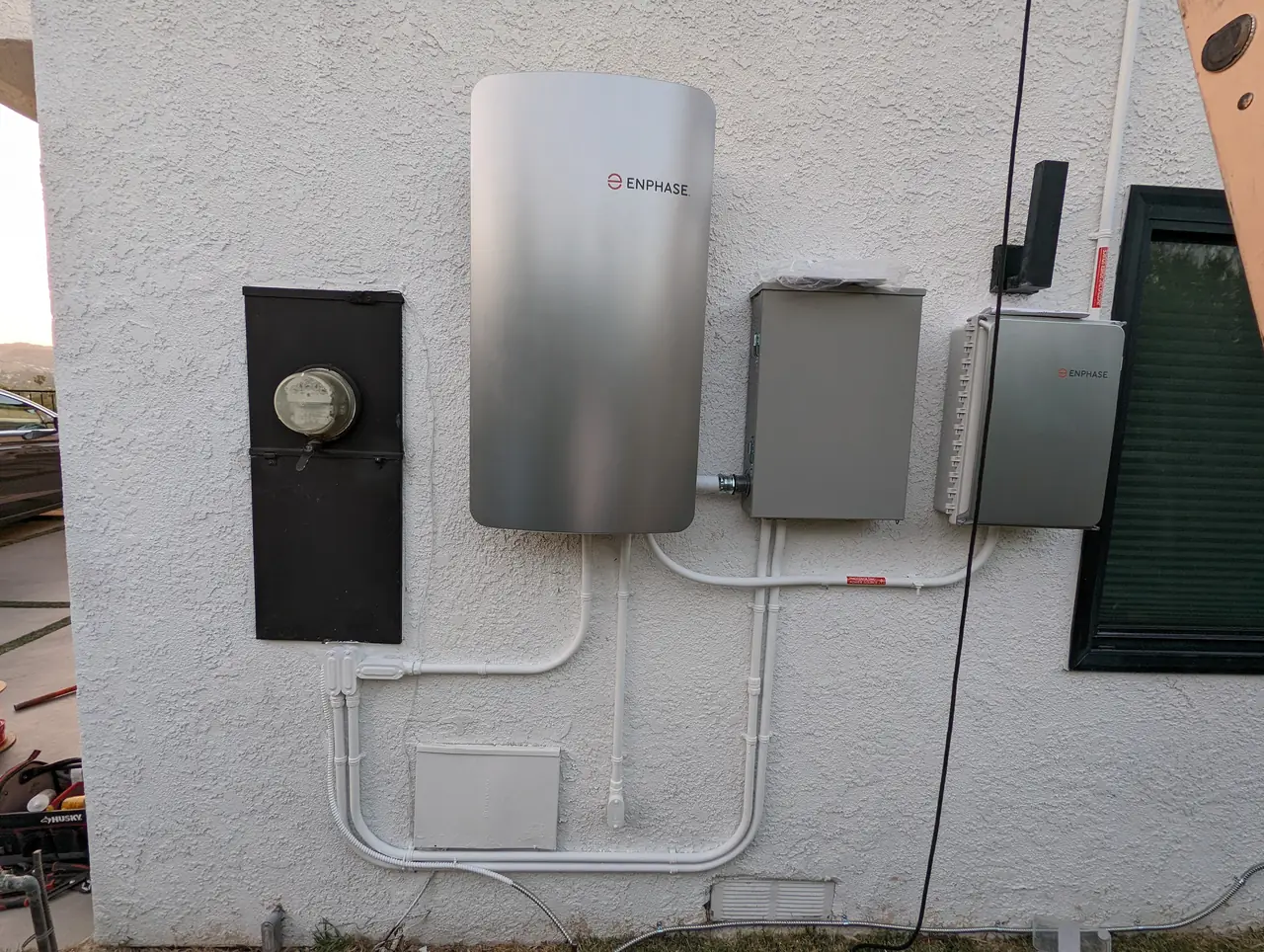
At a glance
- Recorded by the utility
- 8.8 kW AC-CEC
- System as designed
- 9.62 kW DC
- Modules
- 26 × REC 370 W
- Inverters
- 26 × Enphase IQ7PLUS microinverters
- Battery
- 1 × Enphase Encharge 10; recorded by the utility at 3.84 kW AC
- Array topology
- Three branches; one shed during backup
- Main service panel
- Upgraded; main breaker derated to 175 A
- Utility / AHJ
- LADWP / LADBS
The story
The design went out in March. Nine and a half kilowatts on the roof, twenty-six modules with a microinverter under each, one battery, and a main breaker derated to 175 amps on the upgraded service panel. On paper that is a routine residential system with a box added to the wall.
It is not. The first thing the battery did was rewrite the roof.
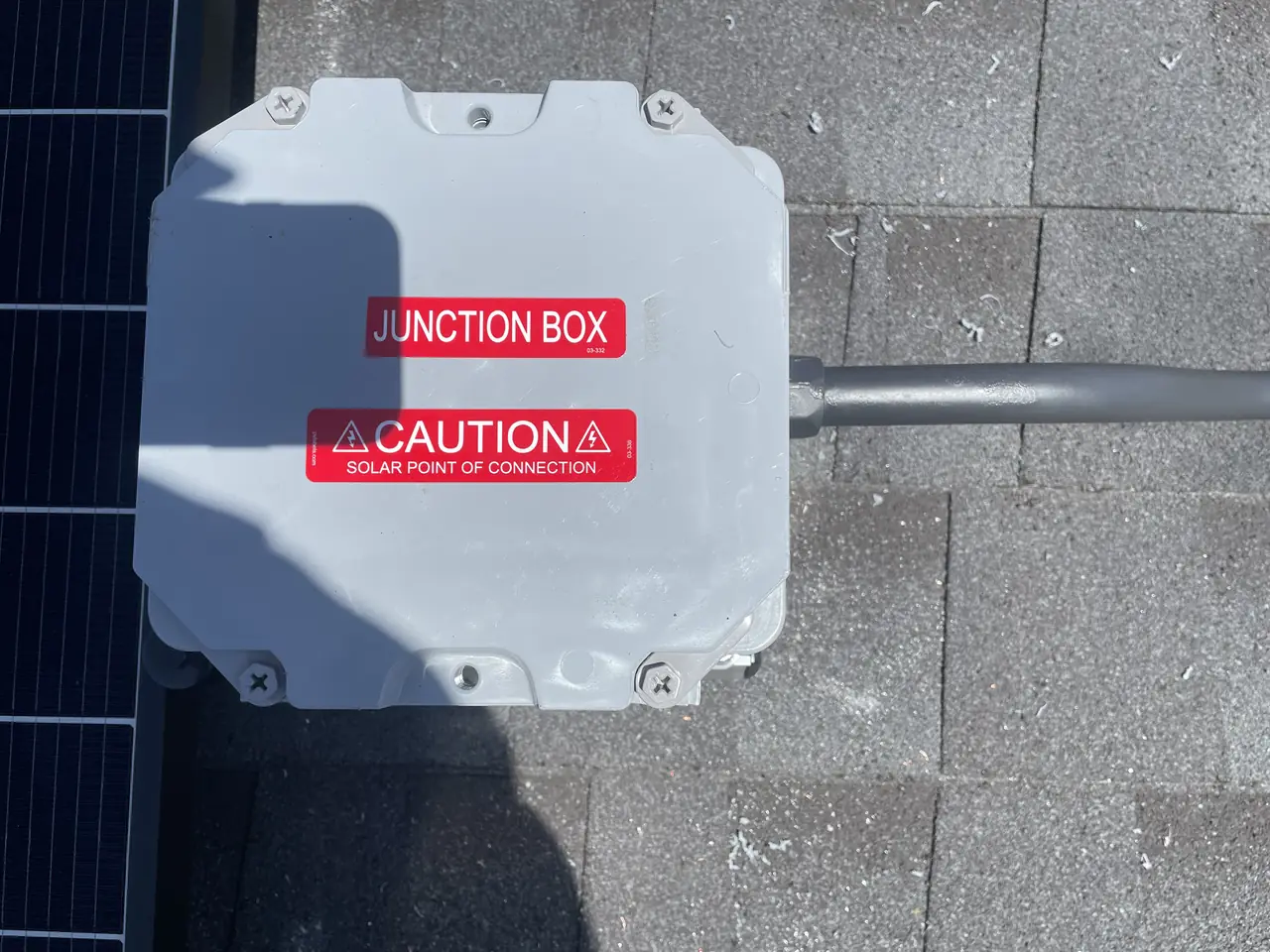
A single battery unit of this type supports a limited number of microinverters, nineteen of the model used here. There are twenty-six modules on this roof. So the array could not be split into two tidy branches. It went out as three: two branches that run with the battery during an outage, and a third of seven modules that is shed when the grid goes down.
That word, shed, is where the design decision lives, though in a quote it reads like a detail. Photovoltaic shedding means part of the array is deliberately disconnected during backup operation, so the battery is never asked to absorb more than it can. Take the shedding out and the same battery is suddenly undersized for the array in front of it. That is not a preference. It is arithmetic, and it belongs on the drawings.
Which is why the shedding was checked again when the plan set came back from city plan check in April: the designer confirmed it on every sheet, noted that a newer generation of microinverter would remove the need for shedding altogether, and the set was reissued with every sheet signed as the jurisdiction asked. A stamped plan is a technical document, not a formality.
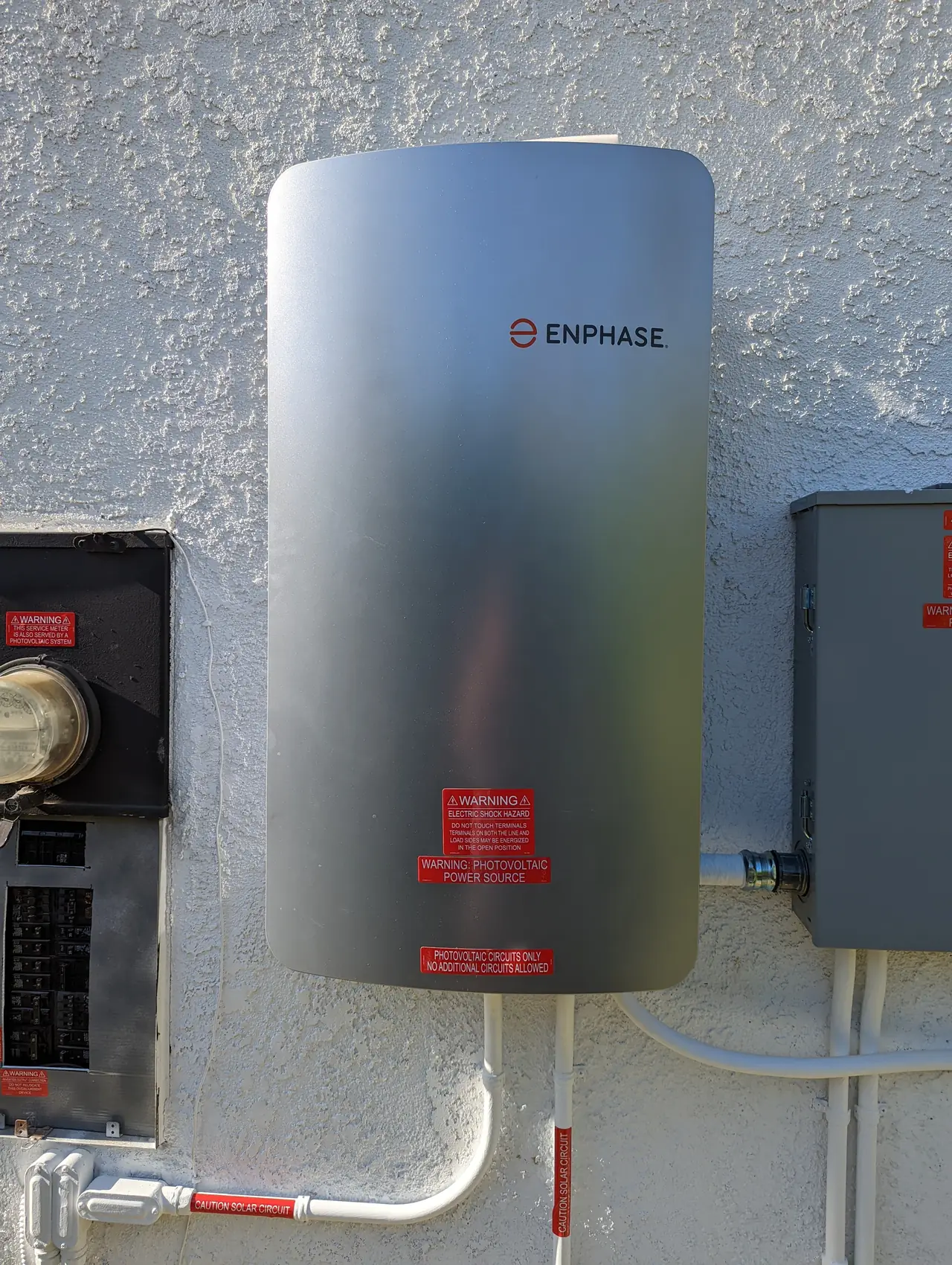
The second thing the battery did was put the project into a second queue at the utility.
A solar-only interconnection in this territory is a familiar sequence. A battery adds a parallel one, run by the utility's electric service representative rather than the interconnection desk, and it starts earlier than people expect. Before the project could be approved to build at all, a storage information sheet and a service planning sheet had to be on file along with a photograph package.
Then came the part that surprises owners. In early May the new service panel had been built and had already passed the city's final inspection, and the utility had still not released anything, because a battery job needs the utility's own inspection on top of the city's. Passing one does not satisfy the other. They are not sequential, they are parallel, and only one of them is visible from your kitchen.
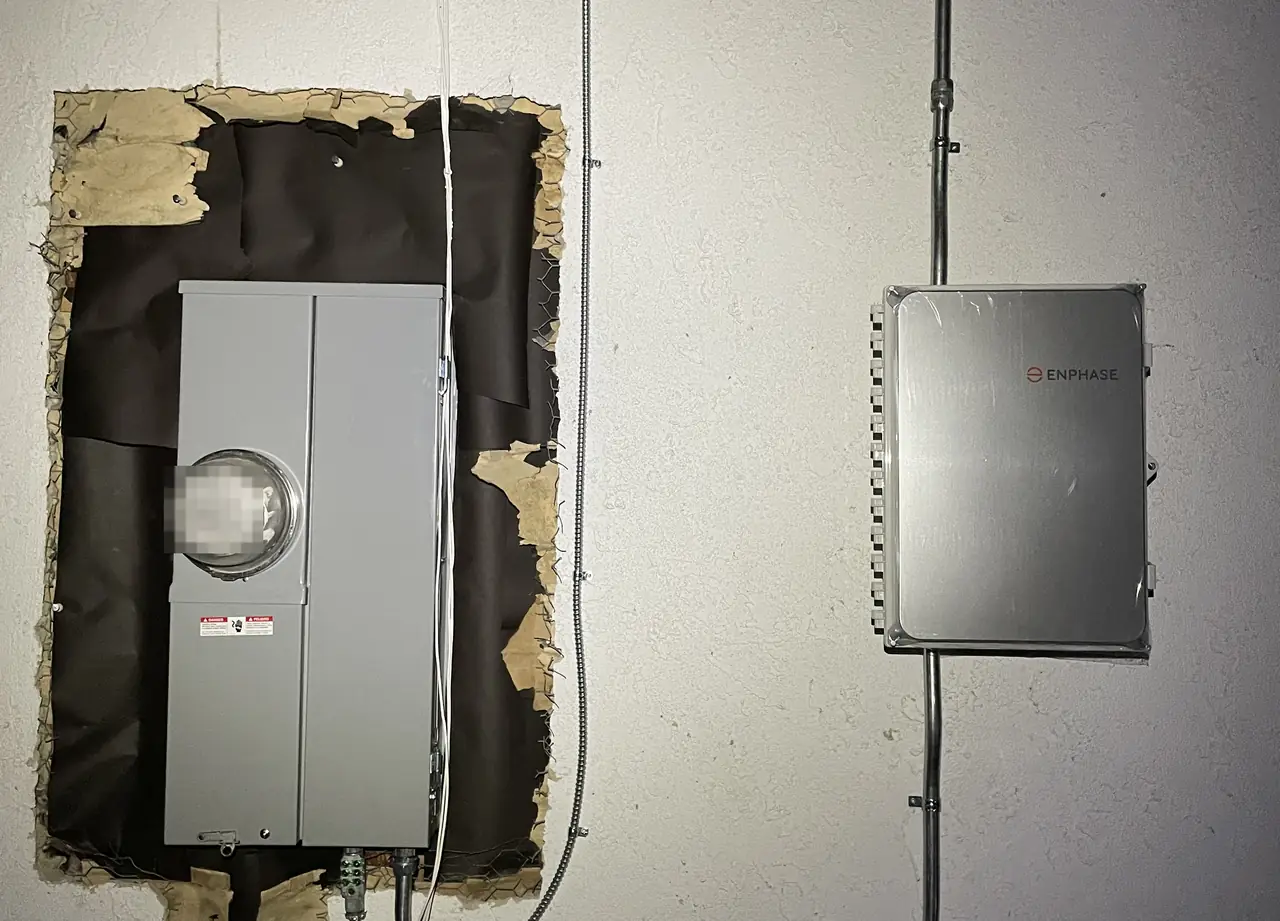
Two details are worth knowing before you file. Photographs go to the utility in an ordinary image format, because a modern phone saves in one its software may not read. And the storage inspection asks for something that cannot be satisfied from a desk: a single-line diagram placard, physically screwed to the meter panel, photographed in place.
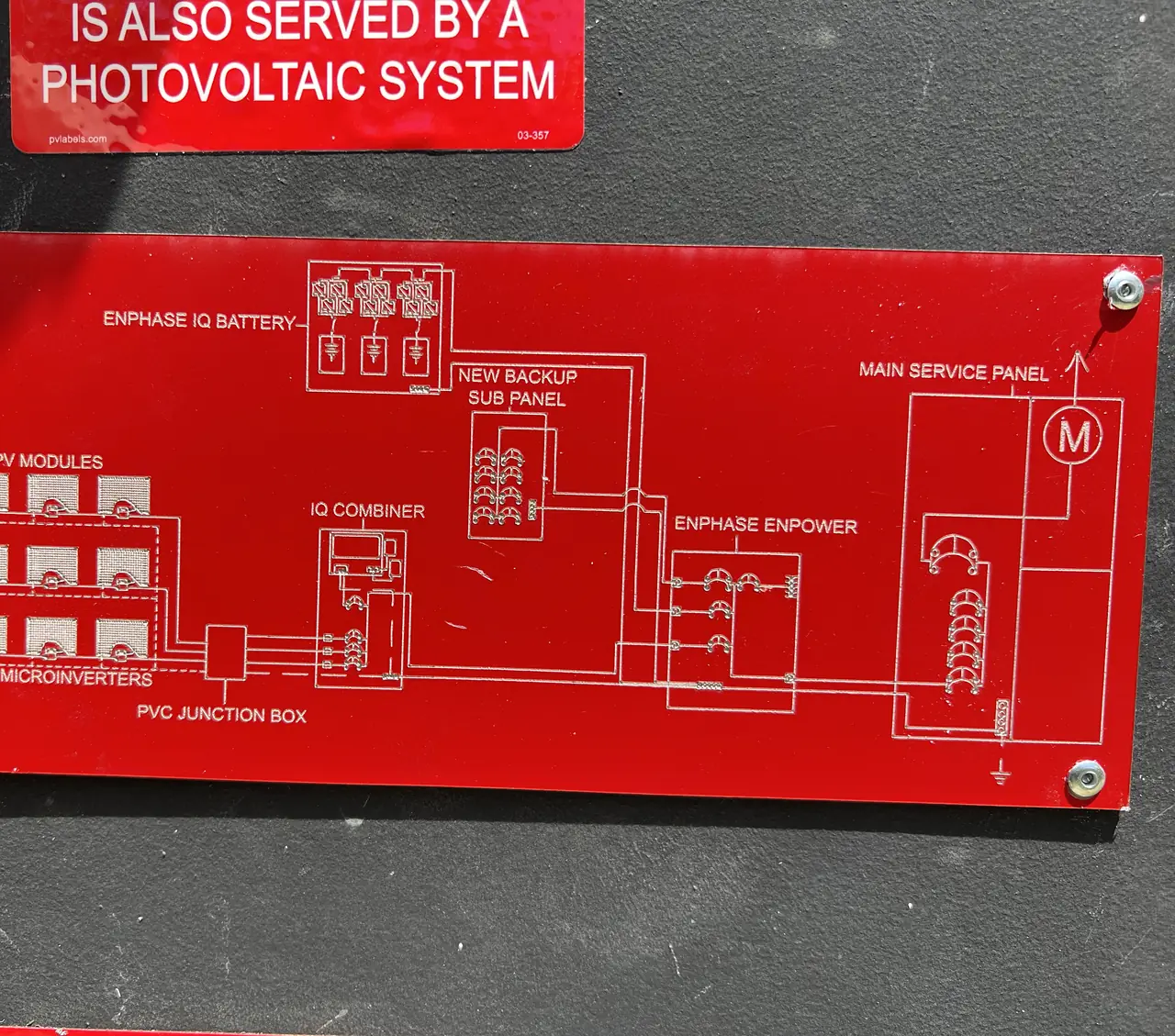
The placard went up, the photographs went out, and the approval came back the next morning. Sixteen days later the net meter was set and permission to operate was granted. The following January the battery reported its calibration complete, which is the last step in a storage system settling into a house.
If you are pricing a battery alongside solar, budget two things that are not on the equipment list. Budget the utility's storage track, which runs on its own clock and needs paperwork before anyone can build. And budget a design conversation about how many microinverters your battery can carry, because that number, not your roof, may be what decides how your array is wired. Here it did, and the house has run on solar with battery backup since permission to operate on the twenty-sixth of May 2022.
How it ran
| 18 March 2022 | Design issued: 9.62 kW DC, 26 modules, 26 microinverters, one battery, main breaker derated to 175 A |
|---|---|
| 21 March 2022 | Plan set returned with load calculations |
| 22 March 2022 | Array split into three branches rather than two, because one battery unit carries nineteen microinverters |
| 23 March 2022 | Interconnection filed; the utility requires storage and service planning sheets plus a photograph package before approval to build |
| 24 March 2022 | Forms resolved; approval to build granted at 8.8 kW AC-CEC solar and 3.84 kW AC storage |
| 15 – 19 April 2022 | City plan-check notes answered; shedding confirmed on every sheet and the set reissued |
| 6 May 2022 | New service panel already passed city final, but the utility still requires its own storage inspection |
| 9 May 2022 | Photographs sent in a readable format; placard with the single-line diagram installed on the meter panel |
| 10 May 2022 | Utility approves; interconnection review completed the same day |
| 26 May 2022 | Net meter set and permission to operate granted |
| January 2023 | Battery reports calibration complete |
This timeline reflects a solar-plus-storage project with a service panel upgrade. The same array without a battery skips an entire utility track and the inspection that goes with it.
What we did
- Designed the array around the battery's microinverter limit rather than around the roof alone, which is what produced the third branch and the shedding scheme (C-10).
- Kept the shedding scheme on every sheet of the plan set through city plan check, so the battery was never undersized against the array.
- Filed the utility's storage and service planning sheets and photograph package, which on a battery job must be on file before approval to build.
- Upgraded the main service panel and derated the main breaker to 175 amps, and passed the city's final inspection on it.
- Sent the utility's photograph package in a format its software could open.
- Installed the single-line diagram placard on the meter panel and photographed it in place, which released the approval the same day.
- Carried the project to permission to operate and saw the battery through calibration.
System specifications
| Recorded by the utility | 8.8 kW AC-CEC solar, 3.84 kW AC storage |
|---|---|
| System as designed | 9.62 kW DC |
| Modules | 26 × REC 370 W |
| Inverters | 26 × Enphase IQ7PLUS microinverters, one per module |
| Battery | 1 × Enphase Encharge 10 |
| Array topology | Three branches: ten and nine backed up, seven shed during backup |
| Main service panel | Upgraded, with the main breaker derated to 175 A |
| Utility work type | Overhead service, meter work only |
| Utility / AHJ | LADWP / LADBS |
Is your project like this one?
- You are adding a battery to a solar system rather than solar alone.
- You have been told your array must be split into branches and want to know why.
- Your system has passed city inspection and the utility has still not released it.
- You are comparing storage quotes and want to know what is missing from them.
- Your Woodland Hills property is served by LADWP, while permits are handled by LADBS.
Cali Energy in Woodland Hills
Woodland Hills is inside City of Los Angeles boundaries: permits run through LADBS, interconnection through LADWP.
Woodland Hills sits inside the City of Los Angeles, so the city inspects the work and LADWP interconnects it. Adding storage does not change who those two are. It adds a third queue inside the utility that most owners have never heard of until they are sitting in it.
This installation is on the Woodland Hills projects page alongside the others, and what the work covers is set out on the Woodland Hills service area page.
- License and classifications: CSLB #1032379
- Official reference for this process: LADWP — residential solar programs
- Official reference for this process: NFPA 70, National Electrical Code — Article 705, interconnected power sources
Frequently asked questions
Why does a battery change how the array is wired?
Because a battery unit supports a fixed number of microinverters, nineteen for the model used here, and this roof carries twenty-six modules. The surplus has to go onto its own branch, which is disconnected during a backup event so the battery is never asked to take more than it can. That is what photovoltaic shedding means, and it is a design decision that belongs on the stamped drawings rather than in a footnote.
Does a battery slow down the interconnection?
It adds a second track rather than lengthening the first. The utility's service representative runs storage separately from the interconnection desk, with its own information sheets, its own site inspection and its own photograph evidence. Those sheets have to be on file before the project is approved to build at all. Expect a battery project to spend time in a queue that a solar-only project never enters.
If the city passed the final inspection, why has the utility not released the system?
Because on a storage project they inspect different things at different times. Here the upgraded service panel had already passed the city's final while the utility's own storage inspection was still outstanding, and the utility will not order a meter until its own inspector is satisfied. The two are parallel, not sequential, and only the city's visit is obvious from the house.
What is the placard on the meter panel for?
It is a single-line diagram of the system, screwed to the panel so that anyone opening it later, a utility crew or a firefighter, can see at a glance what is connected and where the power can come from. On this project the utility required it installed and photographed in place before it would approve. It is also the clearest single drawing of the finished system that exists.
Does Cali Energy install batteries in Woodland Hills?
Yes, and the work that matters is mostly not the box on the wall. It is sizing the array against what the battery can carry, keeping the shedding scheme intact through plan check, and running the utility's storage track alongside the solar interconnection. Cali Energy carried all of that on this project through to permission to operate. California contractor license number 1032379.
What this would look like on your roof
Planning solar in Woodland Hills? Tell us your utility, your roof and what your bill looks like now, and we will model what a system like this would do on your house before you commit to anything.
Or call +1 (323) 844-7777 · Cali Energy, Northridge · CSLB #1032379 (B, C-10, C-39) — design, permits, install and electrical under one licensed contractor.
Related
This timeline reflects this property and this permitting path. Updated September 2026.