

Woodland Hills, CA · April – July 2021 · LADWP / LADBS
The city finaled both permits on this Woodland Hills house. The utility could only see one.
Eight and a half kilowatts on a hillside house, with a new main service panel underneath it. Three separate things tried to stop this project, and only one of them had anything to do with solar. The last one cost two weeks and was invisible from both sides.
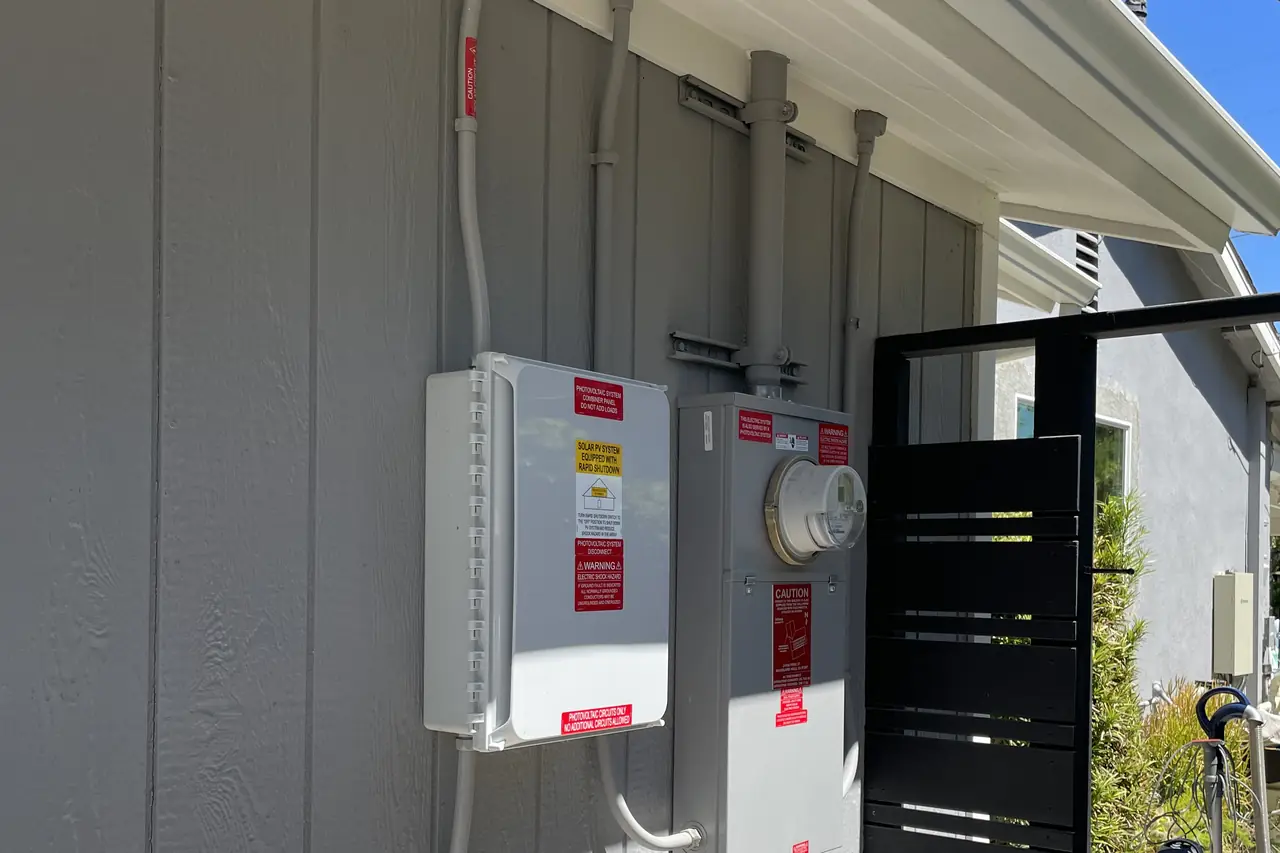
When a solar project also upgrades the main service panel, the city issues two permits and must post two separate electronic final releases to the utility. The utility will not order the net meter until both appear in its own system, it will not accept a copy from the contractor, and it does not tell you which of the two is missing. On this project the photovoltaic release posted and the panel release did not, and the project waited two weeks until Cali Energy went back to the Woodland Hills inspector by name and had the second release re-sent.
At a glance
- Recorded by the utility
- 8.5 kW AC-CEC
- Modules
- REC Alpha series
- Inverters
- Microinverters
- Service work
- Main service panel upgrade, on its own city permit
- City permits
- Two: photovoltaic and panel upgrade
- Homeowner association
- Approval required; granted after installation
- Battery
- None
- Utility / AHJ
- LADWP / LADBS
The story
The first message arrived in April. We were on the roof the next day measuring rafters and looking at the service panel, the layout went out the day after that, and the owner approved it within the week. He was in the middle of a remodel, so the contract was written with an installation window that started in the middle of May and ran to the middle of July, which is how you keep two trades from standing on each other. All of that was straightforward.
What was not straightforward was everything the array had to wait for.
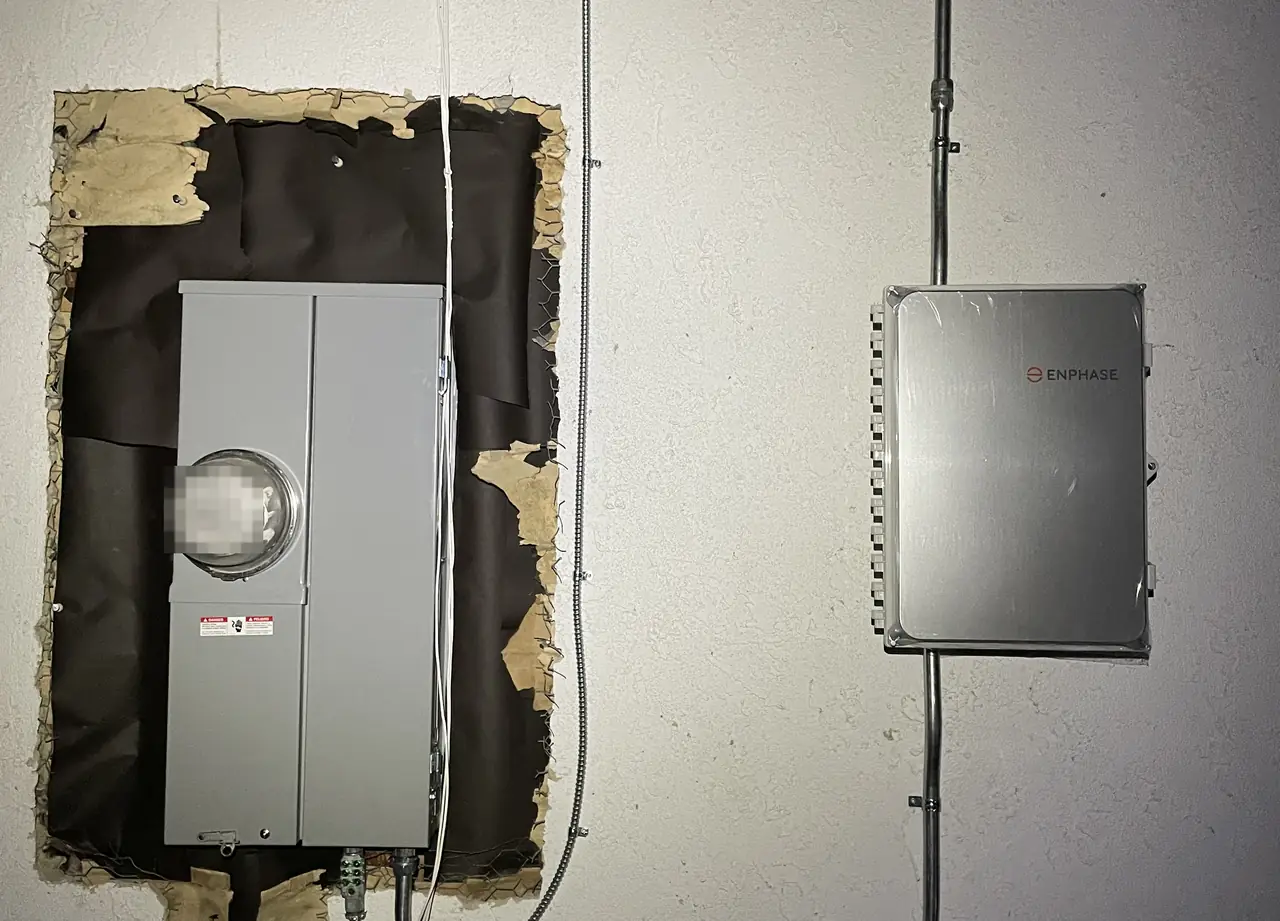
The house needed a new main service panel, so two city permits were pulled rather than one: a photovoltaic permit and a panel upgrade permit. Remember that, because it comes back at the end.
The first obstacle was the homeowner association. Its management company did not answer the phone. We got the emergency line and were told to keep calling the office, which we did. When the company finally acknowledged the architectural request it set expectations at thirty to forty-five days. The owner knew his own board and eventually reached a neighbor who sits on it, and he also knew something most owners do not: his governing documents let an owner proceed if the board does not answer inside thirty days. We did not stop the schedule to wait. The approval came through on the twenty-fourth of June, by which point the array had already been on the roof for a week, and nothing about that sequence was improvised. If an association sits on your critical path, run it in parallel and read your own covenants.
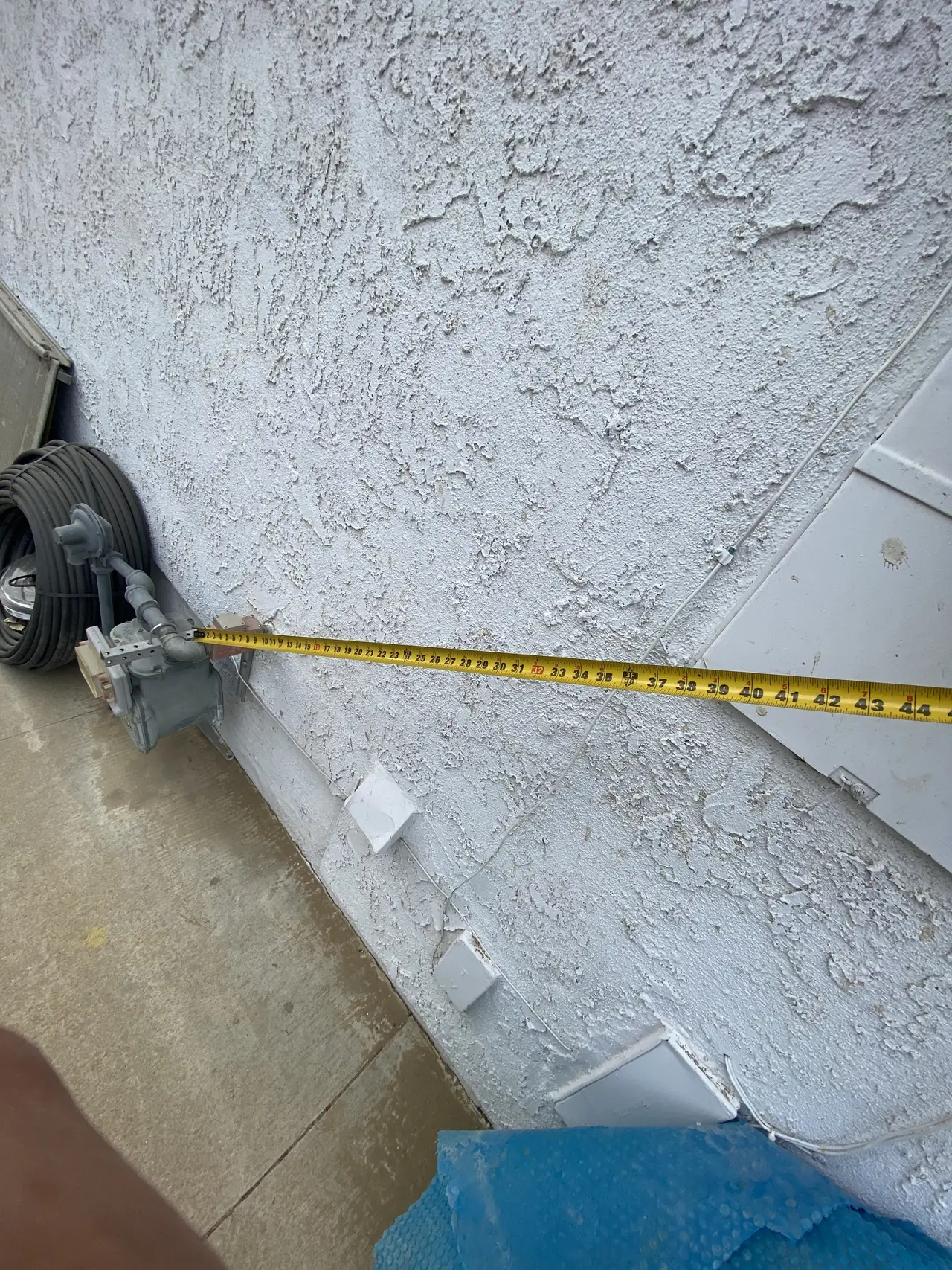
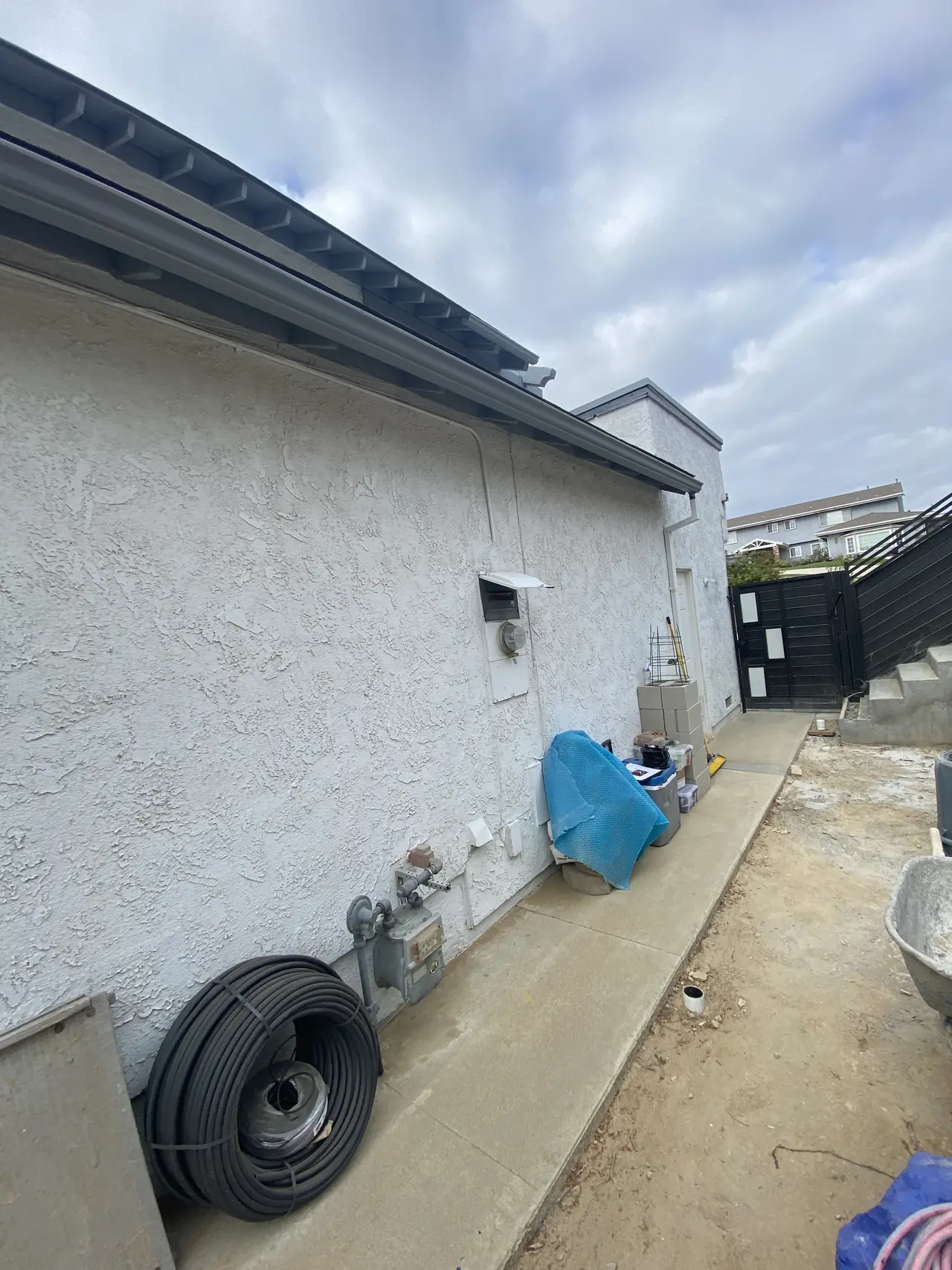
The second obstacle was a clearance. When the utility's representative came out to mark the meter position, the sheet came back flagged: the electrical panel looked to be less than the required thirty-six inches from the gas meter. That is not a small finding. Moving a gas meter is a gas company job with its own price and its own calendar, and moving the electrical panel instead is no cheaper. We did two things. We told the owner in writing that the charge existed and roughly what it would be, so it could not arrive as a surprise later. And then we went out and measured it.
The answer turned out to be a matter of how you hold the tape. The representative's position was that the gas pipe is not measured on the diagonal. Measured the way the requirement actually reads, the distance was thirty-six inches, and the photograph showed it. The reply came back the same day: it looks like you have thirty-six inches. Nothing was moved, and nothing was charged.
The array went up in the middle of June. The city inspected and finaled both permits on the nineteenth. And then, for two weeks, nothing happened at all.
Here is the mechanism. LADBS does not hand a contractor a piece of paper to carry to the utility. It posts an electronic release, and LADWP's clerk sees it or does not. With two permits there are two releases. The photovoltaic release had arrived. The panel upgrade release had not. From the utility's side the project was simply incomplete, with no indication of which document was missing. From the city's side the inspector had finaled both permits and believed he had sent both. Neither agency was wrong and neither was going to notice.
What does not work is the obvious thing. We offered to send the release across ourselves and were told plainly not to: the release is sent electronically by the city to the clerk, and a copy from a contractor is not a substitute. So we went back to the inspector who had done the final, by name, and asked him to confirm the reference number on the panel upgrade release. He had it. He re-sent it by hand on the second of July, and the utility posted its interconnection review complete the same day.
The net meter was set and permission to operate granted on the ninth of July. Monitoring was handed over three days later. The owner then had us come back for the work that tends to follow solar: a Level 2 charger for the car, an extra outlet, a security light, and the stucco patched the same day the electrical was done.
The ending is the part that matters most. Four years later the same owner wrote to us again, said he appreciated what had been done, and asked us to look at a second property for him. That is the only review of a solar installation that means anything.
If your project includes a service panel upgrade, ask one question at final inspection: has the city posted a release for both permits. It takes a sentence, and it is worth two weeks.
How it ran
| 21 April 2021 | First contact; site visit the following day |
|---|---|
| 26 April 2021 | Layout approved by the owner |
| 30 April 2021 | Contract signed, with the installation window set to fall after the owner's own remodel |
| 10 May 2021 | Interconnection filed at 8.5 kW AC-CEC; utility books its meter-position visit for the next day |
| 12 May 2021 | Meter-position sheet returns flagged for gas meter clearance |
| 13 May 2021 | Two city permits pulled: photovoltaic and main panel upgrade; association architectural request prepared |
| 24 May 2021 | Association's management company acknowledges the request and quotes thirty to forty-five days |
| 17 June 2021 | Installation |
| 19 June 2021 | City finals both permits |
| 24 June 2021 | Clearance settled by measured photograph; association approval granted the same day |
| 28 June 2021 | Utility has only one of the two required releases |
| 2 July 2021 | City inspector re-sends the panel upgrade release; interconnection review completed the same day |
| 9 July 2021 | Net meter set and permission to operate granted |
| July 2021 | Monitoring handed over; Level 2 charger, outlet, light and stucco patch completed |
This timeline reflects a project carrying a panel upgrade and an association approval. Without those two, the same array is a two-week job.
What we did
- Measured the roof and the service panel on site the day after first contact, and had an approved layout inside a week.
- Wrote the installation window into the contract around the owner's own remodel so two trades would not collide.
- Pulled both city permits, photovoltaic and panel upgrade, and installed the array and the new service panel (C-10).
- Chased an unresponsive association in parallel with the utility rather than in series, and kept the schedule moving while the request sat.
- Priced the gas meter clearance consequence in writing before it could become a surprise, then settled the question with a measured photograph instead of relocating anything.
- Traced the missing electronic release back to the city inspector by name, confirmed its reference number and had it re-sent, which released the meter order.
- Carried the project to permission to operate, handed over monitoring, and came back for the charger, outlet, light and stucco repair.
System specifications
| Recorded by the utility | 8.5 kW AC-CEC |
|---|---|
| Modules | REC Alpha series |
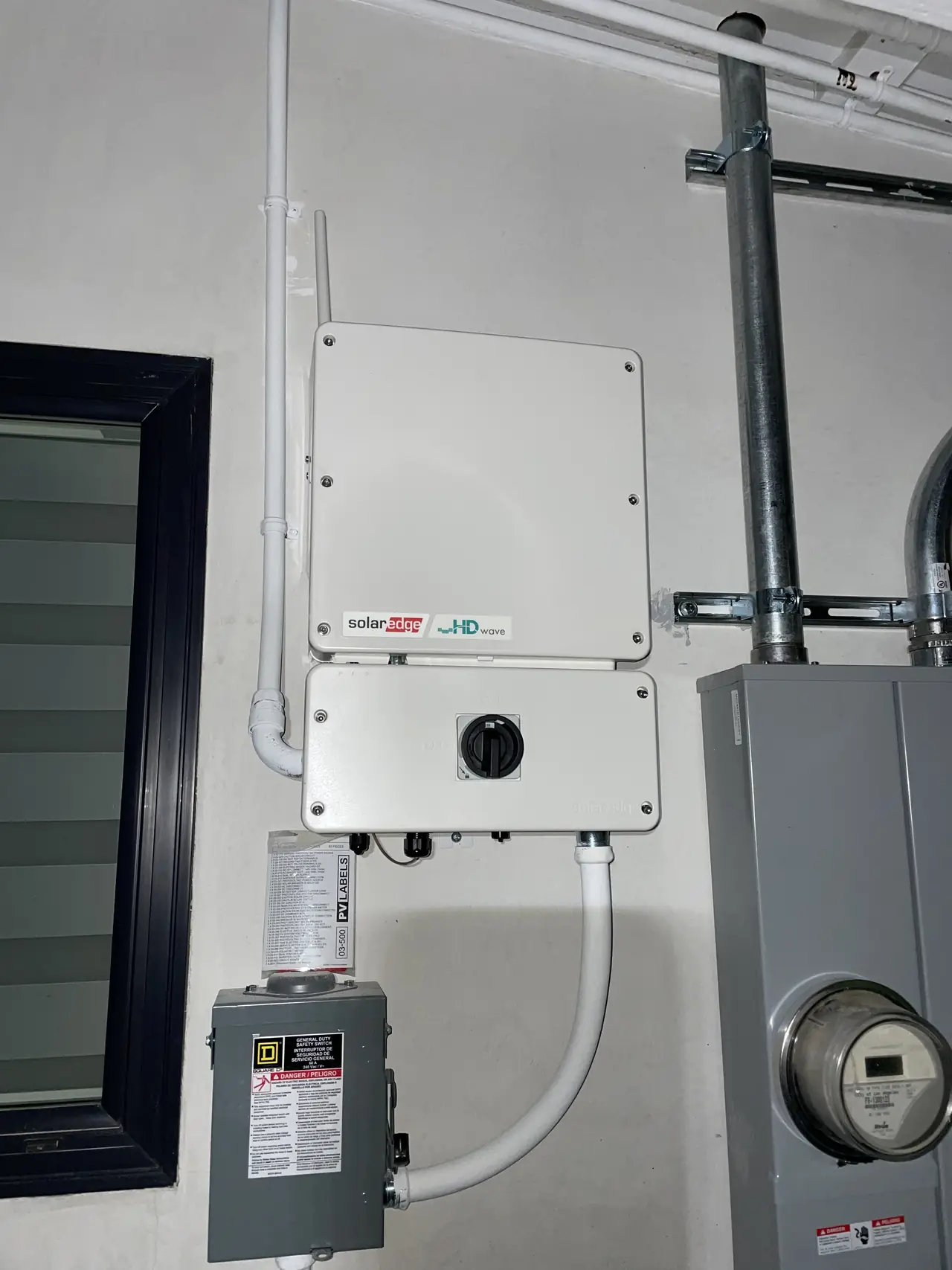
| Inverters | Microinverters, one per module |
| Main service panel | Replaced, under its own city permit |
| Gas meter clearance | Thirty-six inches, confirmed on site by measurement |
| City permits | Two, both finaled on the same day |
| Utility releases required | Two, one per permit |
| Battery | None |
| Follow-on work | Level 2 EV charger, exterior outlet, security light, stucco patch |
| Utility / AHJ | LADWP / LADBS |
Is your project like this one?
- Your solar project includes a main service panel upgrade.
- Your property is under a homeowner association that is slow to answer.
- Your meter position sheet came back flagged for a gas meter clearance.
- Your system passed city inspection and the utility still has not ordered a meter.
- Your Woodland Hills property is served by LADWP, while permits are handled by LADBS.
Cali Energy in Woodland Hills
Woodland Hills is inside City of Los Angeles boundaries: permits run through LADBS, interconnection through LADWP.
Much of the hillside south of the boulevard here is under homeowner associations, which adds a third party to the schedule that neither the building department nor the utility knows about or waits for.
This installation is on the Woodland Hills projects page alongside the others, and what the work covers is set out on the Woodland Hills service area page.
- License and classifications: CSLB #1032379
- Official reference for this process: LADBS — inspections
- Official reference for this process: LADWP — residential solar programs
Frequently asked questions
Why does a panel upgrade need a second final release?
Because it is a second permit. The city finals each permit separately and posts a separate electronic release to the utility for each one. The utility will not order the net meter until every release tied to the project has arrived in its system. On this project both permits were finaled on the same day and only one release reached the utility, which is enough to stop everything without either agency noticing.
Can the contractor just email the missing release to the utility?
No, and it is better to know that before you try. The release is an electronic handoff between two city systems, and the utility's clerk will not accept a copy from a contractor as a substitute for it. The only route is back through the inspector who performed the final, who can confirm the reference number and re-send. Expect to ask for that by name rather than through a general line.
What happens if a homeowner association will not respond?
Read your own governing documents before you assume you are stuck. Many sets of covenants allow an owner to proceed if the board does not respond within a fixed window, commonly thirty days. Just as important, run the association request in parallel with the permit and the interconnection rather than waiting for it. Here the approval arrived a week after the array was already installed.
What is the thirty-six inch gas meter clearance, and does it mean something has to move?
It is the working clearance required between electrical service equipment and a gas meter, and a flag on the meter position sheet is not a verdict. It is often a question of how the distance was measured, since the requirement is not read on the diagonal. A photograph with a tape in it settled this one at exactly thirty-six inches, and nothing was relocated. Ask for the measurement before anyone quotes you a relocation.
Does Cali Energy handle panel upgrades alongside solar in Woodland Hills?
Yes, and on this project the two were designed, permitted and installed together under separate city permits. That pairing is common on older hillside houses where the existing service cannot carry the array. Cali Energy also carries the paperwork through to permission to operate, which on a two-permit job is most of the work. California contractor license number 1032379.
What this would look like on your roof
Planning solar in Woodland Hills? Tell us your utility, your roof and what your bill looks like now, and we will model what a system like this would do on your house before you commit to anything.
Or call +1 (323) 844-7777 · Cali Energy, Northridge · CSLB #1032379 (B, C-10, C-39) — design, permits, install and electrical under one licensed contractor.
Related
This timeline reflects this property and this permitting path. Updated September 2026.