

Woodland Hills, CA · January – July 2023 · LADWP / LADBS
On a Woodland Hills roof the utility saw a balcony that was not there.
A full tear-off and new shingle in the winter, nineteen modules on top of it in the spring, and daytime backup without a battery. Between those two came a photograph review that read a roof as something it was not, and one email that put it straight the same morning.
Replacing a roof before installing solar is the correct order, and it introduces a problem nobody warns you about. The utility reviews your interconnection from photographs, and a house that has just been re-roofed no longer matches the drawings or the earlier images: structures come down, fences around equipment are removed, and the reviewer is looking at a site that changed after the plans were drawn. When a clearance objection arrives, the answer is usually an explanation rather than a construction change. On this Woodland Hills roof Cali Energy answered that objection the same morning and the review moved the same afternoon.
At a glance
- Recorded by the utility
- 5.5 kW AC-CEC
- System as designed
- 7.6 kW DC
- Modules
- 19 × Q CELLS 400 W
- Inverters
- 19 × Enphase IQ8PLUS with Sunlight Backup
- Battery
- None; daytime backup without storage
- Roof
- Full tear-off and new composition shingle, done first
- Main service panel
- Retained; no upgrade
- Utility / AHJ
- LADWP / LADBS
The story
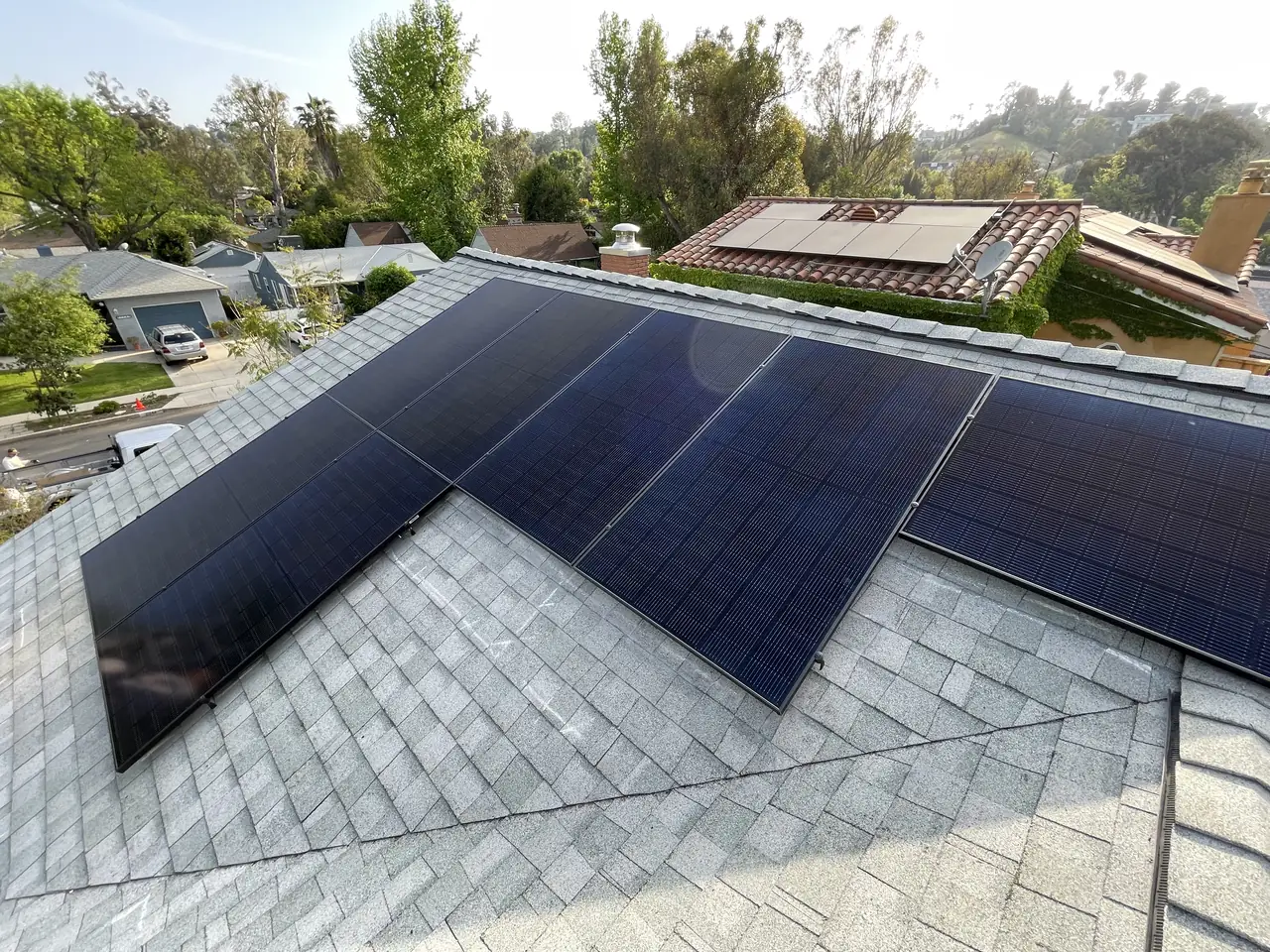
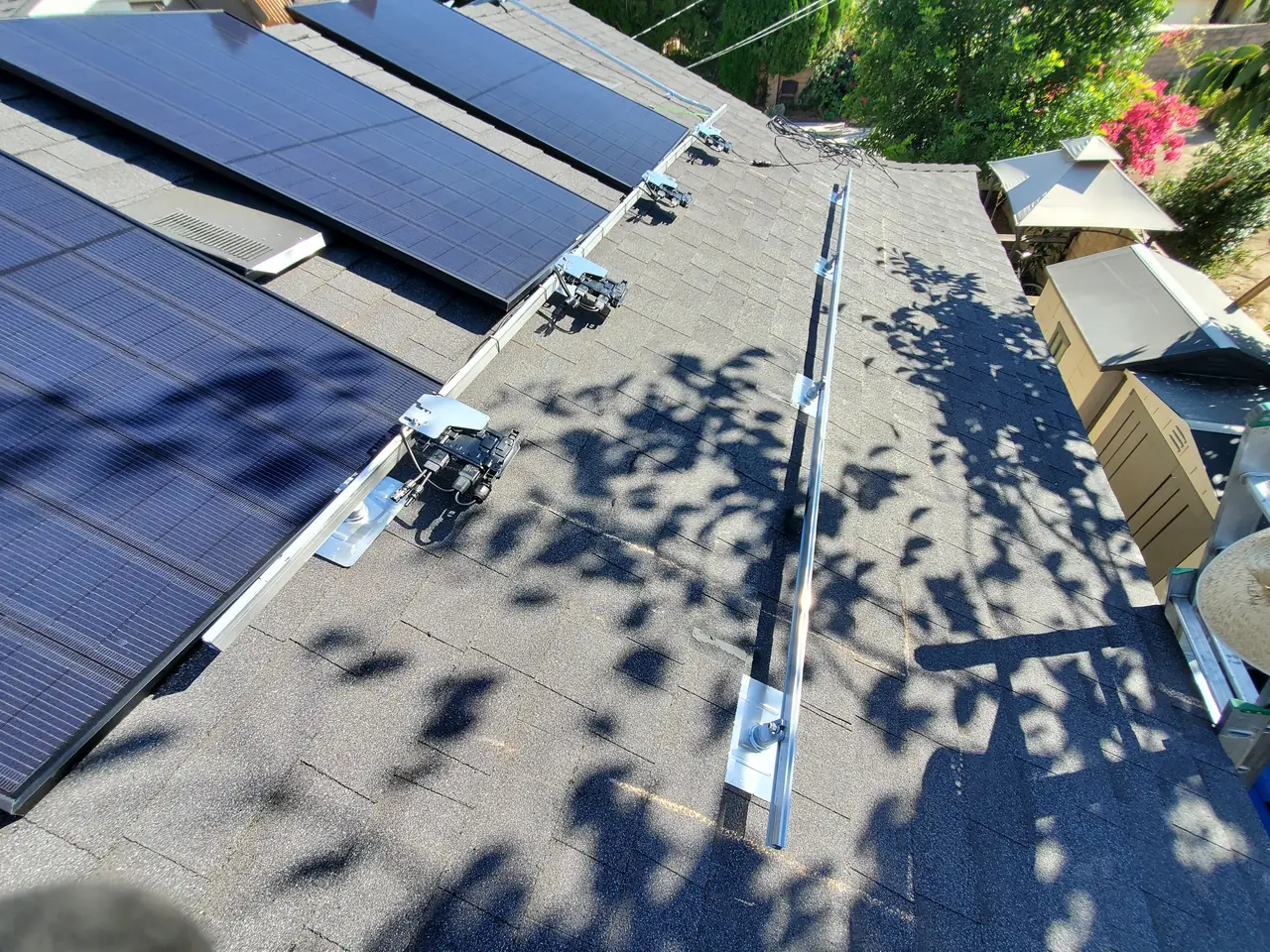
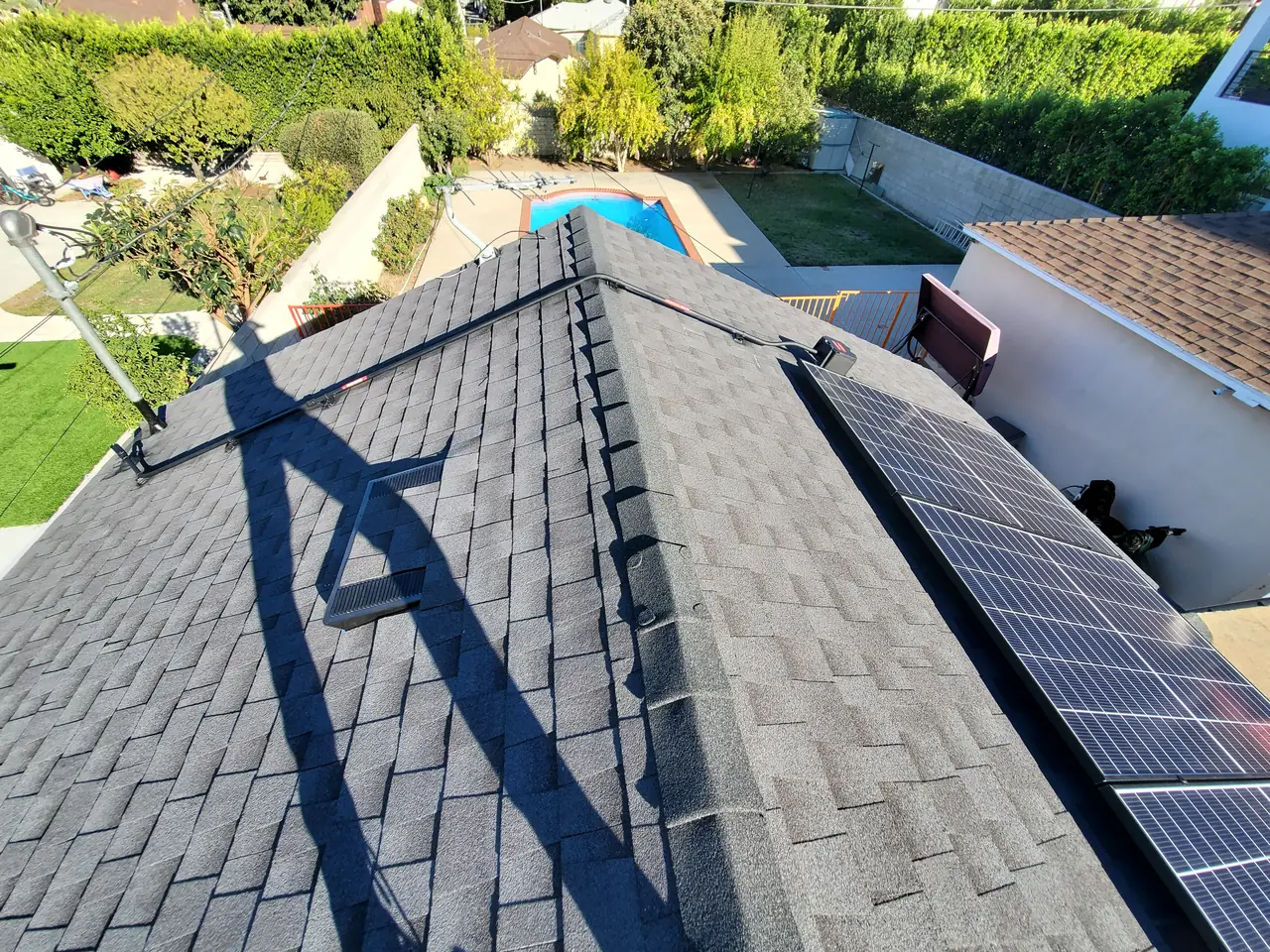
The roof went first, and it should. Stripping an old roof out from under a finished array means taking the array off and putting it back, which costs more than doing the two jobs in the right order ever saves. This one was a full tear-off: eighteen squares of new shingle over sixteen hundred square feet of deck, synthetic underlayment, weather lock, step flashing, a starter strip, a hundred feet of ridge cap and four low-profile vents. The city permit for it was pulled in February and finaled in the ordinary way.
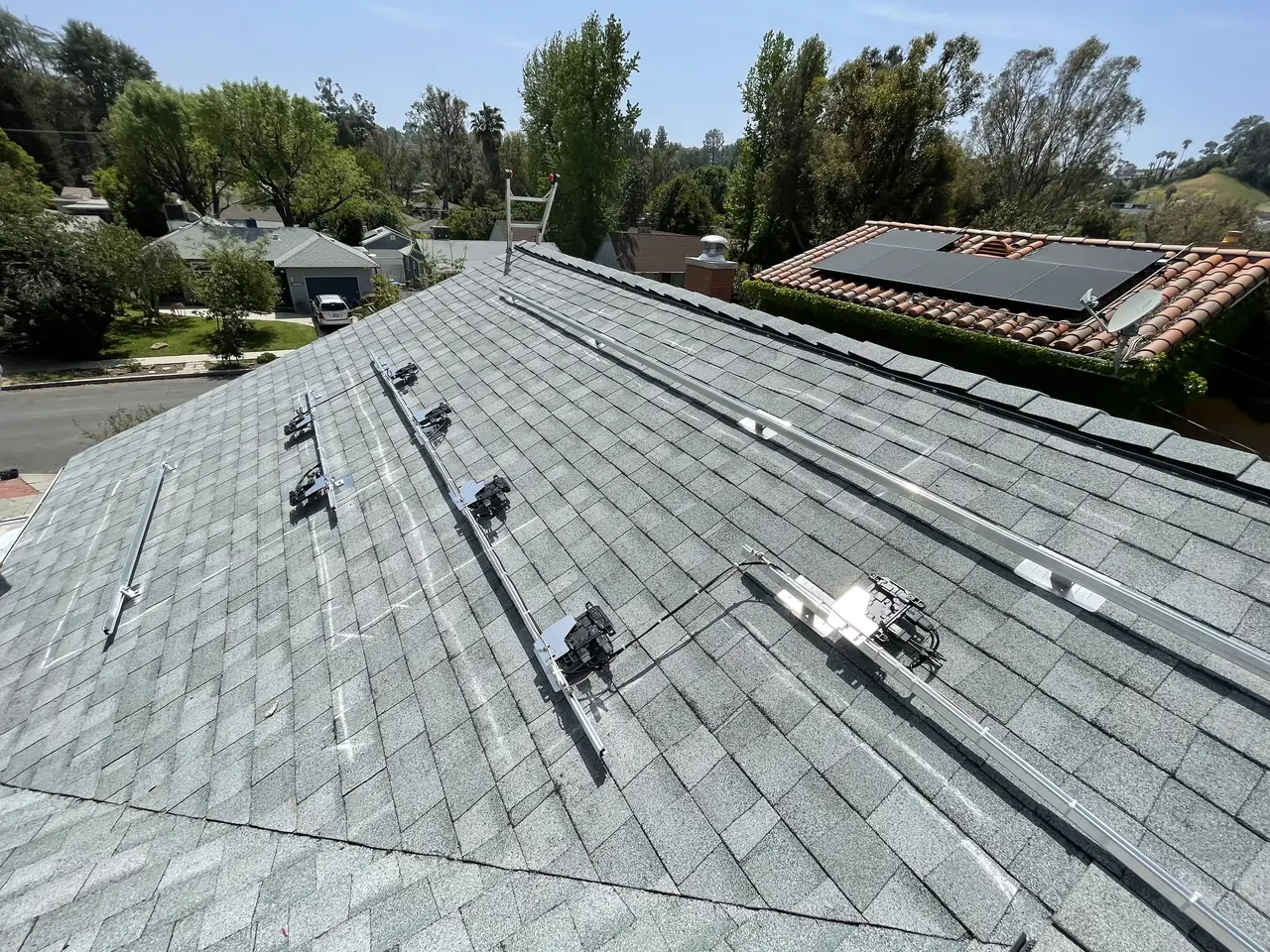
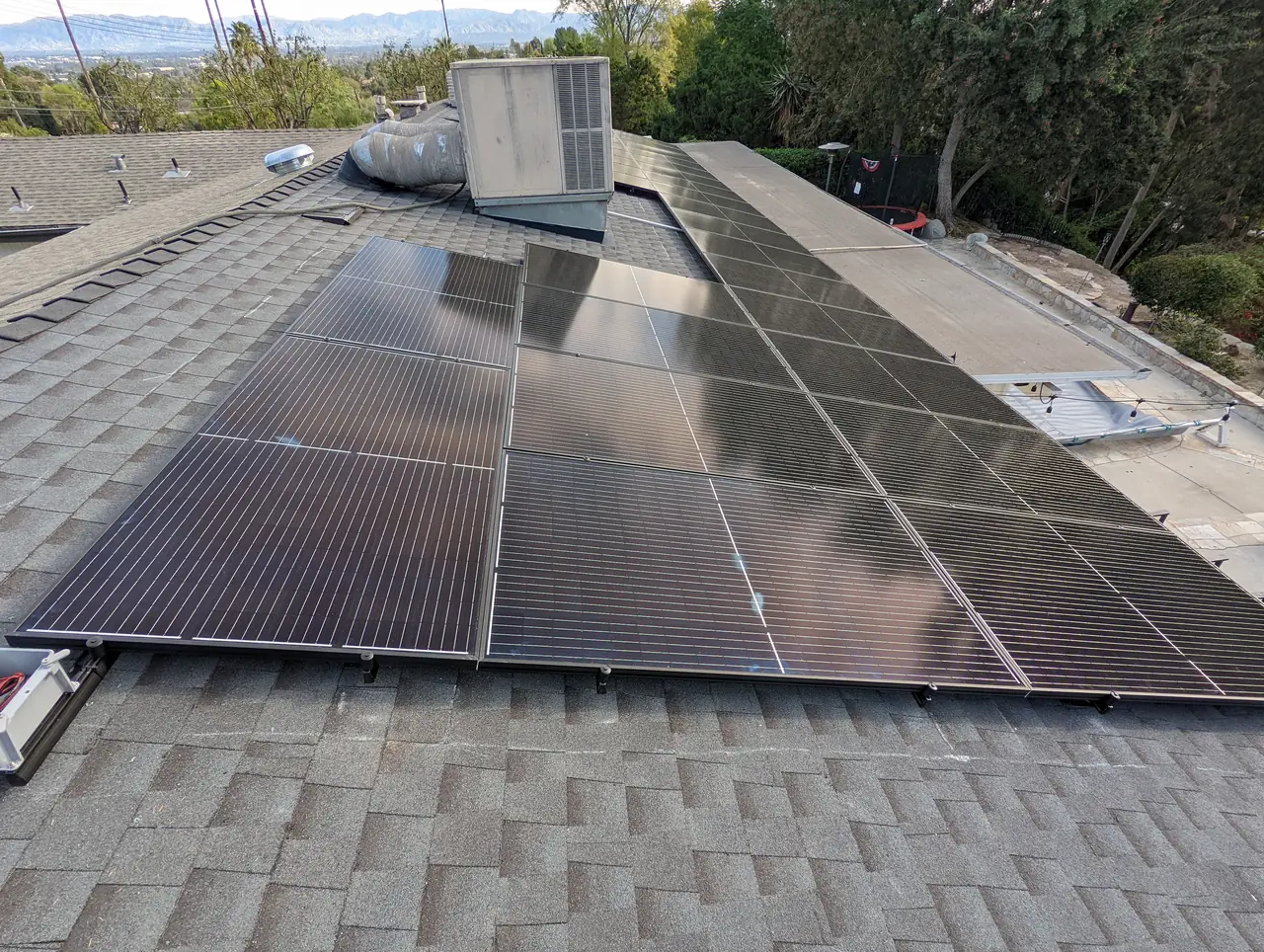
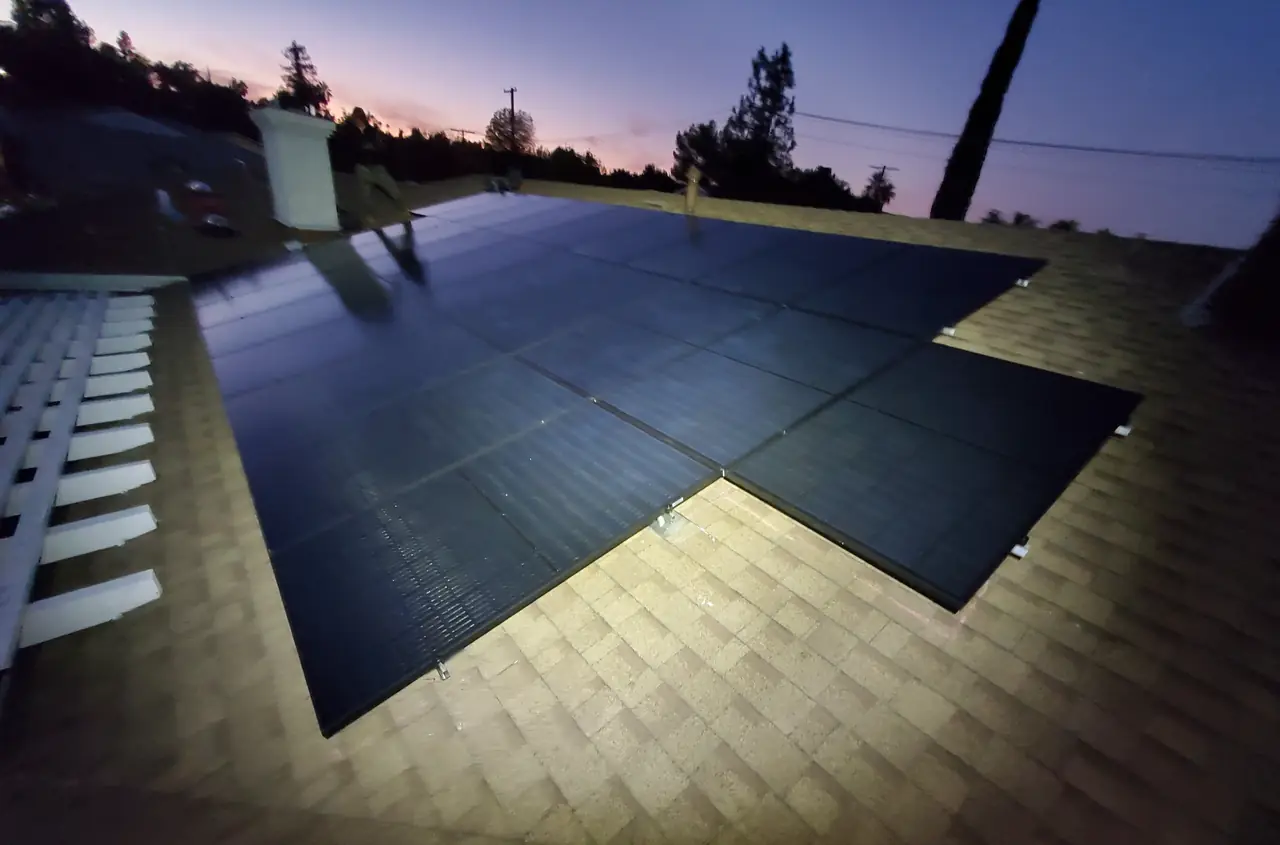
The array that went on it is nineteen Q CELLS modules at four hundred watts each, with an Enphase microinverter under every one. The utility records it at five and a half kilowatts. The interesting choice is the backup: these are IQ8 units configured for Sunlight Backup, which keeps selected circuits alive during a daytime outage without any battery at all. It is not the same as storage and it should never be sold as if it were, because at night it does nothing. What it does do is give a house with no battery budget something to run the refrigerator and a few outlets on while the sun is up.
That choice has a paperwork consequence. Backup means a subpanel, and a subpanel means somebody has to decide what goes on it. The designer asked for an essential loads list, equipment by equipment, with breaker sizes and phases. It was supplied the same day. If you are considering any form of backup, expect that question and expect it to need real answers rather than a shrug, because the list is what gets drawn.
Now the part that is actually useful.
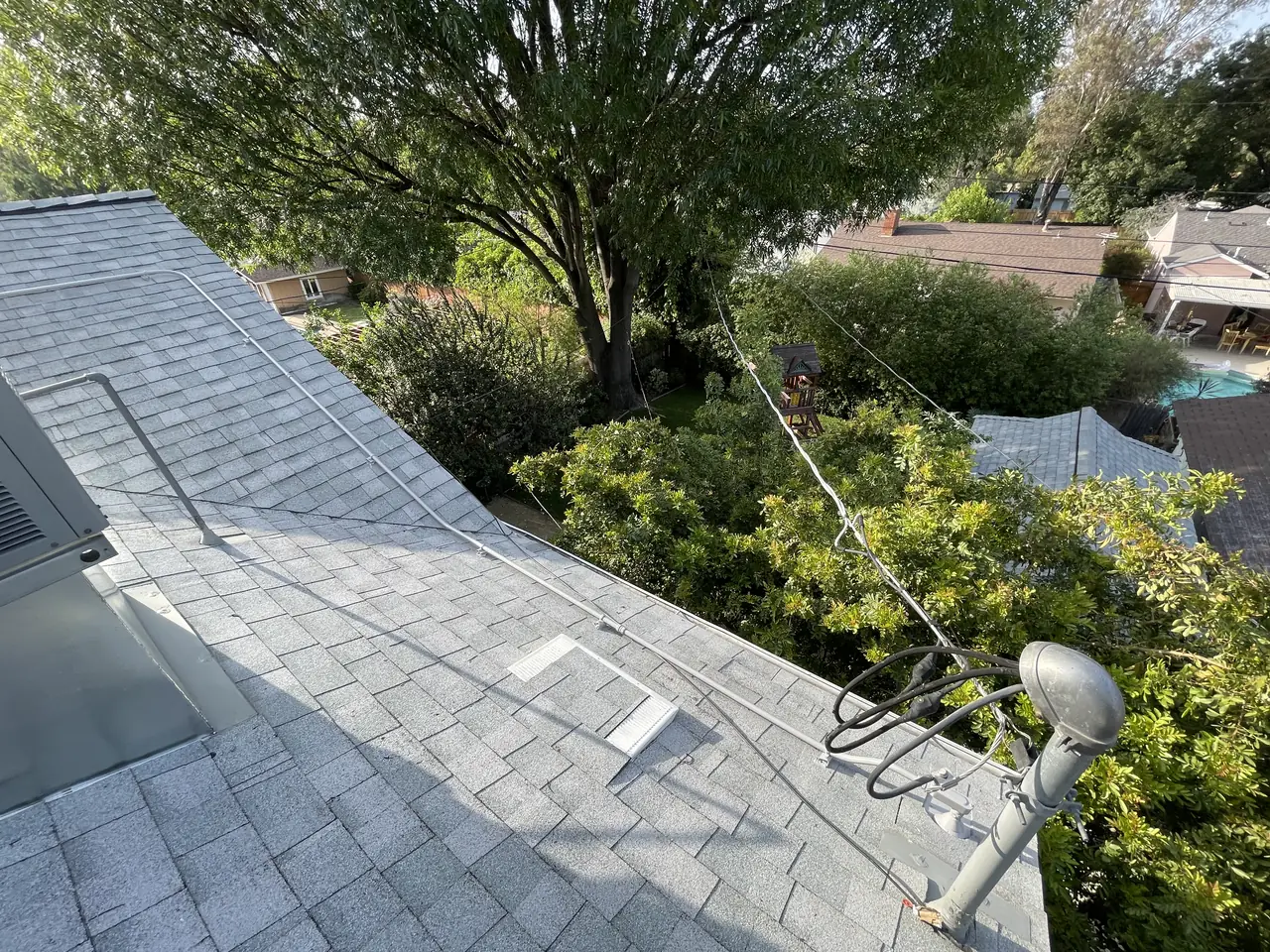
The interconnection went in during April, and within days the utility's service representative came back off the photographs with an objection: a portion of the balcony would have to be blocked off, a minimum of three feet from the weather head and the overhead service conductors.
There is no balcony on this house.
We said so the same morning, and the reviewer came straight back: the photograph he was holding was our own. That is the whole mechanism in one exchange. The house had just been re-roofed, and the fence that had stood around the air conditioning unit had come down as part of the work. The site in the photographs no longer looked like the site in the drawings, and a structure that was no longer there had been read as one that encroached on a clearance. Once that was explained the answer came back in three words, and the utility issued three progress notices that same afternoon, including the site evaluation. The objection had cost hours, not weeks, because it was answered rather than argued with.
One more thing caught later, and it is the reason somebody should always read a returned plan set line by line. The corrected drawings came back with the solar breaker changed from thirty amps to sixty, with no explanation attached. We asked why. The corrected plans came back the next day with it put right. A breaker size is not a detail; it is what the inspector checks and what the busbar calculation depends on.
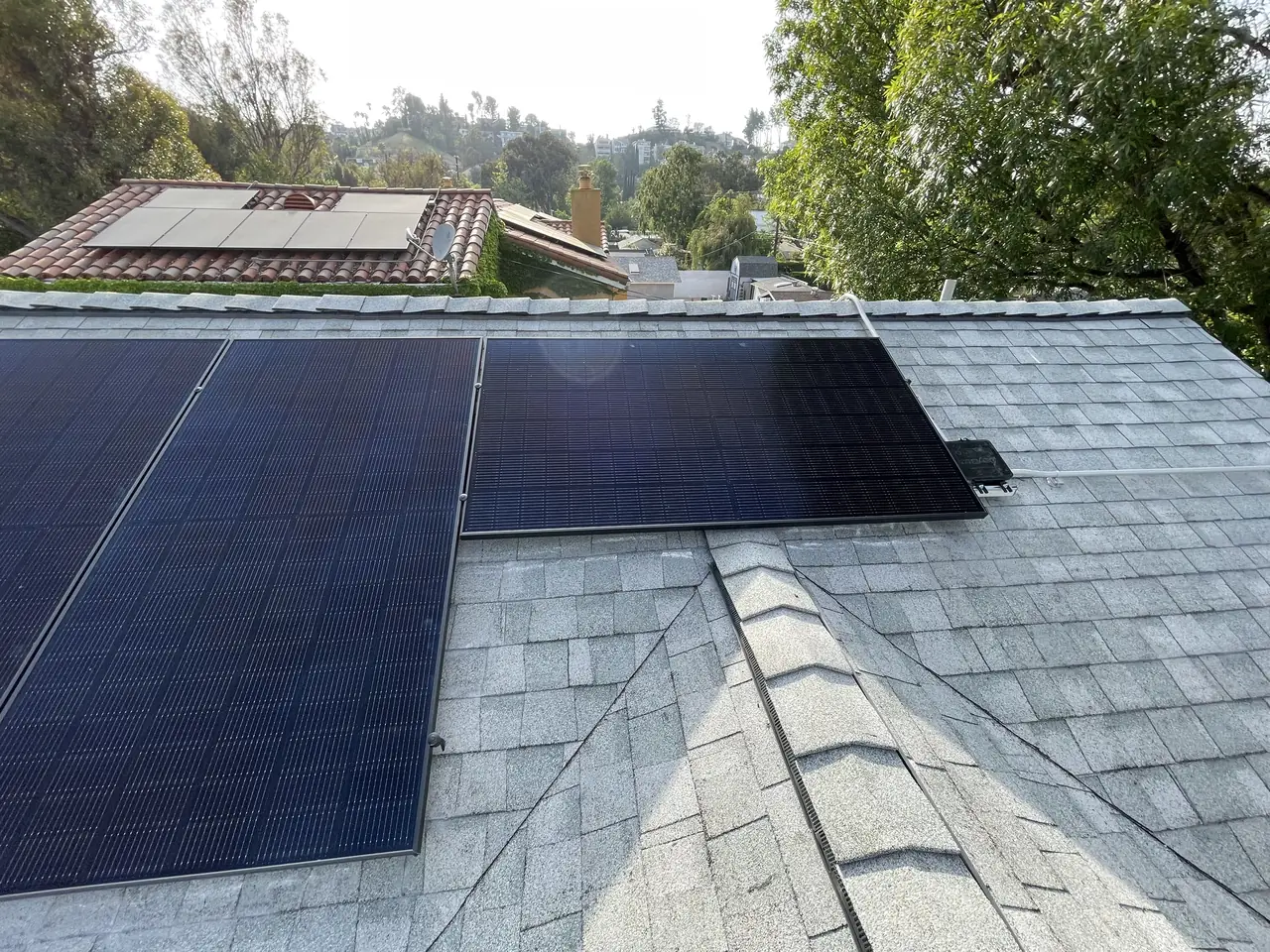
The city posted its release in the third week of June, the net meter was set on the sixth of July and permission to operate arrived two days later.
Three years on, a question arrived that every owner eventually asks: what transfers with the system. The equipment warranties run with the hardware and keep running. The separate term that reimburses labor on a microinverter replacement is shorter and had expired. The monitoring account moves to a new owner for a fee. None of that is obvious from a contract, so ask about all three long before you need them.
If you are planning both a roof and solar, do the roof first, and tell your installer what else changed on the property while the roofers were there. The utility is going to look at photographs of a house it has never seen, and every difference between those photographs and the drawings is a question waiting to be asked.
How it ran
| January 2023 | Re-roof bid: full tear-off, eighteen squares of shingle, new underlayment, flashing, ridge cap and four vents |
|---|---|
| February 2023 | City re-roof permit applied for; later finaled |
| 14 April 2023 | Interconnection filed at 5.5 kW AC-CEC |
| 18 April 2023 | Utility's photograph review raises a clearance objection to a structure that no longer exists; explained and accepted the same day |
| 18 April 2023 | Site evaluation completed and permission to install granted that afternoon |
| 9 May 2023 | Design confirmed: nineteen modules, nineteen microinverters with daytime backup |
| 11 – 19 May 2023 | Plan set issued, city plan-check corrections received, essential loads list supplied, revised plans returned |
| 6 – 7 June 2023 | Unexplained change of the solar breaker from thirty to sixty amps questioned and corrected |
| 21 June 2023 | City posts its final release to the utility; net meter scheduling requested |
| 6 July 2023 | Net meter set |
| 8 July 2023 | Permission to operate granted |
This timeline reflects a house re-roofed immediately before the array. The roofing permit ran on its own track and is not part of the solar schedule.
What we did
- Sequenced the roof ahead of the array so the modules were never installed over a covering due for replacement (C-10).
- Designed nineteen modules with microinverters configured for daytime backup, and collected the essential loads list the backup subpanel needed.
- Answered the utility's clearance objection the same morning by explaining what had changed on site during the re-roof, rather than altering anything.
- Questioned an unexplained change to the solar breaker size on the returned plan set and had the drawings corrected the next day.
- Carried the project through city plan check, the final release, the meter order and permission to operate.
- Answered the owner's later questions about what transfers with the system, and which warranty terms had already run out.
System specifications
| Recorded by the utility | 5.5 kW AC-CEC |
|---|---|
| System as designed | 7.6 kW DC |
| Modules | 19 × Q CELLS, 400 W |
| Inverters | 19 × Enphase IQ8PLUS microinverters, configured for Sunlight Backup |
| Backup | Daytime only, no battery; essential loads on a subpanel |
| Roof | Full tear-off, new composition shingle, sixteen hundred square feet |
| Solar breaker | 30 A |
| Main service panel | Retained, no upgrade |
| Utility / AHJ | LADWP / LADBS |
Is your project like this one?
- You need a new roof and solar, and want to know which goes first.
- Your property changed while the roofers were there and your drawings no longer match.
- You want backup during outages but are not ready to pay for a battery.
- Your utility has raised a clearance objection from photographs.
- Your Woodland Hills property is served by LADWP, while permits are handled by LADBS.
Cali Energy in Woodland Hills
Woodland Hills is inside City of Los Angeles boundaries: permits run through LADBS, interconnection through LADWP.
Woodland Hills is inside the City of Los Angeles, so a re-roof and a solar array are two separate permits from LADBS, and the interconnection is LADWP's. Doing the roof first is the right order. It also means the house the utility photographs is not quite the house on the drawings.
This installation is on the Woodland Hills projects page alongside the others, and what the work covers is set out on the Woodland Hills service area page.
- License and classifications: CSLB #1032379
- Official reference for this process: LADWP Electric Service Requirements
- Official reference for this process: LADBS — plan review and permitting
Frequently asked questions
Should the roof be replaced before solar goes on?
Yes, if the covering is anywhere near the end of its life. Taking an array off and resetting it later costs far more than sequencing the two jobs correctly, and a penetration into new shingle is the cheapest and best sealed it will ever be. Here the roof was stripped and replaced in the winter and the array went on in the spring, which leaves the covering and the system on roughly the same clock.
Why did the utility object to something that was not on the house?
Because the review is done from photographs, and the photographs were of a site that had just changed. The re-roof had included taking down a fence around the air conditioning unit, so what the reviewer saw did not match the drawings, and a clearance objection followed. The fix was an explanation, not a construction change, and it cleared the same day it was raised.
What is daytime backup without a battery?
It is a microinverter feature that keeps a limited set of circuits alive during an outage using the array itself, but only while the sun is on the roof. It costs far less than storage and it does nothing at night, so it should never be described as a substitute. It needs a subpanel and a decided list of essential loads, which is a real design conversation rather than a box to tick.
Why does the breaker size on the drawings matter?
Because it is what the inspector checks and what the busbar calculation is built on. On this project a returned plan set had the solar breaker changed from thirty amps to sixty with no explanation, which would have altered the electrical basis of the design. It was questioned and corrected the next day. Anyone receiving a revised plan set should read it against the previous one rather than assuming only the corrections moved.
What happens when a Cali Energy customer in Woodland Hills sells the house?
The equipment warranties belong to the hardware and continue for the new owner. The shorter term that reimburses labor on a microinverter replacement expires earlier, and once it has gone the visit is chargeable even when the part is free. The monitoring account can be moved to the new owner for a fee. Cali Energy answers those questions for systems it installed, years afterwards. California contractor license number 1032379.
What this would look like on your roof
Planning solar in Woodland Hills? Tell us your utility, your roof and what your bill looks like now, and we will model what a system like this would do on your house before you commit to anything.
Or call +1 (323) 844-7777 · Cali Energy, Northridge · CSLB #1032379 (B, C-10, C-39) — design, permits, install and electrical under one licensed contractor.
Related
This timeline reflects this property and this permitting path. Updated September 2026.