

North Hollywood, CA · July – October 2021 · LADWP / LADBS
The meter was in. The utility's record said it was not.
A system finished, inspected, released and metered in the first week of September sat unable to run until the middle of October. What finally released it was a photograph of the meter on the wall.
Permission to Operate is issued when the utility's records show the net meter installed — not when the meter is physically on the wall. If those two things fall out of step, a system can be finished, inspected, released and metered and still not be allowed to run. The way out is evidence: a photograph of the meter in place, put in front of somebody who can reconcile the record.
At a glance
- System
- 13.3 kW as filed with the utility
- Plan set
- Six versions in seven days
- Interconnection agreement
- Returned once for correction
- Plan check
- Approved 9 August 2021
- Permit
- Held for a signature declaration
- Meter set
- 7 September 2021
- Permission to operate
- 19 October 2021
- Utility / AHJ
- LADWP / LADBS
The story
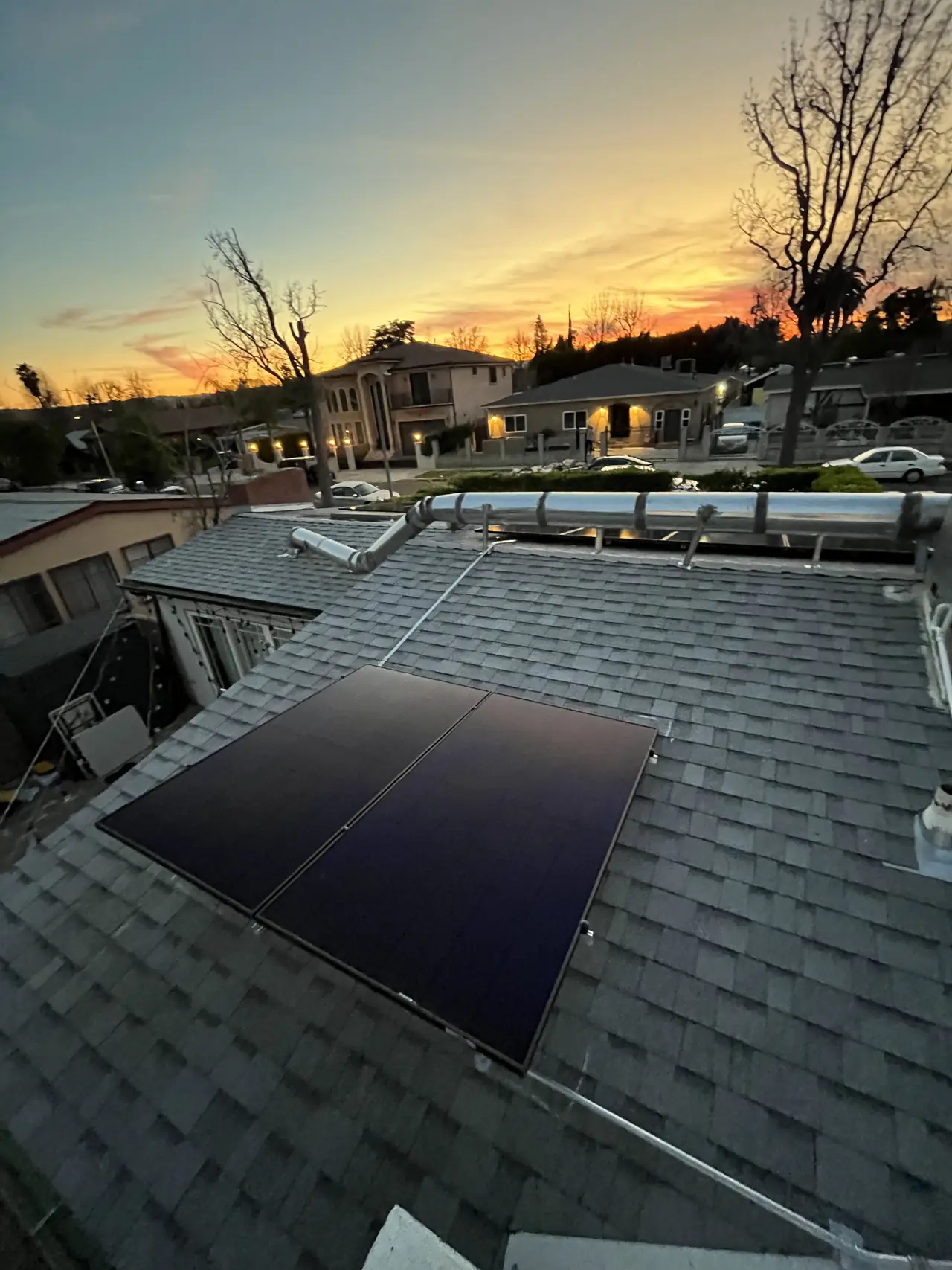
By the seventh of September this system was, in every practical sense, finished. The plans had been approved, the permit issued, the inspection passed, the building department's release transmitted, the interconnection review completed, and a net meter fitted to the wall. The only thing it did not have was permission to run. That arrived on the nineteenth of October.
Six weeks. Nothing was built in them, nothing was corrected, nothing failed an inspection. What happened in those six weeks is that a record did not match a building.
The rest of the project is worth walking through, because the interesting part is how unremarkable it was.
The drawing came first. The permit set went through six versions in seven days at the end of July — revisions to the layout, then load calculations added, then the whole thing sent again as separate files because a compressed archive would not open at our end. That is normal. A plan set is a document that gets argued with, and a designer who sends one version and treats it as final is usually a designer who has not been asked hard questions.
The interconnection application went in on the twenty-third of July. Two weeks later the utility sent the agreement form back: reviewed, and found to have missing or incorrect information, with sticky notes attached to the returned file pointing at each item. We corrected it and sent it back, with a note explaining something that had confused the review — the main service panel was not being upgraded on this job. The interconnection application existed because a solar system was being installed, not because the service was changing. The agreement was approved the following day.
Meanwhile the building department approved the plan check on the ninth of August and then did not issue the permit, because an approved plan check is not a permit. What was missing was a signature declaration from the licensed contractor along with a city business tax registration number. That is a form and a number, not a technical question, and it held the job for nine days.
After that everything moved. The declaration went back on the eighteenth of August, the permit fee was issued on the nineteenth, the inspection was requested the same day, and the building department's final release and the utility's interconnection approval both landed on the twenty-fourth. The net meter was set on the seventh of September.
And then nothing. We asked on the eighth of September and were told the job was scheduled and a permission letter would follow once the meter was installed. We replied the next day to say the meter was already installed. Nothing followed.
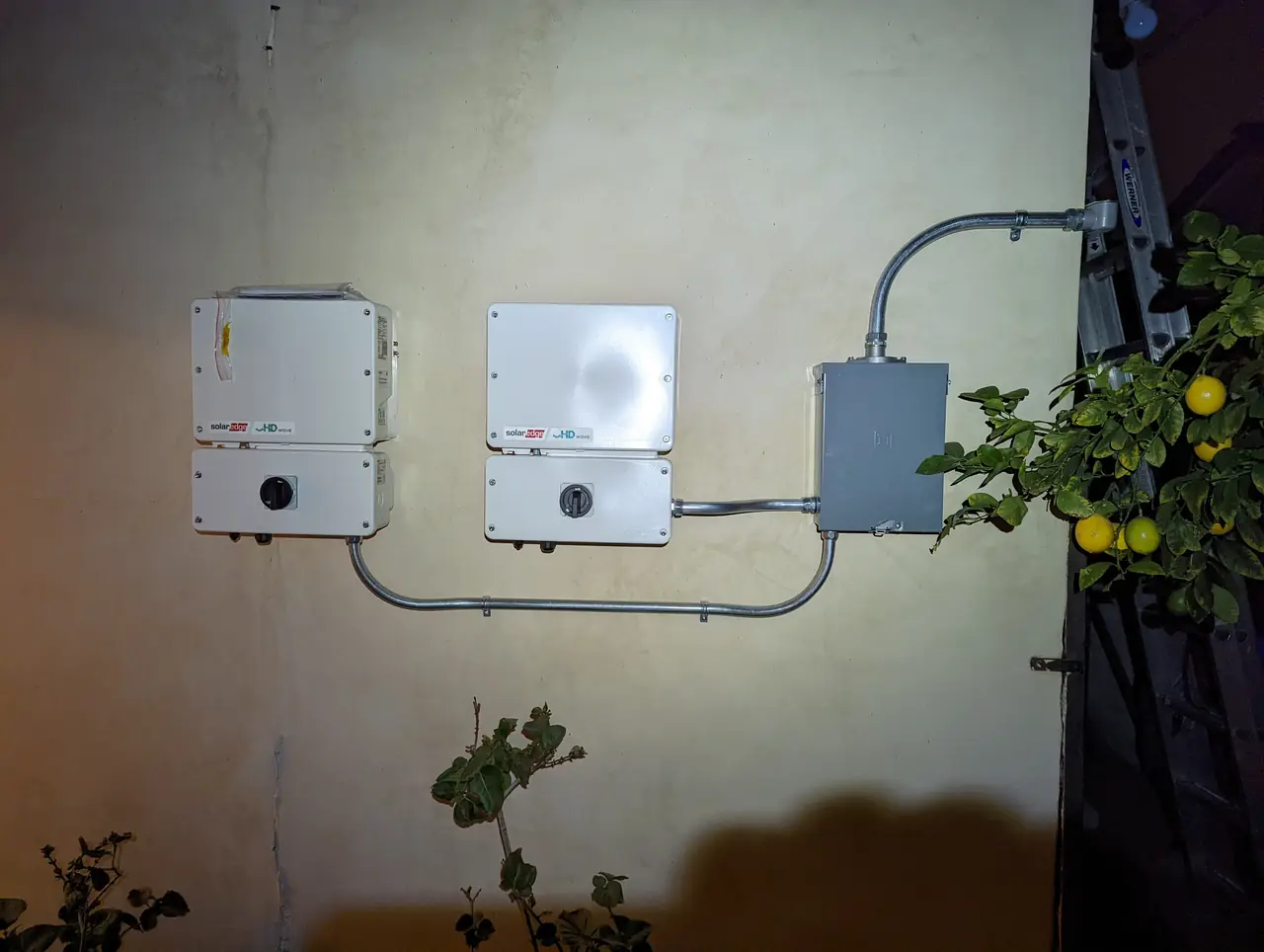
On the eighteenth of October we escalated past the representative handling the job to the section that manages it. The answer came back quickly and was more useful than a chased status: permission is issued when the net meter shows as installed in the utility's system, and the system did not show it. We sent a photograph of the meter on the wall. The reply was that a construction crew had probably completed the installation without recording the work as complete, and that the meter identifier in our photograph would let them sort it out. Permission to operate was issued the following day.
There is no villain in this. A large utility runs on records, and records are maintained by people finishing a job at the end of a long day. But it does mean something specific for anyone waiting on their own system.
Photograph your meter the day it is set, with the surroundings in shot so it is obviously your wall. Know that permission to operate is a bookkeeping event and not a physical one, and that being told a job is scheduled is not the same as the record showing it done. And if a fortnight passes with no movement, ask for the request to be looked at by the section that manages the queue rather than asking the same person the same question again.
Running a system before permission is issued is not an option — it is the one step in the process that is not ours or the homeowner's to take. Which is exactly why it is worth knowing how the last one actually works.
How it ran
| 21–27 July 2021 | Permit set through six versions, including added load calculations |
|---|---|
| 23 July 2021 | Interconnection application filed |
| 6 August 2021 | Interconnection agreement returned for correction |
| 9 August 2021 | Plan check approved — permit held for a signature declaration |
| 10–11 August 2021 | Agreement corrected and approved |
| 18–19 August 2021 | Declaration filed, permit fee paid, inspection requested |
| 24 August 2021 | Building department release and interconnection approval |
| 7 September 2021 | Net meter set |
| 18 October 2021 | Escalated; photograph of the installed meter supplied |
| 19 October 2021 | Permission to operate issued |
Forty-two days between a meter on the wall and permission to use it.
What we did
- Carried the plan set through six revisions before filing.
- Corrected and refiled the interconnection agreement the utility returned.
- Supplied the signature declaration and business tax registration the permit was waiting on.
- Chased the missing permission twice at representative level, then escalated to the managing section.
- Photographed the installed meter and supplied it as evidence; the permission was issued the following day.
System specifications
| System size as filed | 13.3 kW |
|---|---|
| Main panel | Not upgraded — existing service retained |
| Plan set revisions | Six in seven days |
| Interconnection agreement | Returned once, corrected, approved next day |
| Plan check to permit | Nine days, held for a signature declaration |
| Meter set to permission | Forty-two days |
| Utility / AHJ | LADWP / LADBS |
Is your project like this one?
- Your system is finished and metered and you are still waiting for permission.
- You have been told a job is scheduled when the work already happened.
- Your interconnection paperwork came back marked incomplete.
- Your plan check passed and the permit still has not issued.
- You want to know who to escalate to and when.
Cali Energy in North Hollywood
North Hollywood is inside City of Los Angeles boundaries: permits run through LADBS, interconnection through LADWP.
Interconnection in North Hollywood runs through the city utility, and the last step of it is a record being updated rather than anything happening on the building.
This installation is on the North Hollywood projects page alongside the others, and what the work covers is set out on the North Hollywood service area page.
- License and classifications: CSLB #1032379
- Official reference for this process: LADWP interconnection requirements
- Official reference for this process: LADBS — plan review and permitting
Frequently asked questions
What is Permission to Operate and when is it issued?
It is the utility's written authorisation to run the system, issued once the net meter shows as installed in the utility's records. It is a record-keeping event. On this project the meter was set on 7 September 2021 and the permission was issued on 19 October.
Can I run my system before permission is issued?
No. That is the one step in the process that belongs to the utility, and running before it arrives is not an option on the table. It is also why the delay matters rather than being a paperwork curiosity.
What should I do if my permission is late?
Photograph the meter on the day it is set, with enough of the wall in shot to make the location obvious. If a fortnight passes with no movement, ask for the request to be reviewed by the section that manages the queue rather than repeating the question to the same representative.
Why was the permit not issued when the plan check was approved?
Because they are two different things. The plan check was approved on 9 August 2021, but the permit needed a signature declaration from the licensed contractor and a city business tax registration number before it could issue. That took nine days.
Why did the interconnection agreement come back?
It was reviewed and found to have missing or incorrect information, returned with notes attached to each item. Part of the confusion was that the main service panel was not being upgraded — the application existed because a solar system was being installed, not because the service was changing.
Is six versions of a plan set a bad sign?
No. A plan set is a document that gets argued with: layout revised, load calculations added, files re-sent when one will not open. A designer who issues one version and never hears a question is usually one nobody has checked.
What this would look like on your roof
Planning solar in North Hollywood? Tell us your utility, your roof and what your bill looks like now, and we will model what a system like this would do on your house before you commit to anything.
Or call +1 (323) 844-7777 · Cali Energy, Northridge · CSLB #1032379 (B, C-10, C-39) — design, permits, install and electrical under one licensed contractor.
Related
This timeline reflects this property and this permitting path. Updated September 2026.