

Van Nuys, Los Angeles, CA · October 2023 – January 2024 · LADWP / LADBS
Van Nuys: the agreement traced, refiled and the meter set in eight days.
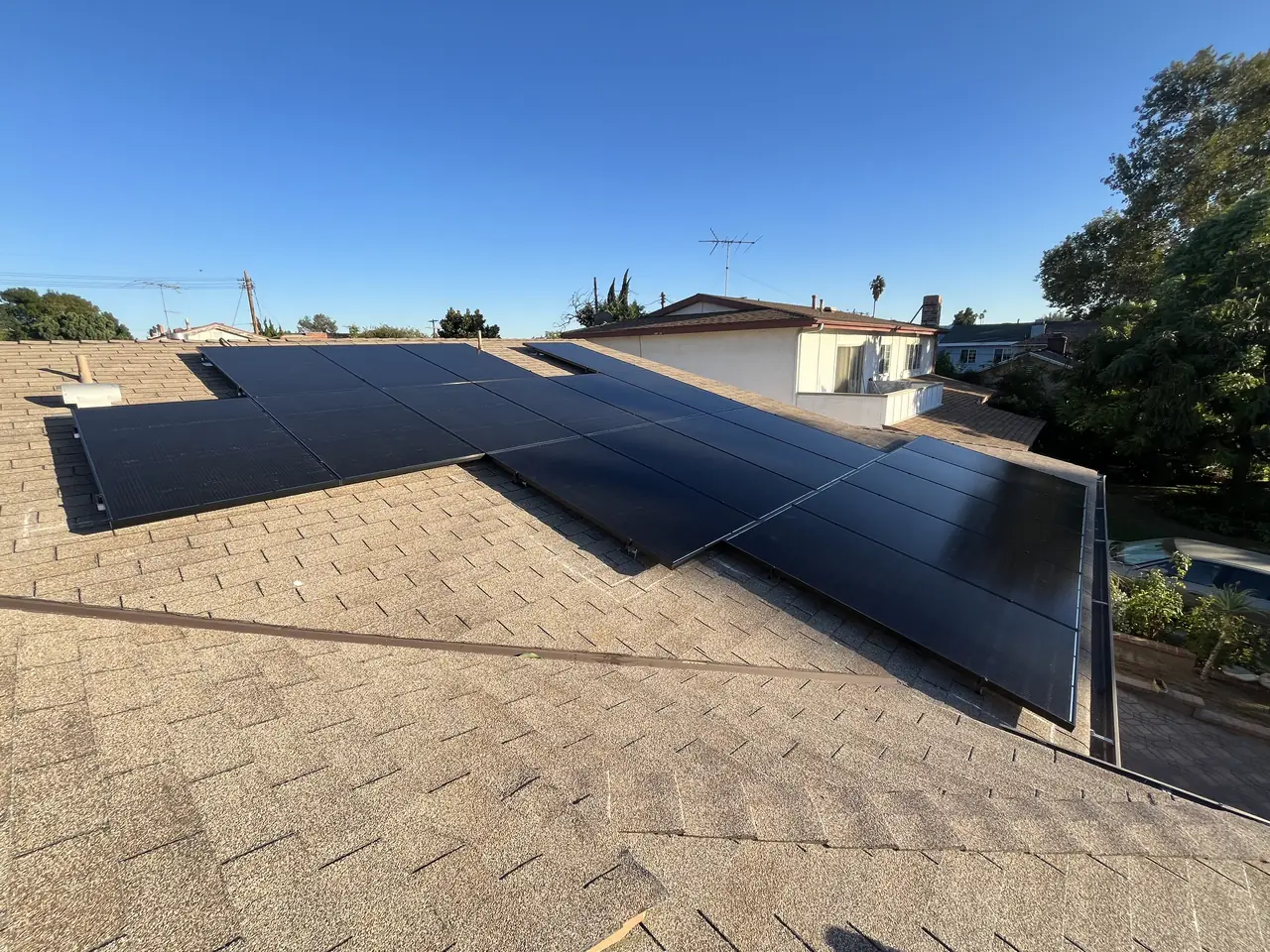
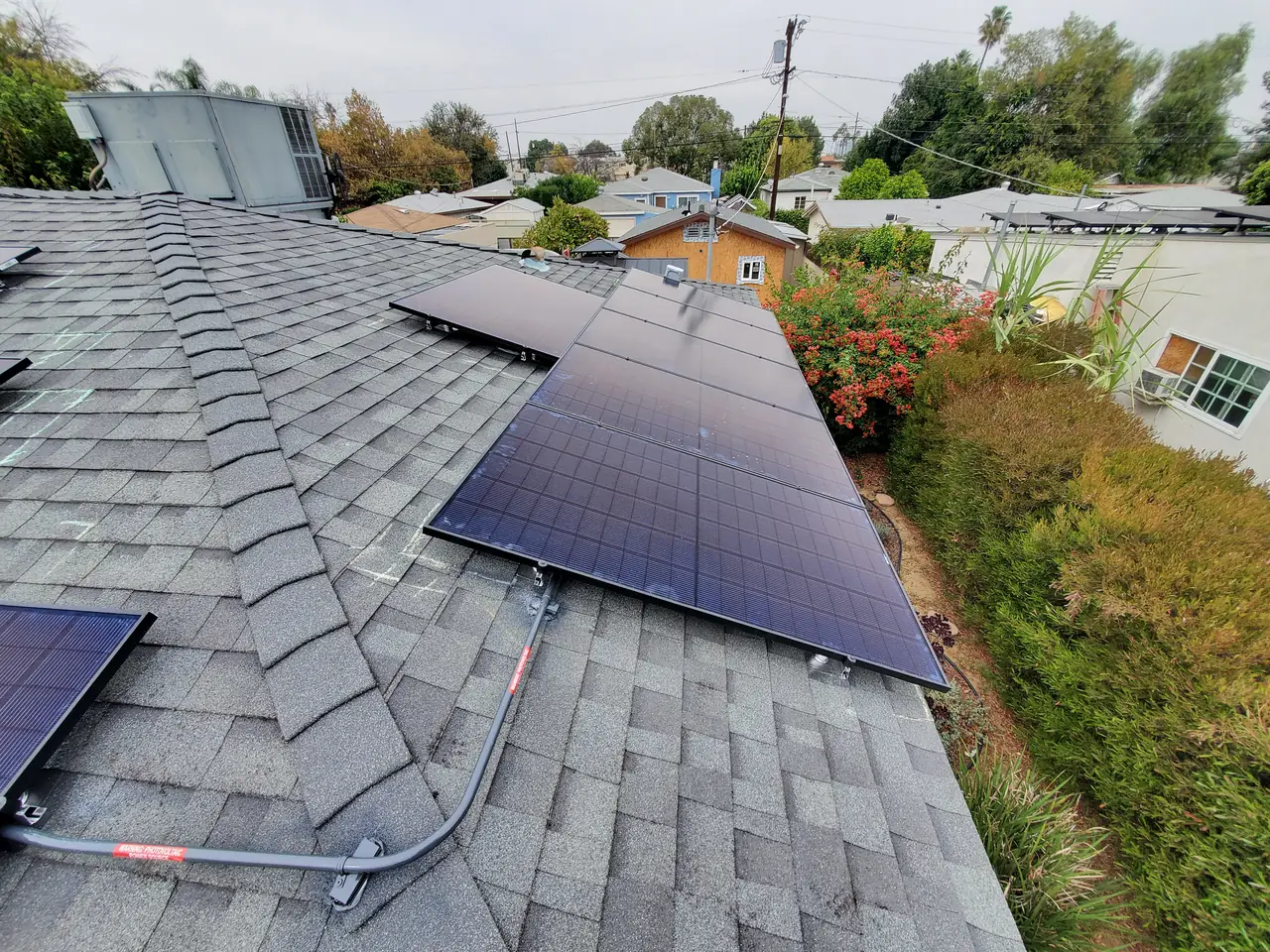
Thirty-two modules on a cross-gable roof, inspected and released by the city three weeks after the application went in. The last step was the interconnection agreement — traced by phone, refiled the same afternoon and approved, with the net meter set eight days later.
An LADWP solar project needs two things to finish: a final release from the building department, and an approved interconnection agreement on file with the utility. On this Van Nuys house the release arrived in three weeks. The agreement, returned by the utility for correction, was traced by Cali Energy through the work request and refiled corrected the same afternoon, and the net meter was set eight days later.
At a glance
- Array
- 32 modules, 395 W each — 12.64 kW DC
- Inverters
- 32 microinverters, one per module
- Size recorded by the utility
- 10.4 kW AC-CEC
- Roof
- Composition shingle, cross-gable
- City release
- Three weeks after the application
- Net meter
- Eight days after the corrected form
- Utility / AHJ
- LADWP / LADBS
The story
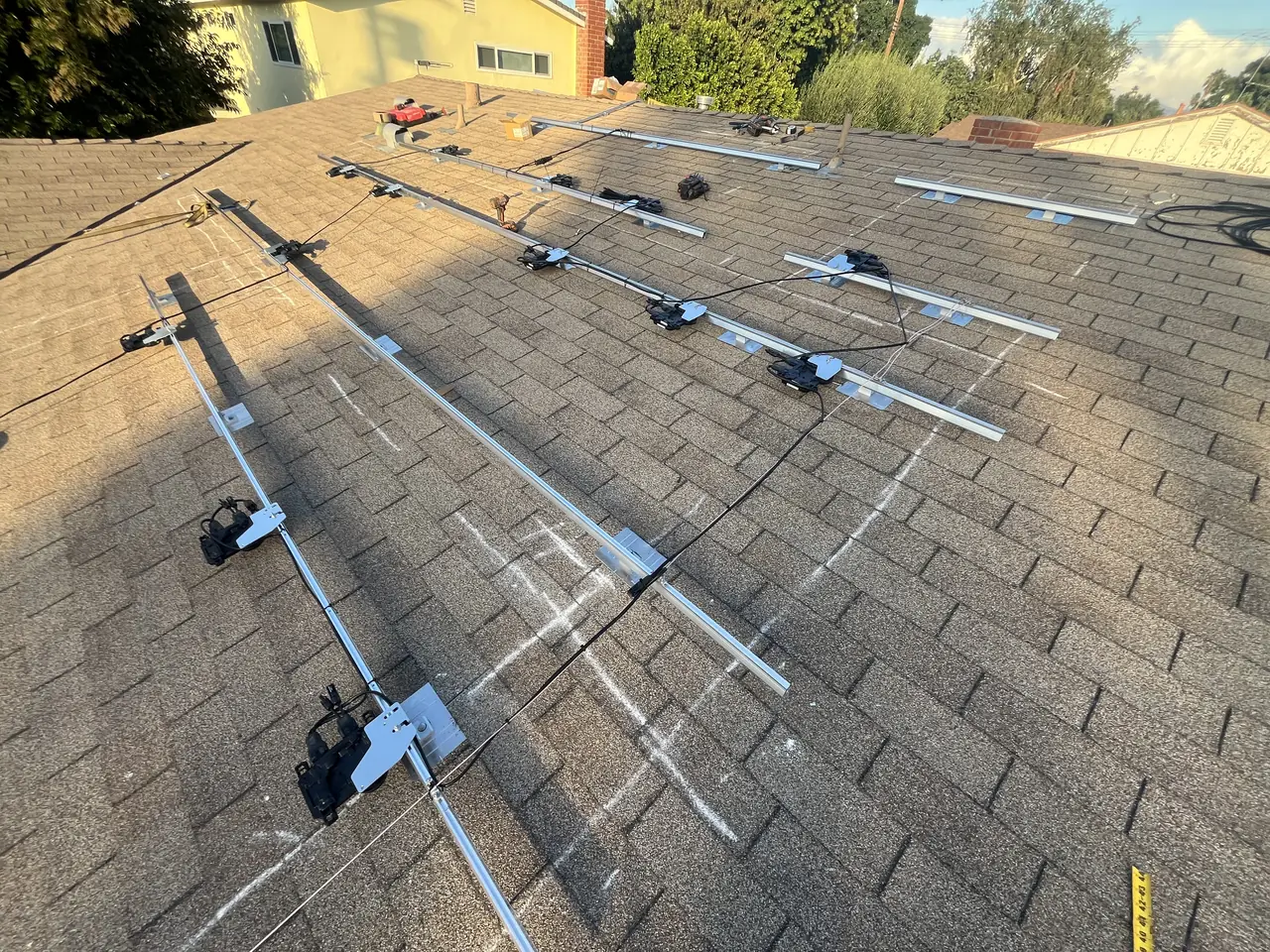
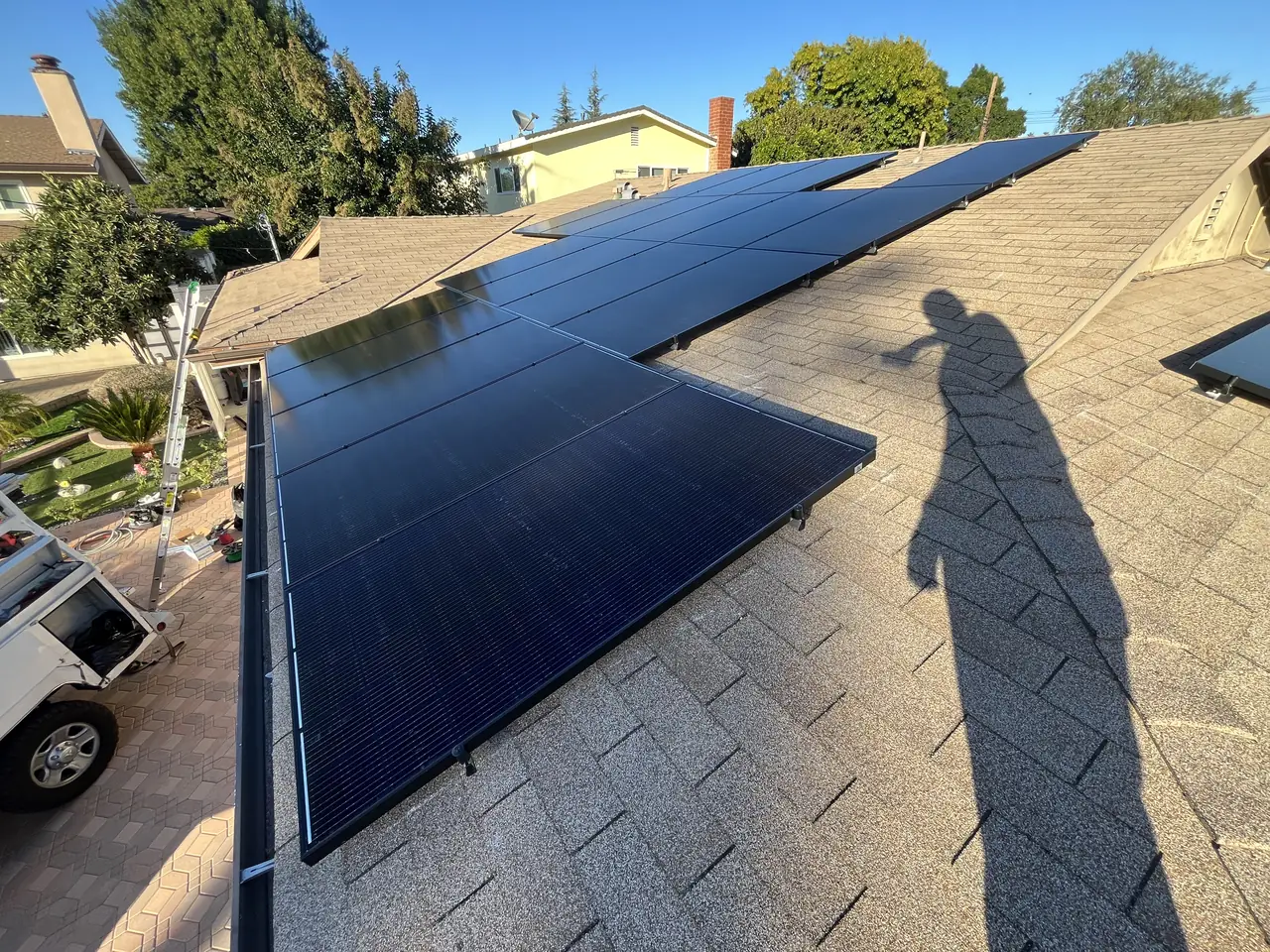
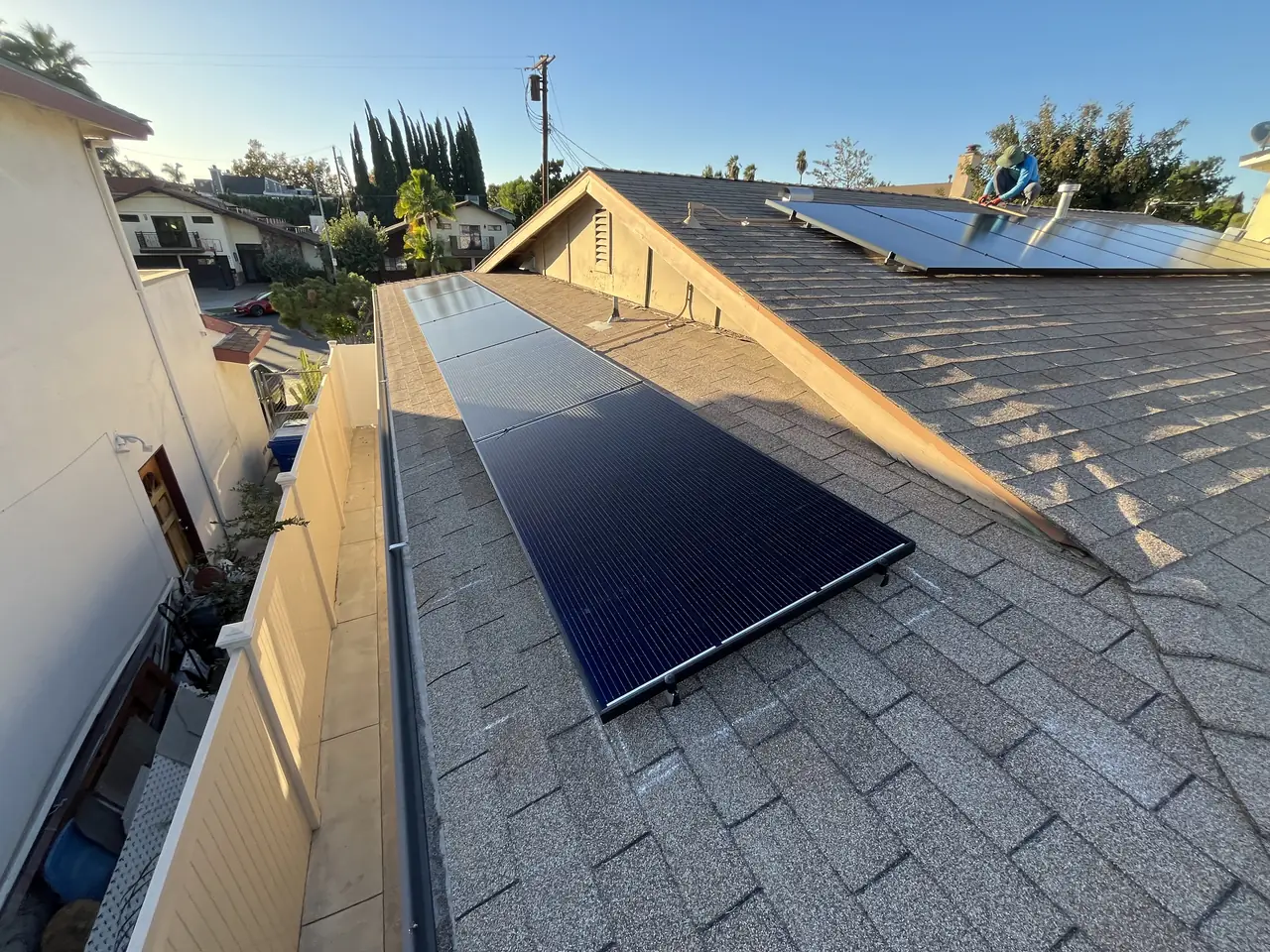
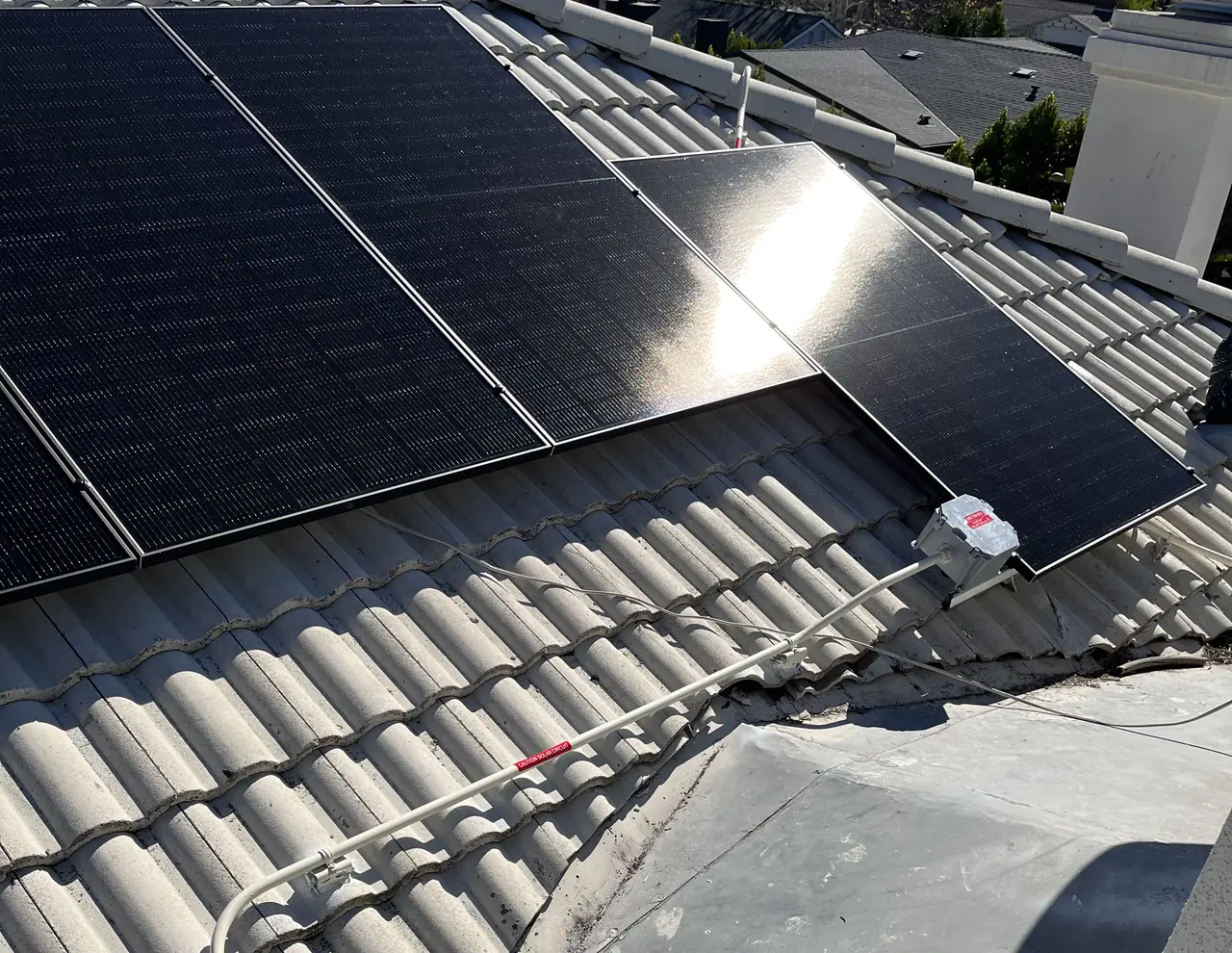
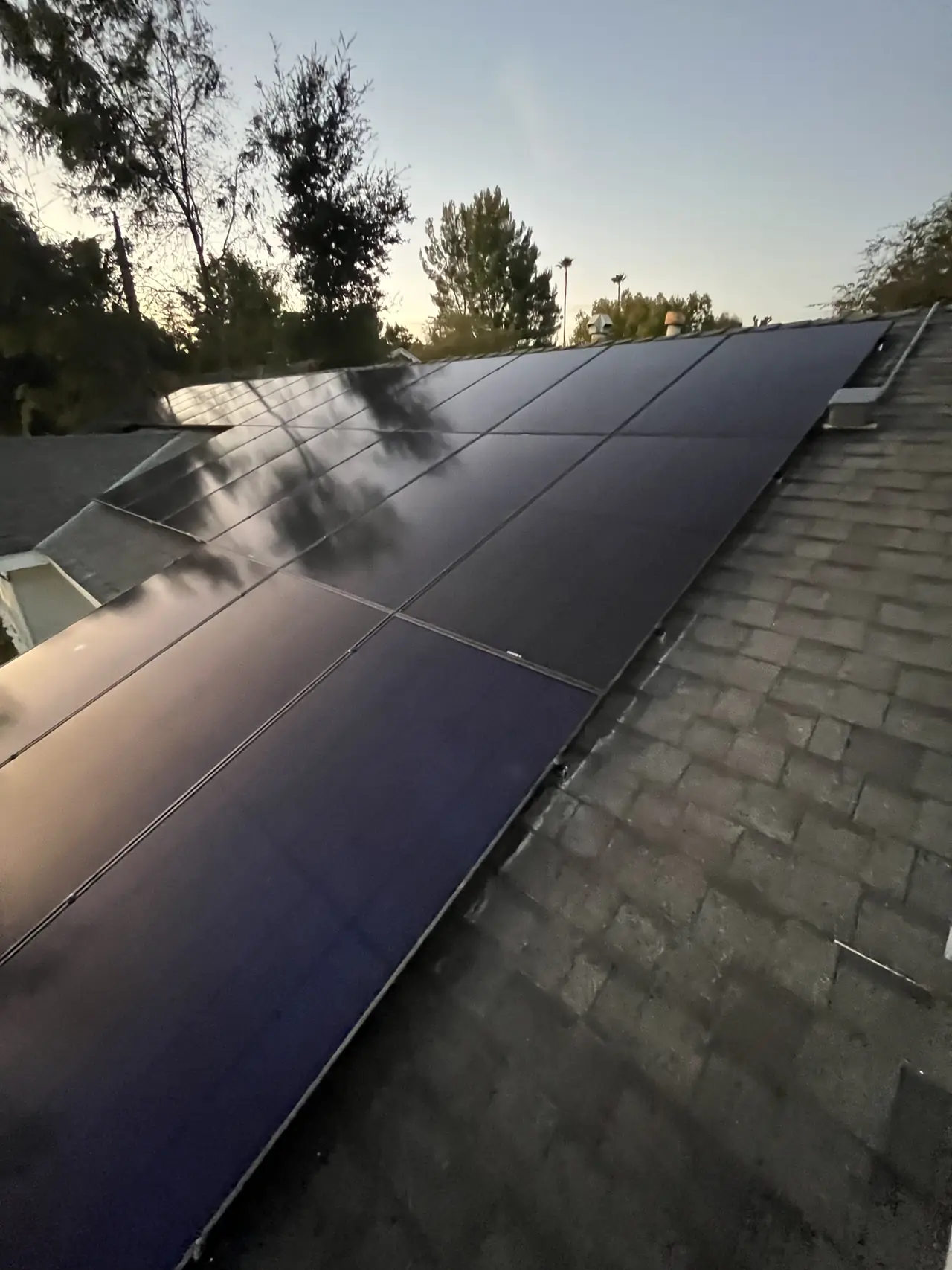
The build itself was ordinary and quick. A single-family house with a cross-gable composition shingle roof, thirty-two 395-watt modules laid in three groups of eleven, eleven and ten, and a microinverter under every module. Rails went down across four planes, the modules followed, and the city released the job three weeks after the interconnection application was filed.
That release is a real milestone. It means an inspector has been on the roof and in the service equipment, that the work passed, and that the building department has told the utility so. On a normal project the utility then schedules a crew, swaps the meter, and the system starts producing.
Here the utility side showed a work request that had been opened and assessed, and then stopped moving.
What held it was small. Alongside the application, a residential project files a Small System Interconnection Agreement — the document in which the customer and the contractor state the system's size, its equipment and its point of connection, and agree to the utility's terms for operating alongside the grid. The reviewer had sent that form back with a note on the fields to correct, and the notice had gone into the same stream as a dozen routine progress updates.
In January Cali Energy called the project in to the utility directly, and the answer came back plainly: the interconnection agreement was waiting on that correction.
A coordinator walked through what had to happen: complete the agreement again, correct the fields that had been flagged, send it back. That was done the same afternoon. She confirmed receipt the same day, pushed the project to the construction field, and said to expect roughly a week.
It took eight days. The utility's crew pulled the old meter and set a new net meter in its place at the end of January, which is the moment a system in Los Angeles is allowed to run.
The lesson is not about the form. Forms come back all the time, and correcting one takes twenty minutes. The lesson is that a solar project running through a large utility produces a stream of automated notices, most of which require nothing, and one of which is a request for action. That is why the work request status, not the inbox, is the thing to watch.
Every LADWP job Cali Energy runs is checked against the utility's own work request status rather than against the notices it sends; if the status has not moved in three weeks, somebody calls. On this Van Nuys house that call led to a net meter eight days later, and the thirty-two modules have run since the end of January 2024.
How it ran
| Late October 2023 | Interconnection application filed; recovery charge paid |
|---|---|
| Early November 2023 | Application reviewed, site assessment completed, meter spot issued |
| Mid-November 2023 | Final release from the building department |
| November – December 2023 | Utility returns the interconnection agreement for correction |
| Early January 2024 | Project called in to the utility; work request traced |
| Mid-January 2024 | Corrected agreement filed and accepted the same day |
| Mid-January 2024 | Interconnection review complete; meter request issued |
| Late January 2024 | Net meter set — permission to operate |
Three weeks from application to city release, and eight days from the refiled agreement to the net meter.
What we did
- Designed a 32-module array across four planes of a cross-gable shingle roof.
- Installed the mounting system, modules and a microinverter under each module.
- Filed the interconnection application and carried the project through the utility's site assessment and meter spot.
- Took the job through the building department's final inspection and release.
- Traced the stalled work request, found the returned interconnection agreement and refiled it corrected the same day.
- Followed the project to the meter swap and commissioned the system.
System specifications
| Modules | 32 × 395 W, all-black — 12.64 kW DC |
|---|---|
| Inverters | 32 microinverters |
| Size recorded by the utility | 10.4 kW AC-CEC |
| Groups | Three: eleven, eleven and ten modules |
| Roof | Composition shingle over four planes |
| Metering | Existing house meter swapped for a net meter |
| Utility / AHJ | LADWP / LADBS |
Is your project like this one?
- Your system passed inspection weeks ago and still has not been switched on.
- You are on LADWP and cannot tell which side of the process you are waiting for.
- Your installer has gone quiet and the utility portal has not moved.
- You want to know what actually has to happen between final inspection and permission to operate.
- You are comparing installers and want one who watches the utility queue.
Cali Energy in Van Nuys
Van Nuys sits inside City of Los Angeles boundaries: permits run through LADBS, interconnection through LADWP.
In Los Angeles a solar project has two finish lines, not one. The building department closes the permit, and the utility closes the interconnection. They run on separate tracks, and a project can clear the first one cleanly while the second sits untouched.
This installation is on the Van Nuys projects page alongside the others, and what the work covers is set out on the Van Nuys service area page.
- License and classifications: CSLB #1032379
- Official reference for this process: LADWP interconnection requirements
- Official reference for this process: LADBS — inspections
Frequently asked questions
Why does a solar system pass inspection and still not turn on?
Because the building department and the utility close two different files. The inspection release tells the utility the work is safe and finished. The utility then has to have an approved interconnection agreement on record before it will send a crew to change the meter. If that agreement is incomplete, the project stops there, and the pause is invisible from the roof. Nothing about the array looks wrong, because nothing about the array is wrong.
What is a Small System Interconnection Agreement?
It is the contract between the customer and LADWP for running a small generator alongside the grid. It records the system size, the equipment, the point of connection and the customer's agreement to the utility's operating terms. It is filed with the interconnection application, and the utility reviews it separately. Where a field is missing or inconsistent with the application, the form comes back for correction before the project can move on.
How long should an LADWP net meter take after the final inspection?
When the paperwork is in order, a few weeks. On this project the corrected agreement was accepted on a Wednesday and the net meter was set eight days later. The variable is not the crew, it is whether any part of the submission is still open. A project with a clean application and an approved agreement moves through the meter queue in a predictable window.
How do I check where my own project is stuck?
Ask your installer for the utility work request number and the status behind it, not for a summary. The status shows which step the project is sitting on. If it has not moved in three weeks and the building department has already released the job, the delay is on the interconnection side, and someone should be calling the utility rather than waiting for another notice.
Does Cali Energy install solar in Van Nuys?
Yes. Van Nuys is part of the City of Los Angeles, so permits run through LADBS and interconnection through LADWP, and our work here covers design, permitting, installation, inspection and commissioning. Our license is CSLB #1032379, and the Van Nuys projects page carries completed installations across the neighborhood, this house among them.
What this would look like on your roof
Planning solar in Van Nuys? Tell us your utility, your roof and what your bill looks like now, and we will model what a system like this would do on your house before you commit to anything.
Or call +1 (323) 844-7777 · Cali Energy, Northridge · CSLB #1032379 (B, C-10, C-39) — design, permits, install and electrical under one licensed contractor.
Related
This timeline reflects this property and this permitting path. Updated September 2026.