

Valley Village, CA · December 2023 – September 2026 · LADWP / LADBS
The part was free. The labor was a separate conversation.
A 2.92 kilowatt array on a new two-story Valley Village house, connected in January 2024. Two and a half years later two microinverters failed within a month of each other, and the warranty claim that followed shows exactly where the manufacturer's cover ends.
A microinverter warranty replaces the device. It does not automatically pay for the visit, the diagnosis or the labor of swapping it out: that is a separate reimbursement request, filed after the work, and on this project the manufacturer put it on hold until the failed units were shipped back for failure analysis. So the practical sequence is longer than the word warranty implies — diagnose on the roof, open a claim, receive the replacement, do the work, return the dead device, then ask to be paid for the labor.
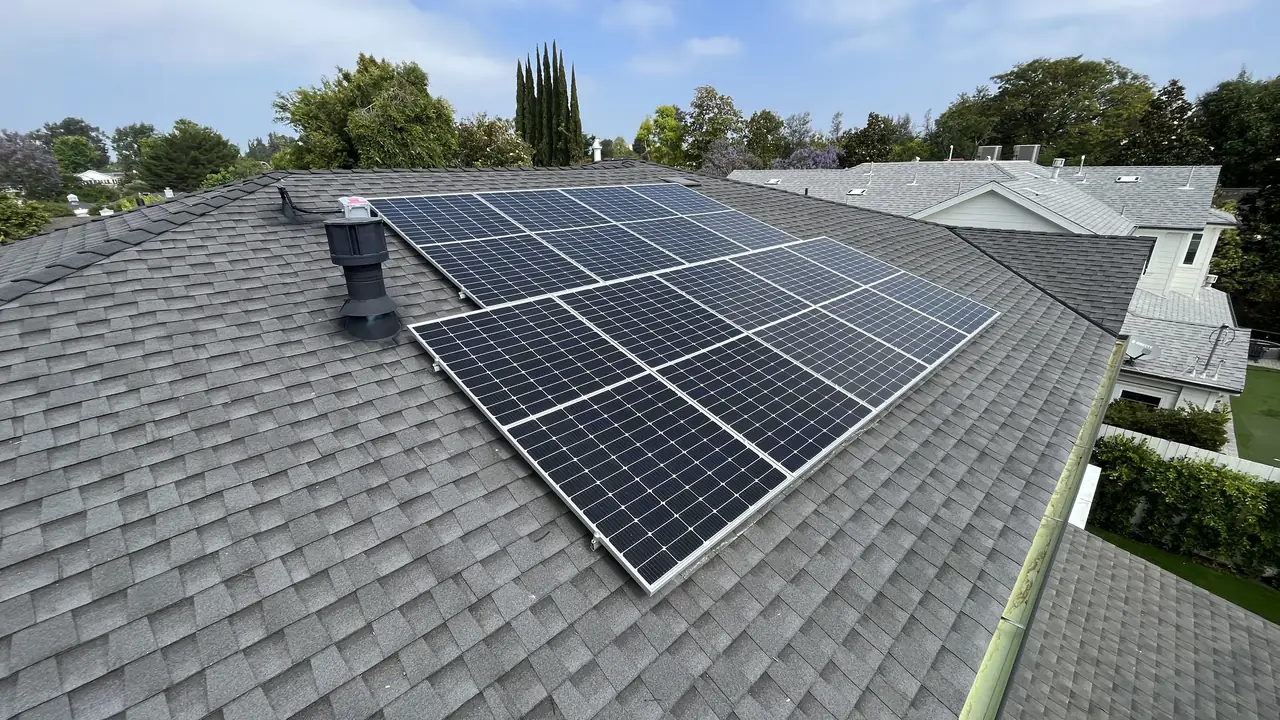
At a glance
- System size
- 2.92 kW AC-CEC recorded by the utility
- Microinverters
- Enphase IQ8MC, one per module
- Building
- New two-story house with basement and NFPA-13D sprinklers
- Permission to operate
- 10 January 2024
- First warranty claim
- 16 July 2026, approved in two days
- Second warranty claim
- 13 August 2026
- Labor reimbursement
- Filed separately, held pending device return
- Utility / AHJ
- LADWP / LADBS
The story
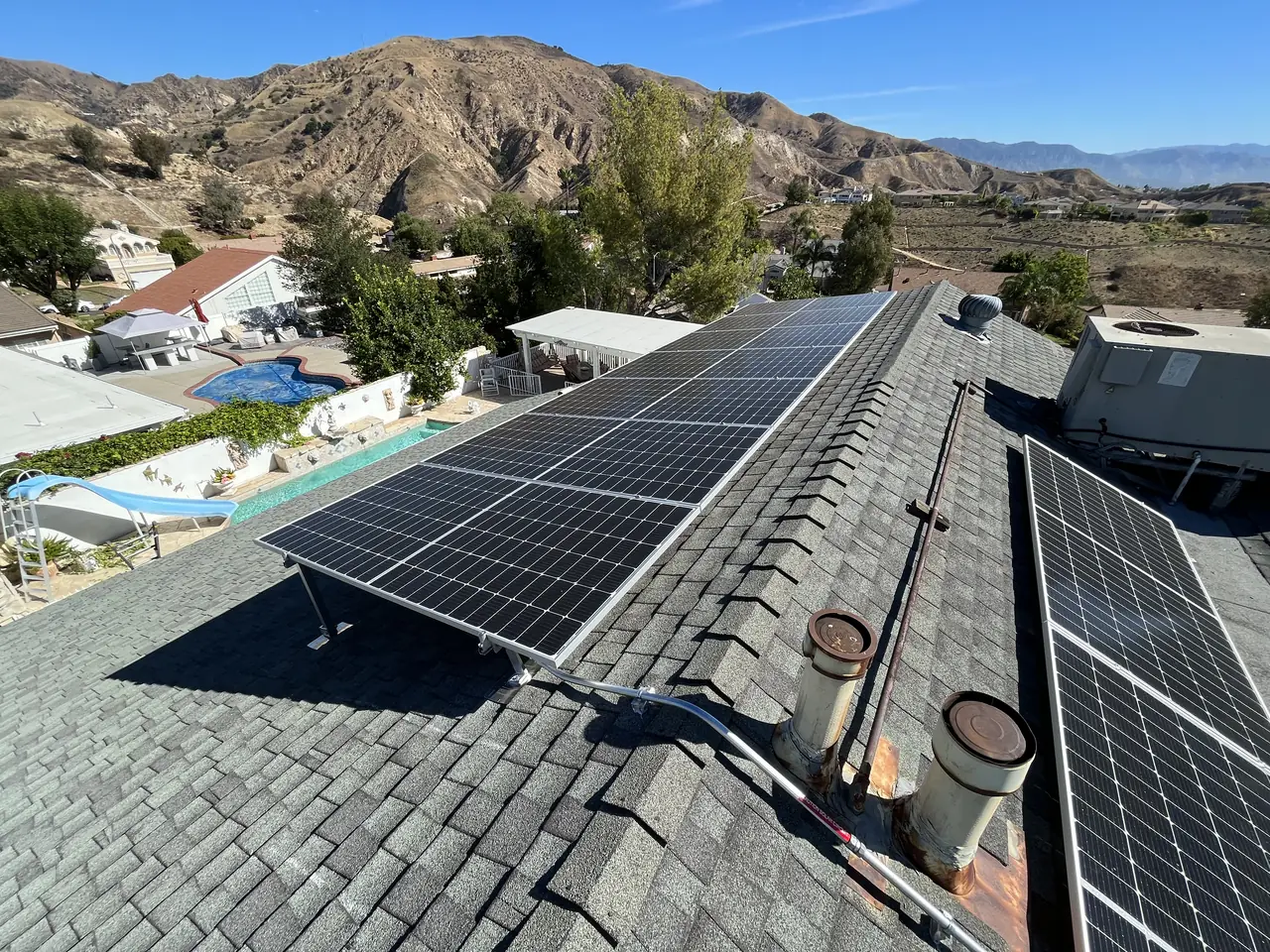
The house is new. The lot was cleared in 2022 — old house, detached garage and shed demolished, the pool backfilled and its shell removed — and what went up in its place is a two-story single-family home with a basement, an attached garage, a detached rec room and an NFPA-13D sprinkler system. The array that came with it is small: 2.92 kilowatts as the utility recorded it.
That size is not an accident and it is not a mistake. On new residential construction in California the energy code sets a minimum photovoltaic system for the building, calculated from floor area and climate zone rather than from what the family expects to use. A builder who is meeting the requirement rather than offsetting a bill installs to that number. The owner of a house like this one often discovers later that the array covers a fraction of the load — which is a separate conversation, and a real one, but it is not a fault.
The interconnection went the way a small system should. The application was filed on the sixth of December 2023, the utility confirmed it and completed the site evaluation three days later, the building department released the project on the twenty-eighth, and the net meter was set with permission to operate on the tenth of January 2024. Thirty-five days end to end.
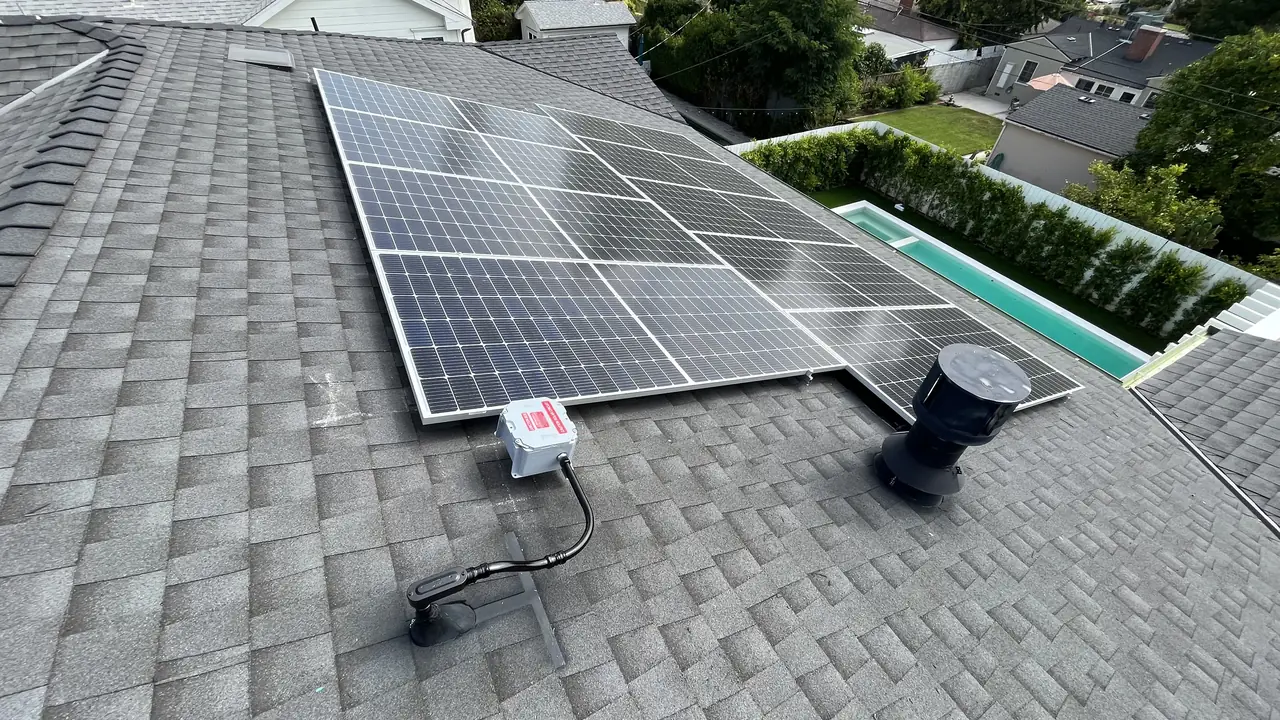
Two and a half years later the monitoring went quiet on part of the array. The gateway that collects production had been showing a fault and was recovered, and behind it sat the real problem: a microinverter that had stopped reporting.
Here is the part worth understanding, because it is where most homeowners learn something expensive. On a microinverter system a failure is local — one module goes dark, the rest keep producing, and nothing about the house changes. That is the architecture working as intended. What it also means is that nobody notices unless somebody is watching the monitoring, which on this project is what started the claim.
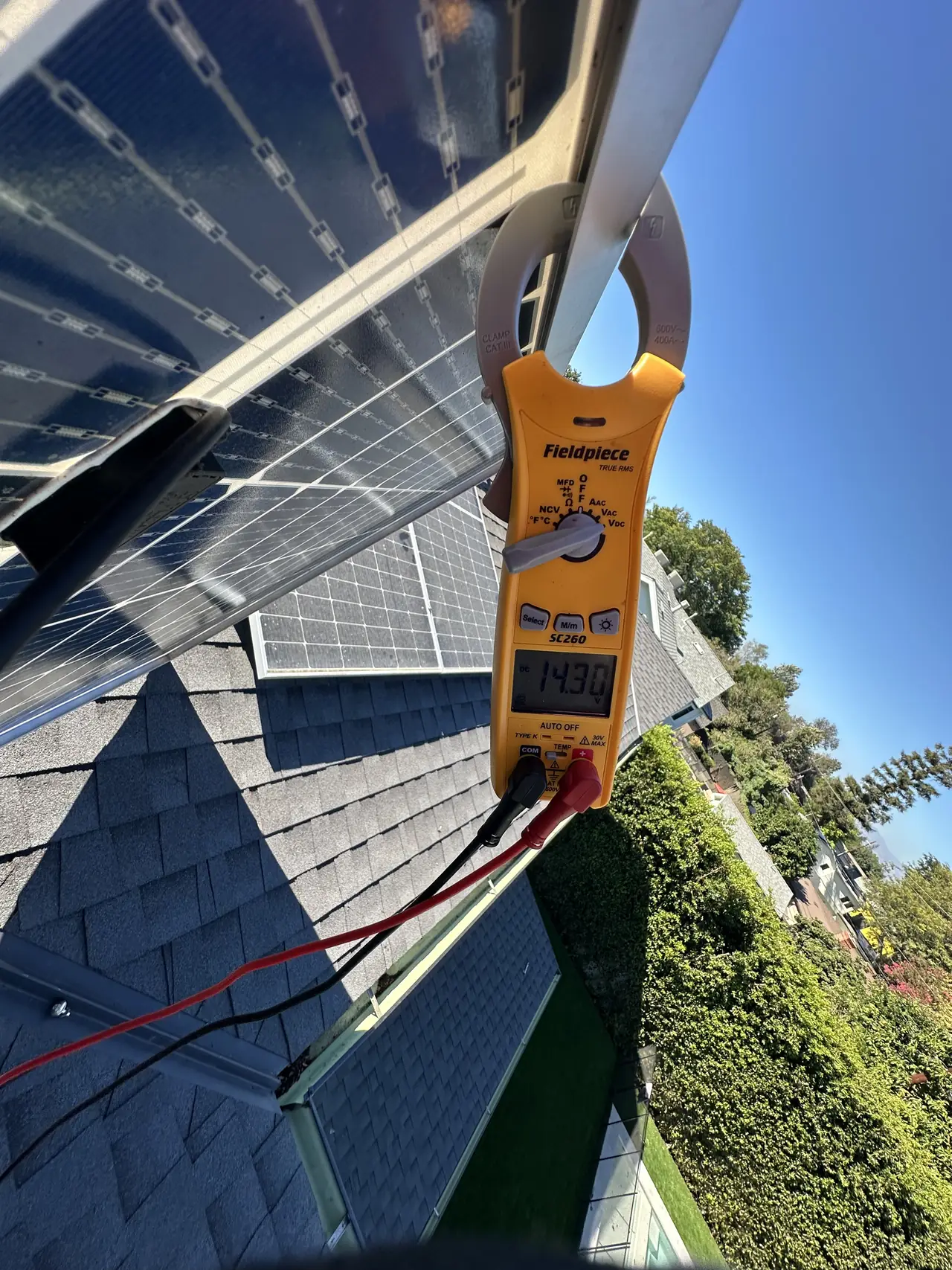
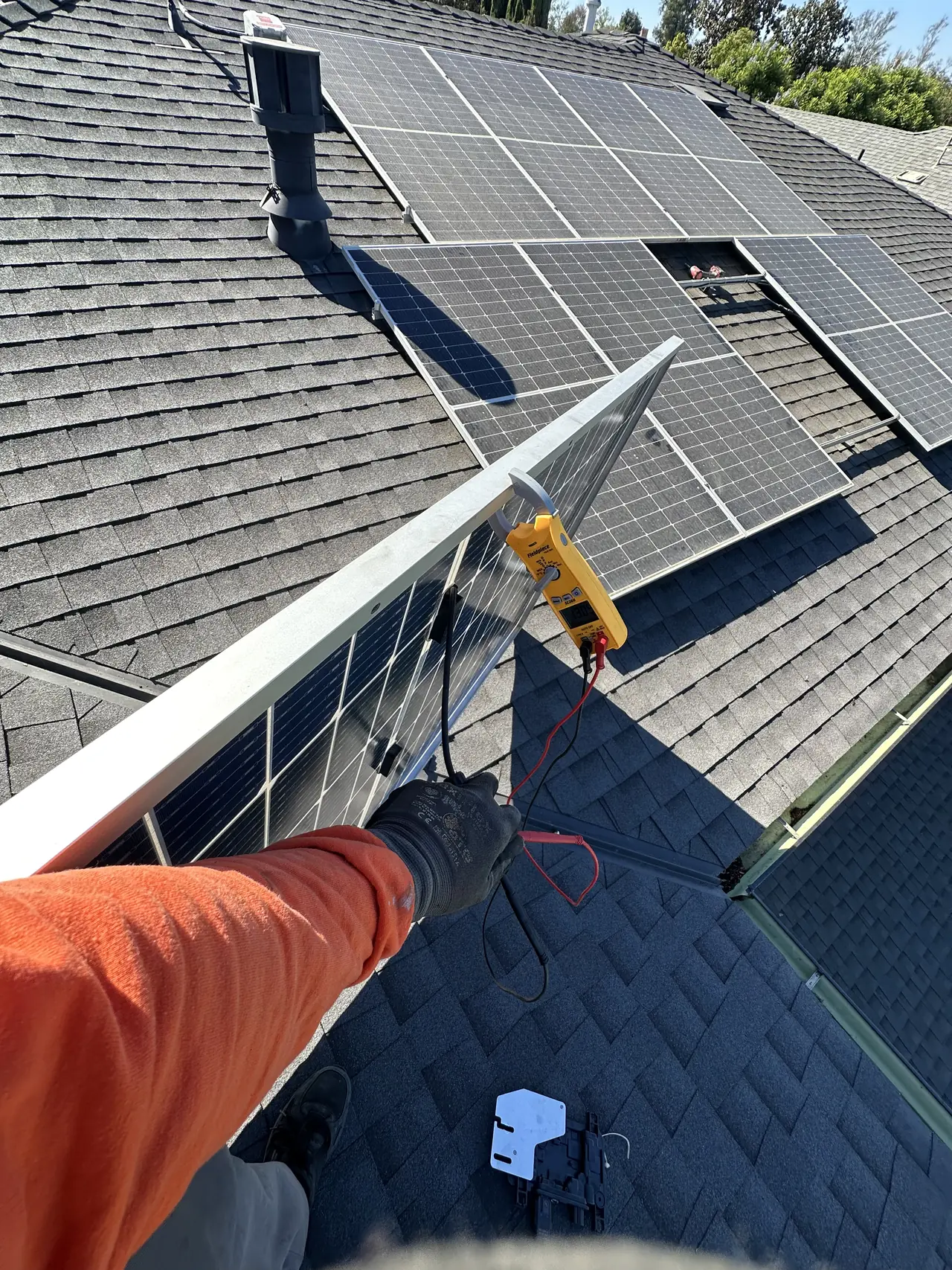
Cali Energy diagnosed it on site, opened a warranty claim with the manufacturer on the sixteenth of July, and had approval in two days and the replacement unit shipped inside a week. In the middle of August a second microinverter on the same roof failed and went through the same process.
Then the part that is not free. A device warranty covers the device. The visit, the diagnosis and the labor of lifting a module and swapping a unit are claimed separately, as a labor reimbursement request, filed after the work is done — and the manufacturer held that request pending return of the failed units for failure analysis. In other words, the dead equipment has to travel back before anyone is paid for having replaced it.
None of this is unreasonable — a manufacturer paying for labor wants to know the part actually failed — but it is worth knowing before you need it. Two questions to ask whoever installed your system, while nothing is broken: does my warranty cover the labor of a replacement or only the part, and who files the reimbursement when the time comes?
And one for the monitoring: who is watching it? On a microinverter array a failed unit takes its own module's share of the output with it — on an array this size that is a noticeable slice — and it announces itself nowhere except in the data. On this house it was caught because somebody was looking.
How it ran
| 6 December 2023 | Interconnection application filed |
|---|---|
| 9 December 2023 | Application reviewed; site evaluation complete |
| 28 December 2023 | Service release issued; meter request sent |
| 10 January 2024 | Net meter set — permission to operate |
| 16 July 2026 | Microinverter not reporting; warranty claim opened |
| 18 July 2026 | Claim approved; replacement shipped within the week |
| 13 August 2026 | Second microinverter fails; second claim opened |
| 2 September 2026 | Labor reimbursement filed; held pending device return |
Thirty-five days from application to permission to operate, and a warranty cycle two and a half years after it. This timeline reflects this property and this equipment.
What we did
- Carried the interconnection application through review and site evaluation to the meter set in thirty-five days (C-10).
- Diagnosed the silent module on the roof with a clamp meter rather than guessing from the monitoring alone.
- Opened the manufacturer warranty claim, tracked it to approval and took delivery of the replacement.
- Lifted the module, replaced the microinverter and confirmed the unit reporting again.
- Repeated the cycle for a second failure a month later on the same roof.
- Filed the labor reimbursement request and prepared the failed units for return and failure analysis.
System specifications
| System size | 2.92 kW AC-CEC recorded by the utility |
|---|---|
| Microinverters | Enphase IQ8MC, one per module |
| Storage | None |
| Building | New two-story single-family house with basement |
| Fire protection | NFPA-13D residential sprinkler system |
| Roof | Composition shingle, hip |
| Warranty scope | Device replaced; labor reimbursed on a separate request |
| Utility / AHJ | LADWP / LADBS |
Is your project like this one?
- Your house is new and the array on it is the size the energy code required.
- Part of your array has stopped reporting and the rest looks fine.
- You have been told a replacement is under warranty and want to know what that includes.
- Nobody is watching your monitoring and you are not sure it would be noticed.
- Your installer is gone and you need somebody to file a manufacturer claim.
Cali Energy in Valley Village
Valley Village is inside City of Los Angeles boundaries, in ZIP 91607: permits run through LADBS, interconnection through LADWP.
Valley Village is a small grid of post-war streets in 91607 that has been filling with new two-story builds for a decade. On a new house the array is often the code minimum rather than a bill-offset system, which makes what happens to it in year two the more interesting question.
This installation is on the Valley Village projects page alongside the others.
- License and classifications: CSLB #1032379
- Official reference for this process: California Energy Commission — solar equipment lists
- Official reference for this process: LADWP interconnection requirements
Frequently asked questions
Does Cali Energy service solar systems in Valley Village?
Yes. Cali Energy works across 91607 on LADWP interconnections and LADBS permits, and service work — diagnosing a silent module, filing a manufacturer warranty claim, replacing a microinverter — is part of it. On this house two units were replaced under warranty in the summer of 2026. Our license is CSLB #1032379.
What does a microinverter warranty actually cover?
The device. A failed unit is replaced free within its warranty term, and on this project approval came two days after the claim was opened. The labor of diagnosing the fault, lifting the module and swapping the unit is a separate reimbursement request filed after the work, and it can be held until the failed device is returned for failure analysis.
How would I know a microinverter has failed?
From the monitoring, and usually from nothing else. On a microinverter array a failure is local: one module stops producing and the rest carry on, so there is no blackout, no alarm and no change indoors. That module's output quietly goes missing until somebody reads the data. That is the argument for having a system watched rather than installed and forgotten.
Why is the array on a big new house so small?
Because on new residential construction the energy code sets a minimum photovoltaic size calculated from the building, not from the family's consumption. A builder meeting that requirement installs to the number. The array is real and it works; it is simply not sized to cover the bill, which is worth knowing before you buy the house rather than after the first summer.
What this would look like on your roof
Planning solar in Valley Village? Tell us your utility, your roof and what your bill looks like now, and we will model what a system like this would do on your house before you commit to anything.
Or call +1 (323) 844-7777 · Cali Energy, Northridge · CSLB #1032379 (B, C-10, C-39) — design, permits, install and electrical under one licensed contractor.
Related
This timeline reflects this property and this permitting path. Updated September 2026.