

Studio City, CA · June 2025 – July 2026 · LADWP / LADBS
Four hundred and four days. The utility used twenty-seven.
A house and a second building on one lot, two work requests filed on the same day in June 2025, and permission to operate in July 2026. Here is where the time actually went, month by month.
A long solar timeline is usually not a long utility queue. The utility cannot issue permission until the building department releases the work, and the building department cannot release it until the building is finished and inspected. On a house still under construction that clock belongs to the construction, and no amount of chasing the utility moves it.
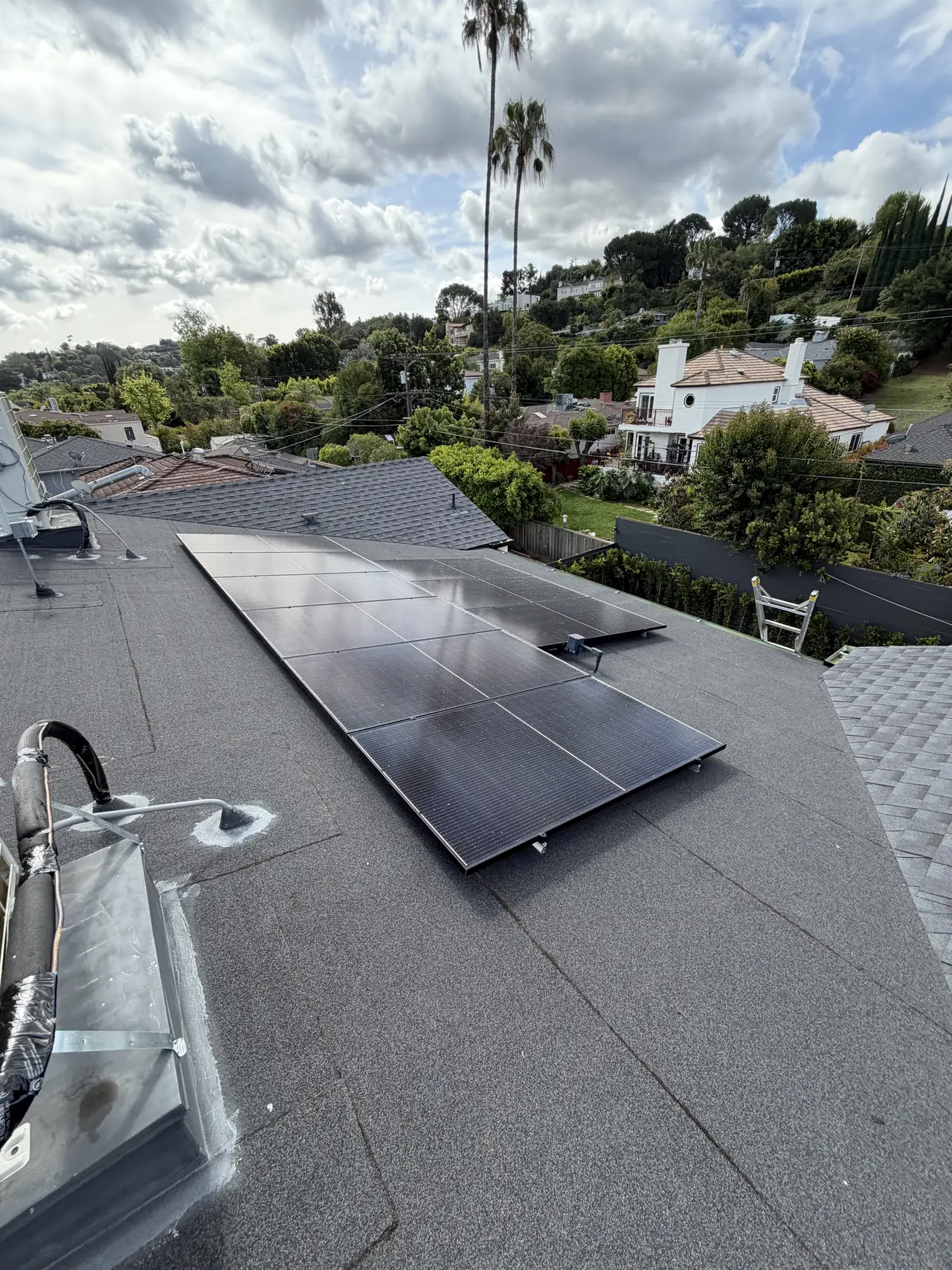
At a glance
- Recorded by the utility
- 3.53 kW and 1.57 kW
- Work requests
- Two, filed the same day
- Filed
- 5 June 2025
- Building department release
- 23 April 2026 — 322 days later
- Permission to operate
- 14 July 2026
- Total
- 404 days
- Of which the utility
- About a month
- Utility / AHJ
- LADWP / LADBS
The story
Four hundred and four days from filing to permission to operate sounds like a utility that lost the paperwork. That is not what happened, and the breakdown is more useful than the total.
The lot had been cleared the previous summer — the old house and its detached garage demolished under one permit — and what was going up was a new dwelling, a pool with a spa, and a separate building of twenty by twelve feet at the back with its own bathroom reached from outside. Two buildings, so two interconnection requests: the utility recorded them at 3.53 and 1.57 kilowatts, filed on the same day in June 2025 with the charges paid a week later and the underground portion the day after that.
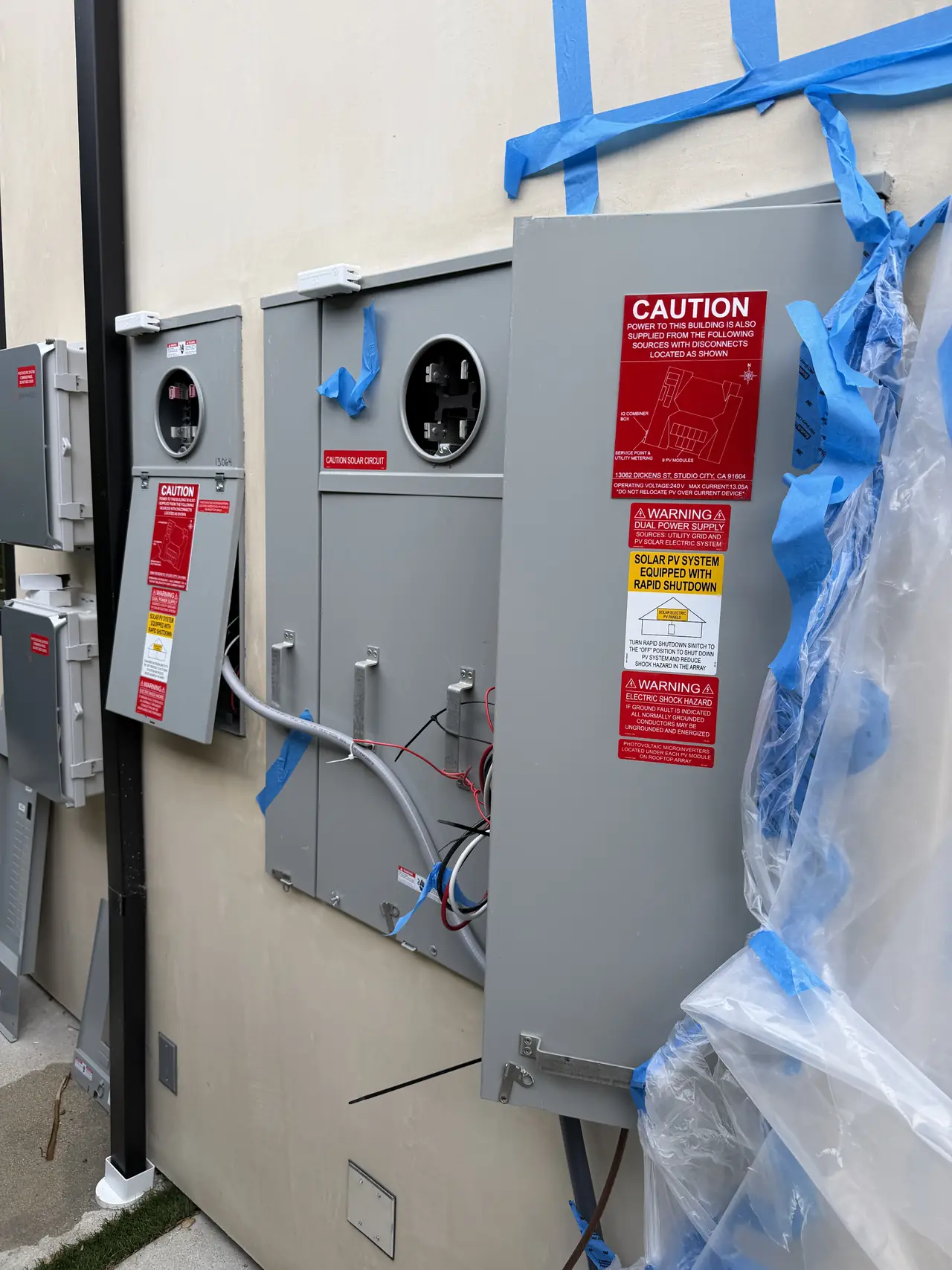
That photograph is the whole story in one frame. The meter sockets, the disconnects and the solar labeling are all mounted and correct. The plastic and the blue tape are still on them because the wall behind them is not finished. Nothing about the solar was outstanding. The building was.
Here is the shape of the fourteen months. From filing in June 2025 the next substantive document is the building department's final release, and it arrives on the twenty-third of April 2026. Three hundred and twenty-two days. In that window the utility had nothing to do and nothing to decide: it cannot grant permission to operate on a building the city has not signed off, and the city cannot sign off a house that is not finished.
Our own part of that stretch was a follow-up in December asking whether the project was ready for inspection yet. That is the honest version of what a solar contractor does while a house is being built: ask periodically, and wait.
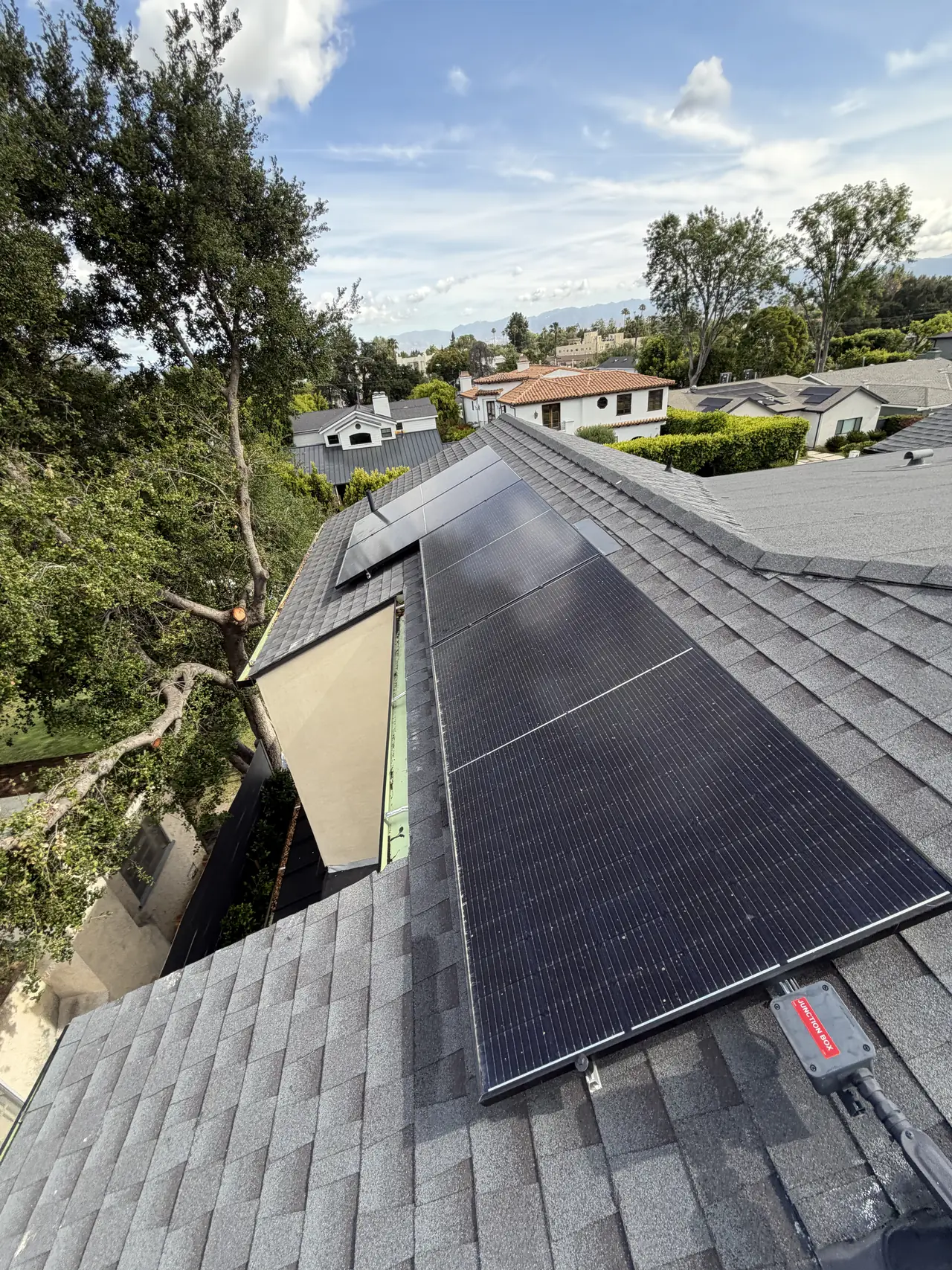
Then there is a stretch that belongs to nobody but us. The release landed on the twenty-third of April. The photographs of both meter positions went to the utility on the seventeenth of June — fifty-five days later. The release is the trigger to send those photographs, and on this project they went late. No client, department or utility was holding that stretch.
What happened once they went across is the argument for sending them on the day. The reply came back the same day — the field orders had been issued for both addresses — and on that same day the review, the confirmation, the site evaluation and the approval all landed on both work requests. Permission to operate followed on the fourteenth of July, on both buildings.
Add it up and the utility's own stretch, from the photographs going across to the permission arriving, is twenty-seven days. Three hundred and twenty-two days were the building being built and inspected. Fifty-five were ours.
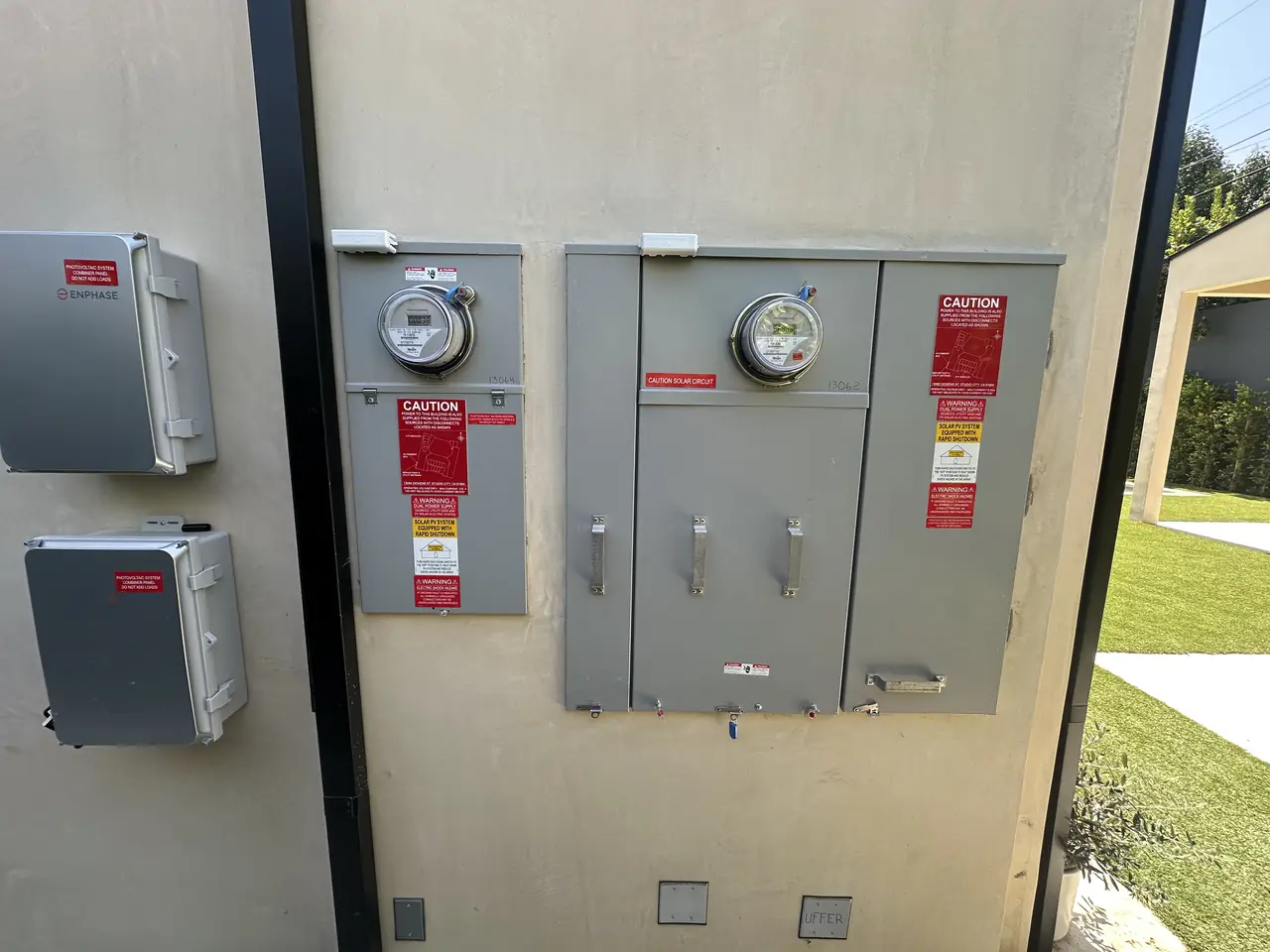
Why this matters when you are choosing a contractor: a timeline promise means nothing unless the person making it says which part they control. The controllable part here is the filing, and the turnaround on anything the utility asks for — including the photographs that should follow the release immediately. That is the part of this project that could have been shorter, and it is the part worth asking any contractor about.
And if you are building, the practical move is the opposite of chasing. File when the array is installed, because the queue position and the charge are dealt with early. Then keep one line open to whoever books the building inspection, because that release is the only document standing between you and a working system.
How it ran
| Summer 2024 | Existing house and detached garage demolished |
|---|---|
| 2024–2026 | New dwelling, a pool with spa and a detached building with its own bathroom |
| 5 June 2025 | Two interconnection requests filed, one per building |
| 12–13 June 2025 | Charges paid on both, then the underground portion |
| 8 December 2025 | Follow-up asking whether the project is ready for inspection |
| 23 April 2026 | Building department final release on both |
| 17 June 2026 | Photographs of both meter positions sent; field orders issued the same day |
| 17 June 2026 | Review, confirmation, site evaluation and approval on both |
| 14 July 2026 | Permission to operate on both buildings |
322 days were the building. 55 were the gap before the photographs. 27 were the utility.
What we did
- Filed both interconnection requests on the same day and paid all four charges within a week.
- Installed both arrays and the exterior equipment while the buildings were still unfinished.
- Followed up with the client through the construction to catch the inspection window.
- Sent photographs of both meter positions without waiting to be asked for them.
- Carried both work requests to permission to operate on the same day.
System specifications
| Buildings | New dwelling and a detached building with its own bathroom |
|---|---|
| Recorded by the utility | 3.53 kW and 1.57 kW |
| Work requests | Two, filed the same day |
| Charges | Four — application and underground portion on each |
| Filing to building release | 322 days |
| Release to permission | 82 days |
| Release to photographs | 55 days |
| Photographs to permission | 27 days |
| Also on the lot | Pool with spa |
| Utility / AHJ | LADWP / LADBS |
Is your project like this one?
- Your solar has been waiting months and you do not know who is holding it.
- You are building and want to know when to file the interconnection.
- You have been told the utility is slow and want to check that.
- You have two buildings on one lot and both need connecting.
- You are comparing contractors who promise timelines.
Cali Energy in Studio City
Studio City is inside City of Los Angeles boundaries: permits run through LADBS, interconnection through LADWP.
When solar goes onto a house that is still being built, the interconnection cannot finish until the building does. In a city where most solar arrives on new construction, that is the single biggest thing setting the calendar.
This installation is on the Studio City projects page alongside the others, and what the work covers is set out on the Studio City service area page.
- License and classifications: CSLB #1032379
- Official reference for this process: LADWP interconnection requirements
- Official reference for this process: LADBS — inspections
Frequently asked questions
Why did this take fourteen months?
Mostly because the buildings were still being built: from filing to the building department's final release was 322 days, and in that window the utility has nothing it can do. The remaining 82 days split into 55 before the meter photographs were sent and 27 from the photographs to permission to operate. The 322 belonged to the construction. The 55 were ours.
Should I file the interconnection early or late?
Early, once the array is actually installed. Filing deals with the queue position and the charges while the building finishes. What it does not do is speed up the building department, so filing before the array exists buys nothing.
Who is actually holding up my solar?
Ask which document everyone is waiting for. If it is the building department's final release, the answer is the building and its inspection, not the utility. If the release has landed and nothing is moving, then it is worth chasing the utility — and sending photographs of the meter position usually moves it.
What can a contractor promise about timing?
The completeness of the filing and the speed of the response when the utility asks for something. That is genuinely theirs. Nobody can promise how long the rest of a construction project takes, and a contractor who quotes you a total without splitting it is guessing.
Does equipment sitting unfinished for months cause problems?
It should not, if it is mounted, sealed and labeled properly. On this project the enclosures stayed under their protective film through the build and were commissioned at the end without rework.
What this would look like on your roof
Planning solar in Studio City? Tell us your utility, your roof and what your bill looks like now, and we will model what a system like this would do on your house before you commit to anything.
Or call +1 (323) 844-7777 · Cali Energy, Northridge · CSLB #1032379 (B, C-10, C-39) — design, permits, install and electrical under one licensed contractor.
Related
This timeline reflects this property and this permitting path. Updated September 2026.