

Simi Valley, CA · July 2025 · Southern California Edison / City of Simi Valley
Simi Valley: the city business certificate the permit counter checks.
A removal and reinstallation permit in Simi Valley, and the city check at the counter that has nothing to do with the roof.
California licenses contractors at state level, and most homeowners check that and stop. Cities license businesses separately: a municipal business tax certificate is what allows a company to trade in that city at all, and Simi Valley verifies it at the permit counter before issuing anything. It is the check almost nobody asks about in advance. On this project the permit issued in early July 2025, and the array went back on the finished roof.
At a glance
- Work
- Removal and reinstallation of an existing array
- Permit type
- Electrical permit, City of Simi Valley
- Fees invoiced
- 2 July 2025
- City check
- Contractor's city business tax certificate, verified at the counter
- Permit issued
- On payment of the invoiced fees
- Utility / AHJ
- Southern California Edison / City of Simi Valley
The story
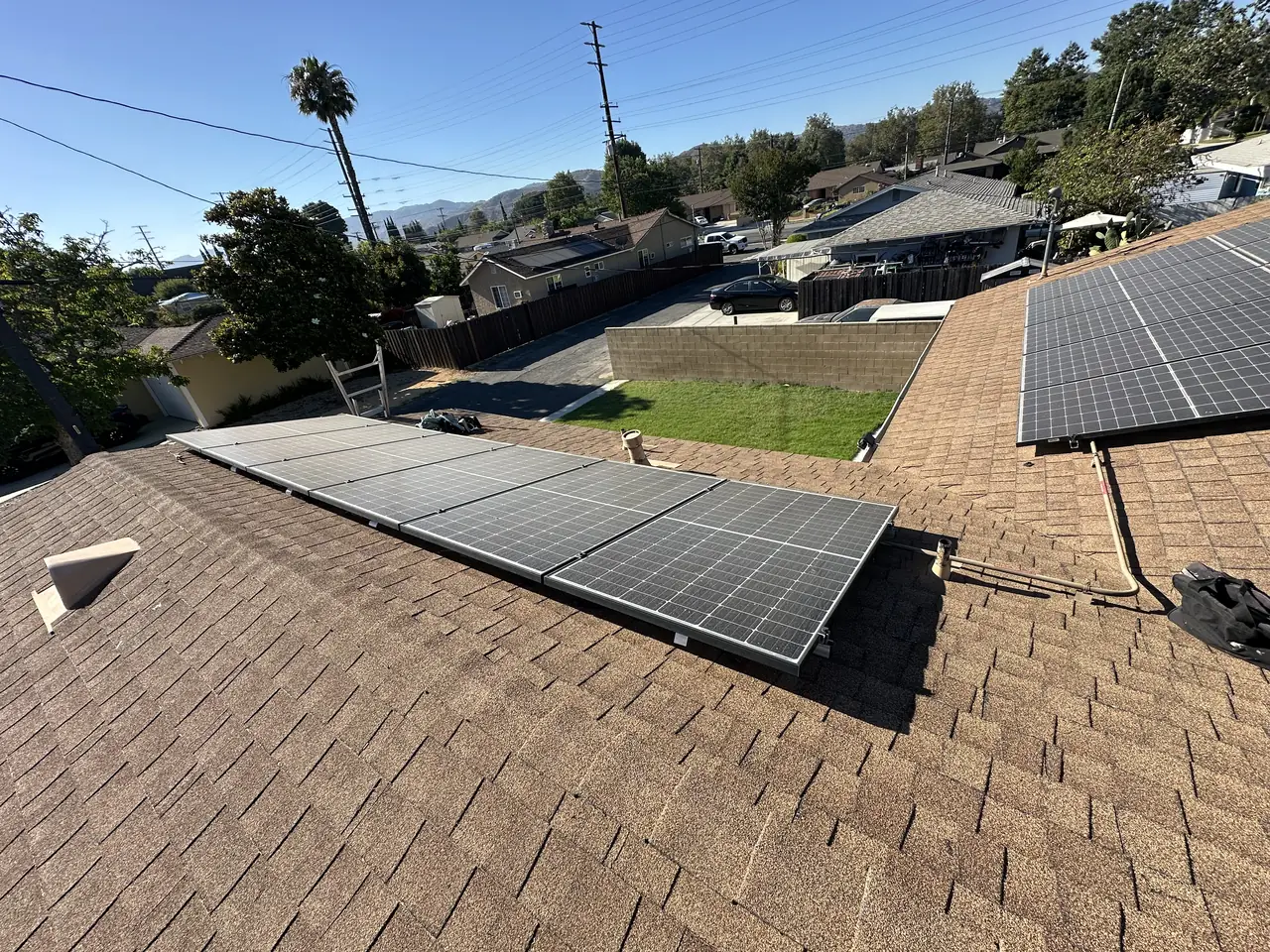
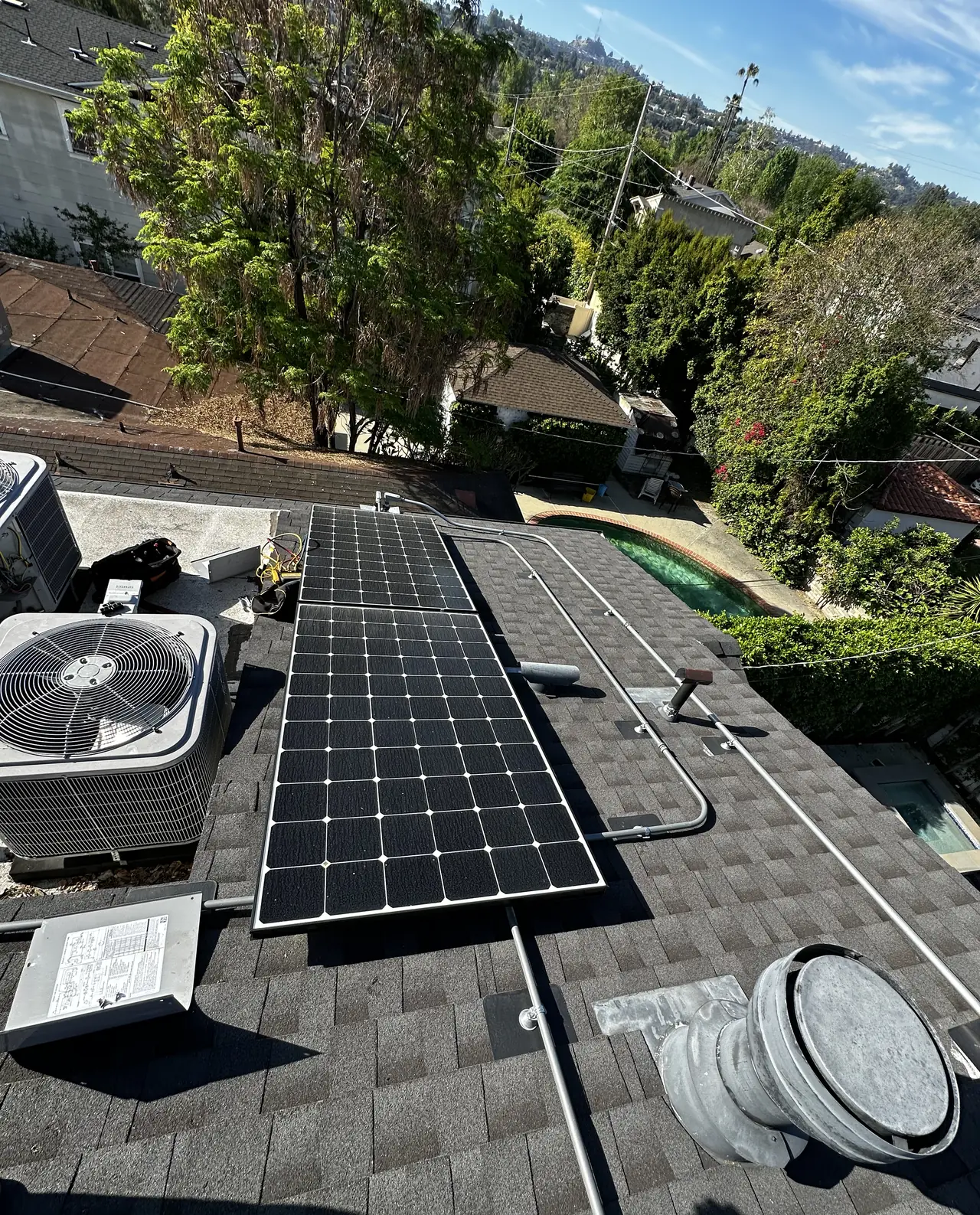
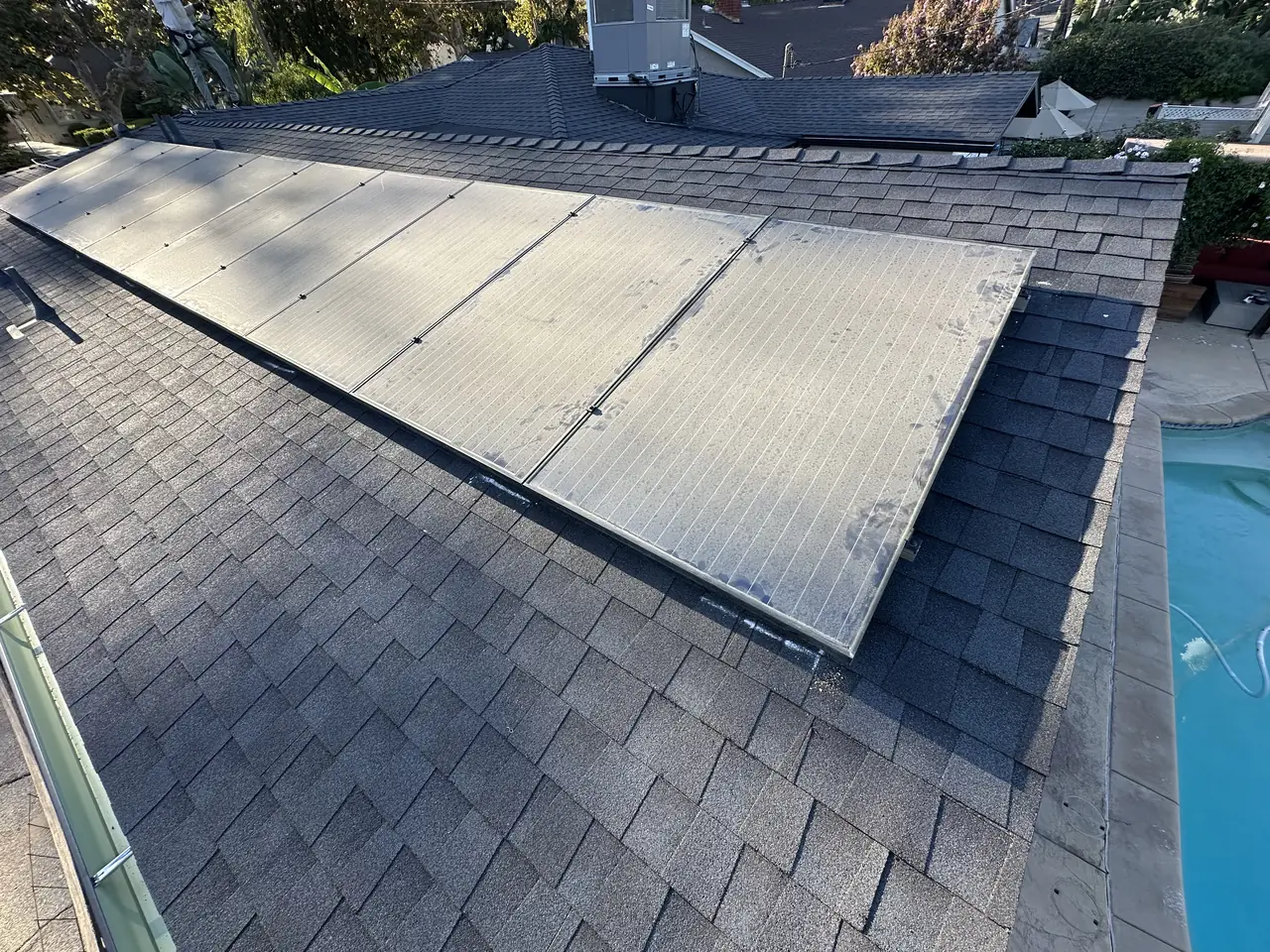
This was a detach and reset: the array comes off so work can be done to the roof beneath it, then goes back on new attachments. The scope is routine and Cali Energy does it regularly. The permit is routine too, and it carries one check worth knowing about.
Before it issues anything, the Simi Valley counter checks that the contractor named on the construction permit declaration has a current City of Simi Valley business tax certificate on file. No certificate, no permit, regardless of what has been paid or approved.
This catches people out because the licensing most homeowners know about is the state one. A California contractor's license is issued by the state board, covers the whole state and is what a homeowner should verify first. A municipal business tax certificate is a different thing entirely: it is the city's own registration, it is renewed on the city's own cycle, and plenty of building departments check it before they will issue anything.
It is not a formality with no content: a city that requires registration knows who is working within its limits.
The permit issued once the invoiced fees were paid, with the crew and the roofer already scheduled behind it.
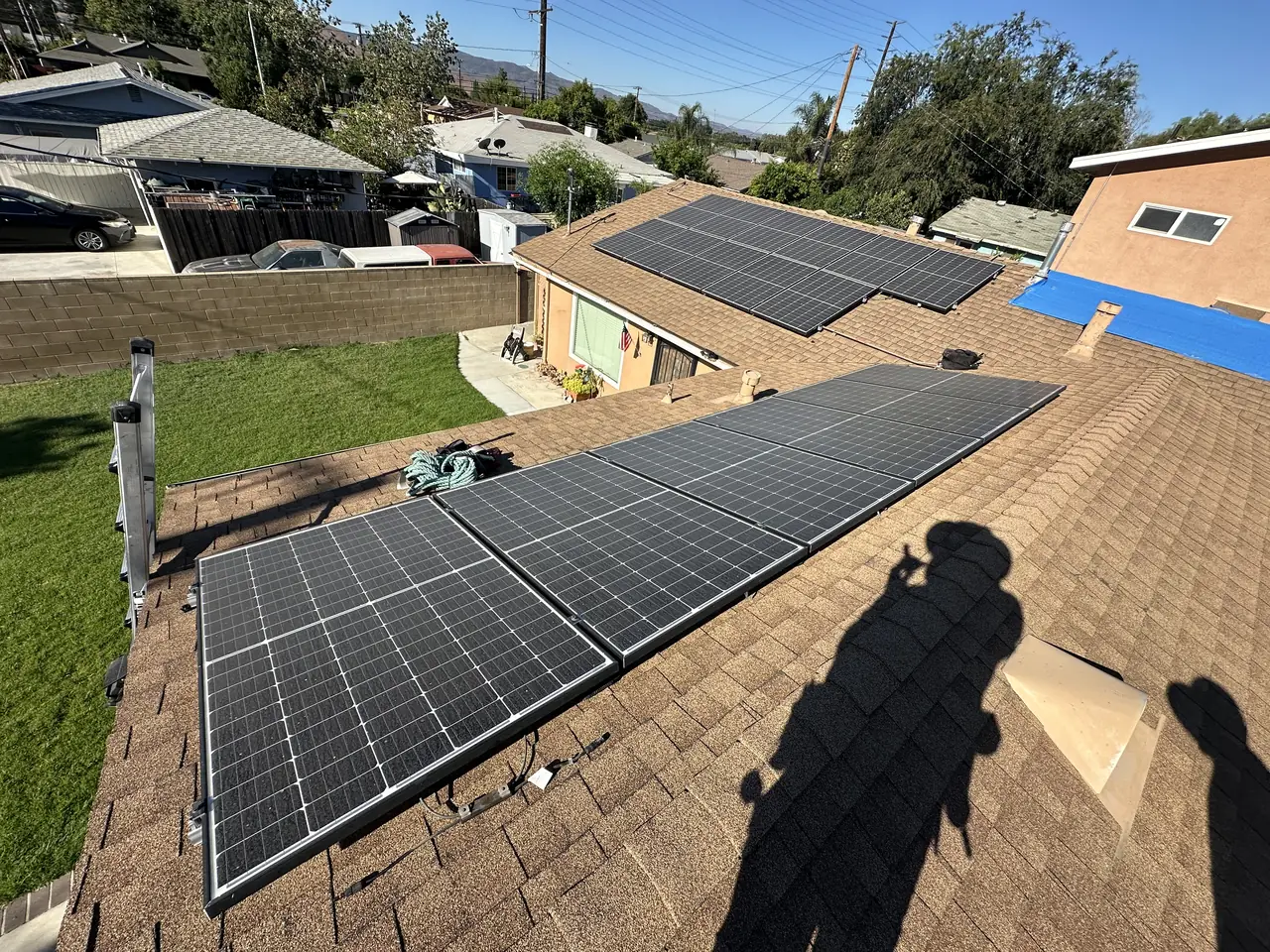
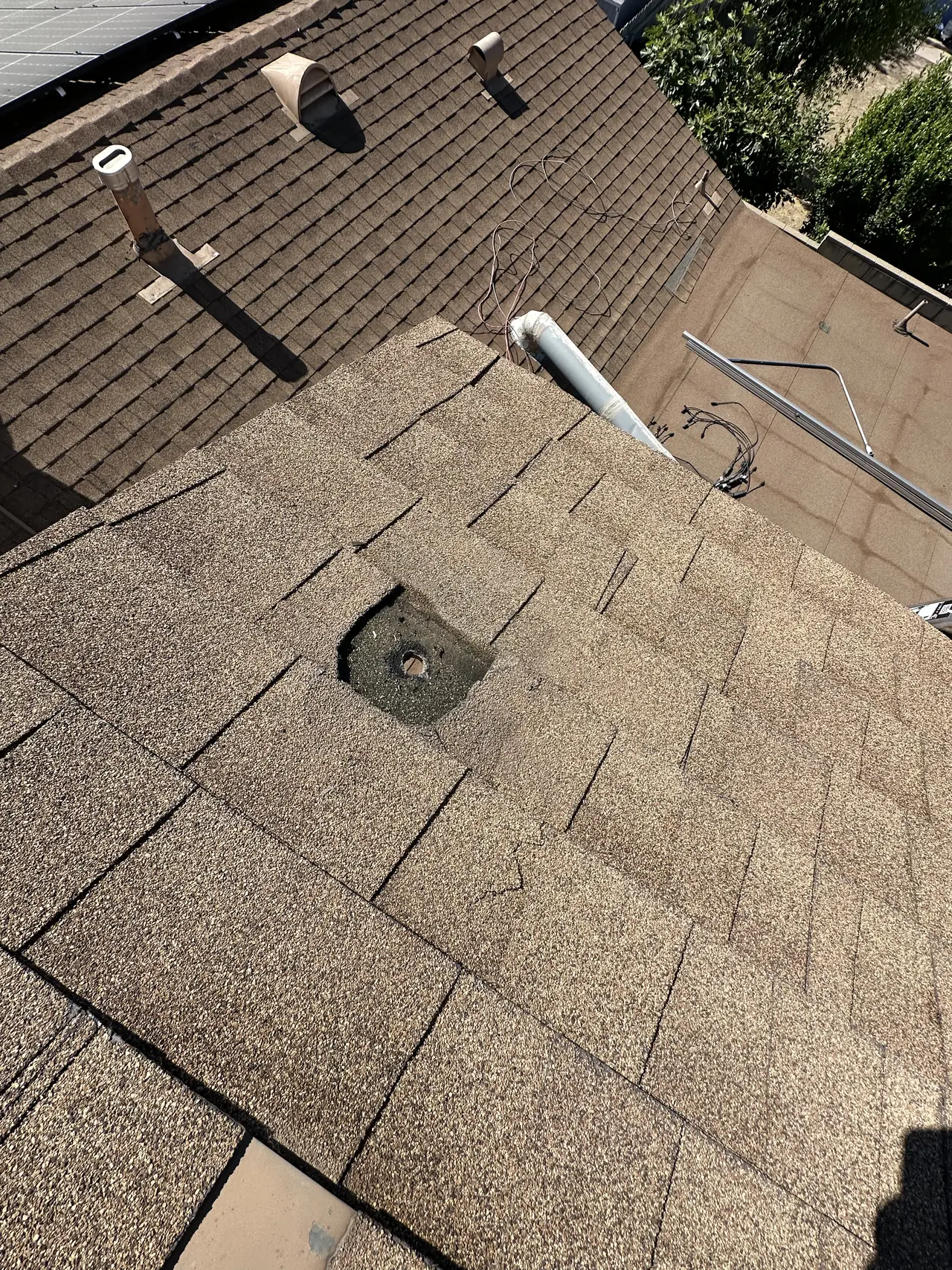
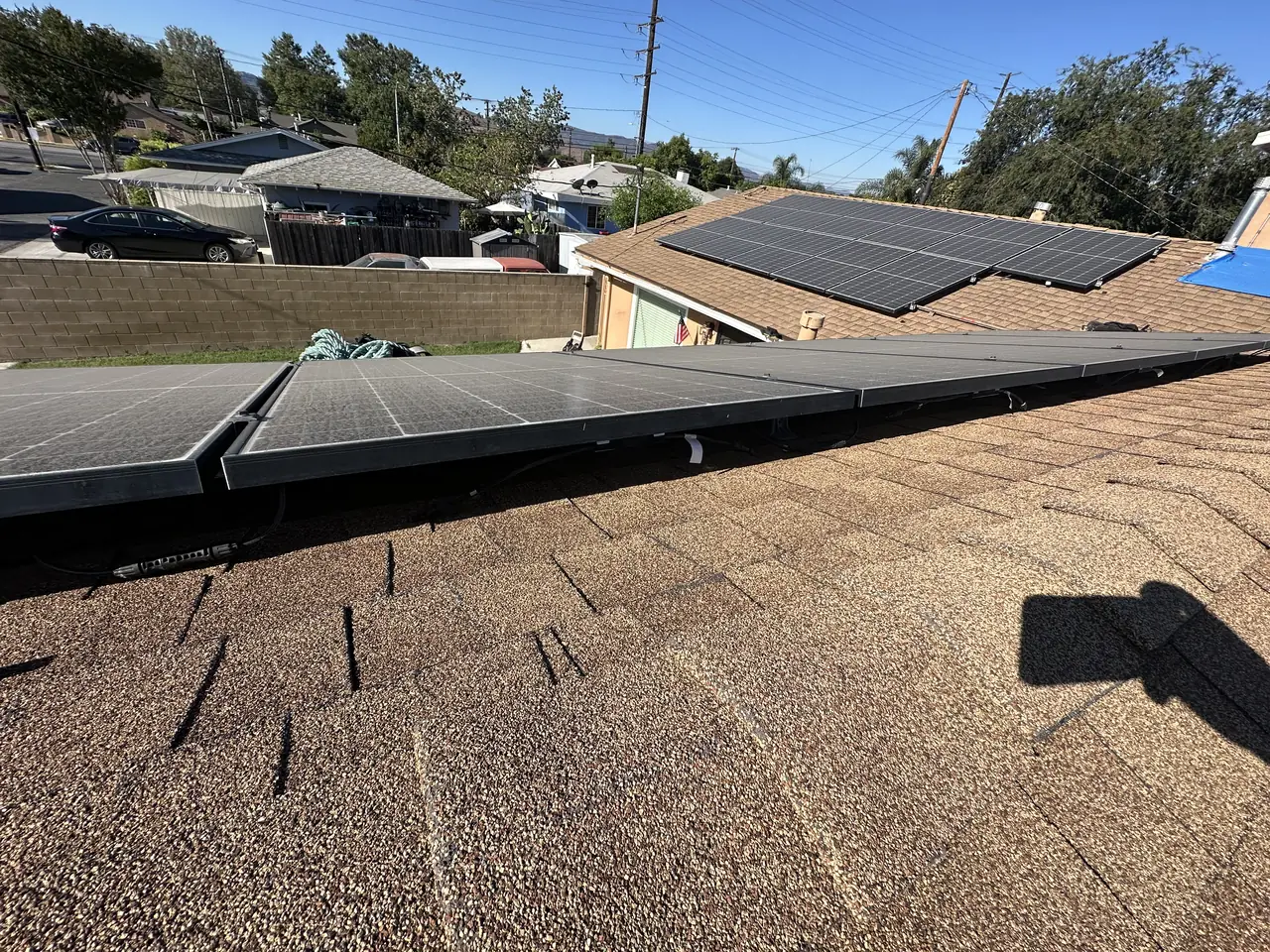
A detach and reset has a second reason to keep the paperwork tidy: when solar comes off for roofing work, the roofer's permit and the electrical permit run alongside each other. Here both ran to plan — the array came off, the roof was done, and the original modules went back on new attachments flashed into the finished roof and were reconnected.
How it ran
| July 2025 | Removal and reinstallation scheduled against the roofing work |
|---|---|
| 2 July 2025 | Permit fees invoiced by the city |
| 3 July 2025 | City confirms the permit will issue once fees are paid |
| July 2025 | Array removed; roof work completed; array reinstalled |
A detach and reset, permitted and done inside July. This timeline reflects this project.
What we did
- Filed the removal and reinstallation permit application with the city (C-10).
- Paid the invoiced fees and took the permit to issue without losing the installation slot.
- Removed the array and racking and made the roof safe for the work beneath it.
- Set new attachments into the finished roof rather than reusing old positions (C-39).
- Reinstalled and reconnected the original modules.
System specifications
| Scope | Detach and reset of an existing array |
|---|---|
| Permit | City of Simi Valley electrical permit |
| State licensing | California contractor's license, verified separately |
| City licensing | Municipal business tax certificate, checked at the counter |
| Attachments | New positions, flashed into the finished roof |
| Coordination | Electrical permit runs alongside the roofing permit |
| Utility / AHJ | Southern California Edison / City of Simi Valley |
Is your project like this one?
- Your permit is invoiced and still has not issued.
- You are checking a contractor and have only looked at the state license.
- Your roofer is waiting on your solar contractor's permit.
- Your array has to come off for roof work and you want the sequence planned.
Cali Energy in Simi Valley
Simi Valley is a city in Ventura County: permits run through the City of Simi Valley Building & Safety Division, interconnection through Southern California Edison.
A state contractor's license lets you work in California. A city business tax certificate lets you work in that city. Simi Valley checks the second one at the permit counter, and a project stops there without it.
This installation is on the Simi Valley projects page alongside the others, and what the work covers is set out on the Simi Valley service area page.
- License and classifications: CSLB #1032379
- Official reference for this process: CSLB — check a contractor's license
- Official reference for this process: City of Simi Valley — Building & Safety Division
Frequently asked questions
What is a city business tax certificate and why does a permit need one?
It is a municipal registration that allows a business to operate within that city, separate from the state contractor's license. Many building departments verify it before issuing a permit, because it identifies who is working inside the city limits.
Does Cali Energy hold licensing for Simi Valley?
Yes. Cali Energy holds a California contractor's license, CSLB #1032379, covering B, C-10 and C-39, and carries the City of Simi Valley business tax certificate the permit counter checks. It is worth asking any contractor for both. Fifteen completed Simi Valley projects are on our projects page.
What should a homeowner verify before signing?
The state contractor's license first: that it is current, that it carries the classifications the work needs, and that the name on it matches the name on the contract. Then ask whether the contractor is registered in your city, because that is the one that stops a permit at the counter and almost nobody asks about it.
Does a detach and reset need its own permit?
In Simi Valley yes, and it is worth knowing before scheduling, because the electrical permit and the roofing permit run alongside each other. A homeowner waiting on the solar permit is usually holding up the roofer too, which turns a day of paperwork into a week of rescheduling across two trades.
What this would look like on your roof
Planning solar in Simi Valley? Tell us your utility, your roof and what your bill looks like now, and we will model what a system like this would do on your house before you commit to anything.
Or call +1 (323) 844-7777 · Cali Energy, Northridge · CSLB #1032379 (B, C-10, C-39) — design, permits, install and electrical under one licensed contractor.
Related
This timeline reflects this property and this permitting path. Updated September 2026.