

Burbank, CA · September 2025 – October 2025 · Burbank Water and Power / City of Burbank
The roof outlived its felt. The array came off and went back.
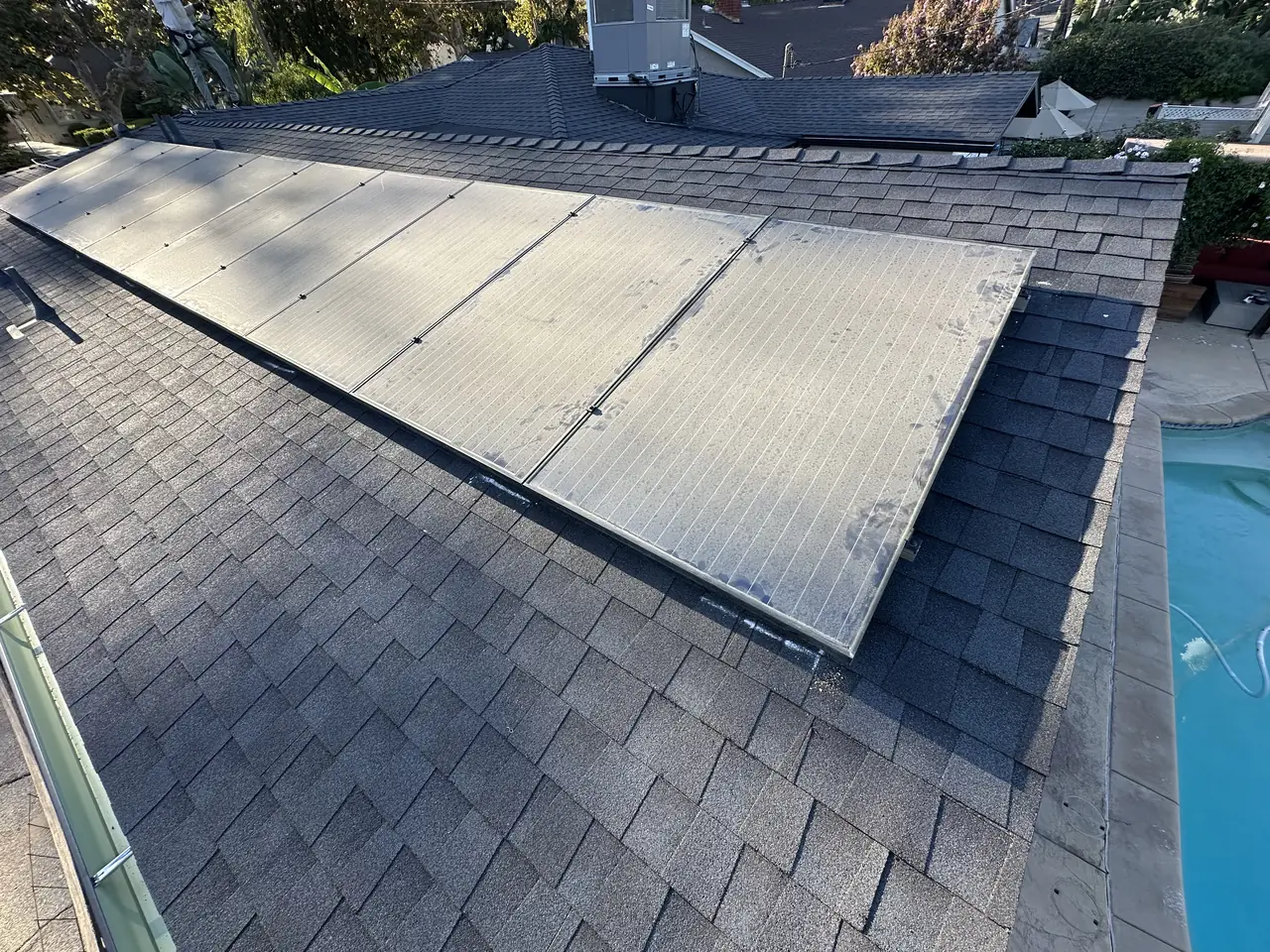
An existing array on a Burbank house detached, stored and reinstalled around a full roof replacement. Two visits, three weeks apart, and a set of new penetrations in between.
A roof underneath an array cannot be replaced around it. The modules come off, the rails and attachments come off, the old penetrations are made good as part of the tear-off, and the roof is rebuilt as if there had never been an array on it. Then new attachments are set into the new roof, flashed into the new courses, and the same modules go back on them. It is two separate visits and a storage problem, and on a Burbank house it is the only way the new roof is genuinely new underneath the array.
At a glance
- Work
- Existing array detached, roof replaced, array reinstalled
- First visit
- 17 September 2025, array and racking removed
- Second visit
- 6 October 2025, new attachments and array reset
- Old penetrations
- Made good as part of the roof replacement
- New attachments
- Set and flashed into the new roof
- Modules
- Original modules retained and reinstalled
- Roof
- Composition shingle, full replacement
- Utility / AHJ
- Burbank Water and Power / City of Burbank
The story
The array on this roof was working. The roof under it was not, and no amount of working array changes what that means: the modules had to come off.
People ask whether the roof can be done around the array, and the answer is that it can be done badly. A tear-off that stops at the edge of an array leaves the oldest, most penetrated, least accessible part of the roof exactly as it was, under the one thing on the roof that is expected to last twenty-five years. The new roof is then new everywhere except where it matters most.
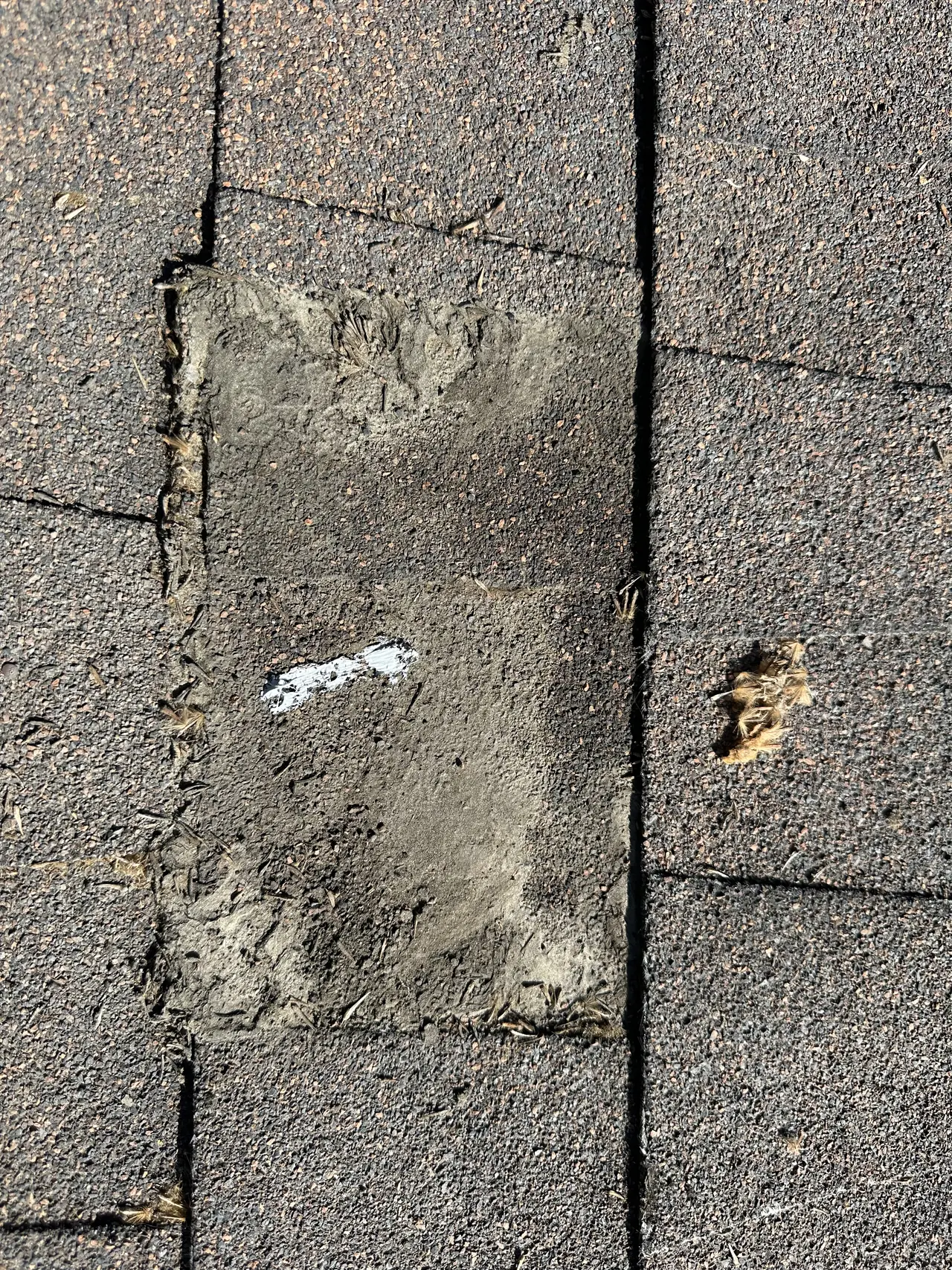
So the first visit Cali Energy made here, in the middle of September, was subtraction. Modules off and stacked, wiring made safe, rails and attachments removed, and every opening left behind sealed so the house stayed dry until the roofing crew got to it. Modules are stored flat and face-protected, because a module that gets dropped or twisted in handling is not a module any more.
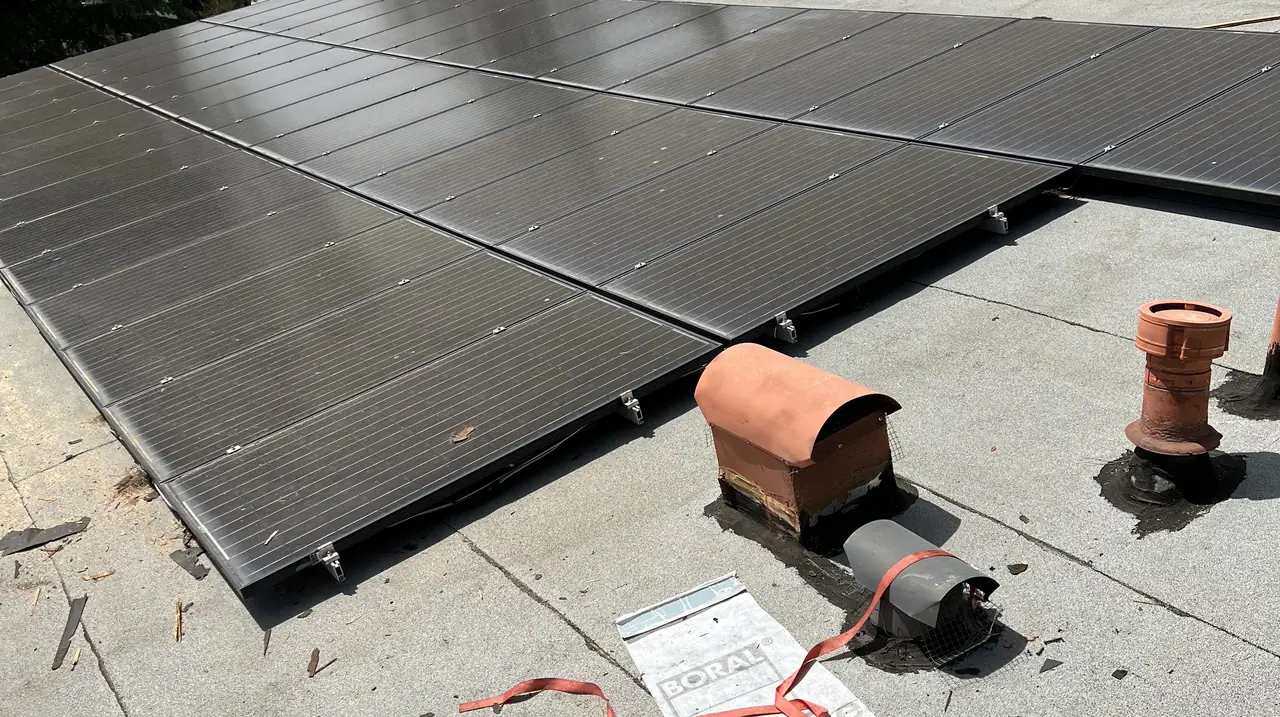
Then the roof was replaced properly, from the deck up, across its whole area including everything that had been underneath the array.
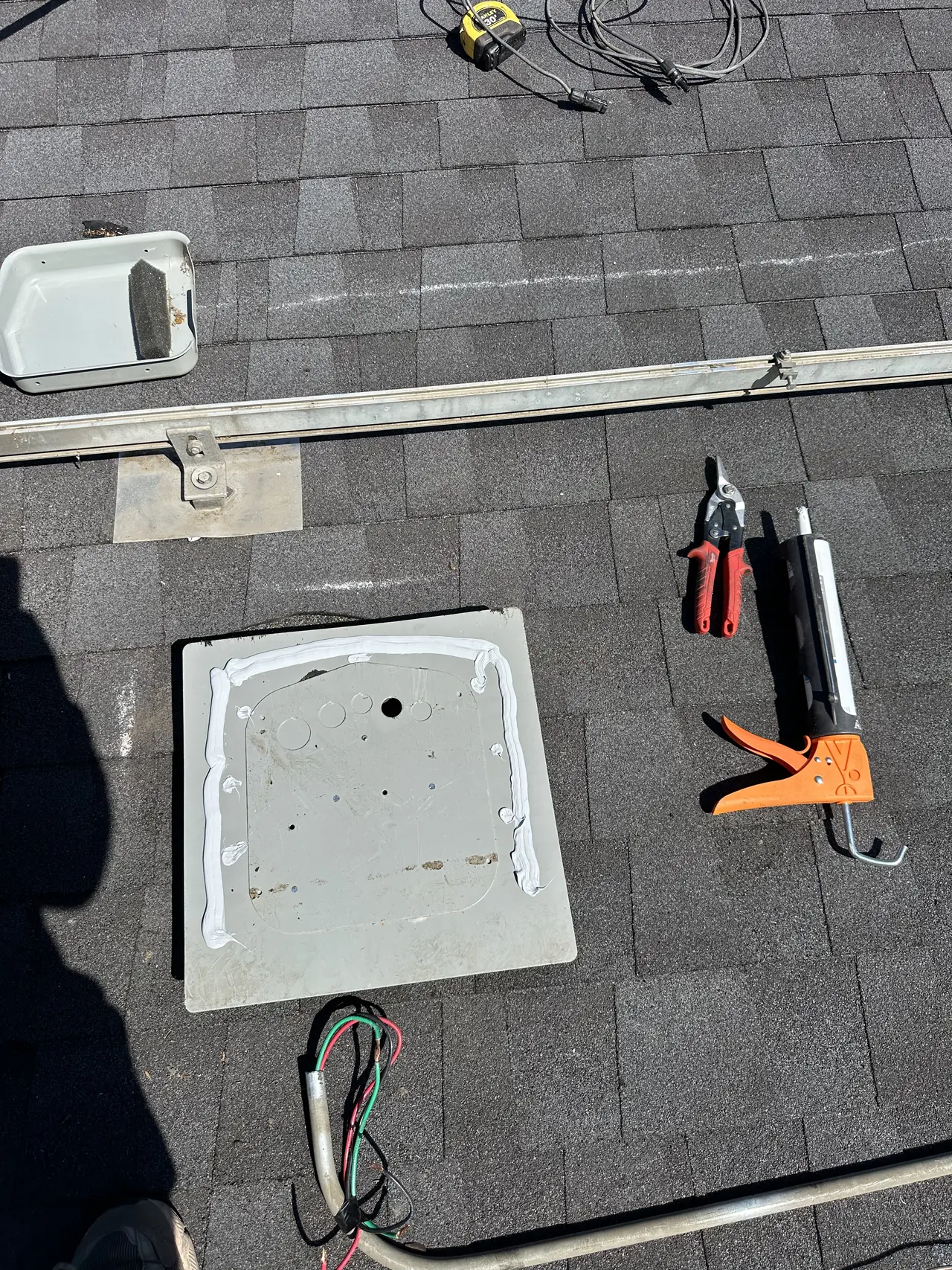
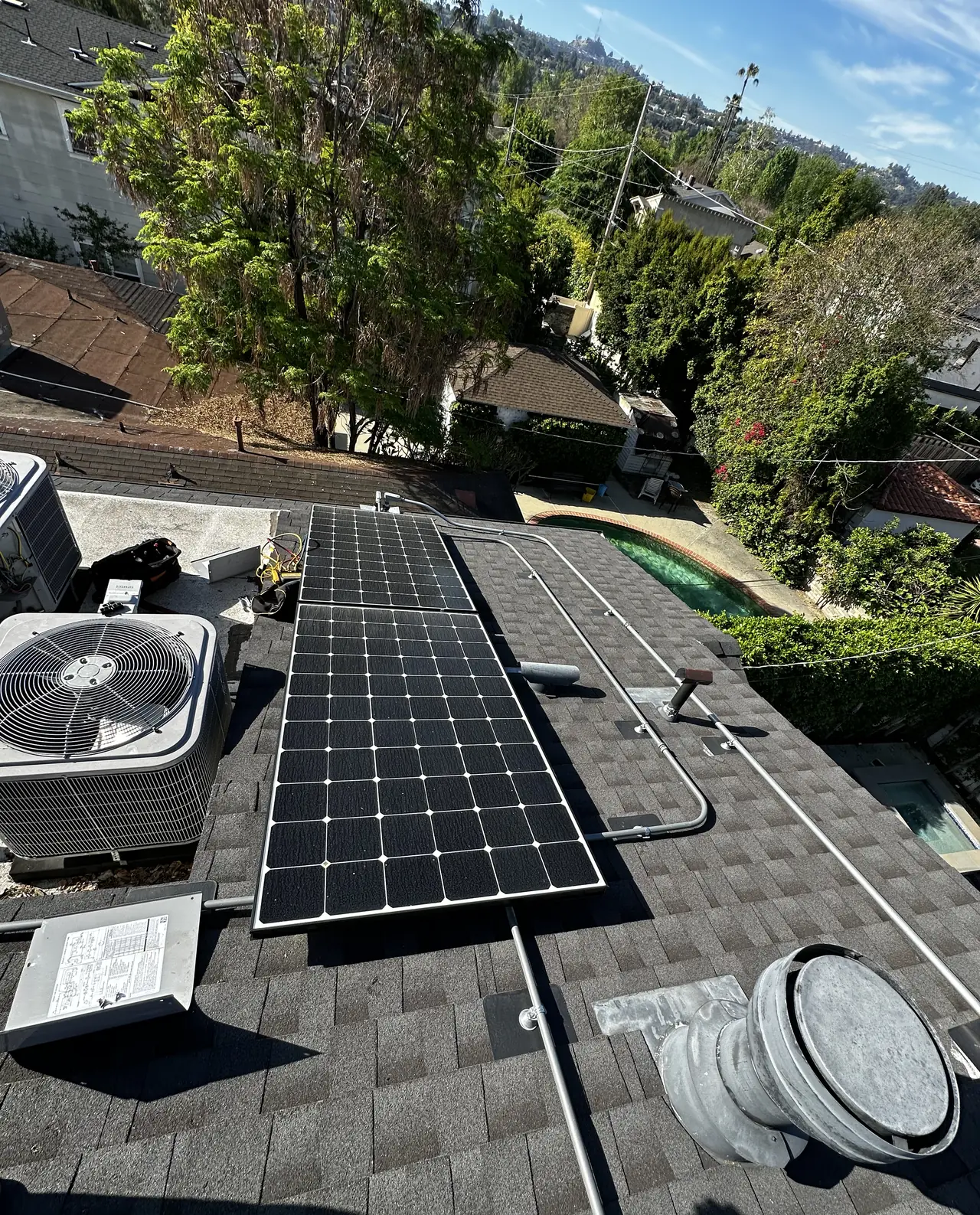
The second visit, three weeks later, was addition and it does not reuse the old holes. New attachment points were laid out and set into the new roof, each one flashed into the courses as they were built up, and only then did the rails go back. This is the part people underestimate: reinstalling an array is a fresh set of penetrations in a brand new roof, done to the same standard as a new installation, not a matter of bolting the racking back where it used to be.
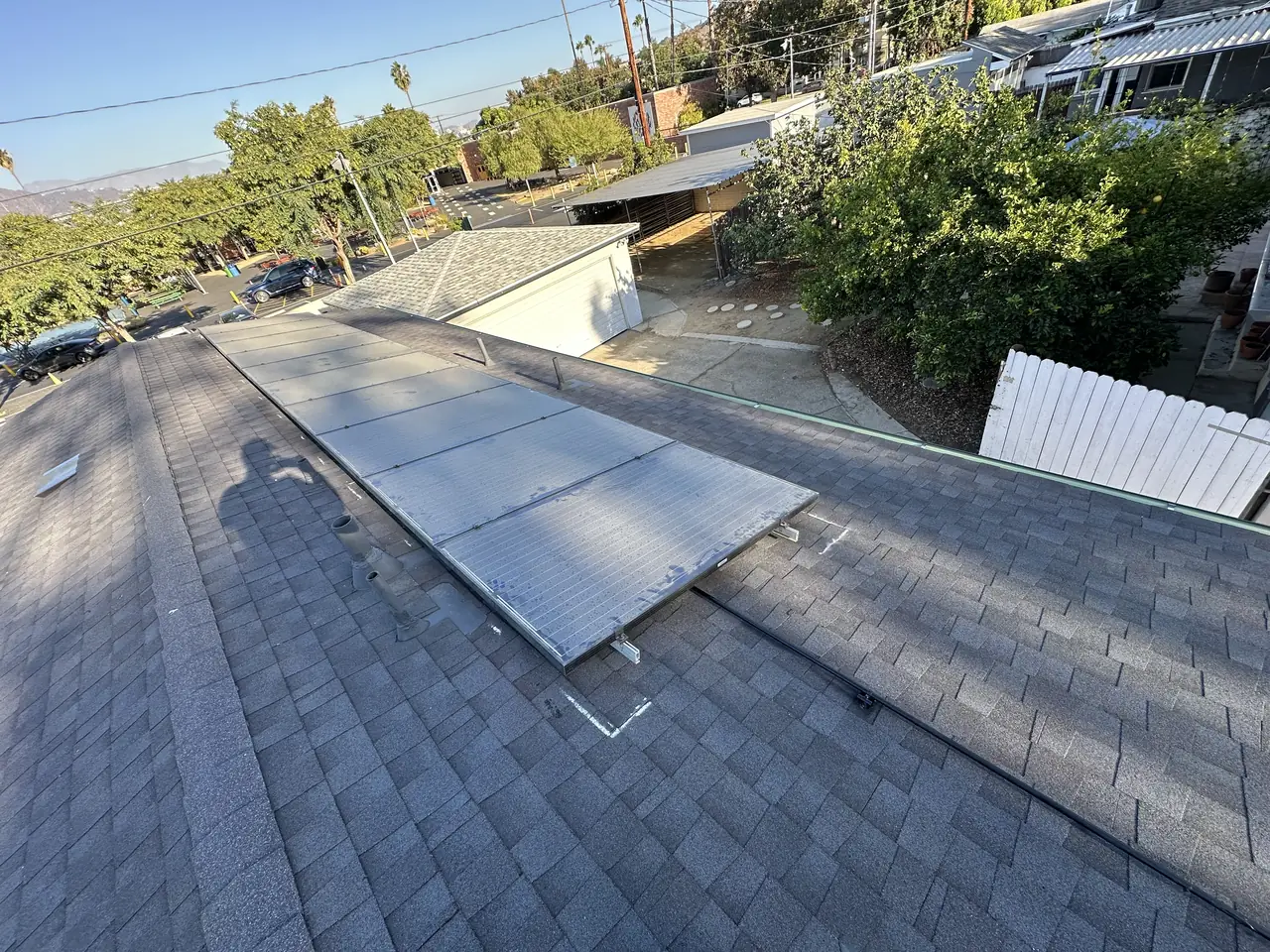
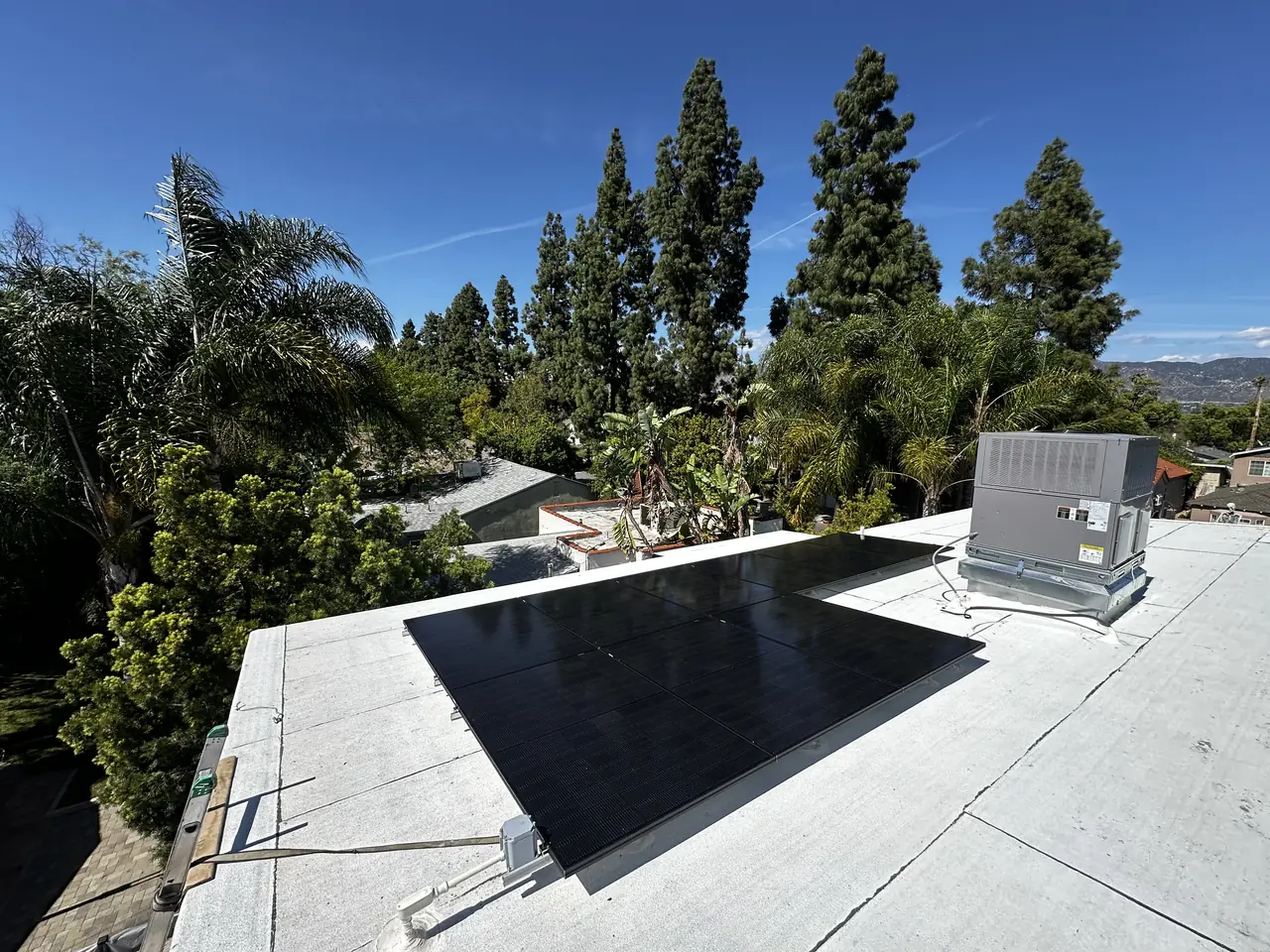
The same modules went back onto the new rails, were reconnected and brought back into service. From the street the house looks the way it did in August. The roof beneath the array is now the same age as the roof beside it, which was the entire point of taking it apart.
How it ran
| September 2025 | Array and roof surveyed; removal and reinstallation scheduled against the roofing |
|---|---|
| 17 September 2025, morning | Modules removed and stored; wiring made safe |
| 17 September 2025, afternoon | Rails and attachments removed; old penetrations sealed |
| Late September 2025 | Roof replaced in full, including the area under the array |
| 6 October 2025, morning | New attachment points set and flashed into the new roof |
| 6 October 2025, midday | Rails reset and leveled |
| 6 October 2025, afternoon | Original modules reinstalled, reconnected and returned to service |
Three weeks between the two visits, set by the roofing schedule rather than by the array. This timeline reflects this property.
What we did
- Surveyed the array and the roof together and scheduled the two visits against the roofing work (C-10 and C-39).
- Removed the modules, made the wiring safe and stored the modules flat and protected.
- Stripped the racking and sealed every old penetration so the house stayed dry before the tear-off.
- Set new attachment points into the new roof and flashed each one into the courses.
- Reset and re-leveled the rails on the new attachments rather than reusing old positions.
- Reinstalled, reconnected and returned the original array to service.
Scope of work
| Scope | Detach and reset of an existing array around a roof replacement |
|---|---|
| Roof | Composition shingle, replaced in full |
| Modules | Original modules retained, stored flat and reinstalled |
| Old attachments | Removed; openings sealed before the tear-off |
| New attachments | New positions, flashed into the new roof |
| Racking | Rails reset and relevelled on the new attachments |
| Visits | Two, three weeks apart |
| Utility / AHJ | Burbank Water and Power / City of Burbank |
Is your project like this one?
- Your roof needs replacing and there is already an array on it.
- A roofer has offered to work around your solar panels.
- You are being asked to coordinate two trades and nobody is holding the schedule.
- Your array is fine and you do not want to buy new modules to get a new roof.
- You want to know what detach and reset actually includes.
Cali Energy in Burbank
Burbank is its own city with its own municipal utility: permits run through the City of Burbank Building & Safety Division, interconnection through Burbank Water and Power.
Burbank's housing stock is mostly old enough that roofs are reaching the end of their second life, and a good many of them now have an array bolted to them. The two schedules have to be made to fit each other.
This array is on the Burbank projects page alongside the others, and what the work covers is set out on the Burbank service area page.
- License and classifications: CSLB #1032379
- Official reference for this process: City of Burbank — Building & Safety
- Official reference for this process: CSLB — check a contractor's license
Frequently asked questions
Can a roof be replaced around the solar panels?
Only by leaving the worst part of the roof in place. The area under an array is the oldest, the most penetrated and the least accessible, and it is the area a new roof most needs to cover. Stopping the tear-off at the array edge produces a roof that is new everywhere except beneath the thing expected to sit there for decades.
Does Cali Energy remove and reinstall existing solar in Burbank?
Yes. Cali Energy detaches arrays for roofing work, stores the modules, and reinstalls them on new attachments once the roof is finished, including arrays it did not originally install. On this house that was two visits three weeks apart. Eleven completed Burbank projects are on our projects page. Our license is CSLB #1032379.
Do the old mounting holes get reused?
No. New attachment points are laid out and set into the new roof, and each one is flashed into the courses as the roof is built up. Old positions belong to a roof that no longer exists, and reusing them would mean cutting back into a finished new roof to find them. The reinstallation is done to the standard of a new installation.
What happens to the modules while the roof is being done?
They are removed, kept flat and face-protected, and stored until the roof is finished. Modules are glass laminates in a frame and they do not like being stacked carelessly, leaned or twisted, so handling is most of the risk in a detach and reset. On this project the gap between the two visits was three weeks.
What this would look like on your roof
Planning solar in Burbank? Tell us your utility, your roof and what your bill looks like now, and we will model what a system like this would do on your house before you commit to anything.
Or call +1 (323) 844-7777 · Cali Energy, Northridge · CSLB #1032379 (B, C-10, C-39) — design, permits, install and electrical under one licensed contractor.
Related
This timeline reflects this property and this permitting path. Updated September 2026.