

Santa Clarita, CA · June – December 2021 · Southern California Edison / City of Santa Clarita
Santa Clarita: the array went on the west roof, not the east.
The same number of panels fits either way. What changes is what they make — and what the shrubs were taking.
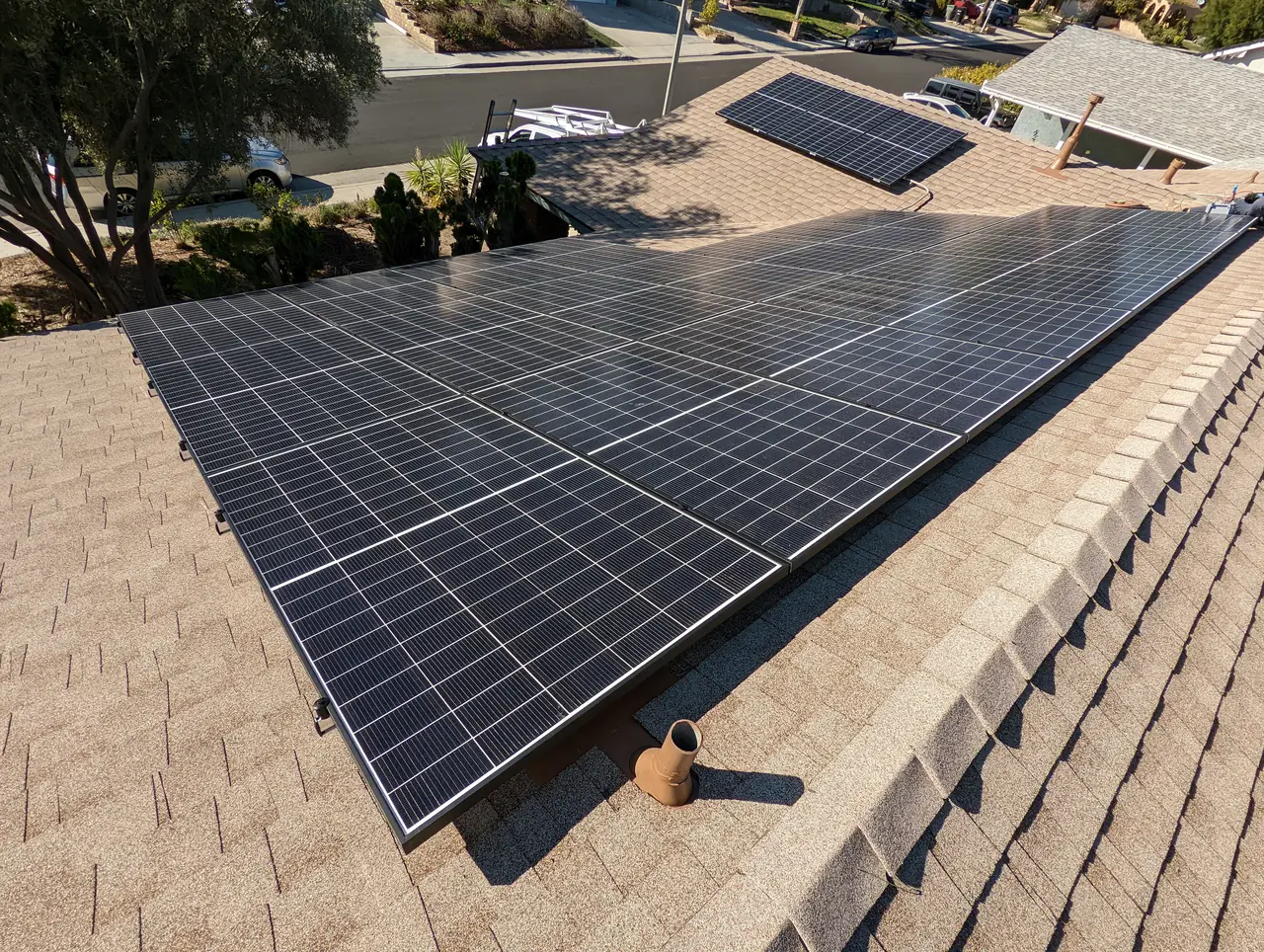
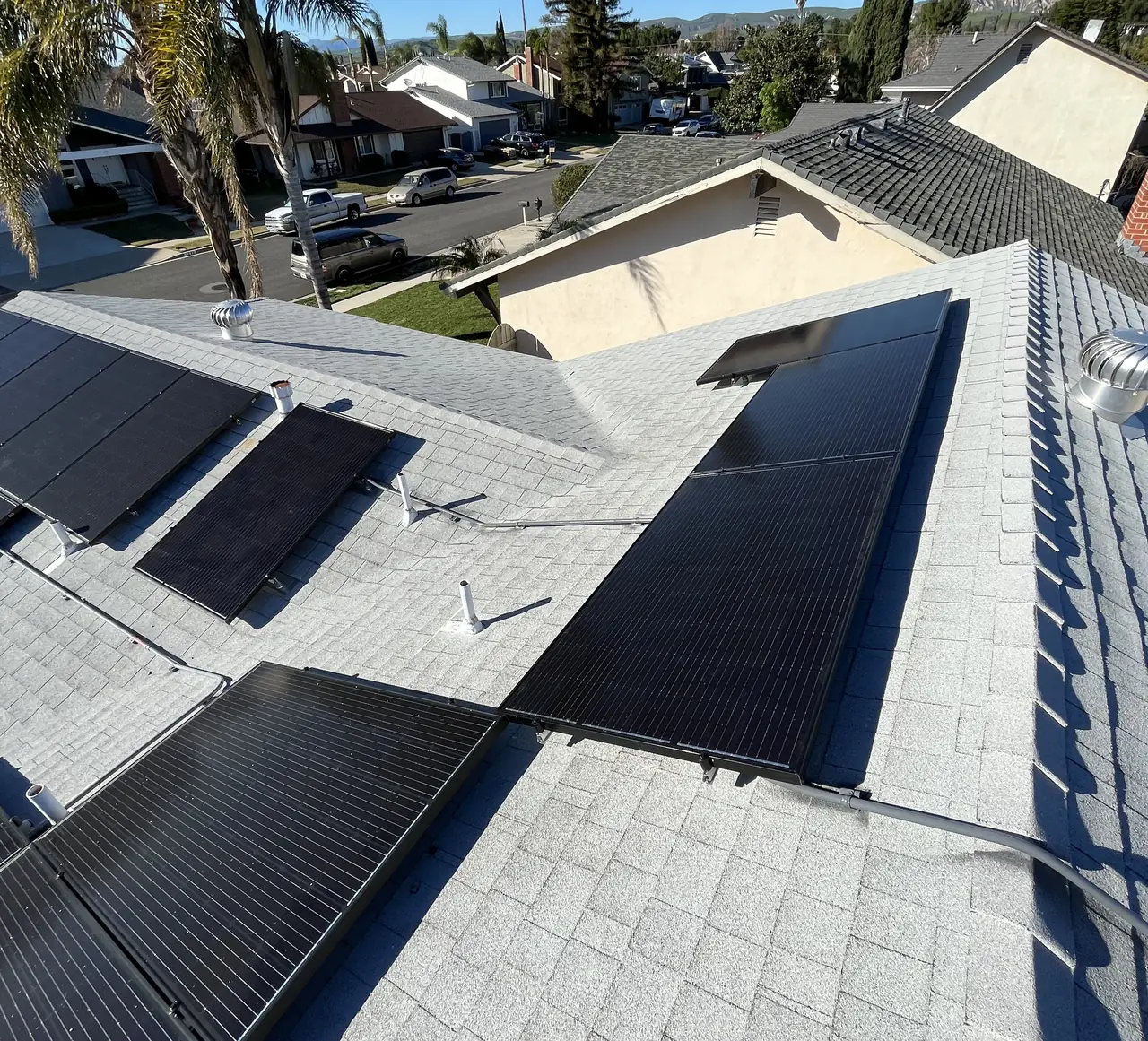
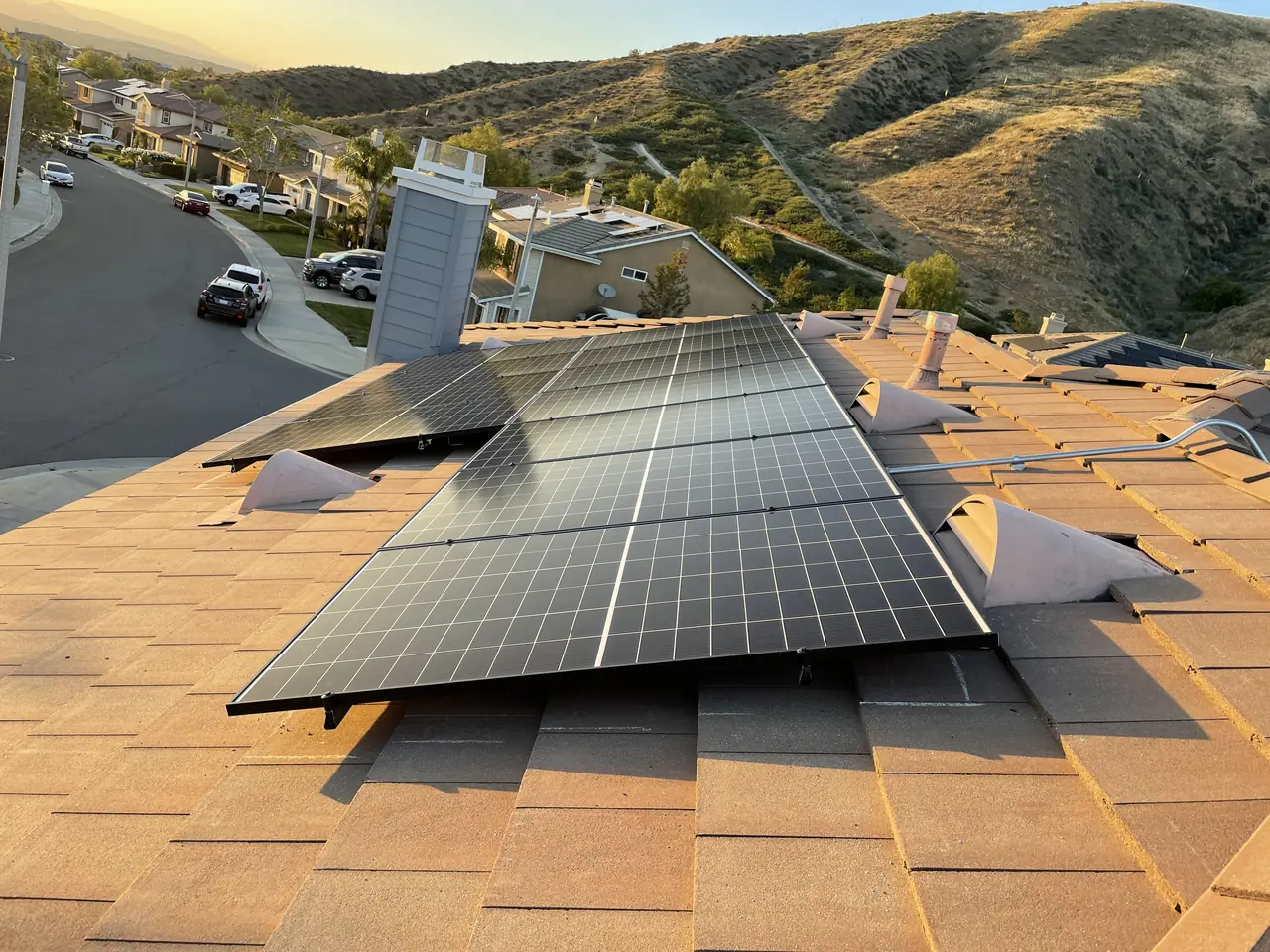
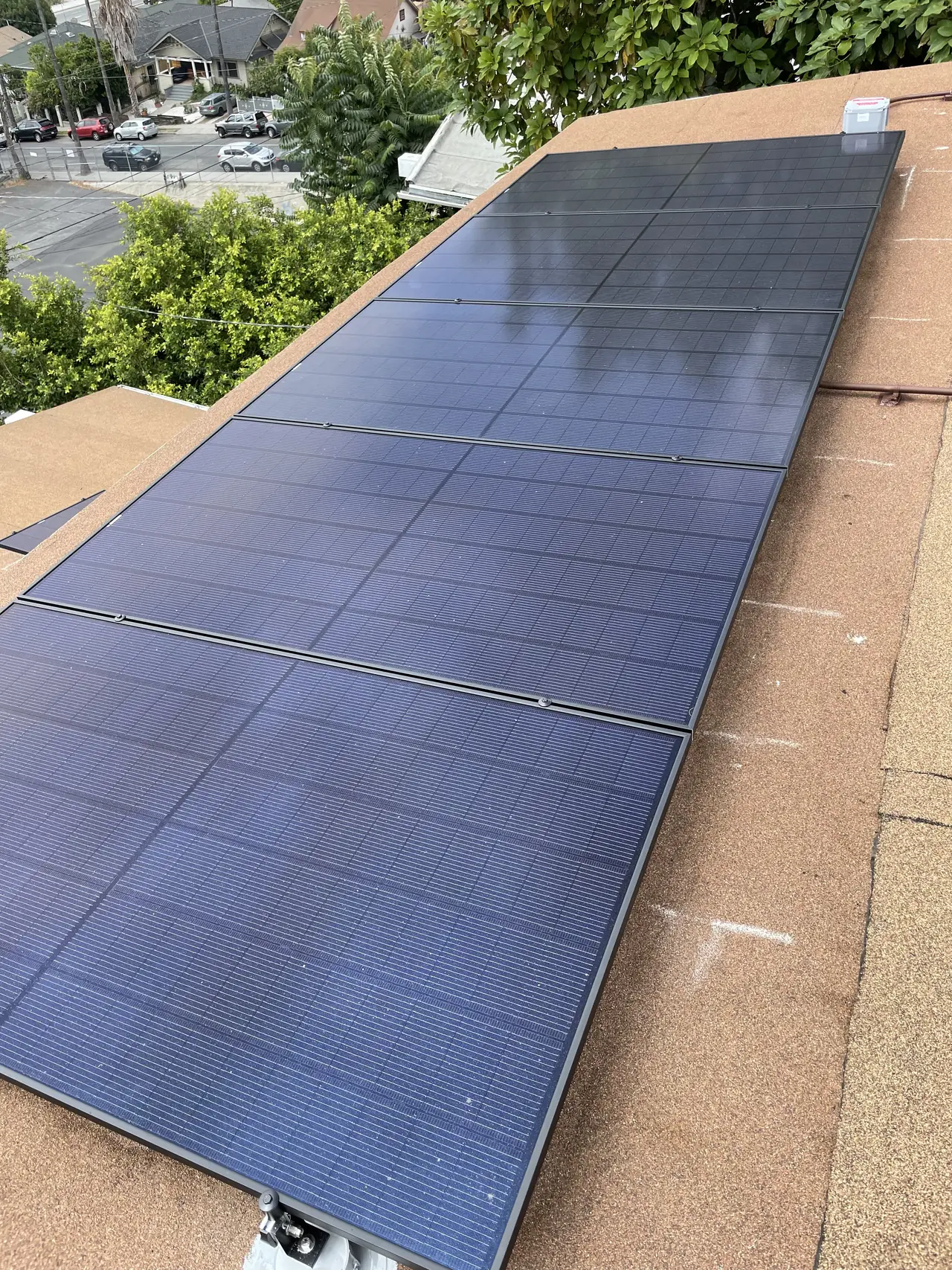
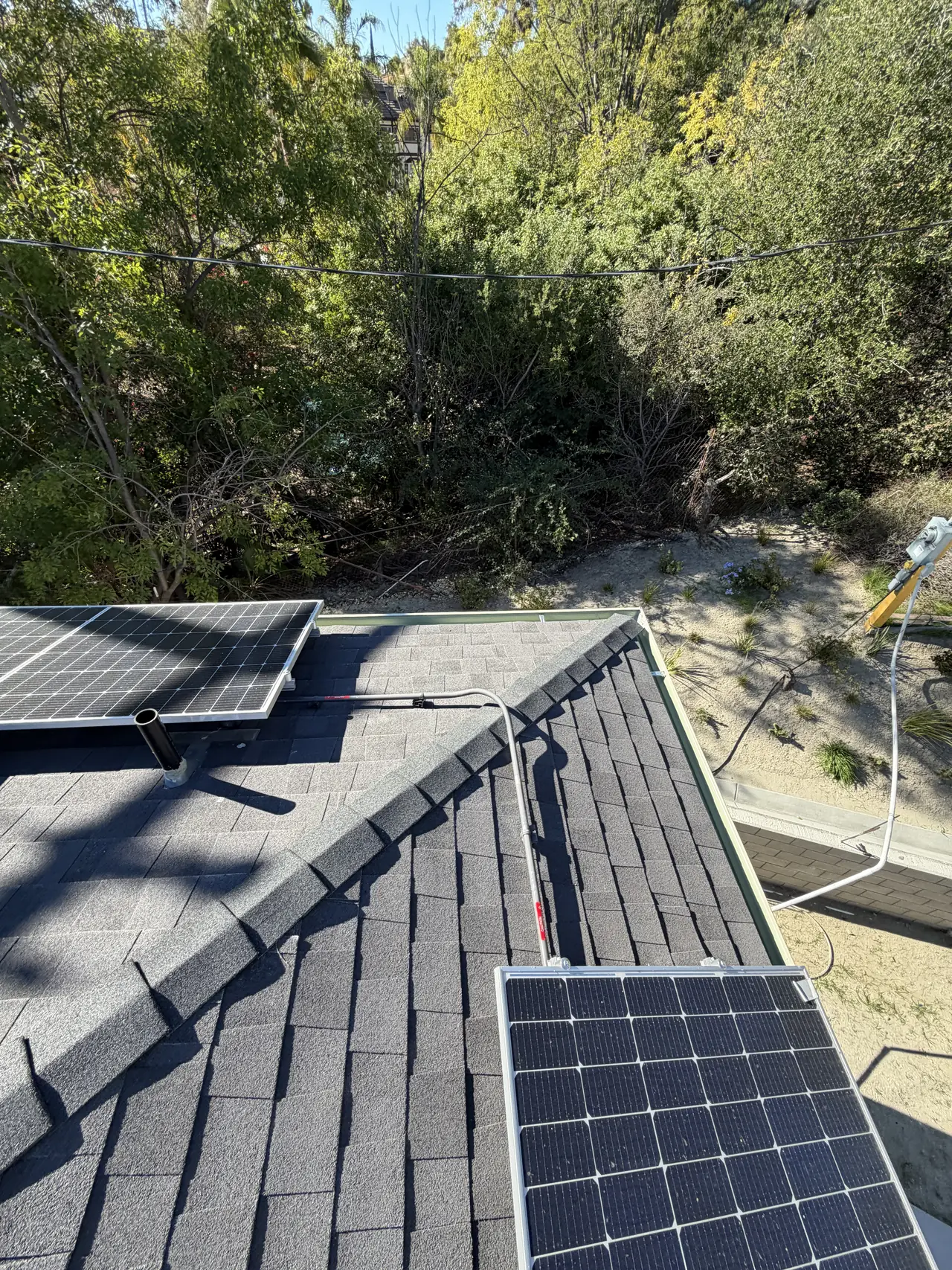
On a house with two usable slopes and no south face, the side you choose does not change how many modules fit. It changes what they produce. On this Santa Clarita roof the west slope was projected at about 11,350 kWh a year with fifteen percent shading assumed, against roughly 10,900 on the east, and the panel count was identical either way. The shade came from twenty-foot shrubs along the west windows, which the owner cut back. Cali Energy designed the 8.14 kW array for the west slope and added the service upgrade it needed.
At a glance
- System
- 8.14 kW, 22 REC Alpha 370 W modules
- Inverter
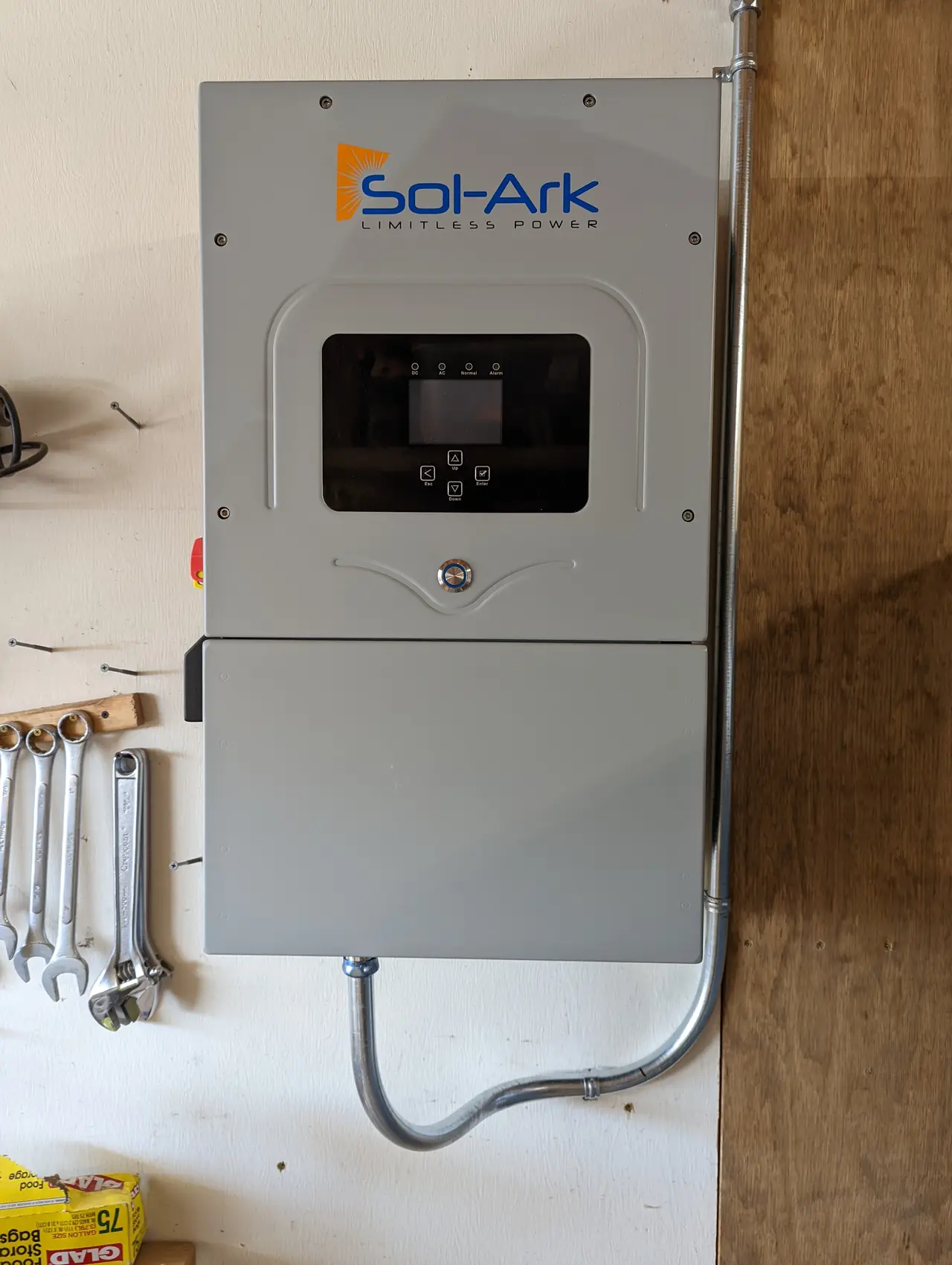
- Sol-Ark 12 kW hybrid
- Slope chosen
- West
- Projected output
- About 11,350 kWh a year
- Shading assumed
- Fifteen percent
- Main panel
- 125 A, upgraded to 225 A
- Utility / AHJ
- Southern California Edison / Santa Clarita
The story
Most solar advice starts with the south roof. This house did not have one worth using — it had a west slope and an east slope, and a decision to make between them.
The owner asked the right question early, and it was not the one most people ask. He had been ignoring the west-facing section of the house, he wrote, because every installer who had quoted him ignored it too. What he wanted to know was whether cutting back the tall shrubs along those windows would change anything.
Here is the part that surprises people. Choosing the west slope over the east did not change the number of panels at all. The roof area is what it is; twenty-two modules fit either way. What changed was the output.
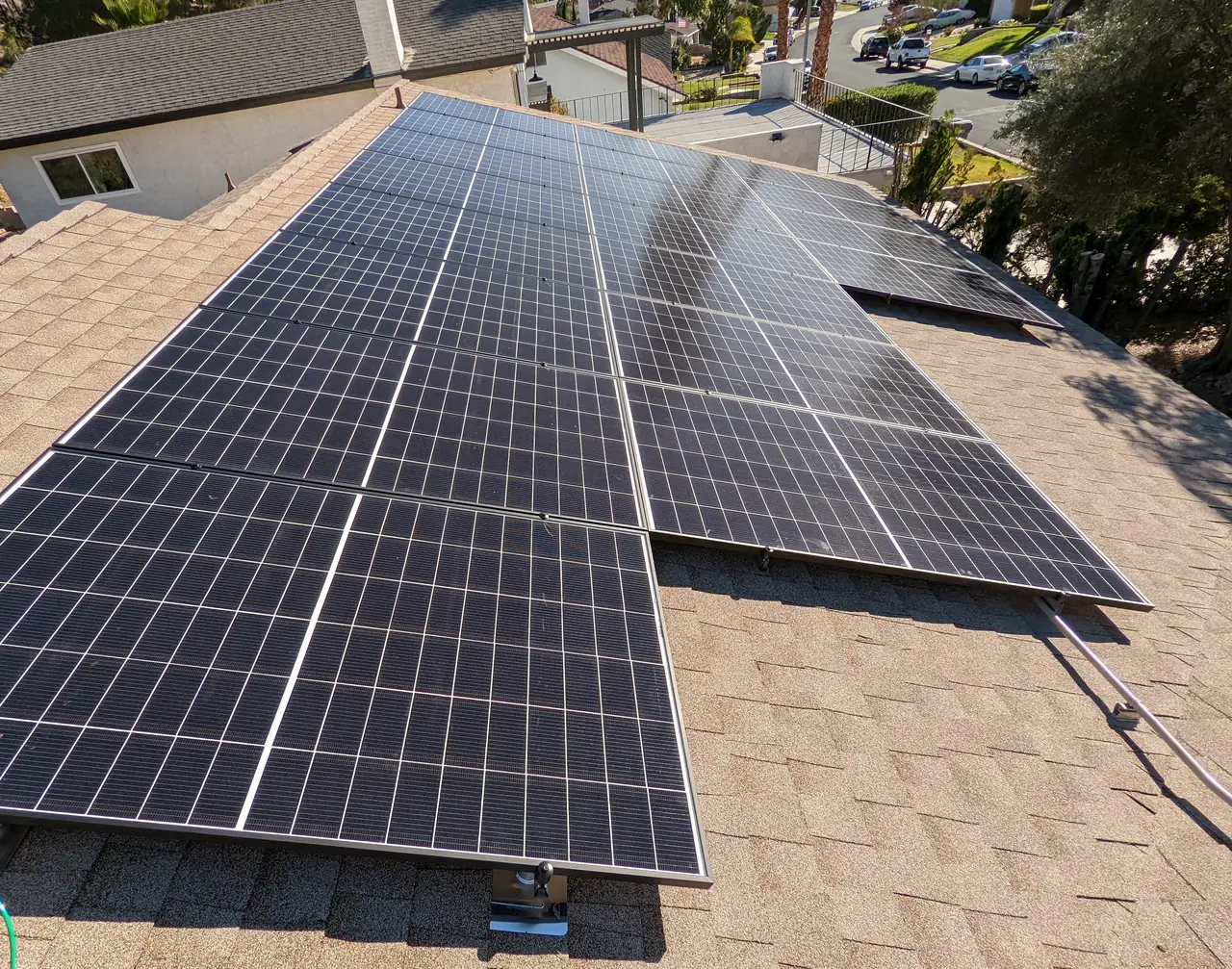
Modeled with fifteen percent shading, the west slope came out at about eleven thousand three hundred and fifty kilowatt-hours a year, against roughly ten thousand nine hundred on the east. Four percent, which sounds like nothing until you look at when it arrives.
Why west wins here is worth understanding, because it is counterintuitive if you have been told south-or-nothing. An east roof front-loads its production into the morning, when a house is mostly empty and rates are low. A west roof pushes its production into the afternoon and early evening — which is when people come home, when air conditioning runs hardest in this valley, and when the utility charges the most. The same kilowatt-hour is worth more at five in the afternoon than at nine in the morning.
Then the shade itself. The shrubs along the west windows had grown past twenty feet, which makes them trees in everything but name. The owner trimmed them, and that single afternoon of work did more for the system than adding hardware would have.
That is the general rule and it is worth stating plainly: removing shade beats compensating for it. A shaded module does not produce, and with module-level electronics it stops dragging its neighbors down but it still does not produce. Adding two more panels to make up for shade means paying for two more panels and keeping the shade. Cutting the shade costs an afternoon.
Two other things came out of the site visit, and both are ordinary on a house of this age.
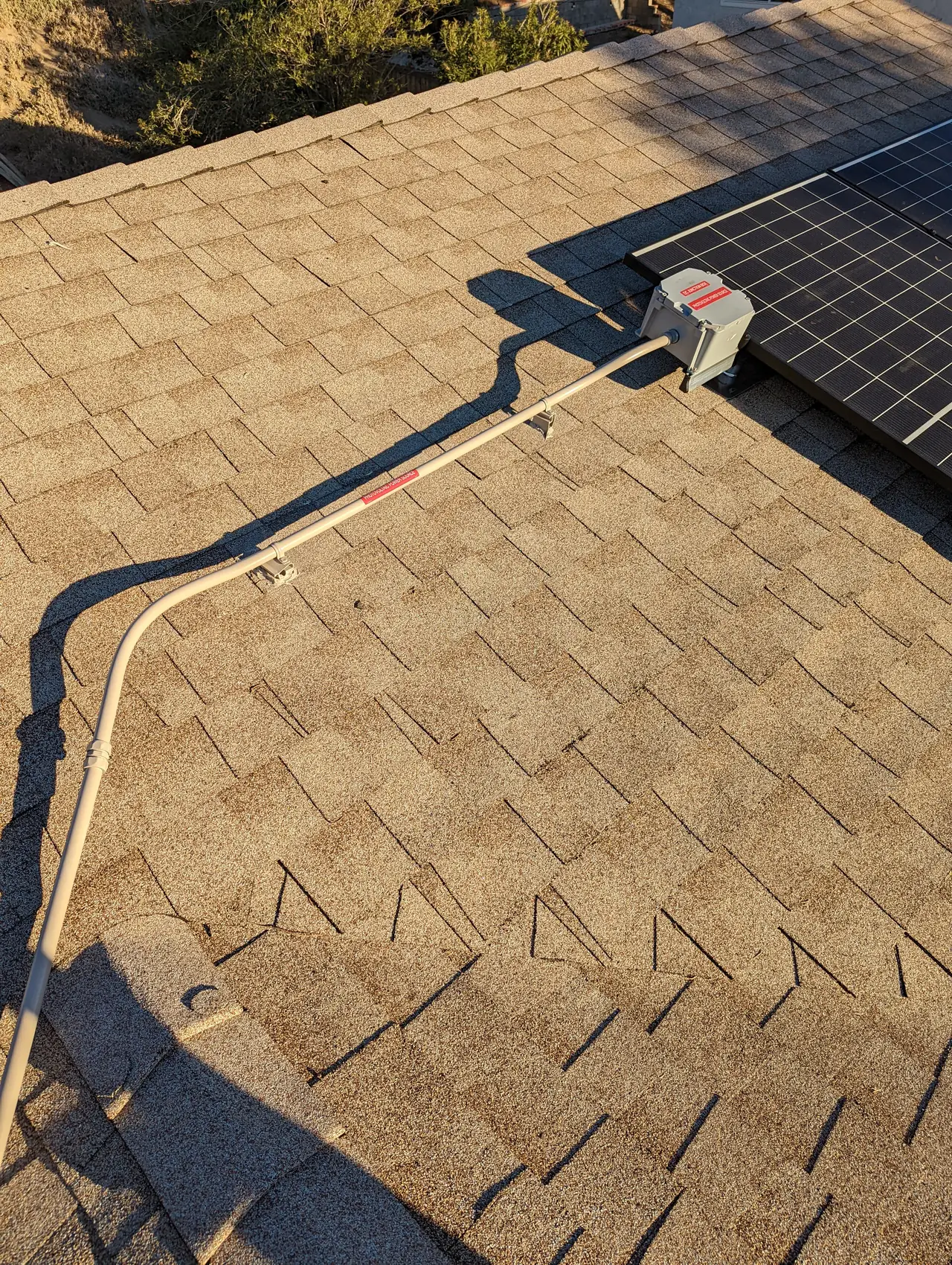
The main panel was 125 A, which is not enough to take this array under the standard rule, so a service upgrade to 225 A went into the design. And the roof itself was due — the covering was measured at around thirty squares and it was replaced under its own city permit before the array went up, because an array laid over a roof that is about to be replaced has to come off again.
One more thing belongs here, because it is what a warranty is for: in the system's first winter the inverter was replaced under the manufacturer's warranty, with Cali Energy carrying the claim from start to finish.
The system was signed off at the start of December and had permission to operate by the middle of it. The following September the same household came back and asked us to quote nine more modules for the east roof — which is the part of a job that never fits in a timeline.
Cali Energy designed, permitted and installed this 8.14 kW array in Santa Clarita.
How it ran
| 7 June 2021 | Proposal issued, roof measured from imagery |
|---|---|
| 8 June 2021 | Owner asks whether trimming the west shrubs changes anything |
| 8 June 2021 | Answer: the panel count does not move, the output does — west ahead of east |
| 18 June 2021 | Site inspection; layout revised and a 225 A main panel upgrade added |
| 21 June 2021 | Owner cuts back the twenty-foot shrubs along the west windows |
| 15 September 2021 | Re-roof permitted separately by the city |
| 13 October 2021 | Roofing materials delivered |
| 29 October 2021 | Solar permit fees paid and the permit released |
| 16 November 2021 | Roof complete; installation set for the Friday |
| 19 November 2021 | Array and service upgrade installed; power off for most of the day |
| 24 November 2021 | Crew back to add two ground rods |
| 30 November 2021 | Remaining work finished |
| 2 December 2021 | Final inspection |
| 16 December 2021 | Permission to operate granted |
Six months from a first estimate to permission to operate, and the cheapest gain in the whole project came from a pair of shears.
What we did
- Modeled both slopes before recommending either one.
- Told the owner plainly that the panel count would not change, only the output.
- Measured the roof on site rather than from imagery before fixing the layout.
- Added the service upgrade the array required instead of designing around it.
- Held the array until the roof had been replaced under its own permit.
System specifications
| System | 8.14 kW |
|---|---|
| Modules | 22 × REC Alpha 370 W |
| Inverter | Sol-Ark 12 kW hybrid |
| Slope | West-facing |
| Shading in the estimate | Fifteen percent |
| Main panel | Upgraded from 125 A to 225 A |
| Utility / AHJ | Southern California Edison / Santa Clarita |
Is your project like this one?
- Your house has no south-facing roof worth using.
- Something is shading part of your roof and nobody has said whether it matters.
- You have been told to add panels to make up for shade.
- Your main panel is 125 A and the quote does not mention it.
Cali Energy in Santa Clarita
Santa Clarita is its own city in Los Angeles County, permitted through the City of Santa Clarita Building & Safety Division and interconnected through Southern California Edison. Hillside tracts with mature planting, which is where shading questions start.
This installation is on the Santa Clarita projects page alongside the others, and what the work covers is set out on the Santa Clarita service area page.
- License and classifications: CSLB #1032379
- Official reference for this process: Southern California Edison — generating your own power
- Official reference for this process: City of Santa Clarita — Building & Safety
Frequently asked questions
Is a west-facing roof worse than an east-facing one for solar?
Usually the opposite in this climate. An east roof produces in the morning, when the house is empty and rates are low. A west roof produces in the afternoon and early evening, when air conditioning runs hardest and the utility charges most. The same kilowatt-hour is worth more at five o'clock than at nine.
Does shading change how many panels fit on a roof?
No. The roof area decides the count. Shading decides what those panels produce, which is why a shaded design and an unshaded one can look identical on paper and differ by thousands of kilowatt-hours a year in practice.
Is it better to trim trees or add more panels?
Trim, almost always. A shaded module does not produce, so adding hardware to compensate means paying for the hardware and keeping the shade. On this project cutting back twenty-foot shrubs did more for output than extra panels would have.
Why does a 125 A main panel need upgrading for solar?
Because the backfeed from the array has to fit inside what the panel's busbar is rated to carry, and a 125 A service usually cannot take a system this size. Here the replacement went in at 225 A, in the same location. The upgrade is part of the solar scope rather than a separate job, and it belongs in the design from the start.
Does Cali Energy install solar in Santa Clarita?
Yes. Santa Clarita is its own city, so permits run through the City of Santa Clarita Building & Safety Division and interconnection through Southern California Edison rather than LADWP. Hillside tracts here have mature planting, which makes the shading question a real part of the design.
What this would look like on your roof
Planning solar in Santa Clarita? Tell us your utility, your roof and what your bill looks like now, and we will model what a system like this would do on your house before you commit to anything.
Or call +1 (323) 844-7777 · Cali Energy, Northridge · CSLB #1032379 (B, C-10, C-39) — design, permits, install and electrical under one licensed contractor.
Related
This timeline reflects this property and this permitting path. Updated September 2026.