

Santa Clarita, CA · March – April 2022 · Southern California Edison / City of Santa Clarita
Santa Clarita: the association review ran alongside everything else.
Three bodies had to say yes. None of them was waiting for the others, and that is the only reason it took five weeks.
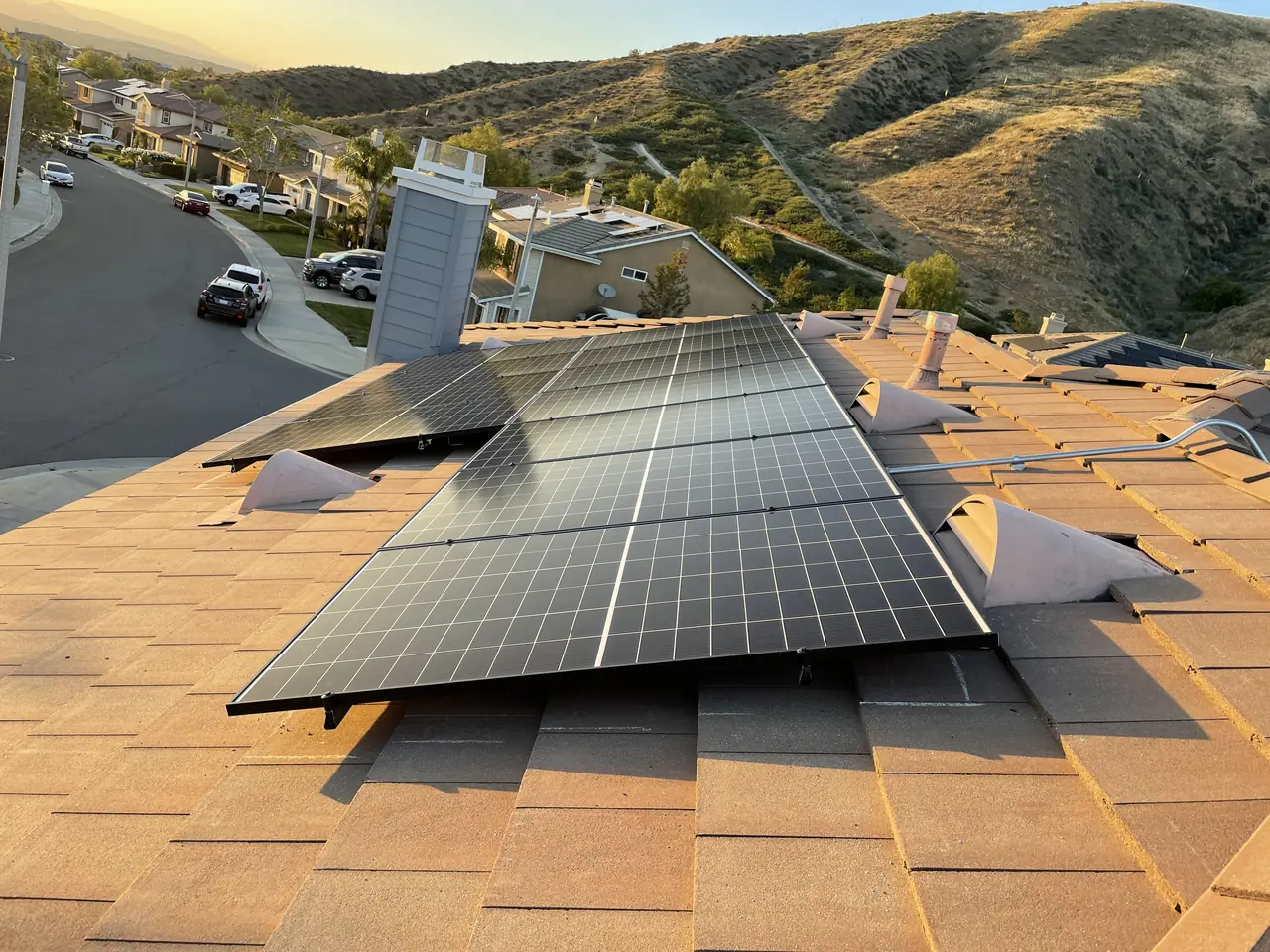
Where a homeowner association governs the property, its approval is a separate track from the building permit and the utility application: different body, different form, different clock. None of the three replaces another, and none of them waits for another. On this Santa Clarita project Cali Energy contacted the association the day the drawings came back, the owner filed the architectural application it required, and the 7.03 kW array reached permission to operate about five weeks after the contract was signed.
At a glance
- System
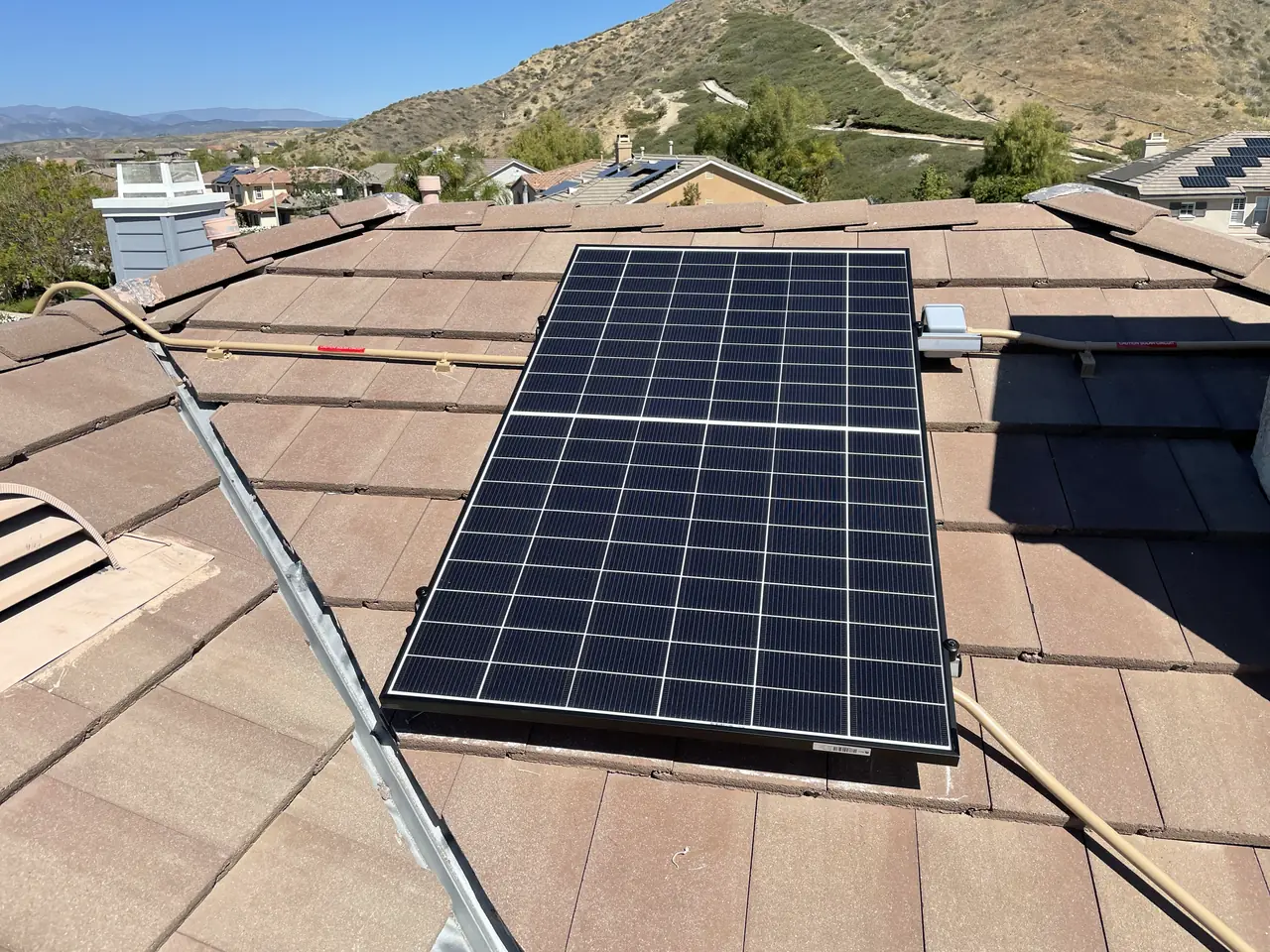
- 7.03 kW, 19 REC 370 W modules
- Inverters
- One Enphase IQ7+ per module
- Main panel
- Existing 200 A, no upgrade needed
- Extra approval
- Association architectural review
- Signature to permission
- About five weeks
- Utility / AHJ
- Southern California Edison / Santa Clarita
The story
A solar project normally answers to two bodies: the city, which permits the work, and the utility, which agrees to connect it. On a property inside a homeowner association there is a third, and it is the one people discover late.
What an association does is narrower than owners fear and wider than they hope.
It does not permit the work — the city does that. It does not connect anything — the utility does that. What it reviews is how the installation sits on the property: what is visible, where equipment goes, what the street sees. In California an association cannot simply refuse a solar system, but it can run its review and set conditions, and the review has to actually happen.
So the question is never whether to deal with it. It is when.
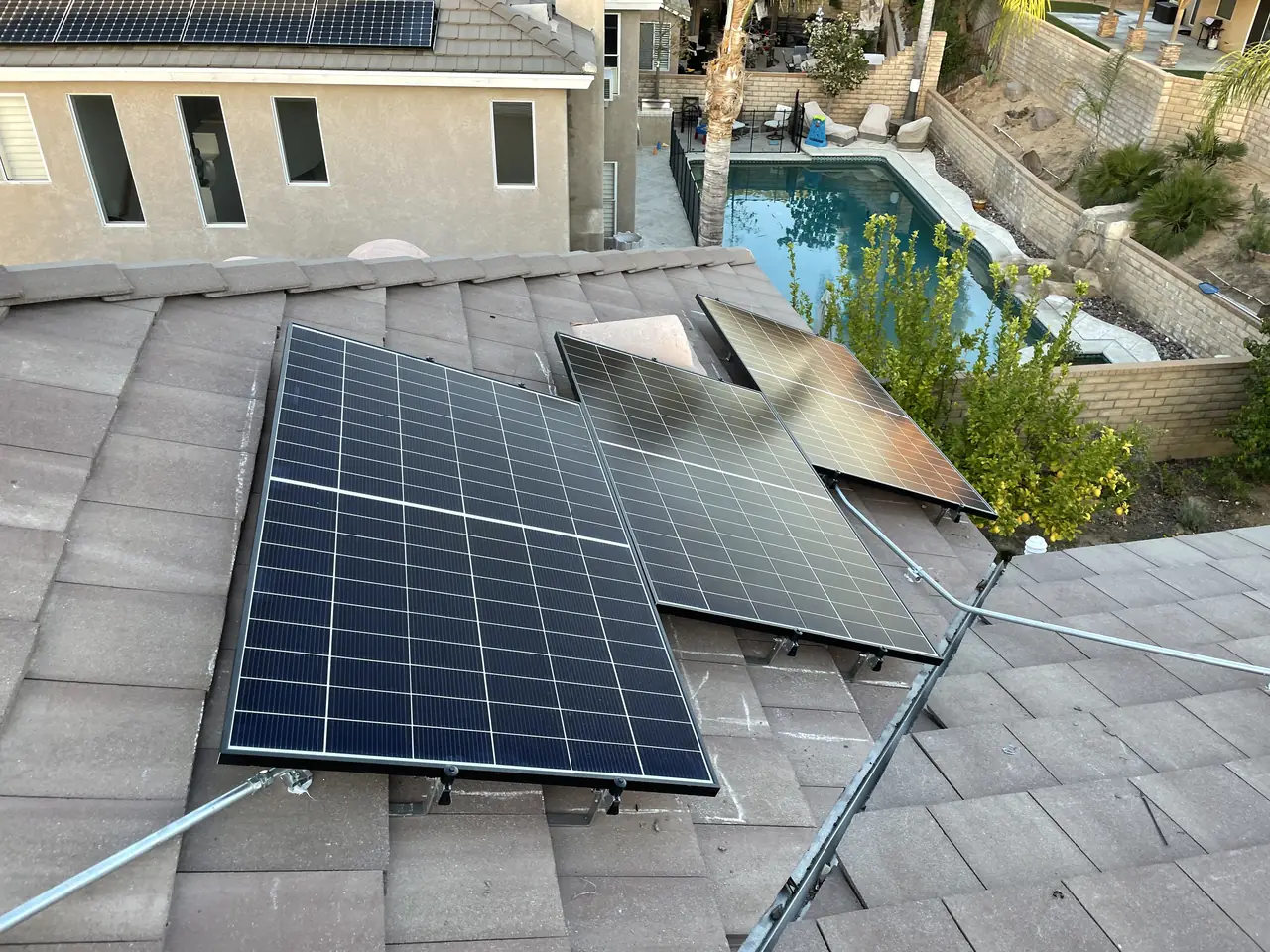
Here the drawings were ordered on a Monday and came back the next day. The association was contacted the same day the drawings arrived — not after the permit, not after the install date was set.
The answer came back quickly and it was procedural rather than difficult: the owner fills out an architectural application and collects the neighbors' signatures, and the property manager takes it to the board.
Two details in that sentence matter more than they look.
The application is the owner's, not the contractor's. We can prepare the drawings and answer questions, but the person who signs is the one who owns the property, which means the paperwork sits on the household's desk and can quietly stall there.
And the board is a board. It meets on a schedule. An application that misses a meeting waits for the next one, and that is where the weeks go — not in the decision itself, which is usually straightforward, but in the gap between when you filed and when they sit.
Which is why the sequence on this project mattered more than any single step in it. Drawings, association, permit and utility application all moved at once. The manager put the board's deadline at the twenty-second of April; the approval letter reached the owner on the eleventh. The array went up on the fourteenth, the final was held and passed on the fifteenth, the monitoring was set up on the nineteenth and the application for permission to operate went in the same day. Permission came back on the twenty-fifth.
Run in series instead — permit, then association, then utility — and the same project is a summer.
Permission to operate arrived on the twenty-fifth of April, the monitoring was already live, and the closing documents went out the next morning. Three approvals, five weeks, no corrections on any of them.
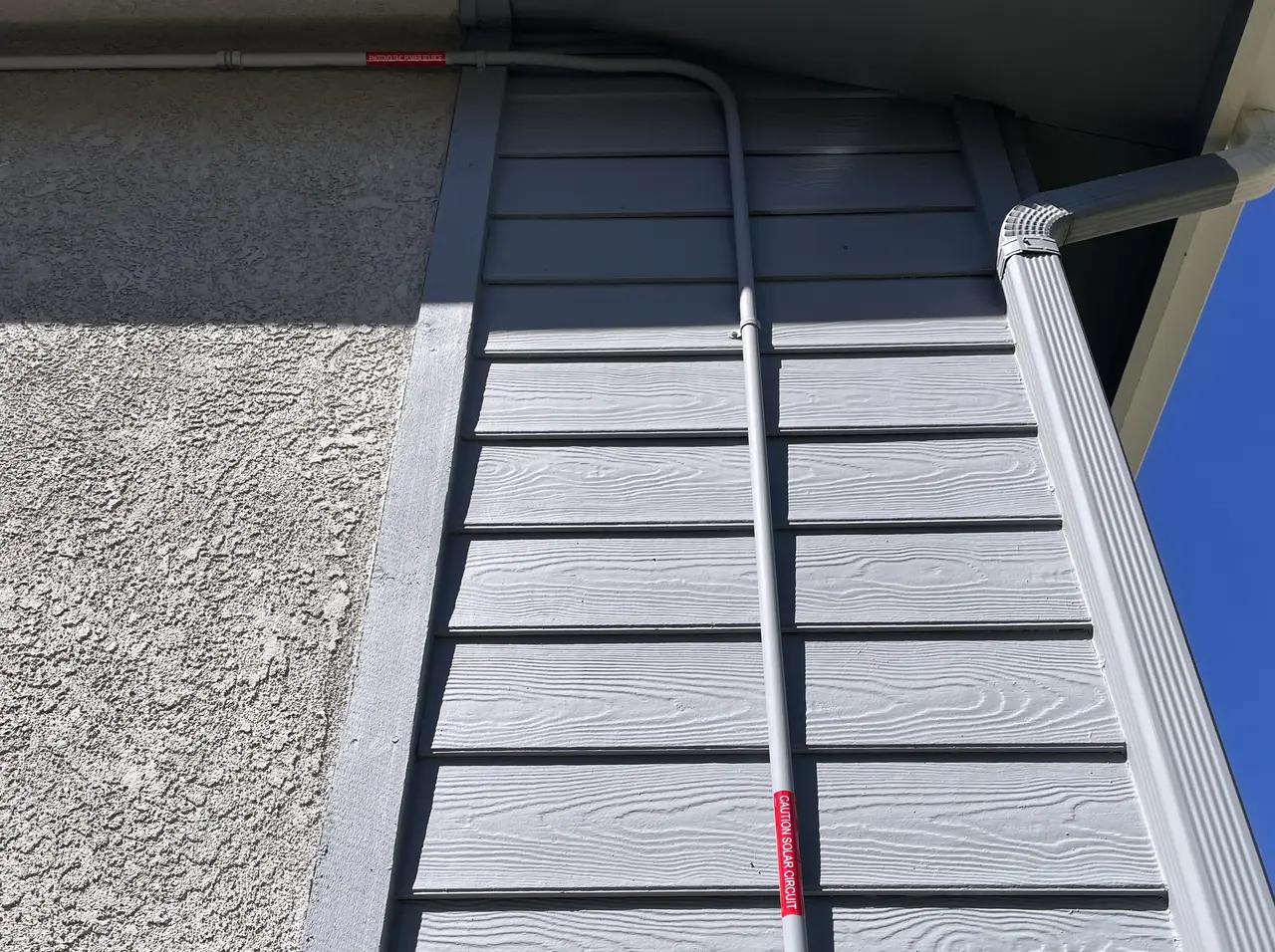
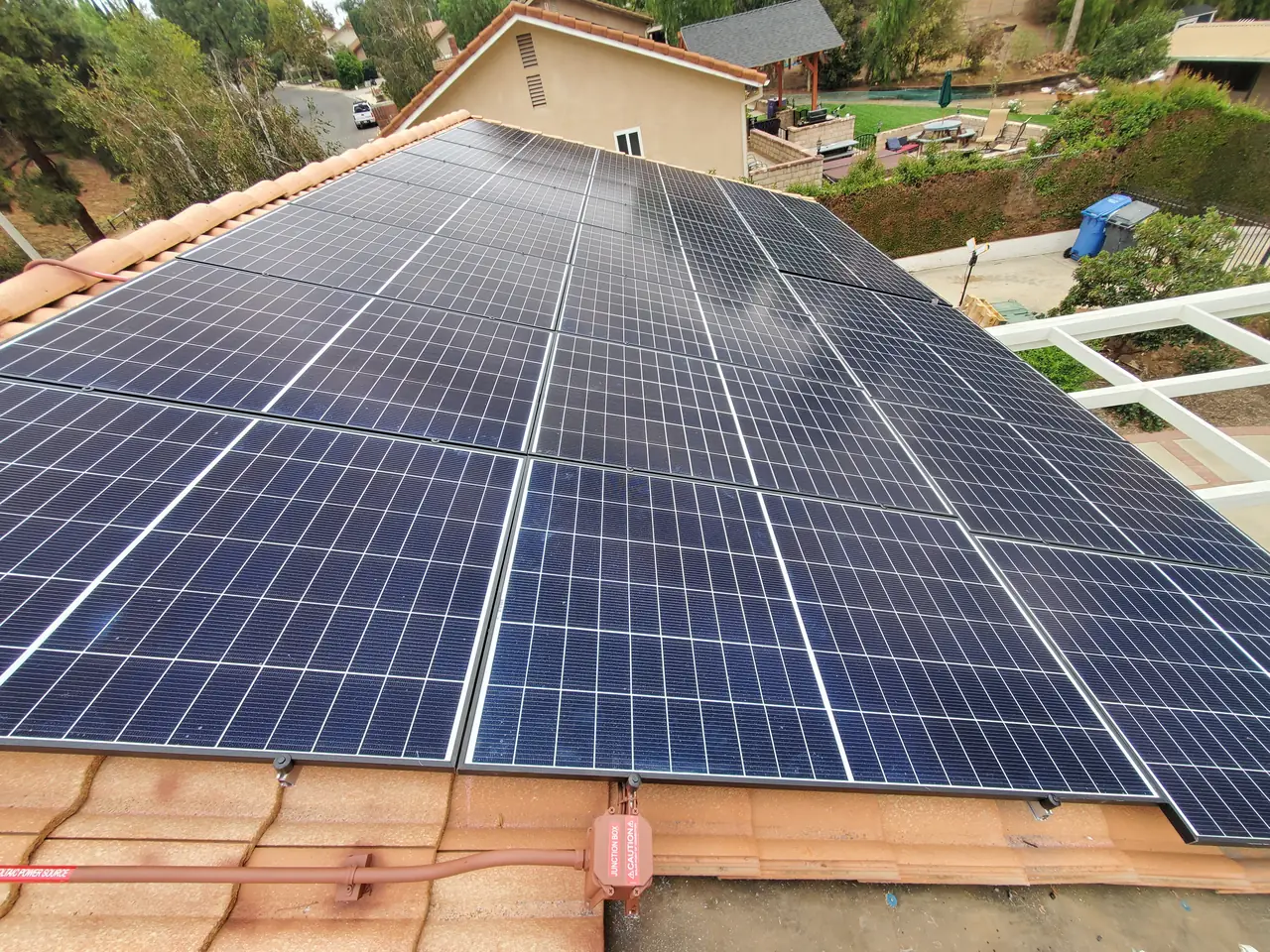
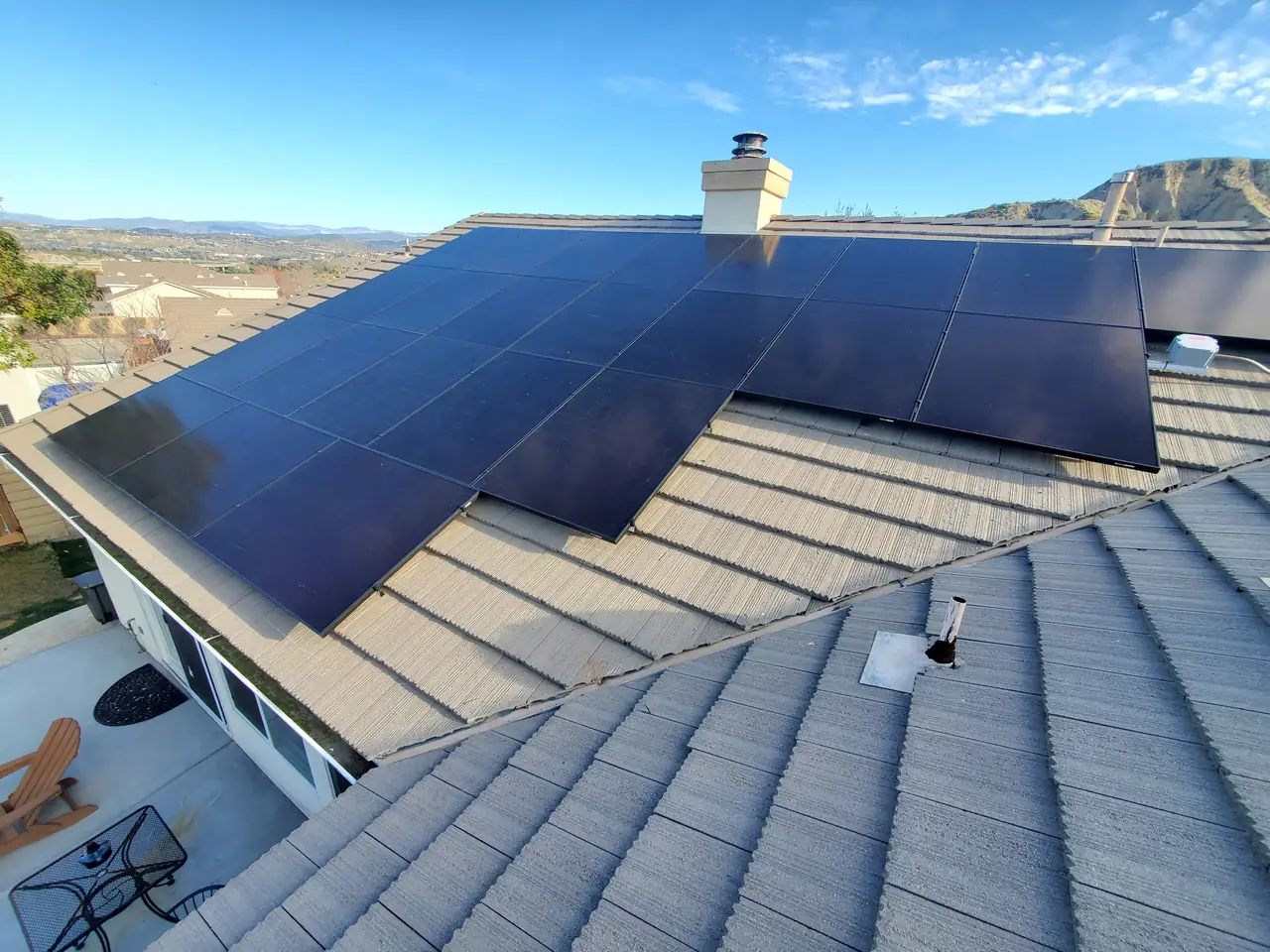
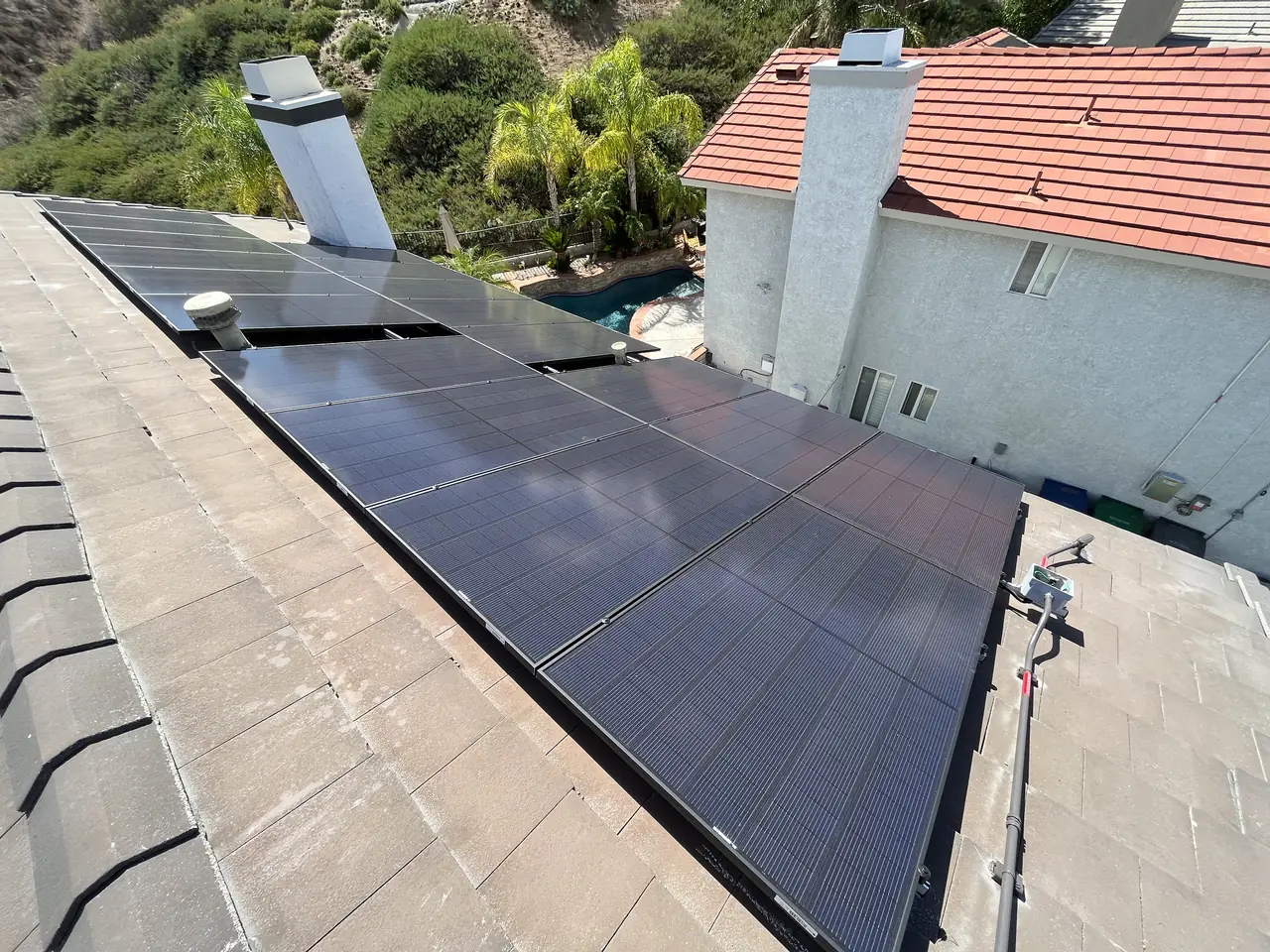
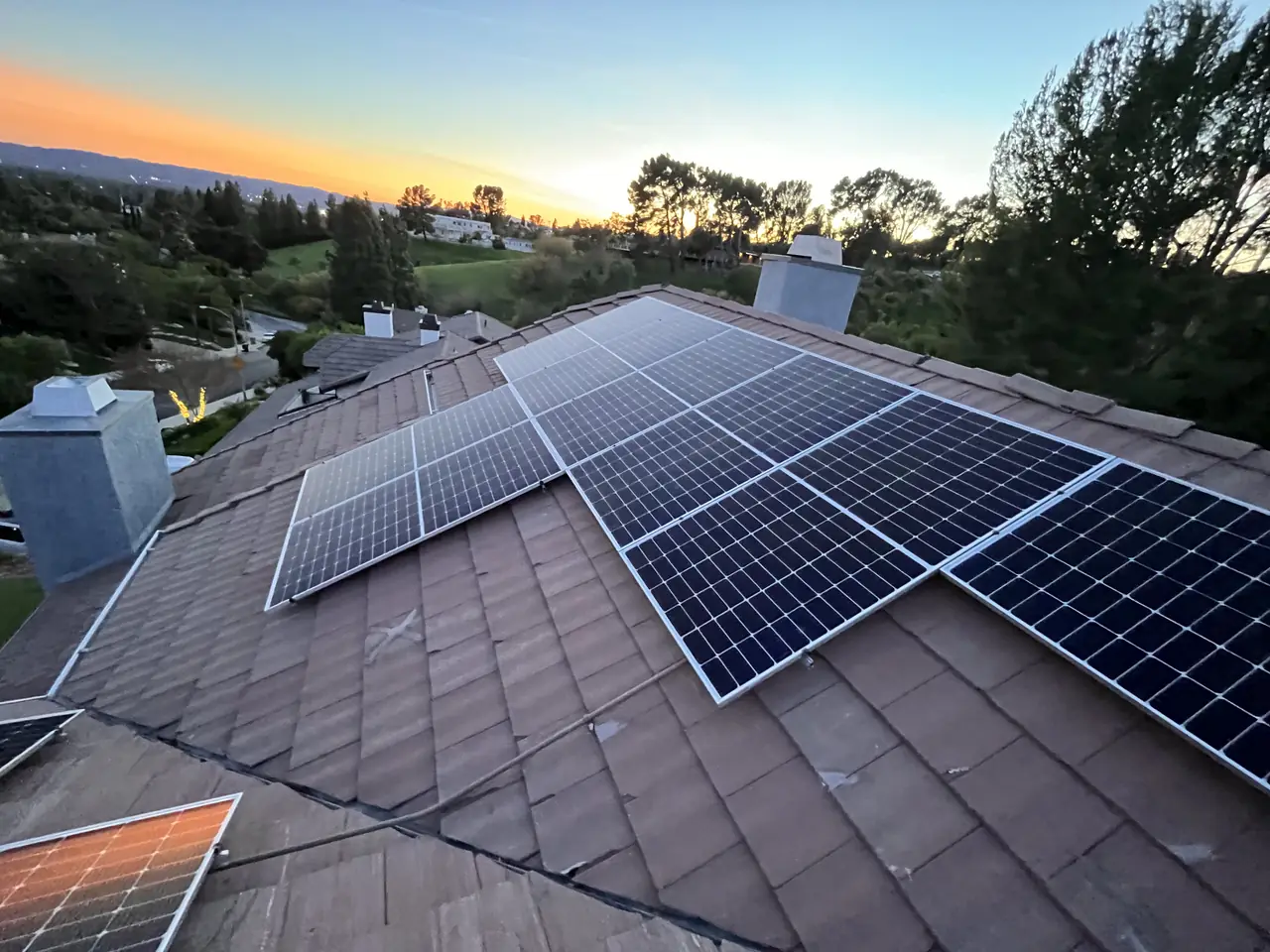
Cali Energy designed, permitted and installed this 7.03 kW array in Santa Clarita.
How it ran
| 18 March 2022 | Contract issued |
|---|---|
| 21 March 2022 | Contract signed |
| 21 March 2022 | Drawings ordered — 19 modules, one microinverter each, 7.03 kW on the existing 200 A panel |
| 22 March 2022 | Plan set returned; the association contacted the same day |
| 22 March 2022 | Association confirms the route: the owner files an architectural application, the manager takes it to the board |
| 31 March 2022 | Manager: the board has until 22 April to decide |
| 11 April 2022 | Association approval letter in the owner's hands |
| 14 April 2022 | Installation |
| 15 April 2022 | Final inspection passed |
| 19 April 2022 | Monitoring set up; application for permission to operate filed |
| 25 April 2022 | Permission to operate granted |
Five weeks from signature to a system allowed to run, with an architectural review and a passed final inside them.
What we did
- Contacted the association the day the drawings came back, not after the permit.
- Established the route in writing: who files, who decides, in what order.
- Kept the drawings, the association review and the utility application moving at once.
- Filed for permission to operate the same day the monitoring was commissioned.
System specifications
| System | 7.03 kW |
|---|---|
| Modules | 19 × REC 370 W |
| Inverters | One microinverter per module |
| Main panel | Existing 200 A |
| Association | Architectural review, filed by the owner |
| Utility / AHJ | Southern California Edison / Santa Clarita |
Is your project like this one?
- Your property is inside a homeowner association and you want solar.
- You have been told the association has to approve it and nobody explained how.
- Your project is waiting on a board that meets once a month.
- You want to know which approvals can run at the same time.
Cali Energy in Santa Clarita
Santa Clarita is its own city in Los Angeles County, permitted through the City of Santa Clarita Building & Safety Division and interconnected through Southern California Edison. Much of the housing here sits inside homeowner associations, which adds a body nobody warns you about.
This installation is on the Santa Clarita projects page alongside the others, and what the work covers is set out on the Santa Clarita service area page.
- License and classifications: CSLB #1032379
- Official reference for this process: City of Santa Clarita — Building & Safety
- Official reference for this process: Southern California Edison — generating your own power
Frequently asked questions
Does a homeowner association have to approve solar panels?
In California an association cannot simply prohibit a solar system, but it can run an architectural review and set reasonable conditions on how the installation looks and where equipment sits. The review is real and has to happen; the outcome is rarely the problem.
Who files the association application, the owner or the installer?
The owner. A contractor can prepare the drawings and answer the association's questions, but the architectural application is submitted by whoever owns the property — which is why it can sit unnoticed on a kitchen table for weeks.
Does association approval replace the building permit?
No, and neither replaces the other. The city permits the work, the utility agrees to the connection, and the association reviews the appearance. Three bodies, three forms, three clocks, and none of them is waiting for the others.
How long does association approval take?
Less than people expect once it is in front of the board, and longer than expected getting there, because boards meet on a schedule. Missing a meeting costs a month, which is why the application should go in as soon as there are drawings to attach.
Does Cali Energy install solar in Santa Clarita?
Yes. Santa Clarita is its own city, so permits run through the City of Santa Clarita Building & Safety Division and interconnection through Southern California Edison. A lot of housing here sits inside associations, so the architectural review is treated as a parallel track from the first week.
What this would look like on your roof
Planning solar in Santa Clarita? Tell us your utility, your roof and what your bill looks like now, and we will model what a system like this would do on your house before you commit to anything.
Or call +1 (323) 844-7777 · Cali Energy, Northridge · CSLB #1032379 (B, C-10, C-39) — design, permits, install and electrical under one licensed contractor.
Related
This timeline reflects this property and this permitting path. Updated September 2026.