

Granada Hills, CA · January 2025 – May 2026 · LADWP / LADBS
The whole property runs on a hundred amps.
A two-story accessory dwelling on a graded hillside lot, ten modules on the roof, and a service smaller than most single rooms are wired for today.
A 100-amp main is a small service by modern standards, and it changes how an array has to be designed rather than whether it can exist. The check is not made at the meter — it is made at whichever busbar the array actually back-feeds, against the breaker feeding it. On a small service there is very little margin in that calculation, so it has to be done from the real equipment ratings before anything is ordered.
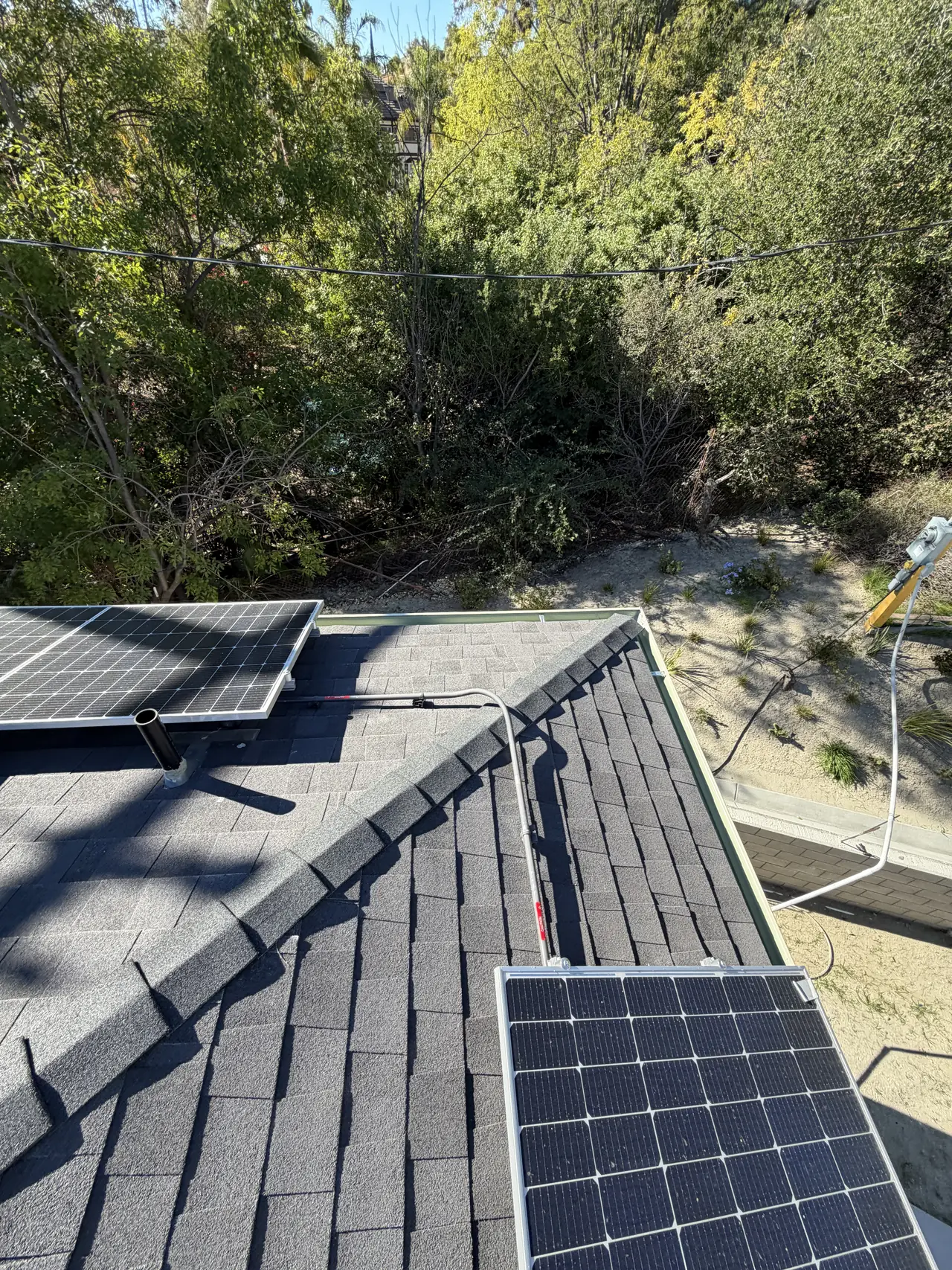
At a glance
- Building
- New two-story detached accessory dwelling
- Lot
- Hillside — graded, with a retaining wall
- Modules
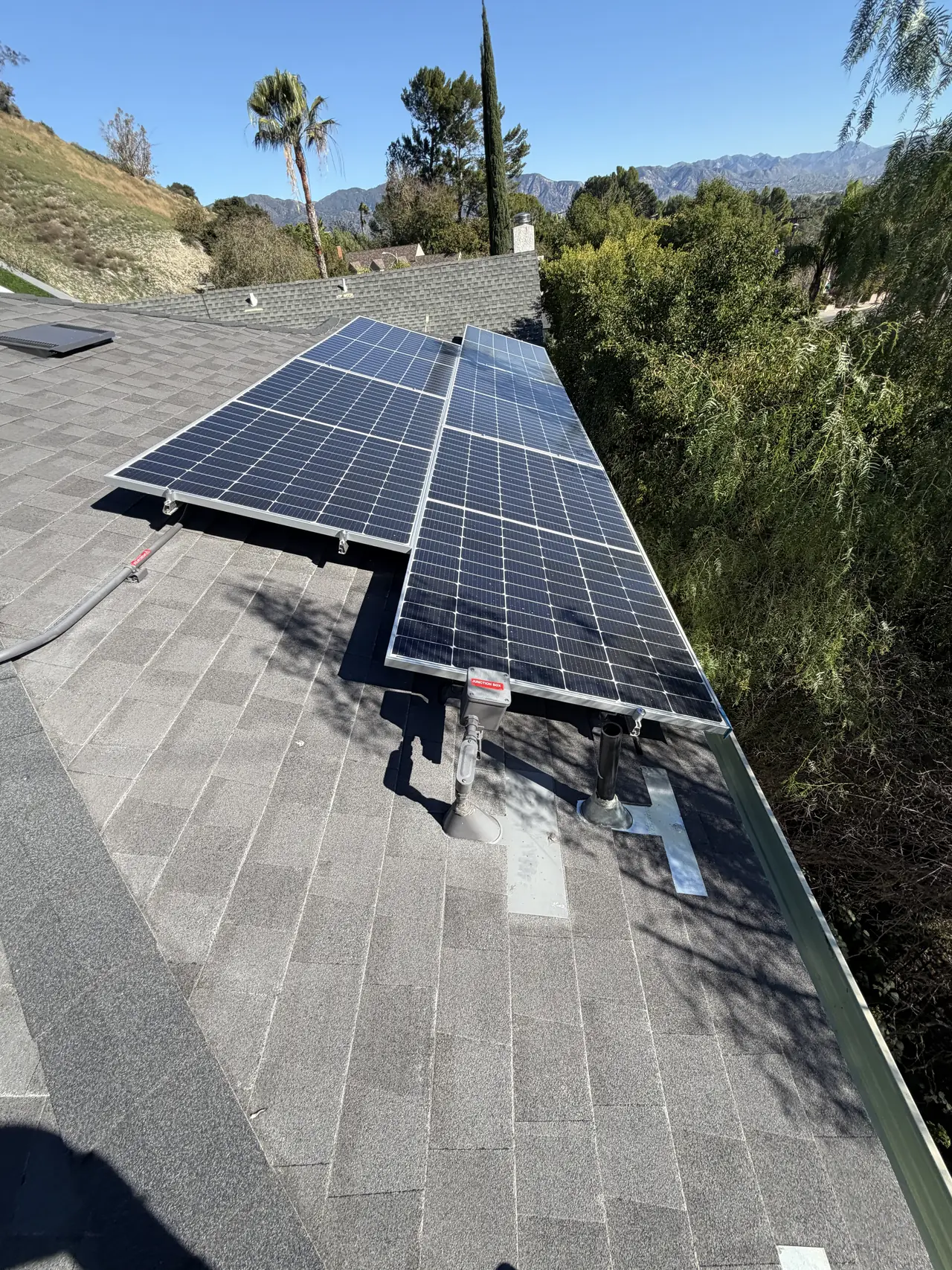
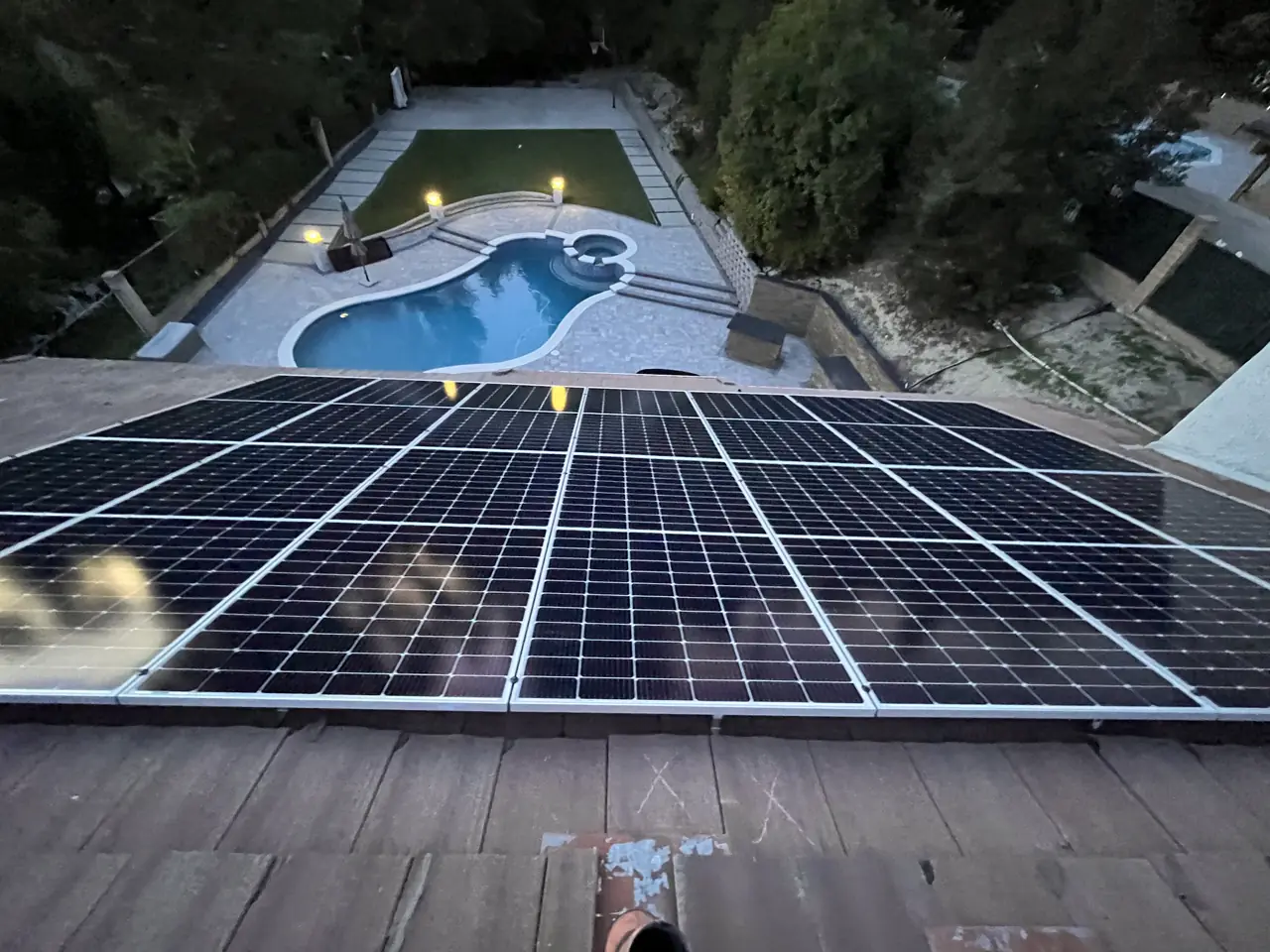
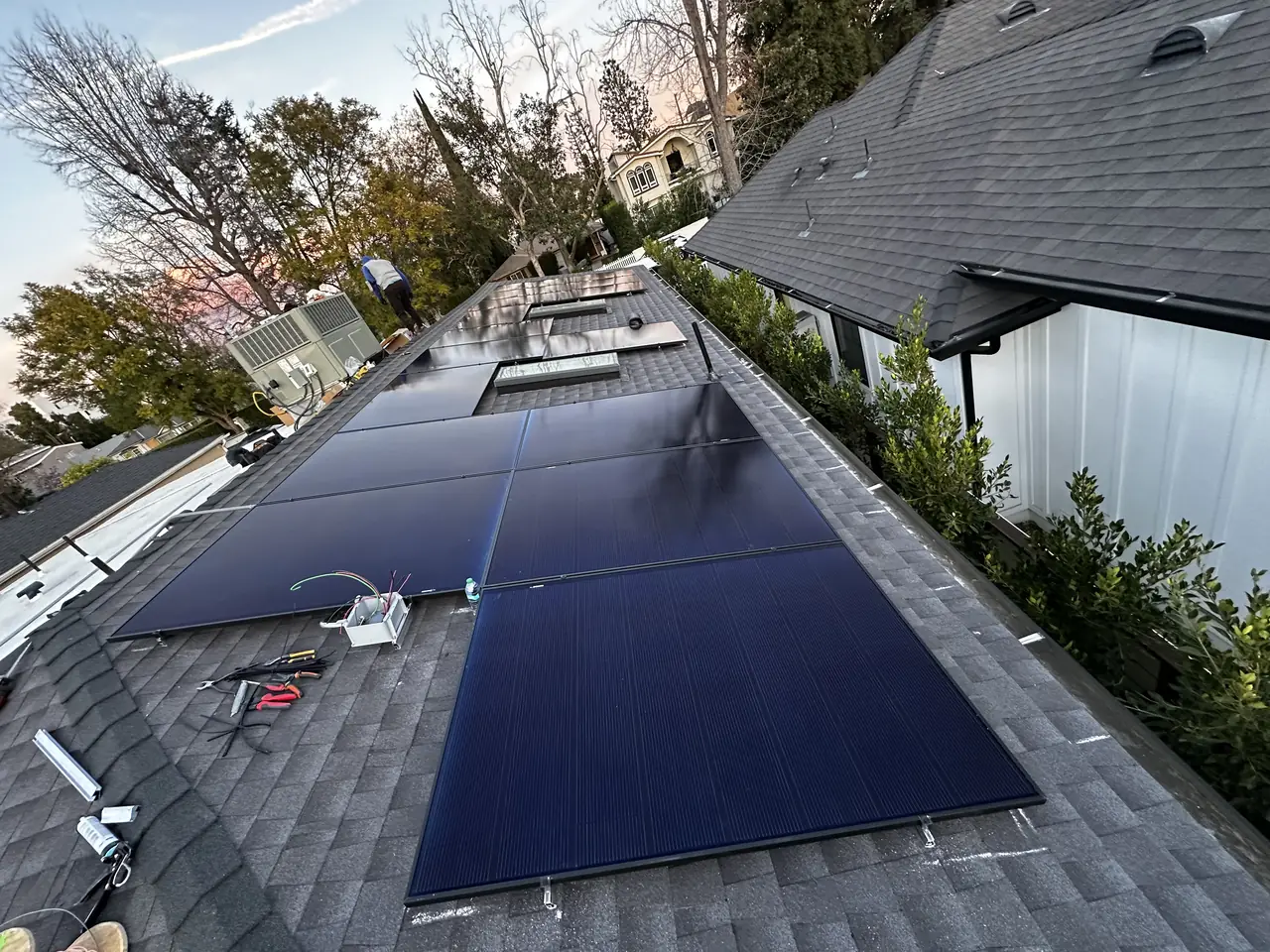
- 10 × Canadian Solar 445 W
- Microinverters
- Enphase IQ8A, one per module
- Recorded by the utility
- 4.3 kW
- Service
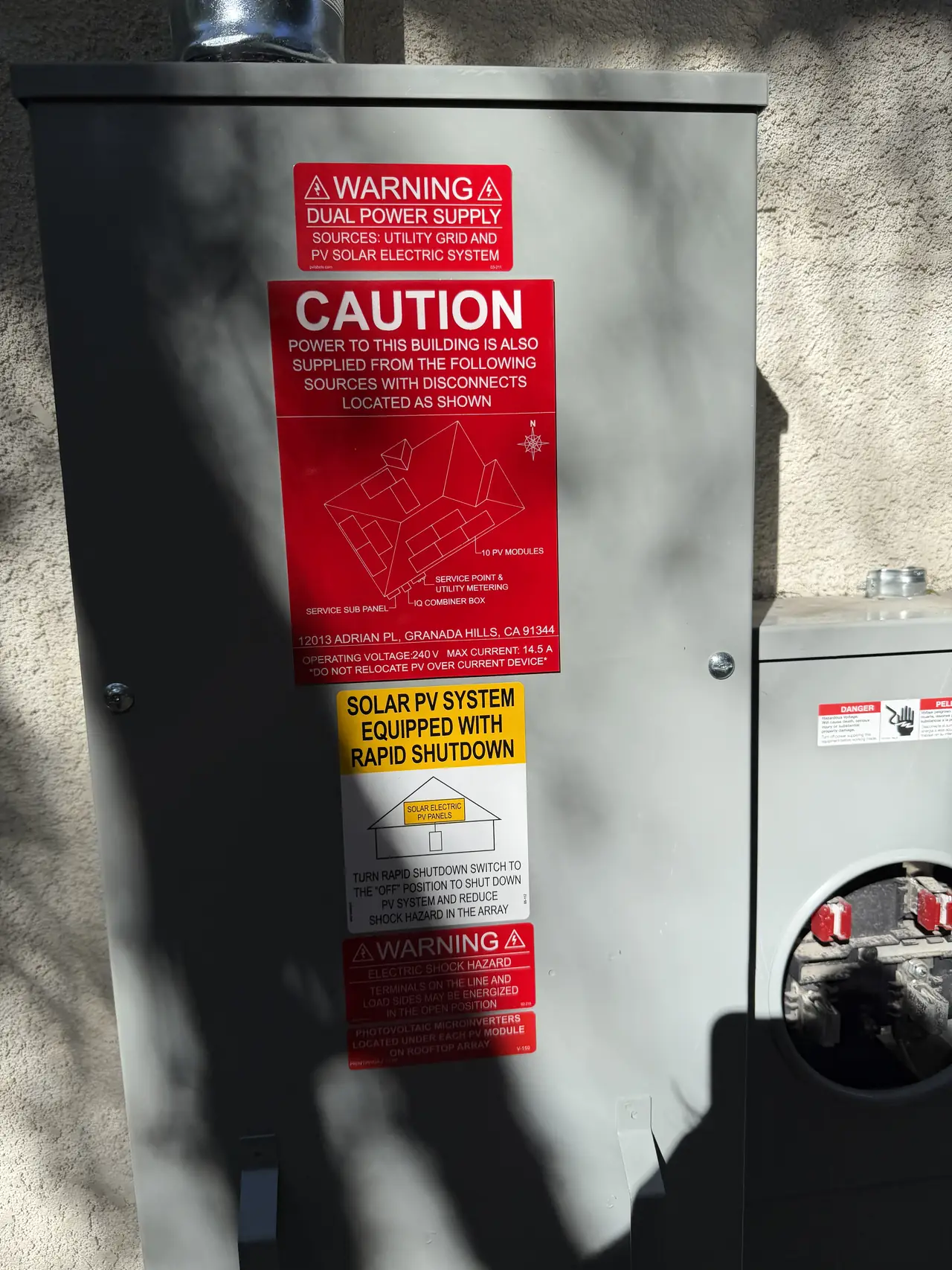
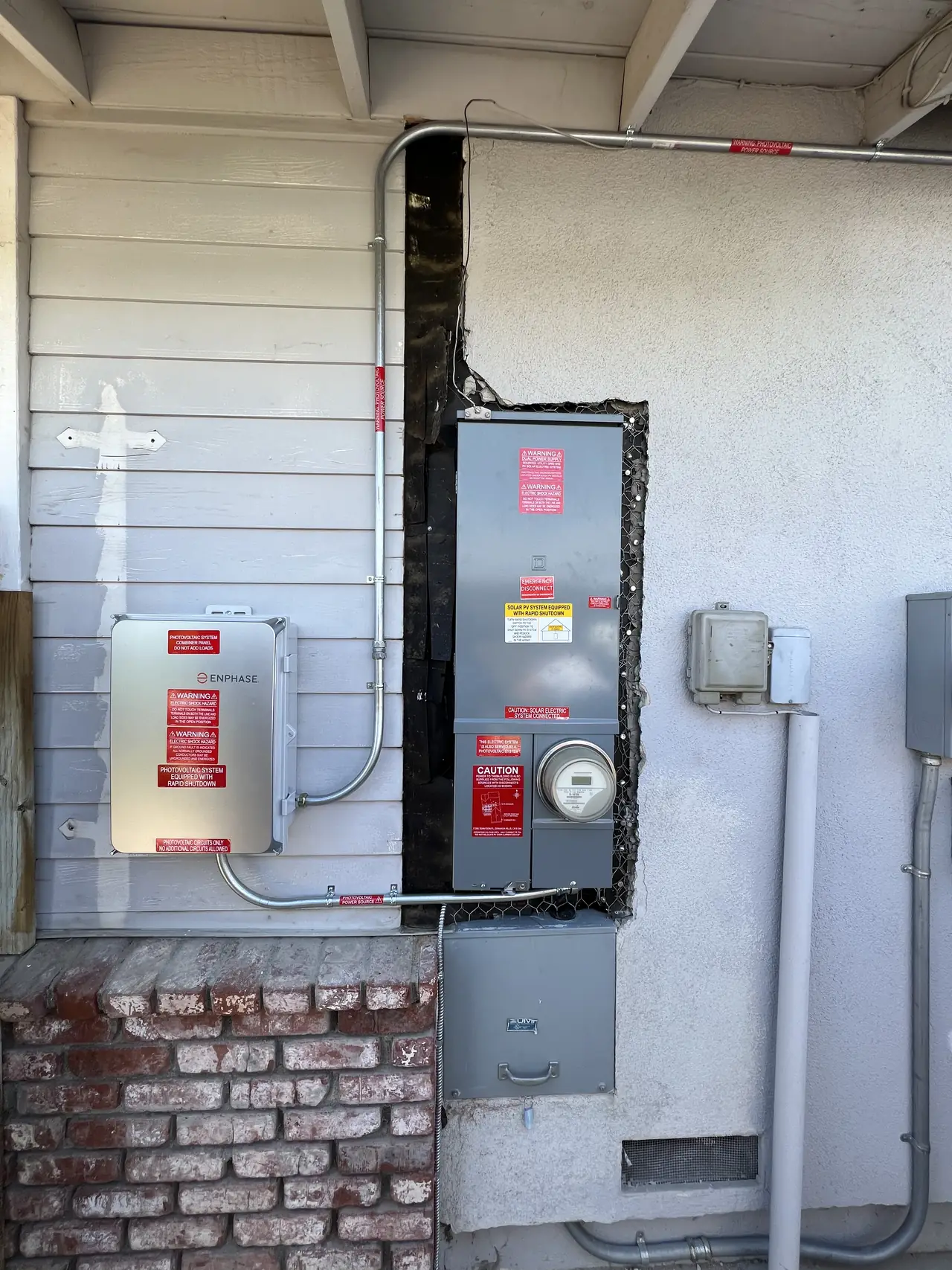
- 100 A main; array connects to a 125 A sub panel
- Permission to operate
- 15 May 2026
- Filing to permission
- 478 days
The story
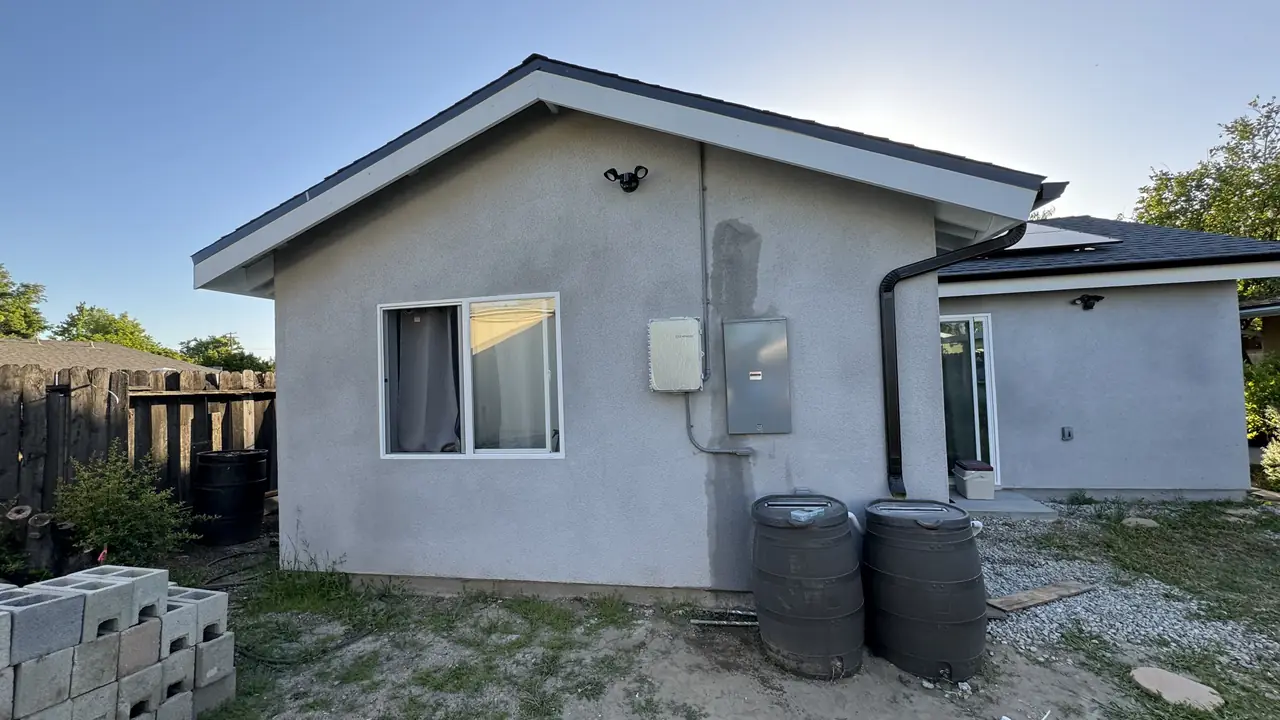
A new two-story accessory dwelling on a hillside lot. Before anybody thought about solar, the parcel had already been through grading, a retaining wall of a little over fifty feet, and a building permit carried through to a certificate of occupancy. That is the ordinary cost of building on a slope here, and it sets the calendar for everything that comes after.
The array is ten modules of 445 watts with a microinverter under each — the utility recorded it at 4.3 kilowatts. Small, and appropriate: this is an accessory dwelling, and its required system size comes out of the energy code rather than out of what anybody wanted.
The number worth stopping on is the service. The main breaker in the service panel is 100 amps, and the array lands in a sub panel rated 125 amps inside the building.
A hundred amps is a small service by any current standard. Plenty of single appliances installed today — a fast car charger, a heat pump, an induction range — are sized against a fraction of it. Houses built when a hundred amps was generous are all over this part of the valley, and their owners usually discover the number when they try to add something.
What it does not mean is that solar is impossible. What it means is that the design has to be done from the real equipment ratings rather than from assumptions, and that the check is made at the busbar the array actually feeds — not at the meter, and not at whatever number somebody remembers the house being. On a small service the margin in that calculation is thin enough that getting the rating wrong on paper turns into a plan check correction rather than a rounding error.
The other half is the calendar, which follows the building rather than the solar. The interconnection request went in during January 2025. Permission to operate came in May 2026. Four hundred and seventy-eight days.
Almost none of that was the utility. The building department's final release reached them on the first of May 2026; eleven days later the review, the confirmation, the site evaluation, the representative's final inspection review and the approval for a meter all landed together, on one day. Permission to operate followed three days after that. From release to switched on: two weeks.
In between there was a correction at final inspection in December 2025, and a building schedule on a hillside lot that ran the way hillside schedules run. Filing early bought the queue position and the charge, and then the request sat where every request on an unfinished building sits.
Two things to take from it. If your service is a hundred amps, say so before anybody quotes — it does not rule out an array, but it rules out designing one from assumptions. And if you are filing an interconnection while a building is still going up, expect the total to be measured from the building's finish, not from your application date.
Permission to operate came three days after the final and the house has been running on the array since. Cali Energy designed this Granada Hills system around a hundred-amp service rather than around an assumption about one.
How it ran
| 2023 | Grading and a retaining wall on the hillside lot |
|---|---|
| 2023 – 2025 | Two-story accessory dwelling built and carried to a certificate of occupancy |
| 22 January 2025 | Interconnection request filed |
| 10 December 2025 | Correction at final inspection |
| 1 May 2026 | Building department's final release reaches the utility |
| 12 May 2026 | Review, confirmation, site evaluation, final inspection review and approval — all on one day |
| 15 May 2026 | Permission to operate; existing meter exchanged for a net meter |
478 days from filing. Fourteen of them were after the building release.
What we did
- Designed the connection from the real equipment ratings on a 100 A service.
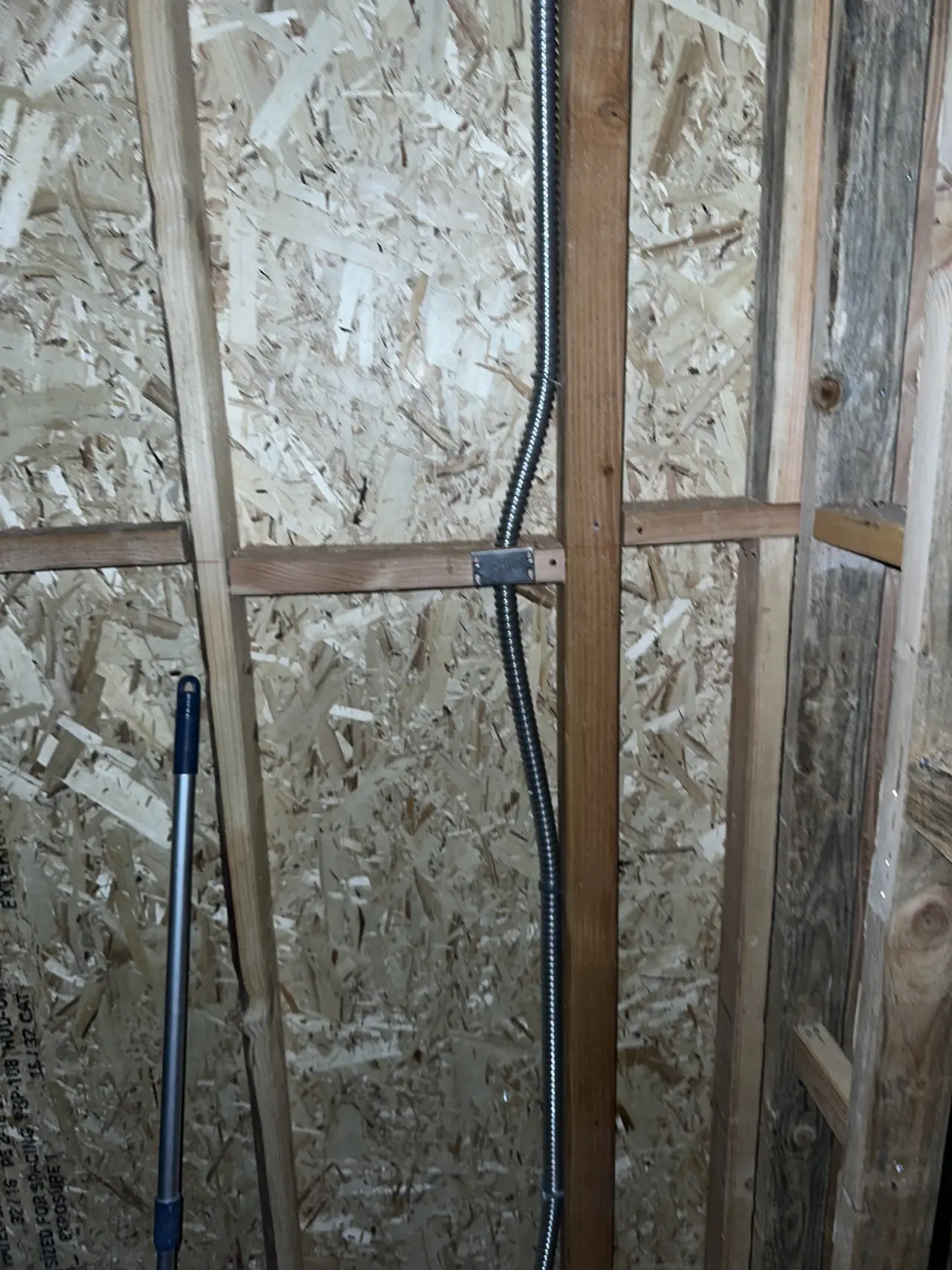
- Ran the conduit through open framing while the building was still being built.
- Set ten modules with a microinverter under each and confirmed all ten at commissioning.
- Carried the request through a correction at final inspection to permission to operate.
System specifications
| Building | New two-story detached accessory dwelling on a hillside lot |
|---|---|
| Site work | Grading and a retaining wall of a little over 50 ft |
| Modules | 10 × Canadian Solar 445 W |
| Microinverters | Enphase IQ8A, one per module — all ten reporting at commissioning |
| Recorded by the utility | 4.3 kW |
| Service | 100 A main breaker in the service panel |
| Connection | 125 A sub panel inside the building |
| Utility / AHJ | LADWP / LADBS |
Is your project like this one?
- Your house or accessory dwelling runs on a 100-amp service.
- You have been told a small service rules out solar.
- You are building on a hillside lot and the schedule keeps moving.
- Your interconnection has been open for over a year and you want to know what it is waiting for.
- You are adding an accessory dwelling and the electrical is being designed now.
Cali Energy in Granada Hills
Granada Hills sits inside City of Los Angeles boundaries, so every project here is permitted through LADBS and interconnected through LADWP. Our work in Granada Hills runs from single-row arrays on accessory dwelling units to systems on underground services, on composition shingle and on concrete tile.
The hillside lots at the north end of Granada Hills carry retaining walls, grading permits and older services, and an accessory dwelling on one of them inherits all three.
This installation is on the Granada Hills projects page alongside the others, and what the work covers is set out on the Granada Hills service area page.
- License and classifications: CSLB #1032379
- Official reference for this process: LADBS — plan review and permitting
Frequently asked questions
Can you put solar on a 100-amp service?
Usually yes. A small service changes how the connection is designed, not whether it is possible. What it removes is margin: the check against the busbar has to be made from the actual equipment ratings, and there is little room for a wrong assumption on paper.
Where is the back-feed limit actually checked?
At the busbar the array feeds, against the breaker supplying it — not at the meter and not at the service main in isolation. On a property with a sub panel that means reading the ratings of both, which is why the panel labels matter more than anybody's recollection of the house.
Why did this take sixteen months?
Because the building was still being finished. The interconnection was filed in January 2025 and the building department's final release did not reach the utility until May 2026. From that release to permission to operate was fourteen days.
Should I file the interconnection before the building is done?
It takes a queue position and settles the charge, which is worth something. Just read the total against the right start line: elapsed time on a build is measured from the building's completion, not from the day the application went in.
Can Cali Energy install solar on a hundred-amp service in Granada Hills?
Yes. A hundred-amp service does not rule out an array; it rules out designing one from assumptions. The busbar, the main breaker and the back-feed all have to be worked out before the layout rather than after it. Cali Energy designs Granada Hills systems around the service that is actually there, which on older housing stock here is frequently smaller than the drawings assume.
What this would look like on your roof
Planning solar in Granada Hills? Tell us your utility, your roof and what your bill looks like now, and we will model what a system like this would do on your house before you commit to anything.
Or call +1 (323) 844-7777 · Cali Energy, Northridge · CSLB #1032379 (B, C-10, C-39) — design, permits, install and electrical under one licensed contractor.
Related
This timeline reflects this property and this permitting path. Updated September 2026.