

Santa Clarita, CA · October 2020 – August 2023 · Southern California Edison / City of Santa Clarita
Santa Clarita: a vent pipe moved one panel off the plan.
One problem is visible on a drawing. The other is invisible until you read the monitoring. Both cost the same thing.
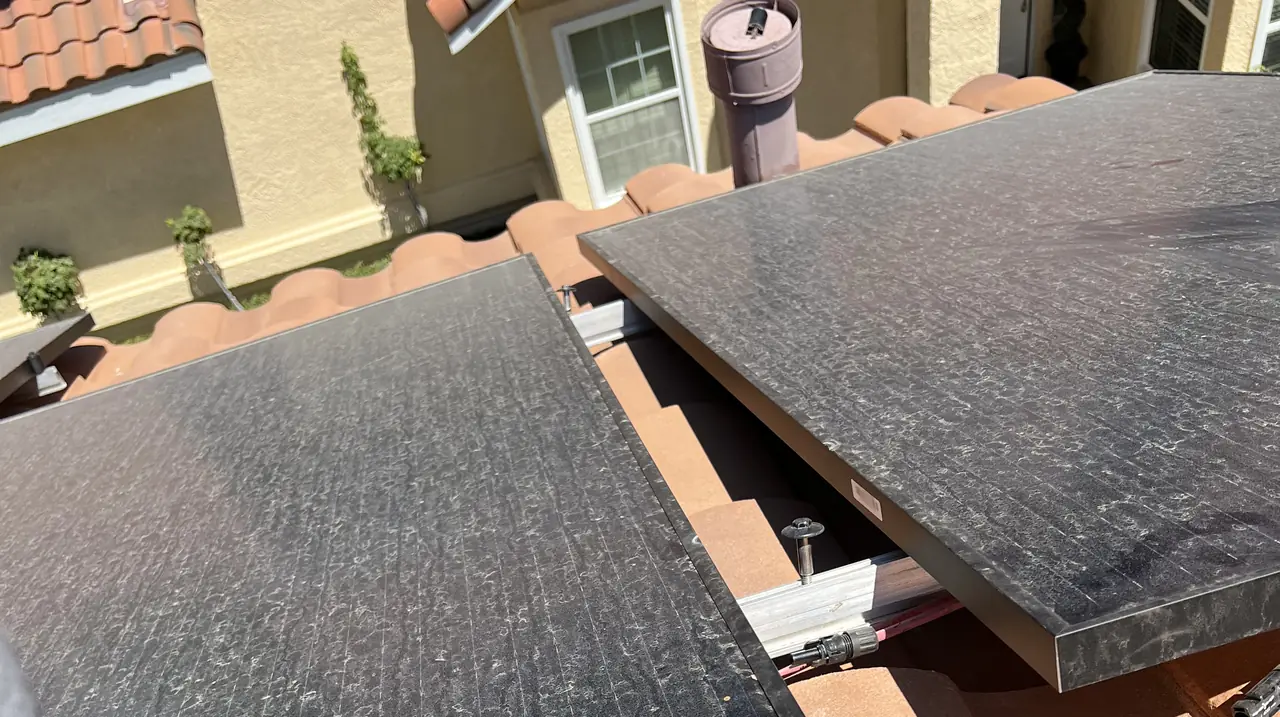
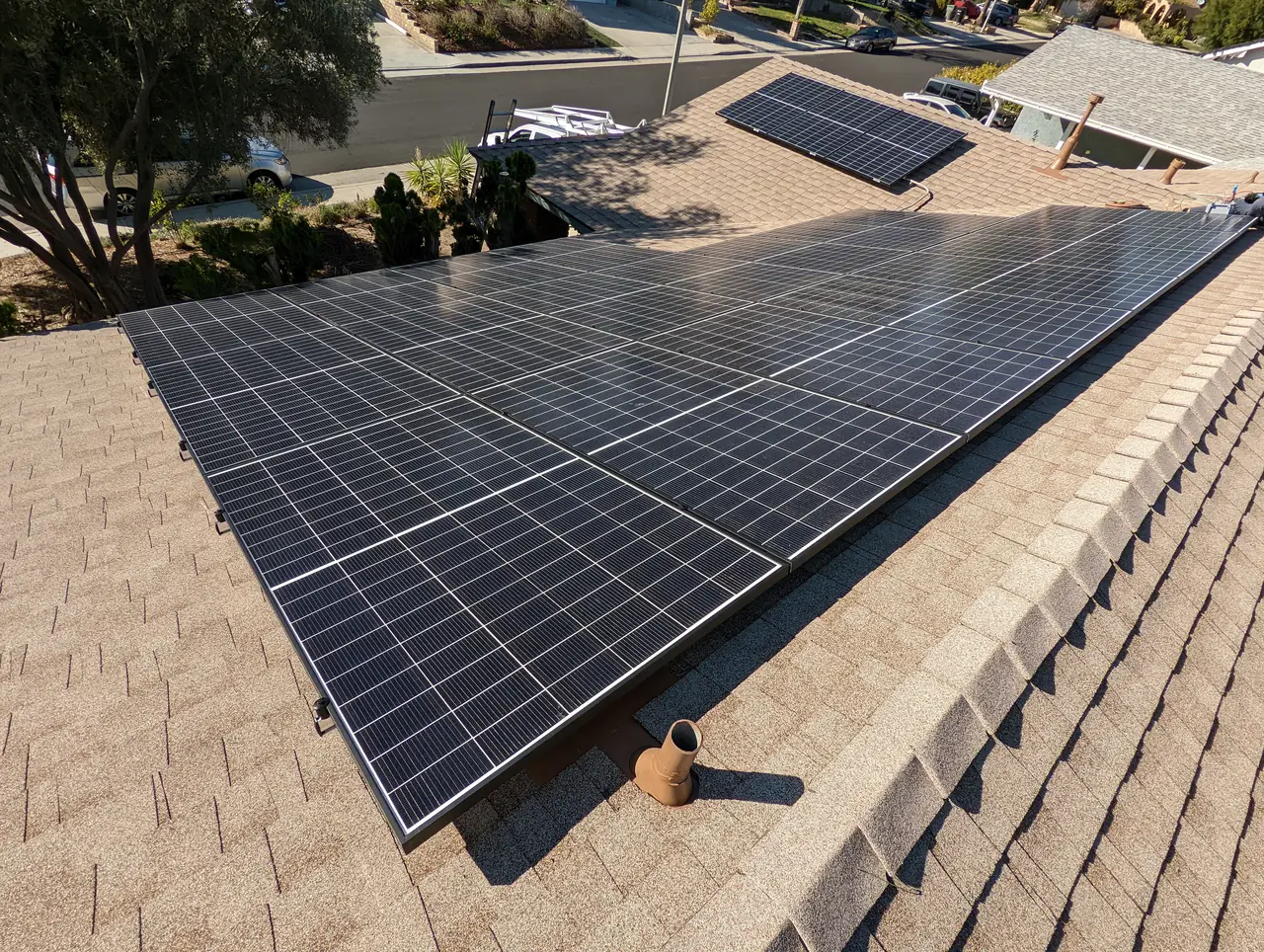
A rooftop array loses output two ways that look nothing alike. Shade is geometric and predictable: it can be found on a plan set before anything is built, and on this Santa Clarita roof one module was moved because a vent pipe threw a shadow across its position. Equipment failure is not predictable and shows up only in the data — eighteen months later a single panel on the same roof stopped producing, and the cause was its optimizer, replaced under warranty, as was the inverter a year after that. The first was caught on paper, while the plan set was still under review; the second was caught in the data, and Cali Energy carried both warranty claims through to a working array.
At a glance
- Caught at the drawing
- Shade from a vent pipe
- Action
- One module relocated before the build
- Caught in the data
- A single panel producing nothing
- Cause
- Failed optimizer
- Remedy
- Warranty replacement
- Utility / AHJ
- Southern California Edison / Santa Clarita
The story
This roof shows a simple point: an array loses production in two completely different ways, and you find them at opposite ends of the project.
The first was found before a single bracket was fitted. The layout went out in October, and the review came back with one item — move a panel, because a vent pipe shades that position. It came with a photograph of the shadow.
That is the kind of loss that is entirely avoidable, and it is worth understanding why it gets missed. A plumbing vent is a two-inch pipe. On a satellite image it is nearly invisible; in a layout drawn from measurements it is a small circle that does not obviously interfere with anything. But the sun moves, and a two-inch pipe standing a foot above the plane throws a moving stripe across the roof for part of every day. Put a module where that stripe lands and you have bought a panel that underperforms for twenty-five years.
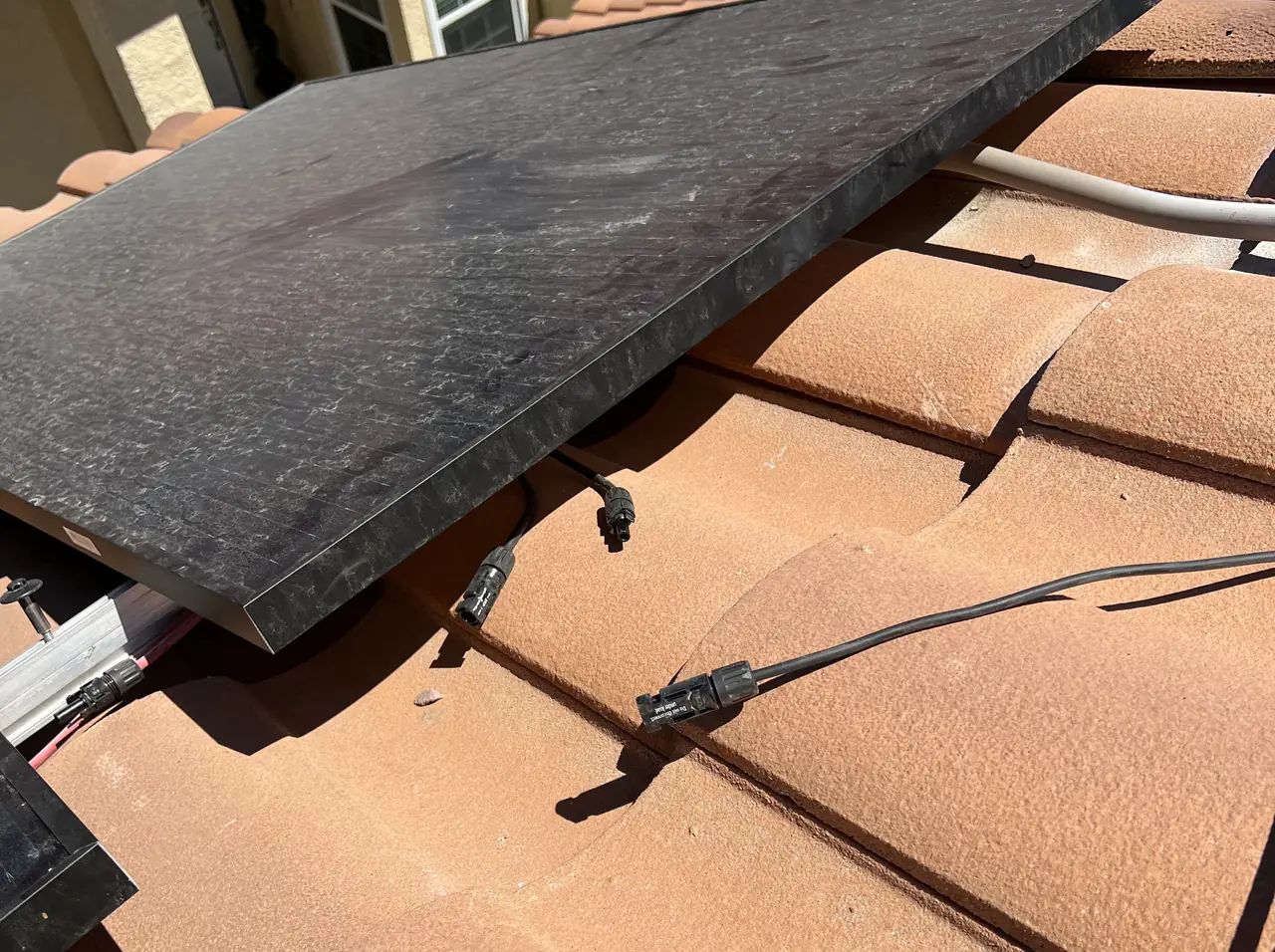
Moving it at the drawing stage costs nothing at all. Moving it later costs brackets, flashing and a penetration in a roof that did not need one.
The second loss showed up eighteen months later and could not have been drawn.
In June the household noticed one panel had stopped producing, three days earlier. The diagnosis was the optimizer — the small device fitted behind an individual module — and it was replaced under warranty.
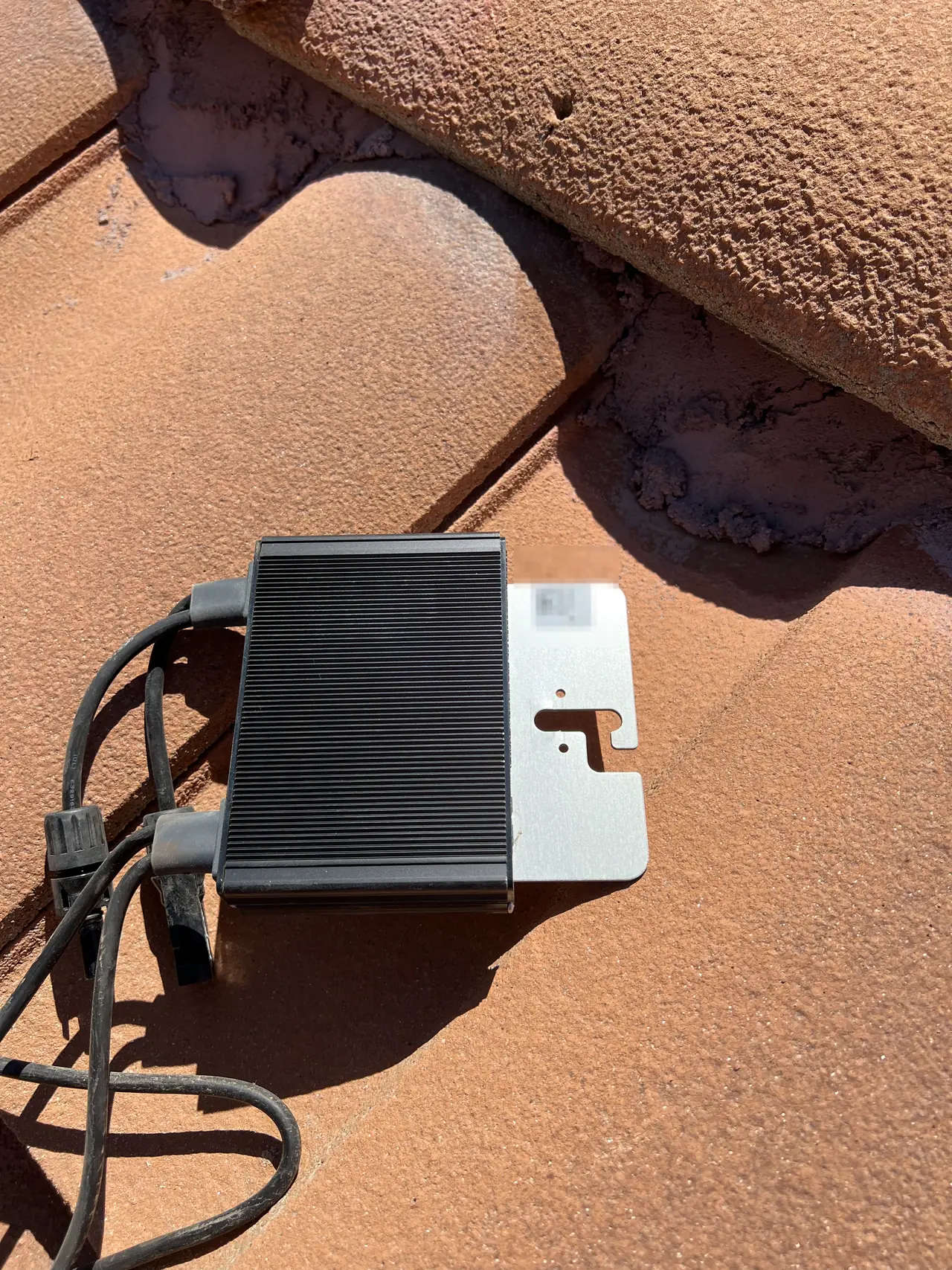
What makes this worth telling next to the vent pipe is how differently the two problems behave.
Shade announces itself on a plan and then never changes. A failed optimizer announces itself nowhere except the monitoring: the system keeps running, the other panels keep producing, nothing trips, nothing alarms. One tile of the display goes flat and everything else looks normal. On a system without module-level monitoring the same failure is a small unexplained dip in a monthly total, which is to say invisible.
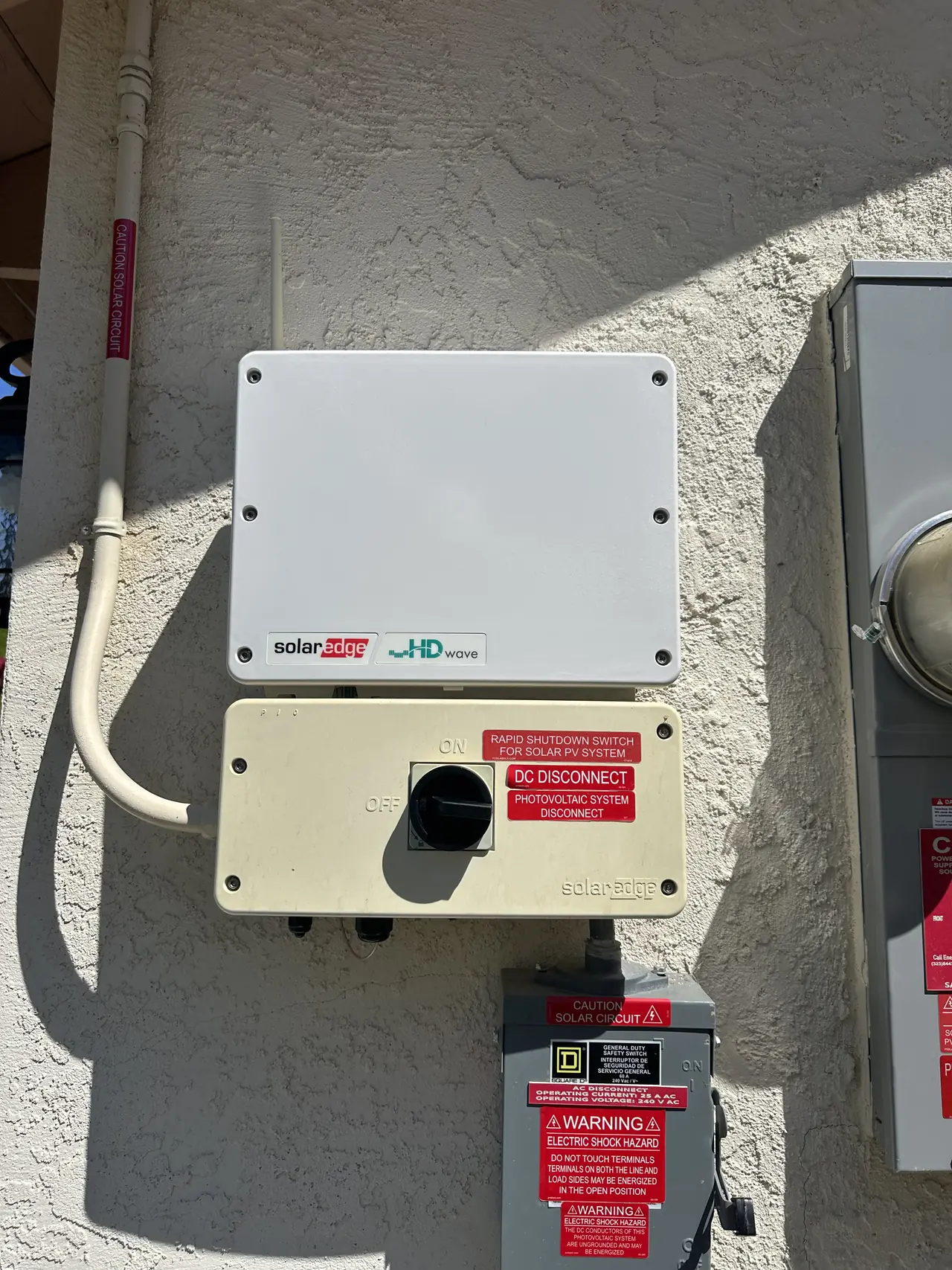
Which is the practical argument for module-level electronics that owners rarely hear made properly. The production gain from optimizers on an unshaded roof is modest. The diagnostic gain is not: it is the difference between knowing which panel failed on which day, and noticing a year later that the bills went up.
There was a third episode, and it belongs here because it is the other half of the same argument. A little over a year after the optimizer, the inverter itself failed. That one is not subtle — an inverter down takes the whole array with it, and nobody needs monitoring to notice. It was claimed under warranty, the replacement was fitted twelve days after the claim, and the new unit was registered in the monitoring portal so the per-module history carried over instead of starting again.
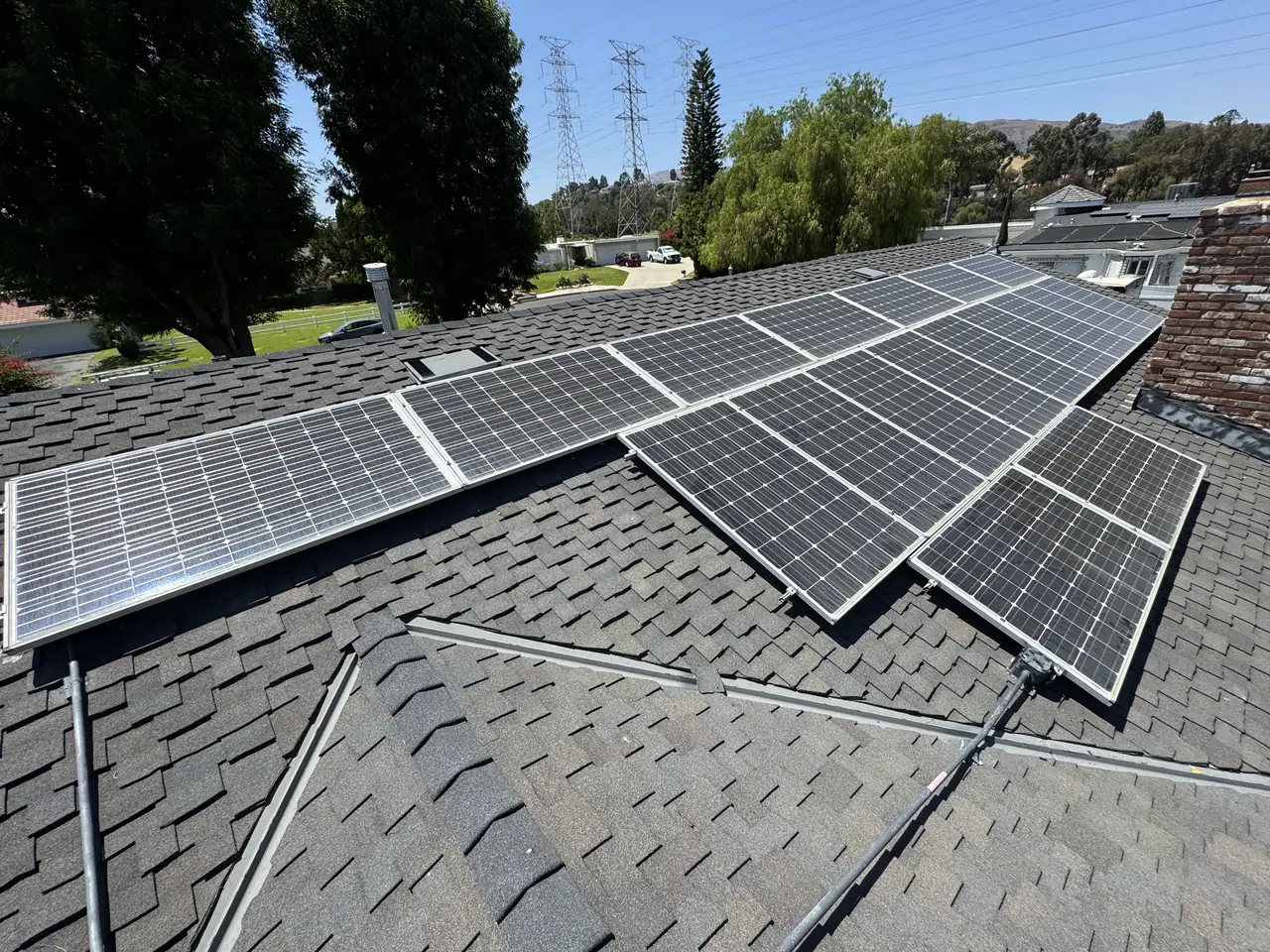
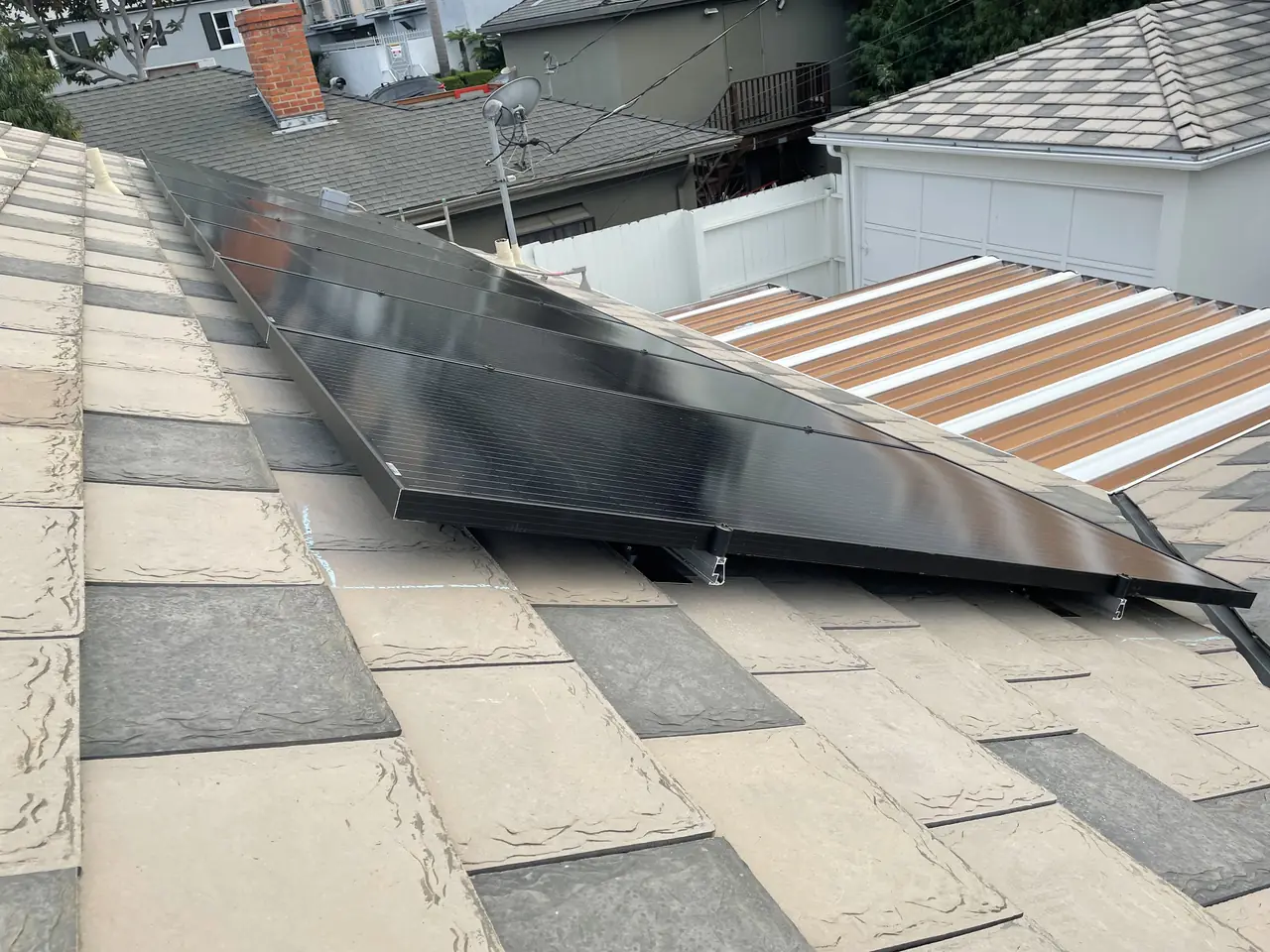
Both claims were ours to carry and both parts were replaced under warranty. The array has been producing on that tile roof for five years, and the per-module history in the monitoring goes back to the week it was switched on.
Cali Energy designed, installed and serviced this array in Santa Clarita.
How it ran
| 7 October 2020 | Layout issued |
|---|---|
| 26 October 2020 | Plan set reviewed; one module to move, shaded by a vent pipe — photograph of the shadow attached |
| 27 October 2020 | Layout corrected |
| 11 June 2022 | One panel stops producing |
| 14 June 2022 | Diagnosed as a failed optimizer |
| 16 June 2022 | Warranty replacement raised with the manufacturer |
| 12 July 2022 | Service call; optimizer replaced |
| 10 August 2023 | The inverter itself fails; second warranty claim |
| 22 August 2023 | Replacement inverter fitted |
| 28 August 2023 | New inverter registered in the monitoring portal |
Three years, one design change and two warranty claims, and only the first of them could have been seen coming.
What we did
- Moved the module at the drawing stage, where a layout change costs nothing.
- Moved the affected module at the drawing stage, where it is free to move.
- Identified the failed device per module rather than by guesswork on the roof.
- Took the failure through the warranty route instead of billing for it.
System specifications
| Array | Q CELLS Q.PEAK DUO BLK-G6 340 W |
|---|---|
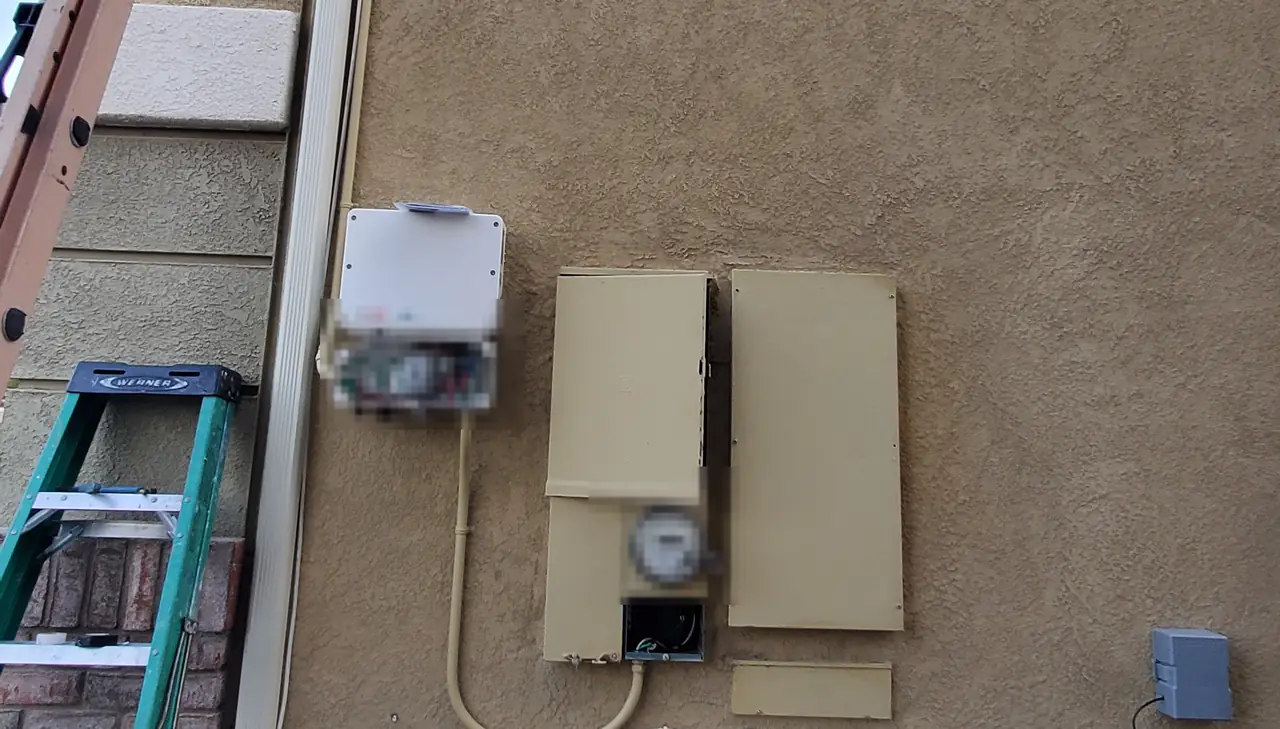
| Electronics | SolarEdge inverter with module-level optimizers |
| Design change | One module relocated away from vent shade |
| Later fault | Single optimizer failure |
| Detection | Noticed by the household, confirmed per module |
| Utility / AHJ | Southern California Edison / Santa Clarita |
Is your project like this one?
- Your roof has vents and your layout puts panels near them.
- One panel in your app is flat and the rest look fine.
- Your production has dropped slightly and nobody can say why.
- You are deciding whether module-level electronics are worth it.
Cali Energy in Santa Clarita
Santa Clarita is its own city in Los Angeles County, permitted through the City of Santa Clarita Building & Safety Division and interconnected through Southern California Edison. Tract roofs here carry the usual forest of vents, and every one of them casts something.
This installation is on the Santa Clarita projects page alongside the others, and what the work covers is set out on the Santa Clarita service area page.
- License and classifications: CSLB #1032379
- Official reference for this process: California Energy Commission — solar equipment lists
- Official reference for this process: CSLB — Solar Smart
Frequently asked questions
Can a vent pipe really shade a solar panel?
Yes, and it is easy to miss. A two-inch pipe standing above the roof plane throws a moving stripe across the surface for part of every day. A module placed where that stripe falls underperforms for the life of the system, for the sake of a position that could have been shifted on the drawing.
When is the cheapest time to fix a shading problem?
At the layout stage, where moving a module costs nothing. Once the array is built, the same move means new brackets, new flashing and an extra penetration in a roof that did not need one.
How do I know if an optimizer has failed?
Module-level monitoring shows it: one panel's output goes flat while the rest carry on normally. Nothing trips and nothing alarms, because the system is working — one module of it simply is not contributing.
Are optimizers worth it on an unshaded roof?
The production argument is modest. The diagnostic one is stronger: with module-level electronics you know which panel failed and on which day. Without them, the same fault is a small unexplained drop in a monthly total.
Does Cali Energy service systems it installed in Santa Clarita?
Yes, including warranty work on module-level electronics. Santa Clarita permits through its own Building & Safety Division and interconnects through Southern California Edison, and the monitoring is what makes a single failed device findable at all.
What this would look like on your roof
Planning solar in Santa Clarita? Tell us your utility, your roof and what your bill looks like now, and we will model what a system like this would do on your house before you commit to anything.
Or call +1 (323) 844-7777 · Cali Energy, Northridge · CSLB #1032379 (B, C-10, C-39) — design, permits, install and electrical under one licensed contractor.
Related
This timeline reflects this property and this permitting path. Updated September 2026.