

Santa Clarita, CA · March – April 2022 · Southern California Edison / City of Santa Clarita
Santa Clarita: twenty-one microinverters became one inverter on a wall.
Same panels, same roof, same output on paper. Everything about the electrical design changed.
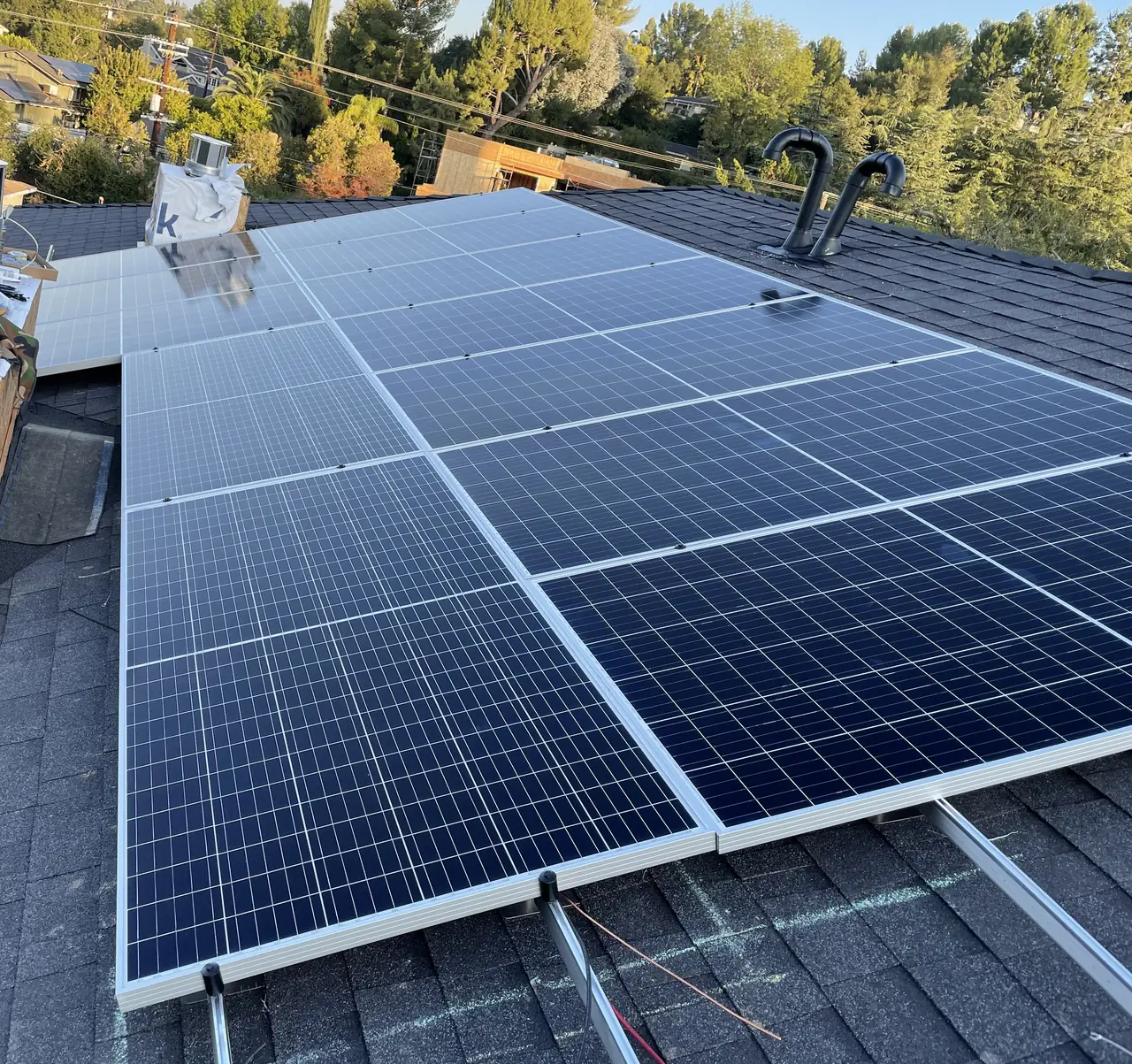
The same array can be built with a microinverter behind every module or with a single string inverter on a wall, and the choice is not a detail — it changes the wiring, the single-line diagram, what happens when one panel is shaded, and what a failure looks like in ten years. On this Santa Clarita project the estimate assumed twenty-one microinverters and the design that went forward used one string inverter with an optimizer behind each module, which keeps per-module control while moving the conversion to a wall. Cali Energy kept the same twenty-one modules and 7.56 kW.
At a glance
- System
- 7.56 kW, 21 REC 360 W modules
- Estimated with
- One microinverter per module
- Designed with
- One string inverter, one optimizer per module
- Projected output
- About 12,750 kWh a year
- Roof
- Simple tract slopes, little shading
- Utility / AHJ
- Southern California Edison / Santa Clarita
The story
The site inspection happened on a Monday, the numbers came back on the Tuesday: twenty-one modules, a microinverter behind each, about twelve and three-quarter thousand kilowatt-hours a year.
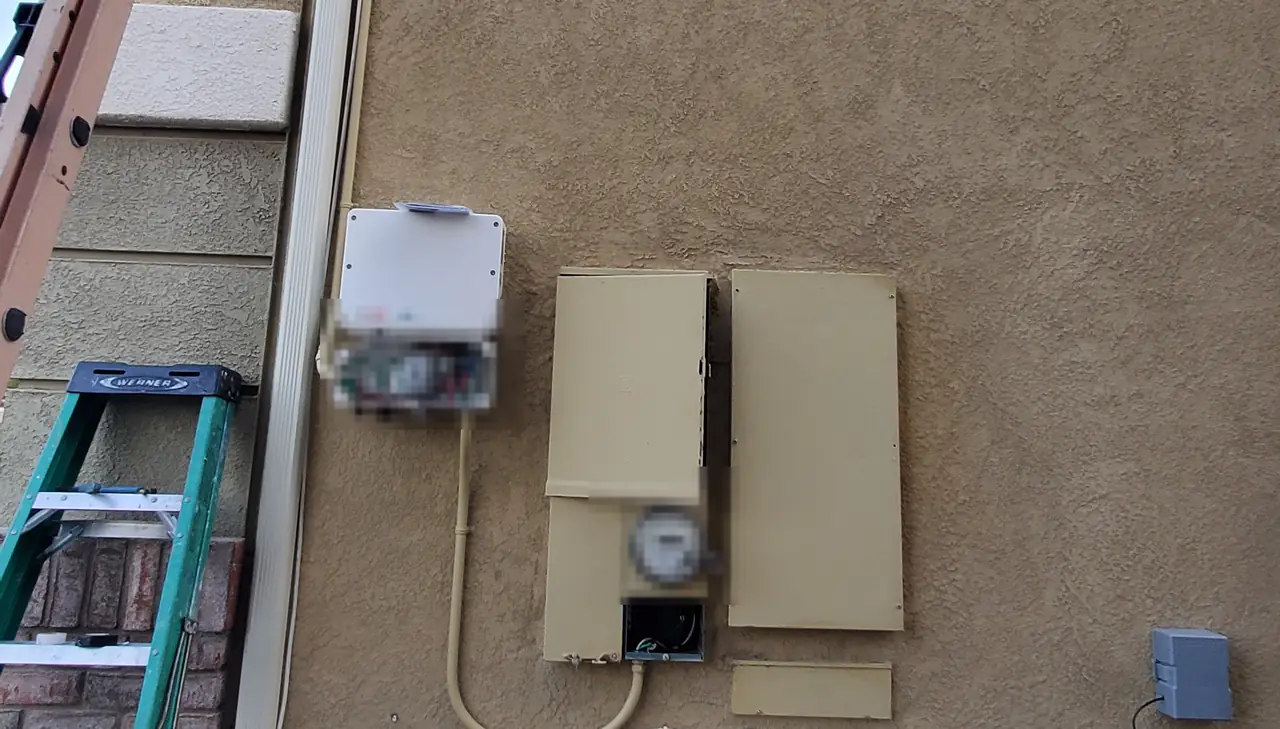
The design that went to the drafting stage a week later kept the twenty-one modules and replaced twenty-one microinverters with one string inverter on a wall — and an optimizer behind every module.
Owners see that and reasonably ask whether something got cheaper at their expense. The truthful answer is that they are different architectures with different strengths, and which one is right depends on the roof in front of you.
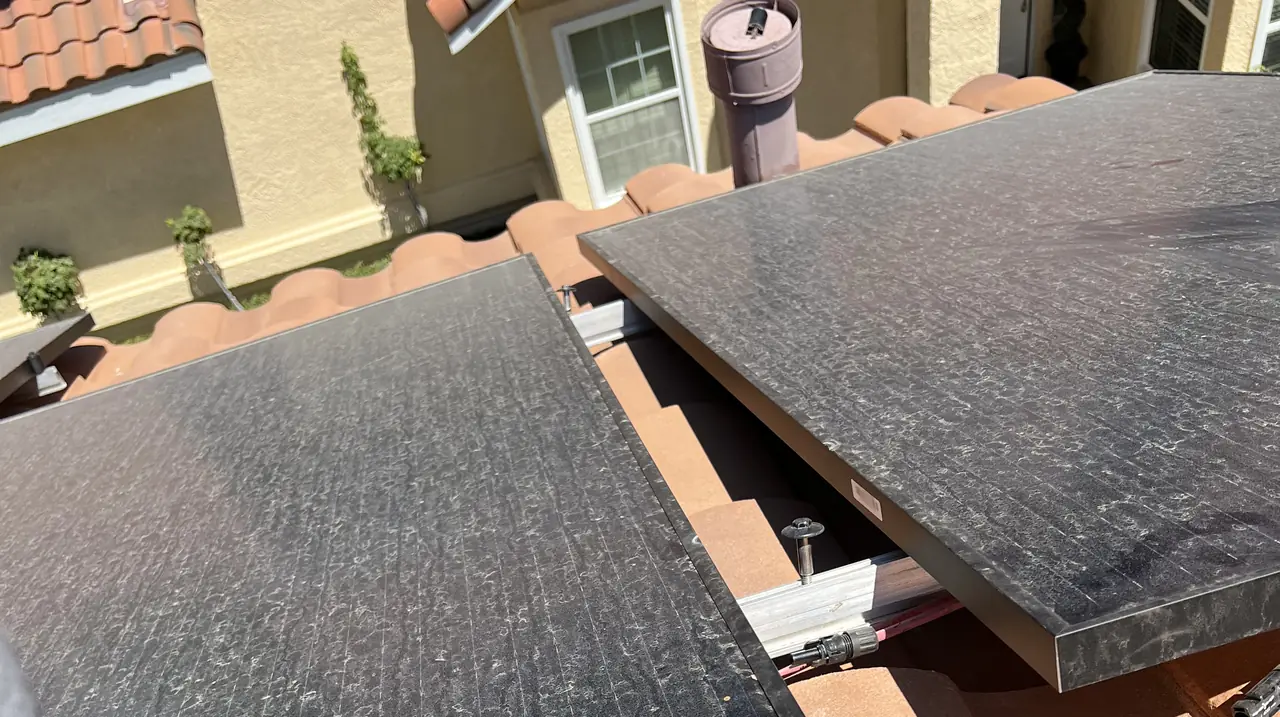
A microinverter converts at the module. Every panel is its own small system, so shade on one does not drag the others down, and the monitoring tells you which panel is which. The cost is twenty-one devices on a roof, each with a service life, each reachable only by going up there.
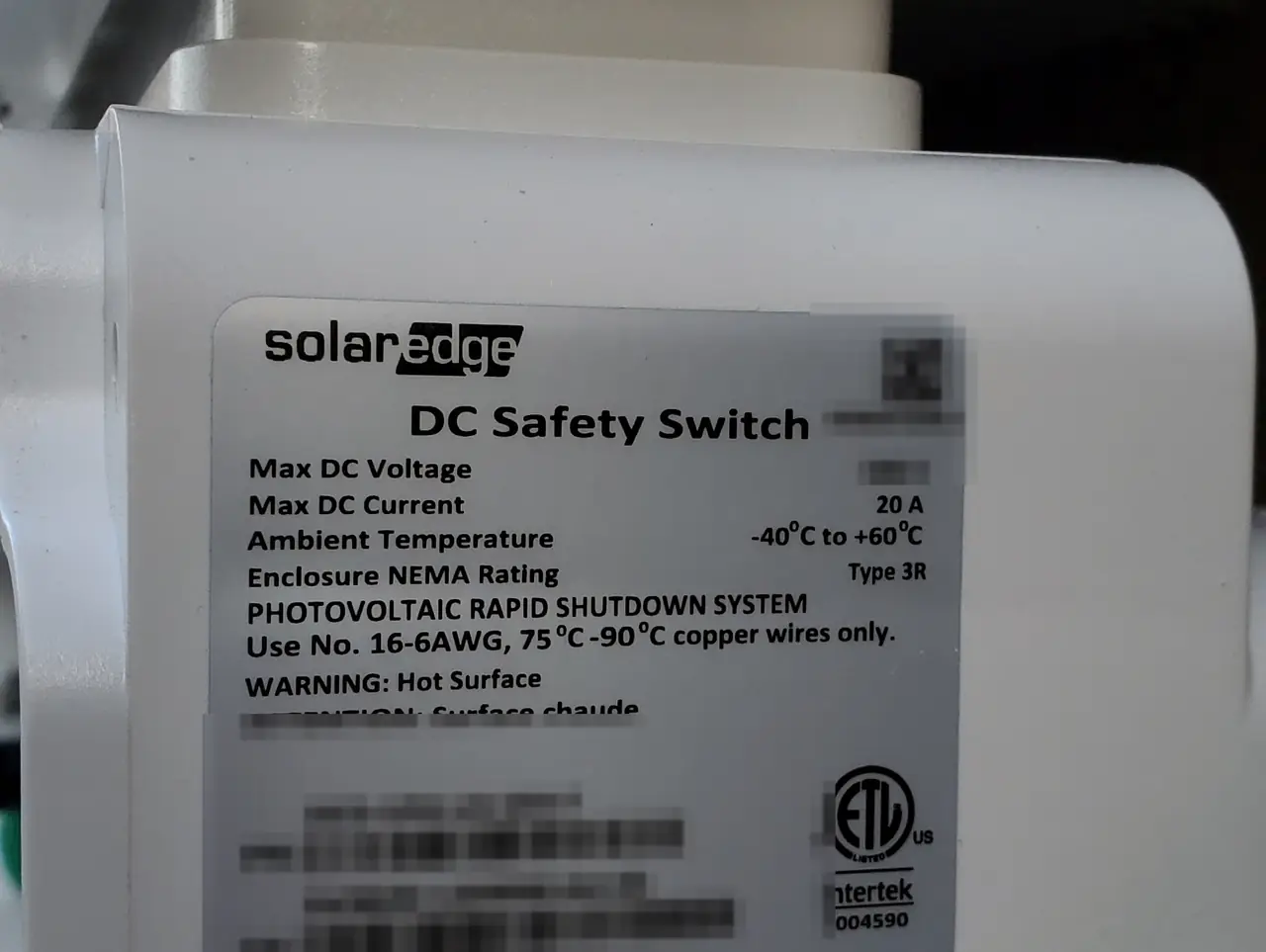
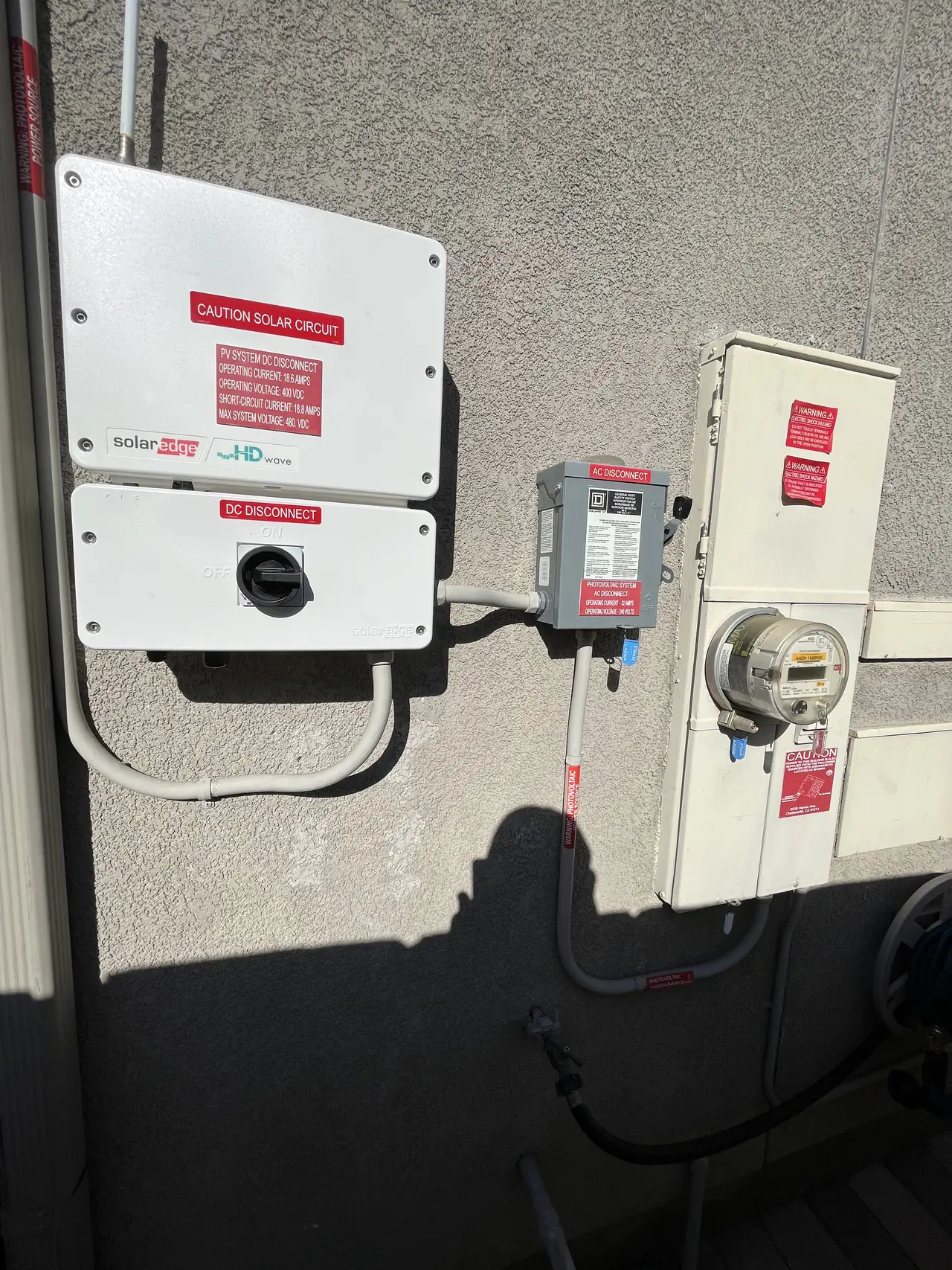
A string inverter converts for the whole array at one point. The modules are wired in series and their combined direct current arrives at a single box on a wall, at eye level, where it can be diagnosed and replaced without a ladder. The cost is that the string behaves as a group: shade or a fault on one module affects the string it belongs to.
Which is why the roof decides. On a broken-up roof with dormers, vents and trees — the kind where panels face three directions and something is always shaded — module-level electronics earn their price. On a simple tract roof with clean slopes and little shading, the thing they protect against mostly does not happen, and a single inverter is a simpler system with one device to maintain instead of twenty-one.
This roof was the second kind. Which is where the design that was actually built sits, because it is neither of the two architectures described above. An optimizer is a module-level device, like a microinverter, but it conditions direct current and leaves the conversion to the inverter on the wall. So the array keeps what module-level electronics are worth — per-panel monitoring, one shaded module not dragging its string down — while the part that most often needs replacing inside twenty-five years stays at eye level.
The plan set named the optimizer model — P401 under each module, feeding a single SolarEdge inverter. An optimizer is a piece of equipment with a rating like any other, and "string inverter" on a quote does not say whether there are any.
The other half of the answer is the ten-year view, and it cuts both ways. One inverter is a single point of failure, and inverters do fail — but it is one warranty claim on a device an electrician can reach from the ground. Twenty-one microinverters fail one at a time over a longer period, each one a smaller loss, each one a roof visit.
What matters for an owner is that the change is made deliberately and explained, not discovered on the plan set. If an estimate says one thing and the drawings say another, ask which roof condition drove it.
Permission to operate came through on the twelfth of April, eleven days after the crew left the roof, and the project closed out that week.
Cali Energy designed, permitted and installed this 7.56 kW array in Santa Clarita.
How it ran
| 3 March 2022 | Site inspection arranged for the Monday |
|---|---|
| 7 March 2022 | Site inspection |
| 8 March 2022 | Estimate: 21 modules, one microinverter each, about 12,750 kWh a year |
| 16 March 2022 | Design released for drafting: same 21 modules, 7.56 kW, one string inverter |
| 17 March 2022 | Plans revised to name the optimizer model under each module |
| 23 March 2022 | Permit fees paid |
| 30 March 2022 | Permit issued |
| 1 April 2022 | Installation |
| 5 April 2022 | Final inspection |
| 12 April 2022 | Permission to operate granted |
Nine days between two designs of the same array, five weeks from the first of them to a system allowed to run.
What we did
- Inspected the roof before fixing the electrical architecture.
- Kept the module count and system size unchanged through the change.
- Chose the architecture the roof conditions actually called for, optimizers included.
- Released the design for drafting with the inverter decision already settled.
System specifications
| System | 7.56 kW |
|---|---|
| Modules | 21 × REC 360 W |
| Inverter | SolarEdge SE7600H with P401 optimizers |
| Alternative considered | One microinverter per module |
| Projected output | About 12,750 kWh a year |
| Utility / AHJ | Southern California Edison / Santa Clarita |
Is your project like this one?
- Your quote and your plan set name different inverters.
- You are choosing between microinverters and a string inverter.
- Your roof is simple and somebody is selling you module-level electronics.
- You want to know what fails first and how it gets fixed.
Cali Energy in Santa Clarita
Santa Clarita is its own city in Los Angeles County, permitted through the City of Santa Clarita Building & Safety Division and interconnected through Southern California Edison. Simple tract roofs, which is where a string design still makes sense.
This installation is on the Santa Clarita projects page alongside the others, and what the work covers is set out on the Santa Clarita service area page.
- License and classifications: CSLB #1032379
- Official reference for this process: California Energy Commission — solar equipment lists
- Official reference for this process: Southern California Edison — generating your own power
Frequently asked questions
What is the difference between microinverters and a string inverter?
A microinverter converts at each module, so every panel is its own small system. A string inverter converts for the whole array at one box on a wall, with the modules wired in series. The first isolates problems; the second concentrates the equipment where it can be reached.
Which is better for a shaded roof?
Module-level electronics, clearly. When one panel is shaded it stops affecting the others, and the monitoring identifies which panel it was. On a roof where something is always in shadow, that is what you are paying for.
Is a single inverter a risk?
It is a single point of failure, and inverters do fail within the life of an array. The offsetting fact is that it is one device at eye level: a warranty claim and a swap an electrician performs from the ground, rather than a roof visit.
Is a string inverter with optimizers the same as microinverters?
No, and the difference is where conversion happens. An optimizer conditions the direct current at the module and sends it on; the inverter on the wall converts for the whole array. You keep per-module monitoring and shade tolerance, and the conversion equipment stays in one reachable place.
Should I worry if the design changes after the estimate?
Not automatically, but it should be explained rather than discovered. Ask which roof condition drove the change. A simple roof with little shading is a legitimate reason to move from module-level electronics to a string design.
Does Cali Energy install both types in Santa Clarita?
Yes, and the roof decides which. Projects here are permitted through the City of Santa Clarita Building & Safety Division and interconnected through Southern California Edison; a lot of the tract roofs are simple enough that a string design is the sensible one.
What this would look like on your roof
Planning solar in Santa Clarita? Tell us your utility, your roof and what your bill looks like now, and we will model what a system like this would do on your house before you commit to anything.
Or call +1 (323) 844-7777 · Cali Energy, Northridge · CSLB #1032379 (B, C-10, C-39) — design, permits, install and electrical under one licensed contractor.
Related
This timeline reflects this property and this permitting path. Updated September 2026.