

Santa Clarita, CA · July 2021 – December 2022 · Southern California Edison / City of Santa Clarita
Santa Clarita: the array did not go on the roof at all.
Posts in the ground, concrete around them, and a trench back to the house. Almost nothing about it is a roof job.
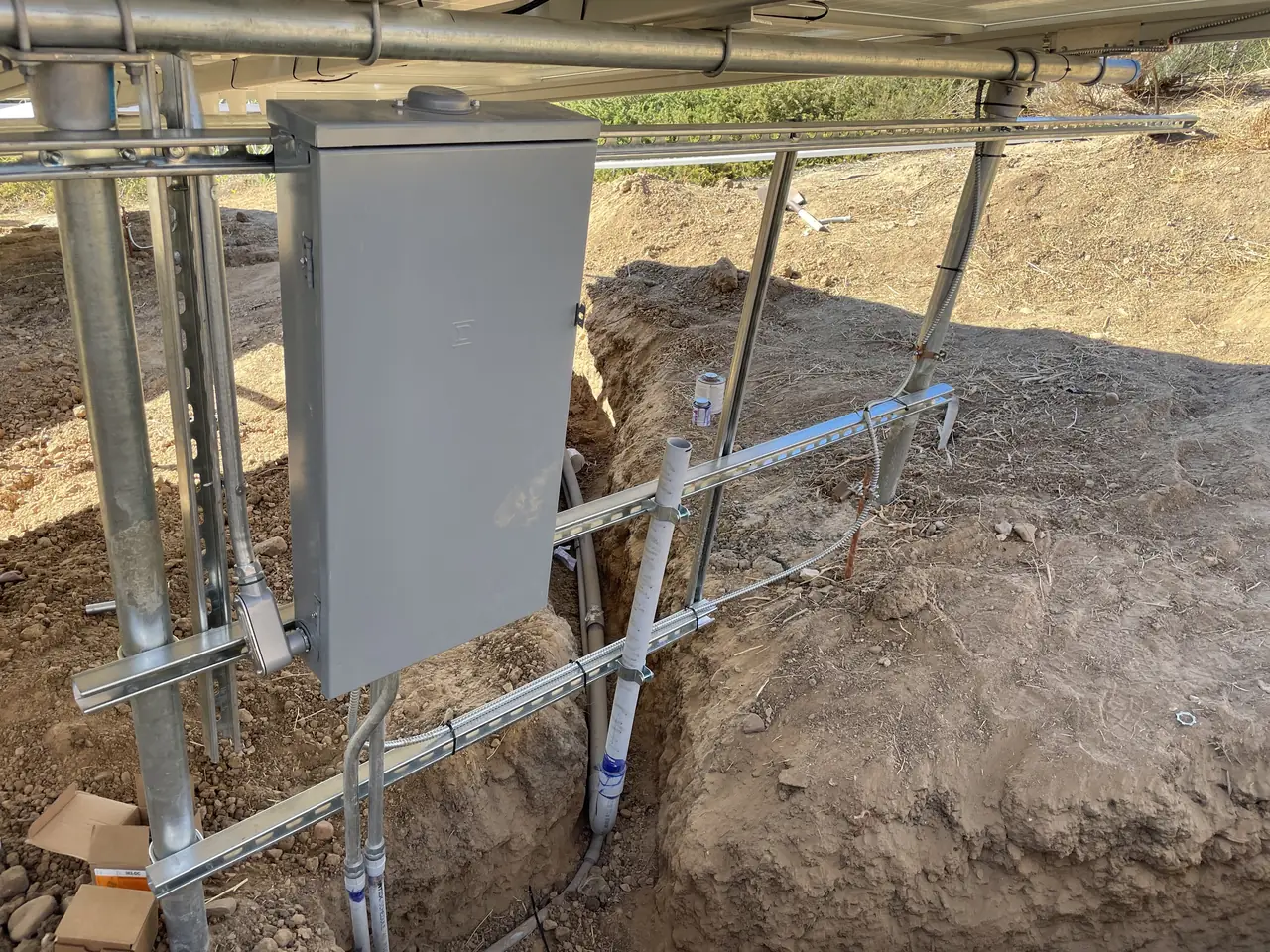
A ground-mounted array solves the problems a roof creates — orientation, shading, a covering that will need replacing — and introduces its own: foundations that have to be engineered and poured, posts set and cured before anything is framed, and a buried run back to the service that is its own scope of work. On this Santa Clarita project Cali Energy set the array on posts in concrete with an underground route to the house, and the schedule was governed by the concrete rather than the panels.
At a glance
- Mounting
- Ground mount on posts set in concrete
- Foundation
- Poured in two scheduled windows in one day
- Route to the house
- Underground
- What set the pace
- Curing, not panels
- Utility / AHJ
- Southern California Edison / Santa Clarita
The story
Most of what is written about solar assumes a roof. This array did not use one, and the differences start before anything is delivered.
A roof gives you a structure that already exists, at an orientation you have to accept, over a covering that will eventually need replacing underneath your hardware. A ground mount gives you the opposite deal: you choose the orientation and the tilt exactly, nothing shades it but what you allow to grow, and no future re-roof will ever require taking it apart. In exchange you have to build the structure yourself, starting underground.
The foundations came first. Posts set into the ground with concrete around them, poured in two scheduled windows on the same day — late morning and mid afternoon — because a concrete order arrives when it arrives and a crew stands waiting if the sequence is wrong.
That is the first thing that surprises people about ground mounts: the critical path is not the array. It is the concrete. The posts have to be set plumb and in line, and then the concrete has to cure before any load goes on it. Nothing about that can be compressed by working faster, and modules delivered early just sit somewhere.
Then the framing above it, which is closer to ordinary steelwork than to roof mounting: pipe and rail, set to a tilt somebody chose rather than a pitch somebody inherited.
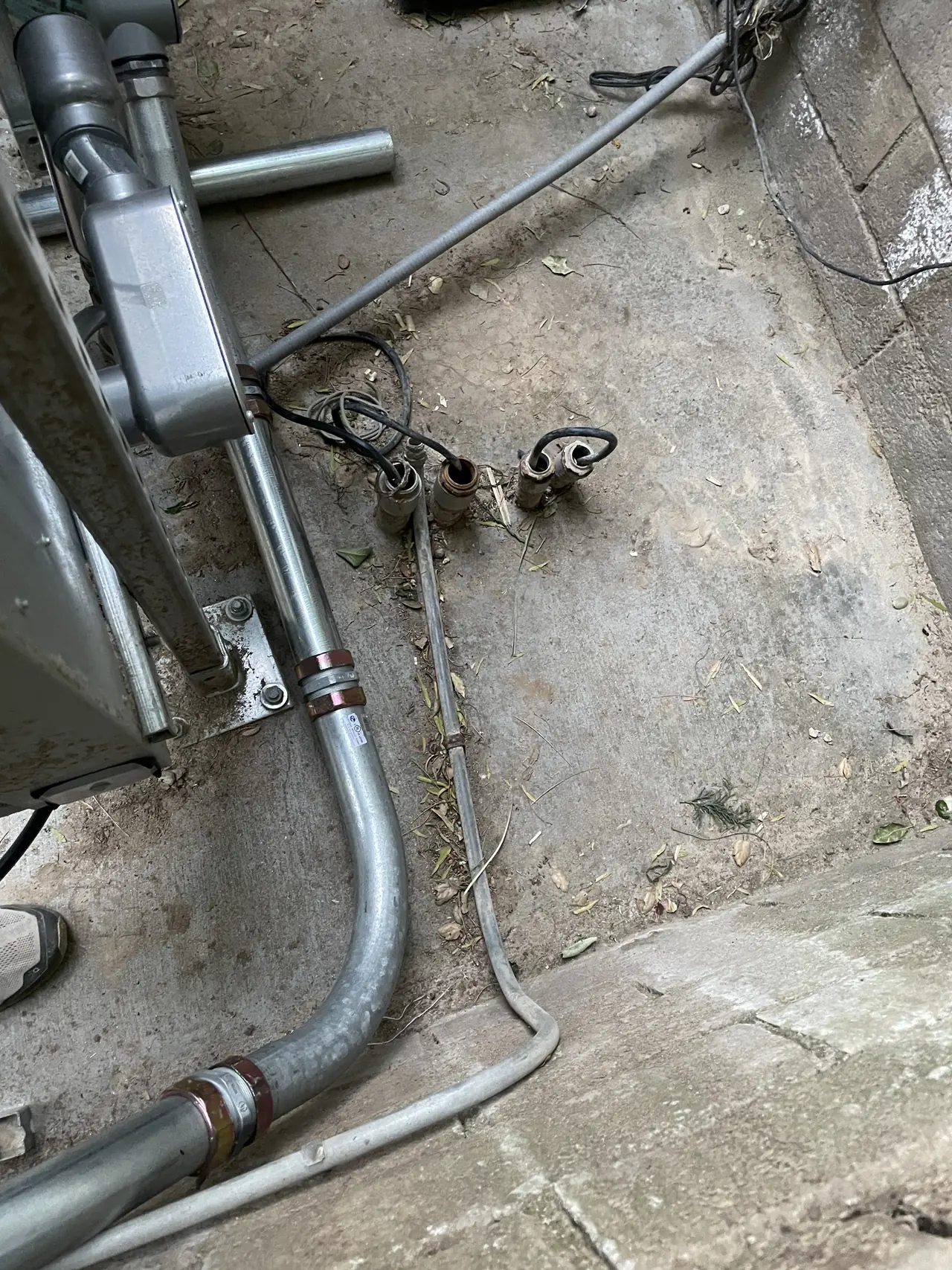
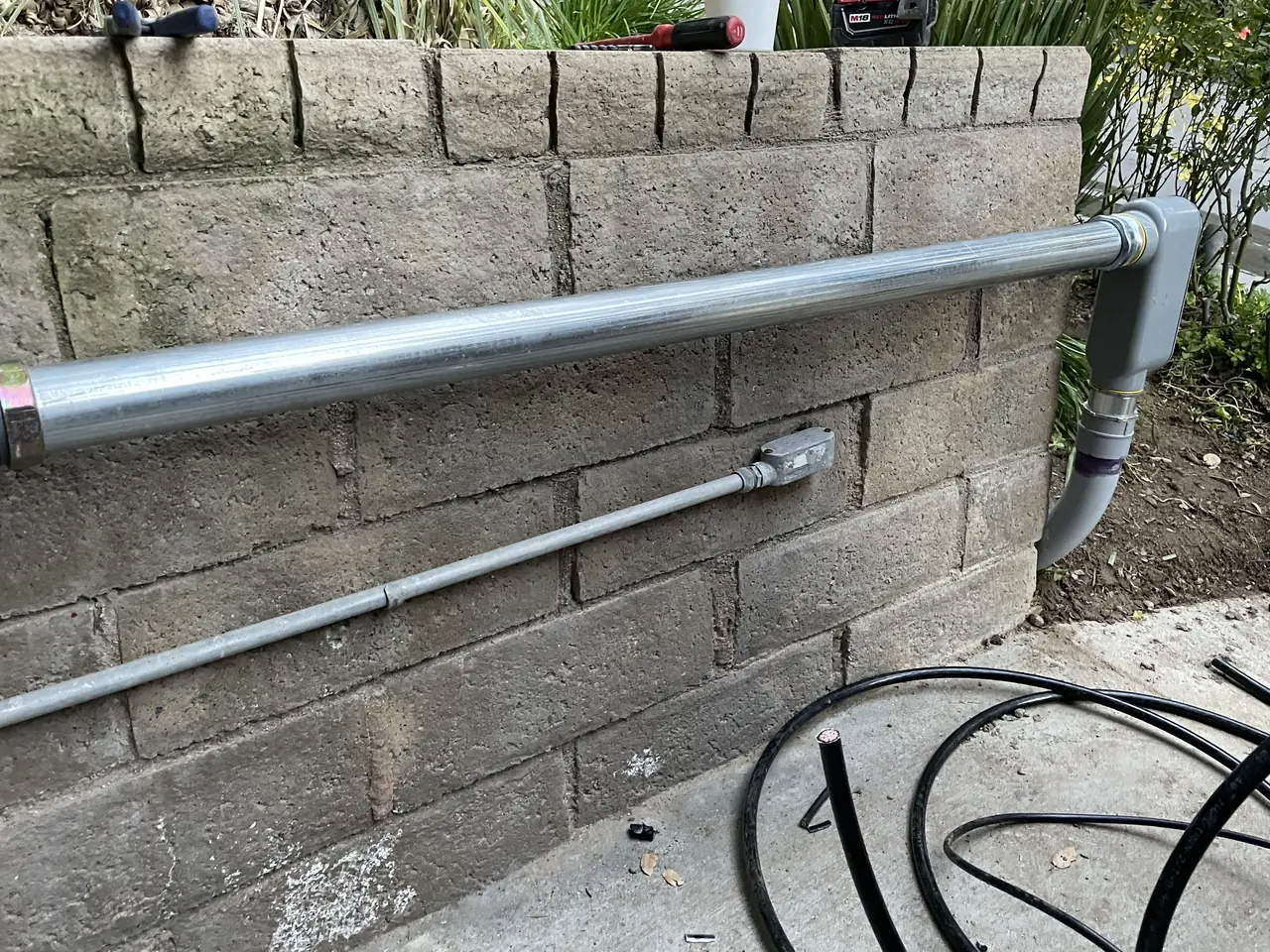
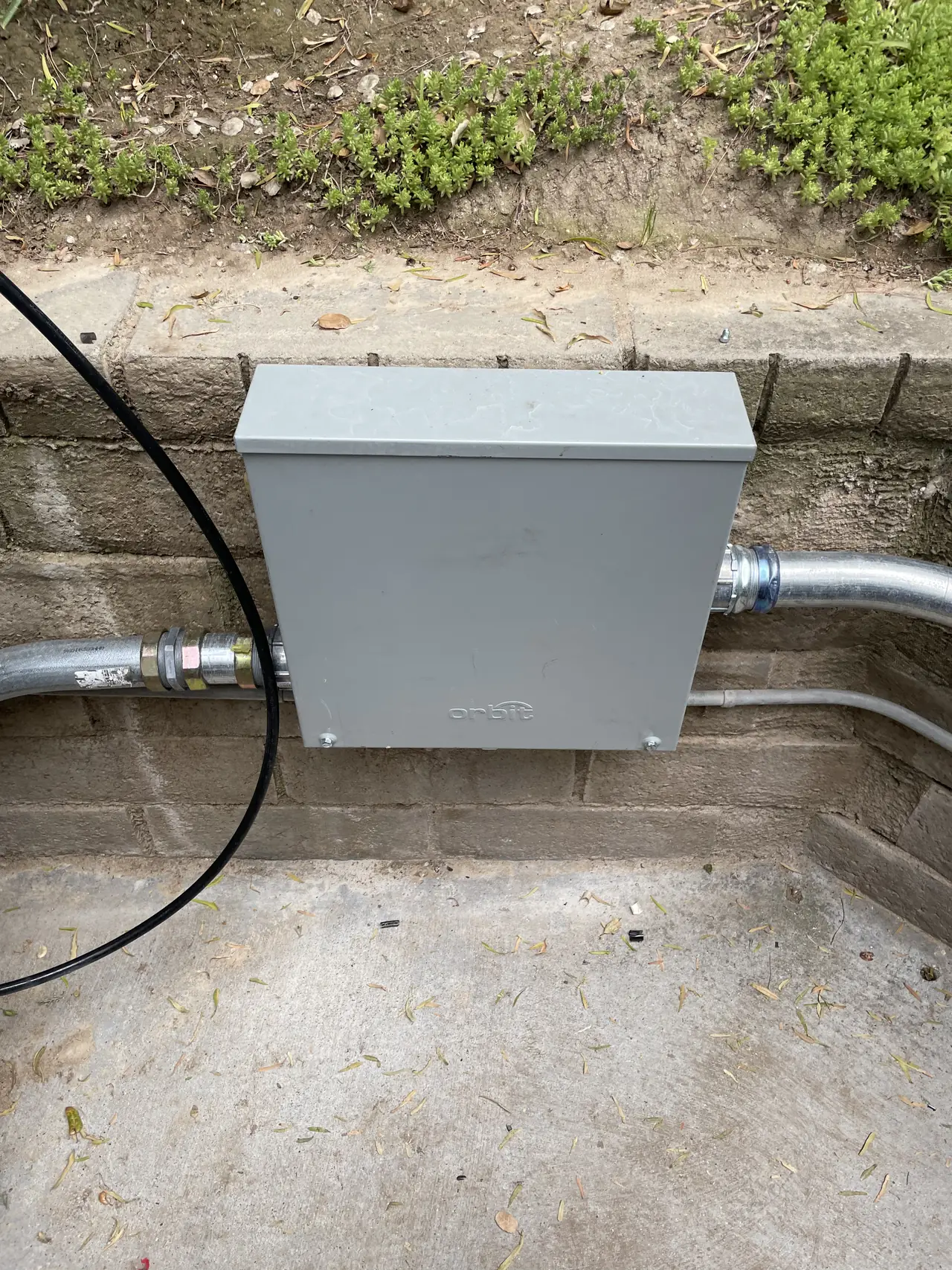
And then the part that does not exist on a roof job at all — getting the power back to the house. A ground array sits away from the building by definition, so the conductors run underground: a trench, conduit, backfill, and a route that has to avoid everything else already buried on the property. It is its own scope, its own work and its own risk, and on a large lot it can be the longest single run in the project.
A ground mount is not the cheap option. It costs a foundation and a trench that a roof array does not, and those are civil works rather than electrical ones. What it buys is orientation you actually chose, tilt set for the site rather than the builder's pitch, access for cleaning and service without a ladder, and independence from the life of a roof covering.
It also draws a different kind of scrutiny: on a structure built from scratch the paperwork is checking a structure, not a mounting method, and that is a slower read. Here the city approved the plan set in late October 2022, and the final passed in the middle of December.
The final passed in the middle of December, and the array has been running on its own foundations ever since — no roof to re-cover under it, and nothing to take apart when one is.
Cali Energy built and connected this ground-mounted array in Santa Clarita.
How it ran
| 26 July 2021 | Concrete ordered for two windows on the Thursday; solar materials released behind it |
|---|---|
| 29 July 2021 | Foundations poured |
| 16 September 2021 | Posts set and framing erected |
| 7 October 2021 | Underground route run back to the service |
| July 2022 | Installation complete |
| 27 October 2022 | Structural plan set approved by the city |
| 16 December 2022 | Final passed |
From the pour to a passed final, the panels were never the slow part.
What we did
- Sequenced the concrete before the equipment rather than the other way round.
- Set the posts and let them cure before any load went on them.
- Ran the connection underground rather than across the property.
- Carried the structural plan set through the city's review to a passed final.
System specifications
| Mounting | Ground mount, posts set in concrete |
|---|---|
| Structure | Pipe and rail above the posts |
| Tilt and orientation | Chosen for the site, not inherited from a roof |
| Connection | Underground run back to the service |
| Utility / AHJ | Southern California Edison / Santa Clarita |
Is your project like this one?
- Your roof faces the wrong way and your lot is large.
- Your covering is near the end of its life and you do not want to move an array later.
- You have been quoted for a ground mount and the price surprised you.
- You want to know what a ground array actually involves.
Cali Energy in Santa Clarita
Santa Clarita is its own city in Los Angeles County, permitted through the City of Santa Clarita Building & Safety Division and interconnected through Southern California Edison. Lots here are large enough that the roof is not always the obvious place for an array.
This installation is on the Santa Clarita projects page alongside the others, and what the work covers is set out on the Santa Clarita service area page.
- License and classifications: CSLB #1032379
- Official reference for this process: City of Santa Clarita — Building & Safety
- Official reference for this process: NFPA — National Electrical Code (NFPA 70)
Frequently asked questions
Is a ground-mounted solar array cheaper than a roof one?
No. It adds a foundation and a buried run that a roof array does not need, and those are civil works rather than electrical ones. What it buys is chosen orientation and tilt, easy access, and independence from the life of a roof covering.
What sets the schedule on a ground mount?
The concrete. Posts have to be set plumb and in line and then cured before any load goes on them, and nothing about that can be compressed by working faster. Modules delivered ahead of the foundation simply wait.
How does a ground array connect to the house?
Underground, in most cases: a trench, conduit and backfill on a route that has to miss everything already buried on the lot. On a large property it can be the longest single run in the project and it is its own scope of work.
Does a ground mount need different permitting?
It is reviewed as a structure rather than as something fixed to an existing one, which is a different kind of scrutiny. On this project the city approved the plan set in late October 2022 and the final passed that December.
Does Cali Energy build ground-mounted arrays in Santa Clarita?
Yes. Lots here are often large enough that the roof is not the obvious place for an array. Projects are permitted through the City of Santa Clarita Building & Safety Division and interconnected through Southern California Edison.
What this would look like on your roof
Planning solar in Santa Clarita? Tell us your utility, your roof and what your bill looks like now, and we will model what a system like this would do on your house before you commit to anything.
Or call +1 (323) 844-7777 · Cali Energy, Northridge · CSLB #1032379 (B, C-10, C-39) — design, permits, install and electrical under one licensed contractor.
Related
This timeline reflects this property and this permitting path. Updated September 2026.