

Santa Clarita, CA · April – September 2025 · Southern California Edison / City of Santa Clarita
Santa Clarita: the second unit got a service of its own.
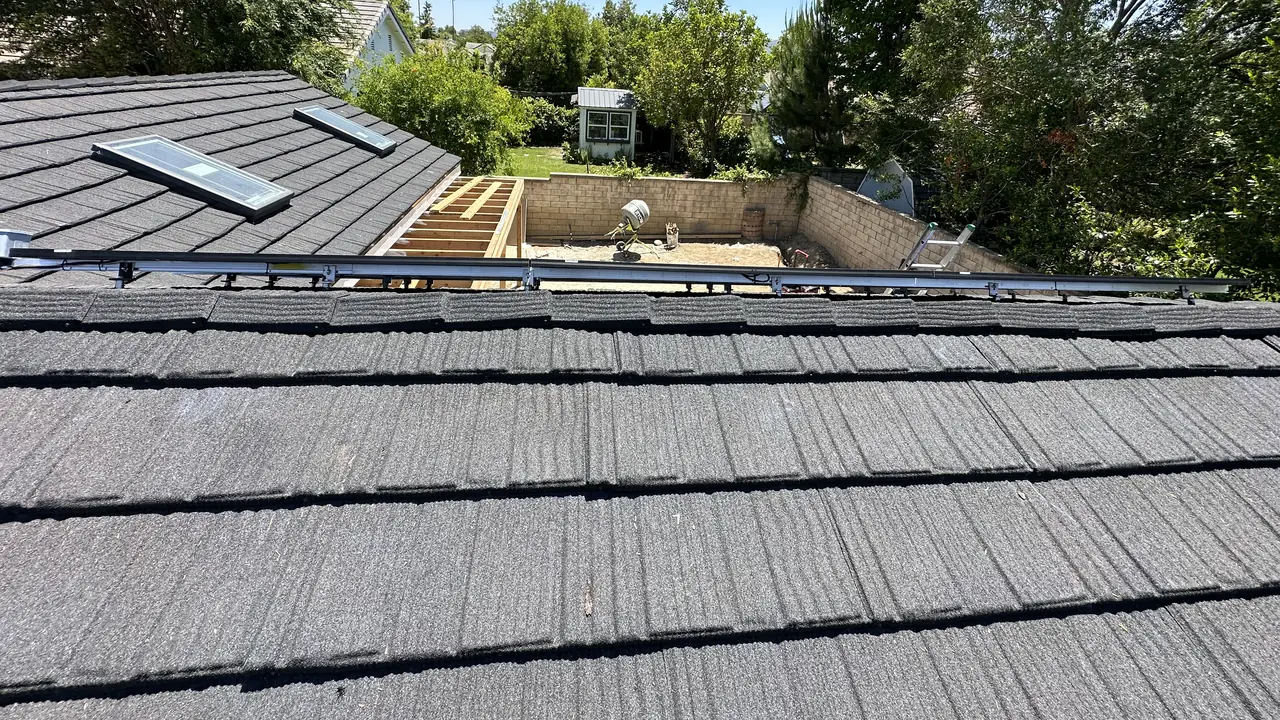
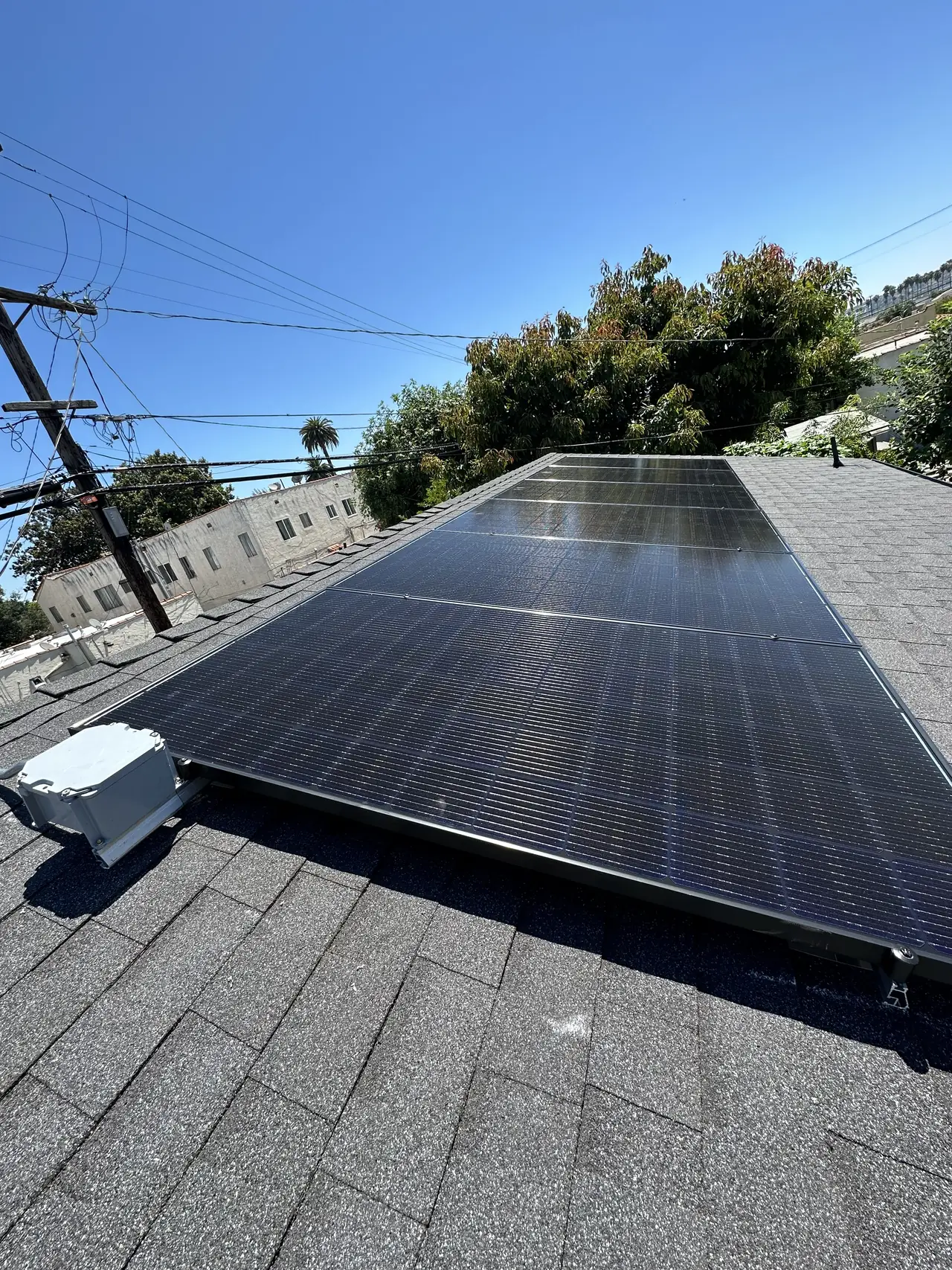
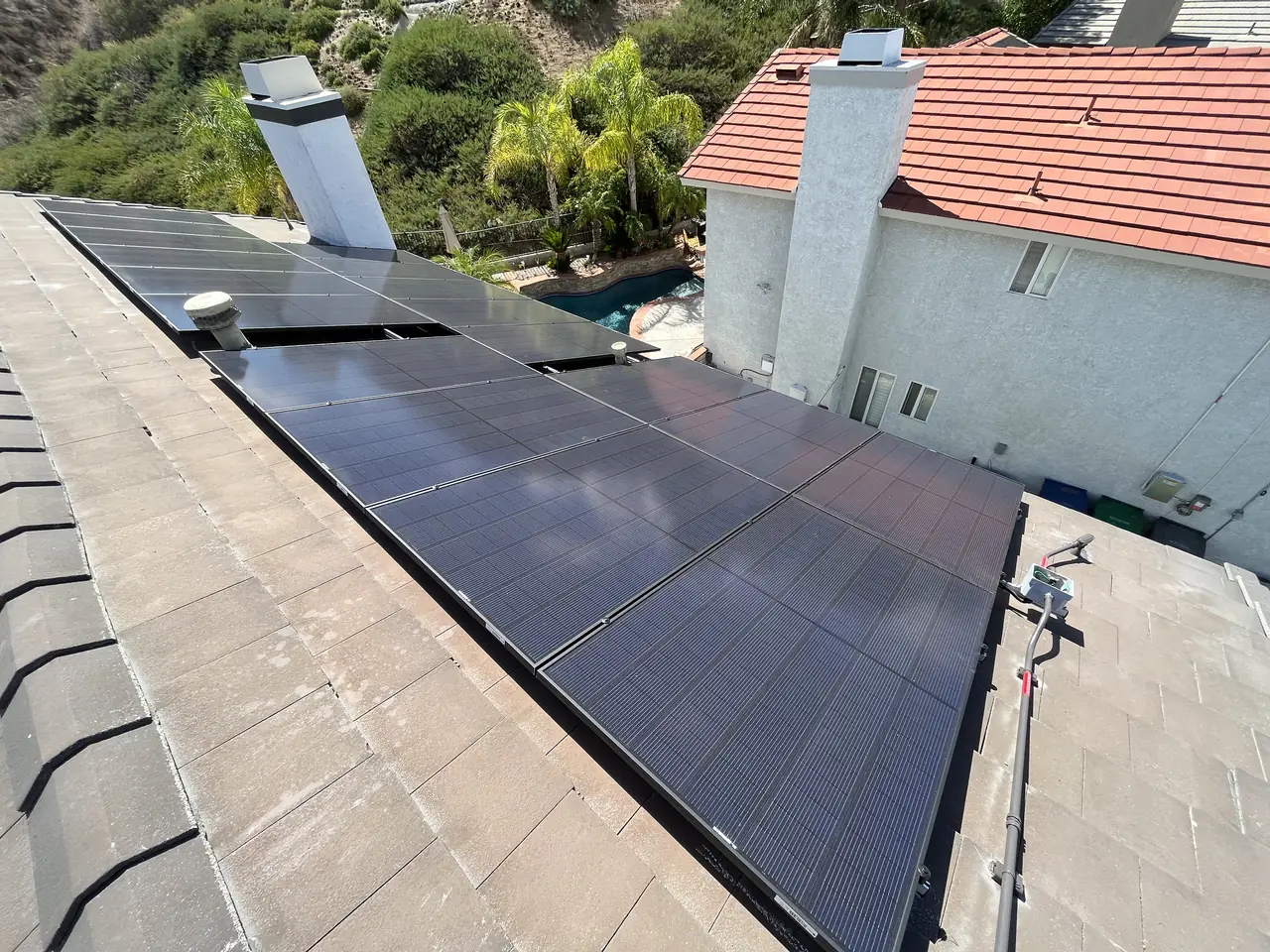
Six modules on a new accessory dwelling. The design changed twice, and both times because of what was feeding it.
A new accessory dwelling can share the main house's electric service or be given its own, and that single decision governs the solar design: what the array connects to, where the arithmetic is done, and which address the interconnection is filed under. On this Santa Clarita project the unit was first drawn against a 125 A sub panel and then changed to a dedicated 200 A service of its own, sited beside the main house panel, with a 200 A sub panel on the unit itself. Cali Energy redrew the six-module array around it.
At a glance
- Property
- New accessory dwelling
- Array
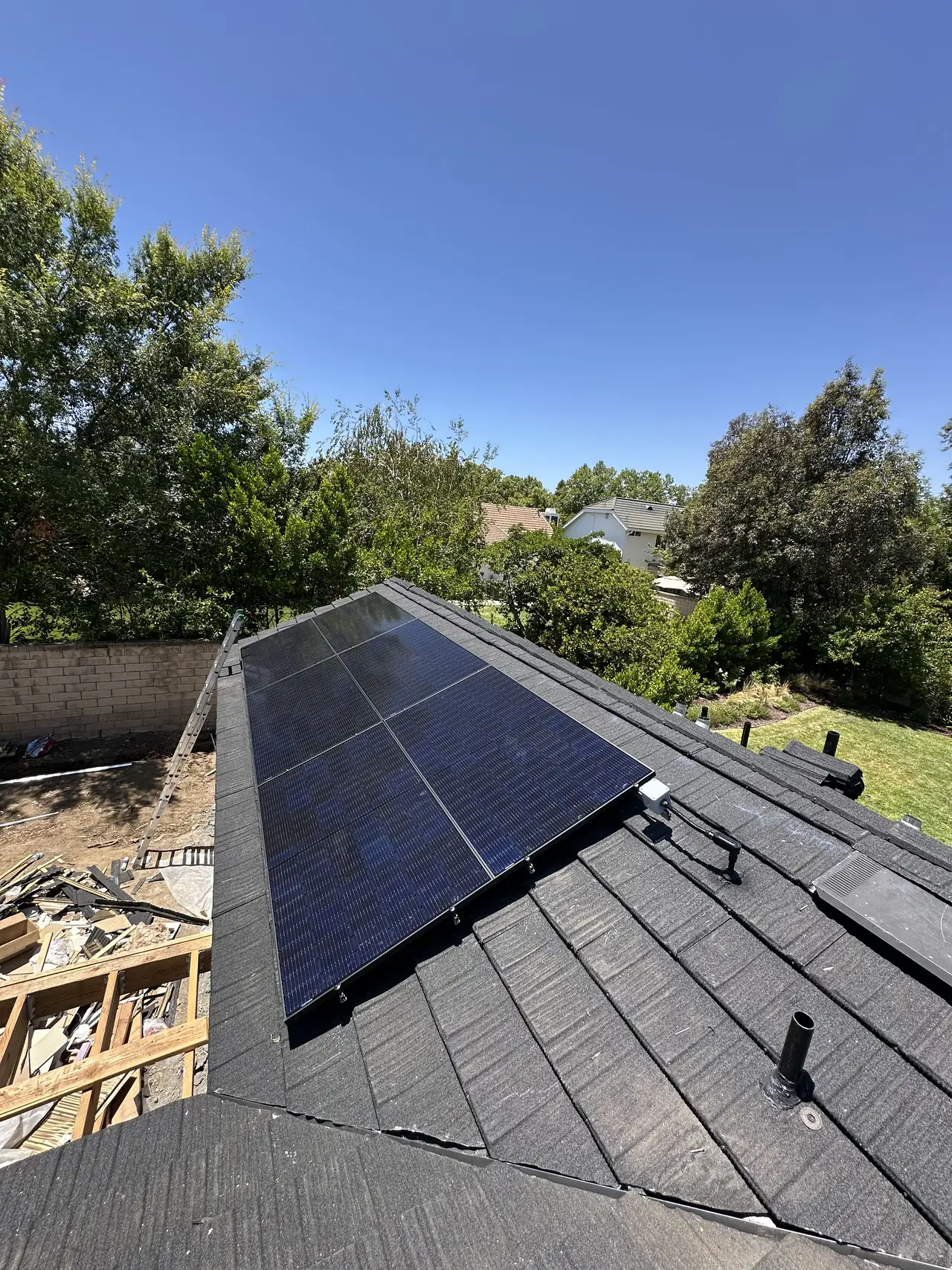
- Six Canadian Solar 400 W modules
- Inverters
- One Enphase IQ7A per module
- Roof
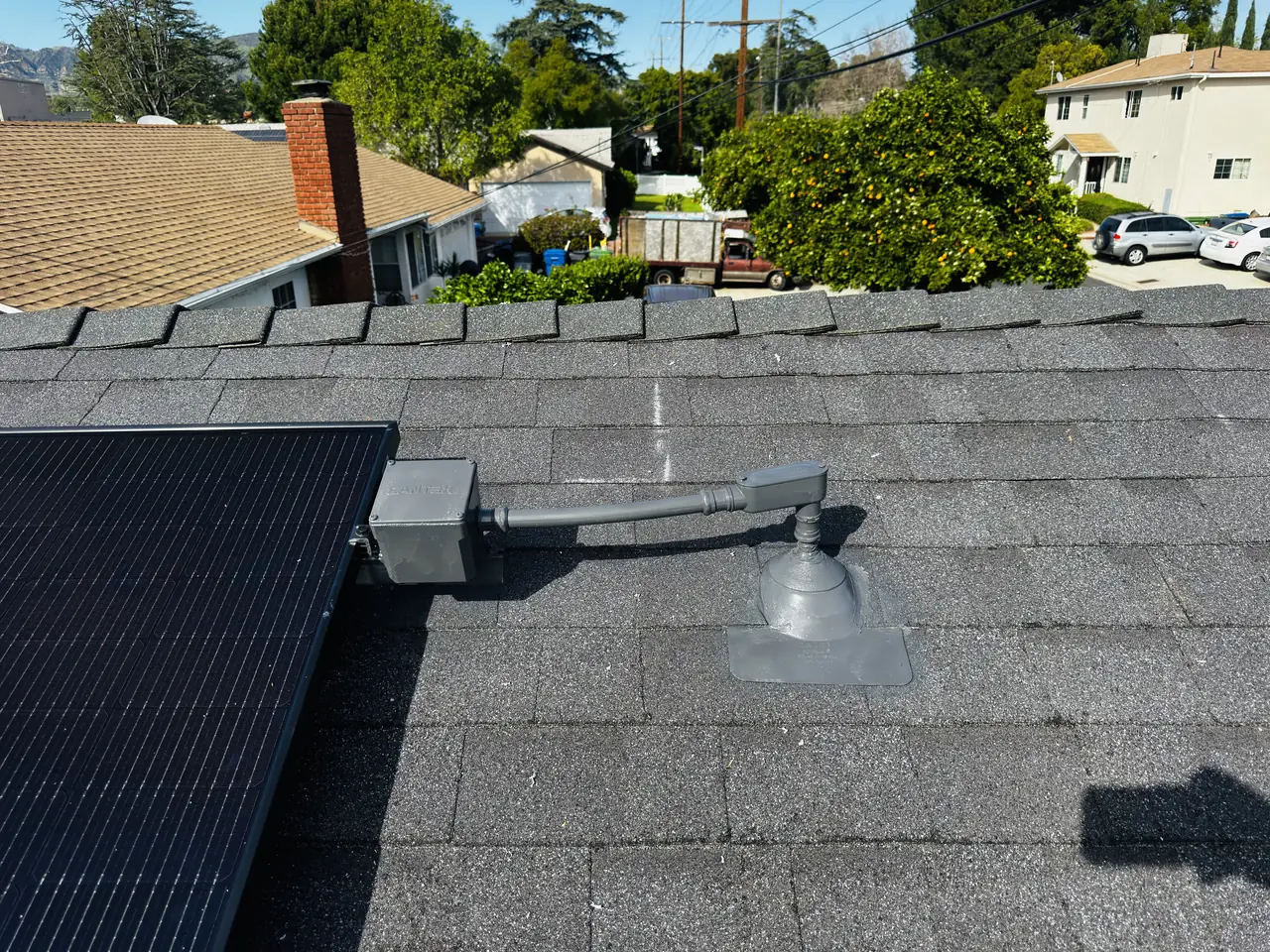
- Metal, re-covered with shingle
- Service
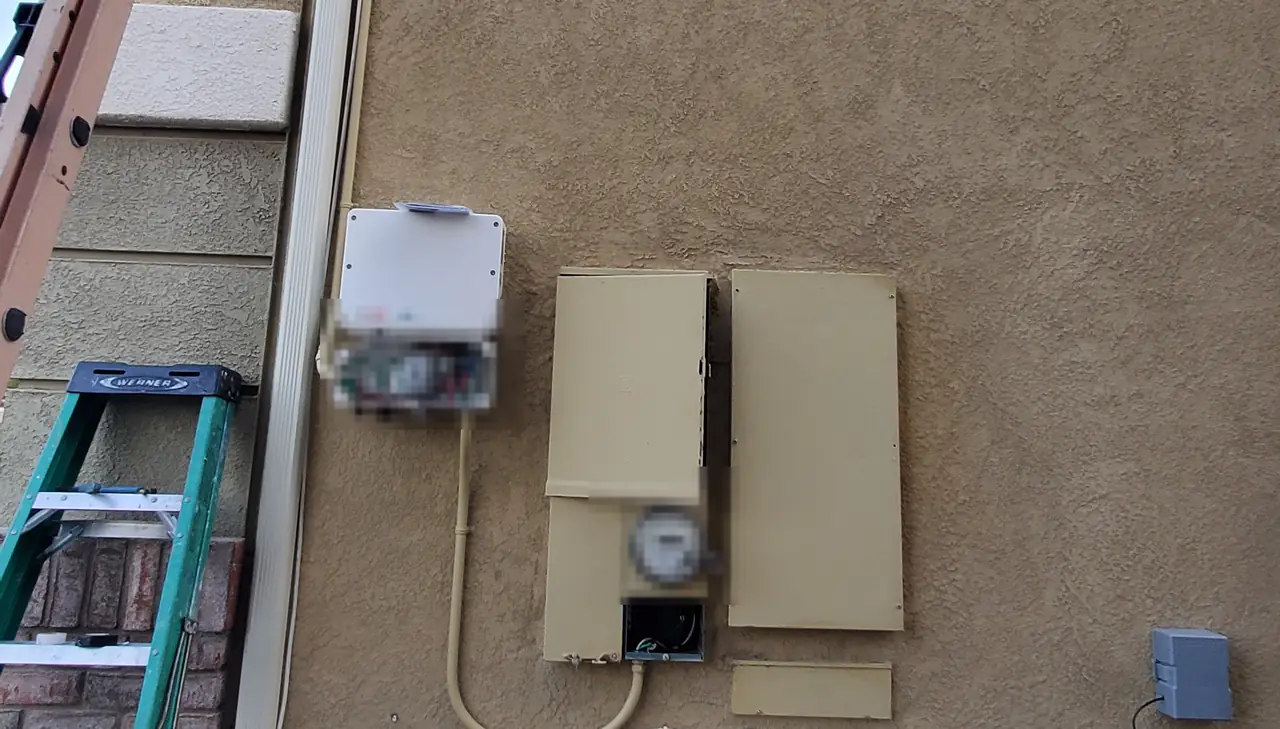
- Own 200 A main, 200 A sub panel on the unit
- Utility / AHJ
- Southern California Edison / Santa Clarita
The story
Six modules on a new second unit. As small as solar projects get, and the design still changed twice before anything was built — both times because of the service rather than the roof.
The first version assumed the ordinary arrangement: the unit hangs off the property's existing supply through a 125 A sub panel, and the array connects there.
The second version is what actually happened. The unit was given a service of its own — a dedicated 200 A main panel sited next to the main house's panel, with a 200 A sub panel at the unit itself.
That is a different building, electrically, and it is worth understanding why it changes so much for a six-panel array.
A shared service makes the second unit part of the main house as far as the utility is concerned: one meter, one account, one premise, and anything connected to it is filed under the main address. A dedicated service makes it its own premise, with its own meter, its own account and its own interconnection.
For the solar that decides three things at once. What the array backfeeds — the unit's own panel rather than the house's. Where the 120 percent arithmetic is done — on the panel it joins, which at 200 A has room a 125 A sub panel would not. And which address the interconnection application belongs under, which is the part that quietly costs weeks when it is got wrong.
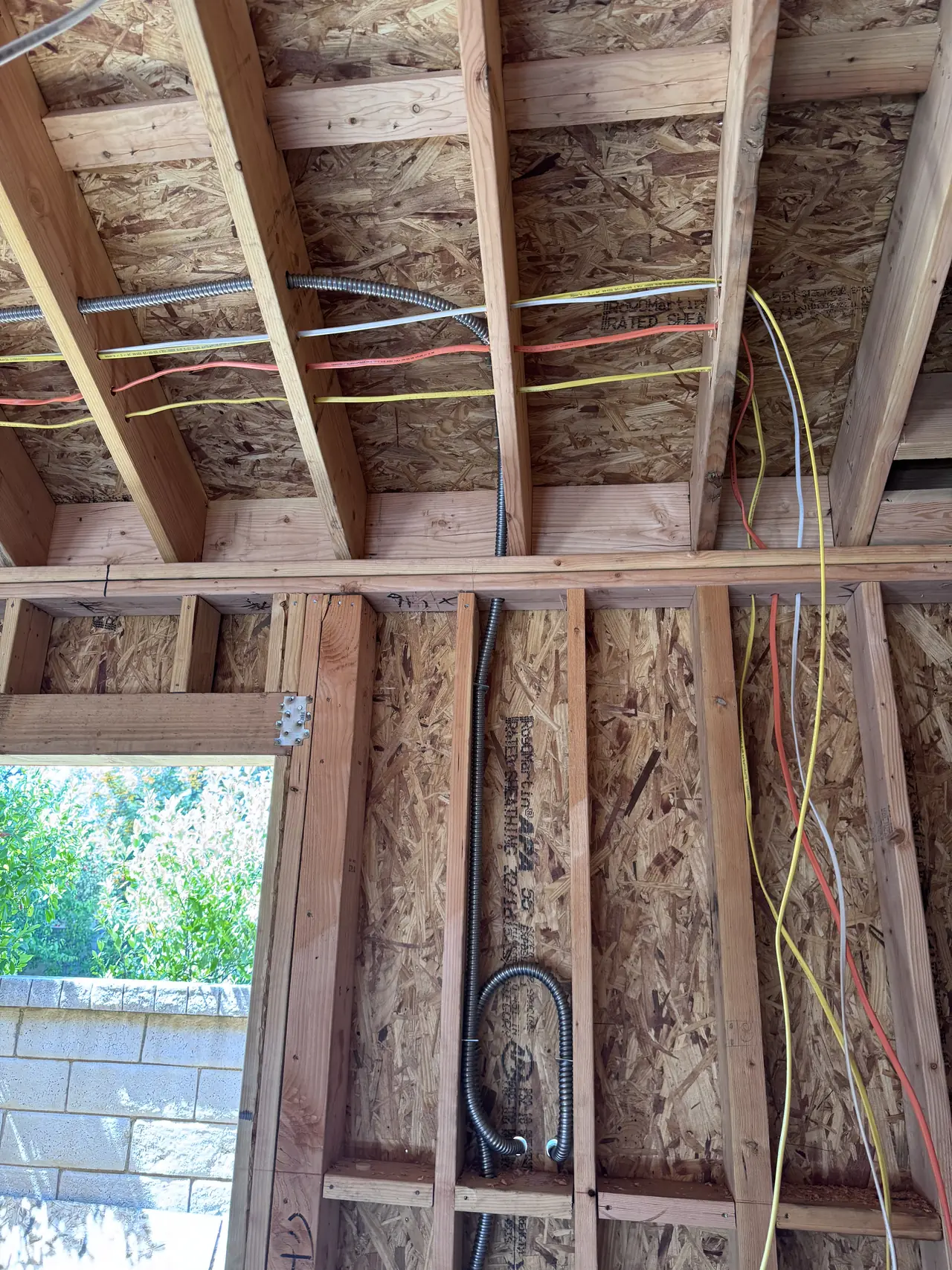
There is a sequencing consequence too, and it was visible here: the project waited on the meter spot. Until the utility has marked where the new service and meter go, the unit has no service to connect to, and solar filed against it has nothing to attach to.
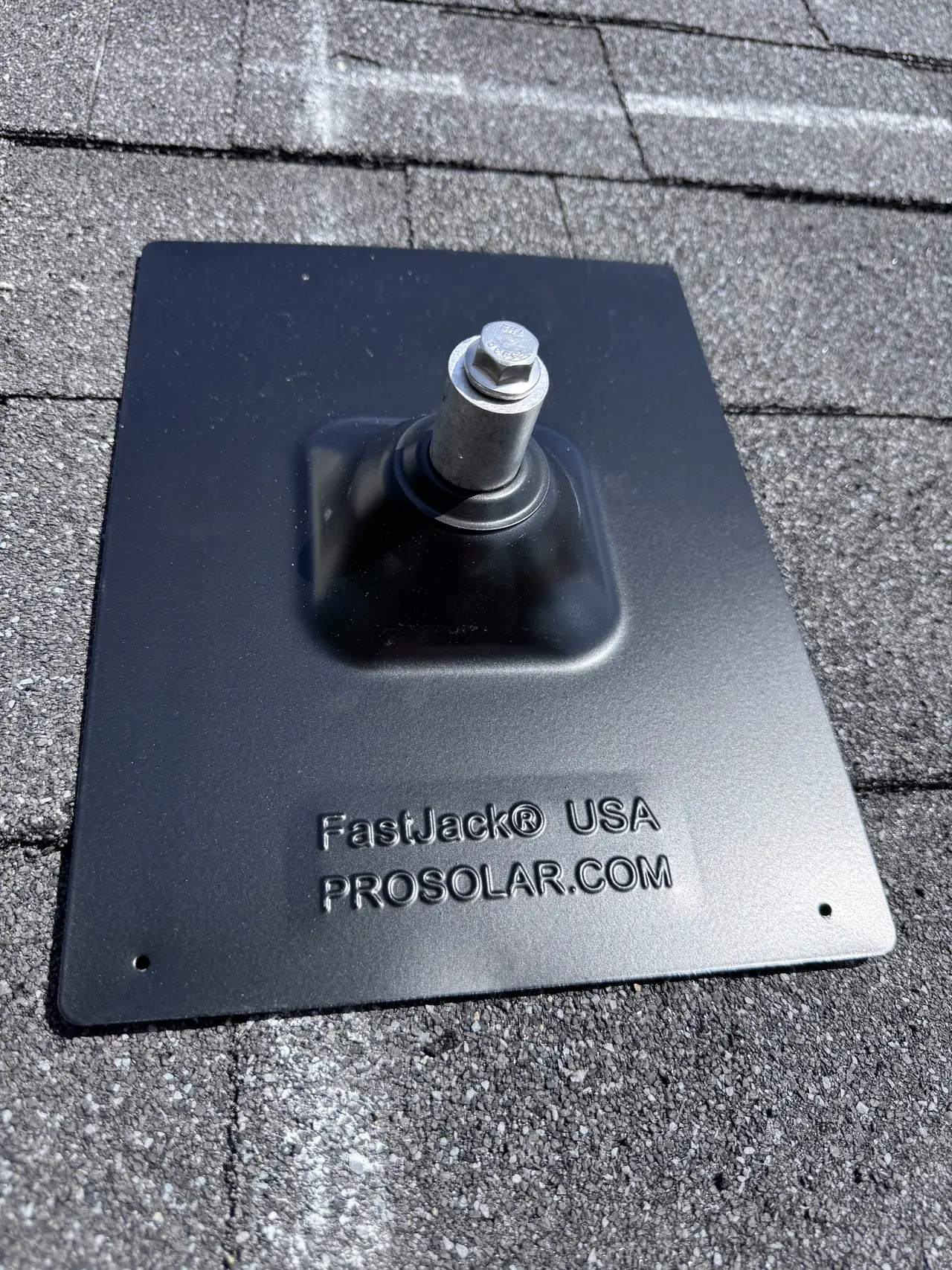
The roof had its own wrinkle: metal, re-covered with shingle, which changes what the array fixes into and has to be settled before attachments are ordered rather than after.
One more thing about the end of a project like this, because owners ask it almost word for word: the array cannot be switched on when the crew leaves. Permission to operate comes from the utility, and until it is issued the system stays off. Here the interconnection application came back with corrections and a ten-day clock on them; they were answered the same day.
What an owner should take from this: if a second unit is going in and solar is anywhere in the plan, the metering question is the first one to answer and it is not a solar question at all. One meter or two decides the panel the array joins, the address the paperwork carries and roughly how long the whole thing takes.
Permission to operate was granted at the start of September, with the monitoring already live, and the second unit has been generating on its own service since.
Cali Energy designed, permitted and installed this accessory dwelling array in Santa Clarita.
How it ran
| 24 April 2025 | Project released — six modules at 400 W, one microinverter each, metal roof re-covered with shingle, 125 A sub panel |
|---|---|
| 25 April 2025 | First plan set returned; unit orientation and panel ratings still open |
| 25 April 2025 | Waiting on the meter spot for the new service |
| 20 May 2025 | Service decided: the unit gets its own 200 A main beside the house panel, with a 200 A sub panel on the unit |
| 20 May 2025 | Plans updated to the new arrangement |
| 5 June 2025 | Plan check approved; fees invoiced |
| 11 June 2025 | Fees paid, permit issued |
| 26 August 2025 | Monitoring activated |
| 17 June 2025 | Installation |
| 26 August 2025 | Monitoring activated |
| 28 August 2025 | Utility asks for corrections to the interconnection application within ten days; answered the same day |
| 4 September 2025 | Permission to operate granted |
Four and a half months from the first drawing to permission to operate, and the decision that shaped all of it was how the second unit would be metered.
What we did
- Drew the array against the sub panel first, then redrew it when the service changed.
- Waited on the meter spot rather than filing against a service that did not exist.
- Settled the roof construction before attachments were ordered.
- Kept the interconnection filed against the address that would hold the meter.
- Answered the utility's ten-day correction notice the day it arrived.
System specifications
| Property | New accessory dwelling on an existing lot |
|---|---|
| Array | 6 × Canadian Solar 400 W |
| Inverters | One microinverter per module |
| Roof | Metal, re-covered with shingle |
| Service | Dedicated 200 A main; 200 A sub panel on the unit |
| Utility / AHJ | Southern California Edison / Santa Clarita |
Is your project like this one?
- You are building an accessory dwelling and want solar on it.
- Nobody has told you whether the new unit gets its own meter.
- Your second unit is drawn off a sub panel and you are not sure it should be.
- Your roof is metal and something is going on top of it.
Cali Energy in Santa Clarita
Santa Clarita is its own city in Los Angeles County, permitted through the City of Santa Clarita Building & Safety Division and interconnected through Southern California Edison. Second units are going up on these lots steadily, and how they are metered is decided early.
This installation is on the Santa Clarita projects page alongside the others, and what the work covers is set out on the Santa Clarita service area page.
- License and classifications: CSLB #1032379
- Official reference for this process: Southern California Edison — grid interconnections
- Official reference for this process: City of Santa Clarita — Building & Safety
Frequently asked questions
Should an ADU have its own electric service?
It can go either way, and the choice is made at the meter spot stage rather than when solar is designed. A dedicated service makes the unit its own premise with its own meter and account; a shared one makes it part of the main house as far as the utility is concerned.
How does the metering decision change the solar design?
It decides what the array backfeeds, where the 120 percent arithmetic is done, and which address the interconnection is filed under. A dedicated 200 A panel has headroom a 125 A sub panel does not, and the address on the application is what determines whether it is processed or closed.
Why does a new unit wait on a meter spot?
Because until the utility marks where the service and meter physically go, the unit has no service. Solar filed against a premise with no service has nothing to connect to, and the application does not queue — it gets closed.
Can solar go on a metal roof?
Yes, and the attachment depends on what the roof actually is. On this project the metal had been re-covered with shingle, which changes what the mounts fix into, and that has to be settled before hardware is ordered rather than discovered on the day.
Does Cali Energy install solar on accessory dwellings in Santa Clarita?
Yes. Santa Clarita permits through its own Building & Safety Division and interconnects through Southern California Edison. Second units are going up steadily on these lots, and the first thing settled on them is how the unit will be metered.
What this would look like on your roof
Planning solar in Santa Clarita? Tell us your utility, your roof and what your bill looks like now, and we will model what a system like this would do on your house before you commit to anything.
Or call +1 (323) 844-7777 · Cali Energy, Northridge · CSLB #1032379 (B, C-10, C-39) — design, permits, install and electrical under one licensed contractor.
Related
This timeline reflects this property and this permitting path. Updated September 2026.