

Porter Ranch, CA · March – April 2025 · LADWP / LADBS
Porter Ranch: the loads moved, the main panel stayed.
A 200 A sub panel, a long conduit run, and a main panel left holding nothing but the service and the solar.
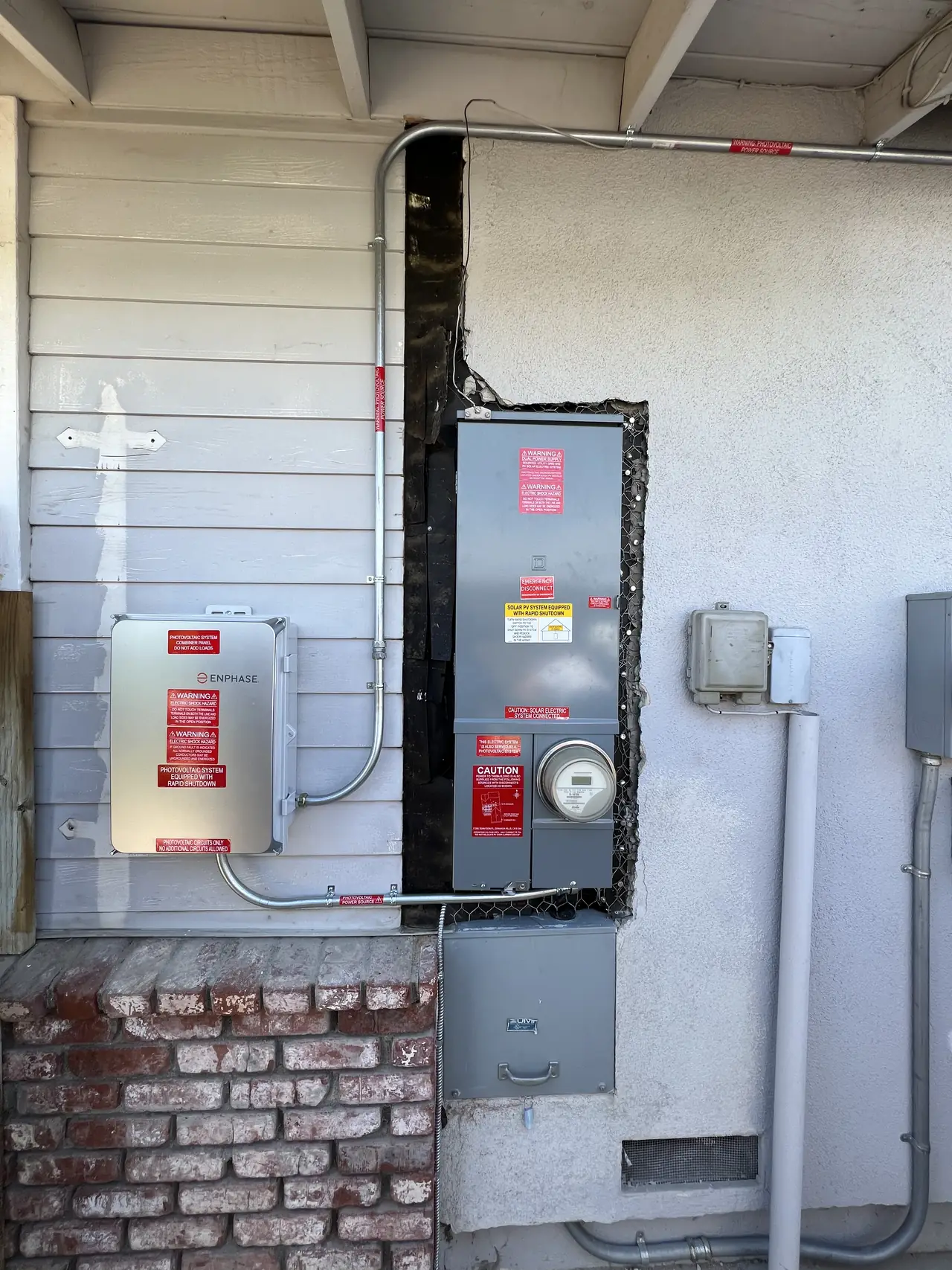
Where a main service panel cannot accept a solar breaker, one standard answer is to move the household circuits out of it into a new sub panel, leaving the main with the service conductors and the solar connection. On this Porter Ranch project Cali Energy relocated a 200 A sub panel next to the alternating-current disconnect and ran the conductors between them in 2.4-inch conduit — a day of electrical work that has nothing to do with the roof and everything to do with whether the array can connect at all.
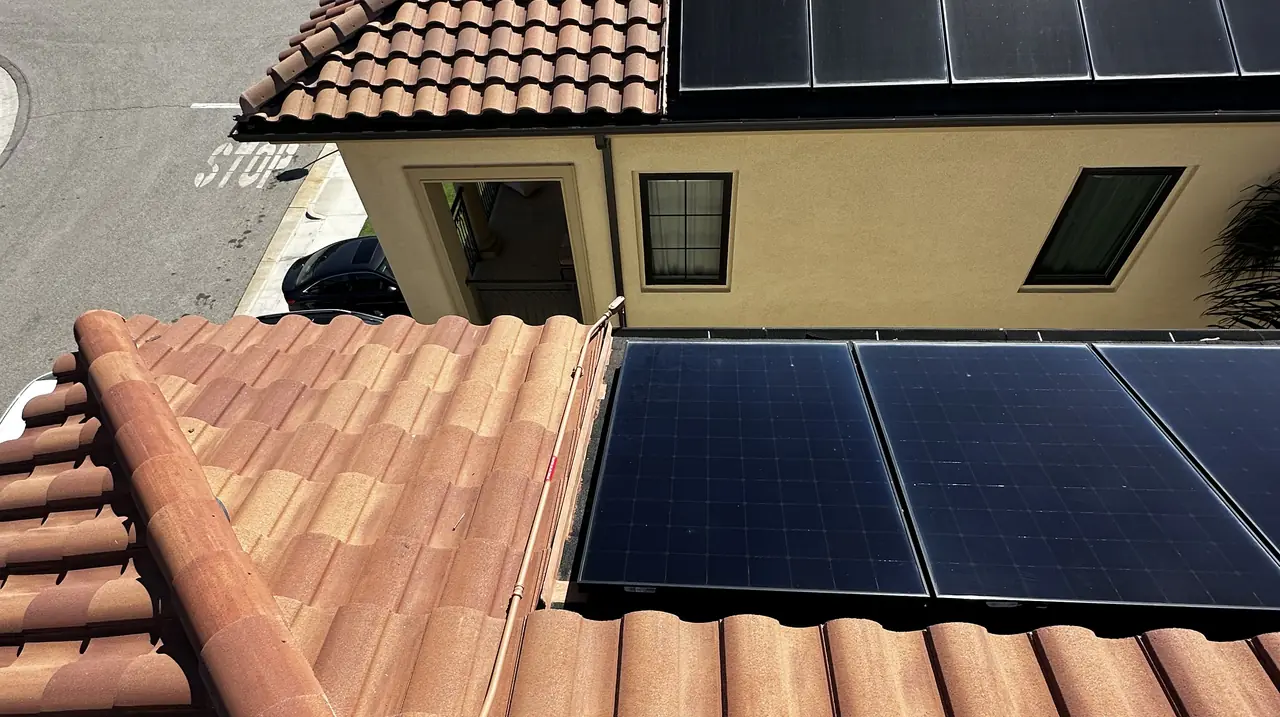
At a glance
- Problem
- Main panel could not take the solar breaker
- Answer
- Household loads moved to a 200 A sub panel
- Between them
- 2.4-inch conduit run
- What the main keeps
- Service conductors and the solar connection
- Installation
- March 2025
- Utility / AHJ
- LADWP / LADBS
The story
Every rooftop array has to land somewhere electrically, and on a full or undersized panel there are only a few ways to make that happen. Derate the main breaker. Replace the panel. Or take the household loads out of the main panel entirely and put them in a new sub panel, leaving the main holding the service and the solar connection and nothing else.
The trade has a nickname in the field — crews call it a Hawaiian tap, or a Hawaiian tie-in — and it is worth knowing what it means, because it appears on quotes as a line item with no explanation.
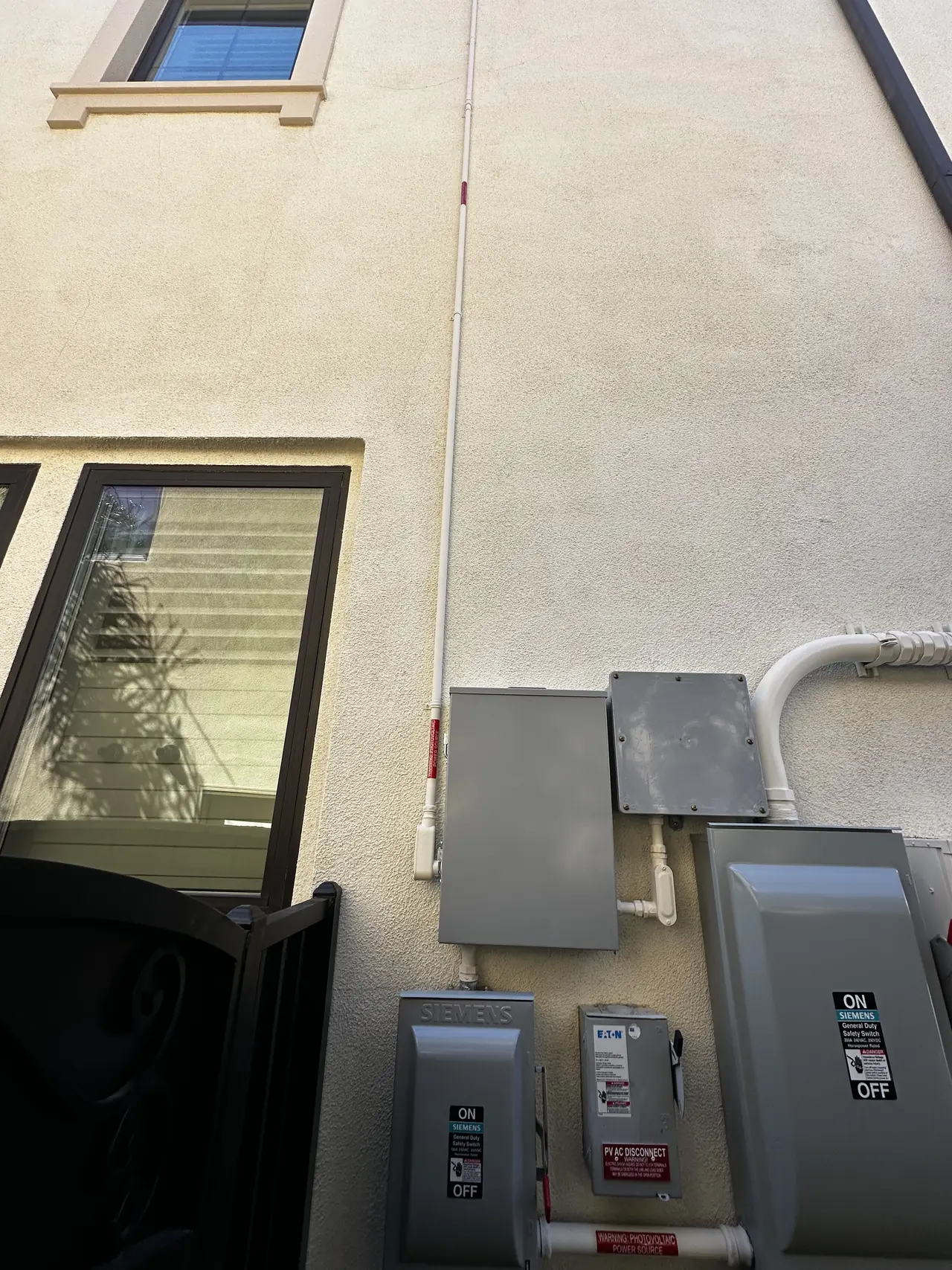
What it involves here: a 200 A sub panel installed beside the alternating-current disconnect, every branch circuit moved across to it, and a conduit run between the two enclosures sized for conductors that carry the whole house. On this project the run was 2.4-inch conduit, which is heavy pipe by residential standards and gives a sense of the scale — this is not a breaker swap, it is a rebuild of how the house is fed.
Why do it at all? Because it solves the 120 percent problem from the other direction. Instead of arguing about how much the busbar can take with a main breaker and a solar breaker both feeding it, the main panel stops being a distribution panel. Its busbar carries the service and the array, and the loads sit downstream in equipment sized for them.
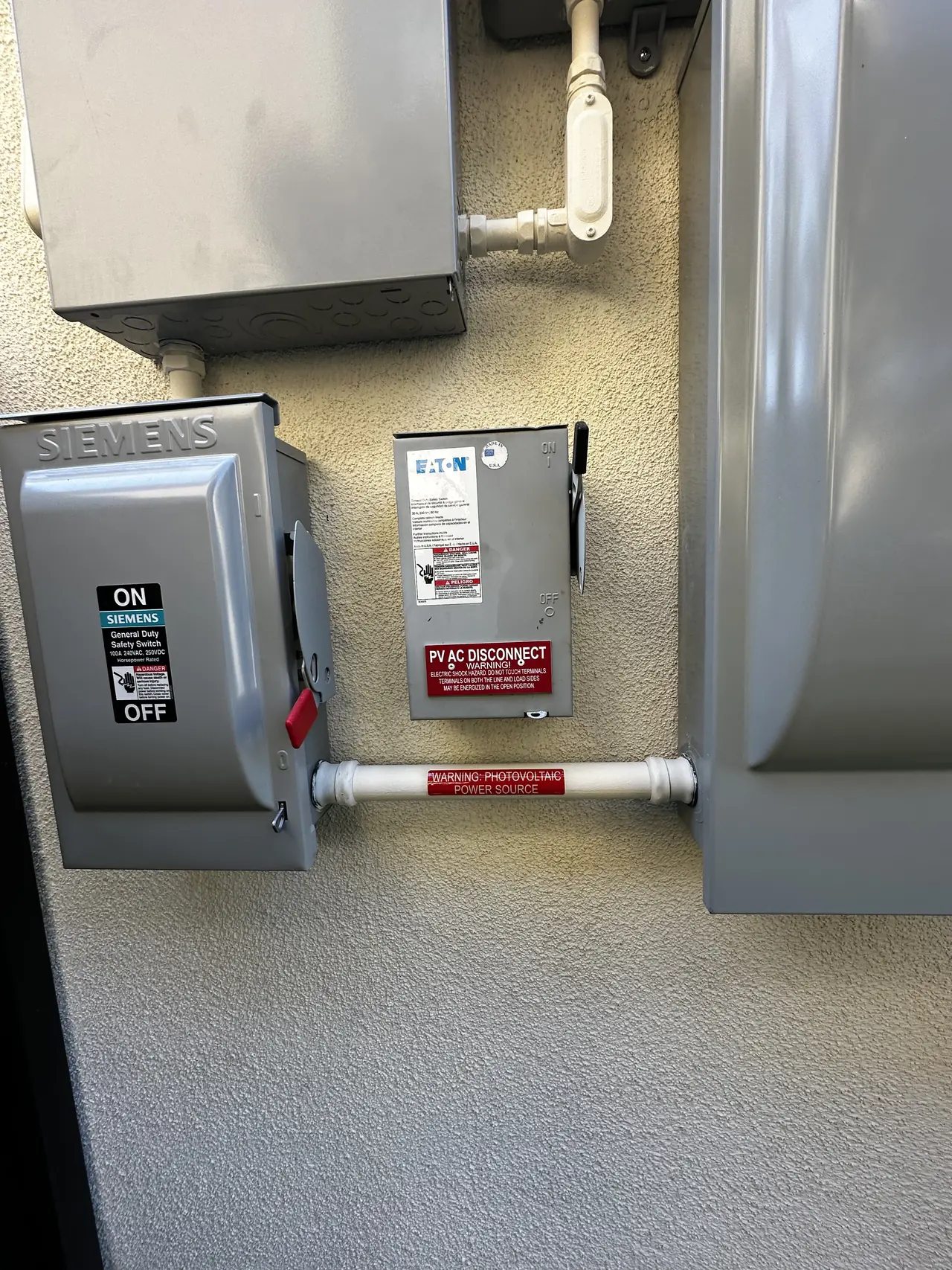
What it costs: a day or more of electrical work, the sub panel and its breakers, the conduit and conductors, and a wall that looks different afterwards. What it buys: an array that can connect without replacing the service, and headroom for what the household adds later.
The part owners should insist on is the same as with any service work — that it is priced and described before the crew arrives, not discovered as a change order when the array is already on the roof. A line that reads sub panel relocation on a quote is a day of work and a set of materials; it deserves a sentence explaining what will be different when it is finished.
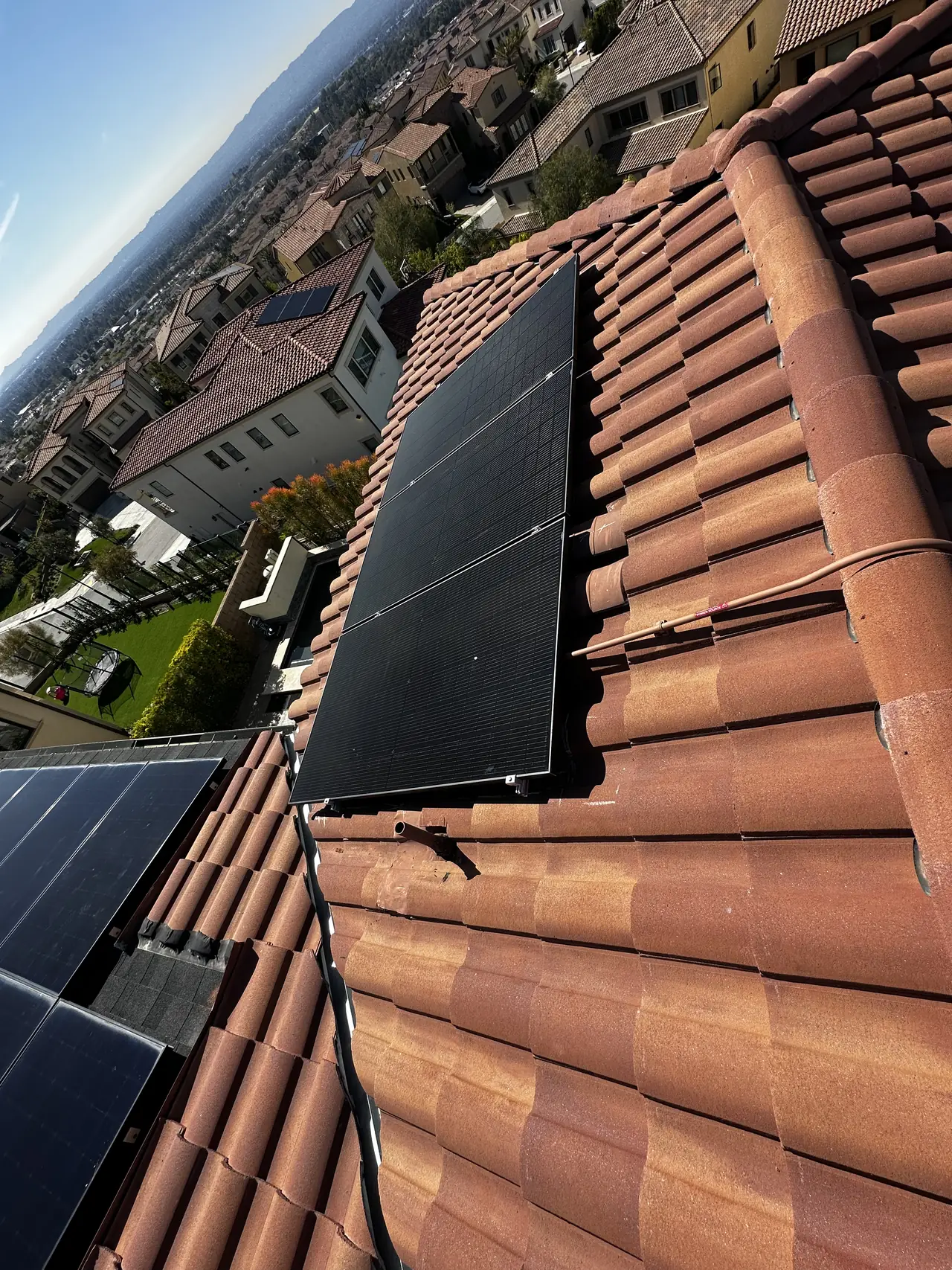
The installation was completed in the second half of March 2025, and the photographs of the finished work were reviewed and accepted in the first week of April.
The household came out of it with every branch circuit in a panel sized for it, an array that could finally connect, and headroom on the service for whatever it adds next — without a new service ever being bought.
Cali Energy carried out the service work and the installation on this Porter Ranch project.
How it ran
| March 2025 | Service work: 200 A sub panel relocated beside the alternating-current disconnect |
|---|---|
| March 2025 | Household circuits moved to the sub panel; 2.4-inch conduit run between enclosures |
| 21 March 2025 | Installation |
| 24 March 2025 | Work complete |
| 2 April 2025 | Installation photographs reviewed and accepted |
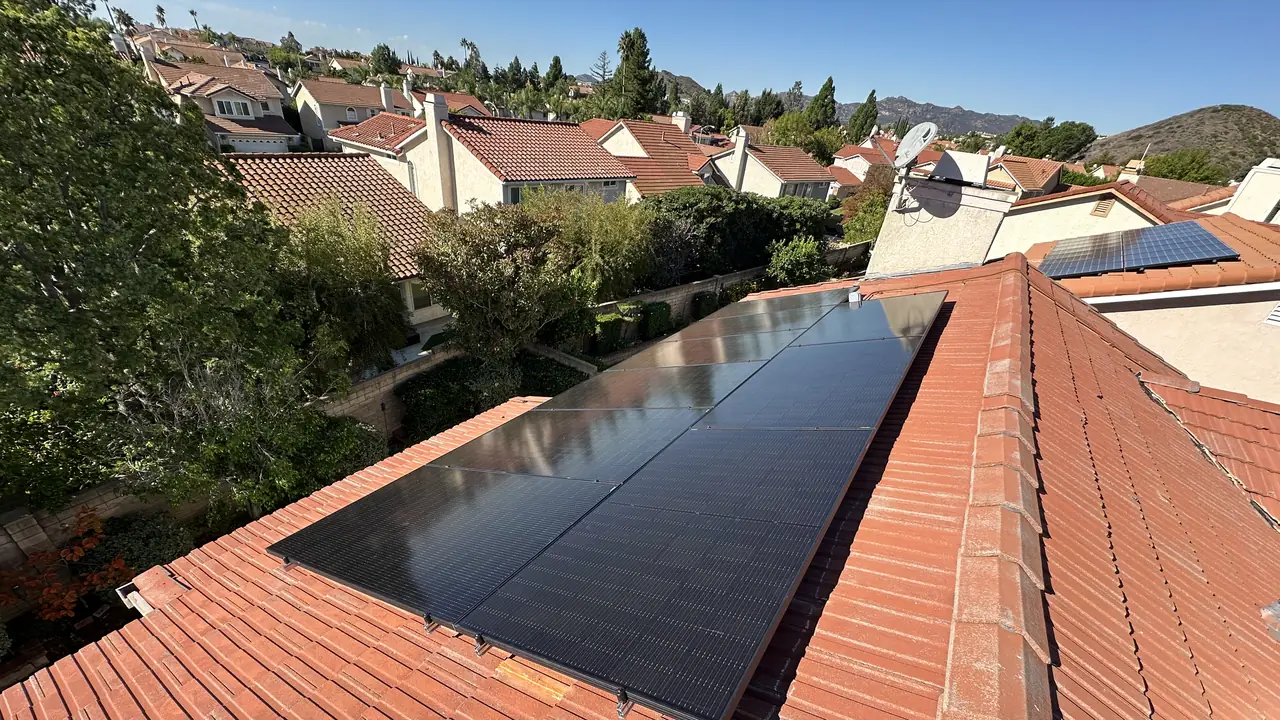
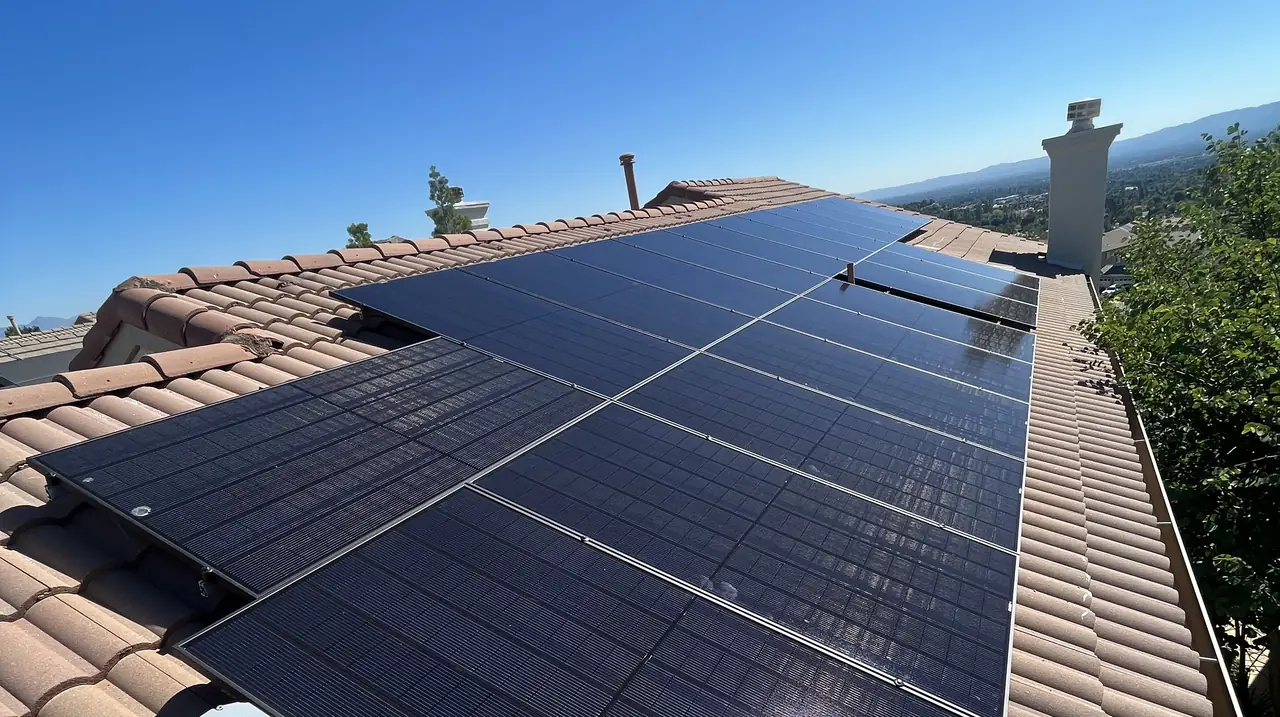
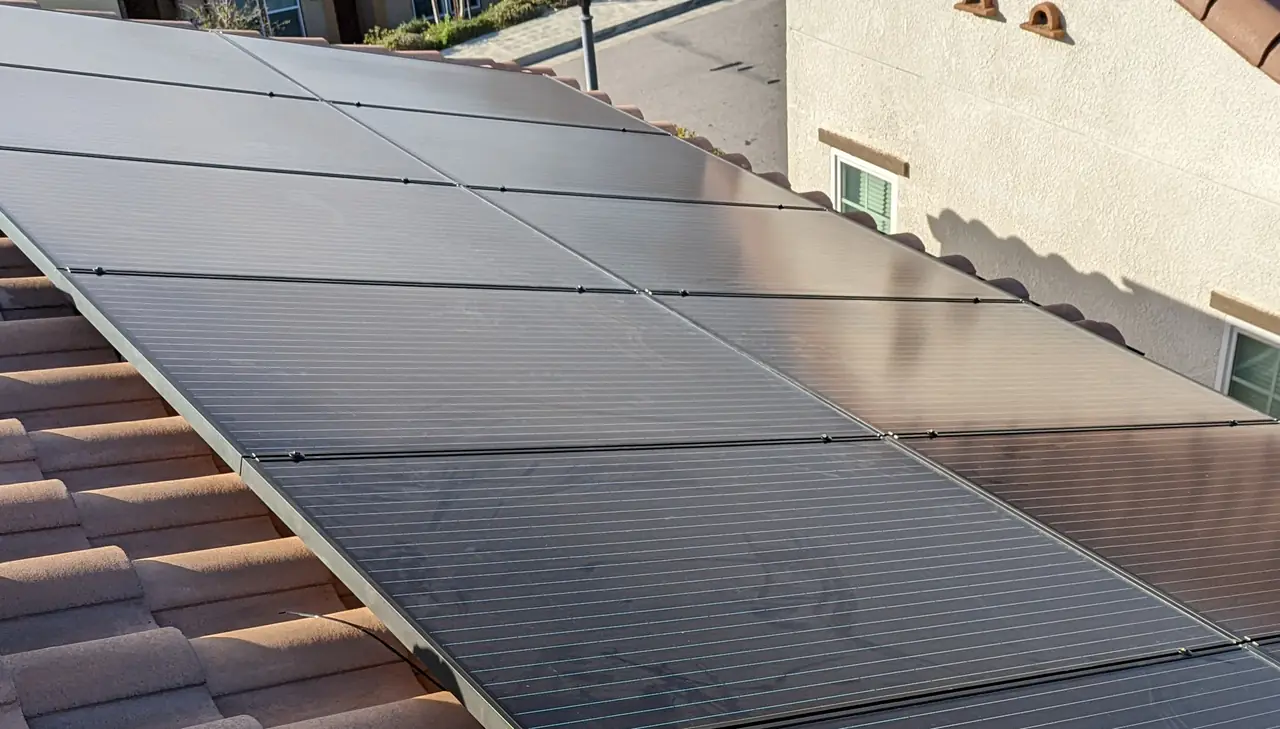
The roof work was the short part. The wiring underneath it was the project.
What we did
- Moved the household circuits instead of replacing a serviceable main panel.
- Sized the conduit and conductors for the whole house, not for the array.
- Left the main panel carrying only the service and the solar connection.
- Documented the finished work in photographs before closing the job.
System specifications
| Service change | Household loads moved to a 200 A sub panel |
|---|---|
| Conduit | 2.4-inch between enclosures |
| Main panel after | Service conductors and the solar connection |
| Alternative considered | Main breaker derate or panel replacement |
| Utility / AHJ | LADWP / LADBS |
Is your project like this one?
- Your main panel cannot take a solar breaker.
- Your quote has a line about a sub panel and no explanation.
- You have been offered a derate and want to know the alternatives.
- You expect to add load to the house later.
Cali Energy in Porter Ranch
Porter Ranch is inside City of Los Angeles boundaries: permits run through LADBS and interconnection through LADWP. Houses here carry a lot of load, and where the panel cannot take a solar breaker the loads move instead.
This installation is on the Porter Ranch projects page alongside the others, and what the work covers is set out on the Porter Ranch service area page.
- License and classifications: CSLB #1032379
- Official reference for this process: NFPA — National Electrical Code (NFPA 70)
- Official reference for this process: LADBS — plan review and permitting
Frequently asked questions
What is a Hawaiian tap, or Hawaiian tie-in?
A field name for moving every household circuit out of the main panel into a new sub panel, so the main carries only the service conductors and the solar connection. It is one of the standard answers when a main panel cannot accept a solar breaker.
When is moving the loads better than replacing the panel?
When the existing main panel and service are sound and the only problem is where the solar can land. Moving loads keeps the service intact and puts the branch circuits in equipment sized for them.
Why does the conduit have to be so large?
Because the conductors between the main and the sub panel carry the entire house, not the array. They are sized to the service, which is why a residential job can end up with pipe that looks oversized next to solar wiring.
Should this work be on my quote before installation?
Yes, priced and described. Service work found after the array is on the roof becomes a change order at the worst moment. A line that says sub panel relocation should come with a sentence about what it does.
Does Cali Energy do service work as well as solar in Porter Ranch?
Yes. Panel upgrades, sub panels and load relocations are part of the same permit route through LADBS, and they are what makes an interconnection through LADWP possible on a house whose panel is already full.
What this would look like on your roof
Planning solar in Porter Ranch? Tell us your utility, your roof and what your bill looks like now, and we will model what a system like this would do on your house before you commit to anything.
Or call +1 (323) 844-7777 · Cali Energy, Northridge · CSLB #1032379 (B, C-10, C-39) — design, permits, install and electrical under one licensed contractor.
Related
This timeline reflects this property and this permitting path. Updated September 2026.