

Reseda, CA · November 2024 – July 2025 · LADWP / LADBS
A one-row array, and the full interconnection machine.
A new detached unit on a Reseda lot took a single row of modules on a single roof plane. The array went on in a day. Everything the utility and the city require then ran at full length, because none of it scales down with the size of the system.
A small array does not get a short process. A 1.96 kW system on an accessory dwelling unit still opens its own utility work request, pays its own recovery and underground-service charges, gets its own assigned service representative and its own photograph package, and generates the same run of progress notices as a full-size rooftop system. Two things gate it, and neither is the solar: the building's own final inspection, and a permanent meter on the new unit. Cali Energy plans ADU projects around those two, not around the install day.
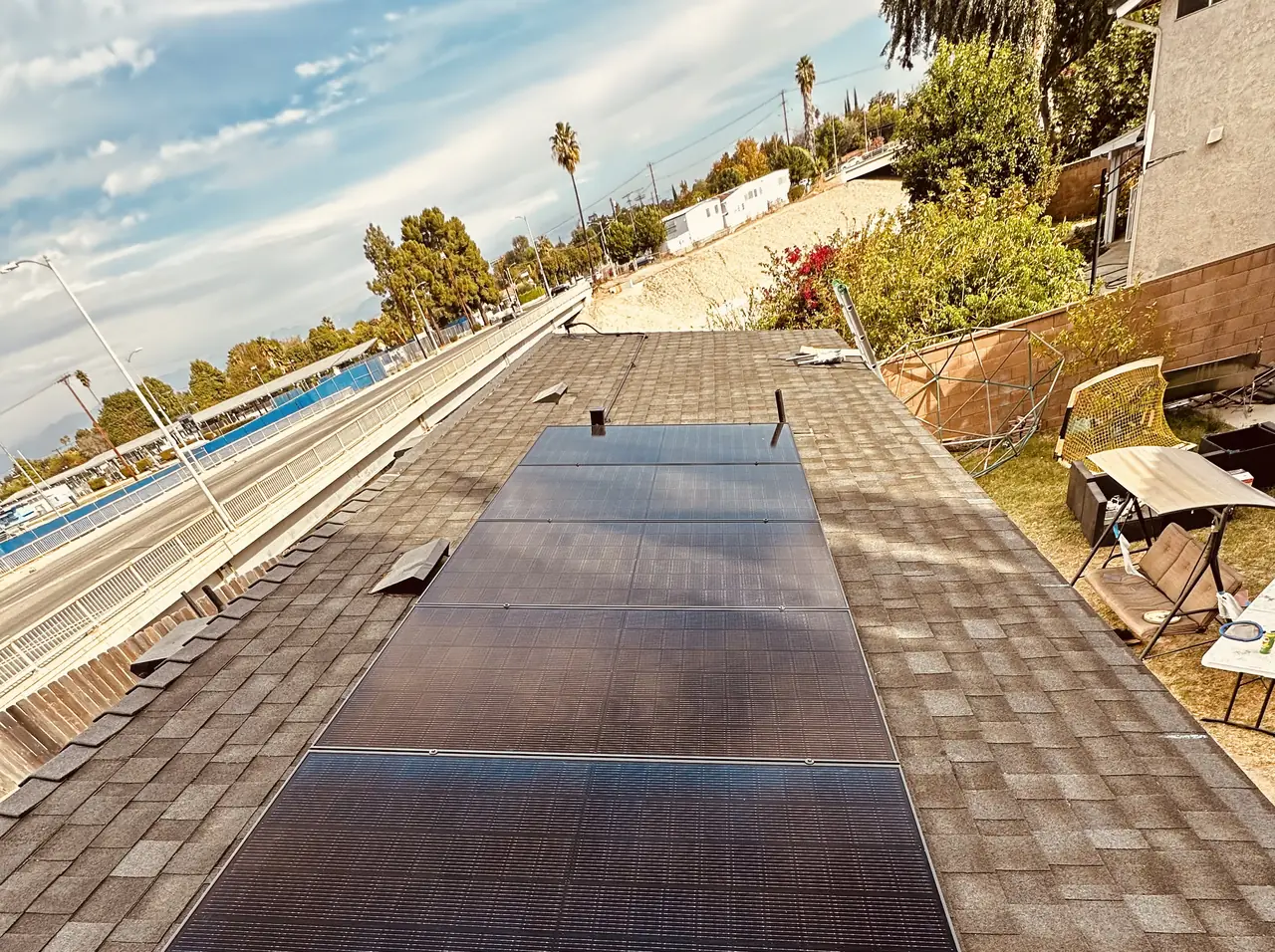
At a glance
- Recorded by the utility
- 1.96 kW AC-CEC
- Modules
- Q CELLS Q.PEAK DUO BLK ML-G10+ 400 W
- Microinverters
- Enphase IQ7A, one per module
- Dwelling
- New detached accessory dwelling unit
- Service
- Underground, meter replacement only
- Main panel upgrade
- None
- Battery
- None
- Utility / AHJ
- LADWP / LADBS
The story
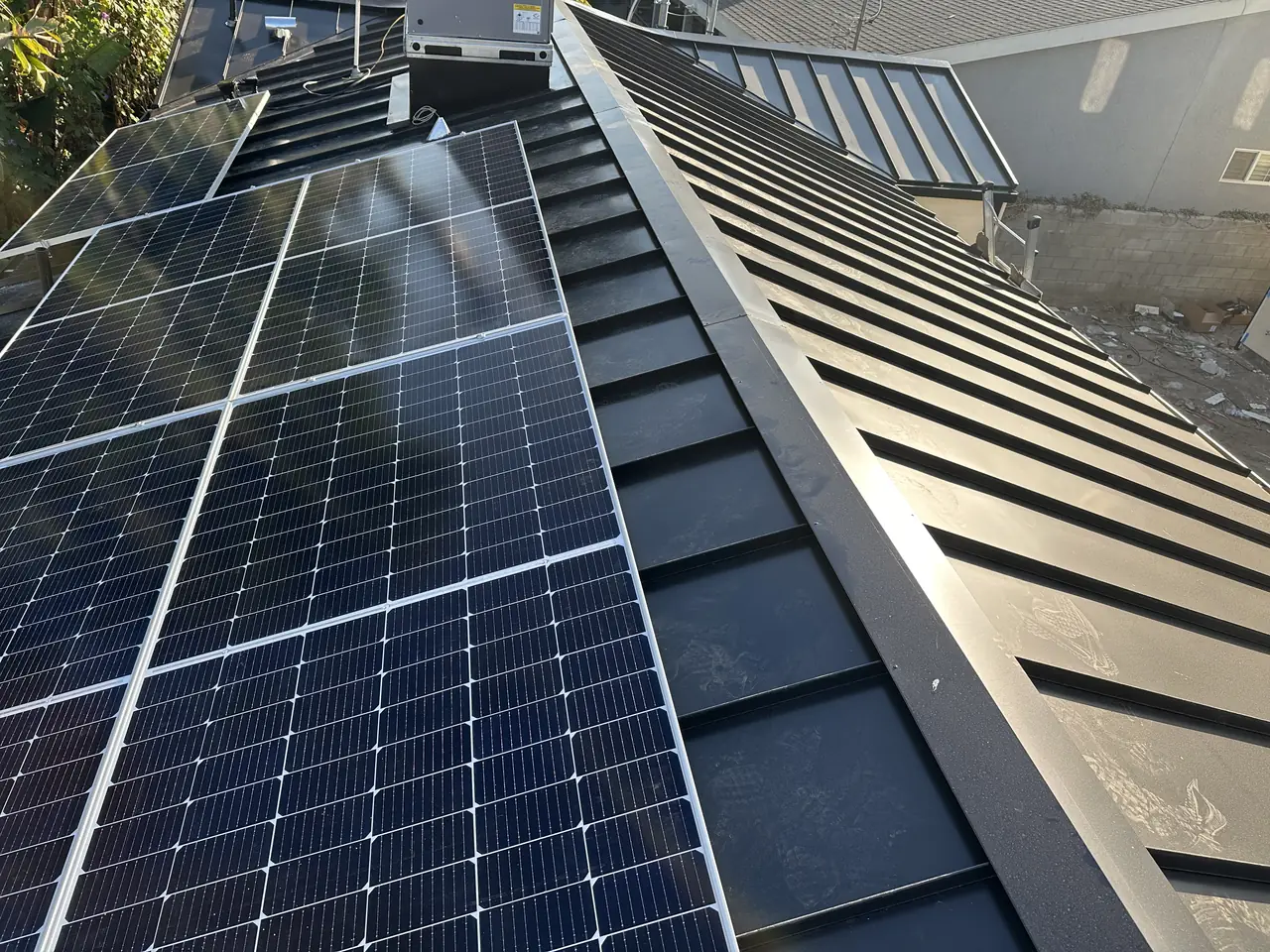
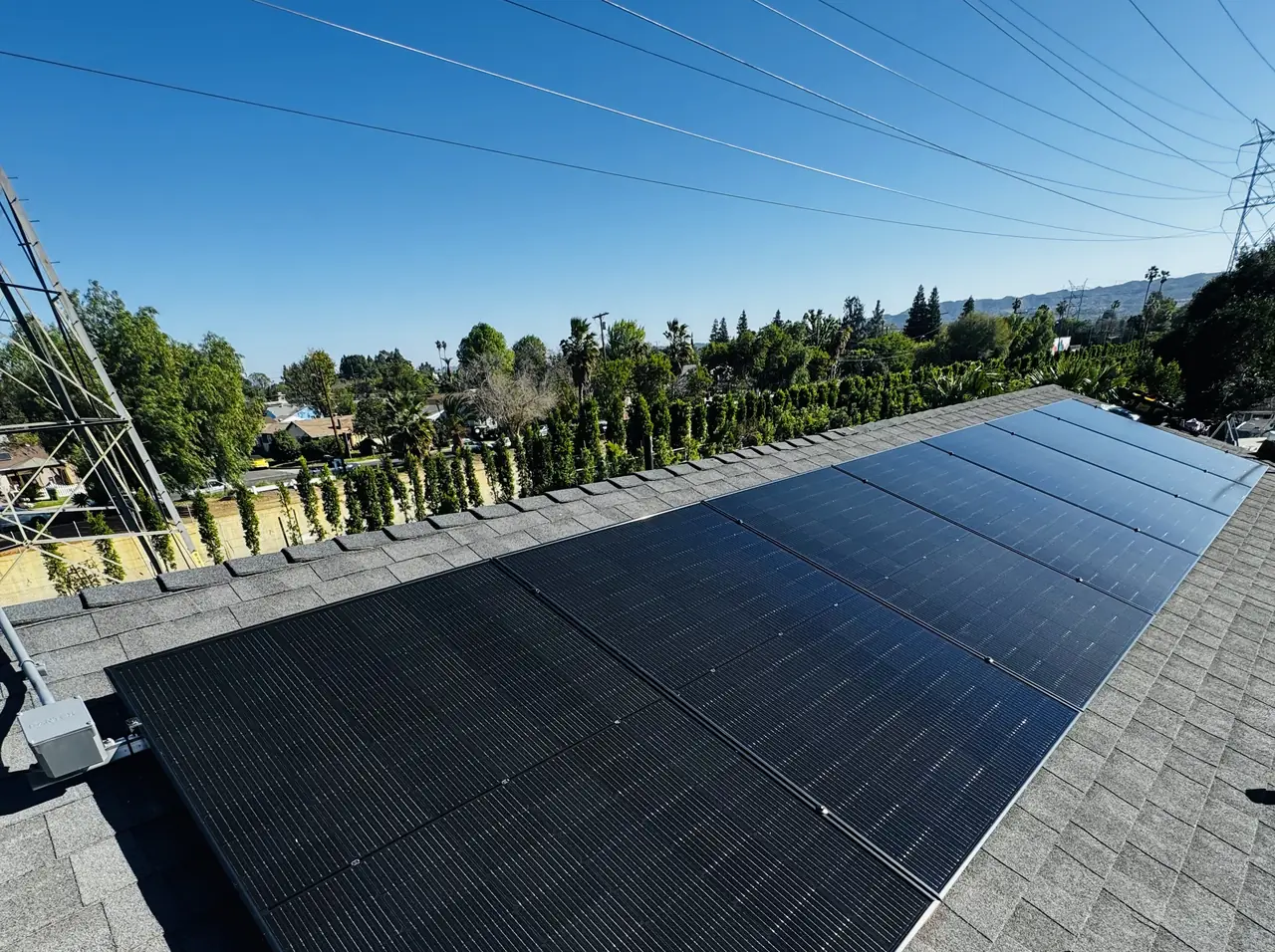
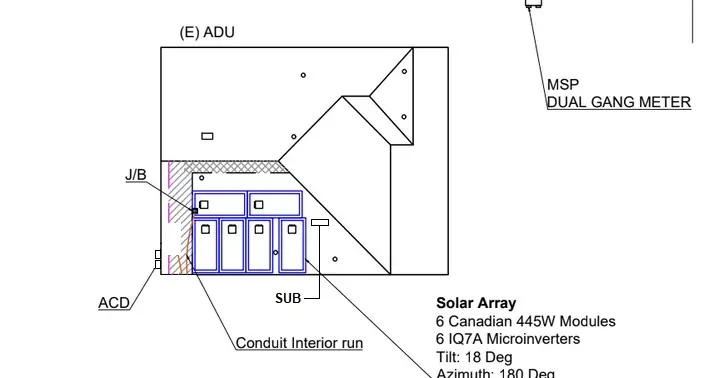
The array is one row. Black modules, Q CELLS four hundred watt, one Enphase microinverter under each, laid along a single plane of brown composition shingle on a new detached unit at the back of a Reseda lot. The utility later recorded it at 1.96 kilowatts. It is about as small as a grid-connected residential system gets in Los Angeles, and a small array is the normal outcome on a new accessory dwelling unit, because the state energy standards size the solar requirement to the building.
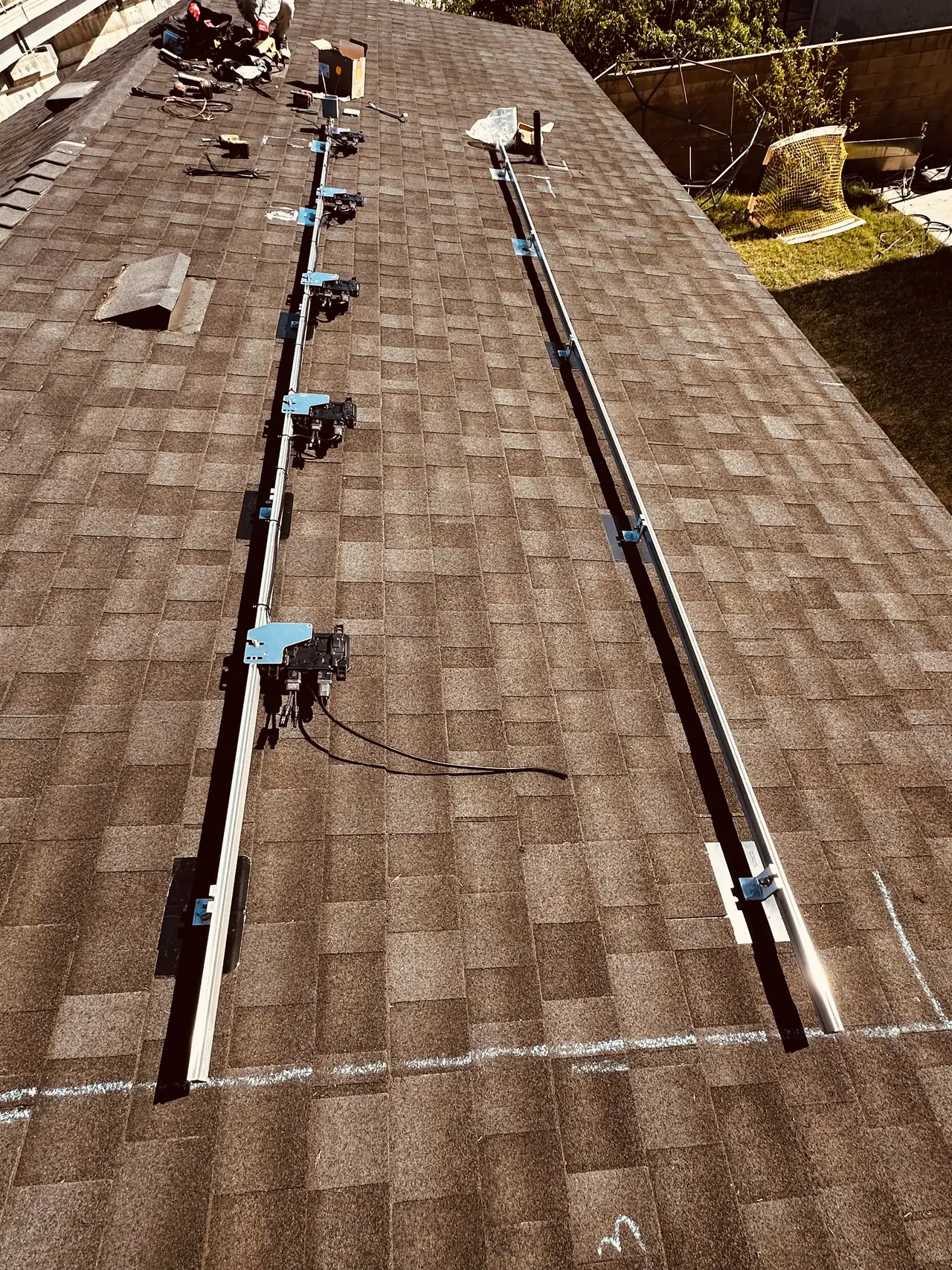
The contract was signed the day it was sent in November. Permits followed inside the week, and the crew installed the array in a single day. Seven days later the final inspection request was in with the building department. On the roof, this was a quick project.
Then five months passed.
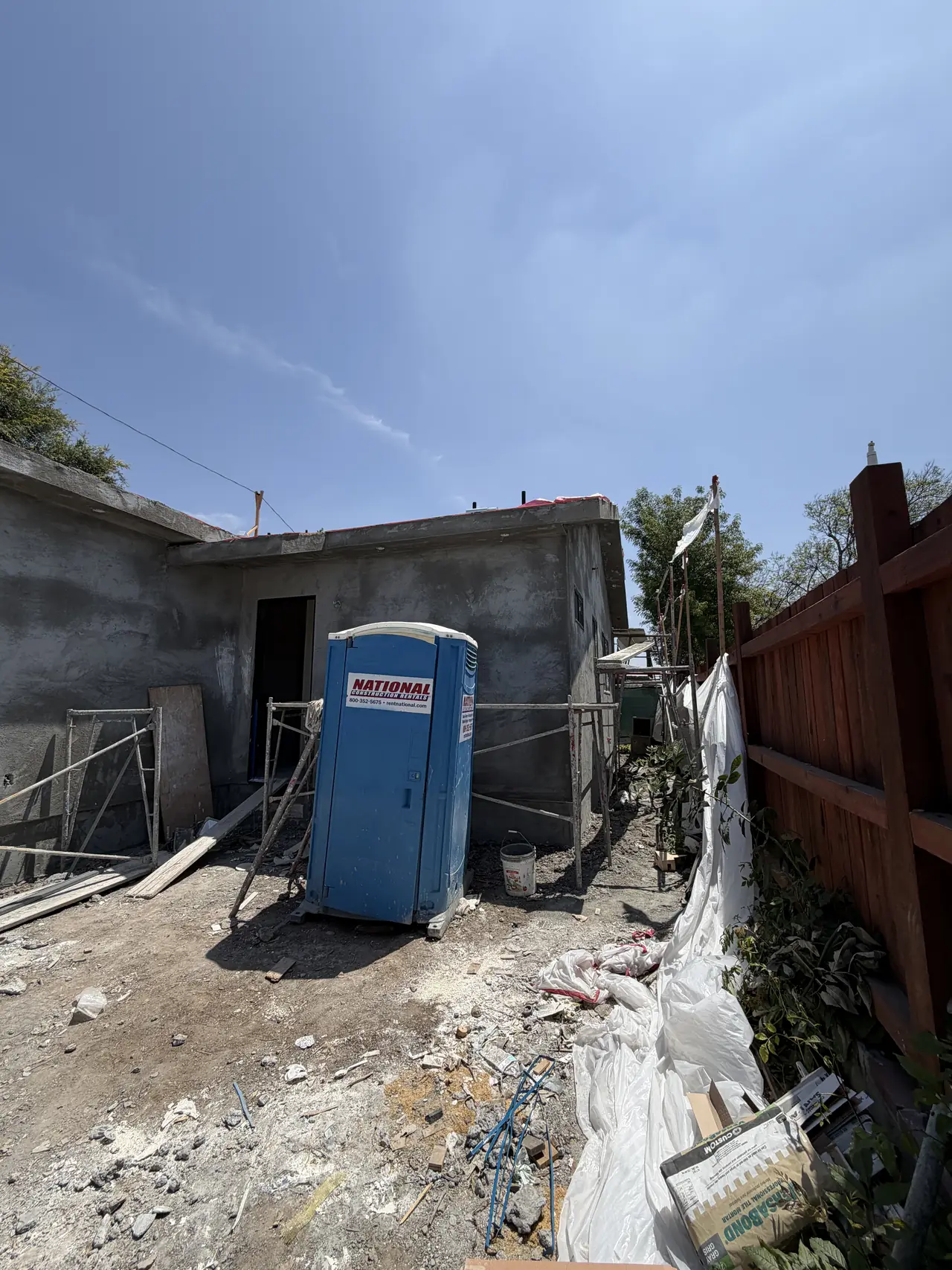
What went wrong is worth knowing before you build. On a new unit, the solar final inspection does not pass on its own. The array is an electrical system attached to a structure that is still, as far as the city is concerned, unfinished, and the inspector cannot sign off the one while the other is open. The owner had been trying to close the solar sign-off separately, on the reasoning that it was a separate permit with a separate number. It is a separate permit. It is not a separate inspection.
In April we wrote to say what the sequence actually is: the building final and the solar final are scheduled together, on the same day, and somebody from the solar side should be standing there when the inspector arrives. Both were booked for the second of May, a technician went out to meet the inspector, and both passed in the one visit.
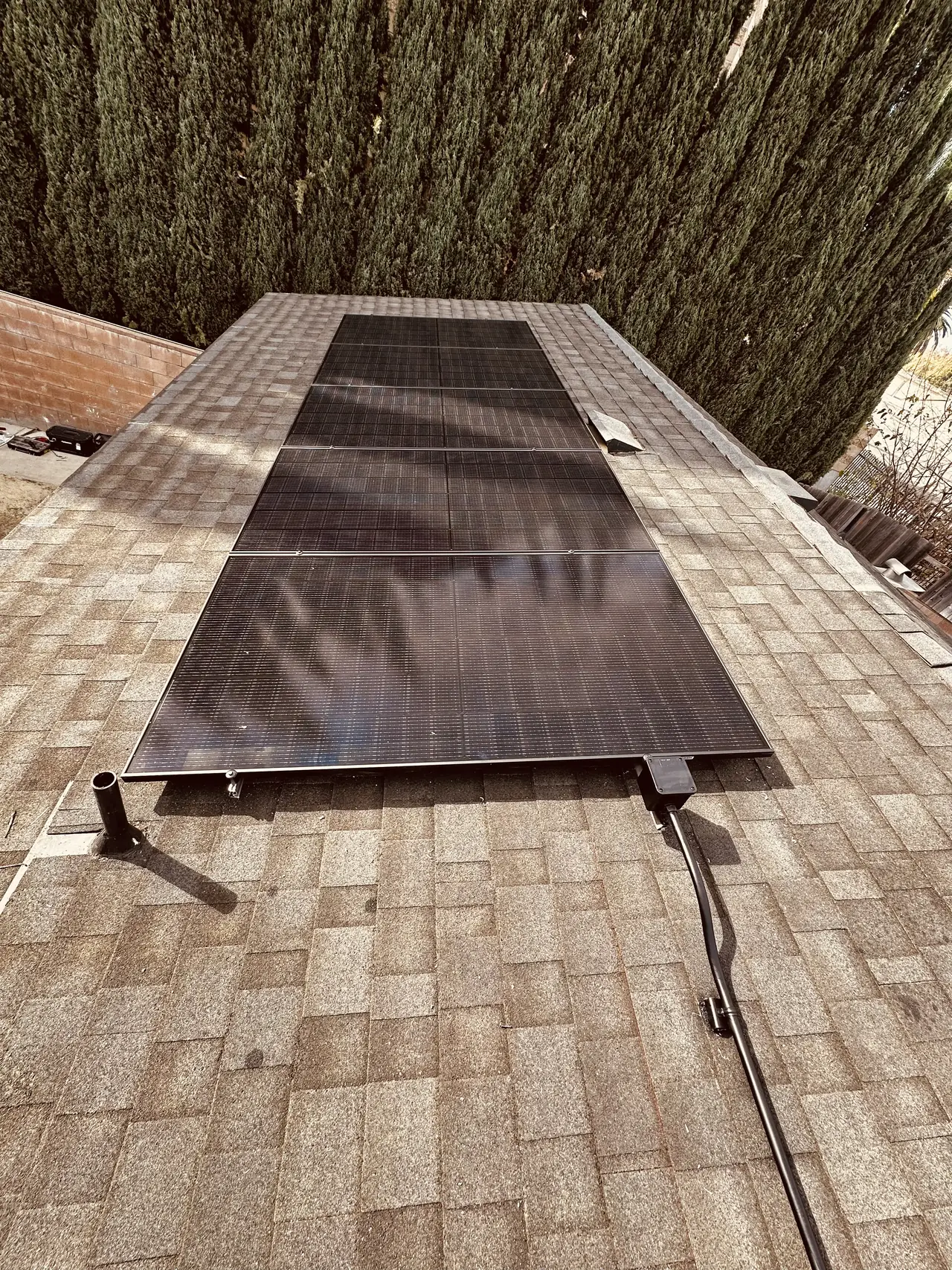
With the city satisfied, the interconnection application went in on the twenty-first of May. Here is the part an owner budgeting for a small system does not expect. The application opened its own work request. It carried its own expenditure recovery charge, and then a second charge for the underground portion of the service. A service representative was assigned to it by name. It required a photograph package of the service equipment. It produced its own numbered run of progress notices, eight of them before it closed. Not one of those steps is shorter because the system is two kilowatts rather than ten.
On the twelfth of June the utility's interconnection group replied in one line: they could not process the project until a permanent legal meter was installed on the new unit, and that was the area service representative's job, at a different desk, under a different request. We had already put the same question to the owner six days earlier, because on an accessory dwelling unit the meter is almost always the thing that is actually holding the project.
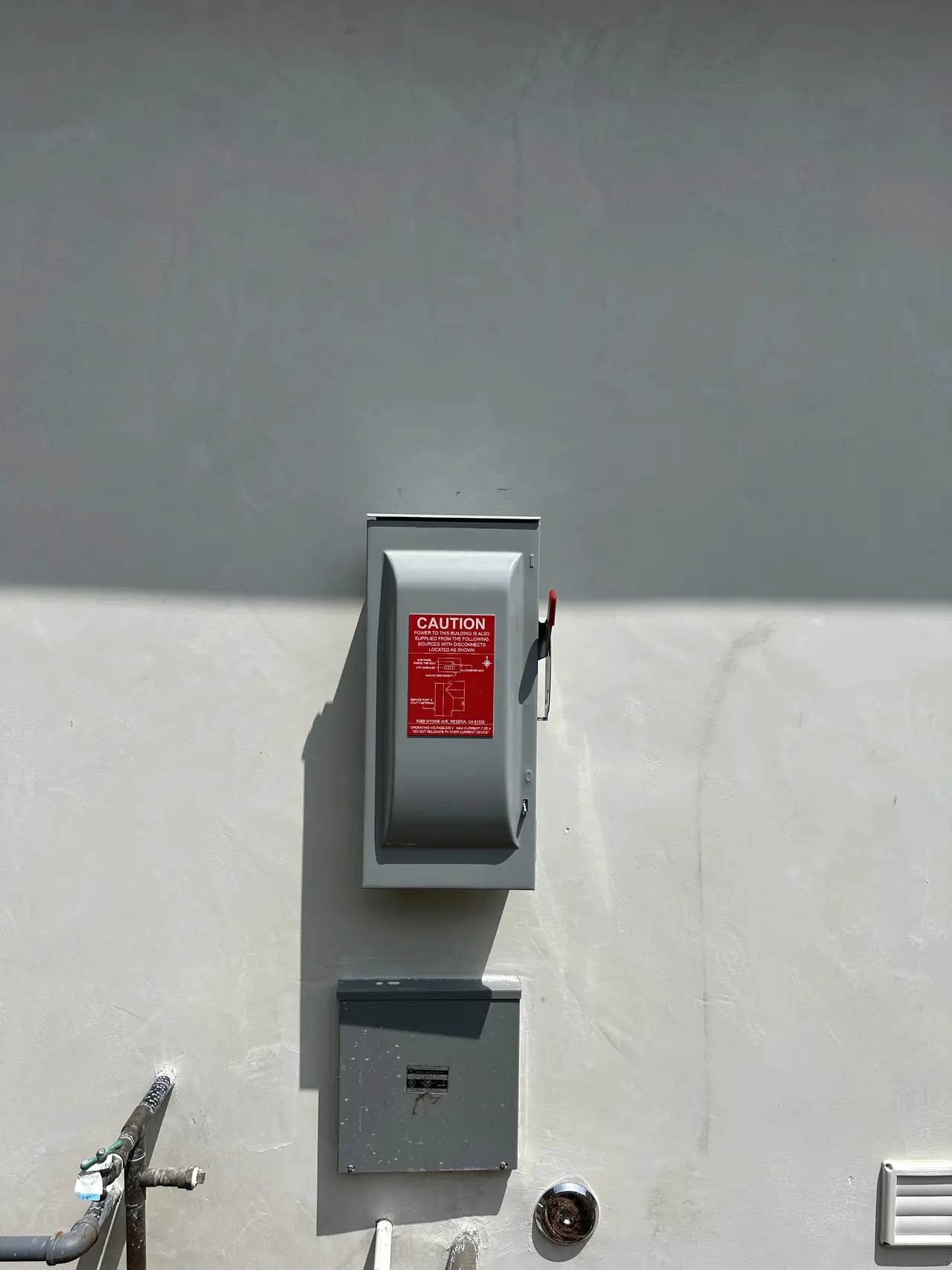
The permanent meter went in, the building department's release reached the utility in July, and permission to operate followed on it. Eight months after the array was installed, the unit had its own meter, its own signed-off system and nothing left open. The owner has a small, quiet array on a new rental unit that has been running ever since.
The lesson is a scheduling one, not a technical one. If you are putting a small array on a new accessory dwelling unit, assume the roof work is the short part and the utility work is the long part, and that the long part is the same length it would be for a system five times the size. Book the two finals together. Chase the permanent meter from the day the unit is framed. Everything after that follows on its own.
How it ran
| November 2024 | Proposal sent; contract signed the same day |
|---|---|
| November 2024 | Permits pulled and the array installed in one day |
| November 2024 | Final inspection request accepted by the building department |
| April 2025 | Sequence set straight with the owner: the building final and the solar final are scheduled together |
| 2 May 2025 | Joint building and solar final, attended by our technician; both passed |
| 21 May 2025 | Interconnection filed at 1.96 kW AC-CEC; recovery charge and underground-service charge paid |
| 12 June 2025 | Utility confirms it cannot process the project until the unit has a permanent meter; permanent service arranged |
| July 2025 | Permanent meter set; building department's final release recorded by the utility and permission to operate granted |
This timeline reflects a new accessory dwelling unit with underground service in LADWP territory. A system of this size on an existing house with an existing meter runs a much shorter path.
What we did
- Designed and installed the array on the new unit's shingle roof in a single day (C-10).
- Filed the permits and the inspection request with the building department.
- Set the inspection sequence straight when the solar final would not pass alone, and had both finals booked for one appointment.
- Sent a technician to the site to meet the inspector at the joint final.
- Filed the interconnection application and paid the utility's recovery and underground-service charges.
- Chased the permanent meter with the owner before the utility raised it, and carried the project to the building department's final release.
System specifications
| Recorded by the utility | 1.96 kW AC-CEC |
|---|---|
| Modules | Q CELLS Q.PEAK DUO BLK ML-G10+, 400 W, all black |
| Microinverters | Enphase IQ7A, one per module |
| Layout | One row on a single roof plane |
| Roof | Composition shingle, new |
| Service | Underground, with a meter replacement rather than a new service run |
| Main panel upgrade | None |
| Battery | None |
| Utility / AHJ | LADWP / LADBS |
Is your project like this one?
- You are adding a small array to a new accessory dwelling unit.
- Your unit's building permit is still open while the solar permit is ready to inspect.
- Your new unit does not yet have a permanent meter.
- You assumed a small system would mean a short utility process.
- Your Reseda property is served by LADWP, while permits are handled by LADBS.
Cali Energy in Reseda
Reseda is inside City of Los Angeles boundaries: permits run through LADBS, interconnection through LADWP.
Reseda sits inside the City of Los Angeles, so its permits run through LADBS and its interconnections through LADWP. New dwellings built here since 2020 carry a solar requirement under the state energy standards, which is why so many of the arrays going up on Reseda accessory dwelling units are small ones.
This installation is on the Reseda projects page alongside the others, and what the work covers is set out on the Reseda service area page.
- License and classifications: CSLB #1032379
- Official reference for this process: California Energy Commission — 2022 Building Energy Efficiency Standards (Title 24, Part 6)
- Official reference for this process: LADWP interconnection requirements
Frequently asked questions
Does a small solar system go through a shorter utility process?
No. A two kilowatt array opens its own work request, pays its own expenditure recovery charge, gets its own assigned service representative, submits its own photograph package and generates its own run of progress notices, exactly as a ten kilowatt array does. On this project the utility side took roughly two months after the city signed off, and none of that time was a function of system size. Budget schedule accordingly, not just money.
Can the solar final be inspected before the building final on a new unit?
No, and having a separate permit number does not change that. The array is an electrical system on a structure the city has not yet finished approving, so the inspector cannot close the solar permit while the building permit is open. The two finals are scheduled for the same day and inspected in the same visit. Have someone from the solar side present, because the inspector will have questions about the array that the builder cannot answer.
Why would the utility refuse to process an application that has already been paid for?
Because a new unit with no permanent meter has no service for the interconnection to attach to. Setting that meter is a separate request handled by the area service representative, at a different desk from the solar interconnection group, and the solar queue does not start until the service queue finishes. Paying the fees and receiving a work request number does not move you forward while that is outstanding.
Why are arrays on new accessory dwelling units usually so small?
Because the state energy standards set a solar requirement scaled to the building, and a detached unit of four or five hundred square feet is a small building. The result is often a single row of modules on one roof plane. It is a real system that a real meter measures, and it goes through the same permitting and interconnection process as any other.
How long should an owner expect an ADU solar project to take?
Plan around the two gates rather than the install. The array itself can go on in a day. The building final has to be ready to schedule alongside the solar final, and the permanent meter has to exist before the utility will begin. On this project those two items accounted for essentially the entire timeline from November to the following July.
Does Cali Energy take on small ADU arrays?
Yes. Under two kilowatts is the normal size on a detached second unit, because the state energy standards scale the requirement to the building rather than to the household. What does not scale down with it is the paperwork: the same work request, the same charges, the same assigned representative, the same photograph package. Cali Energy prices and schedules these around the two real gates, the building final and the permanent meter, not around the day on the roof.
What this would look like on your roof
Planning solar in Reseda? Tell us your utility, your roof and what your bill looks like now, and we will model what a system like this would do on your house before you commit to anything.
Or call +1 (323) 844-7777 · Cali Energy, Northridge · CSLB #1032379 (B, C-10, C-39) — design, permits, install and electrical under one licensed contractor.
Related
This timeline reflects this property and this permitting path. Updated September 2026.