

Northridge, CA · October 2025 – February 2026 · LADWP / LADBS
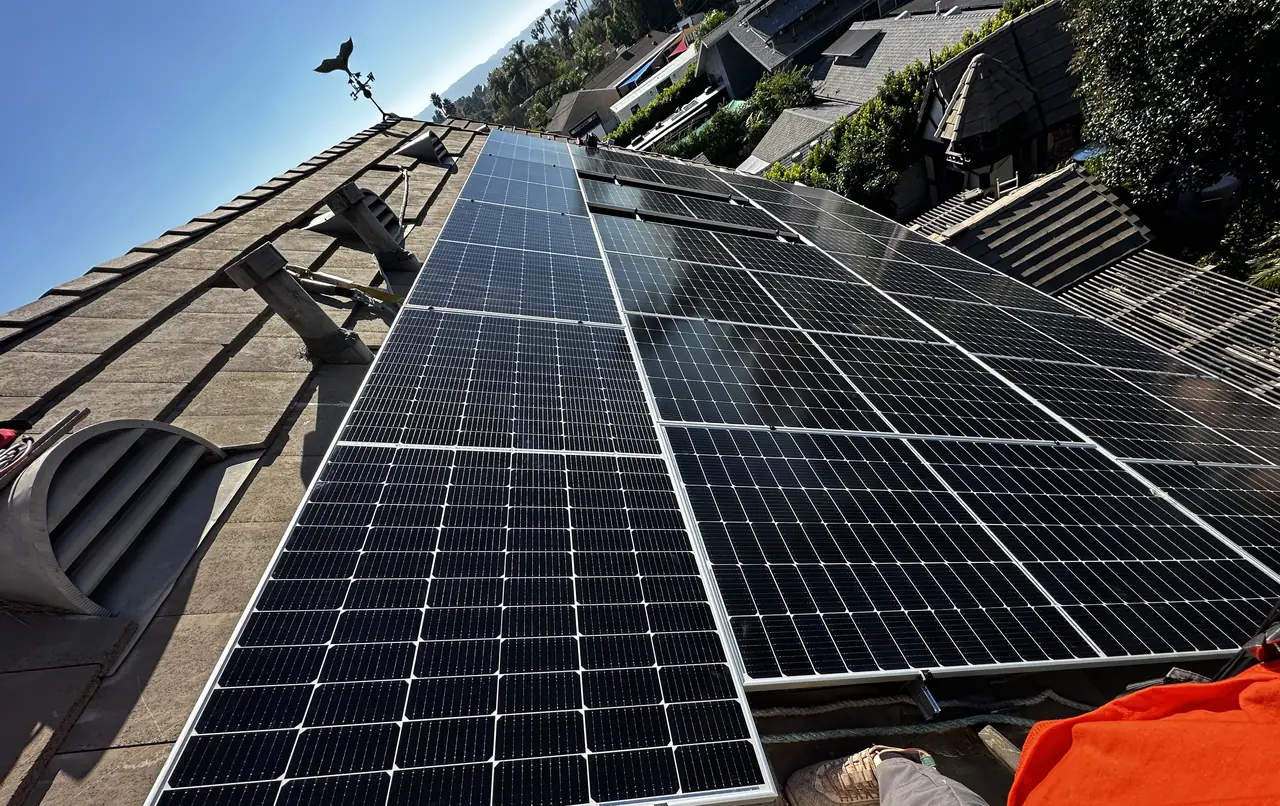
Thirteen point eight kilowatts, and every module sits on lifted tile.
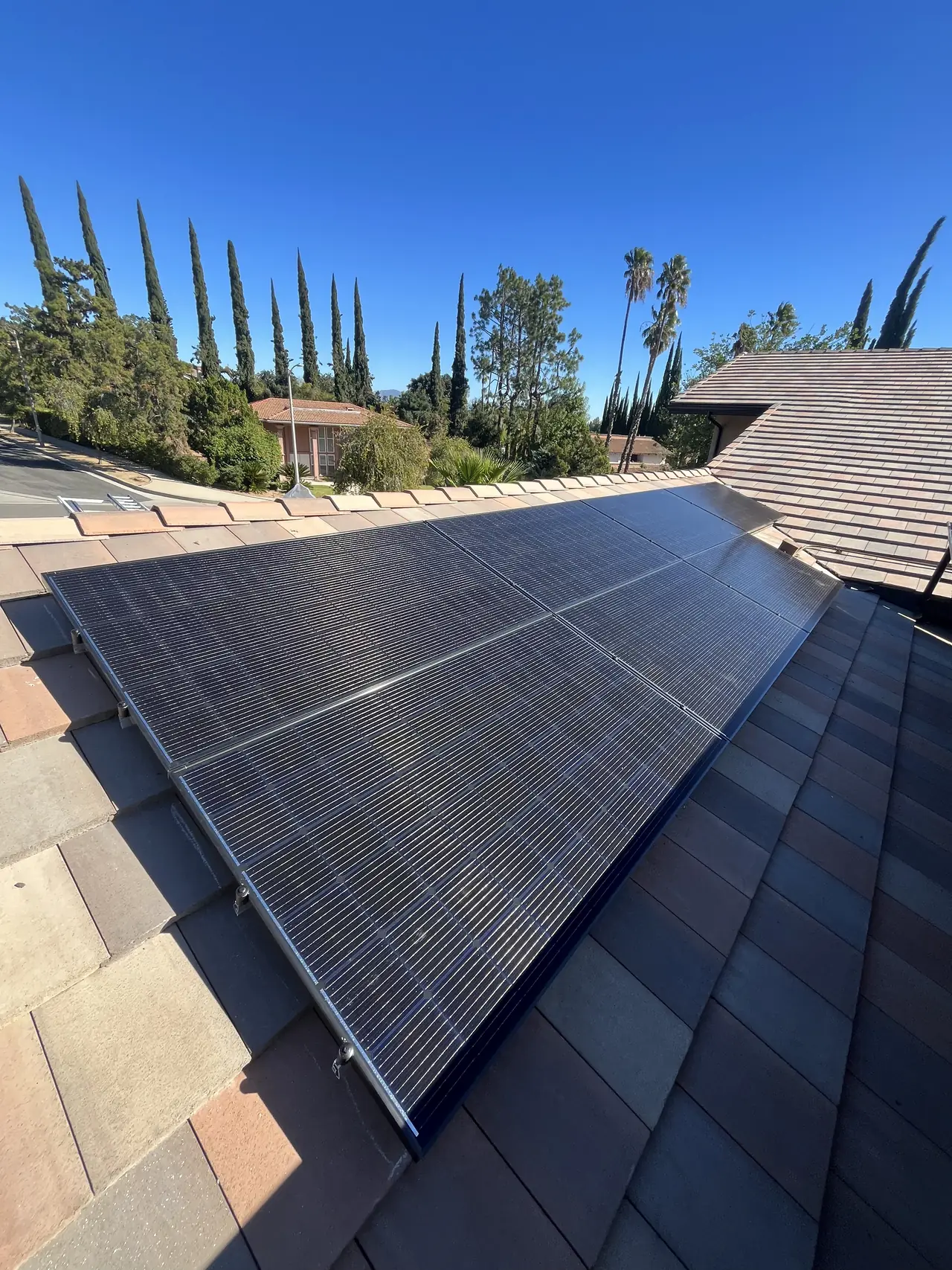
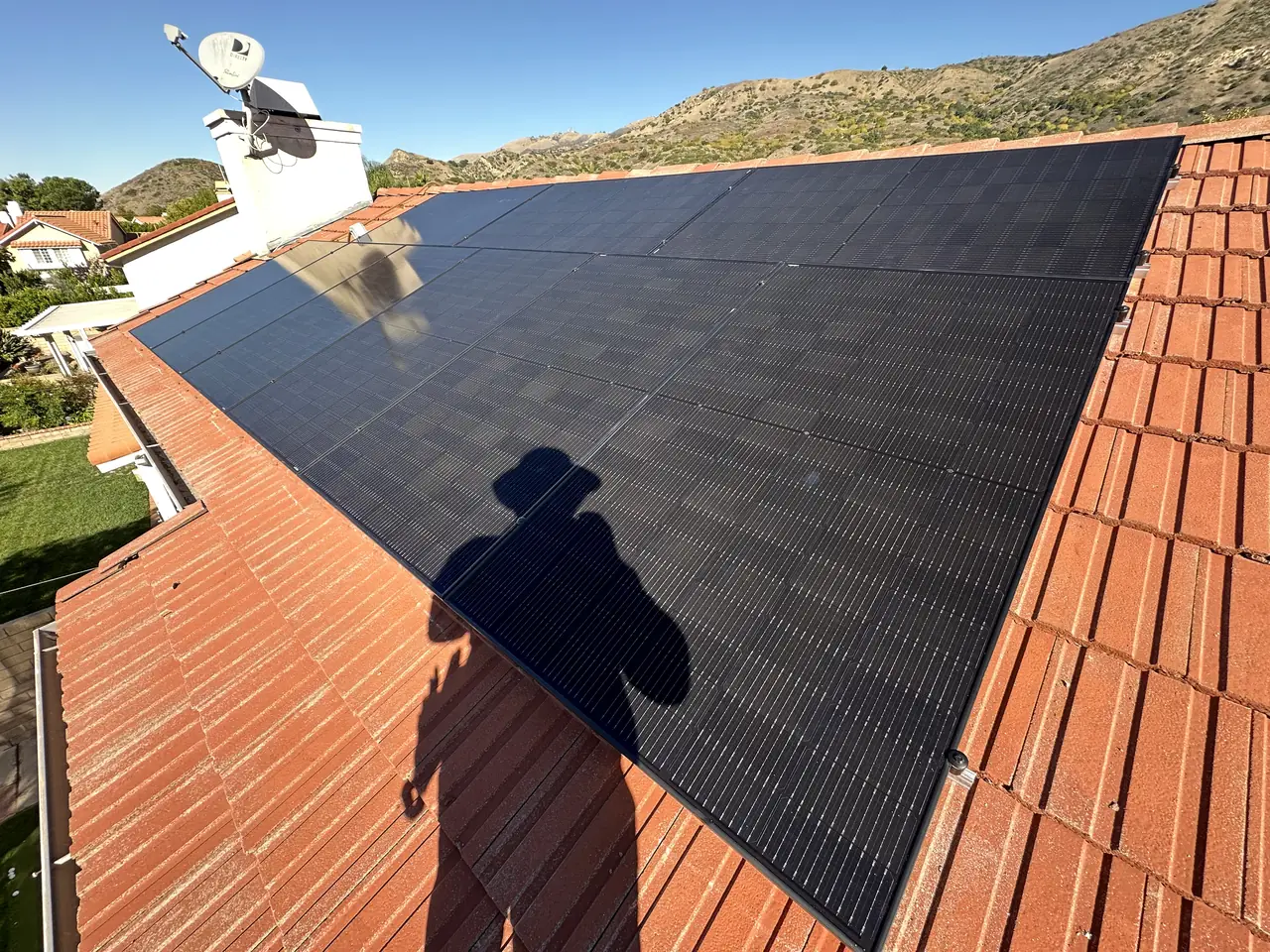
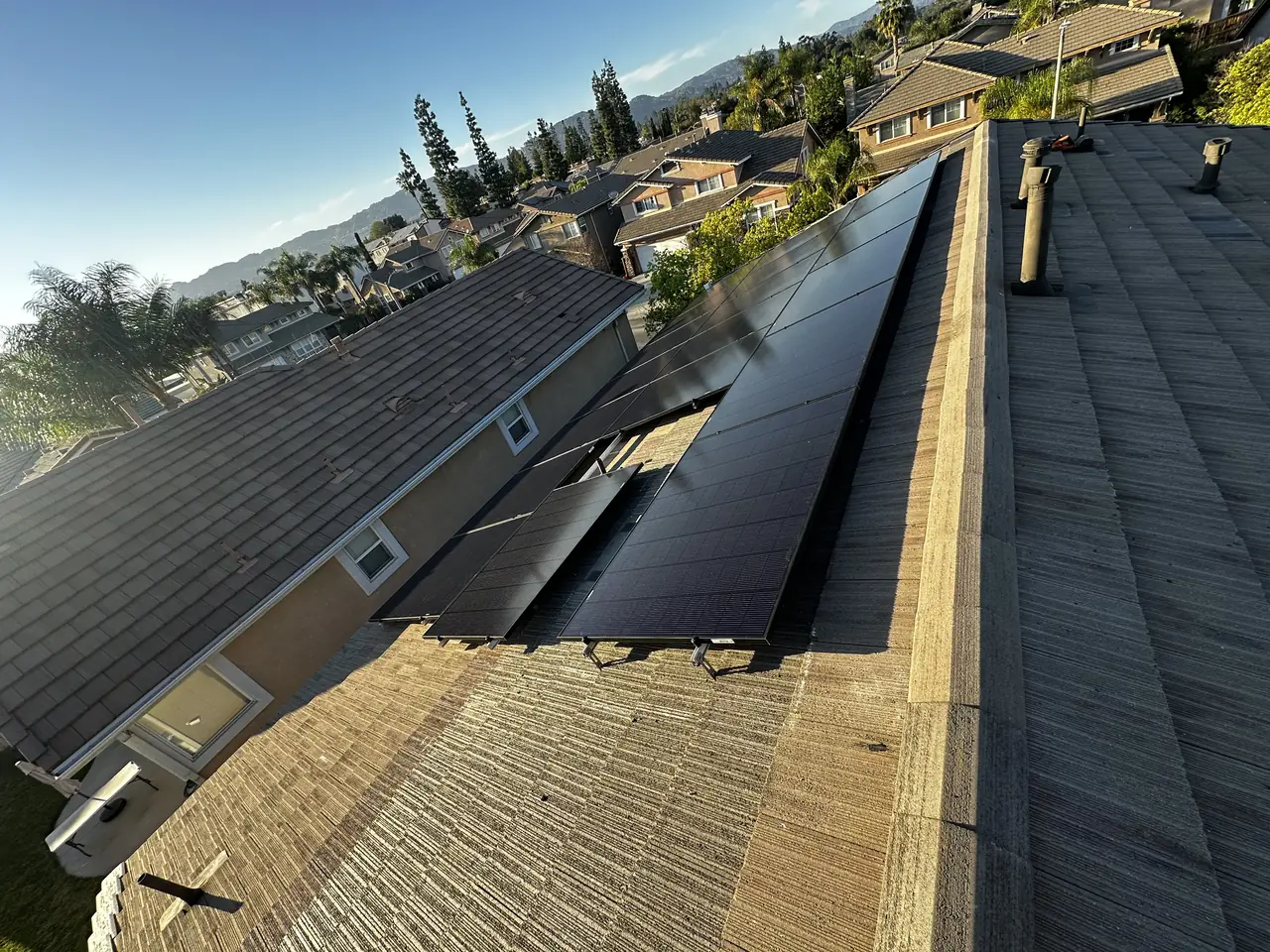
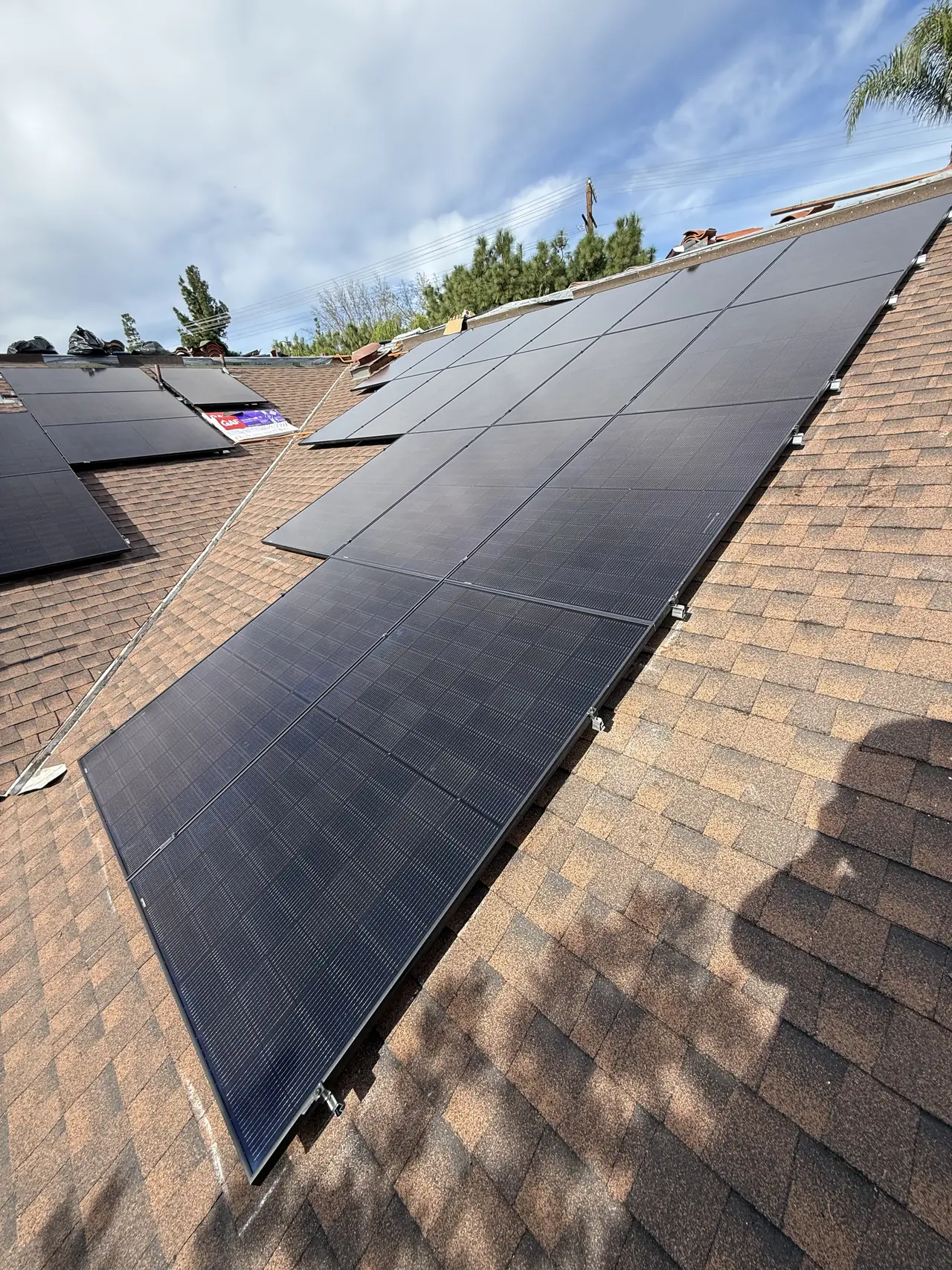
A 13.83 kilowatt array on a flat concrete tile roof. Material landed on a Tuesday; the City inspection was requested seven days later.
On a tile roof the array does not sit on the tile. Every attachment means taking tile off, fixing to the structure underneath, flashing the penetration and setting the tile back. That is slower per module than shingle, and on a system this size it is the part of the schedule worth planning around.
At a glance
- System
- 13.83 kW AC-CEC
- Roof
- Flat concrete tile
- Microinverters
- Enphase IQ8MC, one per module
- Delivery to inspection request
- Seven days
- Agreement to PTO
- Four months
- Largest we have built here
- By array size
- Utility / AHJ
- LADWP / LADBS
The story
This is the biggest residential array we have built in the neighbourhood, and the roof is the reason it is worth writing about. Flat concrete tile looks like a flat surface and is not one. Each tile is an independent piece lying on battens, and the structure that actually carries the array is underneath all of it.
So the first day on a roof like this is not module day. Tiles come off along the rail lines, the attachments go down into the framing, each penetration gets flashed, and the tile goes back over the flashing. Only then does anything look like solar.
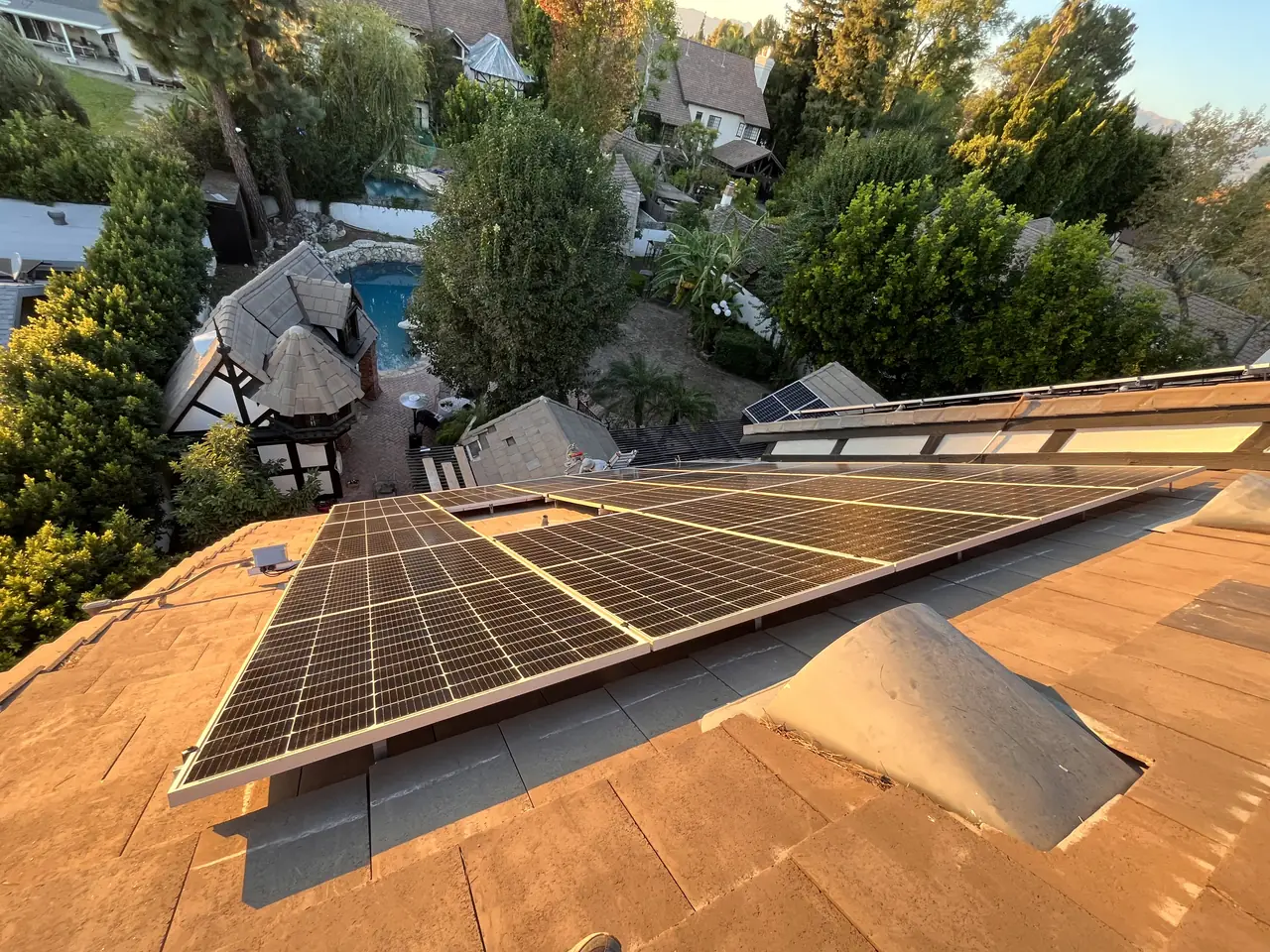
The calendar on this one was short. The material was delivered at the start of December and the inspection request went to the building department seven days later, which puts the roof work inside that week. The layout was set before anyone climbed a ladder and the tile came off in the order the rails went down.
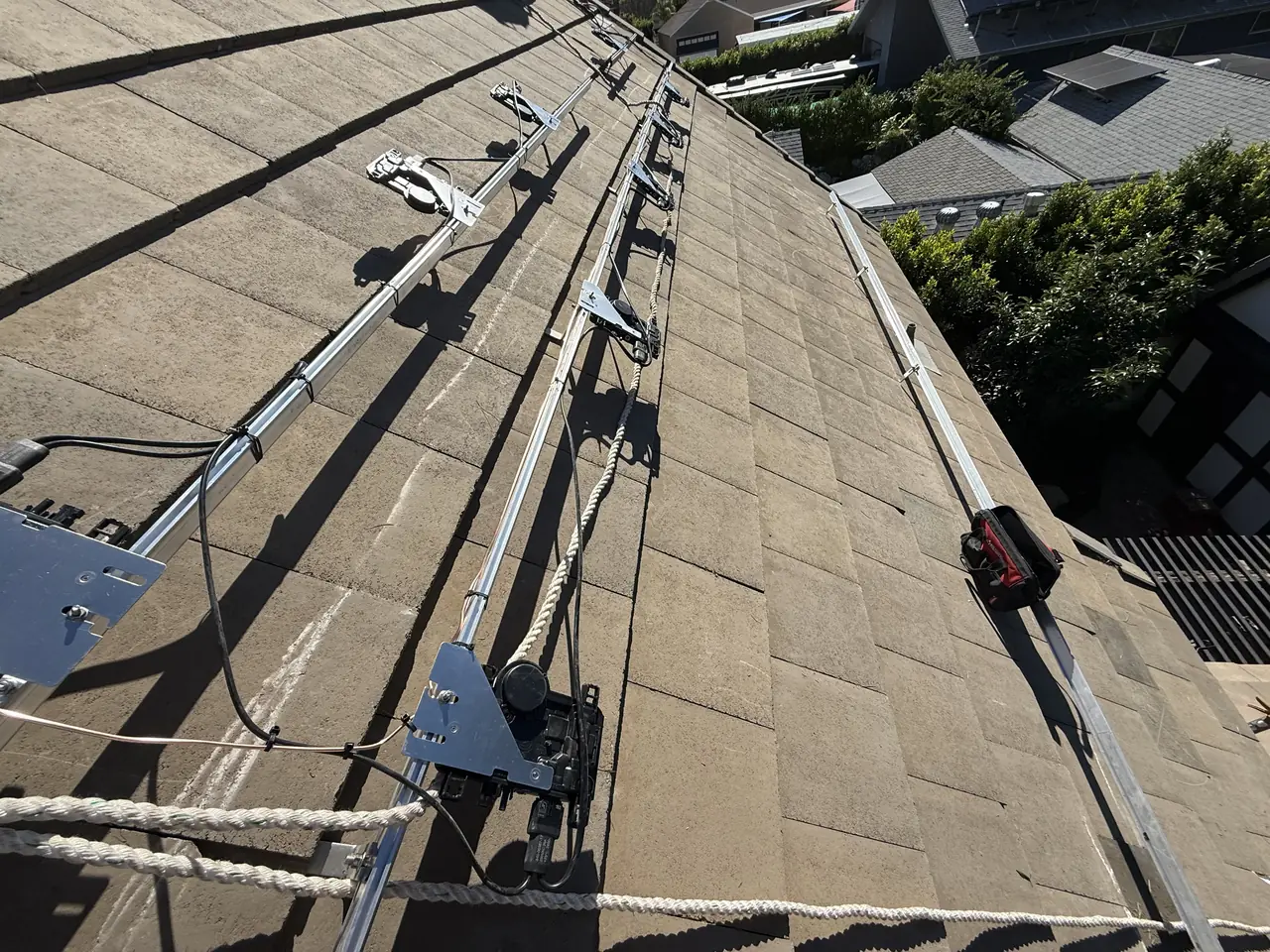
The electronics are Enphase IQ8MC microinverters, one per module, which is the arrangement we use on almost everything in this city. On a roof with this many planes and this much tree cover on the canyon side, per-module conversion is worth more than it is on a single clean south slope.
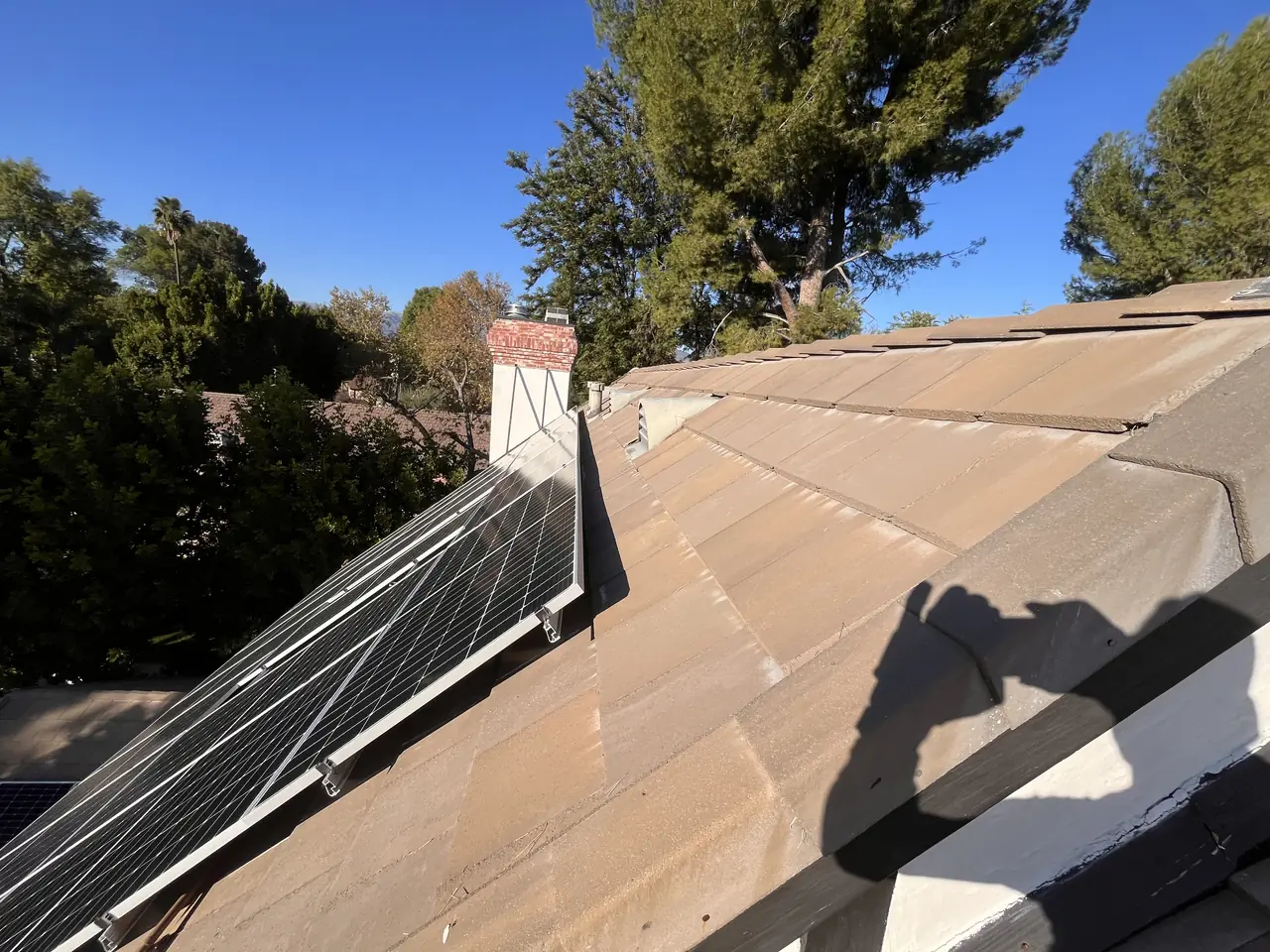
From there the project went through the utility's normal sequence and came out the other end: permission to operate at 13.83 kilowatts AC-CEC in late February, four months after the first site visit. From the ground, the tile roof looks the way it did before we arrived.
How it ran
| 27 October 2025 | First site visit |
|---|---|
| 2 December 2025 | Equipment delivered |
| 9 December 2025 | Inspection requested from the building department |
| January 2026 | Utility interconnection review |
| 24 February 2026 | Permission to operate — 13.83 kW AC-CEC |
Seven days between the material arriving and the inspection request. The rest of the calendar was review.
What we did
- Set the array layout across the tile planes before any tile was lifted.
- Lifted tile along the rail lines, fixed attachments to the structure and flashed every penetration before resetting the tile.
- Installed one Enphase IQ8MC microinverter per module.
- Requested the building department inspection one week after material delivery.
- Carried the interconnection through to permission to operate at 13.83 kilowatts AC-CEC.
System specifications
| System | 13.83 kW AC-CEC |
|---|---|
| Roof | Flat concrete tile |
| Attachment | Tile lifted, fixed to structure, flashed, tile reset |
| Microinverters | Enphase IQ8MC, one per module |
| Delivery to inspection request | One week |
| Utility / AHJ | LADWP / LADBS |
Is your project like this one?
- Your roof is concrete tile and you have been told solar will damage it.
- You have a large roof and want to know what the upper end of a residential system looks like.
- You want the tile put back rather than replaced with a patch of shingle.
- You are comparing microinverters against a single string inverter on a roof with several planes.
- You have a large tile roof and want the tile back where it started.
Cali Energy in Northridge
Northridge is inside City of Los Angeles boundaries: permits run through LADBS, interconnection through LADWP.
The hillside streets on the west side of Northridge are mostly tile, and the houses are large enough to carry a system this size without running out of roof.
This installation is on the Northridge projects page alongside the others, and what the work covers is set out on the Northridge service area page.
- License and classifications: CSLB #1032379
- Official reference for this process: LADWP interconnection requirements
- Official reference for this process: California Energy Commission — solar equipment lists
Frequently asked questions
Can solar go on a concrete tile roof?
Yes, and it is routine here. The array does not rest on the tile: tile is lifted along the rail lines, the attachments are fixed to the structure underneath, each penetration is flashed, and the tile is set back over the flashing. On this project that was done across the whole array.
Does lifting tile break it?
Some tiles break during any tile work and are replaced. Planning the rail lines before lifting anything keeps the number down, which is what we did here.
How big can a residential system be?
It depends on the roof, the service and the utility's review, not on a single number. This one is 13.83 kilowatts, the largest array we have built in the neighbourhood.
Why one microinverter per module?
Each module converts on its own, so shading or soiling on one module is not carried by the rest of a string the way it would be with a single inverter. That was the reason for the choice here. It affects that module rather than a string. On this roof, with several planes and mature trees on the canyon side, that was the reason for the choice.
How long did the work on the roof take?
Material was delivered at the start of December and the building department inspection was requested seven days later, so the roof work sits inside that week. The months on either side were design, permitting and utility review.
Does Cali Energy work on tile roofs in Northridge?
Yes. Cali Energy holds B, C-10 and C-39 classifications under CSLB #1032379, which covers the roofing and electrical sides of a tile installation.
What this would look like on your roof
Planning solar in Northridge? Tell us your utility, your roof and what your bill looks like now, and we will model what a system like this would do on your house before you commit to anything.
Or call +1 (323) 844-7777 · Cali Energy, Northridge · CSLB #1032379 (B, C-10, C-39) — design, permits, install and electrical under one licensed contractor.
Related
This timeline reflects this property and this permitting path. Updated September 2026.