

North Hills, Los Angeles, CA · January 2021 · LADWP / LADBS
The array was finished after sunset, and the roof closed the same day
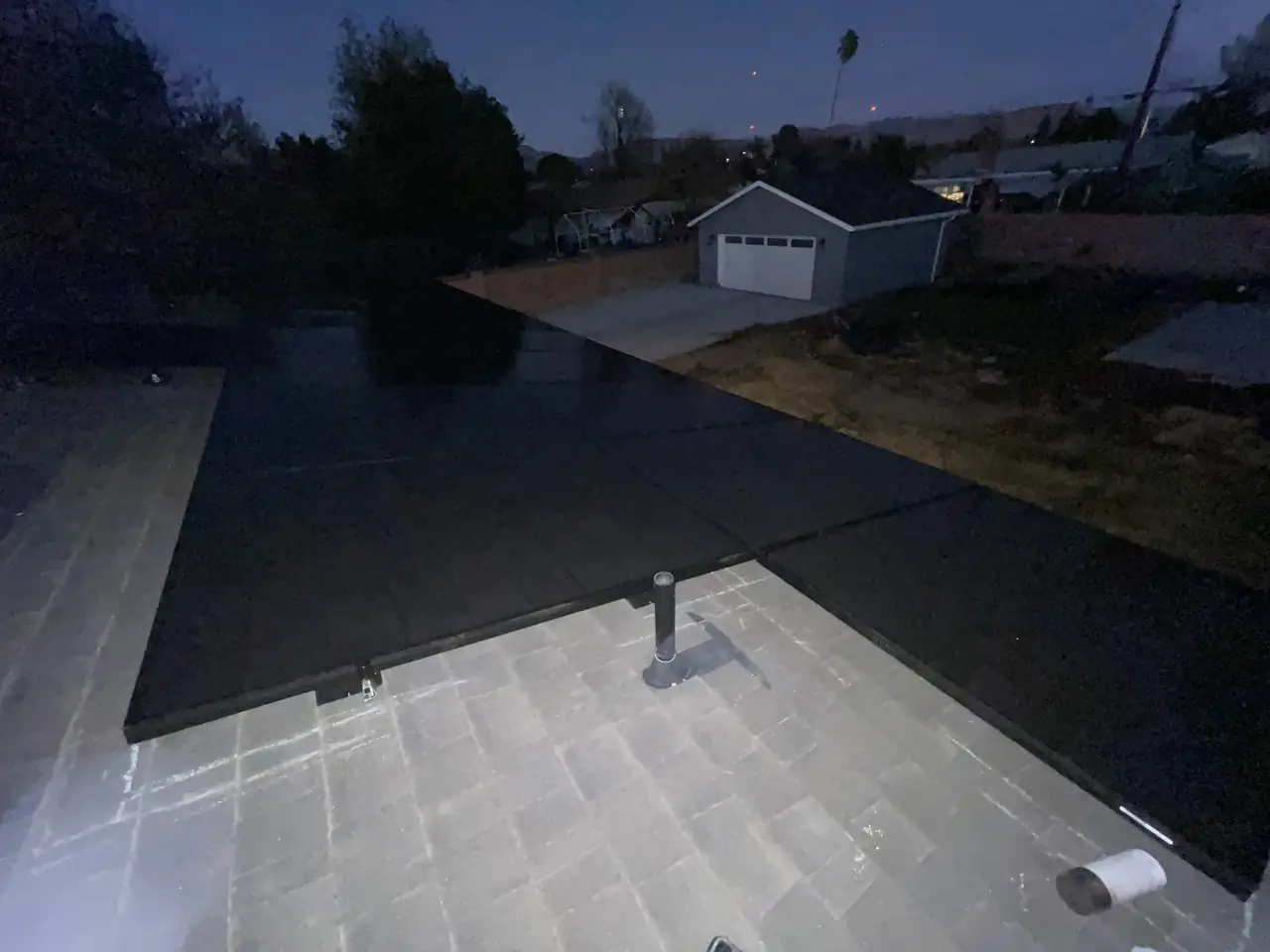
Modules went on at dusk, the last flashings were set under a work lamp, and the conduit was closed with the street lights already on. The installation was finished that evening rather than carried over to the next day.
This North Hills installation ran past sunset on a January afternoon and was finished that evening rather than carried over. Cali Energy completed the array, the flashings, the conduit and the service equipment before leaving the site, because a roof with attachments in it is not weather-tight until the array is closed up, and because a finished job can be called in for its final the next morning instead of two days later.
At a glance
- Array
- Two groups on a composition shingle roof
- Modules
- Solaria PowerXT, 400 W
- Inverters
- Microinverters with an Enphase IQ Combiner at the wall
- Service
- Service equipment replaced
- Installed
- A single January day, finishing after dark
- Inspection called in
- The next day
- Correction
- Issued at the final inspection that followed
- Utility / AHJ
- LADWP / LADBS
The story
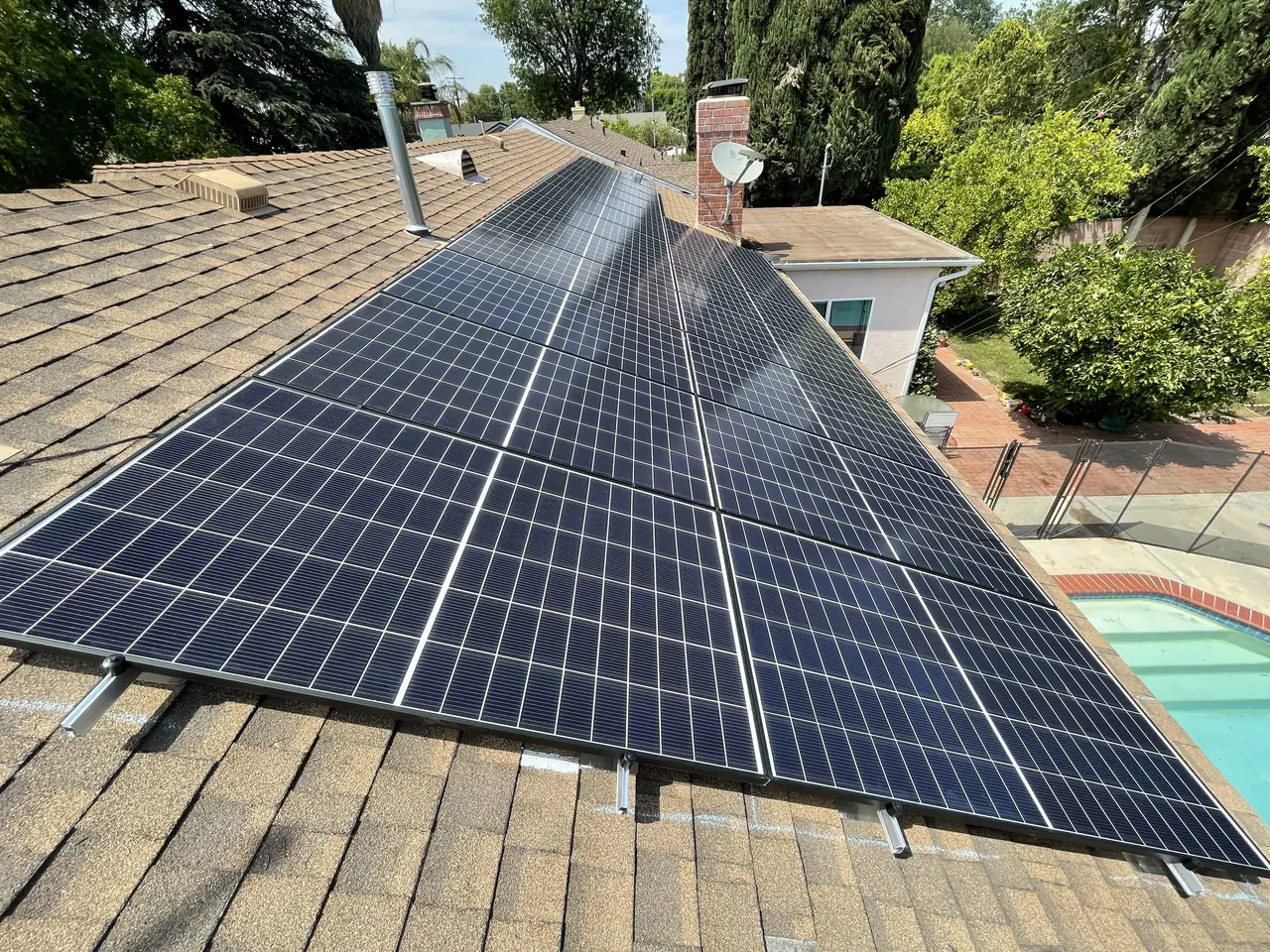
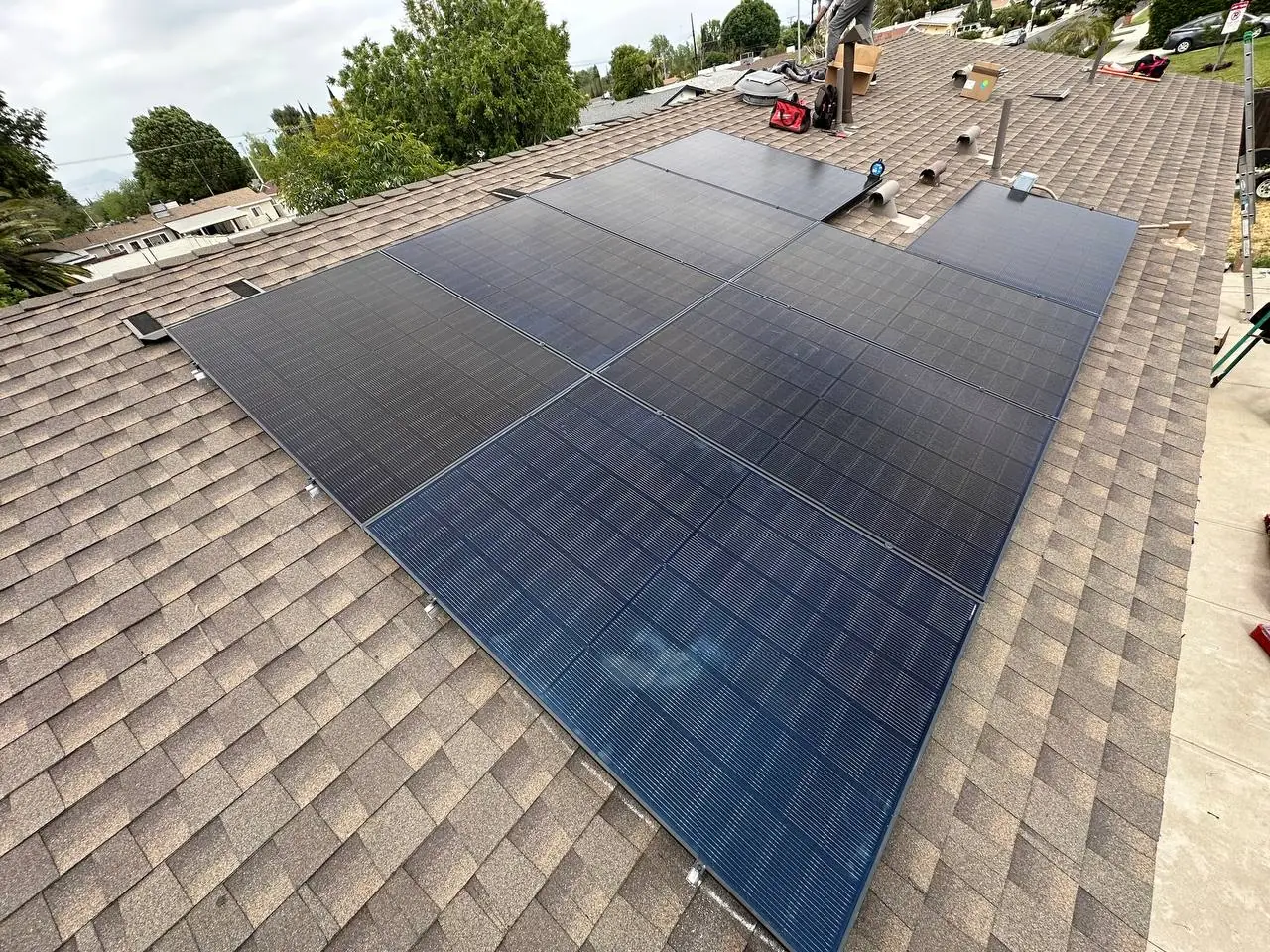
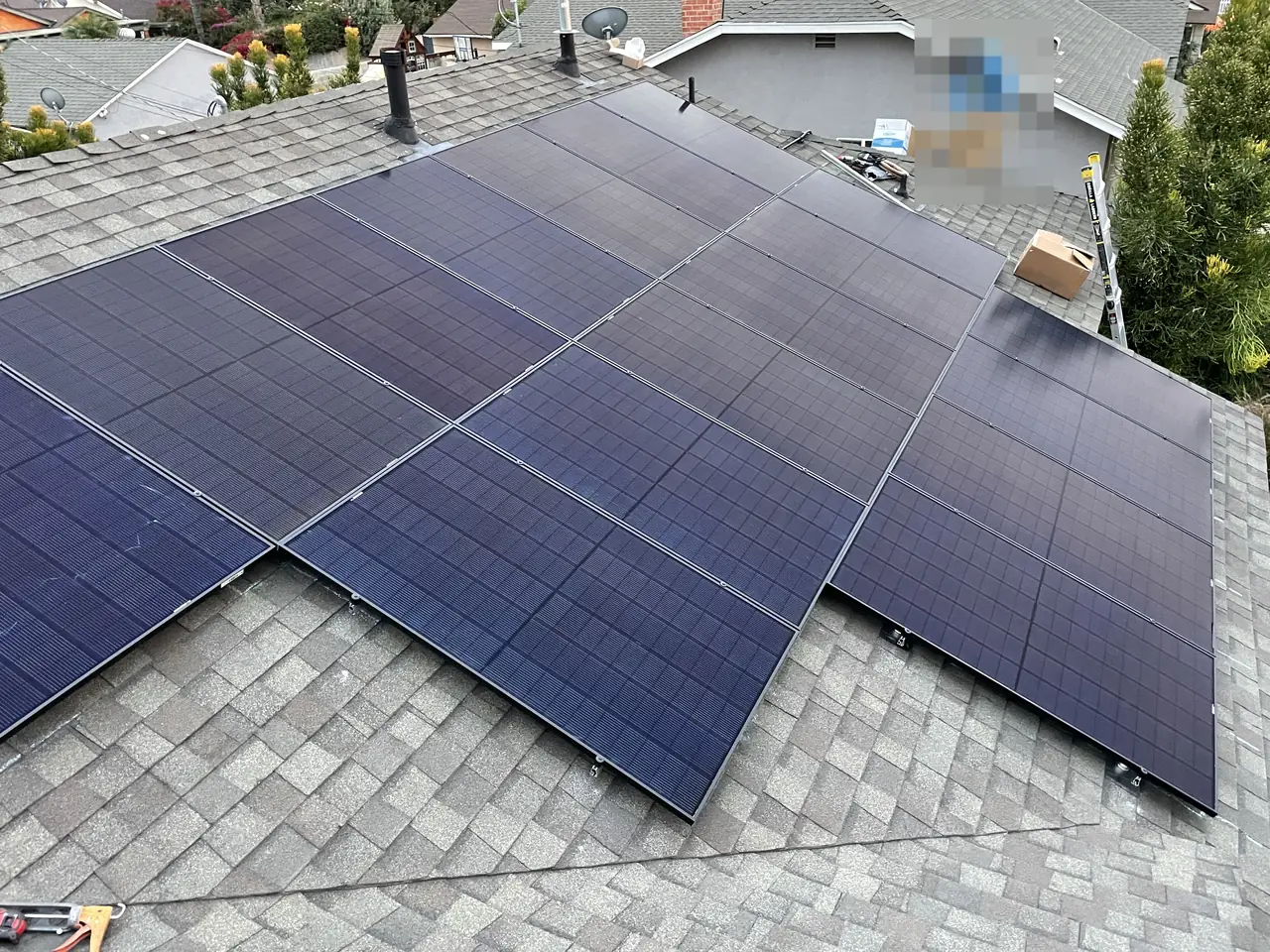
The array is two groups on a composition shingle roof: a long block on the main plane and a second, smaller one set beyond it. Solaria PowerXT modules of 400 watts, a microinverter under each, and an Enphase combiner at the wall with the service equipment replaced at the same time.
The installation ran into the evening and was taken through to the end that night. The reason is not stamina, it is the state the roof is left in. Once attachments are in, there are holes in it. Every one of them is flashed as it is made, but the array is not weather-tight until the rails and modules are on and the conduit is closed. Leaving that overnight in January means either tarping the work or accepting a risk nobody needs to take.
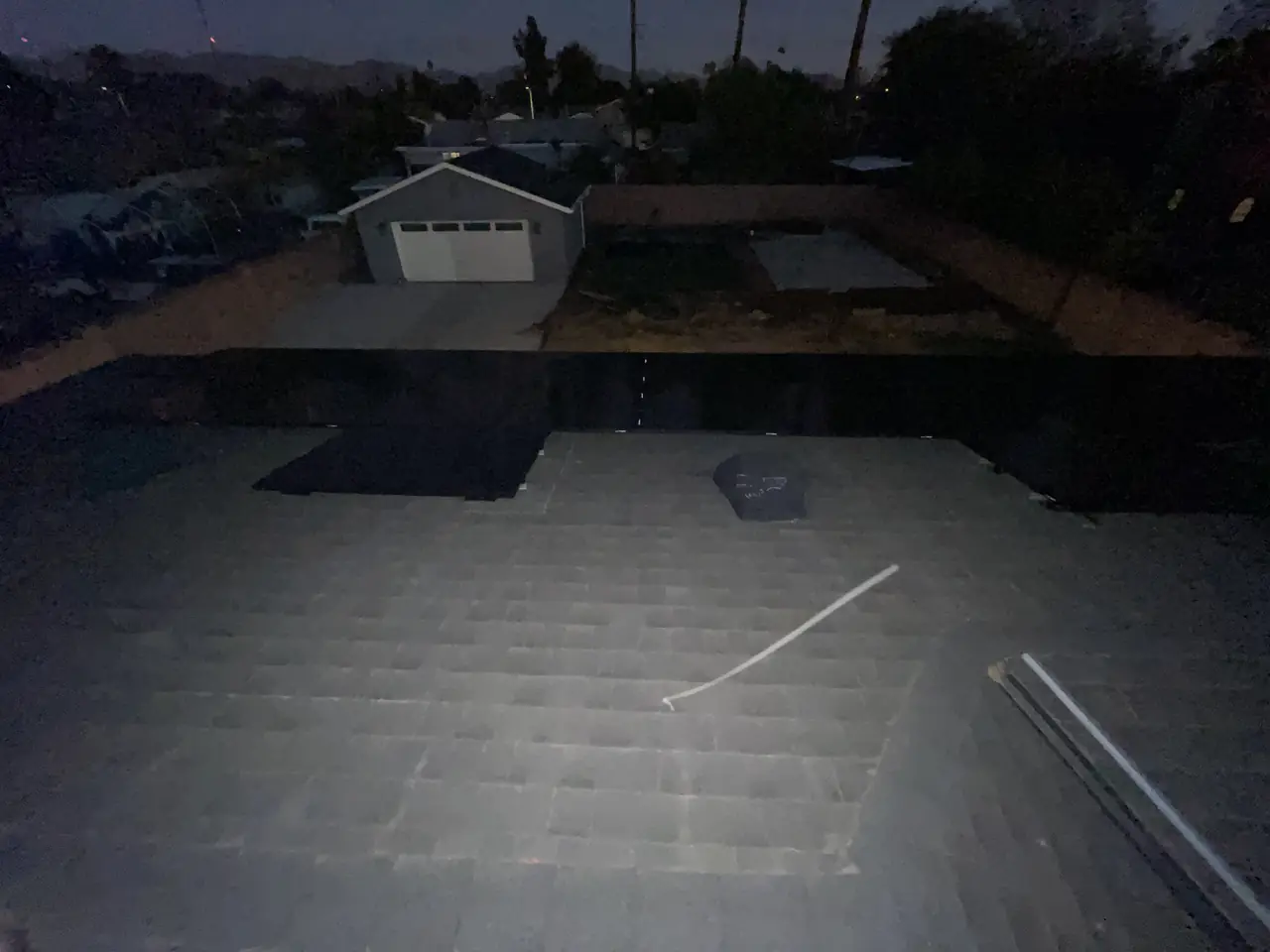
The second reason is the inspection. A final cannot be requested until the work is finished, and requests have a daily cut-off. Work closed out today can be called in first thing tomorrow; work carried over to tomorrow is called in the day after. On this project the request went in the next day, and the final inspection was carried out on the day after that, with a correction issued on it.
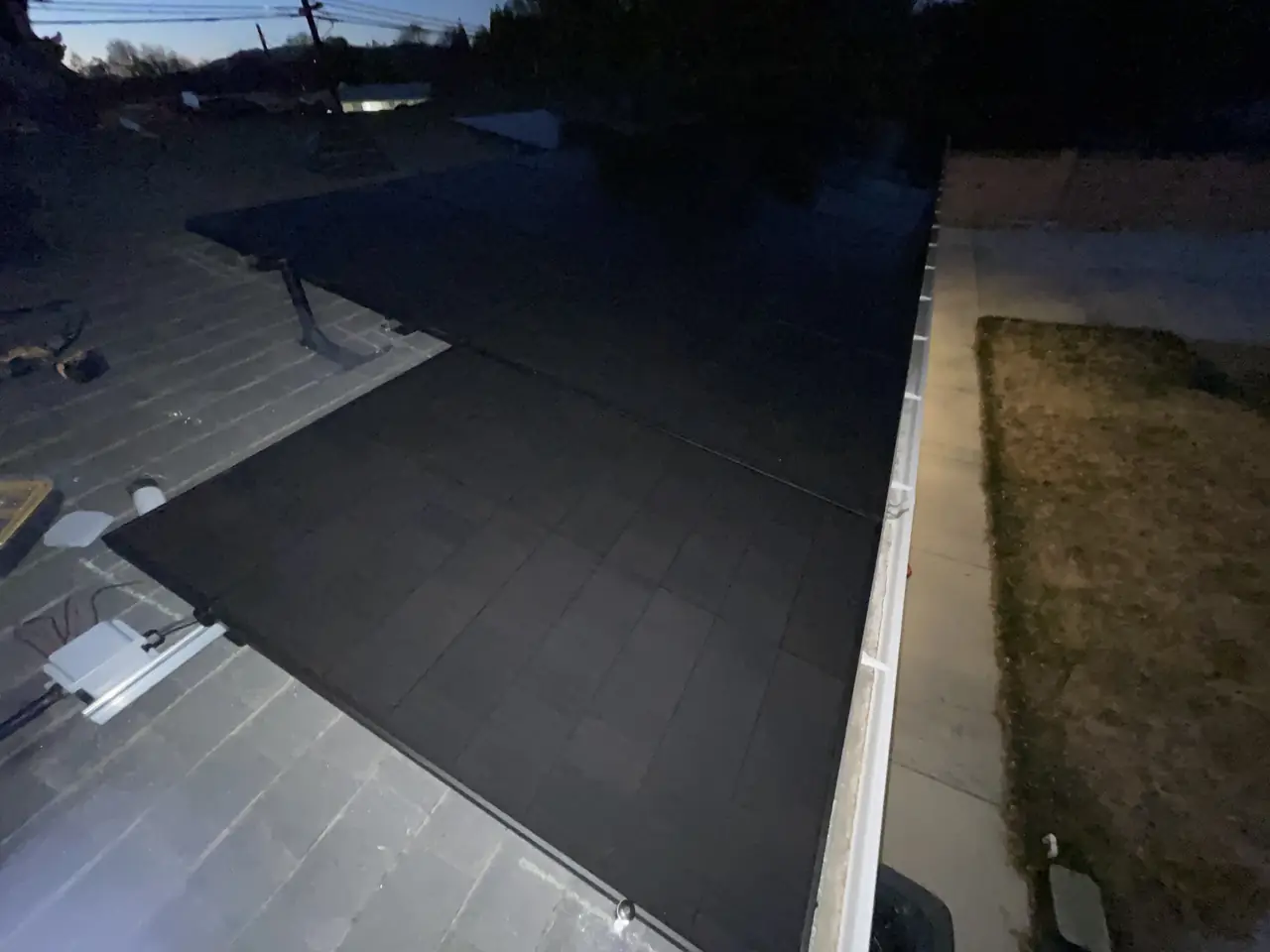
What changes after dark is not the standard but the method. Work lights go up so that the surface being worked on is genuinely lit rather than half lit. Torque-critical connections and flashing details are the ones to be most careful about, because they are exactly the things that look finished in poor light whether they are or not. Everything that can be left for daylight is left for daylight, and anything that cannot be verified properly is not signed off.
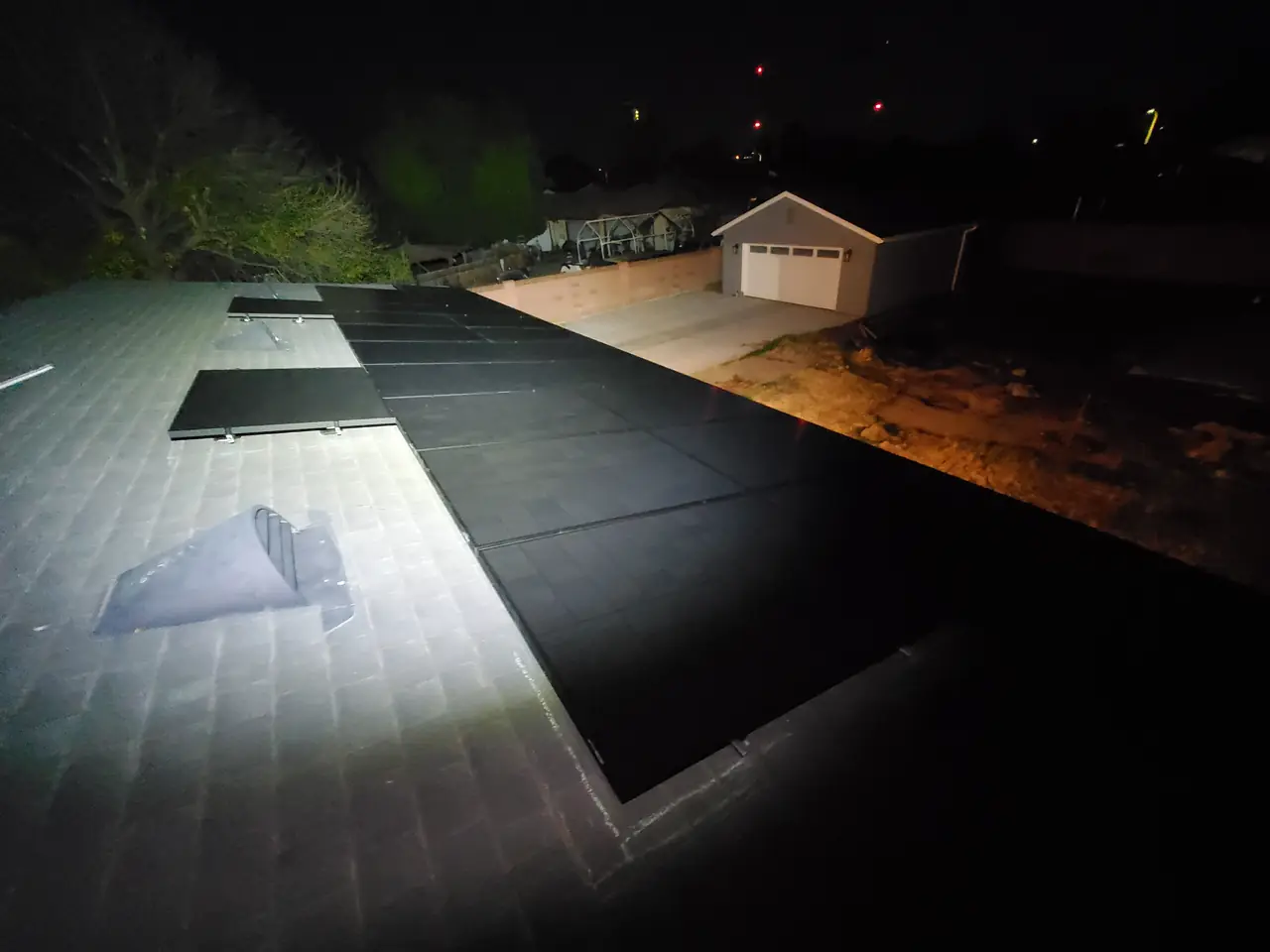
That is an ordinary result, and it is the one worth expecting: finishing late does not produce a worse installation, and it does not produce a cleaner one either. What it produces is a roof that is closed, a job that can be called in the next day, and a homeowner who is not living with a half-finished array through a week of January weather.
How it ran
| Thursday 14 January 2021 | Attachments and flashings set; rails installed |
|---|---|
| 14 January, afternoon | Modules and microinverters installed on the main plane |
| 14 January, dusk | Second group set; work lights up |
| 14 January, after dark | Conduit run and closed; combiner and service equipment finished |
| Friday 15 January | Final inspection called in |
| Saturday 16 January | Final inspection carried out; correction issued |
One working day, finished after sunset, and the job called in for its final the next day.
What we did
- Set and flashed the attachments and installed the rails across the working plane.
- Installed the modules and a microinverter under each one, in two groups.
- Worked on under lights after sunset and completed the array the same day rather than leaving the roof open.
- Ran and closed the conduit and fitted the combiner at the wall.
- Replaced the service equipment as part of the same day's work.
- Called the final inspection in the next day.
System specifications
| Array | Two groups on one composition shingle roof |
|---|---|
| Modules | Solaria PowerXT, 400 W |
| Inverters | Microinverters, one per module |
| Balance of system | Enphase IQ Combiner at the wall |
| Service | Service equipment replaced |
| Mounting | Rafter-fixed attachments, flashed as each is made |
| Working conditions | Finished under work lights |
| Utility / AHJ | LADWP / LADBS |
Is your project like this one?
- Your installation is running late in the day and you want to know what happens.
- You have been told the crew will come back tomorrow to finish the roof.
- You are installing in winter and daylight is short.
- You want the inspection called in as early as possible after installation.
- You want to know what is done differently once the light goes.
Cali Energy in North Hills
North Hills sits inside City of Los Angeles boundaries: permits run through LADBS, interconnection through LADWP.
In January the sun sets on Los Angeles a little after five, which puts the last hour of a winter installation in the dark. A roof left open at that point has to be either finished or covered, and finishing it is almost always the better answer — for the roof, for the schedule, and for the inspection that follows.
This installation is on the North Hills projects page alongside the others.
- License and classifications: CSLB #1032379
- Official reference for this process: LADBS — inspections
- Official reference for this process: California Energy Commission — solar equipment lists
Frequently asked questions
Is it safe to finish a solar installation after dark?
It is, with the right preparation. Work lights go up so the surface being worked on is properly lit, and the connections that depend on being verified rather than seen — torque, flashing details, terminations — get extra attention because those are the ones that look finished in poor light either way. Anything that cannot be checked properly waits for daylight rather than being signed off.
Why not just come back the next day?
Because the roof has holes in it. Attachments are flashed as they are made, but the array is not weather-tight until the rails, modules and conduit are finished and closed. Leaving that overnight means tarping the work or carrying a risk for no reason. Finishing also means the final inspection can be requested the next morning instead of two days later.
Does finishing late affect the quality of the installation?
It should not, and the standard is the same either way. On this project the job was called in the next day and inspected the day after that, on the ordinary schedule. What changes is the method — more light, more care on the details that cannot be judged by eye, and a willingness to leave anything uncertain for the morning.
How soon after installation can the inspection happen?
The request can go in as soon as the work is complete, and the visit usually follows within a few working days. Because requests have a daily cut-off, a crew that closes the roof today can call the job in tomorrow, while one that returns tomorrow to finish calls it in the day after. Cali Energy calls the job in the first morning after the work is done, which is why the crew stays to close the roof.
Does Cali Energy install solar in North Hills in winter?
Yes. A short January day is a scheduling question rather than an obstacle: the crew plans the work so the roof can be closed the same day, brings work lights instead of racing the sun, and leaves anything that cannot be verified properly for the morning. Cali Energy covers design, permitting, installation and commissioning across North Hills. License CSLB #1032379.
What this would look like on your roof
Planning solar in North Hills? Tell us your utility, your roof and what your bill looks like now, and we will model what a system like this would do on your house before you commit to anything.
Or call +1 (323) 844-7777 · Cali Energy, Northridge · CSLB #1032379 (B, C-10, C-39) — design, permits, install and electrical under one licensed contractor.
Related
This timeline reflects this property and this permitting path. Updated September 2026.