

Long Beach, CA · December 2021 · Southern California Edison / City of Long Beach
The route gets drawn before it gets drilled
Eighteen modules, a new 200 A main panel and a new service mast. The decision that took the longest was where a length of conduit would cross the wall — and it was made on a photograph.
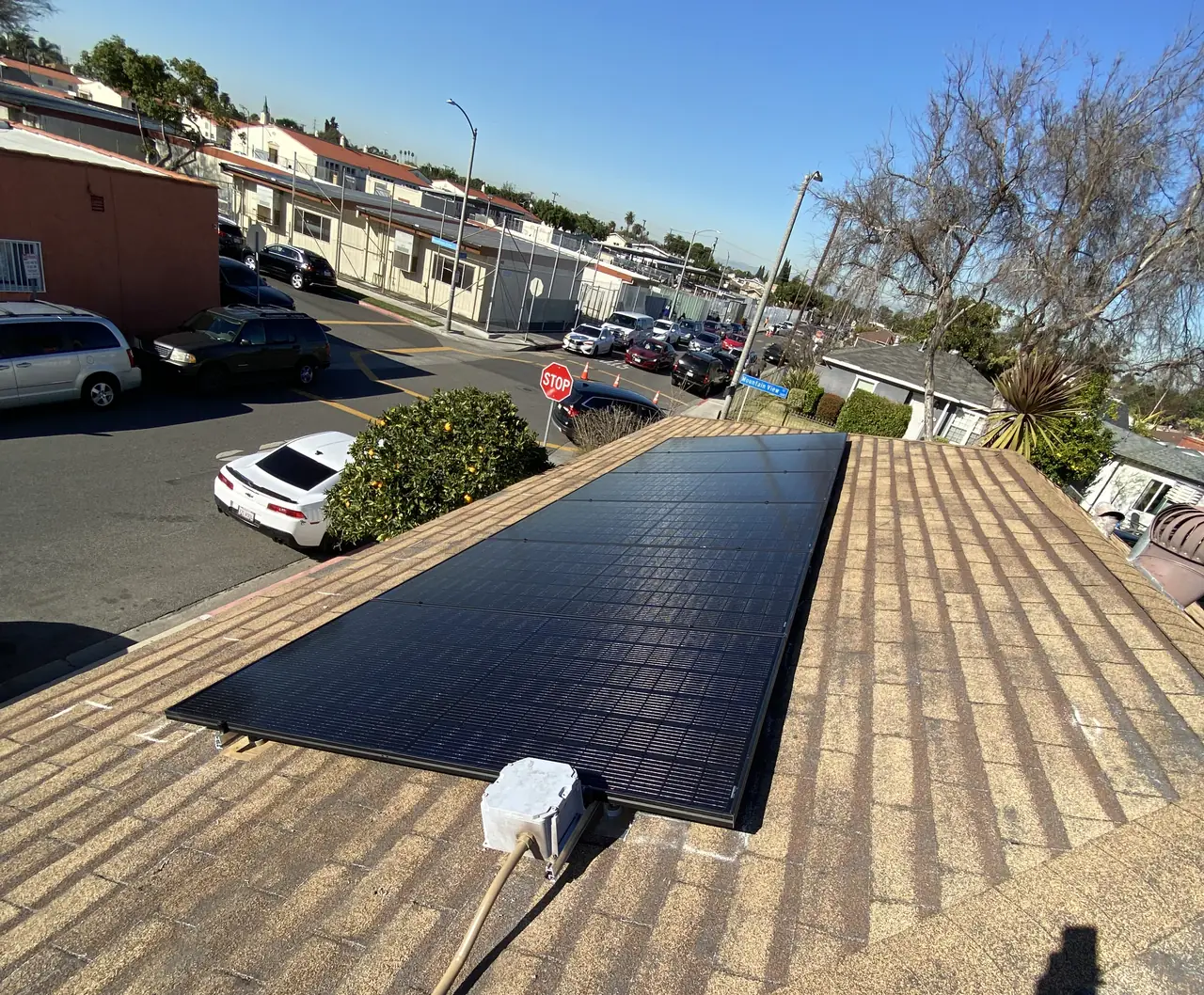
This Long Beach project replaced the main service panel with a 200 A board and the service mast that feeds it, then added eighteen modules with a microinverter under each — 6.66 kW. Cali Energy agreed the conduit route across the elevation on a photograph of the wall before anything was drilled, because a conduit run is permanent, outside and at eye level. The city signed the final on 17 December 2021.
At a glance
- Array
- 18 modules, 18 microinverters — 6.66 kW
- Service
- Main panel replaced with a 200 A board
- Also replaced
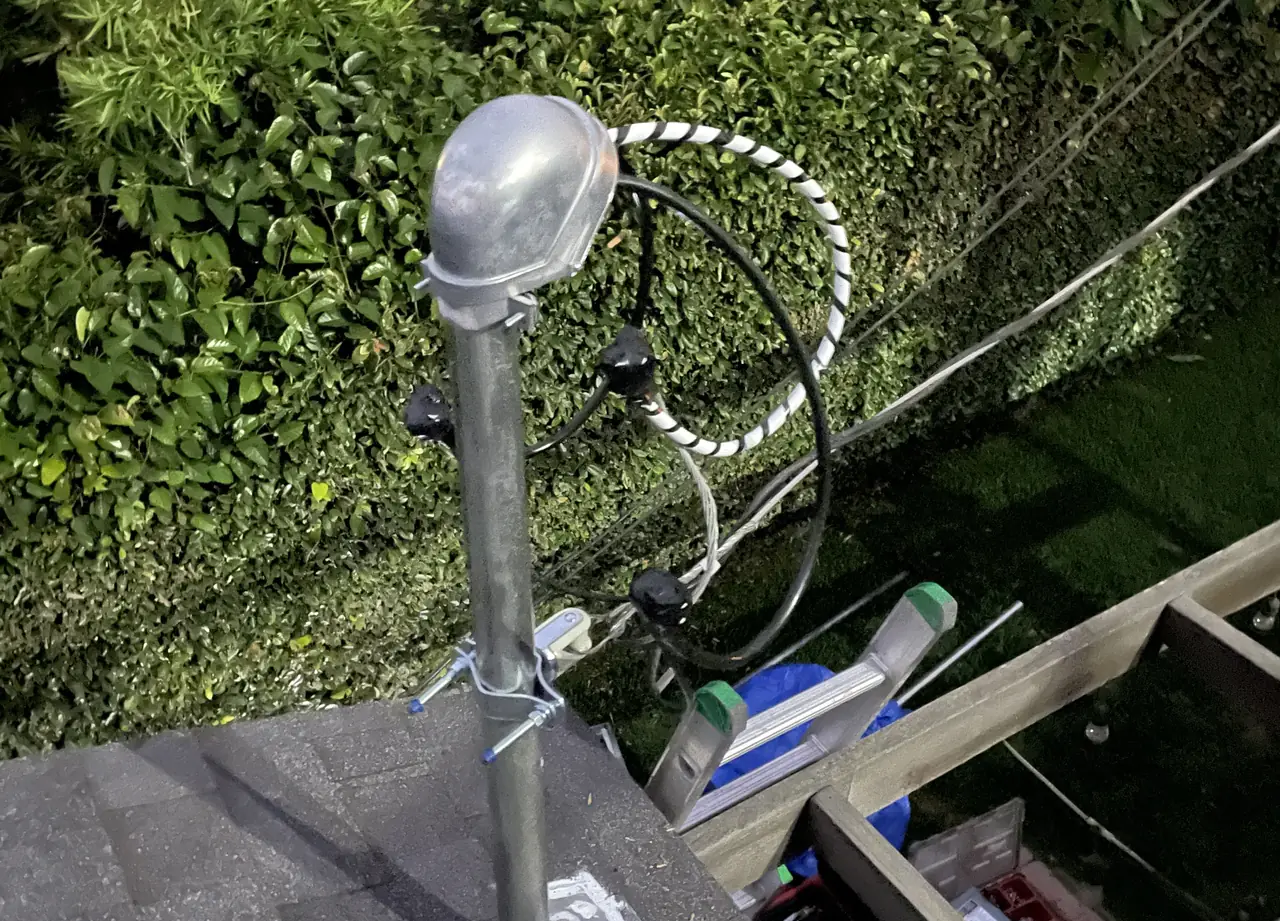
- The service mast carrying the utility's wires
- Conduit route
- Agreed on a photograph of the wall before drilling
- Roof
- Composition shingle
- Final inspection
- Signed 17 December 2021
- Utility / AHJ
- Southern California Edison / City of Long Beach
The story
Ask a homeowner a year after an installation what they notice about it and they will not say the modules. They will say the pipe on the wall. It is the part of a solar system at eye level, on the outside, in the same place every day.
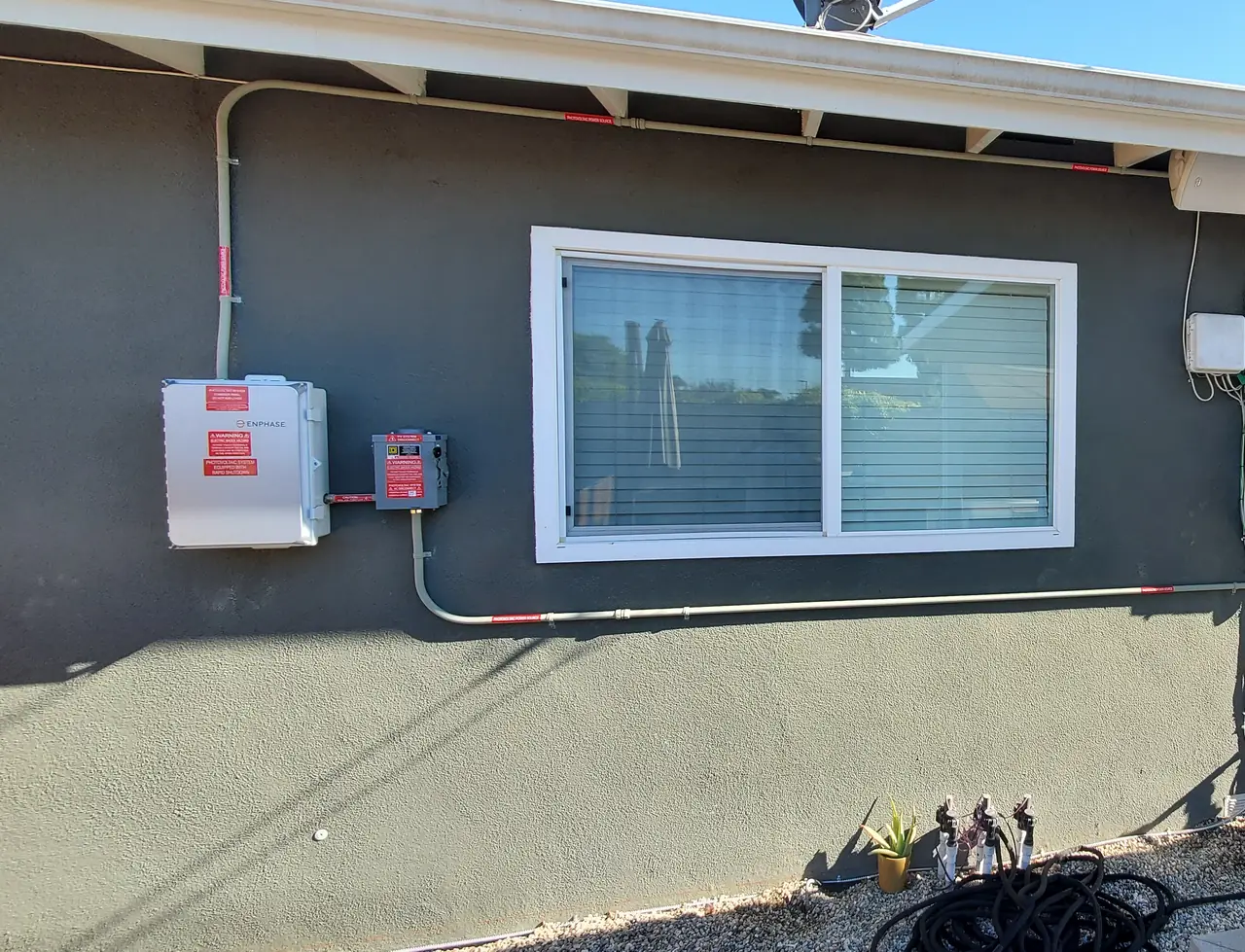
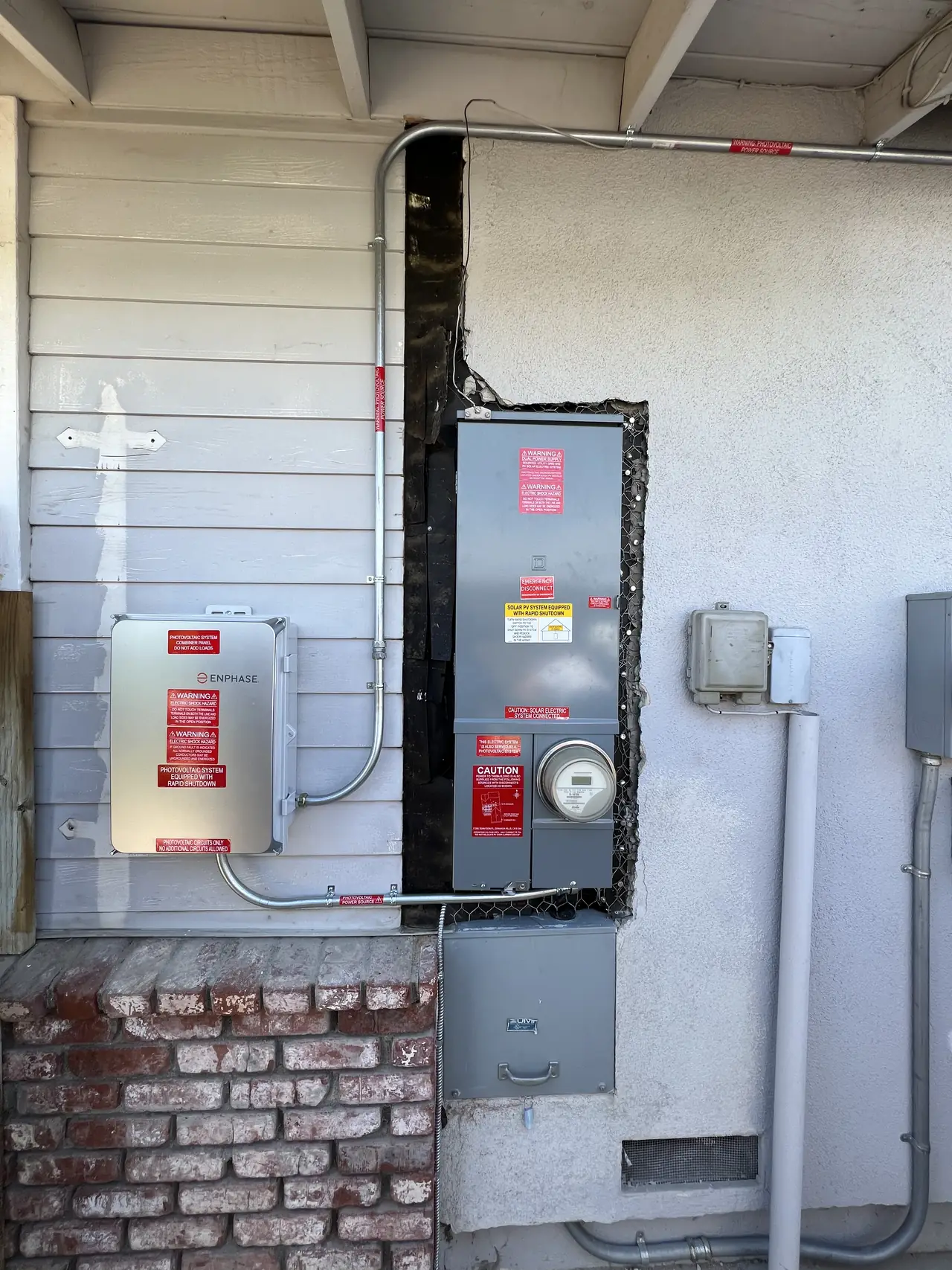
So on this elevation the route was settled before anything was drilled. A photograph of the wall, two candidate runs drawn over it, and a decision about which one the house gets — how far from the window, whether it turns above or below the light, which side of the downpipe it passes. Ten minutes on a picture instead of an afternoon of regret.
The two options are almost never equal. One is shorter and crosses something you look at. The other is longer, costs more conduit and disappears against a corner. Neither is wrong; they are a choice, and the person who lives there is the one who should make it.
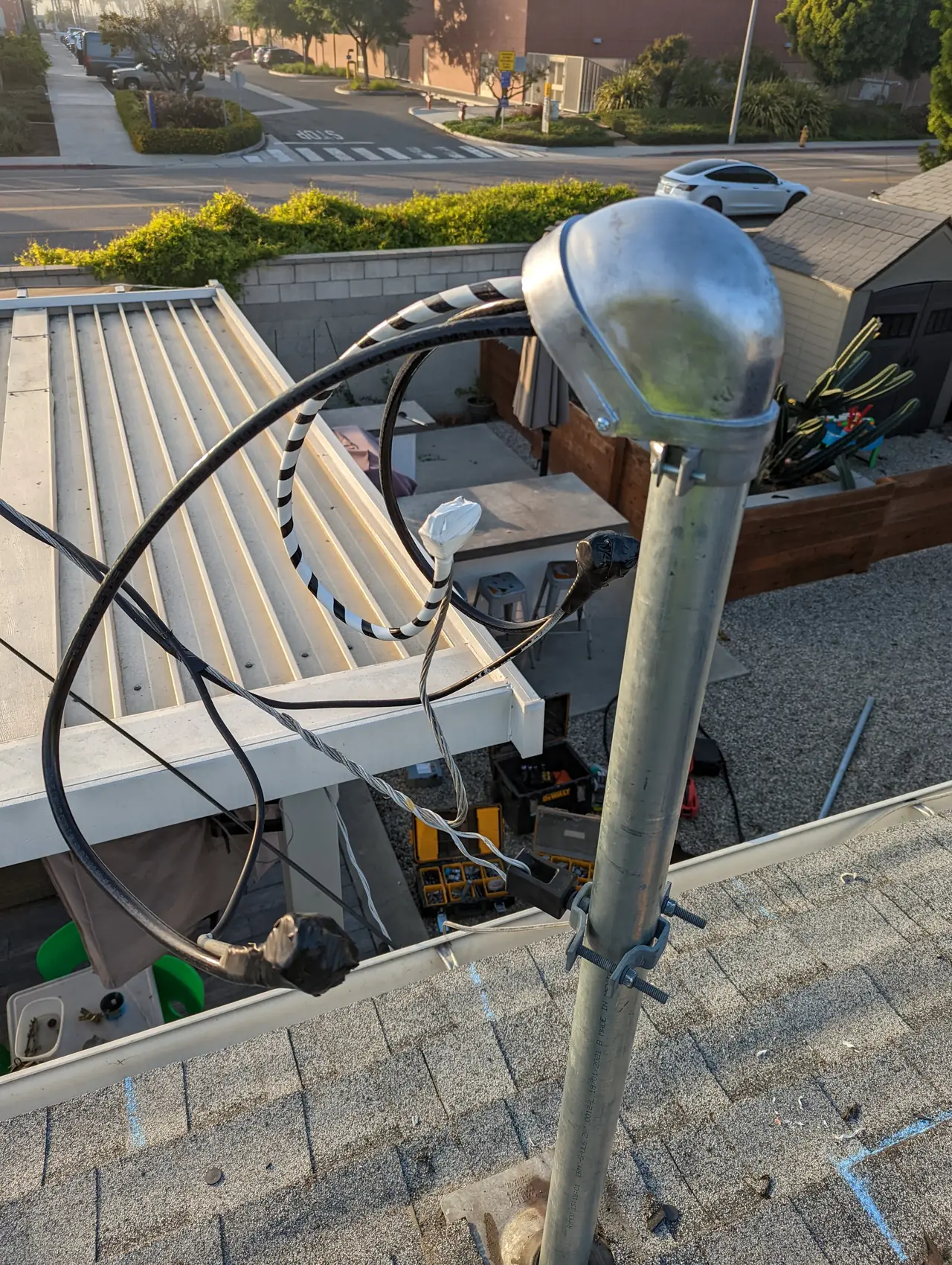
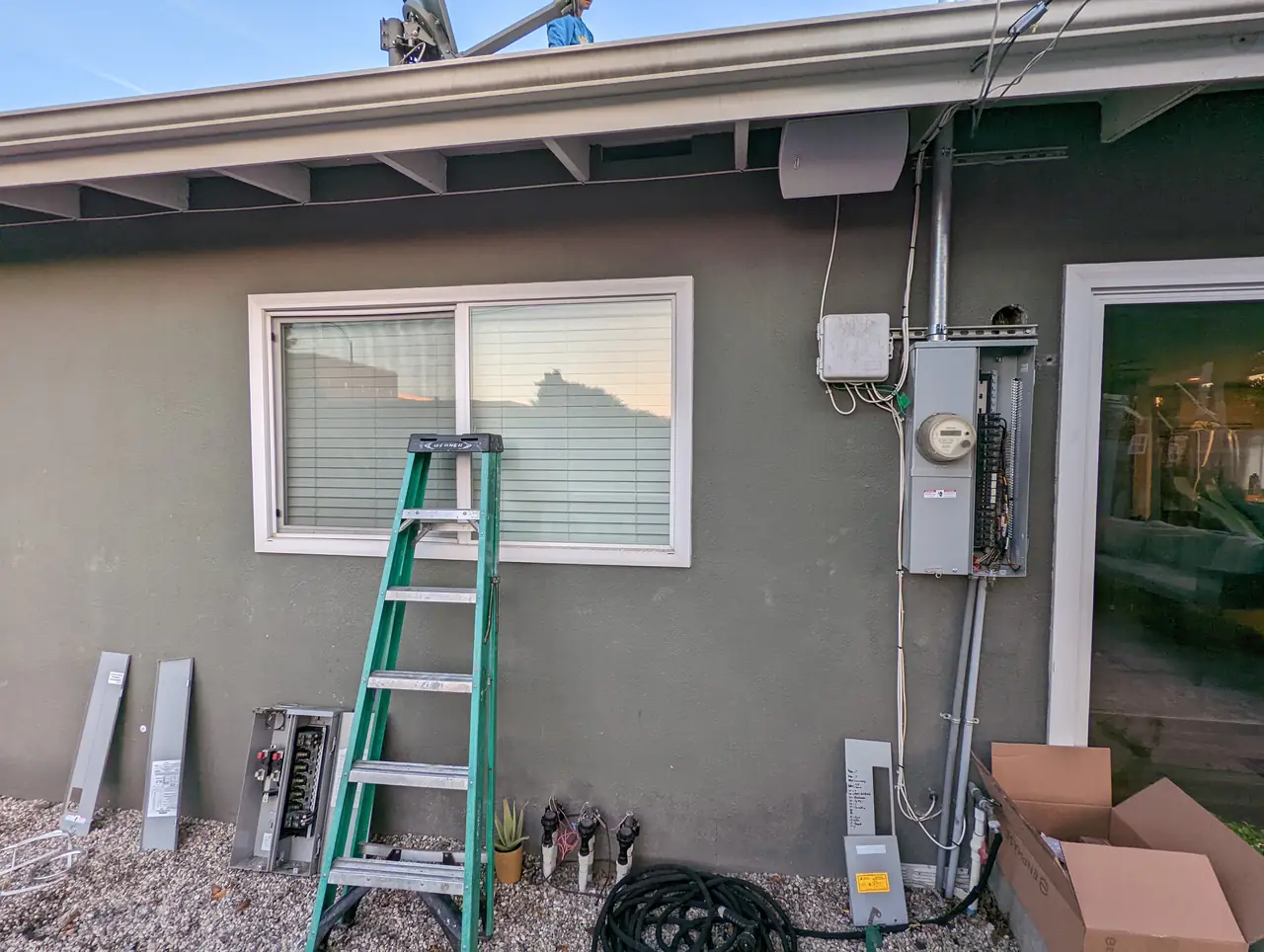
The wall was not the only thing that changed. Eighteen modules need a service that can carry them, and the existing panel could not, so it was replaced with a 200 A board. On an overhead-fed house that decision rarely stops at the panel: the mast above it — the galvanized pipe with the hood on top where the utility's wires land on the building — came out and went back new, with the service conductors re-landed on it.
That is the part of a panel upgrade people do not expect. The new equipment on the wall is the visible half. The half above it involves the utility's own conductors, a day with the house disconnected, and a crew from the utility turning up to reconnect at the pole.
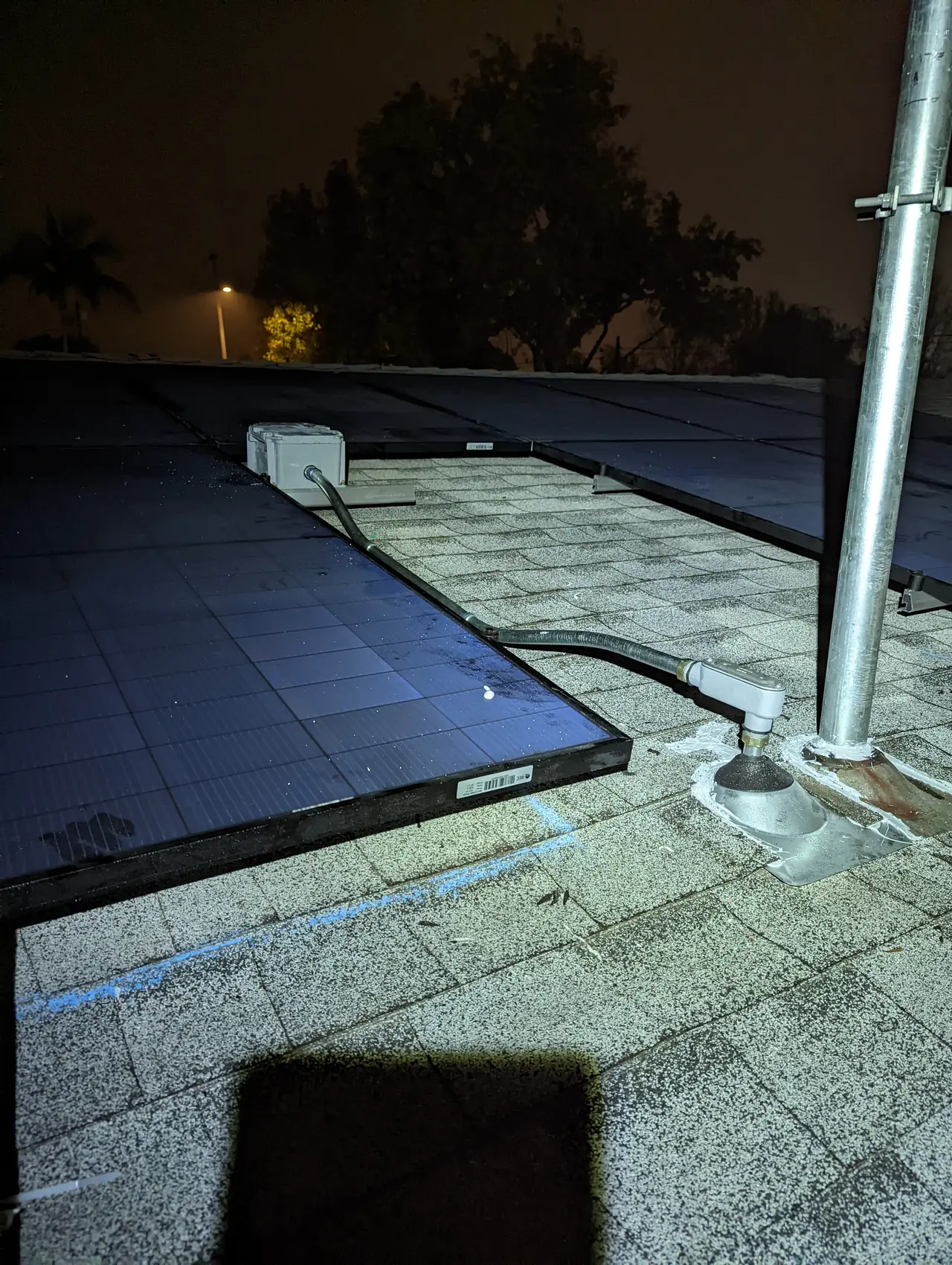
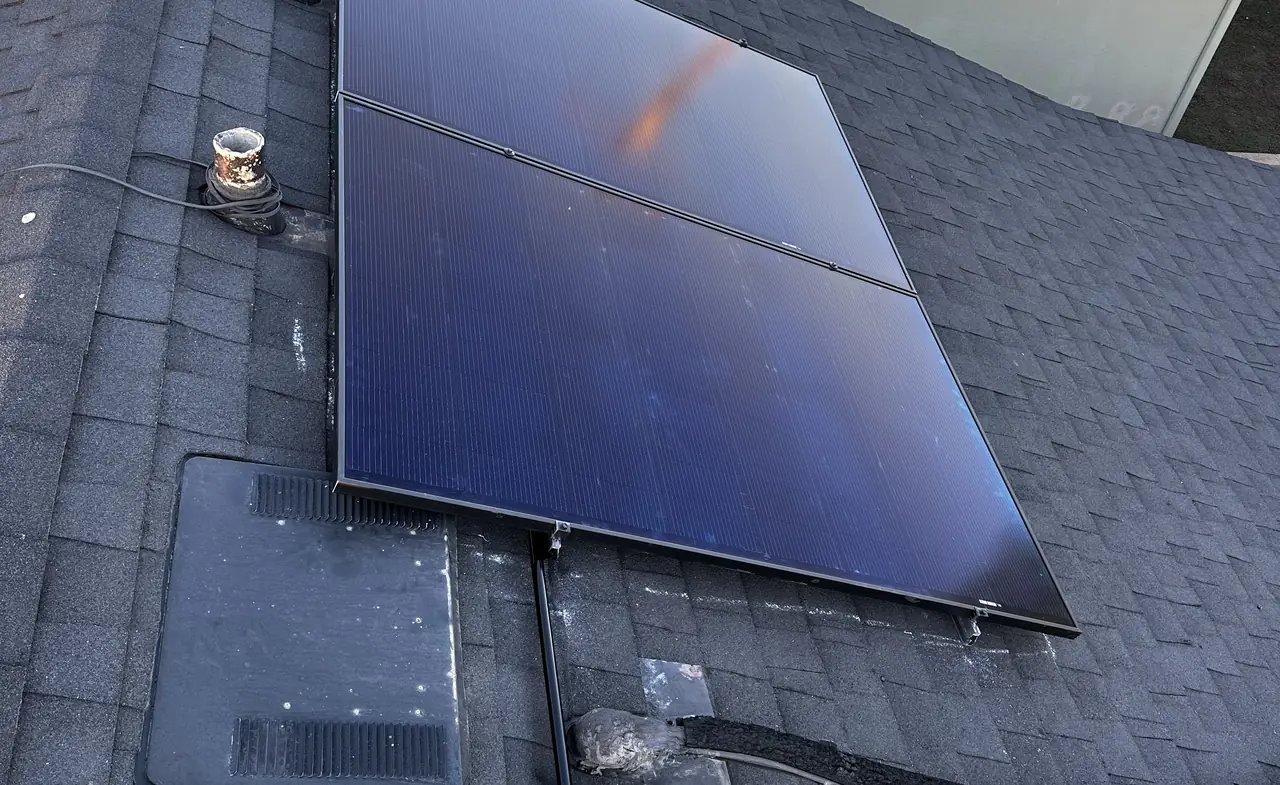
The array went on across December, when the useful light on a wall runs out at four in the afternoon and anything left unfinished is finished in the dark or not at all. The city signed the final on 17 December: eighteen modules, eighteen microinverters, 6.66 kilowatts and a 200 A service.
If your installer has not asked you where the conduit should run, ask them to show you on a photograph before they start. It is the single easiest thing to change before it exists and the most annoying afterwards.
How it ran
| Before drilling | Conduit route drawn over a photograph of the wall |
|---|---|
| Agreed | One of the two candidate runs chosen |
| Service | Main panel replaced with a 200 A board |
| Same work | Service mast replaced and the utility's wires re-landed |
| December 2021 | Eighteen modules and eighteen microinverters installed |
| 17 December 2021 | Final building inspection signed |
Ten minutes on a photograph decided what the wall looks like. The rest of the job decided what the service can carry.
What we did
- Drew the candidate conduit routes over a photograph of the elevation and had one chosen before drilling.
- Replaced the main service panel with a 200 A board sized for the array.
- Replaced the service mast and re-landed the utility's conductors on it.
- Installed eighteen modules with a microinverter under each.
- Built the wall run on the agreed line down to the service equipment.
- Took the work through the city's final inspection, signed 17 December 2021.
System specifications
| Array | 18 modules, 18 microinverters — 6.66 kW |
|---|---|
| Main panel | Replaced, 200 A |
| Service mast | Replaced; utility conductors re-landed |
| Route | Agreed on a photograph before any fixing |
| Wall run | Down the elevation to the service equipment |
| Roof | Composition shingle |
| Final inspection | Signed 17 December 2021 |
| Utility / AHJ | Southern California Edison / City of Long Beach |
Is your project like this one?
- You care what the outside of your house looks like afterwards.
- You have seen conduit run straight across somebody's front elevation.
- Your panel is too small for the array you want.
- Your house is fed from a pole and nobody has mentioned the mast.
- You want to be asked before something permanent is fixed to your wall.
Cali Energy in Long Beach
Long Beach is its own city, not a Los Angeles neighborhood: permits run through the City of Long Beach Building & Safety Bureau, interconnection through Southern California Edison.
When a Long Beach house needs a bigger service to carry solar, the work reaches further than the panel. The mast that brings the utility's wires down to it may have to be replaced too, and the conduit that runs from the array to the new equipment crosses a wall somebody looks at every day.
This installation is on the Long Beach projects page alongside the others, and what the work covers is set out on the Long Beach service area page.
- License and classifications: CSLB #1032379
- Official reference for this process: City of Long Beach — Permit Center
- Official reference for this process: California Energy Commission — solar equipment lists
Frequently asked questions
Can I choose where the conduit runs?
You should be asked. There are usually two sensible routes — a short one that crosses something visible and a longer one that hides against a corner — and they cost different amounts of conduit and labor. Neither is wrong. Deciding it on a photograph of your own wall takes ten minutes and cannot be done once the pipe is fixed.
Does a panel upgrade mean replacing the mast as well?
On an overhead-fed house it often does. The mast is the pipe that brings the utility's wires down to the meter, and new service equipment can mean it no longer suits — in height, in position or in condition. Replacing it adds a day with the house disconnected and a visit from the utility's own crew to reconnect at the pole.
Why did eighteen modules need a 200 A service?
Because the solar breaker has to fit on the busbar alongside everything the house already draws, within what the code allows. Where the existing panel cannot carry it, the panel is the thing that changes rather than the array. Here the service was replaced with a 200 A board and the system came to 6.66 kilowatts across eighteen modules.
Does Cali Energy agree the route with the homeowner in Long Beach?
On any visible elevation, yes — the candidate routes are marked on a photograph of the wall and one is chosen before anything is fixed. Cali Energy installs across Long Beach and treats the outside of the building as part of the job rather than as somewhere the cable happens to end up. License CSLB #1032379.
What this would look like on your roof
Planning solar in Long Beach? Tell us your utility, your roof and what your bill looks like now, and we will model what a system like this would do on your house before you commit to anything.
Or call +1 (323) 844-7777 · Cali Energy, Northridge · CSLB #1032379 (B, C-10, C-39) — design, permits, install and electrical under one licensed contractor.
Related
This timeline reflects this property and this permitting path. Updated September 2026.