

Long Beach, CA · March 2021 · Southern California Edison / City of Long Beach
Nothing under the array touches the shingle
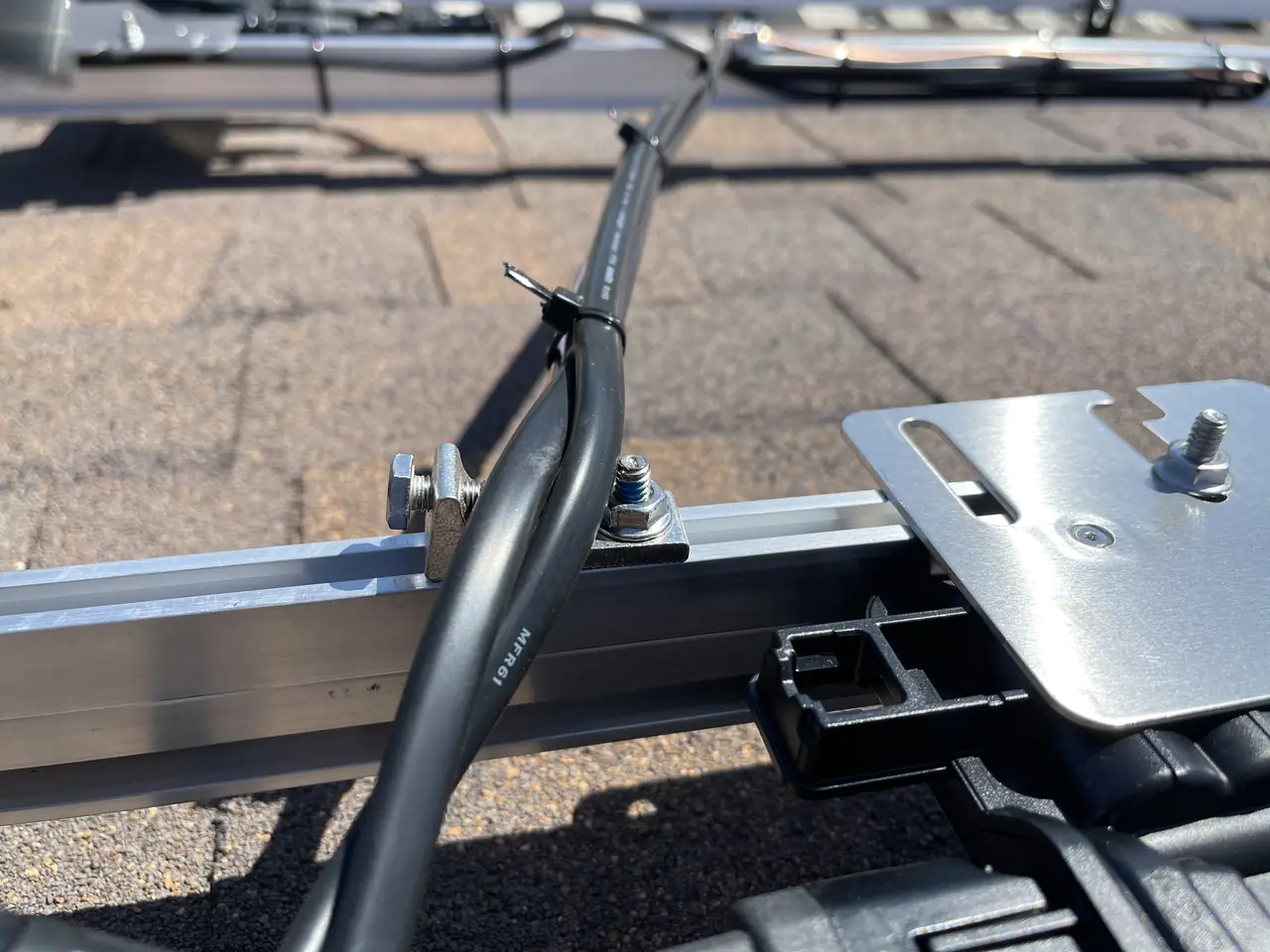
Every cable clipped to the rail, every clip at a spacing, nothing looping down to rest on the roof. It is the least photogenic hour of the installation and the one that ages best.
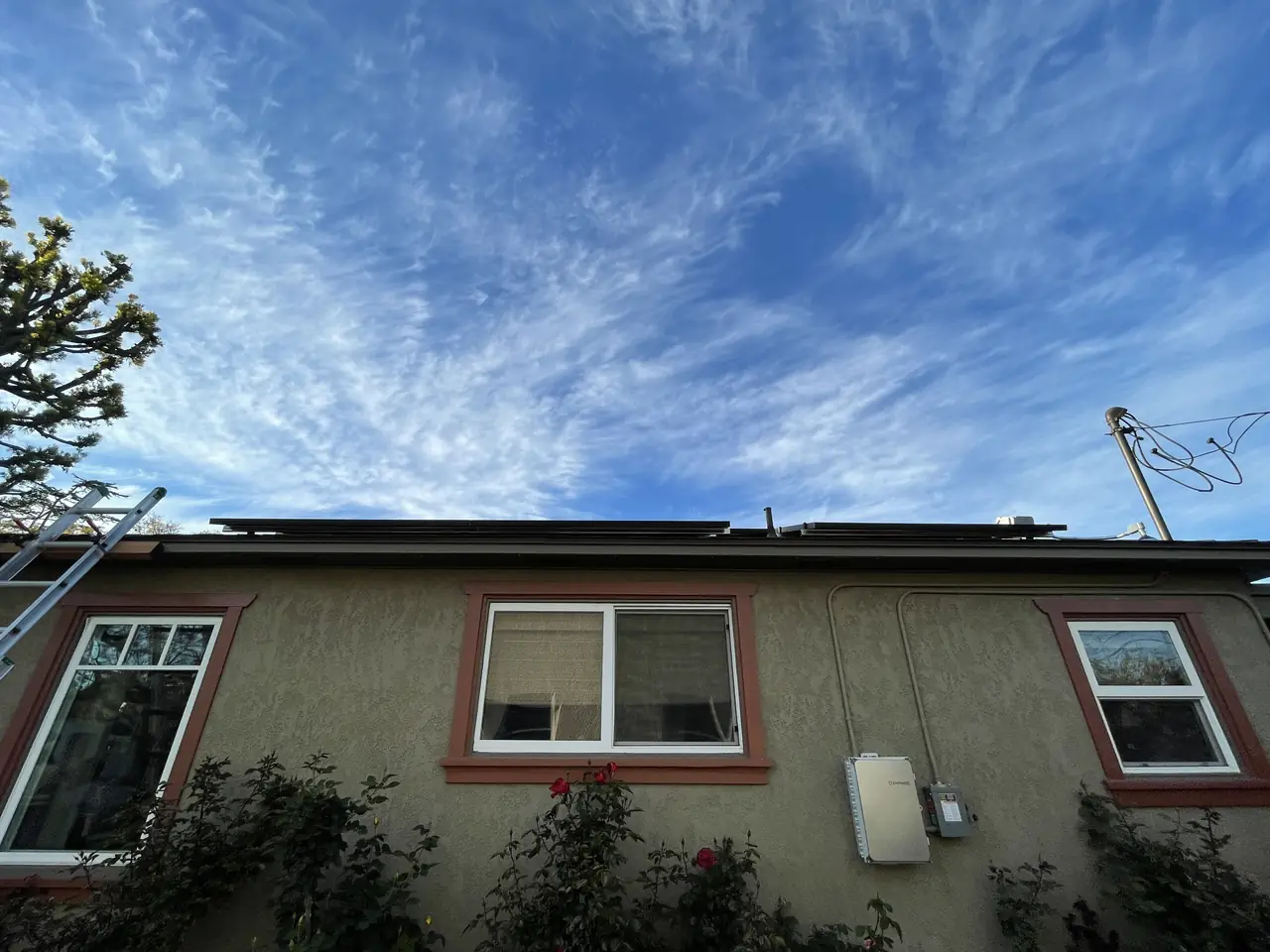
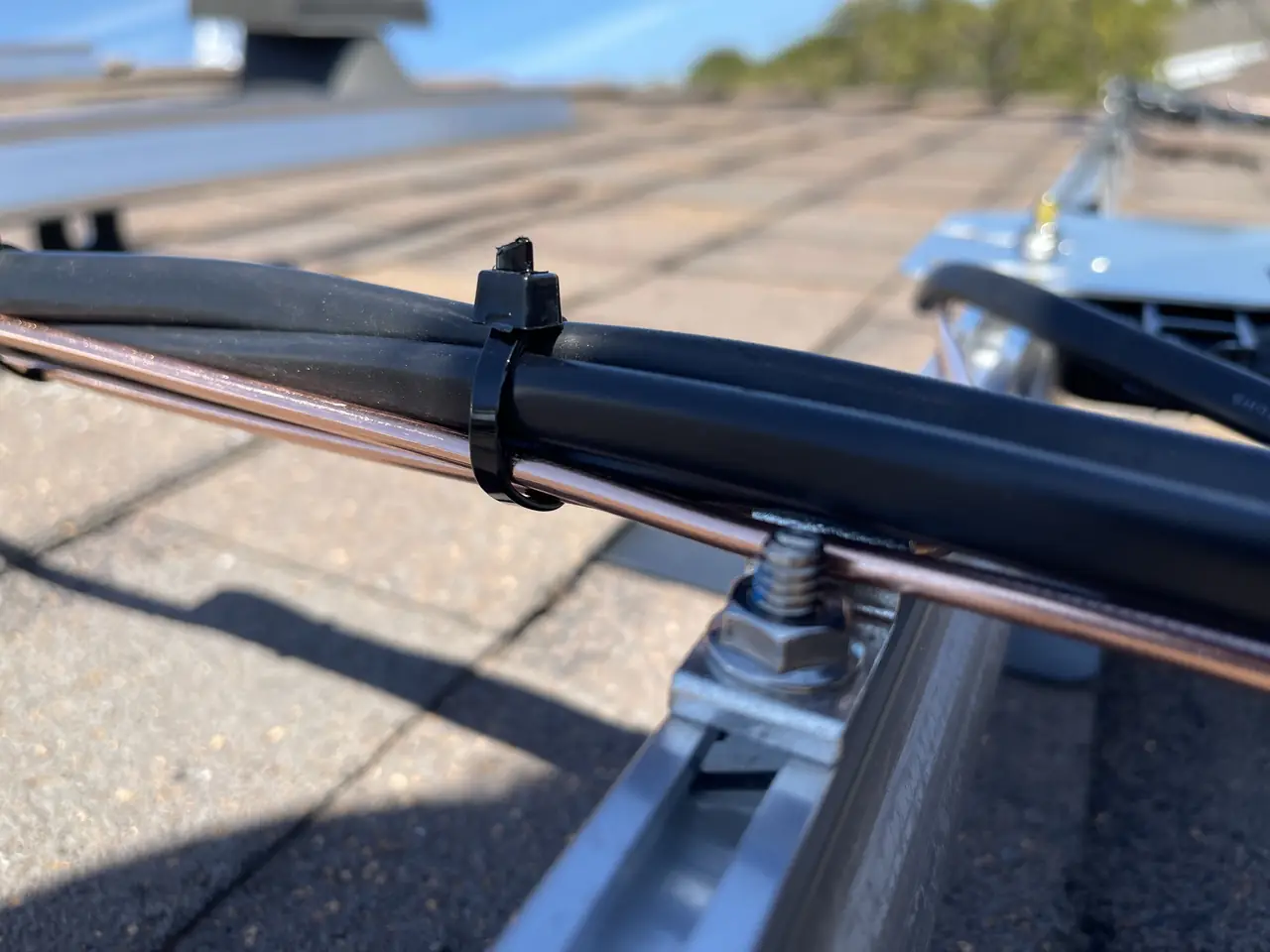
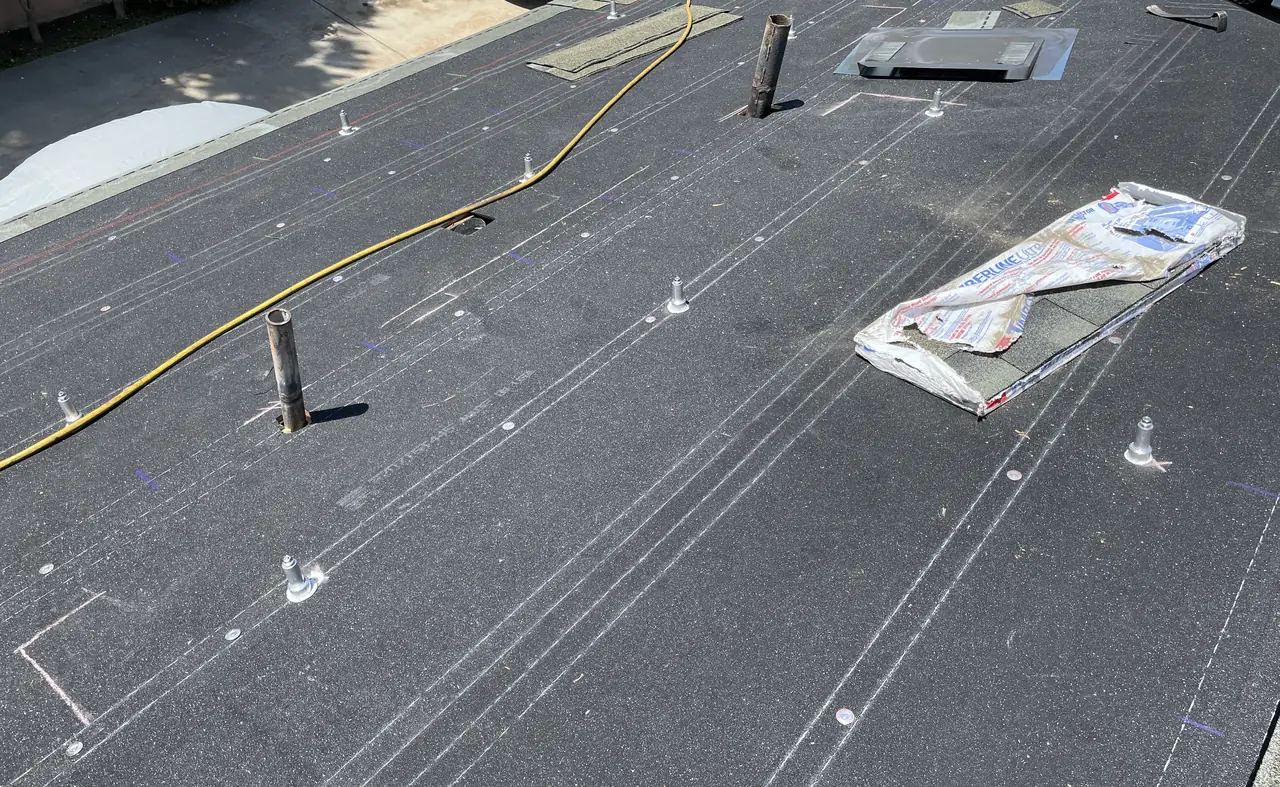
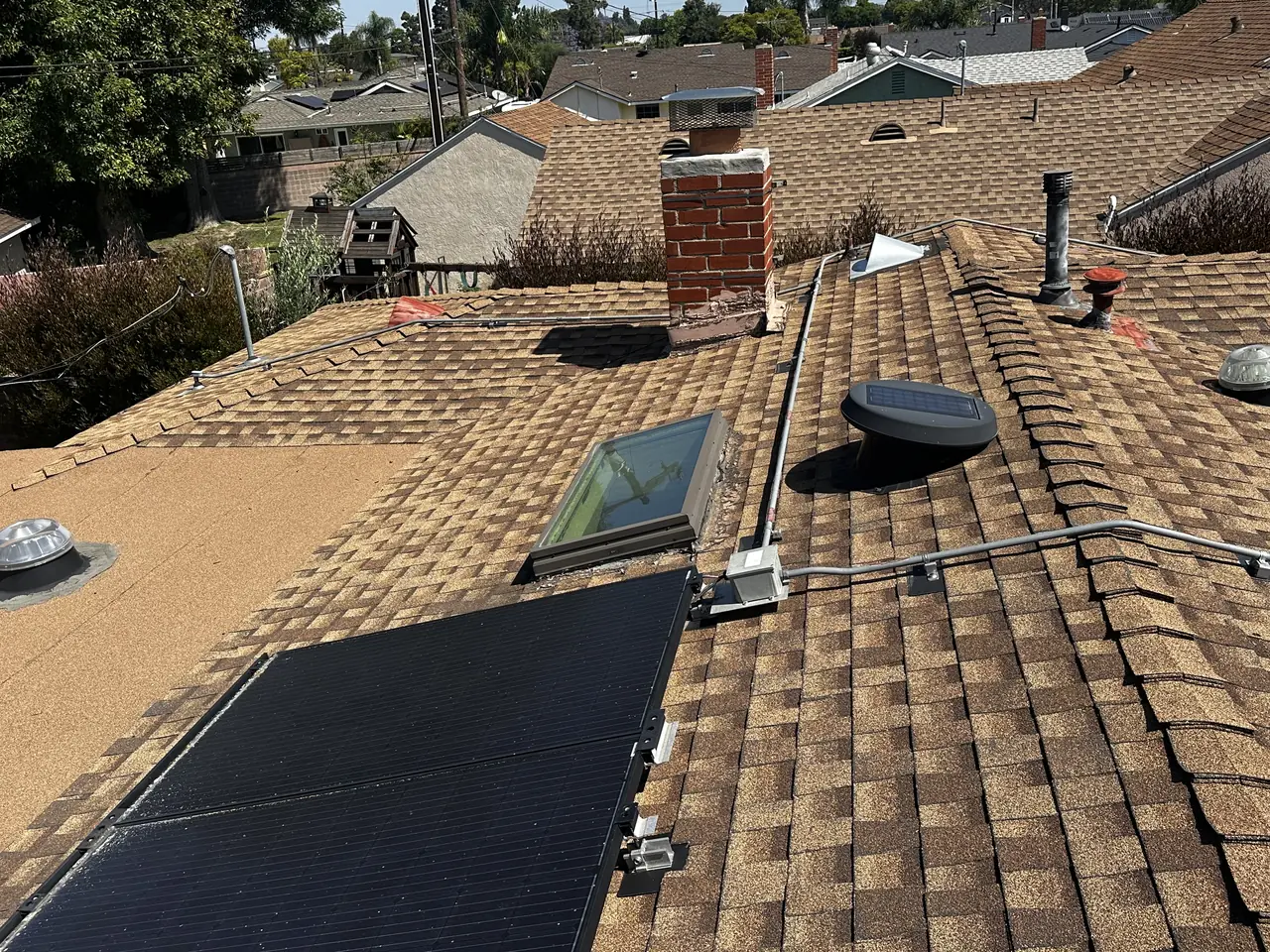
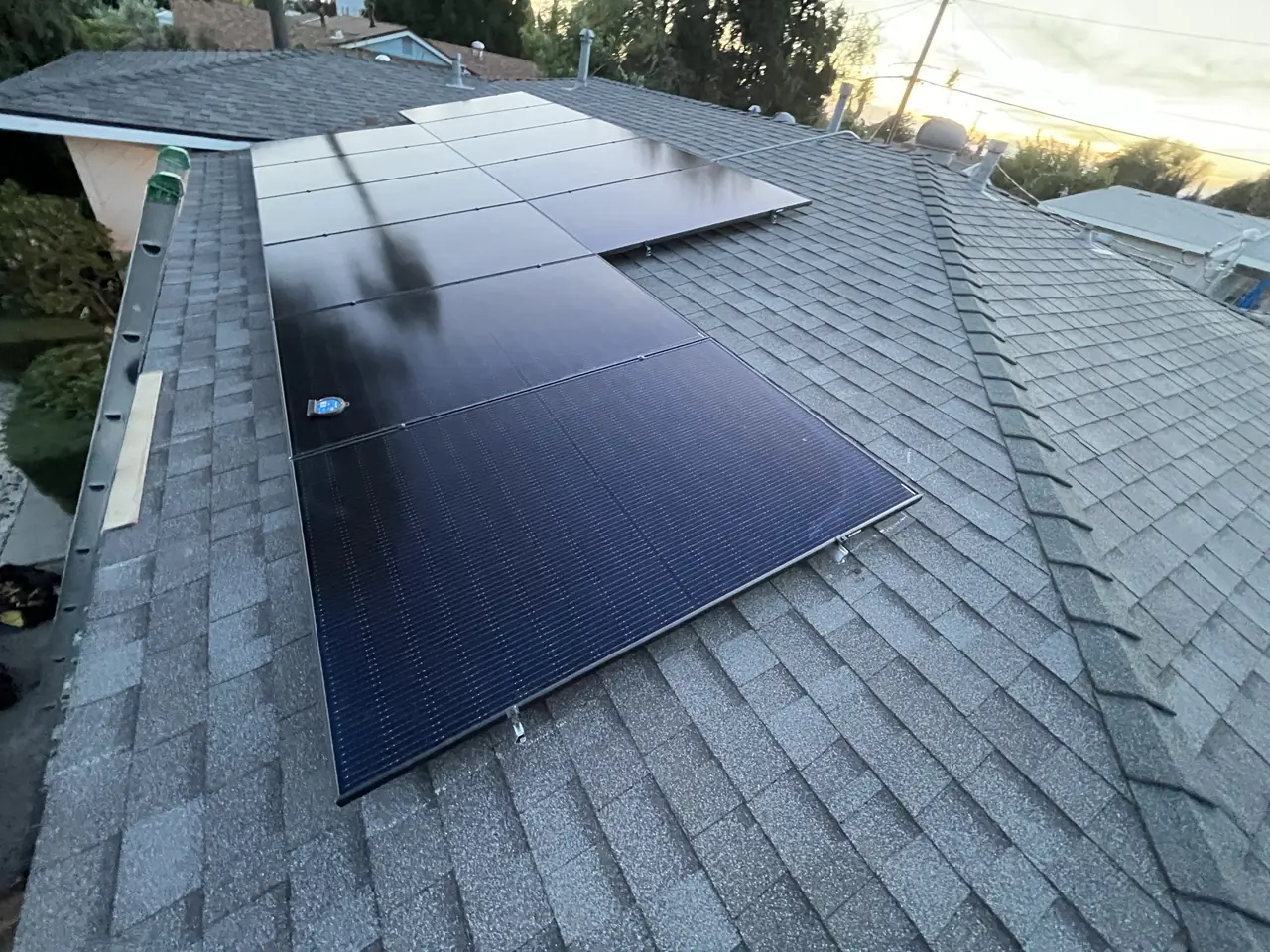
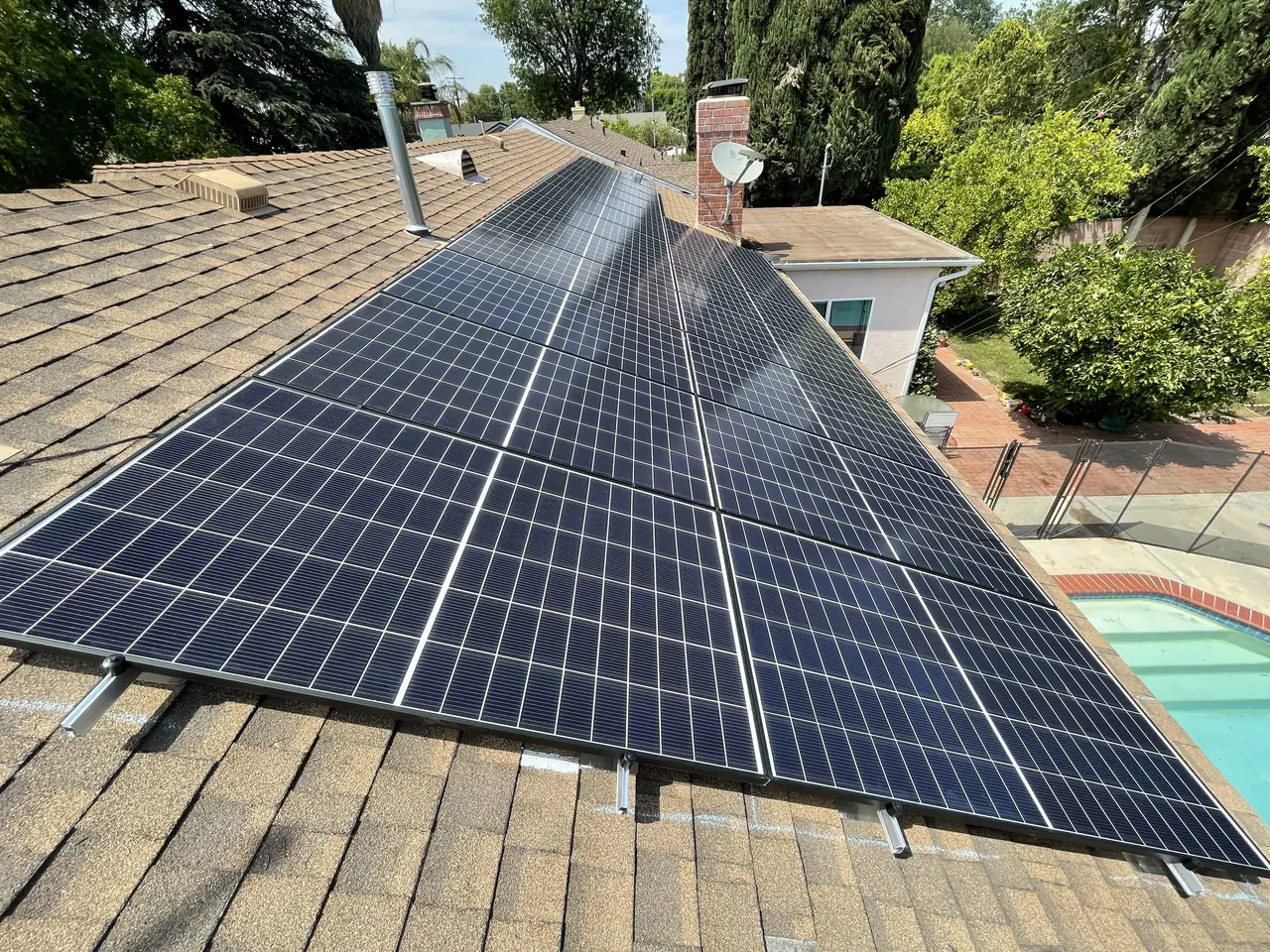
Under this Long Beach array every conductor is clipped to the racking rather than left resting on the roof: the module leads dressed along the rails, the grounding conductor run and bonded at each point, and nothing hanging low enough to touch the shingle. Cali Energy does this because a cable lying on a roof abrades, holds water and gives rodents something to find. The system is LG 360 W modules on composition shingle, finaled in March 2021.
At a glance
- Modules
- LG 360 W
- Roof
- Composition shingle
- Cable management
- Every conductor clipped to the racking
- Grounding
- Bonded conductor run along the rails
- Nothing
- Left resting on the covering
- Final inspection
- Passed 30 March 2021
- Utility / AHJ
- Southern California Edison / City of Long Beach
The story
Every module comes with two leads and every one of them has to end up somewhere. On a finished array you cannot see where, which is why this is the part of the work that gets skipped: nobody is going to look, and the system produces exactly the same on the day either way.
What happens on the day it is skipped is nothing. What happens afterwards has three parts, and all three are slow.
A cable resting on composition shingle abrades. The surface is granulated — it is designed to be rough — and a conductor that moves against it a few millimeters in every thermal cycle is being sanded. Second, a cable lying flat holds water against the roof underneath it, and anything that keeps a roof wet in one line shortens it there first. Third, a loop of cable off the surface is a place for rodents to get a grip and start chewing, which is a common cause of a solar fault that has nothing to do with the solar.
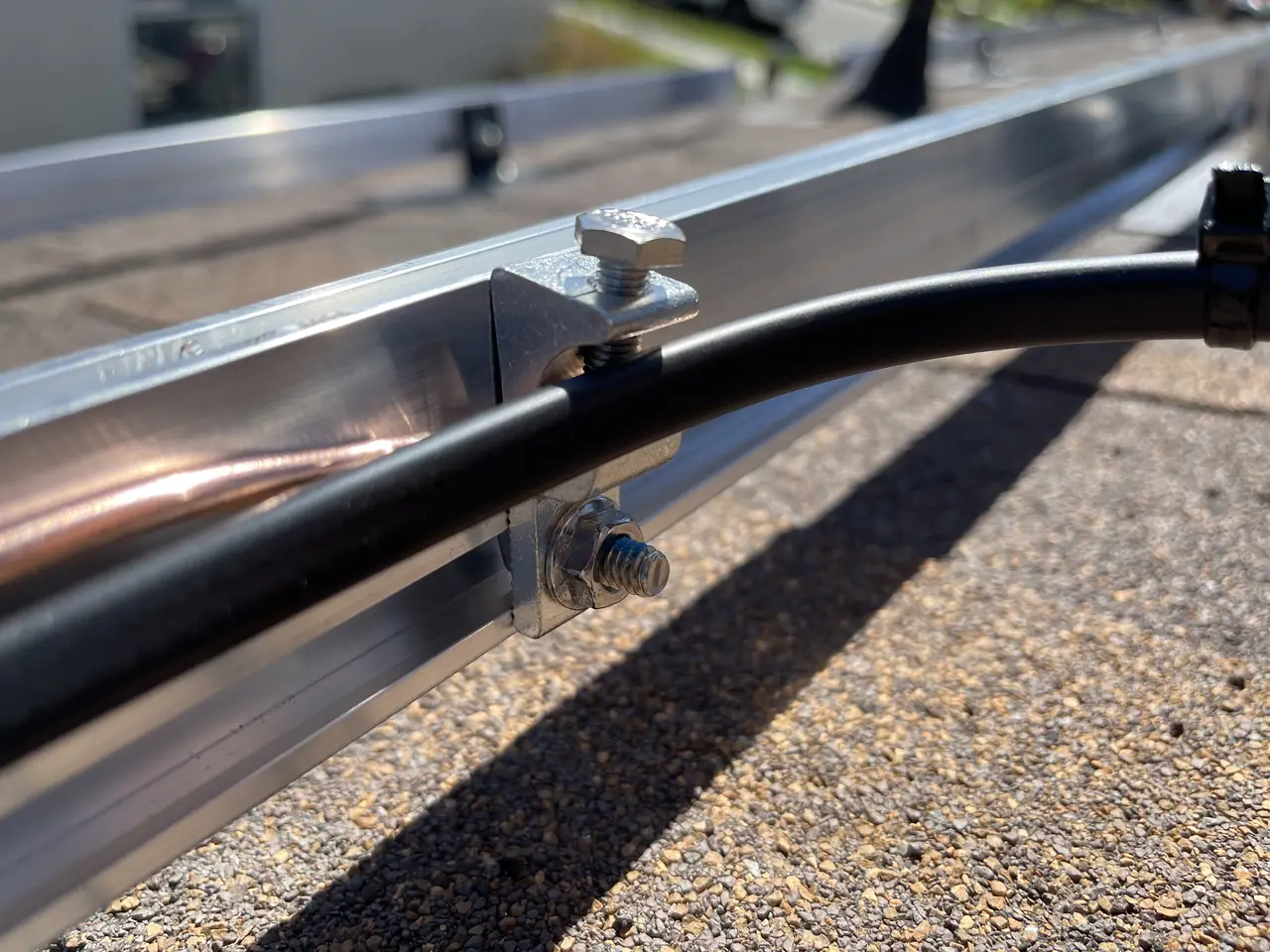
So it gets clipped. The leads are dressed along the rails and held at a spacing, the grounding conductor is run the same way and bonded at each point, and nothing is left hanging low enough to reach the shingle. It takes an hour on a small array and it is invisible the moment the last module is set.
The final passed at the end of March. An inspector does not measure this with a tape and there is no line on a permit for it — it is simply the difference between an array that is fine in year ten and one that has an intermittent fault nobody can find.
If you want to judge an installation from the ground, you cannot. But you can ask for a photograph taken under the modules before they went on, and anybody who did this properly will be glad to send one.
How it ran
| Mounting | Flashed mounts and rails set on the shingle |
|---|---|
| Wiring | Module leads dressed along the rails and clipped at a spacing |
| Grounding | Bonded conductor run along the rails and landed at each point |
| Check | Nothing left hanging low enough to touch the covering |
| 30 March 2021 | Final inspection passed |
An hour of work that is invisible the moment the last module goes down.
What we did
- Set the flashed mounts and rails on the composition shingle.
- Dressed every module lead along the rails and clipped it at a spacing.
- Ran and bonded the grounding conductor along the racking.
- Checked that no conductor was left in contact with the roof covering.
- Passed the final inspection on 30 March 2021.
System specifications
| Modules | LG 360 W |
|---|---|
| Roof | Composition shingle |
| Mounts | Flashed, fixed to the rafters |
| Cable management | Leads clipped to the rails at a spacing |
| Grounding | Bonded conductor along the rails |
| Clearance | No conductor in contact with the covering |
| Final inspection | Passed 30 March 2021 |
| Utility / AHJ | Southern California Edison / City of Long Beach |
Is your project like this one?
- You want to know what is under the modules you cannot see.
- You have had an intermittent solar fault nobody can locate.
- You have rodents in the neighborhood and a roof they can reach.
- You are comparing two quotes that look identical on paper.
- You want a photograph of the wiring before the modules go on.
Cali Energy in Long Beach
Long Beach is its own city, not a Los Angeles neighborhood: permits run through the City of Long Beach Building & Safety Bureau, interconnection through Southern California Edison.
Cable management is the part of a solar installation nobody photographs and no inspector measures with a tape. It is also the part that decides whether the system is still working, unmarked and rodent-free after ten Long Beach summers.
This installation is on the Long Beach projects page alongside the others, and what the work covers is set out on the Long Beach service area page.
- License and classifications: CSLB #1032379
- Official reference for this process: California Energy Commission — solar equipment lists
- Official reference for this process: City of Long Beach — Permit Center
Frequently asked questions
Why does it matter if a cable touches the roof?
Three reasons, all slow. Composition shingle is granulated and abrades a conductor that moves against it through every thermal cycle. A cable lying flat holds water against the covering underneath it. And a loop off the surface gives rodents something to grip and chew, which is a common cause of solar faults that have nothing to do with the solar.
Will an inspector check the cable management?
Not with a tape, and there is no line for it on a permit. It is one of the parts of an installation that depends entirely on whether the crew does it when nobody is watching. That is precisely why it is worth asking for a photograph taken under the modules before they were set.
How long does it take to do properly?
About an hour on a small array — dressing the leads along the rails, clipping them at a spacing, running and bonding the grounding conductor the same way. It is invisible from the moment the last module goes down, which is the whole reason it gets skipped on jobs that are being hurried.
Does Cali Energy photograph the wiring in Long Beach?
Yes — the under-module work is photographed before the array is closed up, so there is a record of what is under there for whoever opens it next. Cali Energy installs across Long Beach and will send those photographs on request. License CSLB #1032379.
What this would look like on your roof
Planning solar in Long Beach? Tell us your utility, your roof and what your bill looks like now, and we will model what a system like this would do on your house before you commit to anything.
Or call +1 (323) 844-7777 · Cali Energy, Northridge · CSLB #1032379 (B, C-10, C-39) — design, permits, install and electrical under one licensed contractor.
Related
This timeline reflects this property and this permitting path. Updated September 2026.