

Granada Hills, CA · November – December 2025 · LADWP / LADBS
The array did not fit the panel, so the main breaker got smaller.
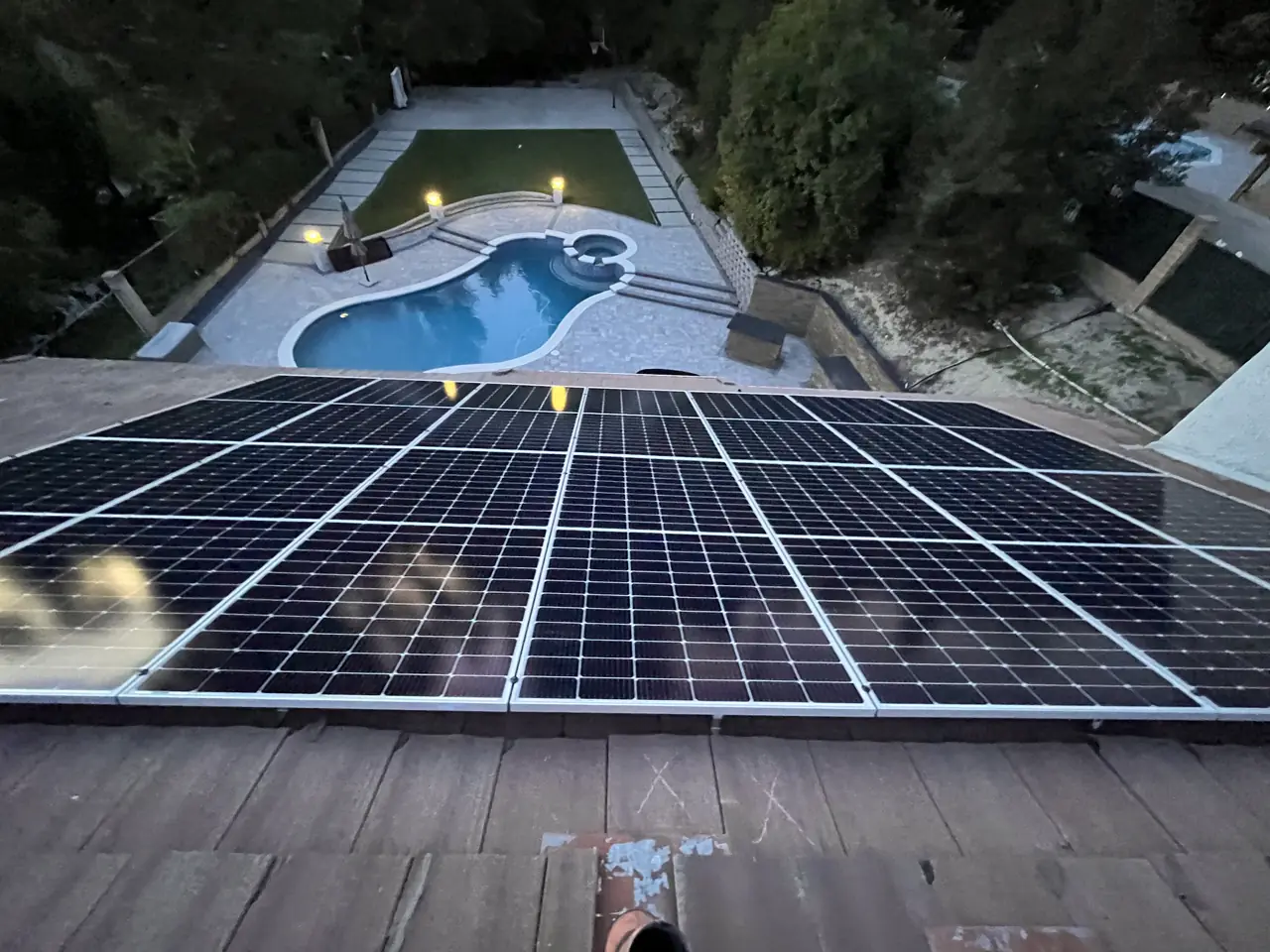
Thirty-one modules, a 60-amp solar breaker and a service panel that could not legally carry both. The fix runs backwards from what people expect, and it comes with a permit of its own.
A grid-tied array back-feeds the panel through a breaker of its own, so current arrives from two ends at once. The electrical code caps the sum: the main breaker plus the solar breaker must not exceed 120 percent of the busbar rating. When the sum is too high there are three ways out — a smaller array, a bigger panel, or a smaller main breaker. The third is usually much the cheapest and the one people have never heard of. Here the main came down to 175 amps and the array went in on a 60-amp breaker.
At a glance
- Modules
- 31 × 445 W
- Inverter
- String inverter
- Solar breaker
- 60 A
- Main breaker
- De-rated to 175 A
- Permits
- Two — solar and the de-rate
- Roof
- Concrete tile, several planes
- Installed
- 1 December 2025
- Utility / AHJ
- LADWP / LADBS
The story
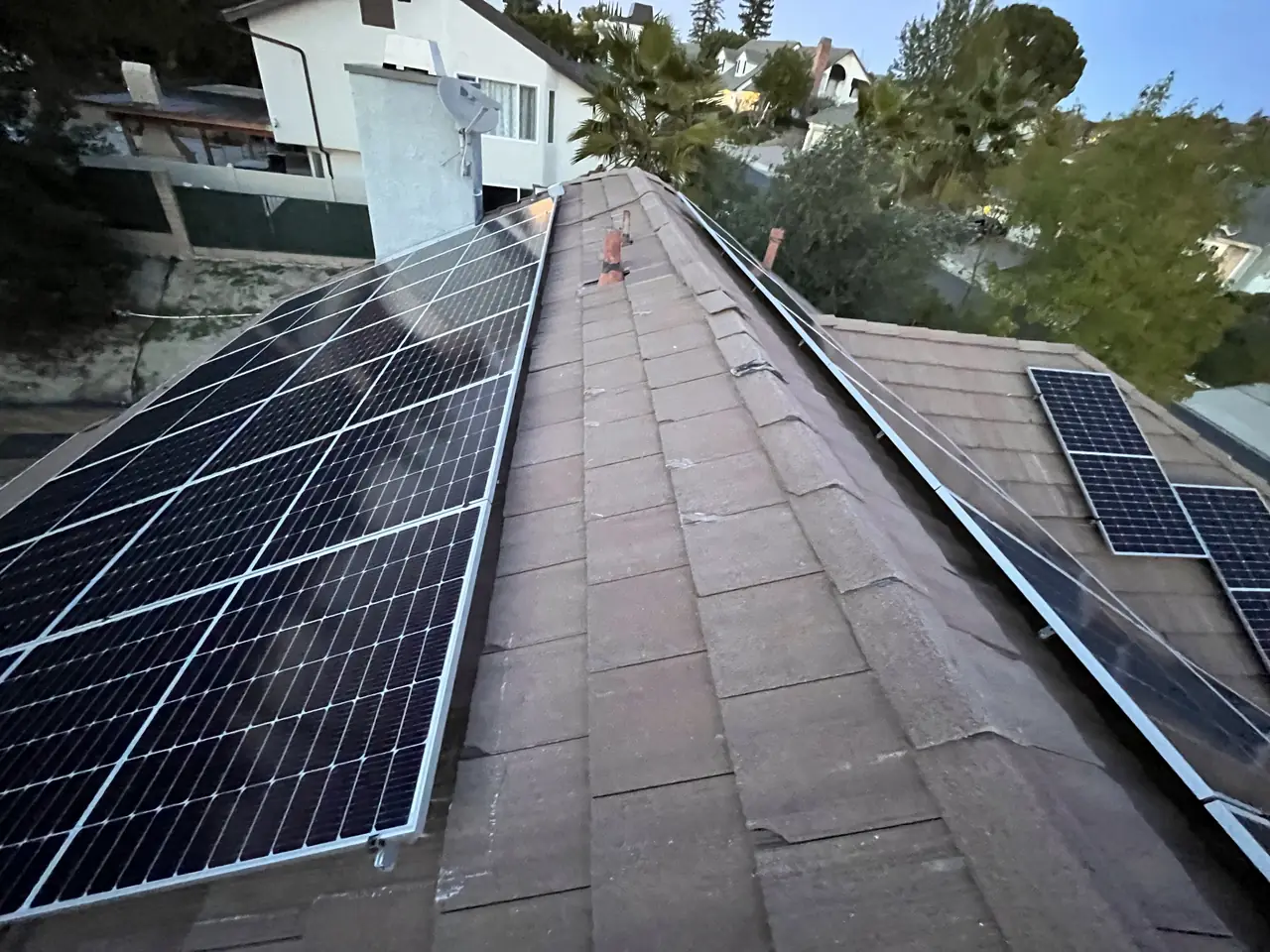
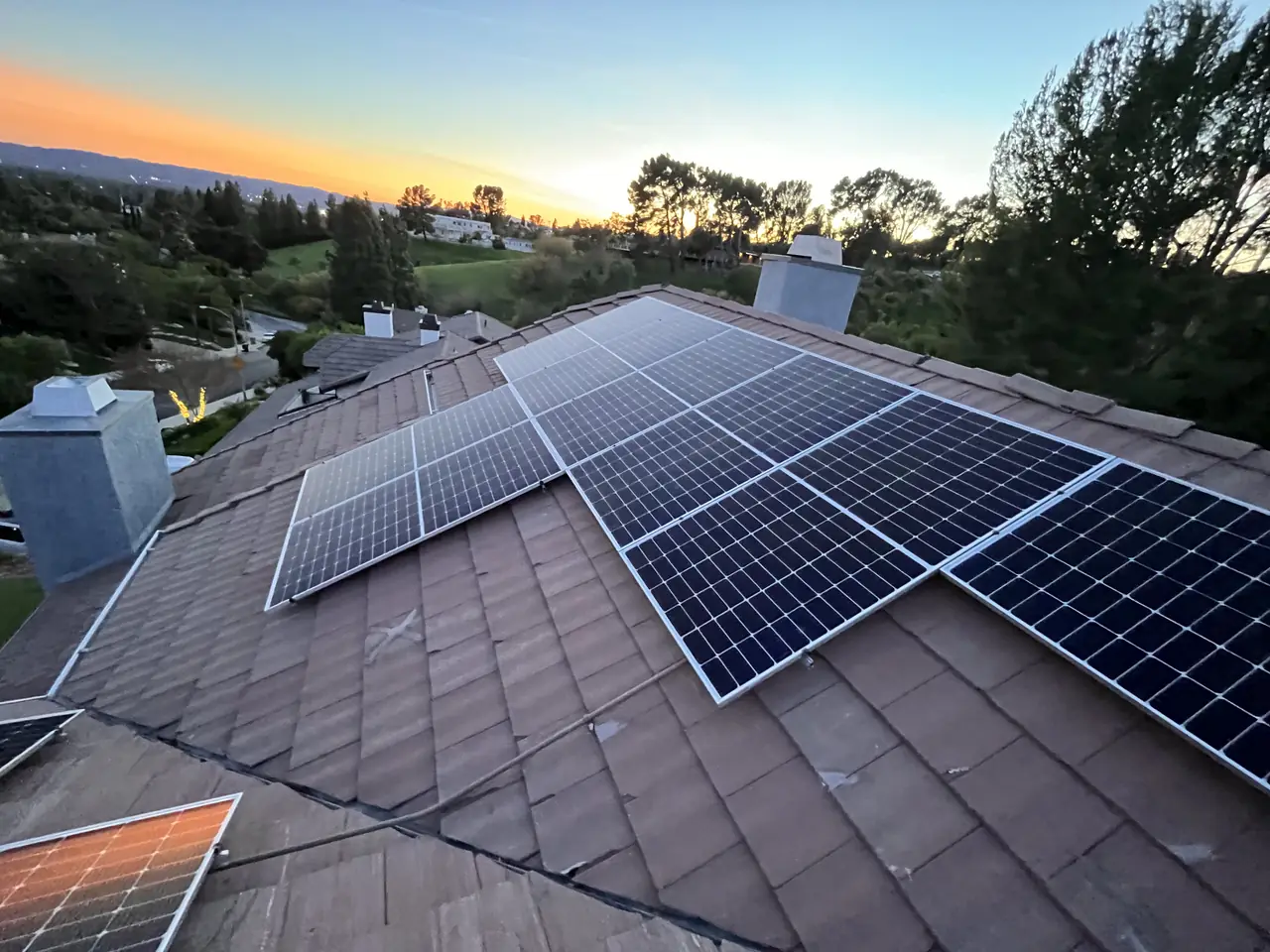
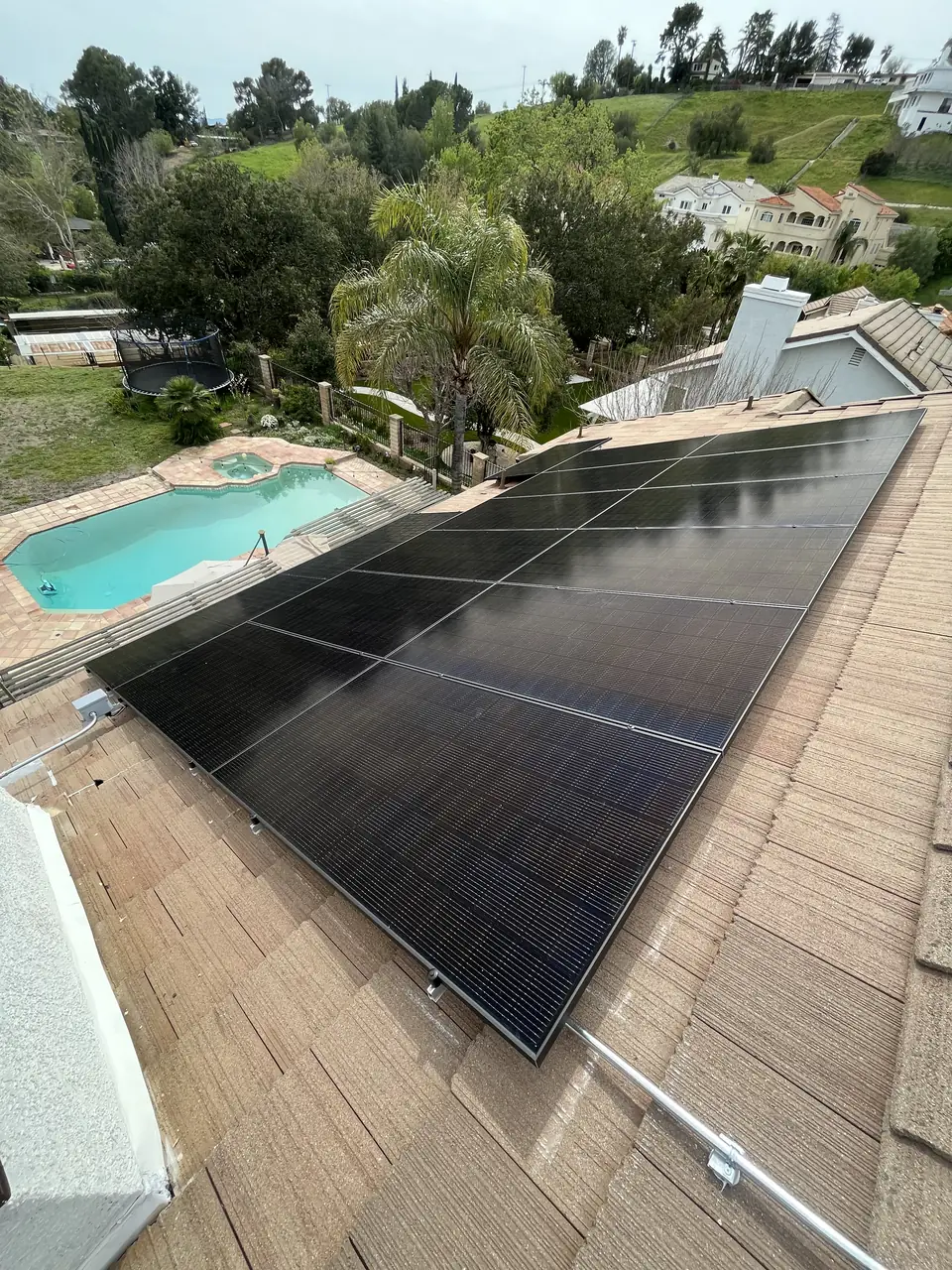
Thirty-one modules is a lot of module for one house, and the thing that nearly stopped it was not the roof. This roof is concrete tile across half a dozen planes and it had area to spare. What nearly stopped it was a strip of metal inside the service panel.
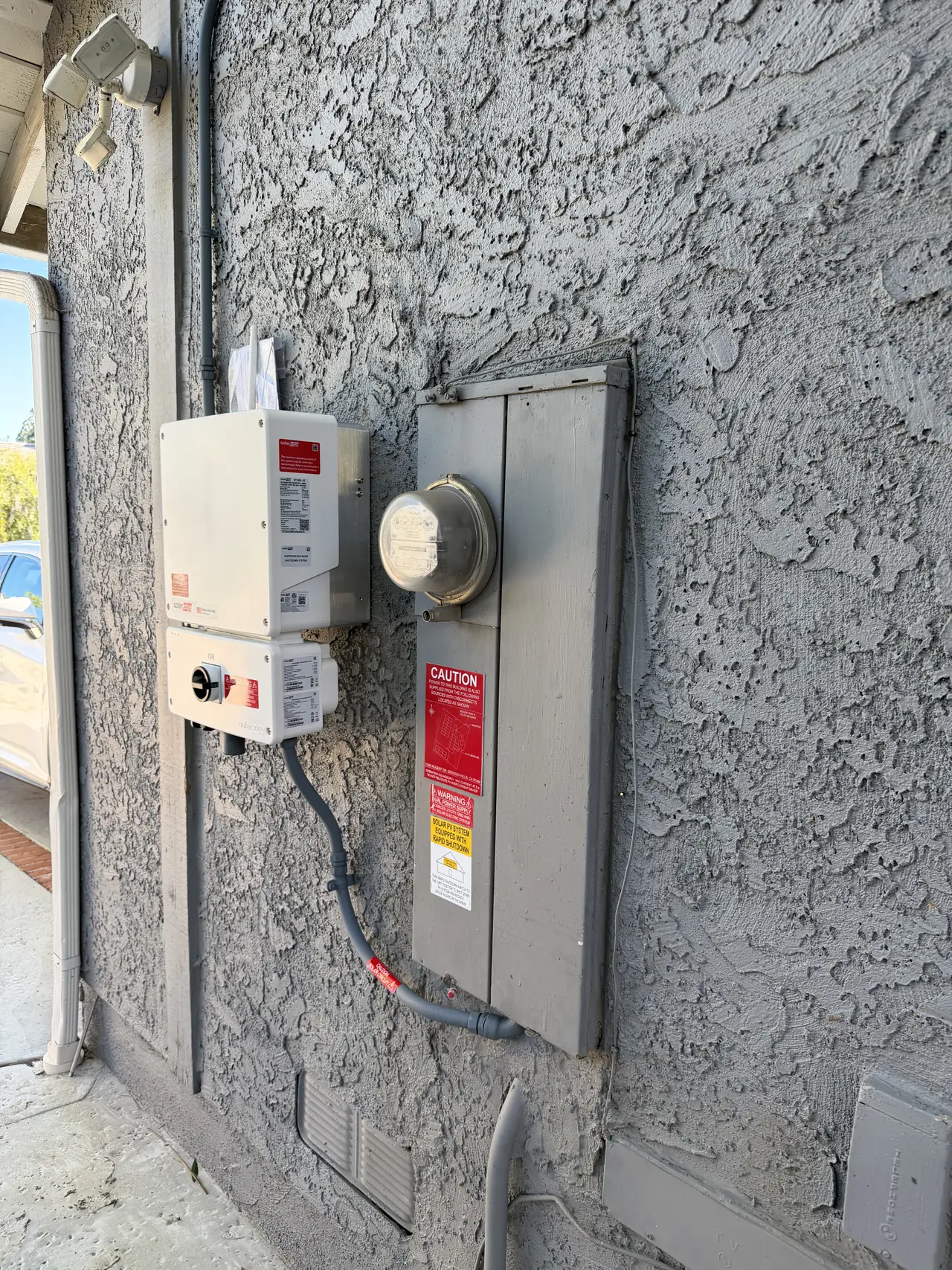
Here is the mechanism, because it is worth understanding before anybody quotes you. In an ordinary house, power arrives at the busbar from one place: the utility, through the main breaker. Add solar and it arrives from two — the utility at one end and the array at the other, through its own breaker. The busbar has to carry whatever both ends can deliver, so the code caps the sum. The main breaker and the solar breaker together may not exceed 120 percent of what the busbar is rated for.
Put numbers on it. A 200-amp busbar gives you a ceiling of 240 amps. A 200-amp main plus a 60-amp solar breaker is 260. Two hundred and sixty is not two hundred and forty, and no amount of arguing changes that.
From there you have three moves. Shrink the array until its breaker fits — you pay for it every year in production you did not install. Replace the panel with one that has a bigger busbar — a service upgrade, its own permit, its own utility coordination, and by a wide margin the most expensive answer. Or make the main breaker smaller.
That third one sounds like a downgrade and mostly is not. The main breaker is not a measure of how much electricity the house is allowed to have; it is the device protecting the busbar from the utility side. Bringing it from 200 amps to 175 means the panel can pull 175 amps from the street rather than 200, and 175 plus 60 is 235, which is inside the ceiling. The array becomes legal without anything being replaced.
Mostly is not the same as never, though, and this is the part to take seriously. A de-rate is a real reduction in the service available to the house. If there is an electric vehicle charger coming, or a heat pump replacing a gas furnace, or a second dwelling on the plan, 175 amps is the ceiling those have to live under. The way to decide is a load calculation on the actual house, not a shrug. Ask for one.
Now the administrative half, which is where this project actually lost time. Changing the main breaker is its own scope of work, and in the City of Los Angeles it needs its own electrical permit — separate from the solar permit, with its own description on the application. Opening it takes minutes; what you cannot do is request a final inspection on work that no permit covers, so it has to exist before the inspection is booked rather than after.
So the finals were requested for the same date. Two open permits on one house, one inspector, one visit — which is the only sensible way to run it, and the reason to find out about the second permit before the day you want the first inspection rather than after.
Two questions are worth asking anyone who quotes you a large array on an existing house. What is the busbar rating on my panel, and what does the array add to it? A contractor who has not read the label inside the panel door cannot answer the first, and everything else they tell you about the design is downstream of it. If the sum comes out over the ceiling, ask which of the three routes they are proposing, what it costs, and what it leaves you for whatever you plug in next.
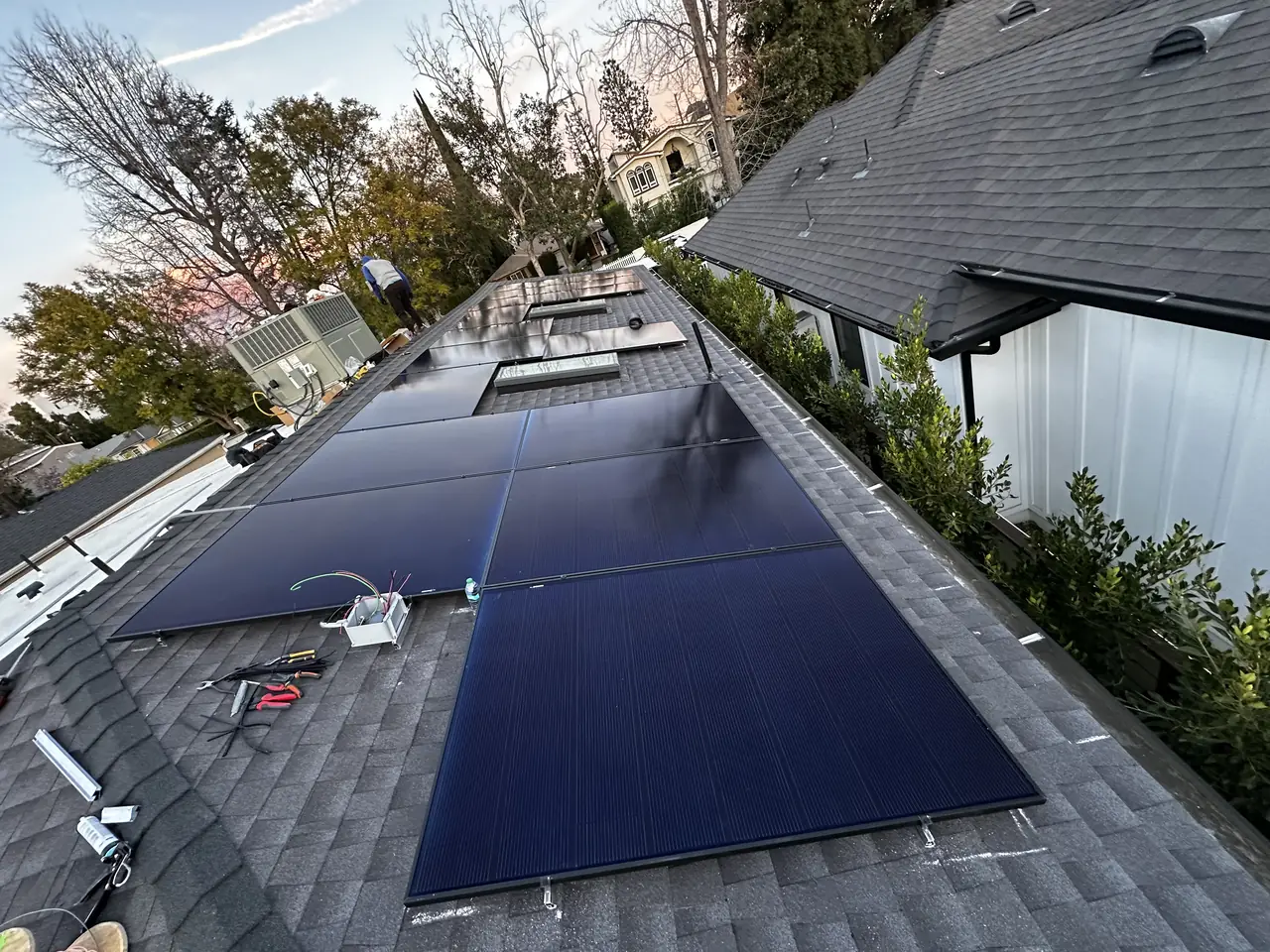
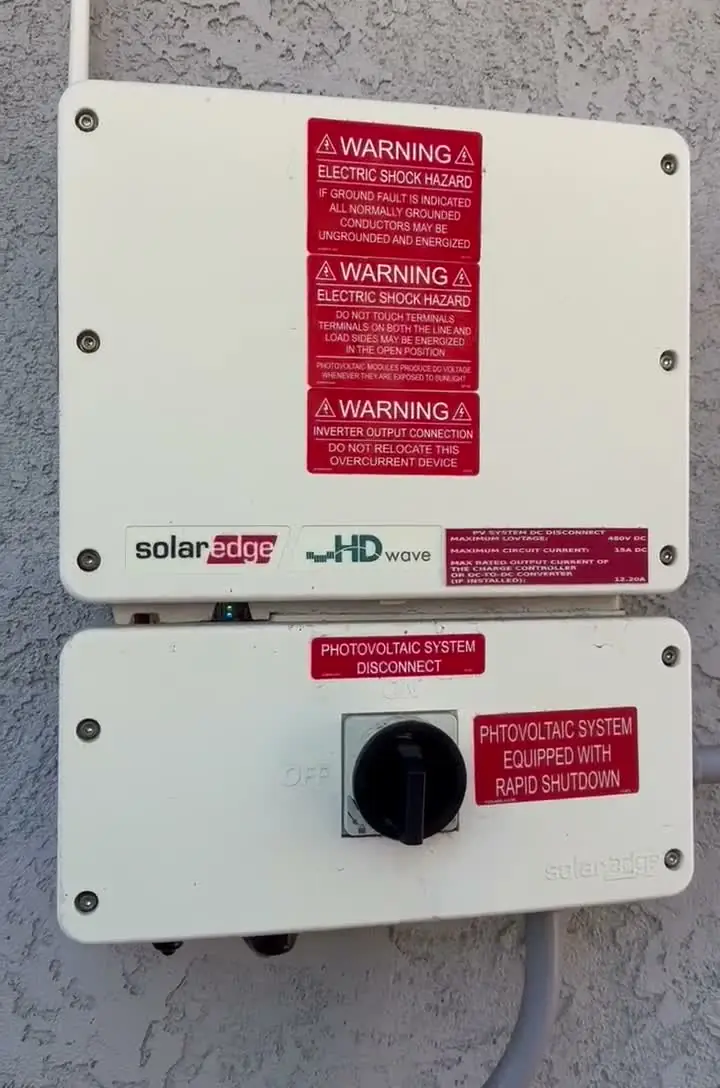
Both permits closed on the same visit, permission to operate came through, and the house has been running on the array since. Cali Energy de-rated the main, opened the second permit and carried both finals on this Granada Hills service. The clearance argument on the roof above it is on three feet of clearance.
How it ran
| 4 November 2025 | Roof plan and module data sheet issued — 31 modules at 445 W on a string inverter |
|---|---|
| 1 December 2025 | Array installed |
| 5 December 2025 | De-rate scoped at 175 A; the solar permit does not cover it, so a separate electrical permit is opened |
| 8 December 2025 | Both finals requested for the same date |
| 29 December 2025 | Final passed on both permits |
The de-rate itself is an afternoon. The permit behind it is the part that has to be planned.
What we did
- Checked the busbar rating against the array's breaker before the panel was opened.
- De-rated the main breaker to 175 amps instead of replacing the service panel.
- Opened a separate electrical permit for the de-rate once it was clear the solar permit did not cover it.
- Requested the finals on both permits for a single date and a single visit.
- Left the array on a 60-amp breaker inside the code ceiling, with nothing replaced.
System specifications
| Modules | 31 × 445 W |
|---|---|
| Inverter | String inverter |
| Solar breaker | 60 A |
| Main breaker | De-rated to 175 A |
| Why | Main plus solar breaker over 120 percent of the busbar rating |
| Permits | Solar, plus a separate electrical permit for the de-rate |
| Roof | Concrete tile, several planes |
| Utility / AHJ | LADWP / LADBS |
Is your project like this one?
- You have been told your panel cannot take the array you want.
- Somebody has quoted you a service upgrade and you want to know whether it is necessary.
- You are adding a large array to a house built before anyone thought about back-feed.
- You have an EV charger or a heat pump coming and want to know what a de-rate costs you.
- Your solar permit is open and an inspector has asked about a second one.
Cali Energy in Granada Hills
Granada Hills sits inside City of Los Angeles boundaries, so every project here is permitted through LADBS and interconnected through LADWP. Our work in Granada Hills runs from single-row arrays on accessory dwelling units to systems on underground services, on composition shingle and on concrete tile.
Most of the housing here was built with a service that was generous for its decade and is ordinary now. When an array is large enough to matter, the service panel is what decides how it gets connected.
This installation is on the Granada Hills projects page alongside the others, and what the work covers is set out on the Granada Hills service area page.
- License and classifications: CSLB #1032379
- Official reference for this process: LADBS — plan review and permitting
Frequently asked questions
What is the 120 percent rule?
The limit in the National Electrical Code that decides whether an array can connect to an existing panel: the overcurrent devices feeding a busbar may not add up to more than 120 percent of what that busbar is rated for. On a 200-amp busbar that is a ceiling of 240 amps for the main breaker and the solar breaker combined.
What does de-rating the main breaker mean?
Replacing the main breaker with one of a lower rating, so the sum of it and the solar breaker comes back inside the ceiling. Nothing else in the panel changes. Here the main went to 175 amps and the array connected on a 60-amp breaker — 235 against a ceiling of 250.
Is a de-rated service a downgrade?
It is a genuine reduction in how much the house can draw from the street, and whether that matters depends entirely on the house. Most homes never come close to either number. Some do — a fast EV charger, a heat pump, a second dwelling, a pool heater. The way to decide is a load calculation on the actual loads, not an assumption in either direction.
Why does a de-rate need its own permit?
Because it is a change to the service equipment, not part of the photovoltaic scope. The solar permit covers the array, its wiring and its breaker; swapping the main breaker is separate electrical work and gets its own application. In practice that means two open permits, and the sensible move is to request both final inspections for the same day.
What are the alternatives to de-rating?
Make the array smaller so its breaker fits, or replace the service panel with one that has a larger busbar. The first costs production for as long as you own the house. The second is a service upgrade with its own permit and utility coordination and is the most expensive of the three. De-rating is usually the cheapest — which is why it is worth asking about before agreeing to a panel replacement.
Can Cali Energy connect an array to an existing Granada Hills panel?
Usually, and the answer comes from the label inside the panel door rather than from the size of the array. Cali Energy reads the busbar rating first and works out what the main breaker and the solar breaker come to together. On this Granada Hills house that arithmetic ruled out leaving the main at 200 amps, so we de-rated it, opened the second permit the de-rate needs, and carried both finals on one visit.
What this would look like on your roof
Planning solar in Granada Hills? Tell us your utility, your roof and what your bill looks like now, and we will model what a system like this would do on your house before you commit to anything.
Or call +1 (323) 844-7777 · Cali Energy, Northridge · CSLB #1032379 (B, C-10, C-39) — design, permits, install and electrical under one licensed contractor.
Related
This timeline reflects this property and this permitting path. Updated September 2026.