

Glendale, CA · January 2026 – June 2026 · Glendale Water & Power / City of Glendale
Forty-five modules on a roof that did not have its tile yet.
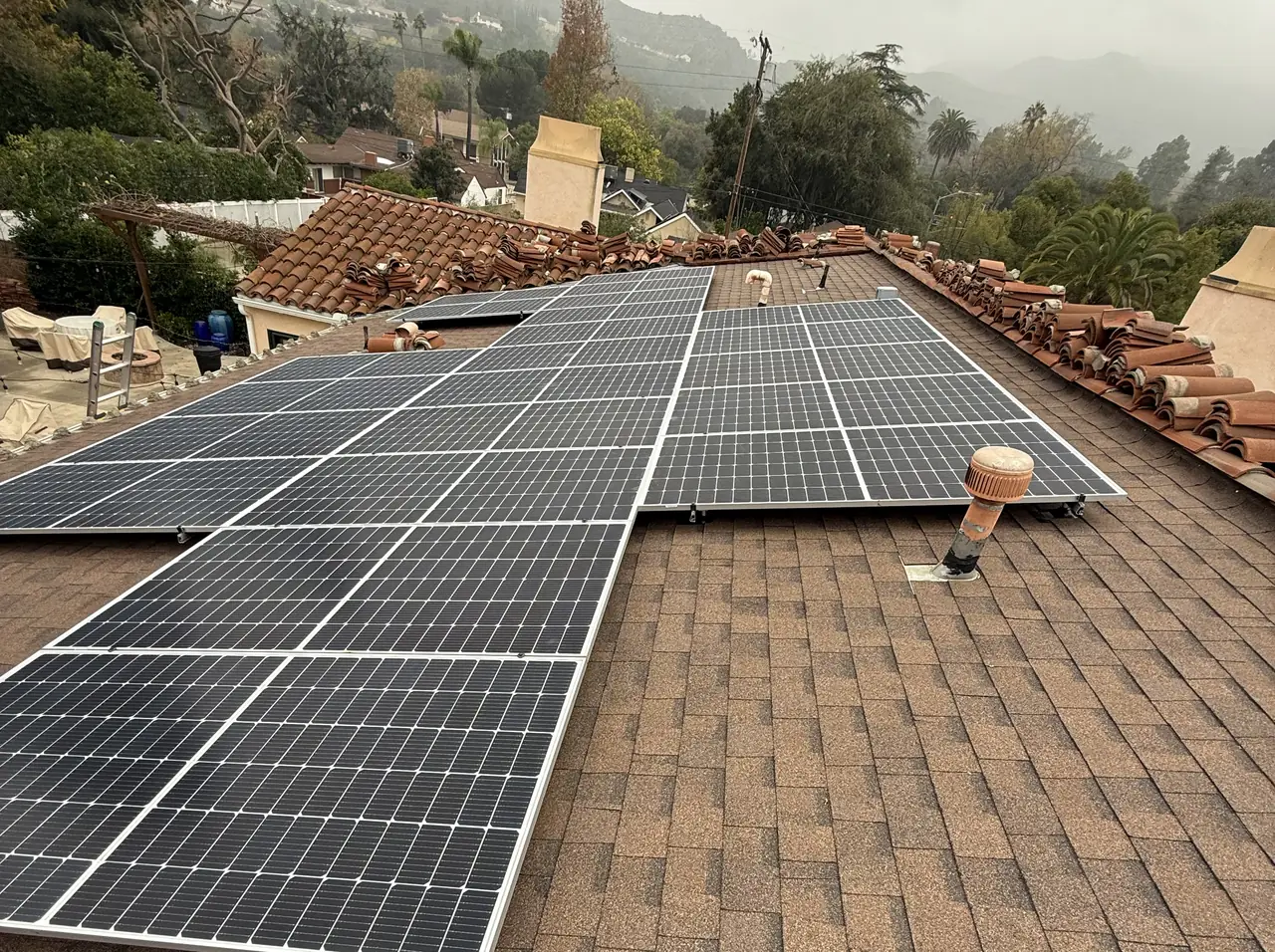
A new two-story house on a Glendale hillside, clay tile specified, with a 45-module array on the plans. We walked the roof in January, before the tile went on, and moved two modules so the layout matched the deck as built. The array went up in June once the tile was down, with a new sub-panel to carry it.
On new construction the solar contractor's most valuable visit is the one before the roofing. With the deck exposed, the rafters, vents and hips are all visible, and a layout drawn from plans can be checked against the roof that was actually built. Here that check moved two modules. The array itself then goes on after the tile, on mounts made for tile, and the electrical side needs a sub-panel sized for forty-five modules rather than a spare breaker.
At a glance
- House
- New two-story build on a hillside lot
- Roof
- Clay tile, laid after the layout was checked
- Array
- 45 modules, mounted on the tile
- Electrical
- New sub-panel for the array
- Layout change
- Two modules relocated after the deck walk
- Installation
- Two days, late June 2026
- Utility / AHJ
- Glendale Water & Power / City of Glendale
The story
The call came in the third week of January: a new house on a Glendale hillside, forty-five modules on the approved plans, and a roof that was framed and decked but not yet tiled. Would we come and look at it before the tile went on? Yes. That is the single most useful visit on a new build, and it is the one most often skipped.
Two days later one of our people was on the deck with the plan set. The roof had been built to the drawings, but drawings and decks are never identical, and forty-five modules leave little slack. Two modules on the plan landed where the as-built roof did not want them. The layout was redrawn the same day with those two relocated and the rest unchanged, and the revised sheet went back to the project so the tile crew and the electrician were working from the same picture.
Then the house went on being built. Tile is one of the last trades on a roof, and the array is one of the last things on the tile, so the solar waited through the spring while the rest of the house caught up. That is normal. What is not automatic is the check that happens next: before anything is ordered, the material list is read against the electrical plans line by line. On this house that check is what put the dedicated sub-panel the plans called for onto the order, in June, rather than leaving it to be noticed on installation morning.
Installation was booked for the last Thursday in June, with Friday held in case the delivery slipped, and the material came to the site the morning it was needed. The modules went onto the finished tile roof on mounts made for tile, rather than the shingle inlay we use under arrays on older tile roofs, and the sub-panel went in beside the main service. Two days, and the array was on the roof the house had been built for.
A 45-module array on a hillside tile roof is a large piece of work and none of it is quick. The deck walk in January bought certainty about the layout; it did not shorten the calendar, because the calendar belonged to the house. An array this size also needs a panel of its own, which is a line on the electrical plans long before it is a box on a wall. Both are reasons to have the solar contractor in the room early rather than at the end.
If you are building, ask your solar contractor to walk the deck before the roofing goes on, and ask whether the array needs its own panel. Both questions are cheap in January and expensive in June.
How it ran
| 21 January 2026 | Project handed over: 45 modules on plan, roof decked, tile not yet laid |
|---|---|
| 23 January 2026 | Deck walked with the plan set; two modules relocated and the layout reissued |
| 24 June 2026 | Material list read against the electrical plans; sub-panel on the order |
| 25–26 June 2026 | Array and sub-panel installed on the finished tile roof |
The layout was settled in January; the roof and the rest of the house set the date for everything after.
What we did
- Walked the roof deck with the plan set before the tile was laid.
- Relocated two modules to match the roof as built and reissued the layout the same day.
- Read the material list against the electrical plans before the order went in, so the dedicated sub-panel was on site for installation day.
- Installed the 45-module array on tile mounts over two days (C-10).
- Installed the new sub-panel beside the main service.
System specifications
| House | New two-story construction, hillside lot |
|---|---|
| Roof | Clay tile |
| Array | 45 modules |
| Mounting | Tile mounts on the finished roof |
| Electrical | New sub-panel dedicated to the array |
| Utility / AHJ | Glendale Water & Power / City of Glendale |
Is your project like this one?
- You are building a new house and the plans already show solar.
- Your roof will be clay tile and you want the array designed before the tile goes on.
- Your array is large enough to need its own panel.
- You are a builder or project manager who needs one solar contractor for the roof visit, the install and the inspection.
Cali Energy in Glendale
Glendale is its own city with its own municipal utility: permits run through City of Glendale Building & Safety, interconnection through Glendale Water & Power.
Glendale's hillside lots keep producing large new houses, and new houses of this kind are built with solar on the drawings. The useful moment on a new build comes months before the modules: when the roof deck is finished and the tile is still on pallets.
This installation is on the Glendale projects page alongside the others, and what the work covers is set out on the Glendale service area page.
- License and classifications: CSLB #1032379
- Official reference for this process: California Energy Commission — Building Energy Efficiency Standards
- Official reference for this process: City of Glendale — getting a permit
Frequently asked questions
When should the solar contractor first visit a new build?
When the roof is decked and before it is roofed. With the deck open, the layout drawn from plans can be checked against the rafters, vents and hips that were actually built, and adjusted while changing it costs nothing. On this house that visit moved two of forty-five modules. After the tile is down, the same change means lifting tile.
Can solar go directly on a new clay tile roof?
Yes, on mounts made for tile, and on a new roof that is usually the right choice because the tile courses are fresh and can be worked with. On older tile roofs we more often replace the roofing under the array with shingle. Both are legitimate; the difference is the age and condition of the tile.
Why did the array need a sub-panel?
Because forty-five modules produce more current than a spare breaker in the main panel can safely accept. The electrical plans called for a dedicated sub-panel for the array, and it had to be standing beside the main service on installation day. On an array of this size, read the material list against the electrical plans before anything is ordered: the panel is the item most easily left off a list written from the roof drawing alone.
How long does solar take on a new build?
The solar itself took two days. The gap between the deck walk in January and the installation in June was the house being built: tile is one of the last trades on a roof and the array goes on after it. Plan for the solar to be scheduled by the roofer's calendar, not the other way round.
What this would look like on your roof
Planning solar in Glendale? Tell us your utility, your roof and what your bill looks like now, and we will model what a system like this would do on your house before you commit to anything.
Or call +1 (323) 844-7777 · Cali Energy, Northridge · CSLB #1032379 (B, C-10, C-39) — design, permits, install and electrical under one licensed contractor.
Related
This timeline reflects this property and this permitting path. Updated September 2026.