

Fairfax, CA · May – June 2021 · LADWP / LADBS
Fairfax: monitoring that does not need your Wi-Fi.
Twenty modules, a straightforward roof, and one specification line that decides whether anybody ever notices when the system stops.
Most residential solar reports its production over the household Wi-Fi, which means the monitoring depends on a router the installer does not own, a password that changes, and a signal that has to reach equipment usually mounted on an outside wall. A cellular option puts the reporting on a mobile network instead, independent of the house. On this 7.4 kW Fairfax project Cali Energy specified cellular monitoring, and the array went from intake to a passed final inspection in twelve days.
At a glance
- System
- 20 modules, 370 W each — 7.4 kW
- Inverter
- SolarEdge SE7600H-US
- Monitoring
- Cellular, not household Wi-Fi
- Main panel
- No upgrade required
- Intake to passed final
- Twelve days
- Utility / AHJ
- LADWP / LADBS
The story
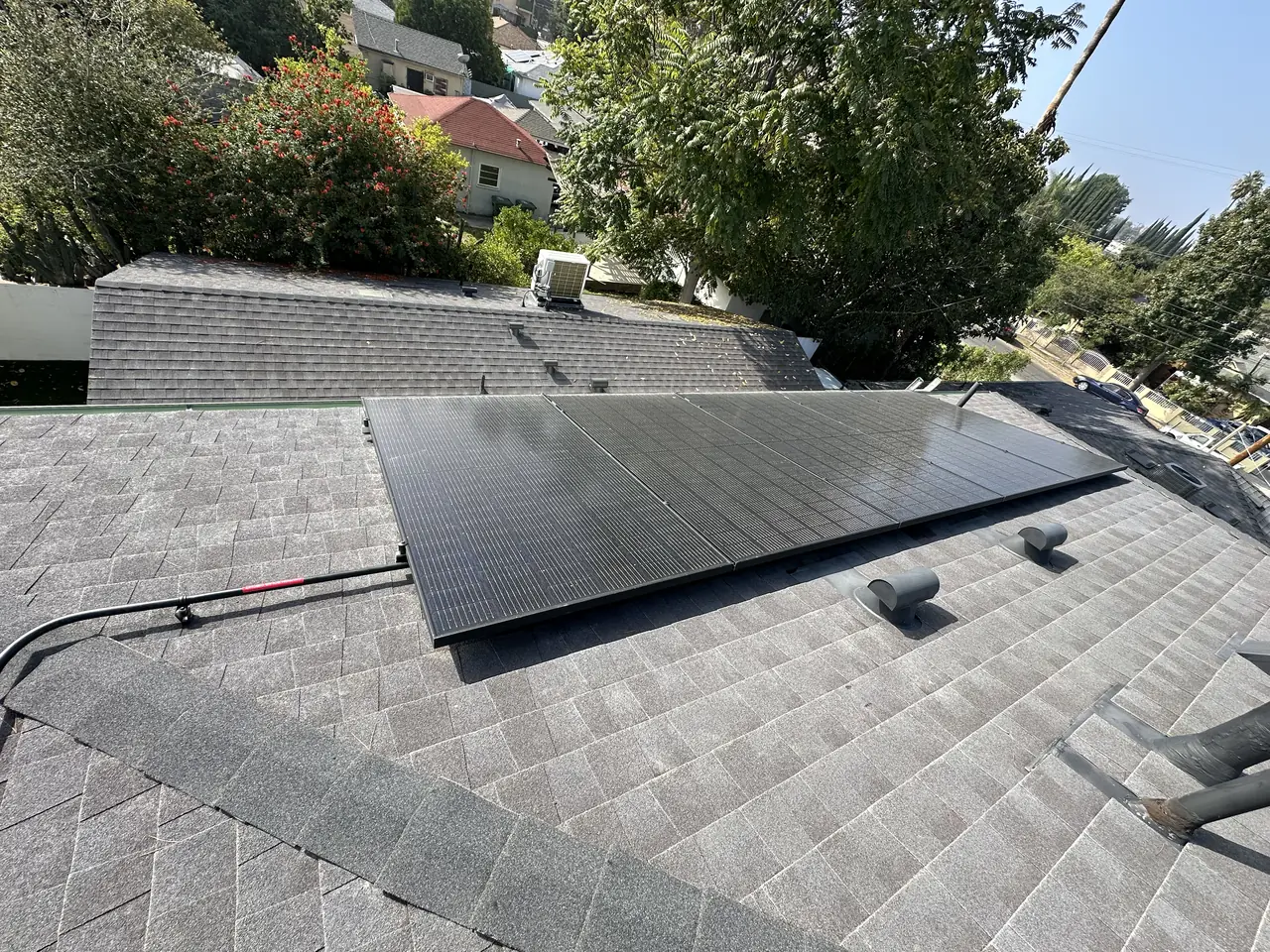
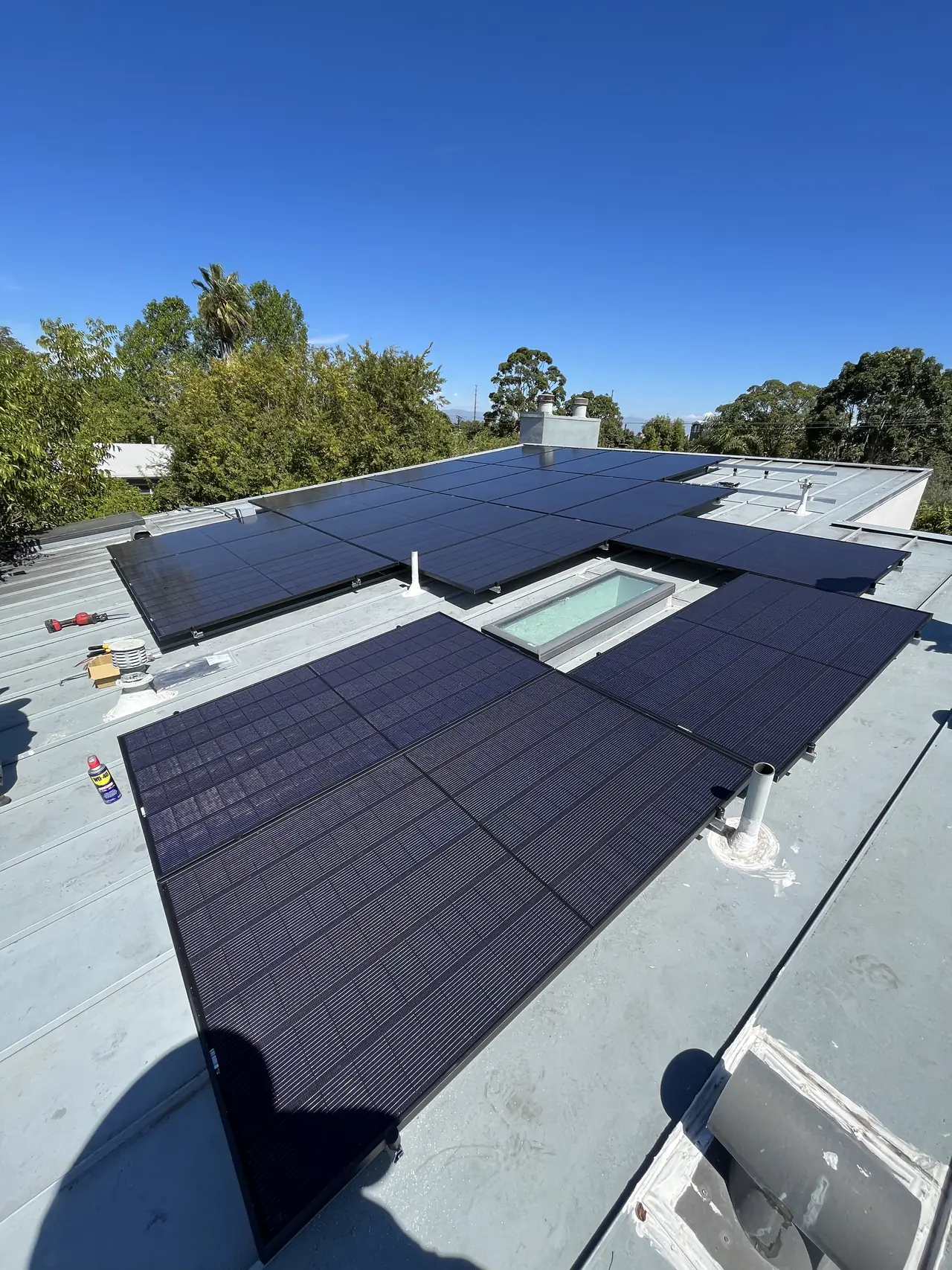
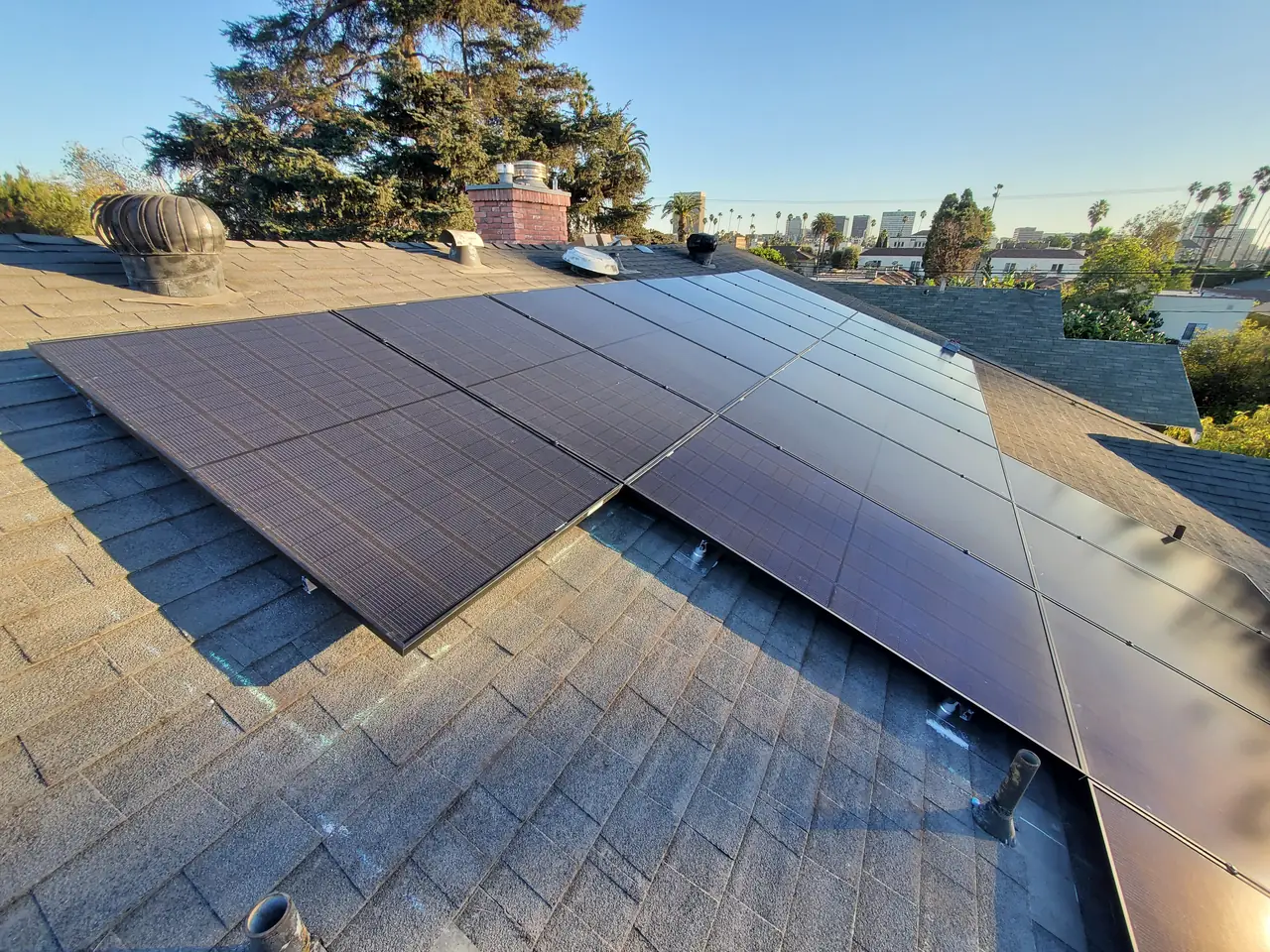
Twenty modules at three hundred and seventy watts on a composition shingle roof, a single SolarEdge SE7600H-US inverter, no main panel upgrade. On the specification sheet one line stands out, and it is the line nobody asks about: the monitoring is cellular.
Here is what that means.
A solar system reports what it is producing. That reporting has to reach the internet somehow, and on most residential installations it does so over the household Wi-Fi. The inverter or the gateway joins the home network like a laptop would, and from then on the production data, the fault alerts and the app on the owner's phone all depend on that connection.
Three things go wrong with it, and all three are ordinary.
The equipment is usually on an outside wall, in a garage, or down a side yard — which is exactly where household Wi-Fi is weakest. A signal that is adequate in the kitchen can be marginal at the meter, and marginal means intermittent rather than absent, which is harder to diagnose than a clean failure.
The network changes. A new router, a new provider, a changed password, a mesh system installed two years later — every one of those silently drops the inverter off, and nothing on the house indicates it. The system keeps producing. It simply stops saying so.
And the owner usually finds out late. Monitoring is what tells you a string has dropped, an optimizer has stopped reporting or production has fallen off a cliff. When the monitoring itself is the thing that is broken, the house looks fine from the outside for however many months it takes somebody to check a bill.
Cellular reporting removes the house from that chain. The equipment talks over a mobile network of its own, so the router, the password and the provider stop mattering. It costs more to specify and it is the right answer on properties where the equipment sits far from the router, where the household changes its internet often, or where nobody is going to notice a silent system quickly.
The rest of the project was quick, and quick for its own reason. The job opened on the twentieth of May. The crew went out on Monday the twenty-fourth. The inspection request went in on the twenty-fifth and the final was booked for Saturday the twenty-ninth, at a point when the city was openly running behind on inspections. The inspection card and the photographs went out on the first of June.
Twelve days from a new file to a passed final, in a month when the counter was slow.
Cali Energy designed and installed this 7.4 kW array in Fairfax, Los Angeles, with monitoring that does not depend on the household network.
How it ran
| 20 May 2021 | Project intake — 20 modules, string inverter, cellular monitoring, no main panel upgrade |
|---|---|
| 21 May 2021 | Materials and placards confirmed; the city is running behind on inspections |
| 24 May 2021 | Array installed |
| 25 May 2021 | Inspection request filed; final booked for Saturday the 29th |
| 29 May 2021 | Final inspection |
| 1 June 2021 | Inspection card and photographs issued |
Twelve days from intake to a passed final, with a Saturday inspection in a month when the city was behind.
What we did
- Specified cellular monitoring rather than relying on the household router.
- Installed twenty modules on composition shingle in a single day.
- Filed the inspection request the day after the install.
- Took a Saturday final while the city was running behind.
- Issued the inspection card and the photograph set on handover.
System specifications
| Modules | 20 × 370 W |
|---|---|
| System | 7.4 kW |
| Inverter | SolarEdge SE7600H-US |
| Monitoring | Cellular — independent of the household network |
| Roof | Composition shingle |
| Main panel | Existing, no upgrade |
| Utility / AHJ | LADWP / LADBS |
Is your project like this one?
- Your solar app has stopped showing data and nobody can say why.
- Your inverter is at the far end of the house from the router.
- You change internet providers or routers fairly often.
- You want to know whether a system is producing without going outside.
Cali Energy in Fairfax
Fairfax is City of Los Angeles between Hollywood and the Miracle Mile, permitted through LADBS and interconnected through LADWP. Dense pre-war blocks where the equipment usually ends up further from the router than anybody expects.
This installation is on the Los Angeles projects page alongside the others, and what the work covers is set out on the Los Angeles service area page.
- License and classifications: CSLB #1032379
- Official reference for this process: LADBS — inspection
- Official reference for this process: LADWP — interconnection requirements
Frequently asked questions
How does solar monitoring usually connect to the internet?
Over the household Wi-Fi. The inverter or gateway joins the home network the way a laptop would, and the production data, the fault alerts and the phone app all depend on that connection. It works well when the signal is strong at the equipment and the network is stable, and it is the default on most residential installations.
Why does solar monitoring stop working?
Usually because something changed on the house rather than on the roof. A new router or provider, a changed password, a mesh system added later — any of these drops the inverter off the network silently. The system keeps producing and simply stops reporting, and there is nothing visible on the house to show it.
What is cellular monitoring and when is it worth it?
Reporting over a mobile network instead of the household Wi-Fi, so the router, the password and the internet provider stop mattering. It costs more to specify and it earns that back where the equipment sits far from the router, where the household changes its internet often, or where a silent system would go unnoticed for months.
Does a broken monitor mean a broken solar system?
No, and that is the problem with it. A system whose monitoring has dropped off keeps generating normally; only the reporting has failed. The risk is the reverse case — a real fault on the roof that nobody sees because the channel that would have reported it went quiet first.
Does Cali Energy install solar in Fairfax, Los Angeles?
Yes. Fairfax projects are permitted through LADBS and interconnected through LADWP. The pre-war blocks here put service equipment in side yards and garages, well away from where a router usually sits, which is exactly the condition that makes the monitoring specification worth deciding deliberately.
What this would look like on your roof
Planning solar in Fairfax? Tell us your utility, your roof and what your bill looks like now, and we will model what a system like this would do on your house before you commit to anything.
Or call +1 (323) 844-7777 · Cali Energy, Northridge · CSLB #1032379 (B, C-10, C-39) — design, permits, install and electrical under one licensed contractor.
Related
This timeline reflects this property and this permitting path. Updated September 2026.