

Encino, CA · December 2021 – June 2022 · LADWP / LADBS
The array was finished. The paperwork is what you keep.
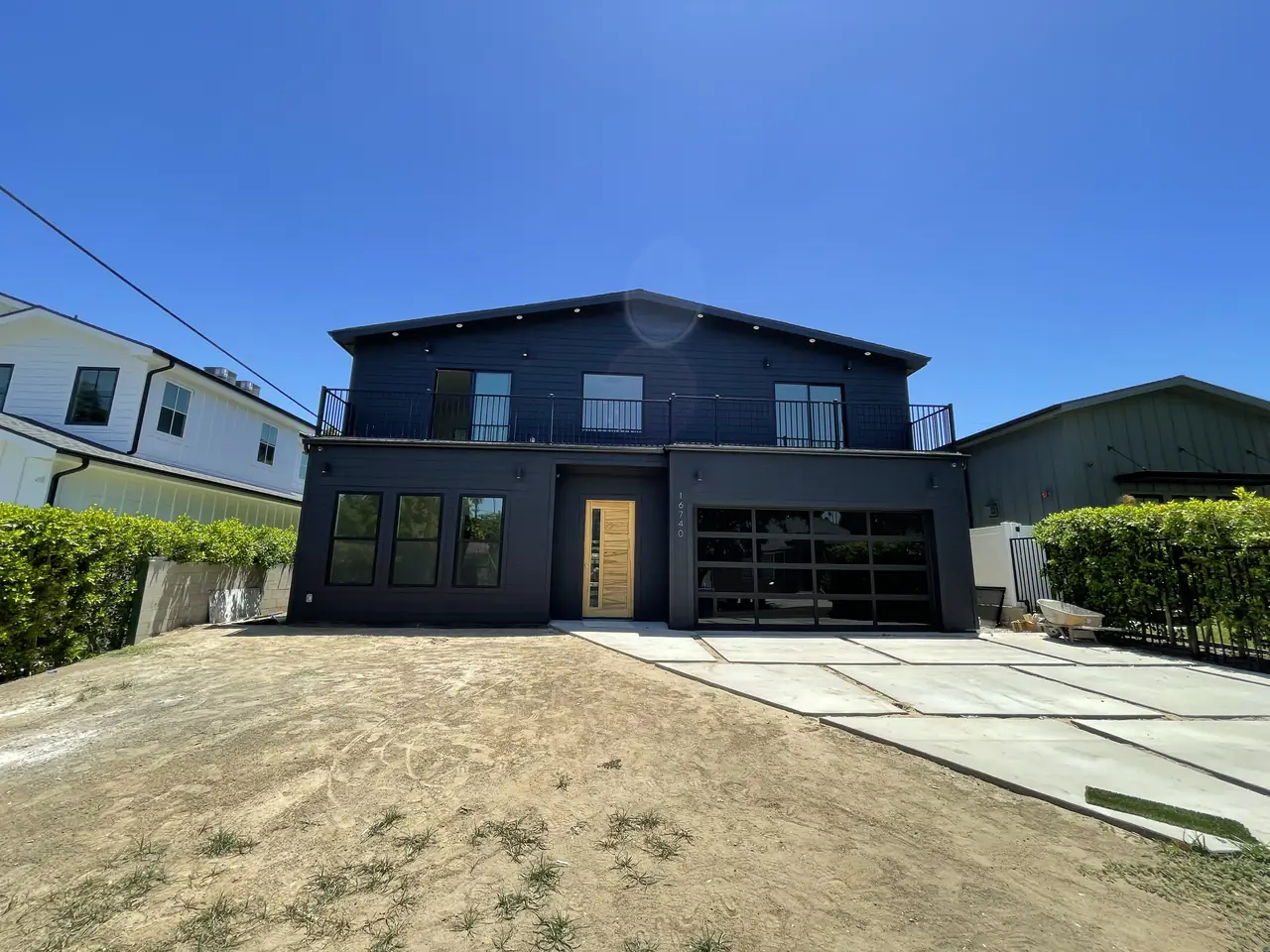
A new two-story Encino house with an attached garage, a patio deck, a pool and an NFPA-13D sprinkler system. The Enphase array went on last, passed its final on the first of June 2022, and was handed over the next day with the document that matters most seven years later.
A microinverter array is dozens of separate devices bolted under dozens of modules. When one stops reporting years later, the fastest way to find it is a map made at handover: which serial number sits in which position on which plane. Without it, the search is a person on a roof lifting modules. The map belongs in the handover package alongside the as-built plan set, the equipment list, the warranty registrations and ownership of the monitoring account.
At a glance
- Building
- New two-story house, attached garage, patio deck
- Fire protection
- NFPA-13D residential sprinkler system
- Array
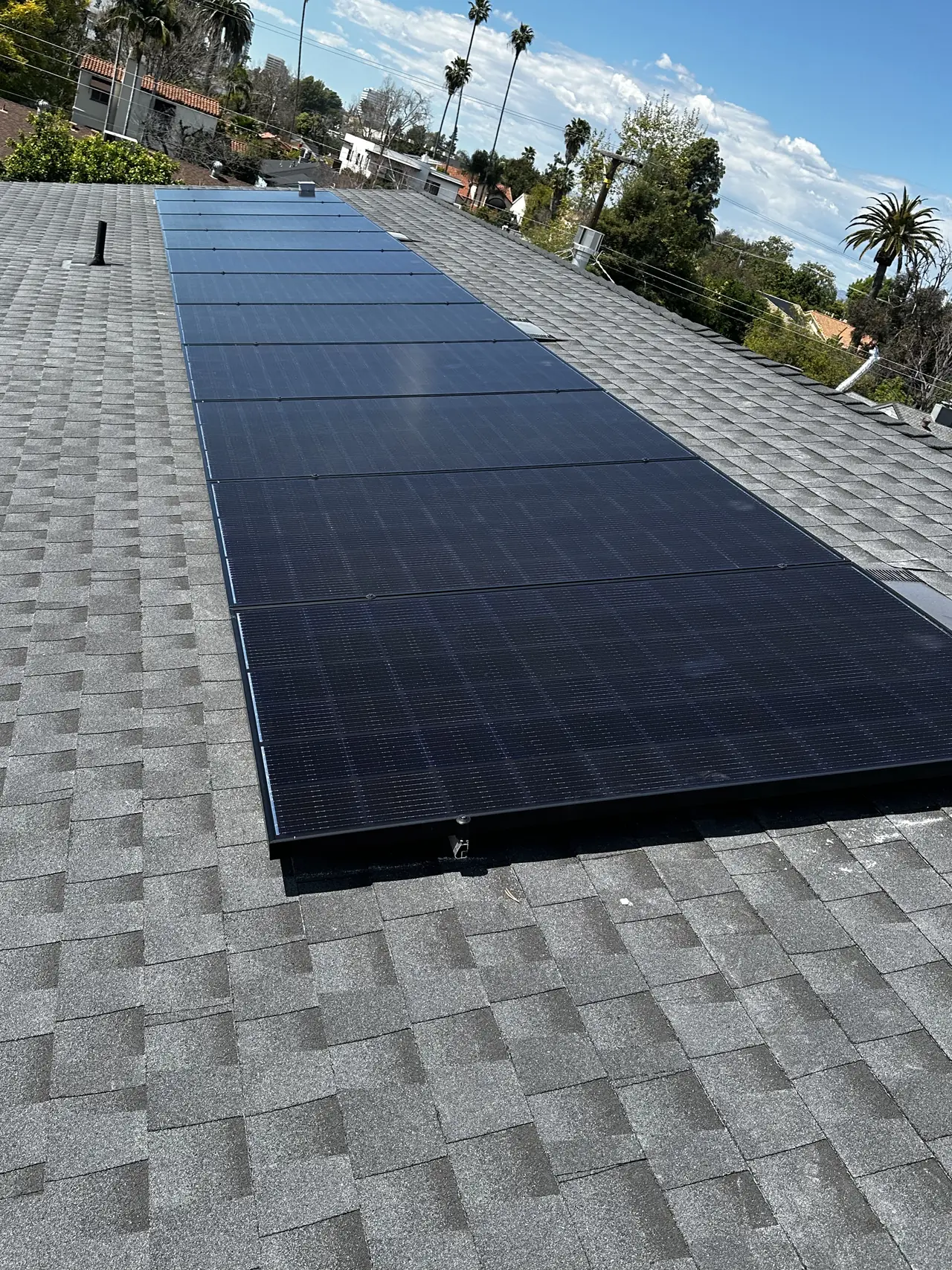
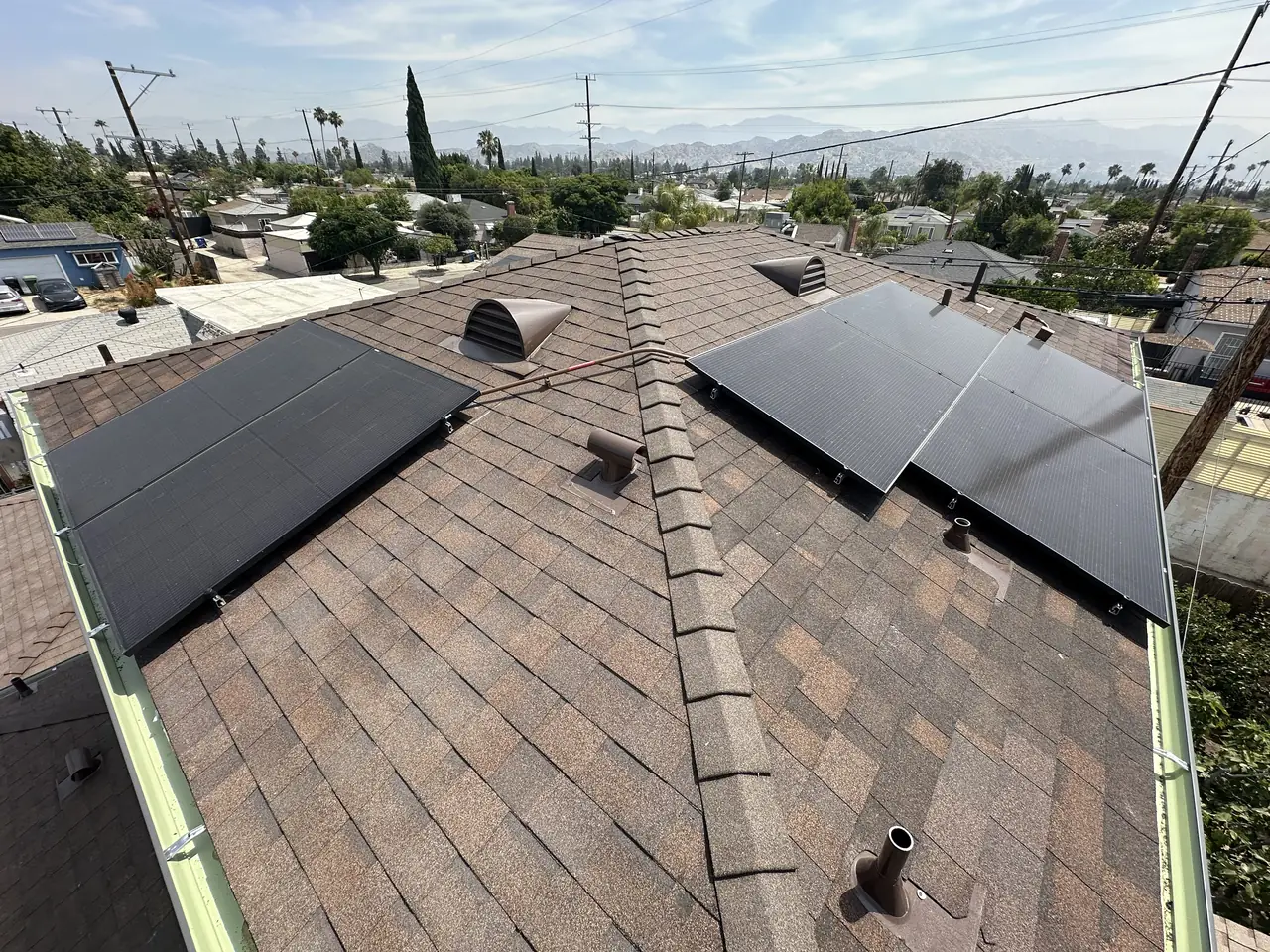
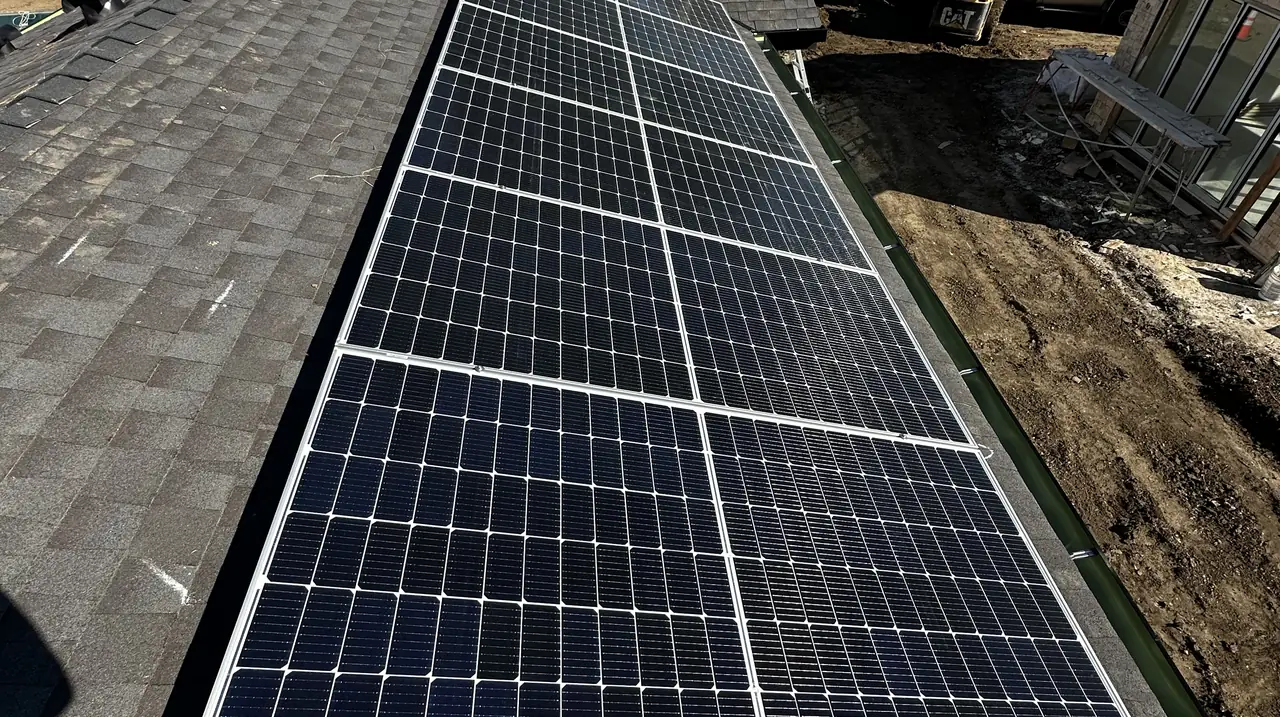
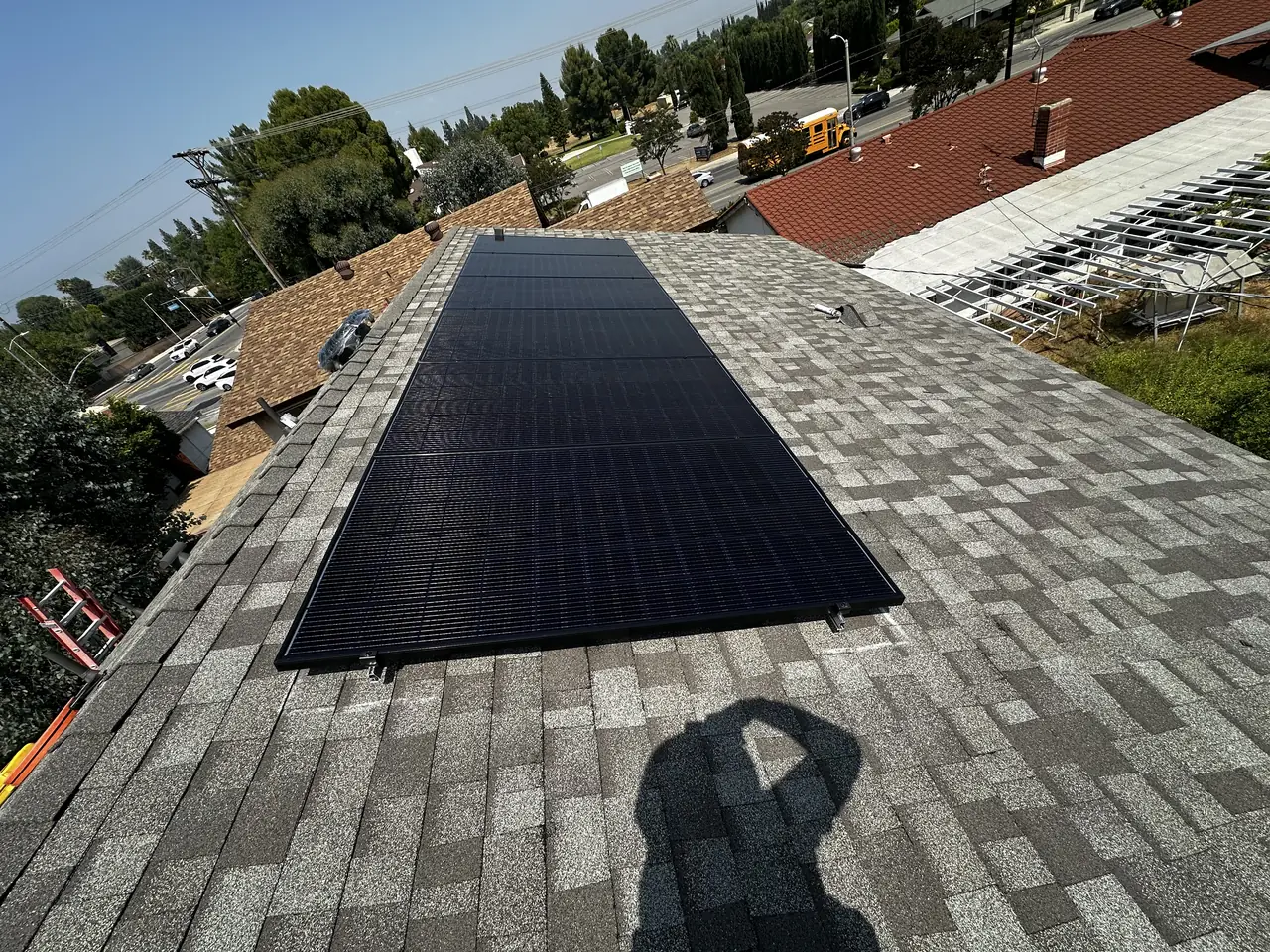
- Enphase microinverter system on composition shingle
- Final inspection
- 1 June 2022, passed
- Handover package
- Delivered 2 June 2022, microinverter map included
- Utility / AHJ
- LADWP / LADBS
The story
On a new house, solar is the last trade in. The framing, the roof, the sprinkler system, the pool, the drywall, the finishes — all of it comes first, and the array goes on a building that is otherwise complete. That is why the solar schedule on new construction is not really a solar schedule. It is whatever is left of everybody else's.
This house is a new two-story with an attached garage and a covered patio deck, built with an NFPA-13D sprinkler system — the residential standard, with heads in the living spaces fed off the domestic water. Nothing about that changes the array, but it changes the order of inspections: the house has more finals to pass than a remodel does, and the solar final sits in that queue.
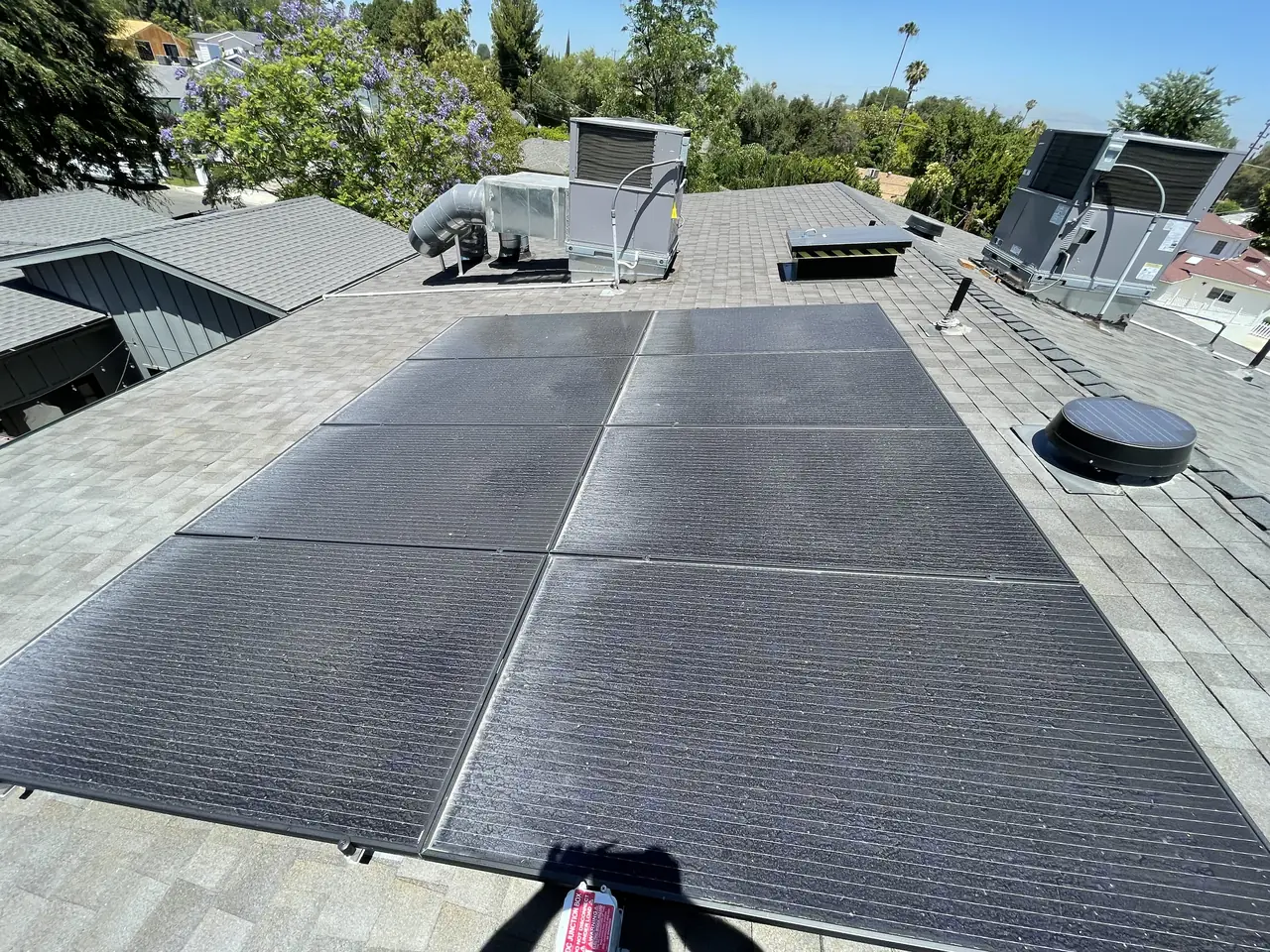
The array is an Enphase microinverter system: one small inverter under each module, converting on the roof so that everything below is household AC. It is the architecture that handles a cut-up roof best, and on a new house with mechanical units and a hipped plan, that matters.
It also means the system is not one machine but dozens. Each microinverter has a serial number, and the only thing connecting that number to a physical position on the roof is a record somebody makes at installation.
That record is the microinverter map, and Cali Energy put it in the handover package the day after the final. It is a drawing of the array with each position marked and each serial number against it. Seven years from now, when the monitoring shows one unit dark, the map turns a morning of lifting modules into a fifteen-minute visit.
A handover package worth having contains more than that. The as-built plan set, so the next contractor is not guessing. The equipment list with serial numbers, because warranty claims are made against serials. The warranty registrations themselves, done in the owner's name rather than the installer's. The signed permit card. Photographs of the labels and placards. And — the one people forget — ownership of the monitoring account, transferred to the homeowner, not left under an installer login that stops being answered when a company changes hands.
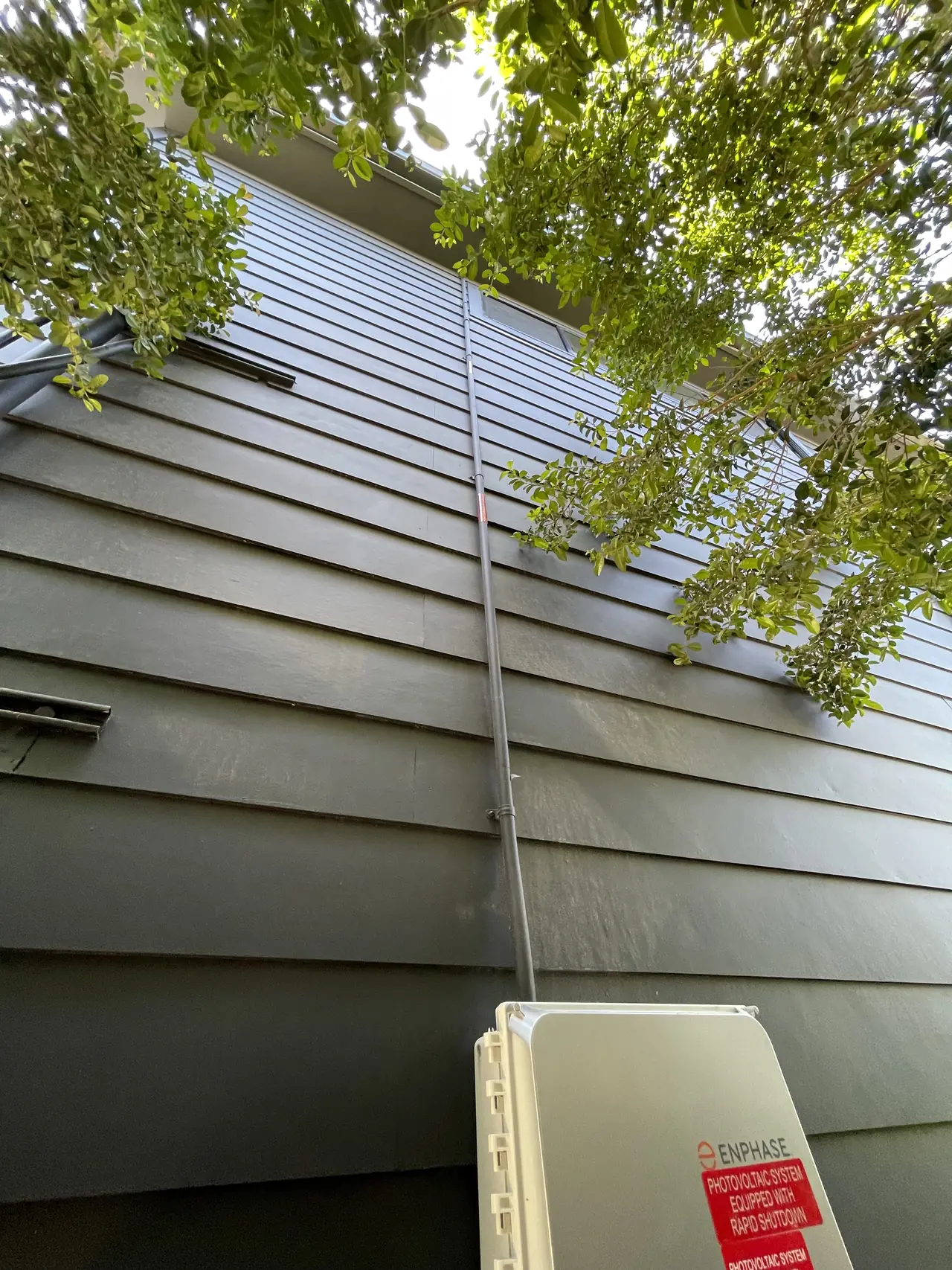
The thing new construction makes possible, and remodels rarely do, is that conversation before anything is closed up. Where the conduit runs, where the combiner lands, whether the service equipment has room for the backfeed, whether the roof planes the architect drew are the ones the modules want. None of it is expensive at framing. All of it is expensive afterwards.
The limit on all this is that a handover package is only worth what the owner keeps. Paper gets lost in a move. Ask for it as files as well as paper, ask for the monitoring account to be in your name before the crew leaves, and put the serial list somewhere that survives a new phone.
So the question for anyone taking delivery of a new system, on a new house or an old one: what exactly am I being handed, and is the map of the array part of it?
How it ran
| 13 December 2021 | Project scheduled into the construction sequence |
|---|---|
| 25 May 2022 | Final inspection requested |
| 1 June 2022 | Final inspection passed |
| 2 June 2022 | Handover complete — signed permit card, as-built set and microinverter map delivered |
Solar finished behind the rest of the build, as it does on new construction. This timeline reflects this property and this permitting path.
What we did
- Fitted the array into a new-construction schedule where the solar final sits behind the building finals (B).
- Installed an Enphase microinverter array on new composition shingle with the conduit path planned into the building rather than added to it (C-10, C-39).
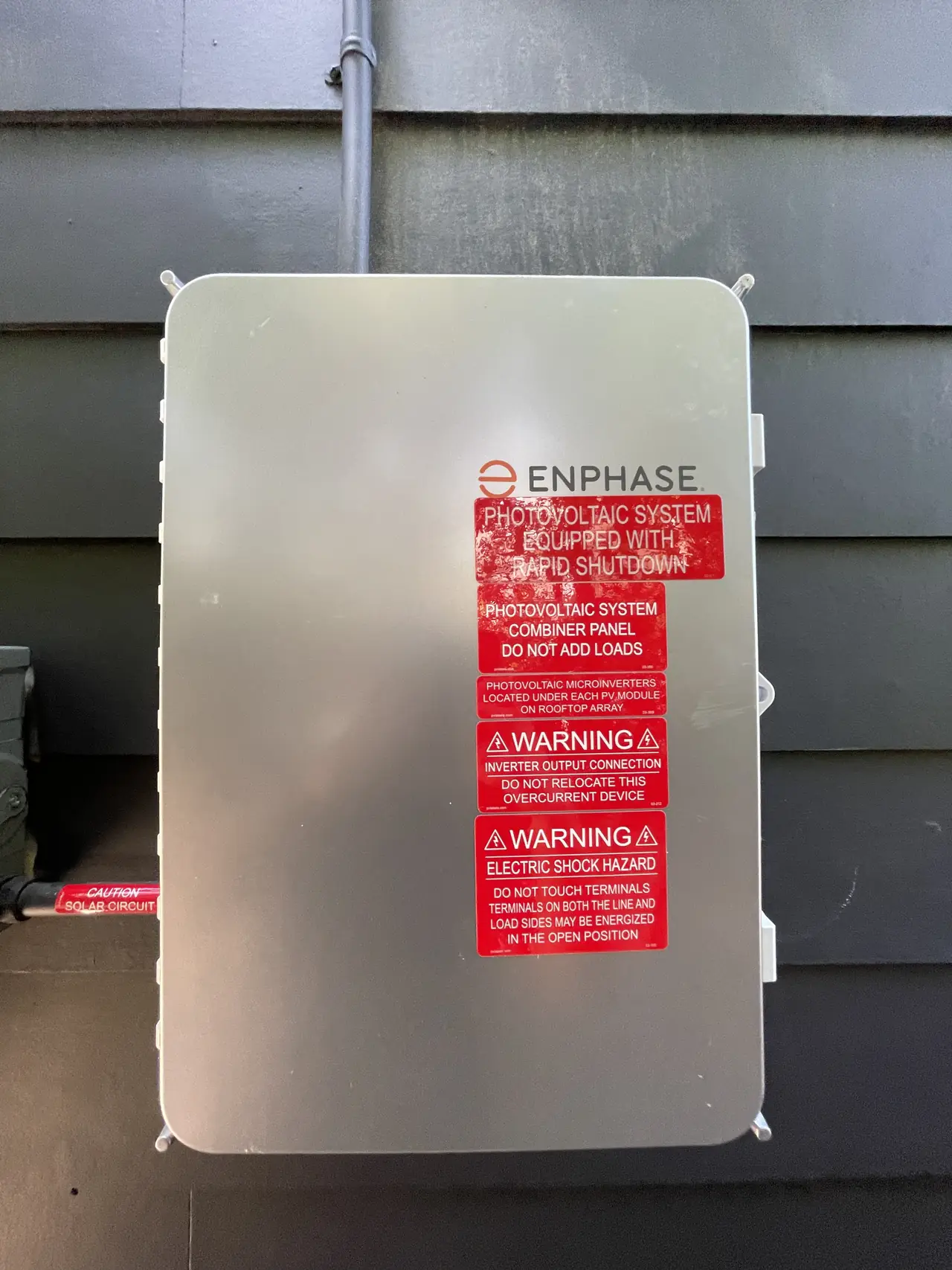
- Mounted and labeled the combiner and rapid shutdown equipment to match the approved plan.
- Carried the final inspection on the date it was scheduled.
- Produced a handover package the next day, including the microinverter map that ties every serial number to its position on the roof.
System specifications
| Building type | New two-story single-family house with attached garage |
|---|---|
| Fire protection | NFPA-13D residential sprinkler system |
| Roof covering | Composition shingle |
| Array | Enphase microinverter system, one inverter per module |
| Wall equipment | Enphase combiner with rapid shutdown, labeled per plan |
| Handover | As-built plan set, equipment list, microinverter map |
| Utility / AHJ | LADWP / LADBS |
Is your project like this one?
- You are building a new house and solar is in the drawings.
- Your house has a residential sprinkler system and you are adding an array.
- You have a microinverter system and no record of which unit is where.
- You are taking over a system installed by somebody else and cannot find the documents.
- You want the monitoring account in your own name rather than your installer's.
Cali Energy in Encino
Encino sits inside City of Los Angeles boundaries: permits run through LADBS, interconnection through LADWP.
Encino has been replacing single-story houses with new two-story builds for a decade, and on those projects solar is the last trade through the door. Twelve completed Encino projects are documented on our projects page, new construction among them.
This installation is on the Encino projects page alongside the others, and what the work covers is set out on the Encino service area page.
- License and classifications: CSLB #1032379
- Official reference for this process: LADBS — plan review and permitting
- Official reference for this process: California Energy Commission — solar equipment lists
Frequently asked questions
Does Cali Energy install solar on new construction in Encino?
Yes. Cali Energy works with builders across Encino, fitting the array into the construction sequence and handing over an as-built set, the equipment list and the microinverter map at the end of it. Twelve completed Encino projects are documented on our projects page, this new build among them. Our license is CSLB #1032379.
What should I receive when a solar system is handed over?
An as-built plan set, the equipment list with serial numbers, warranty registrations in your name, the signed permit card, photographs of the labels, and — on a microinverter system — the map that ties each serial number to a position on the roof. Ask for ownership of the monitoring account to be transferred to you before the crew leaves.
What is a microinverter map and why does it matter?
It is a drawing of the array with every module position marked and the serial number of the microinverter under it recorded against that position. When one unit stops reporting years later, the map is what turns a roof-wide search into a single visit. Without it, somebody lifts modules until they find the right one.
When does solar go on during new construction?
Last, after the building trades are finished, because the array needs a complete roof and a complete electrical service. What can and should happen early is the planning: conduit paths, equipment locations and the service capacity for the backfeed, all settled while the walls are still open.
Does a sprinkler system change how solar is installed?
Not the array itself. What it changes is the sequence: a house built to the residential sprinkler standard has more inspections to clear, and the solar final sits in that queue behind them. Plan the interconnection timing around the building schedule rather than the other way round.
What this would look like on your roof
Planning solar in Encino? Tell us your utility, your roof and what your bill looks like now, and we will model what a system like this would do on your house before you commit to anything.
Or call +1 (323) 844-7777 · Cali Energy, Northridge · CSLB #1032379 (B, C-10, C-39) — design, permits, install and electrical under one licensed contractor.
Related
This timeline reflects this property and this permitting path. Updated September 2026.