

Burbank, CA · November 2024 · Burbank Water and Power / City of Burbank
Two rows of ten, and one day on the roof.
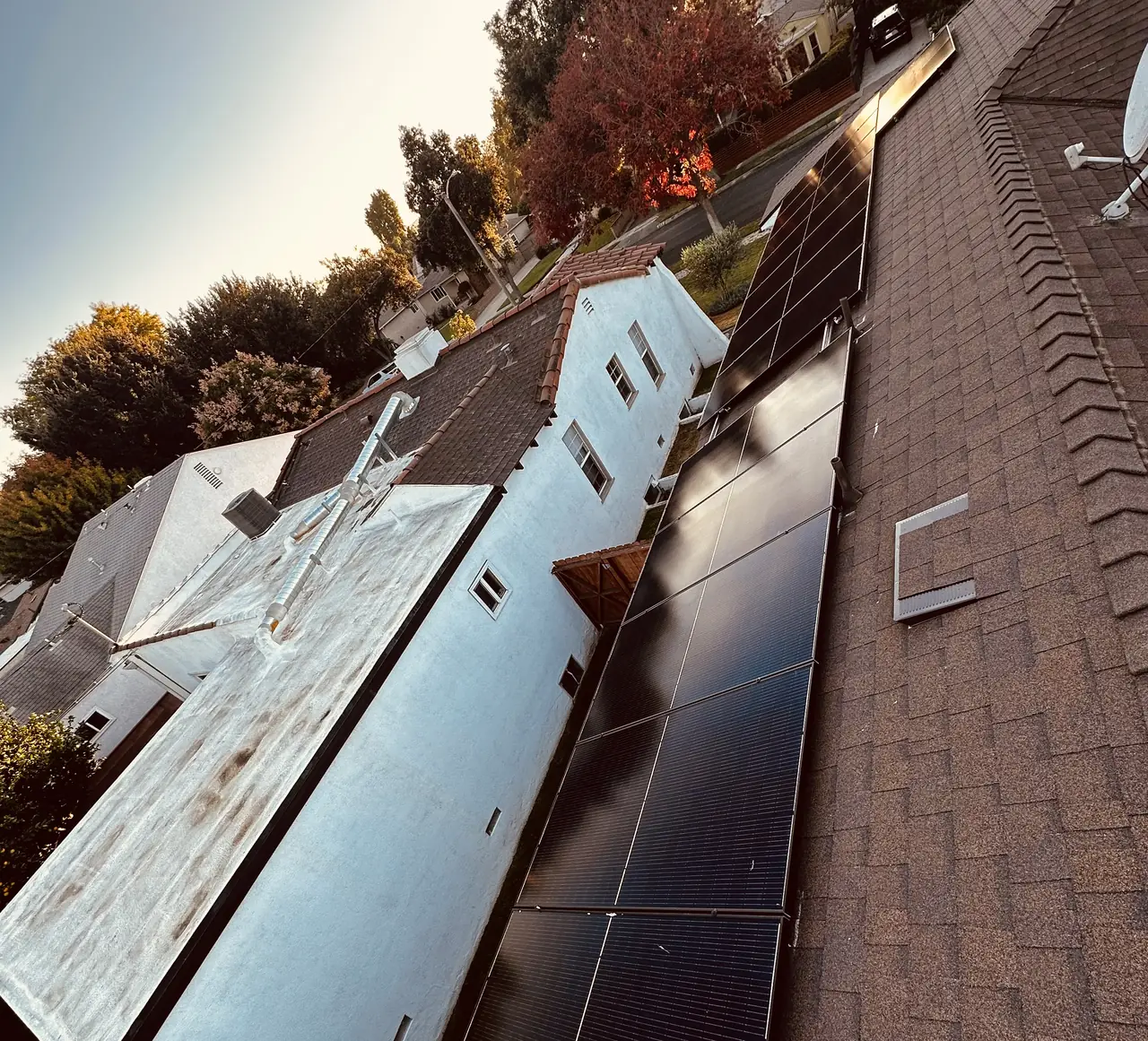
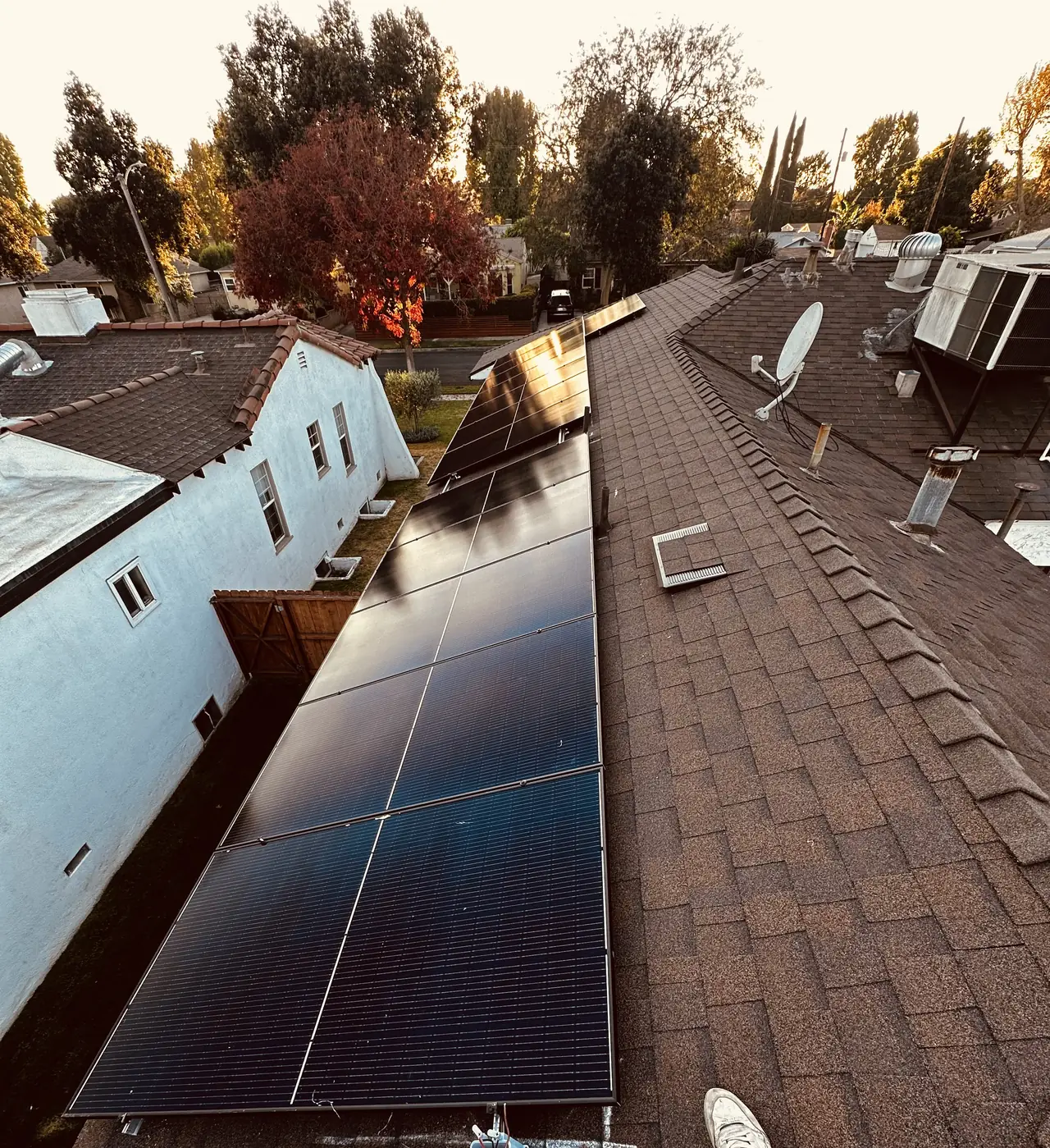
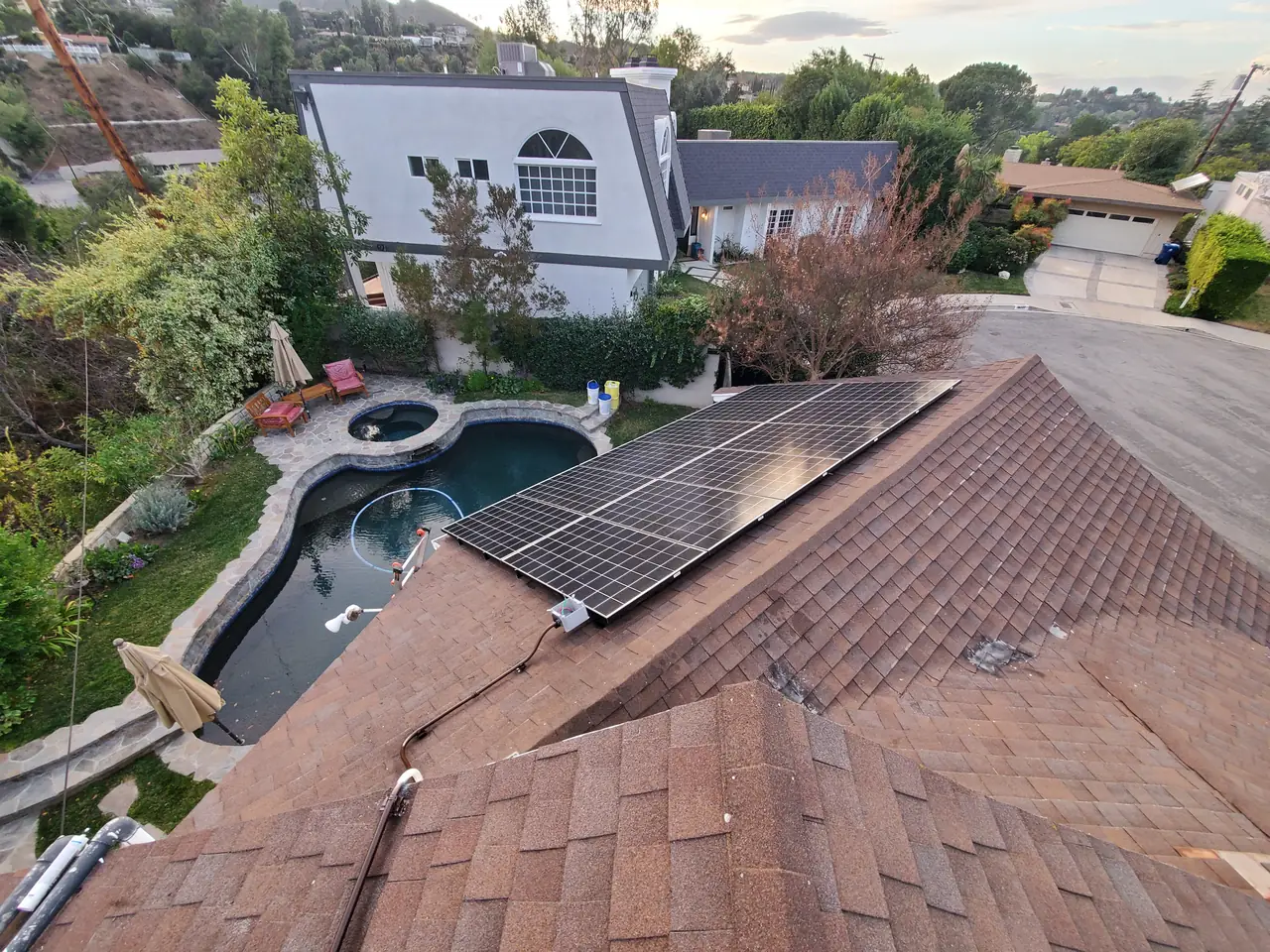
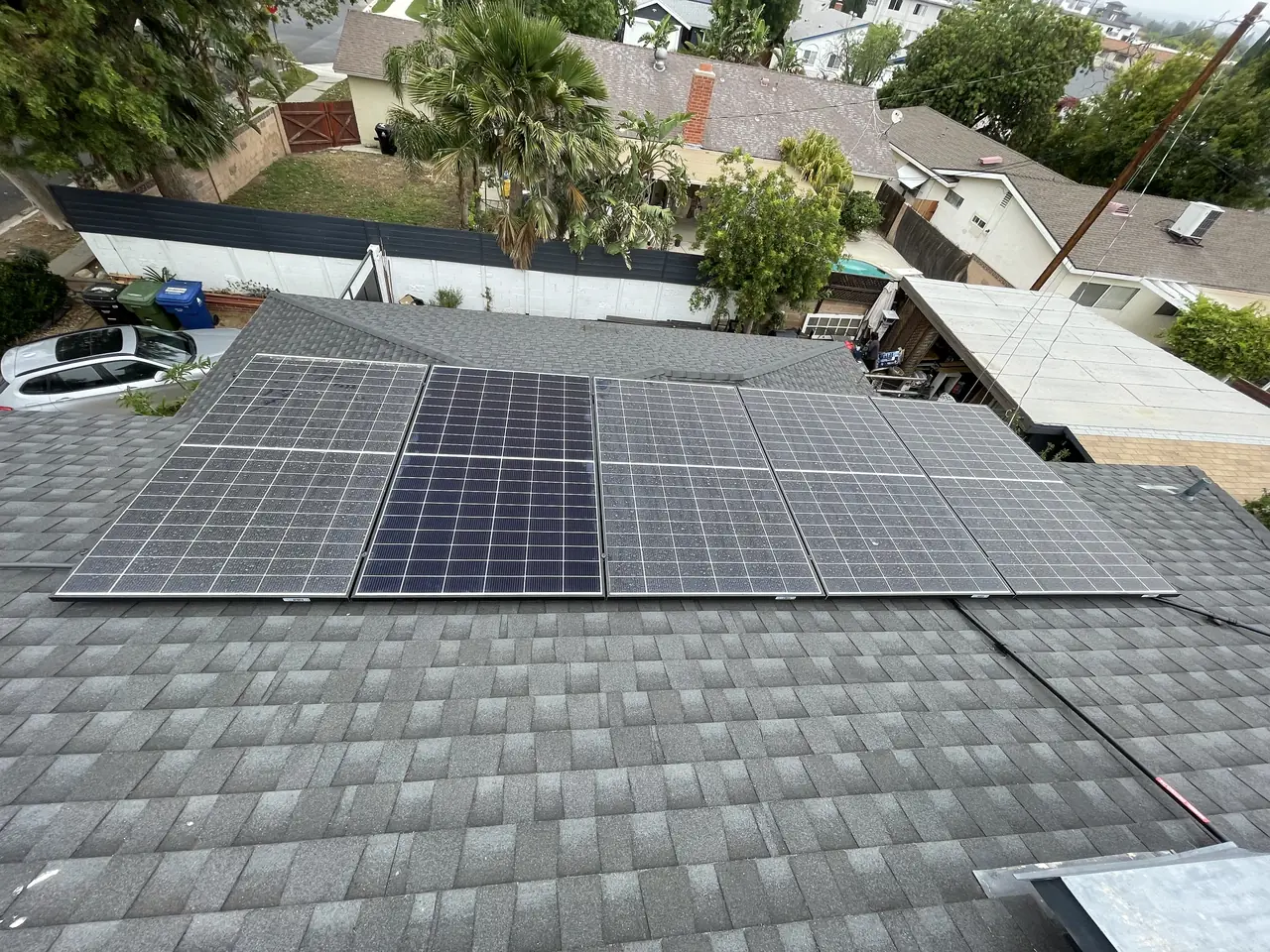
An eight-kilowatt array on a composition shingle roof in Burbank, arranged as two rows of ten modules and installed in a single working day in November 2024.
A one-day installation is not a measure of speed, it is a measure of how much was settled beforehand. The roof pitch was measured, the layout was fixed to it, the attachment points were marked from that layout, and the modules were grouped into two rows of ten before anybody climbed a ladder. What happens on the day is then mechanical: flash the attachments, set the rails, land the microinverters, lay the modules. The work that decides whether that day is possible happens in the weeks before it, and on a Burbank roof most of it is measurement.
At a glance
- Modules
- 20 x Hyundai Energy Solutions HiS-S400YH(BK) 400 W
- System size
- 8.0 kW DC
- Microinverters
- Enphase IQ8M, one per module
- Array layout
- Two rows of ten on a single plane
- Roof
- Composition shingle
- Installation
- One working day, 22 November 2024
- Pitch
- Measured on site with an angle finder before layout
- Utility / AHJ
- Burbank Water and Power / City of Burbank
The story
Twenty modules, four hundred watts each, eight kilowatts on the nose. A composition shingle roof on a single-story house, one usable face, nothing complicated. Cali Energy put the whole thing up in a day.
That sentence is the least interesting part of this project, and it is worth explaining why. A crew can install twenty modules in a day when every decision has already been made. When they have not, the same crew spends the morning measuring and the afternoon arguing with a layout that does not fit, and comes back on Monday.
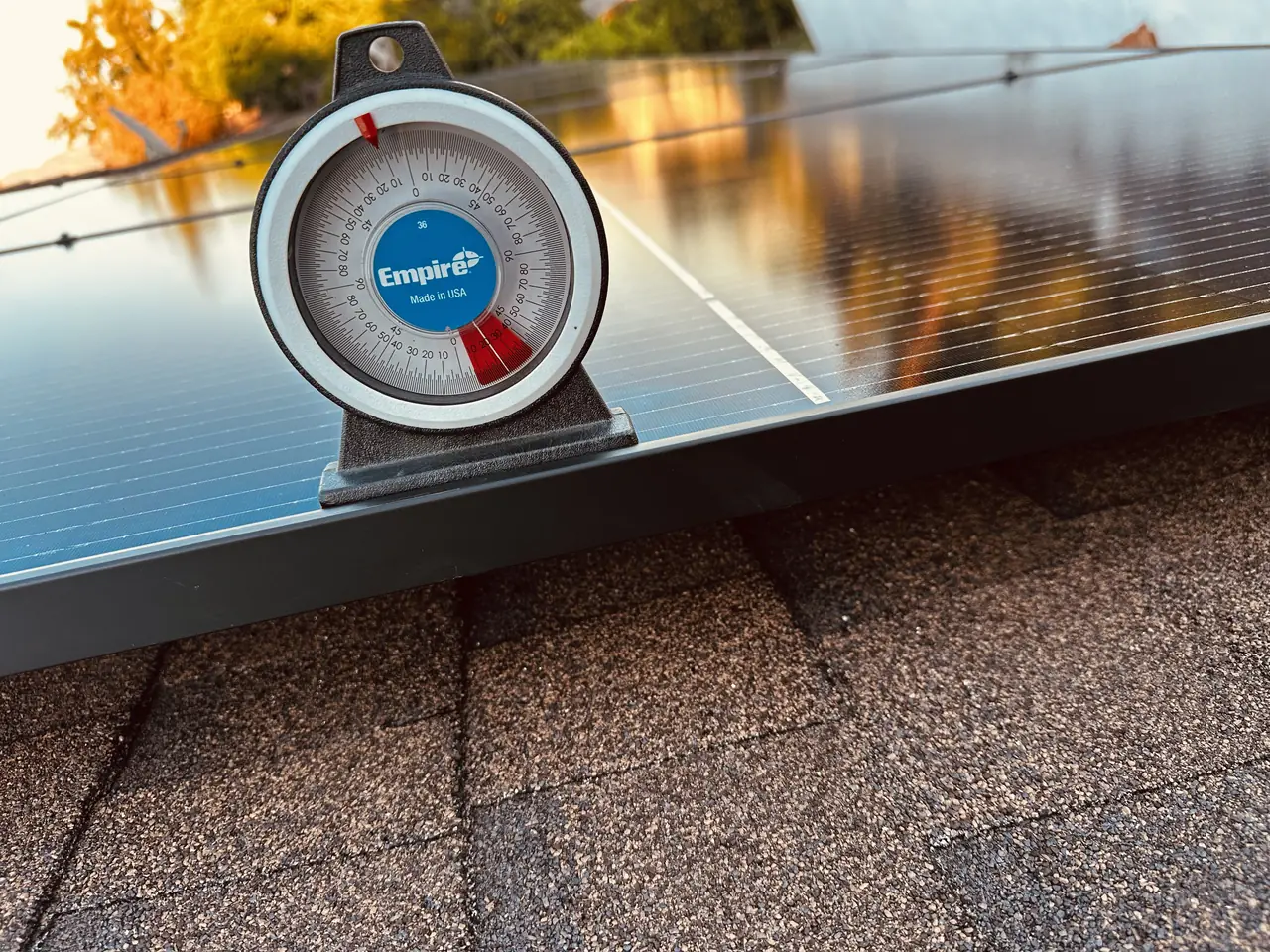
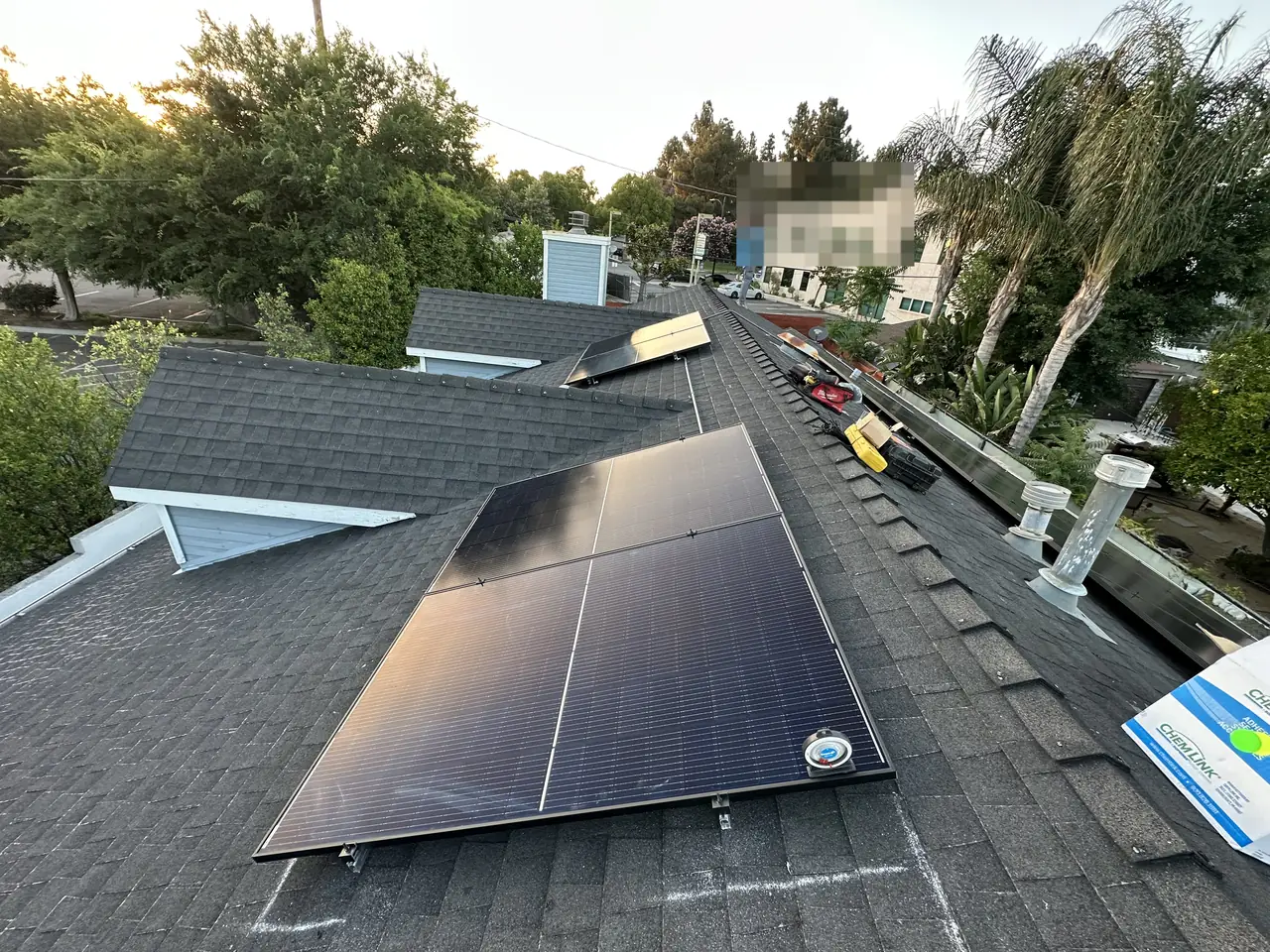
What was settled first was the pitch. It gets measured on the roof with an angle finder rather than taken from a drawing, because the drawing is somebody's reading of an aerial image and the roof is the roof. Pitch feeds the layout, the layout feeds the attachment spacing, and the attachment spacing has to land on structure rather than between it.
The twenty modules sit as two rows of ten on a single plane. That is the simplest thing an array can be, and it is only available when one face of the roof is genuinely big enough to hold the whole array with its clearances intact. Plenty of roofs in this city are not, and the array then has to be broken up across faces. This one was, so it was not.
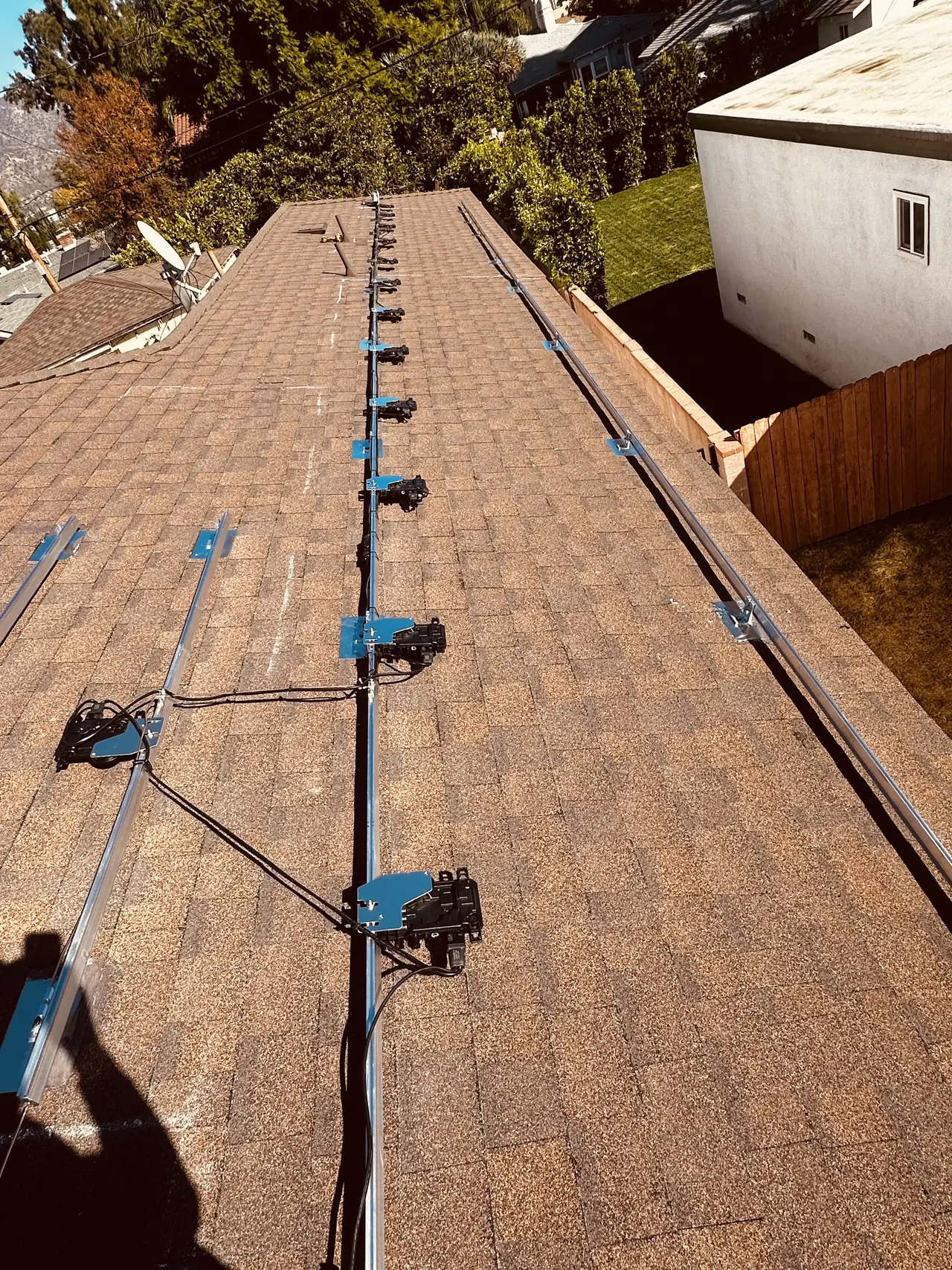
That is the quiet argument for microinverters on a roof like this one. A string system wants modules grouped and matched; shade or dirt on one drags its neighbors. One microinverter per module means the array can be split wherever the roof is convenient, and a single underperforming module shows up as itself rather than as a dip across a whole row.
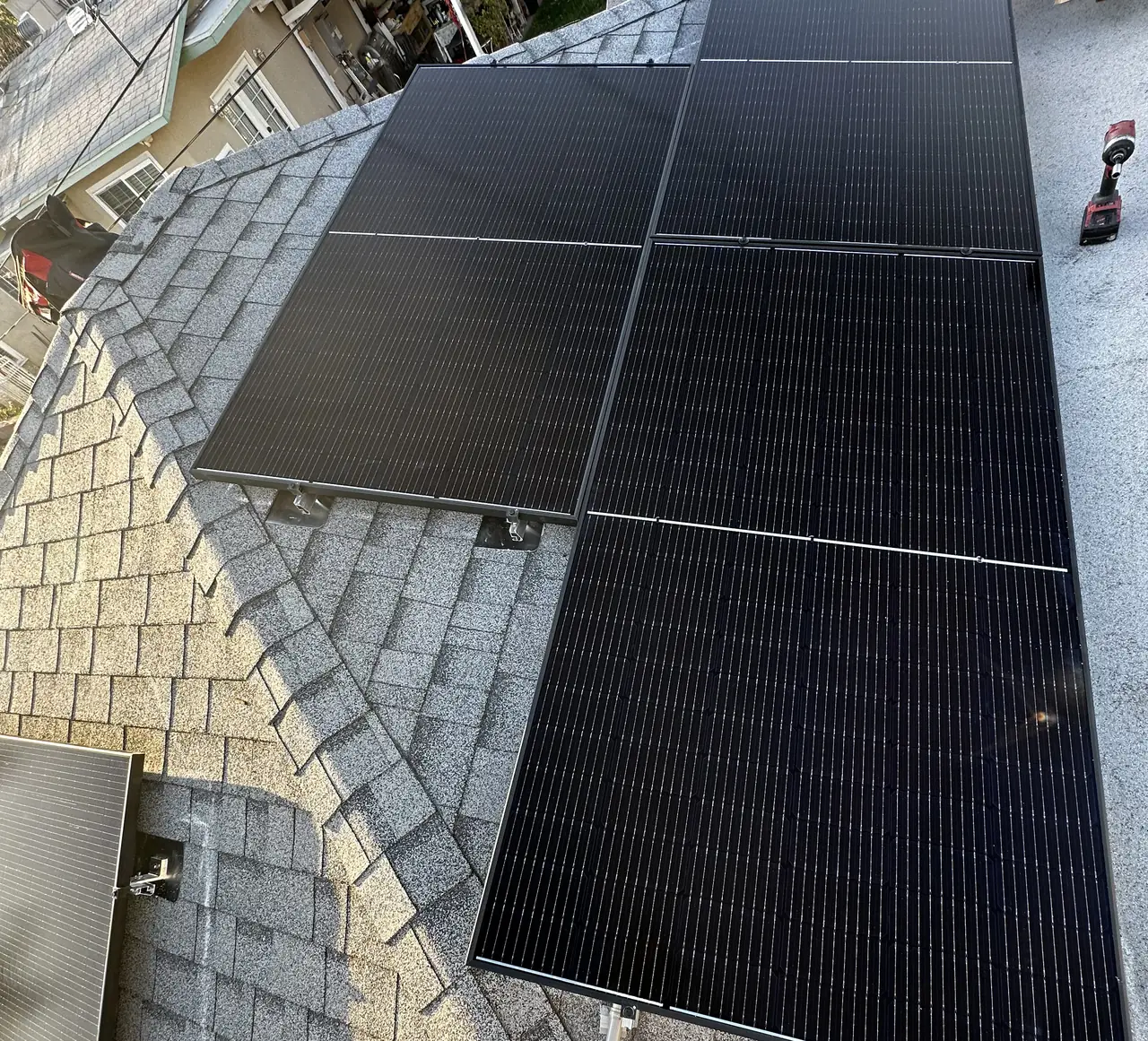
The day itself ran in the usual order. Attachments located, lagged and flashed. Rails set and leveled to the flashings. Microinverters mounted to the rails and cabled. Modules laid, clamped and connected, row by row. The last connections were made in the last of the evening light.
How it ran
| Before the day | Roof surveyed and pitch measured on site |
|---|---|
| Before the day | Layout fixed to the measured pitch and the required clearances |
| 22 November 2024, morning | Attachments located, lagged and flashed |
| 22 November 2024, midday | Rails set and leveled; microinverters mounted and cabled |
| 22 November 2024, afternoon | Twenty modules laid, clamped and connected in two rows of ten |
| 22 November 2024, close of day | Array connected and the roof left clear |
One day on the roof, after the decisions that made one day possible. This timeline reflects this property and this roof.
What we did
- Measured the roof pitch on site and built the layout from that number rather than from imagery (C-10).
- Laid out twenty modules as two rows of ten on the one plane that took them with full clearances.
- Located every attachment on structure, lagged it and flashed it individually.
- Set and leveled the rails to the flashings before any module arrived.
- Mounted and cabled a microinverter under each module position.
- Laid, clamped and connected the array in one working day and left the roof clear.
System specifications
| Modules | 20 x Hyundai Energy Solutions HiS-S400YH(BK) 400 W |
|---|---|
| System size | 8.0 kW DC |
| Microinverters | Enphase IQ8M, one per module |
| Array layout | Two rows of ten, one roof plane |
| Roof | Composition shingle |
| Attachments | Lagged to structure and flashed individually |
| Pitch | Measured on site before layout |
| Utility / AHJ | Burbank Water and Power / City of Burbank |
Is your project like this one?
- You have a simple shingle roof and want to know what a straightforward job looks like.
- You are choosing between a string inverter and microinverters.
- Your roof has one large face and you want to know whether the whole array fits.
- You have been quoted from an aerial photograph without a site visit.
Cali Energy in Burbank
Burbank is its own city with its own municipal utility: permits run through the City of Burbank Building & Safety Division, interconnection through Burbank Water and Power.
Most Burbank houses are single-story with a simple composition shingle roof, which is the easiest thing there is to put an array on and the easiest thing to get wrong by rushing.
This installation is on the Burbank projects page alongside the others, and what the work covers is set out on the Burbank service area page.
- License and classifications: CSLB #1032379
- Official reference for this process: California Energy Commission — solar equipment lists
- Official reference for this process: Burbank Water and Power — Solar Power
Frequently asked questions
Can twenty modules really go up in one day?
On a simple shingle roof with the layout settled, yes. What makes it possible is everything that happened first: the pitch measured on site, the attachment points located on structure, the clearances drawn in, the modules grouped. A crew that arrives to decide those things on the roof does not finish in a day, and should not try to.
Does Cali Energy install on composition shingle roofs in Burbank?
Yes, and it is the most common roof in the city. Cali Energy lags each attachment to structure and flashes it individually, sets and levels rails to those flashings, and lays the array on top. On this house that was twenty modules in a day. Eleven completed Burbank projects are on our projects page. Our license is CSLB #1032379.
Is one big roof plane better than several small ones?
For cost and simplicity, yes. A single face that holds the whole array with its clearances means one rail run, one conduit path and no crossings between planes, and each crossing is another penetration to flash. It does not change what the array produces. On a microinverter system an array broken across faces performs the same; it just costs more to build.
Why measure the pitch on the roof?
Because the pitch sets the layout, and the layout sets where every attachment lands. A figure taken from an aerial image or an old plan can be a degree or two out, which is enough to push a row of attachments off the structure they were meant to hit. It takes minutes on the roof and removes a whole class of problems.
What this would look like on your roof
Planning solar in Burbank? Tell us your utility, your roof and what your bill looks like now, and we will model what a system like this would do on your house before you commit to anything.
Or call +1 (323) 844-7777 · Cali Energy, Northridge · CSLB #1032379 (B, C-10, C-39) — design, permits, install and electrical under one licensed contractor.
Related
This timeline reflects this property and this permitting path. Updated September 2026.