

Burbank, CA · February 2025 · Burbank Water and Power / City of Burbank
Seventeen modules, two planes, one system.
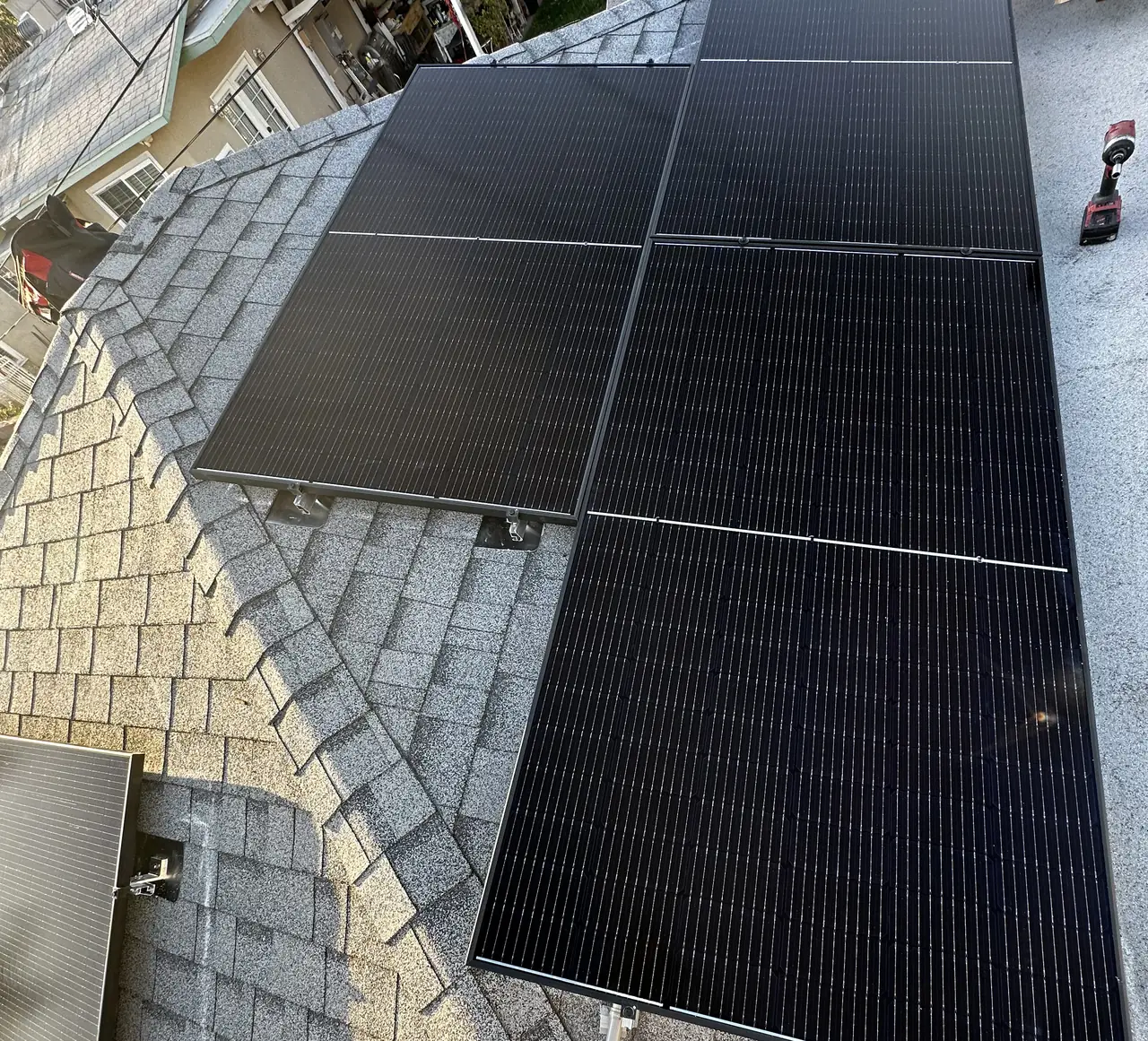
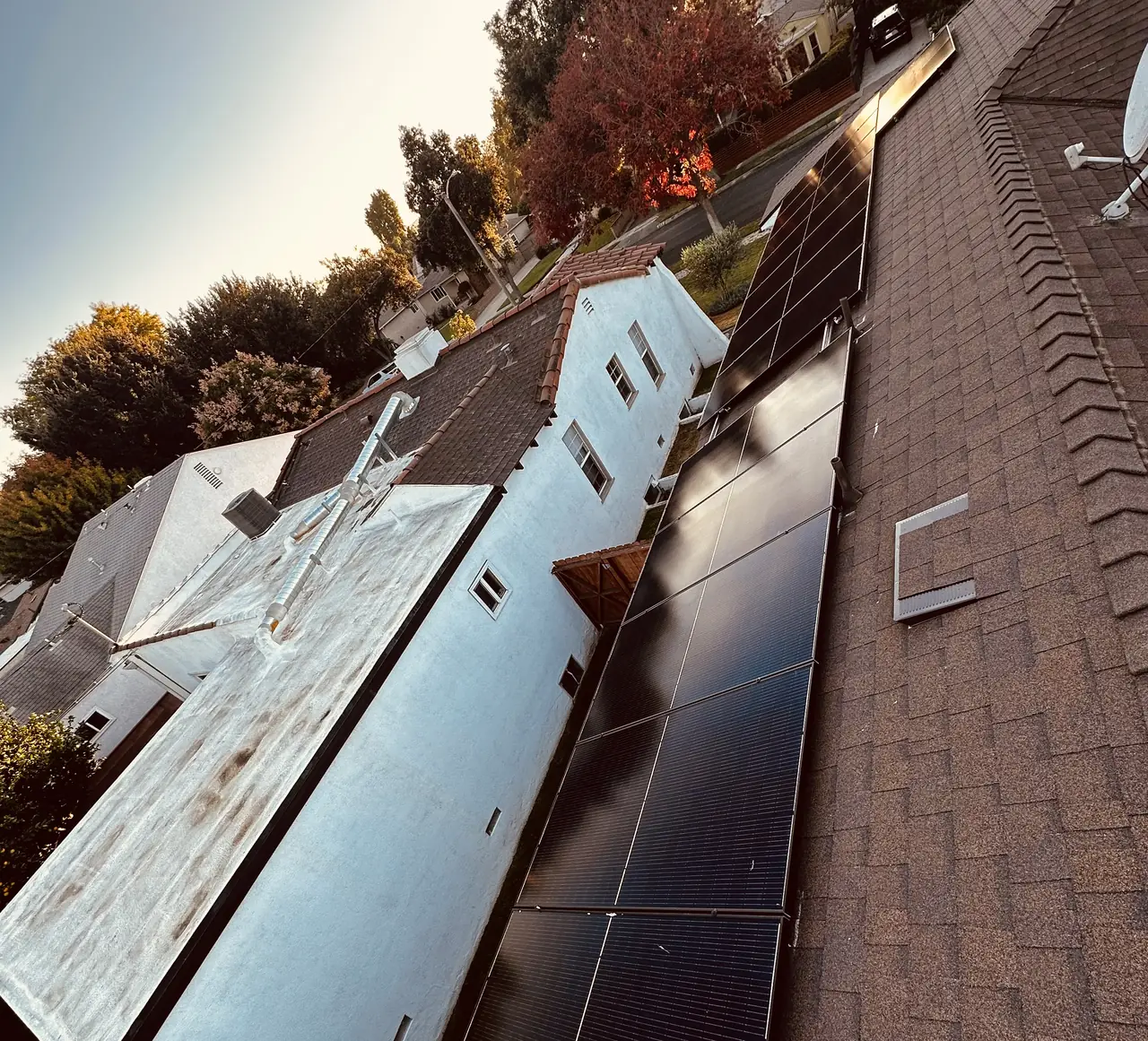
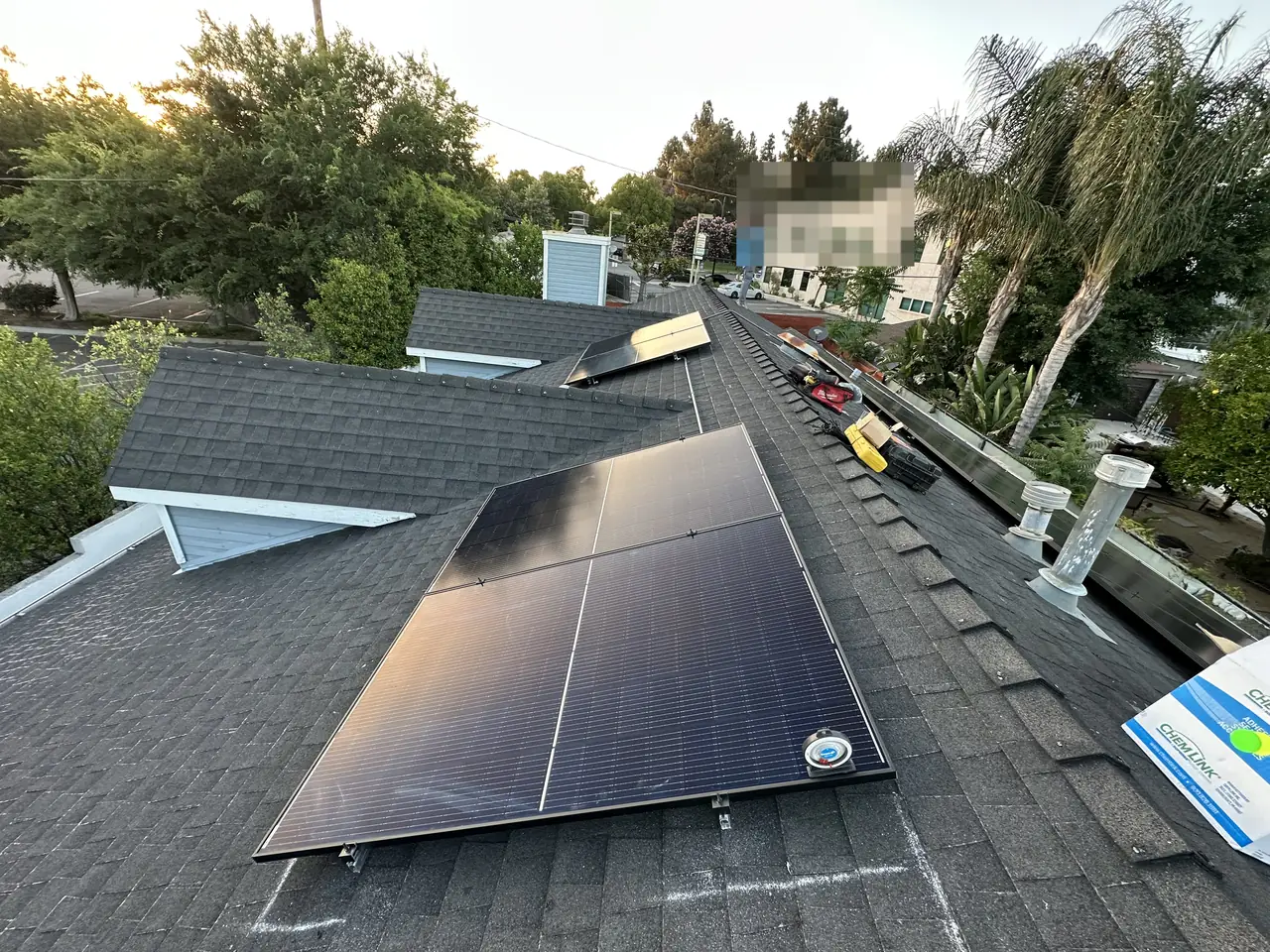
A 6.885 kilowatt array on a Burbank house whose roof had no single plane large enough for it. Nine modules went on one face and eight on another, in a day.
An odd module count usually means the roof, not the budget. Seventeen modules split nine and eight because neither plane on this house would take the whole array with its required clearances, and the split costs nothing when every module has its own microinverter. What the split does cost is roof penetrations: two arrays mean two sets of attachments, two rail runs and a conduit path that has to cross from one plane to the other, and every one of those crossings is a hole that has to be flashed properly. Burbank roofs are cut up enough that this is the normal case rather than the awkward one.
At a glance
- Modules
- 17 x Hyundai Energy Solutions HiS-S405YH(BK) 405 W
- System size
- 6.885 kW DC
- Microinverters
- Enphase IQ8MC, one per module
- Array layout
- Nine modules on one plane, eight on another
- Roof
- Composition shingle, multiple planes
- Balance of system
- Combiner panel and alternating current disconnect on the exterior wall
- Installation
- 26 February 2025
- Utility / AHJ
- Burbank Water and Power / City of Burbank
The story
Seventeen is not a number anybody chooses. It is what a roof gives back after the clearances are taken out of it.
This house has the shape a lot of Burbank houses have: a main ridge, a couple of hips, an addition that changed the roofline at some point, and no single surface big enough to hold a working array with its required perimeter. So Cali Energy laid the array across two of those faces, nine modules on the larger and eight on the smaller, and left the rest of the roof alone.
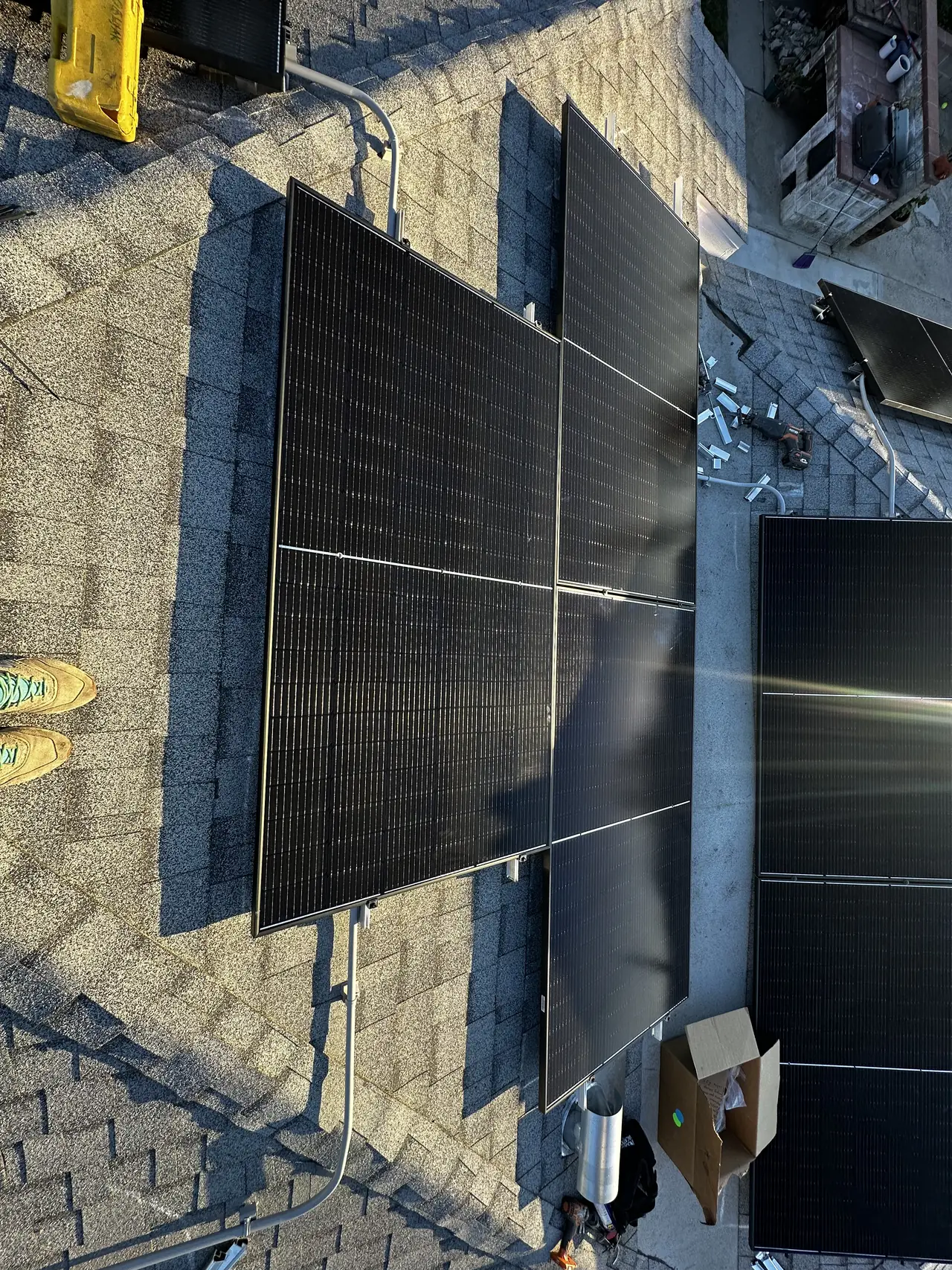
Splitting an array across orientations is only free if the electronics allow it. With one microinverter under each module, they do: every module converts on its own, reports on its own and is unaffected by what its neighbor on a different face is doing. Put the same seventeen modules on a string inverter across two orientations and the design gets harder and the losses get real.
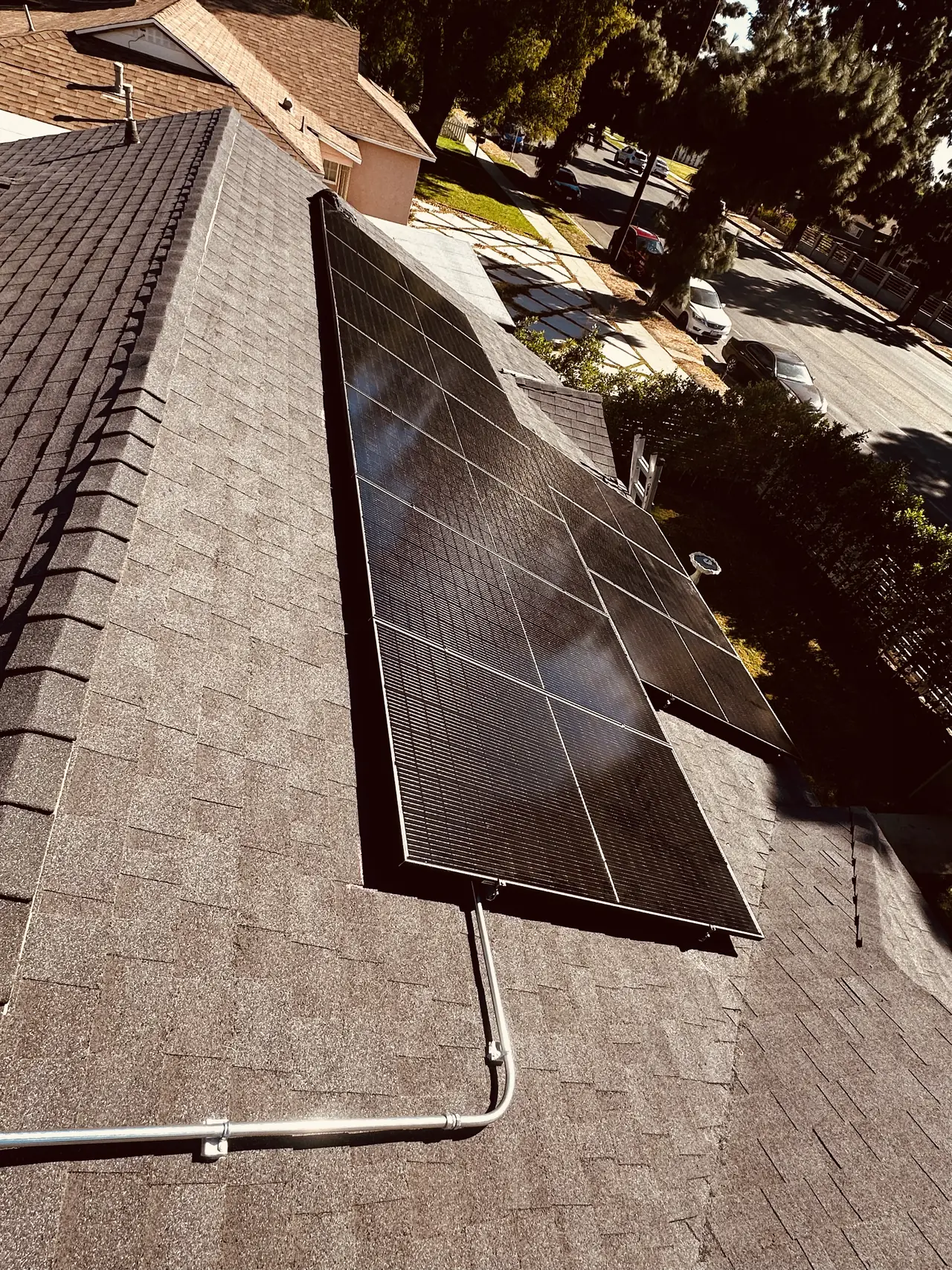
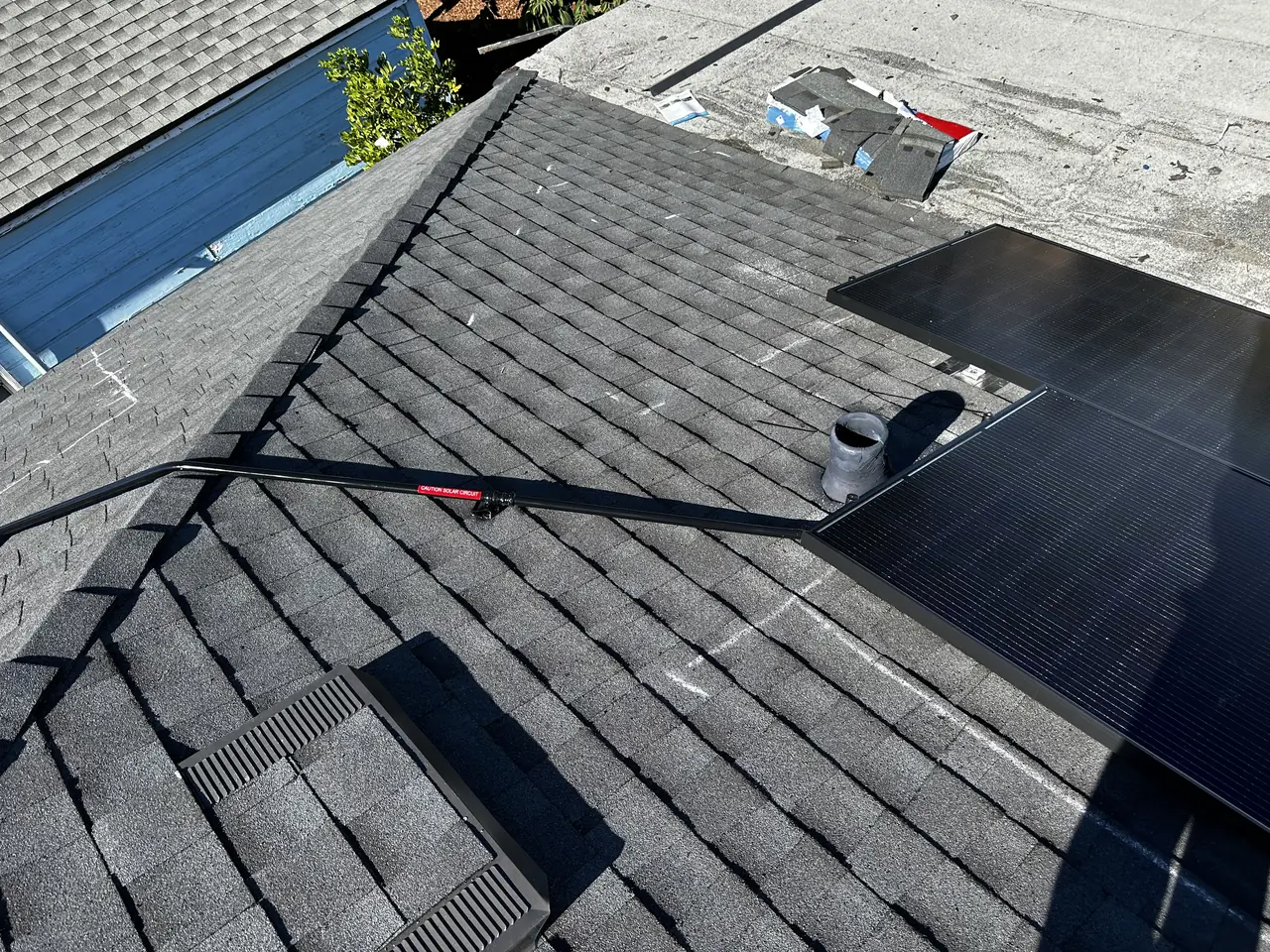
What the split genuinely costs is roof work. Two arrays mean two sets of attachments, two rail runs to level independently, and a conduit path that has to leave one plane and arrive on the other. Every one of those is a penetration, and a penetration on a shingle roof is not a hole with sealant in it.
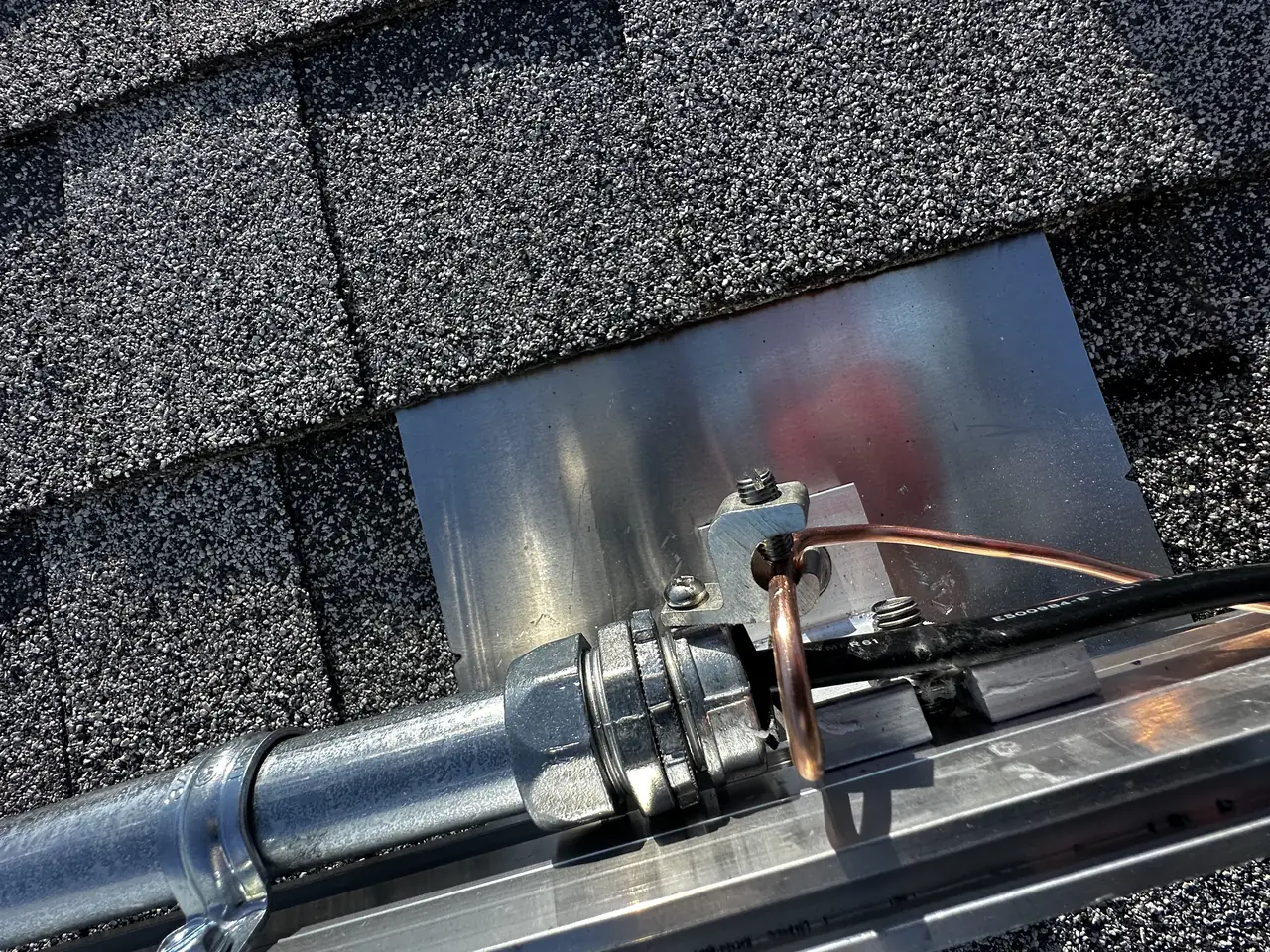
Done properly, the flashing plate slides under the shingle course above the hole, so that water running down the roof passes over the top of the flashing and never reaches the opening. Sealant is a secondary defense at the collar, not the thing holding the roof out of the house. Done improperly, the bead on the surface looks reassuring for about two winters.
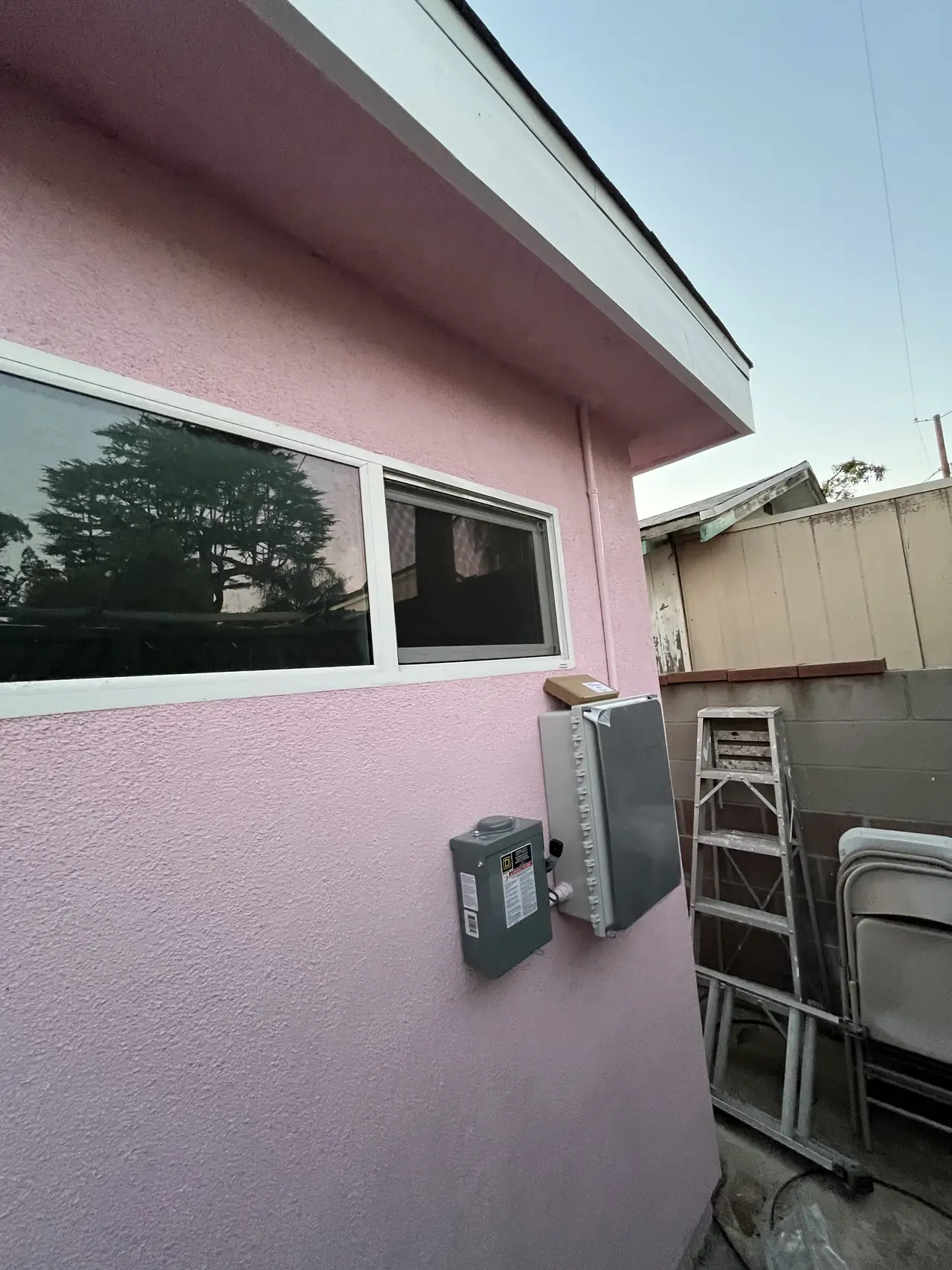
Everything from both planes comes down to the same wall: a combiner panel, an alternating current disconnect, and the tie into the house. Two arrays on the roof, one system on the wall, one circuit into the service. The whole installation ran on the twenty-sixth of February 2025.
How it ran
| Before the day | Roof surveyed; usable planes identified and clearances set |
|---|---|
| Before the day | Array split nine and eight across the two workable faces |
| 26 February 2025, morning | Attachments set and flashed on both planes |
| 26 February 2025, midday | Rails leveled; microinverters mounted and cabled |
| 26 February 2025, afternoon | Conduit crossing flashed between the planes |
| 26 February 2025, close of day | Modules connected; combiner and disconnect wall completed |
One installation day across two roof faces. This timeline reflects this property and this roof.
What we did
- Surveyed a cut-up roof and identified which planes would carry an array with full clearances (C-10).
- Split the array nine and eight rather than forcing one plane to take all seventeen.
- Flashed every attachment and every conduit crossing under the shingle course above it.
- Leveled two independent rail runs on two different faces.
- Mounted and cabled a microinverter under each module position.
- Brought both groups down to a single combiner and disconnect on the service wall.
System specifications
| Modules | 17 x Hyundai Energy Solutions HiS-S405YH(BK) 405 W |
|---|---|
| System size | 6.885 kW DC |
| Microinverters | Enphase IQ8MC |
| Array layout | Nine plus eight, two roof planes |
| Roof | Composition shingle |
| Penetrations | Individually flashed under the course above |
| Balance of system | Combiner panel and alternating current disconnect |
| Utility / AHJ | Burbank Water and Power / City of Burbank |
Is your project like this one?
- Your roof is cut into several small faces by hips, valleys or an addition.
- You have been given an odd module count and want to know where it came from.
- You are weighing microinverters against a string inverter on a complicated roof.
- You want to know what a roof penetration under an array actually looks like.
Cali Energy in Burbank
Burbank is its own city with its own municipal utility: permits run through the City of Burbank Building & Safety Division, interconnection through Burbank Water and Power.
A lot of Burbank roofs are cut into several small planes by hips, valleys and additions. An array on a roof like that is not one array, it is two or three that happen to share a combiner.
This installation is on the Burbank projects page alongside the others, and what the work covers is set out on the Burbank service area page.
- License and classifications: CSLB #1032379
- Official reference for this process: California Energy Commission — solar equipment lists
- Official reference for this process: California Building Standards Commission — California Building Standards Code
Frequently asked questions
Does splitting an array across two roof faces lose production?
With one microinverter per module, effectively no. Each module converts independently, so a group facing one way does not drag on a group facing another. On a string inverter the answer changes: modules in a string interact, orientation differences matter, and the design has to group and match them much more carefully.
Does Cali Energy install arrays across more than one roof plane in Burbank?
Yes, and on Burbank's cut-up roofs it is often the only way to reach a useful system size. On this house Cali Energy split seventeen modules nine and eight across two faces and brought both groups to one combiner. Eleven completed Burbank projects are on our projects page. Our license is CSLB #1032379.
Why is my system an odd number of modules?
Because the roof decided it. Once fire clearances, vents, skylights and equipment are taken out, what remains is rarely a tidy rectangle, and the module count is whatever fits inside what is left. Seventeen here is nine on one plane and eight on another, which is the roof's answer rather than a compromise on the system.
How should a roof penetration under solar be sealed?
With a flashing plate set under the shingle course above the hole, so water running down the roof passes over the flashing and never reaches the opening. Sealant belongs at the collar as a secondary measure, not on the surface as the primary one. A penetration sealed only with a bead on top of the shingles is a leak with a delay on it.
What this would look like on your roof
Planning solar in Burbank? Tell us your utility, your roof and what your bill looks like now, and we will model what a system like this would do on your house before you commit to anything.
Or call +1 (323) 844-7777 · Cali Energy, Northridge · CSLB #1032379 (B, C-10, C-39) — design, permits, install and electrical under one licensed contractor.
Related
This timeline reflects this property and this permitting path. Updated September 2026.