

Burbank, CA · December 2025 – August 2026 · Burbank Water and Power / City of Burbank
The mounts went in first. Everything else followed that.
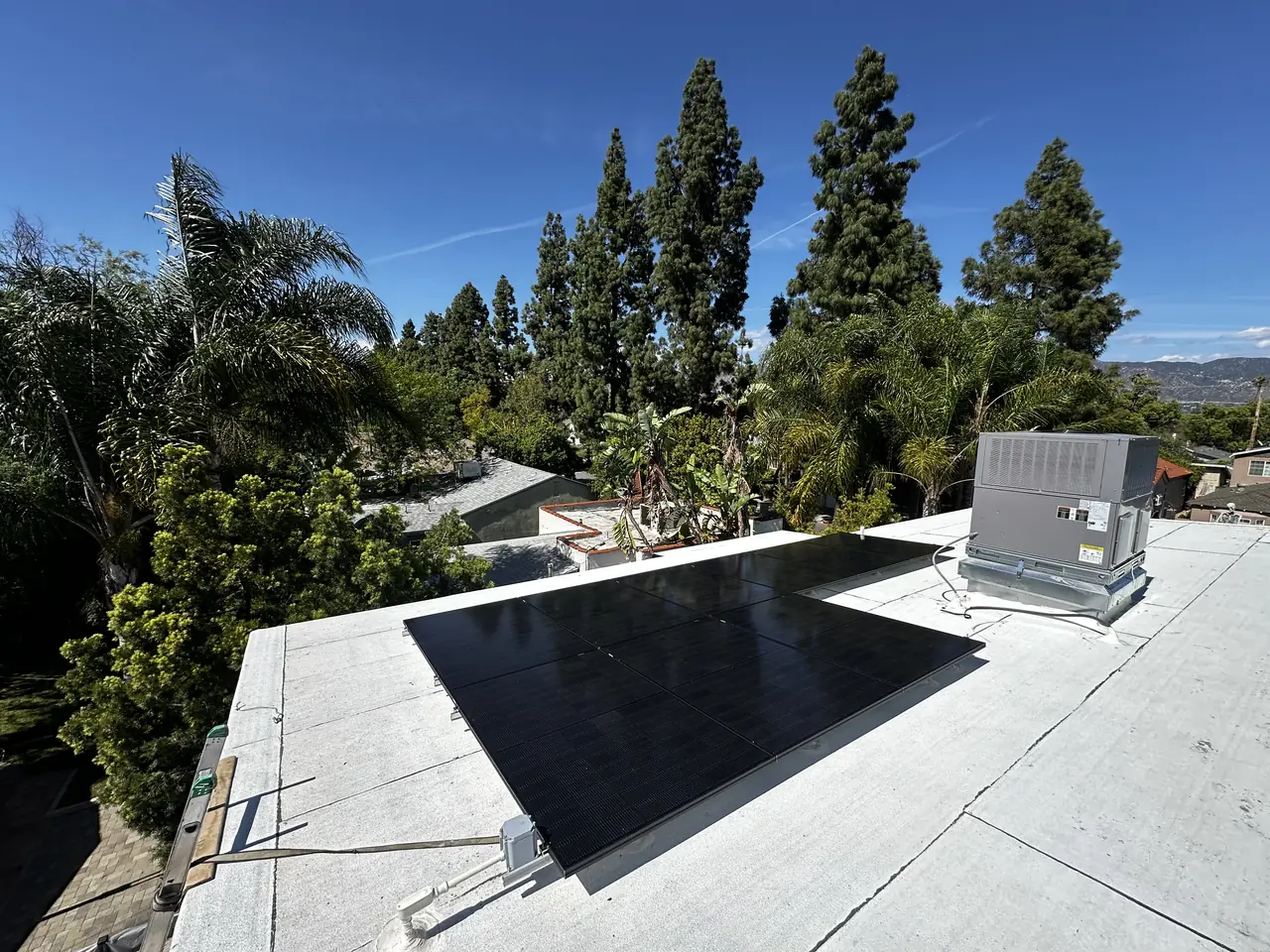
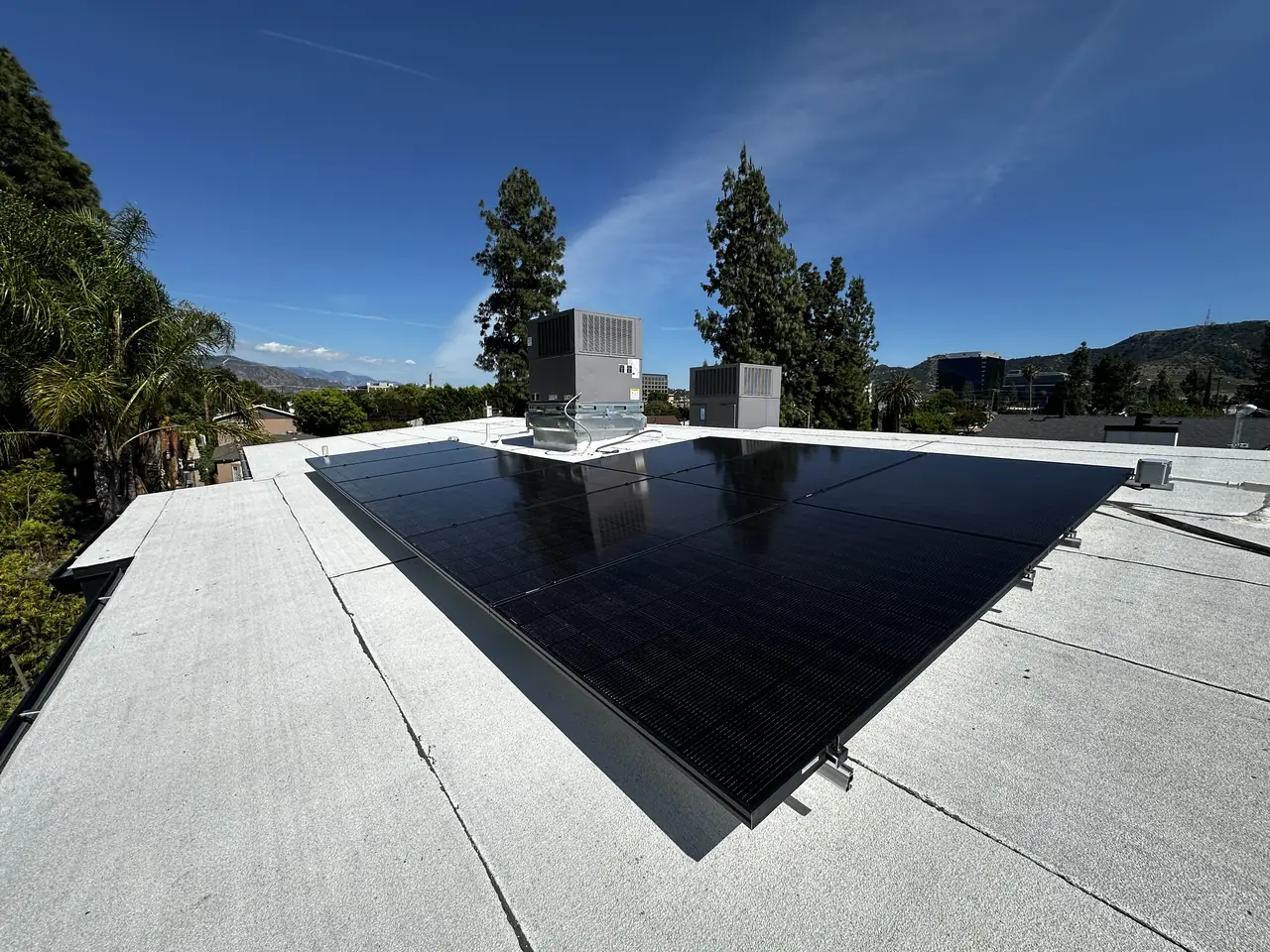
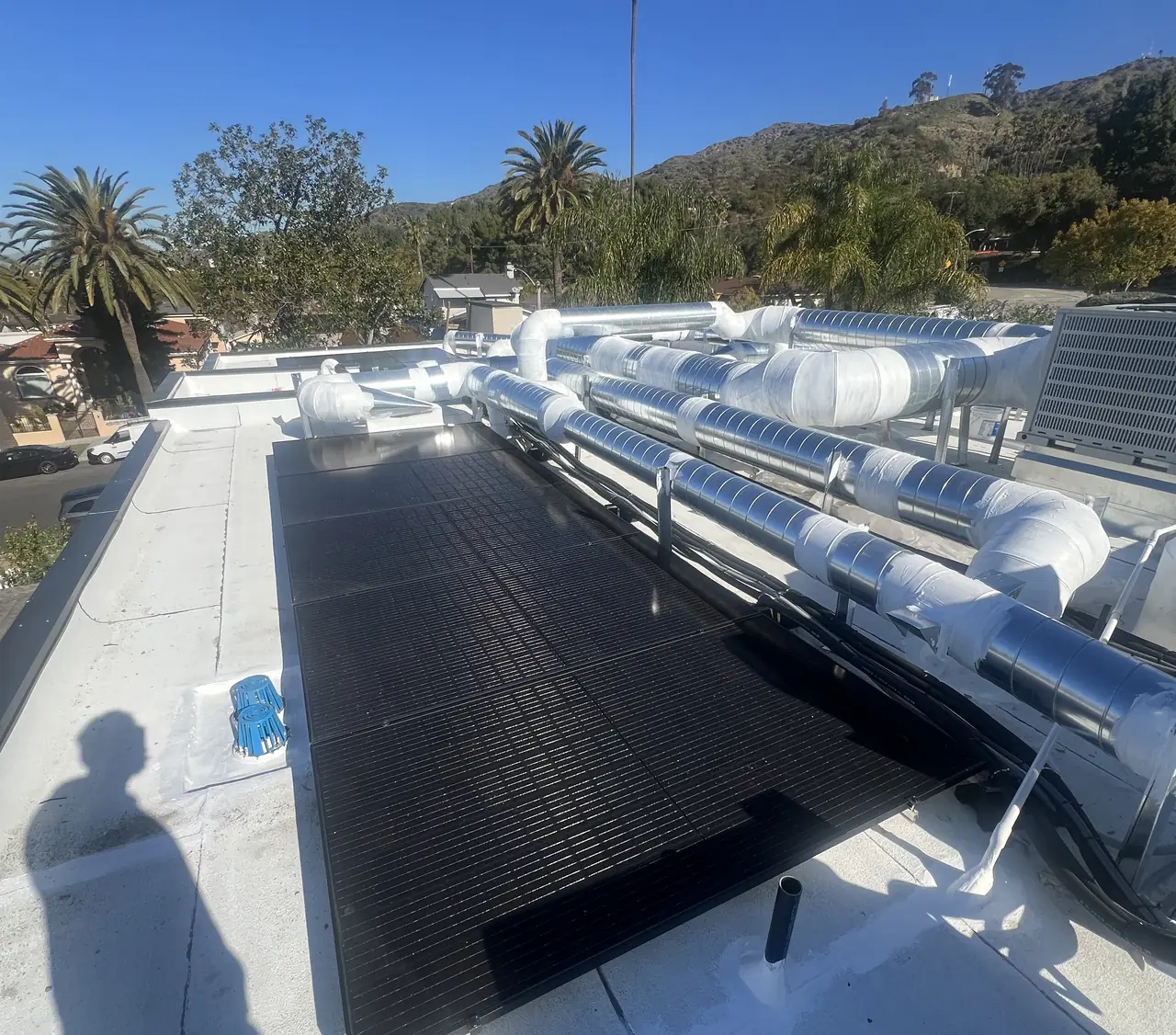
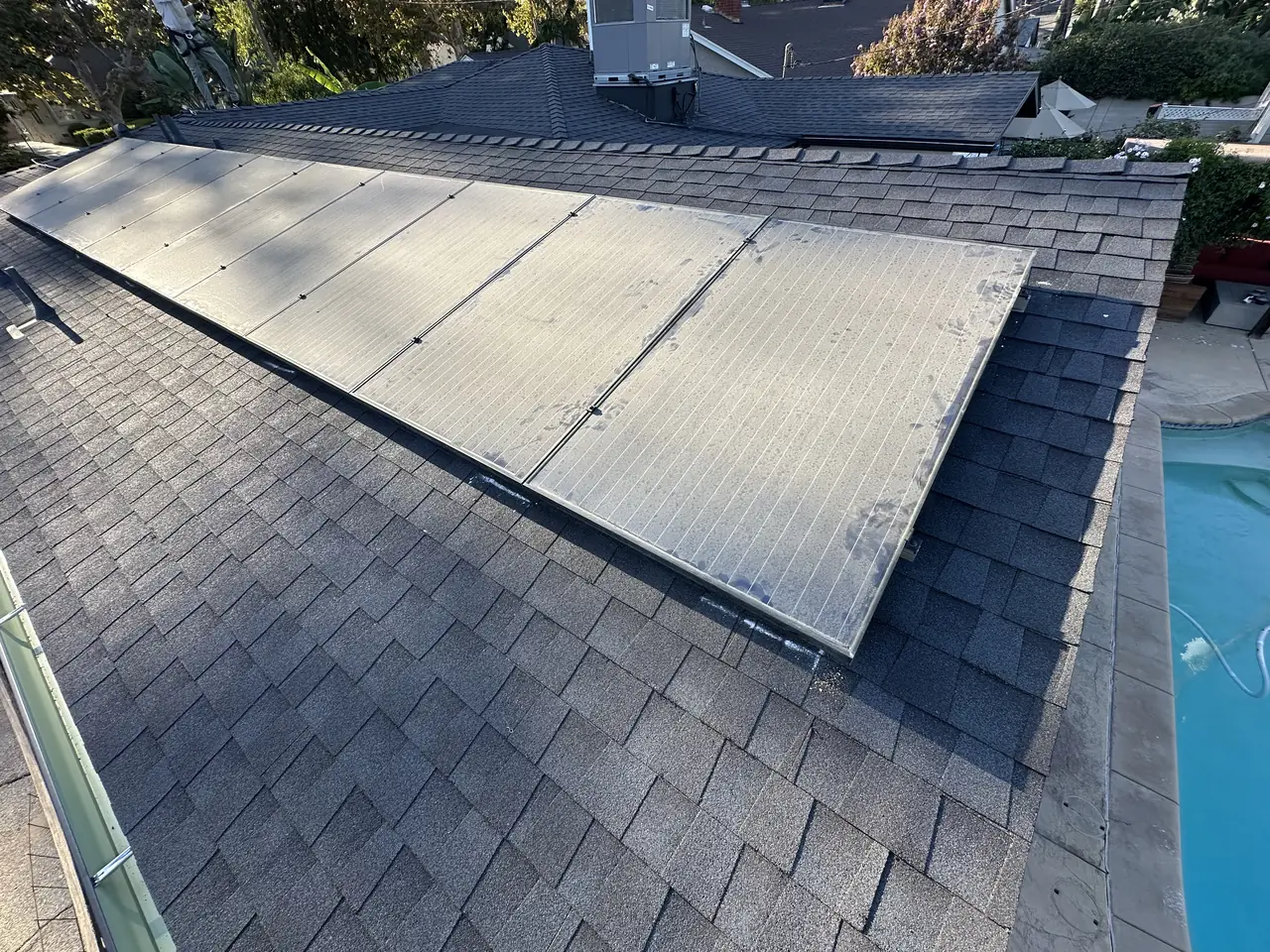
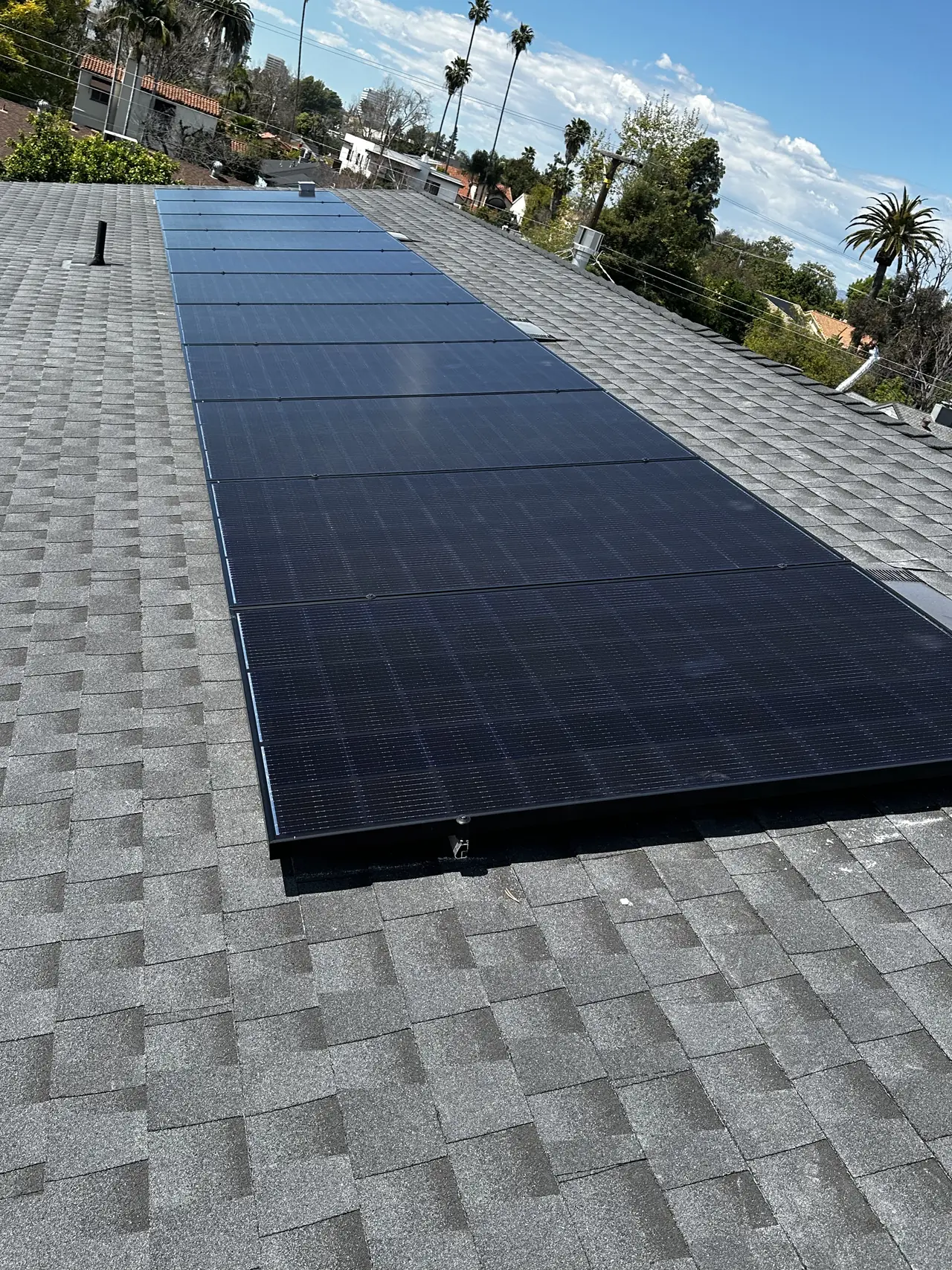
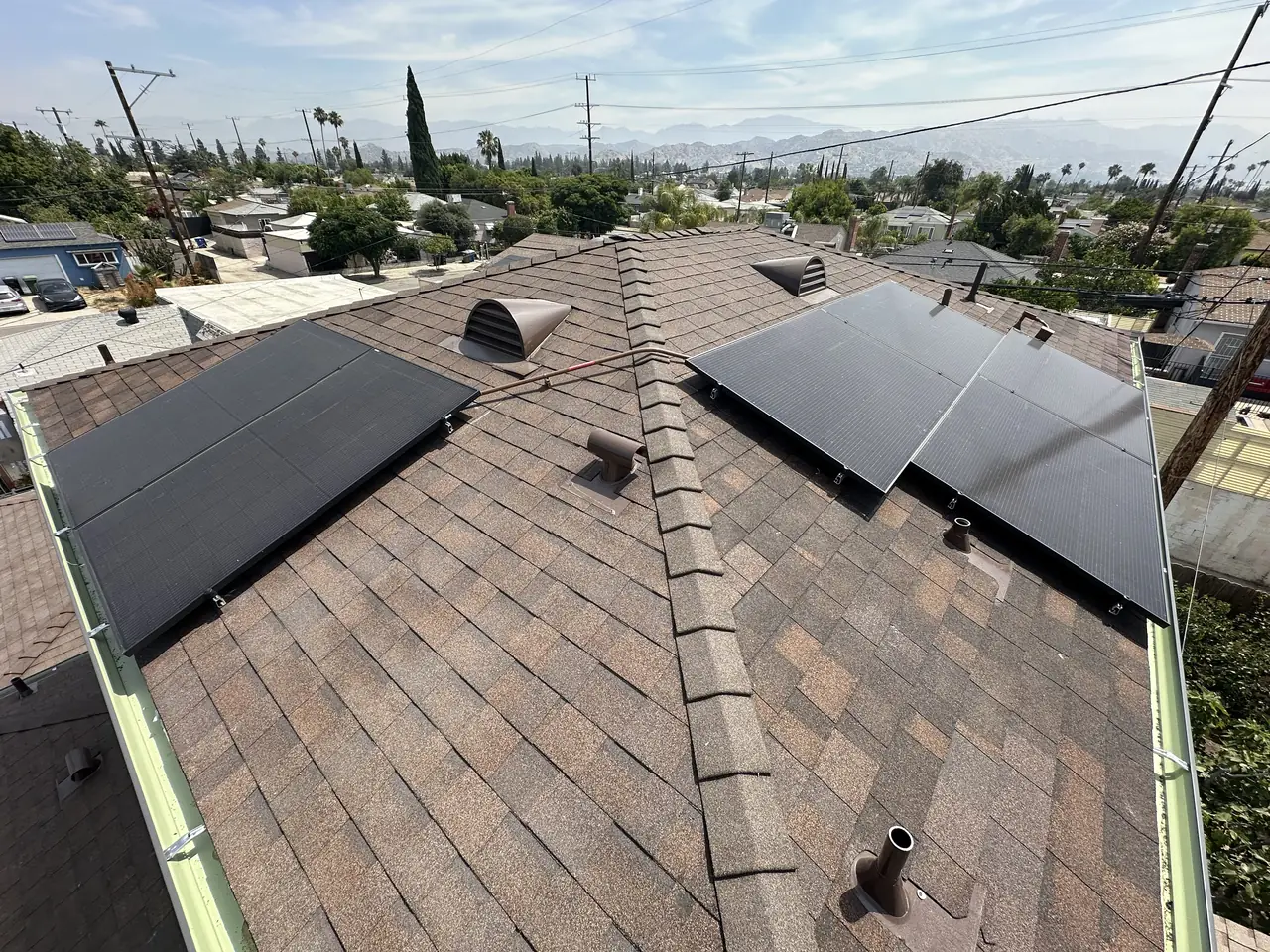
A nine-module array on a house that was still being built in Burbank. The roof attachments were set in December, before the roof was, and the plans reached the utility twelve days before the end of the year.
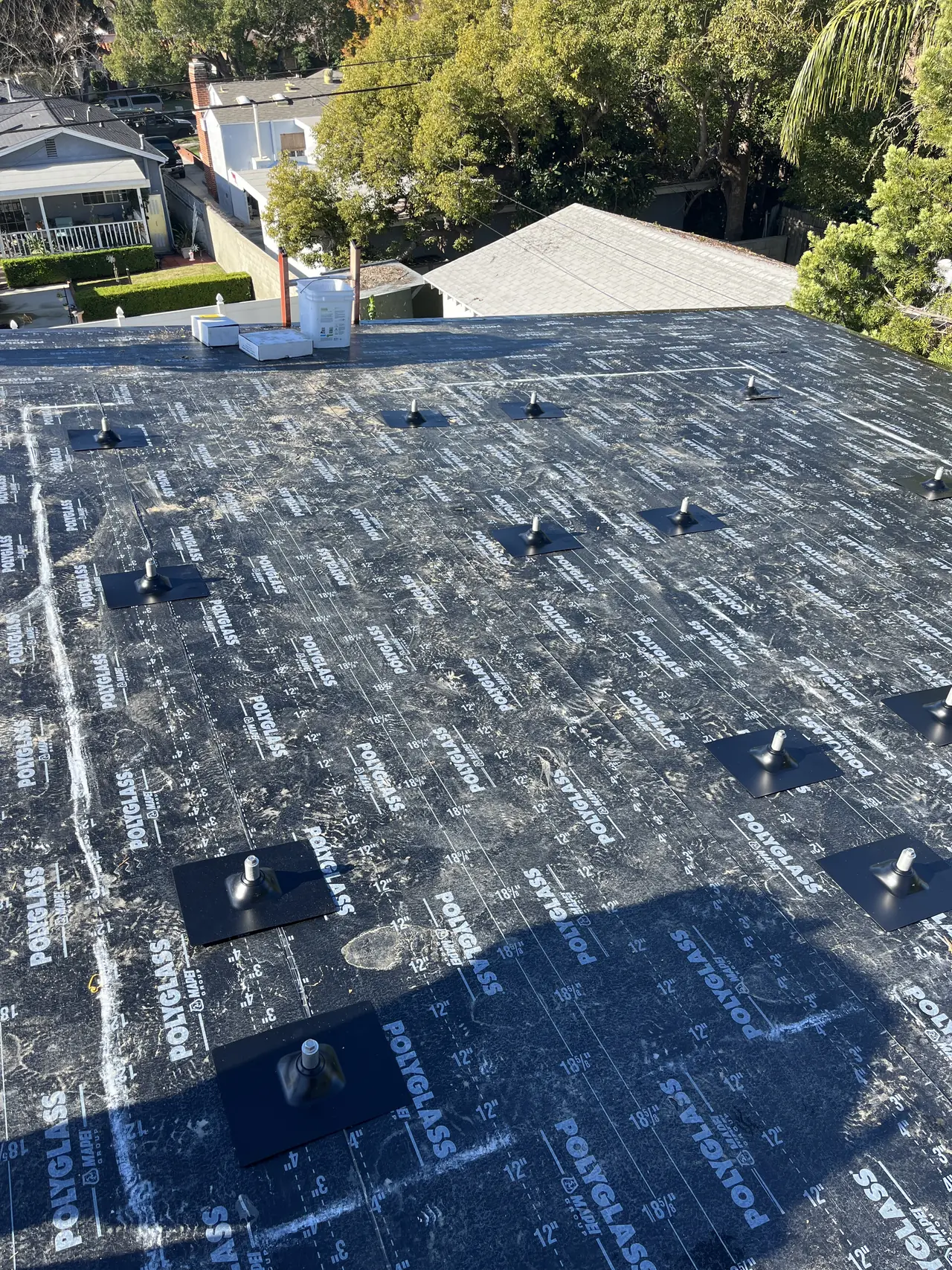
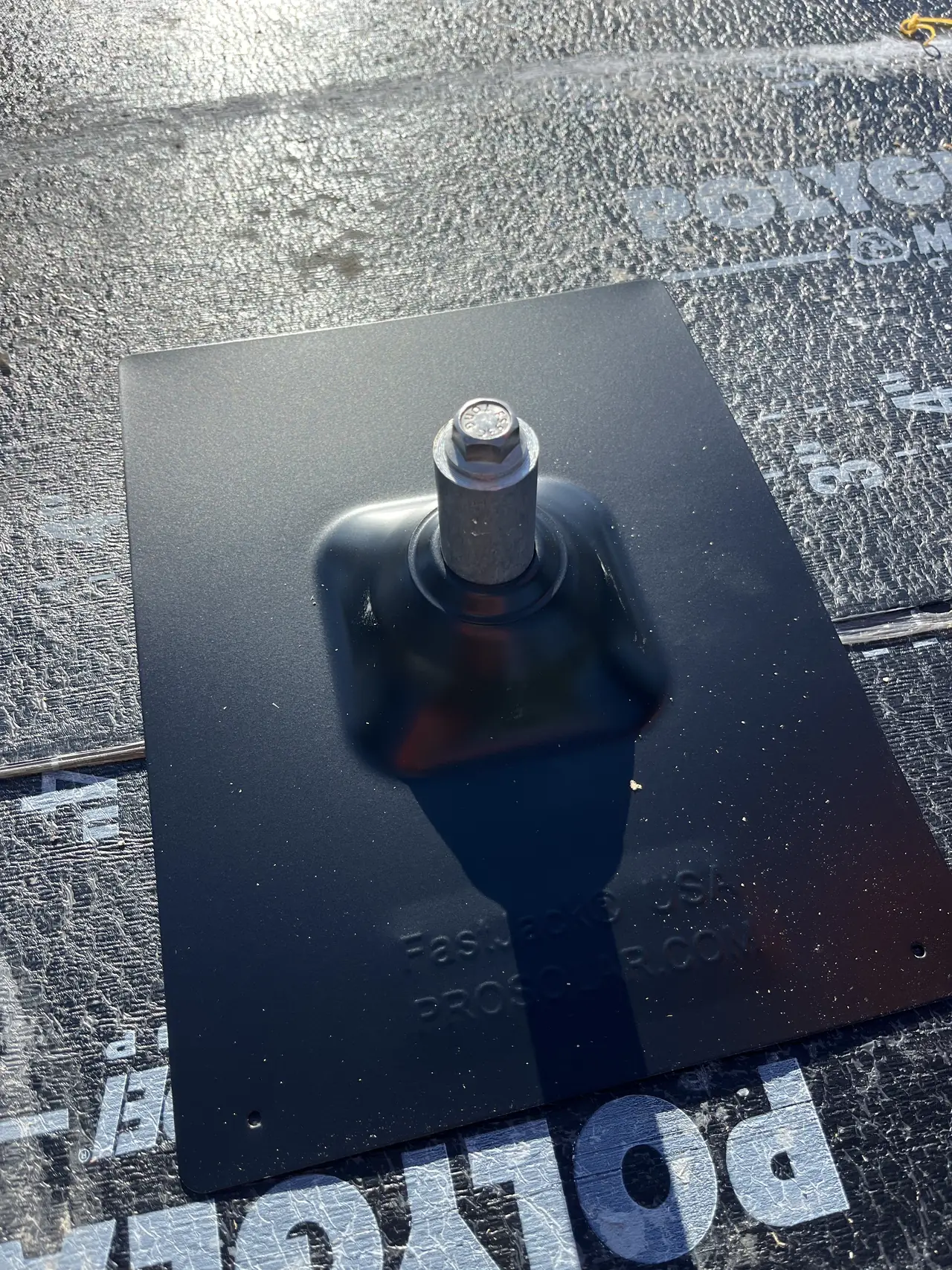
On new construction the cheapest moment to attach an array is before the roof covering goes on. The standoffs are lagged into the structure, flashed, and the roofer then works over and around them, so nothing cut or patched afterwards. Doing it the other way means opening a roof that was finished days earlier. On this house the mounts went in on the fifteenth of December and the roofers started the same week. That same week put the plan set in front of Burbank Water and Power, which decided the metering terms.
At a glance
- Modules
- 9 x Canadian Solar TOPHiKu6 CS6.2-48TM 445 W
- System size
- 4.005 kW DC
- Microinverters
- Enphase IQ8A, one per module
- Building
- New single-family house under construction
- Service
- New 200 A solar-ready main panel
- Mounts set
- 15 December 2025, before the roof covering
- Field acceptance
- 20 August 2026, solar and the new main panel together
- Utility / AHJ
- Burbank Water and Power / City of Burbank
The story
The house was a shell in December. The deck was on, the underlayment was down, and the roofers were due the following week. That gap is the only easy moment a solar array ever gets, and Cali Energy sent a crew into it.
What happens in that window is not glamorous. The attachment points are laid out from the approved array layout, lagged into the structural members, and each one is flashed and sealed on the underlayment. Then everybody leaves, and the roofers install the finished covering over and around them. The array itself arrives months later and bolts to standoffs that were waterproofed before the roof existed.
Compare that with the normal sequence. A finished roof is a system: covering, flashing, laps, all built to shed water in one direction. Every attachment afterwards is a hole cut into that system and then repaired. Good installers repair it properly and it lasts, which is why retrofit arrays are perfectly normal. But on a Burbank house that is being built anyway, choosing to make those holes later rather than earlier is choosing to pay for work that did not need doing.
The second thing that happened in December had nothing to do with the roof. The complete plan set reached the utility on the nineteenth, and the drawings came back on the twenty-second with no corrections at all. On the thirty-first the utility wrote to say that because the plans had arrived before the end of the year, this customer would be placed on its established net energy metering terms rather than the newer solar net billing arrangement.
That is a municipal utility running its own transition on its own calendar, and it is a real reason to care about filing dates rather than installation dates. A system connected in August 2026 was placed under terms set by a plan set received in December 2025. Nothing about the hardware changed. The date on the submission did.
The rest was ordinary and slow. The property was on a temporary construction meter, so the size review again ran on estimated living area rather than on bills. The field visit was booked for January and the meter spot issued that month. In February a fault in the city's own permitting system held up the express permit until the city resolved it. In July the utility noted that the new main panel needed its own electrical permit, separate from the solar, and that was pulled and finalled. The field acceptance issued in August for the solar and the new two-hundred amp panel together.
How it ran
| 15 December 2025 | Roof attachments set and flashed on the underlayment, before the roofing |
|---|---|
| 19 December 2025 | Complete plan set submitted to the utility |
| 22 December 2025 | Drawings returned with no corrections |
| 31 December 2025 | Utility confirms the established metering terms apply, plans having arrived in time |
| 8 January 2026 | Utility field visit |
| 16 January 2026 | Solar meter spot issued; interconnection forms requested |
| 11 February 2026 | Permit delayed by a fault in the city permitting system |
| 22 April 2026 | Array installed |
| 29 July 2026 | Separate electrical permit confirmed for the new main panel |
| 20 August 2026 | Field acceptance issued for solar and the new 200 A panel |
Eight months from the mounts to field acceptance, on a house that was being built around them. This timeline reflects this project.
What we did
- Set and flashed every roof attachment on the underlayment before the roofing went on, to the approved array layout (C-10).
- Coordinated that day against the roofing schedule so neither trade waited on the other.
- Submitted a complete plan set that came back without corrections.
- Got the plans in before the year end, which decided the metering terms.
- Built the size justification from living area on a property with only a temporary construction meter.
- Took the field visit and installed to the meter spot conditions.
- Pulled the separate electrical permit for the new main panel and carried both to final.
System specifications
| Modules | 9 x Canadian Solar TOPHiKu6 CS6.2-48TM 445 W |
|---|---|
| System size | 4.005 kW DC |
| Microinverters | Enphase IQ8A |
| Roof | Low-slope, attachments set before the covering |
| Service | New 200 A solar-ready main panel, permitted separately |
| Metering during construction | Temporary construction meter |
| Permitting route | Online express permit |
| Utility / AHJ | Burbank Water and Power / City of Burbank |
Is your project like this one?
- You are building and the roofer is about to start.
- You want the array attachments made before the roof rather than cut into it after.
- Your utility is changing its metering terms and you are trying to file in time.
- Your property is on a temporary construction meter and the utility wants usage figures.
- You have been told the panel upgrade is covered by the solar permit.
Cali Energy in Burbank
Burbank is its own city with its own municipal utility: permits run through the City of Burbank Building & Safety Division, interconnection through Burbank Water and Power.
Burbank Water and Power sets its own interconnection terms, and the date a complete plan set arrives can decide which of them a customer falls under. On a house still under construction that date is negotiable in only one direction.
This installation is on the Burbank projects page alongside the others, and what the work covers is set out on the Burbank service area page.
- License and classifications: CSLB #1032379
- Official reference for this process: Burbank Water and Power — Solar Power
- Official reference for this process: City of Burbank — Building & Safety
Frequently asked questions
Why set solar mounts before the roof goes on?
Because a finished roof is a water-shedding system and every attachment made afterwards is a hole cut into it and then repaired. Setting the standoffs on the underlayment lets each one be flashed into the roof as it is built, so the roofer works over them. It costs one coordinated day during construction and removes a whole category of later risk.
Does Cali Energy work on houses that are still under construction in Burbank?
Yes, and it is usually the better time. On this house Cali Energy set and flashed the roof attachments before the roofing went on, ran the interconnection through Burbank Water and Power, and returned months later to install the array on mounts that were already watertight. Eleven completed Burbank projects are on our projects page. Our license is CSLB #1032379.
Does the date I file really change my metering terms?
It can. A municipal utility runs its own interconnection terms on its own calendar, and on this project the utility confirmed that because a complete plan set arrived before the end of the year, the established net metering arrangement applied rather than the newer one. The system was connected eight months later under terms set by that filing date.
Is a main panel upgrade covered by the solar permit?
Not in Burbank. A new main electrical panel takes its own electrical permit from the building division, separate from the solar permit, and its own final inspection before the utility will commission anything. It is worth establishing at the start which permits a project needs, because the two run on separate tracks and the utility waits for both.
What this would look like on your roof
Planning solar in Burbank? Tell us your utility, your roof and what your bill looks like now, and we will model what a system like this would do on your house before you commit to anything.
Or call +1 (323) 844-7777 · Cali Energy, Northridge · CSLB #1032379 (B, C-10, C-39) — design, permits, install and electrical under one licensed contractor.
Related
This timeline reflects this property and this permitting path. Updated September 2026.