

Studio City, CA · May 2024 – August 2025 · LADWP / LADBS
We asked for the building final and the solar final on one date.
A new two-story house and a detached accessory dwelling, arrays on a standing-seam metal roof, and one scheduling request made three weeks before anybody booked anything.
There is no city-wide rule that a building final and a solar final must share a date. What there is, on a house being finished, is a practical reason to ask for it: the solar inspection wants a finished building, and the building inspection happens whether or not the array is ready. Putting both on one booked date removes the chance of one arriving before the other is ready. On this project we asked in April, and the final release reached the utility three days after the interconnection was filed.
At a glance
- Buildings
- New two-story house and a detached accessory dwelling
- Recorded by the utility
- 3.9 kW and 2.18 kW
- Roof
- Standing-seam metal
- Work requests
- Two, filed the same day
- Building department release
- Three days after filing
- Permission to operate
- 6 August 2025, both
- Filing to permission
- 93 days
- Utility / AHJ
- LADWP / LADBS
The story
In the middle of April 2025 we wrote to this client with a request that reads like administrative trivia: put the building final and the solar final inspections on the same date.
That is a request, not a requirement. Nothing in the city's published procedure says the two finals have to share a day, and on plenty of projects they do not. It is worth asking for anyway, and the reason is worth understanding.
On a house that is finished and lived in, a solar final is its own appointment: an inspector comes, looks at an array on a completed building, signs it off. On a house that is still being finished, the two visits are looking at the same thing from different directions. If the building is not signed off, the solar inspection is being asked to pass a system on an unfinished structure. If the solar is not ready when the building final comes round, the building final happens anyway and the array waits for its own appointment.
So the useful question to a builder is not are you ready, it is which day are you booking the building final — because that is the day worth putting the solar final on. We asked it in April and asked the client to tell us, so the site could be prepared for both.
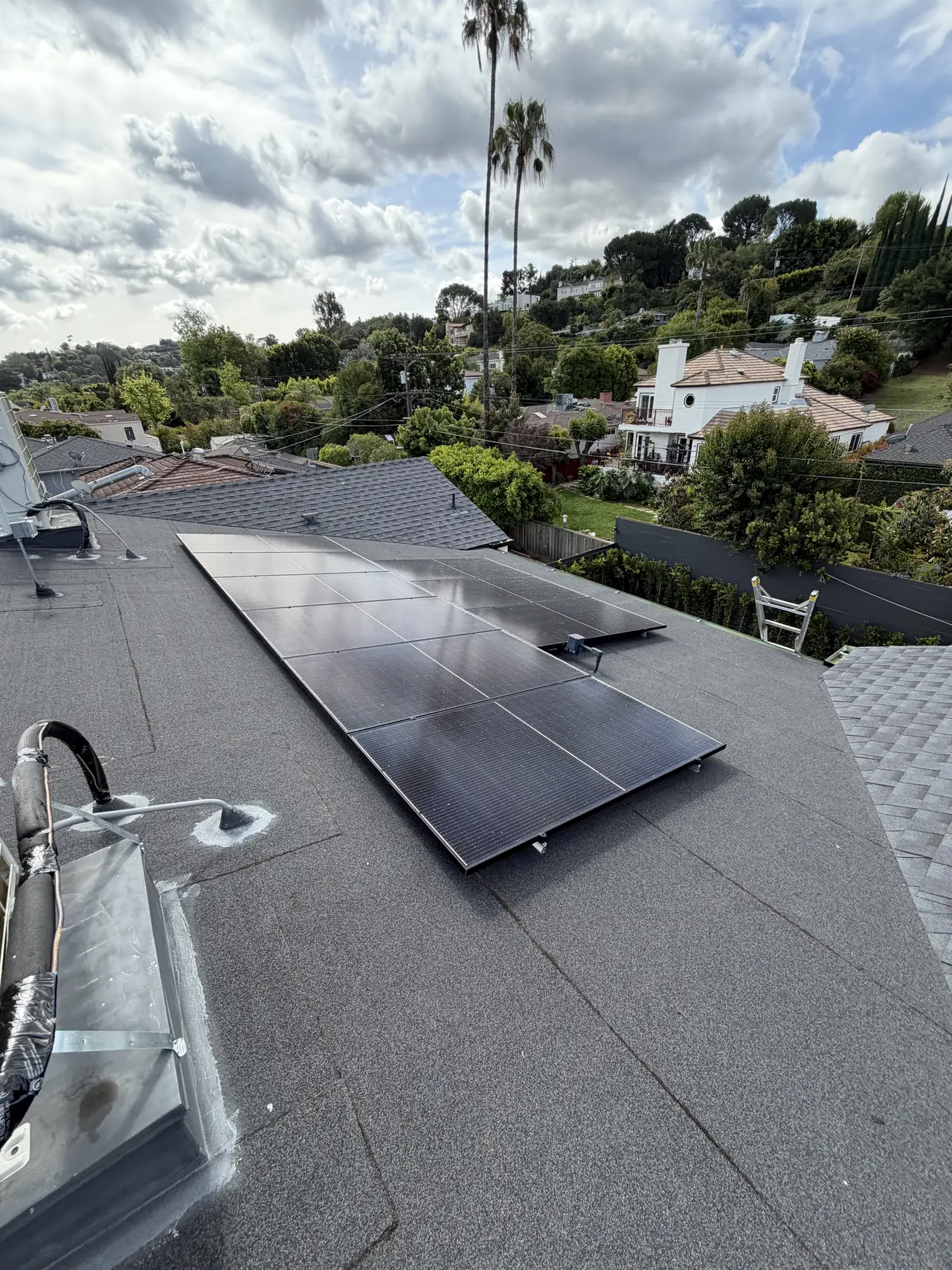
The lot itself is the Studio City pattern: the old single-family house demolished, a new two-story dwelling in its place with fire sprinklers throughout, and a separate single-story accessory dwelling behind it. Two buildings, each separately metered, so two arrays and two interconnection requests — the utility recorded them at 3.9 and 2.18 kilowatts.
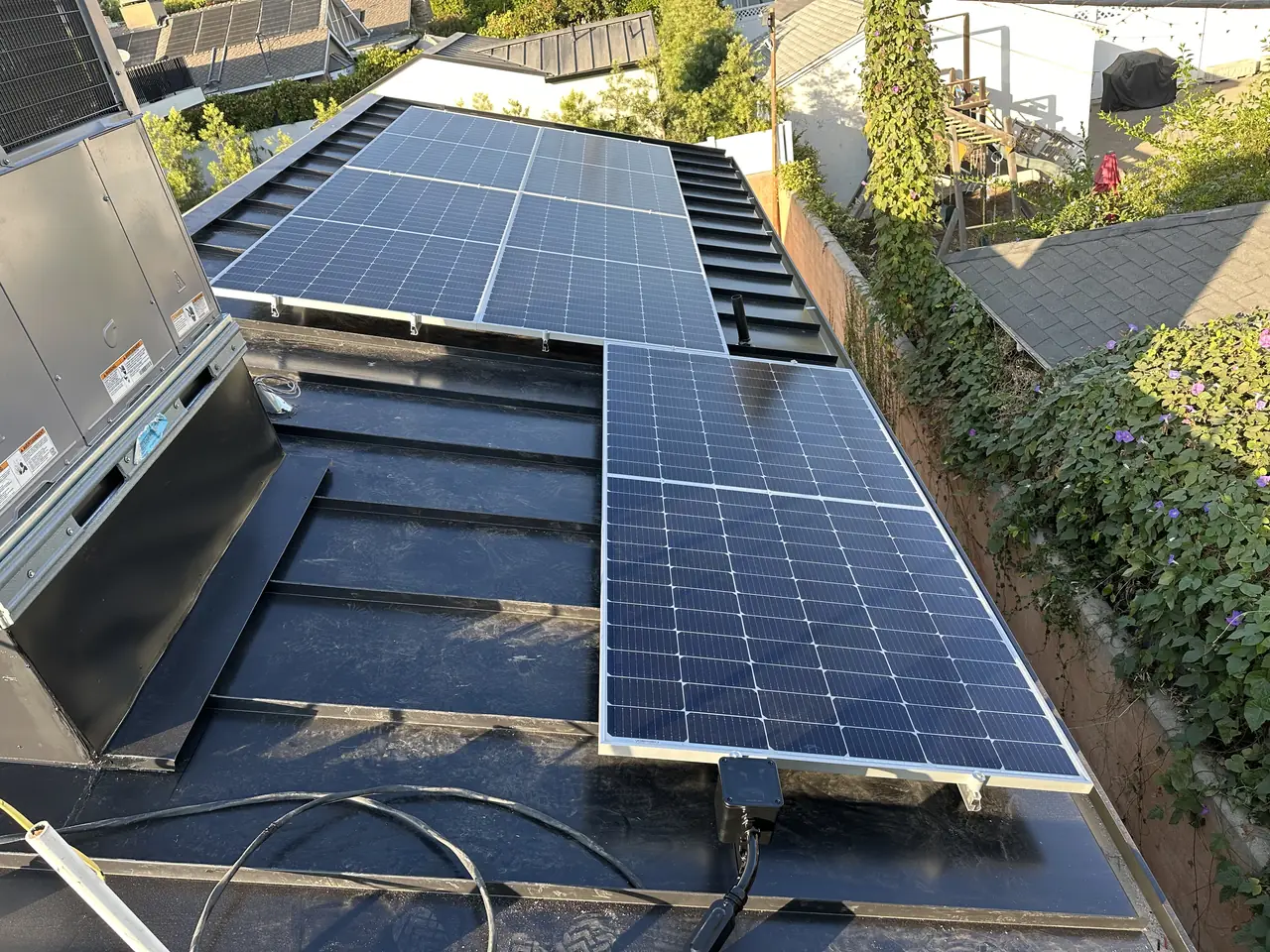
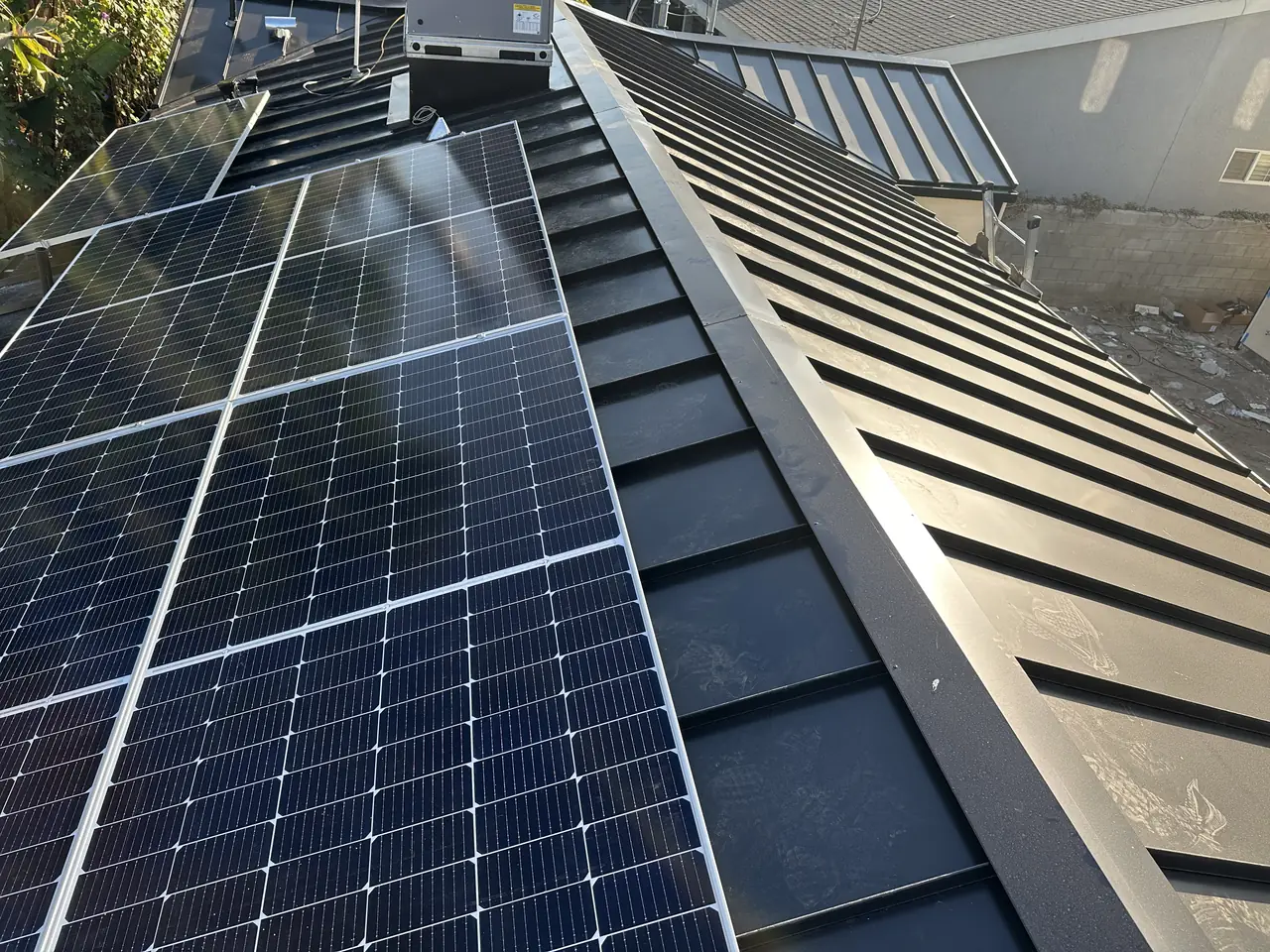
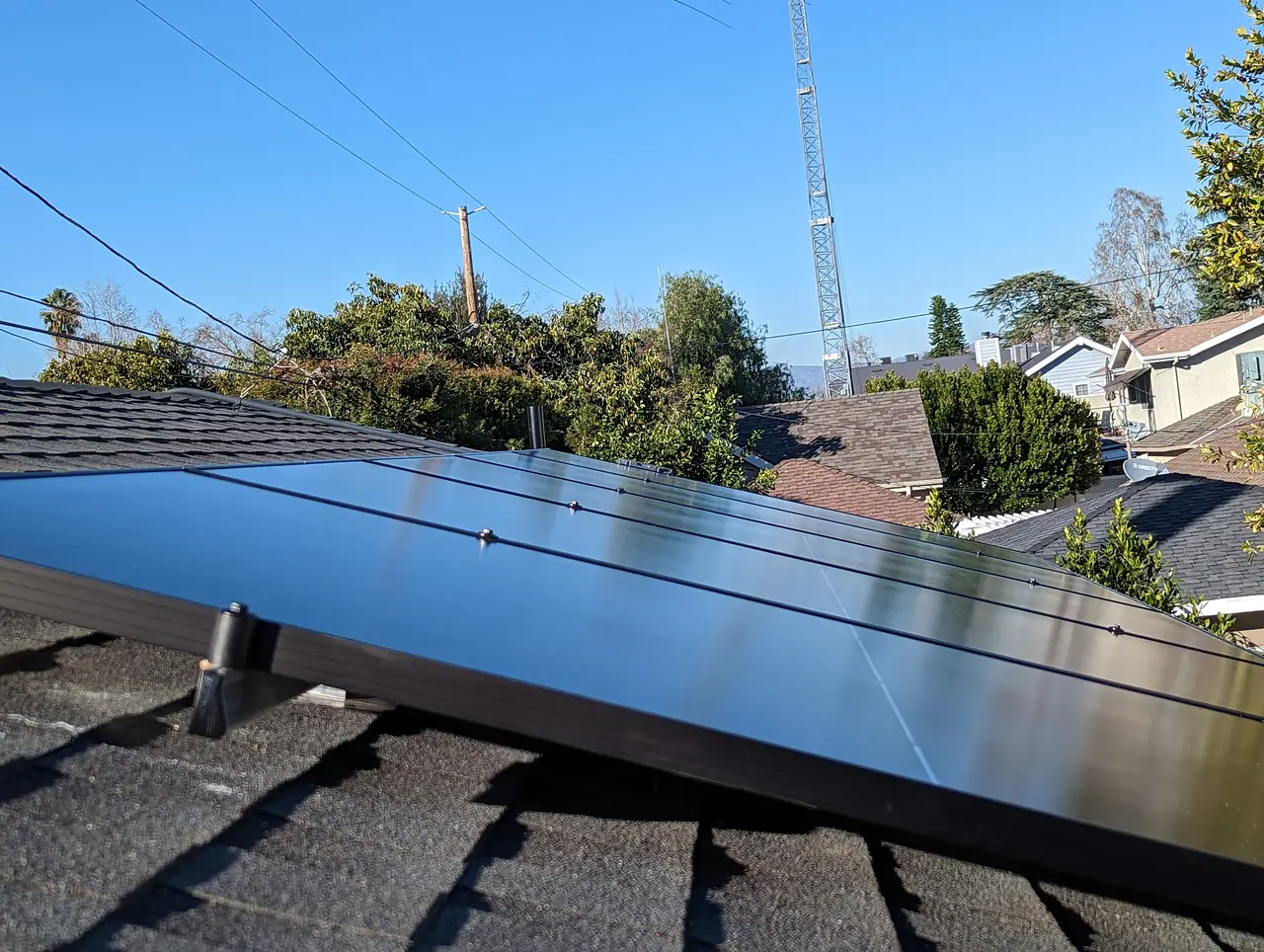
The roof is worth a paragraph because it is not what most houses here have. It is standing-seam metal — long panels with raised seams running up the slope — and the rails carrying the modules run across those seams rather than along them.
Standing seam is the friendliest roof there is for solar, and for one reason: the seam is a structural rib standing proud of the water surface, so an attachment can grip it instead of going through the covering. That is the opposite of every other roof in this city, where mounting means a penetration and a flashing. Ask about it specifically if you have a metal roof, because the answer tells you whether the contractor has done one before.
The rest ran the way it should. Both work requests were filed on the fifth of May with both charges paid the same day and the underground portion the day after. The building department's final release reached the utility three days later. Three days is fast, and on a project where the finals had been talked about three weeks in advance that is worth noticing.
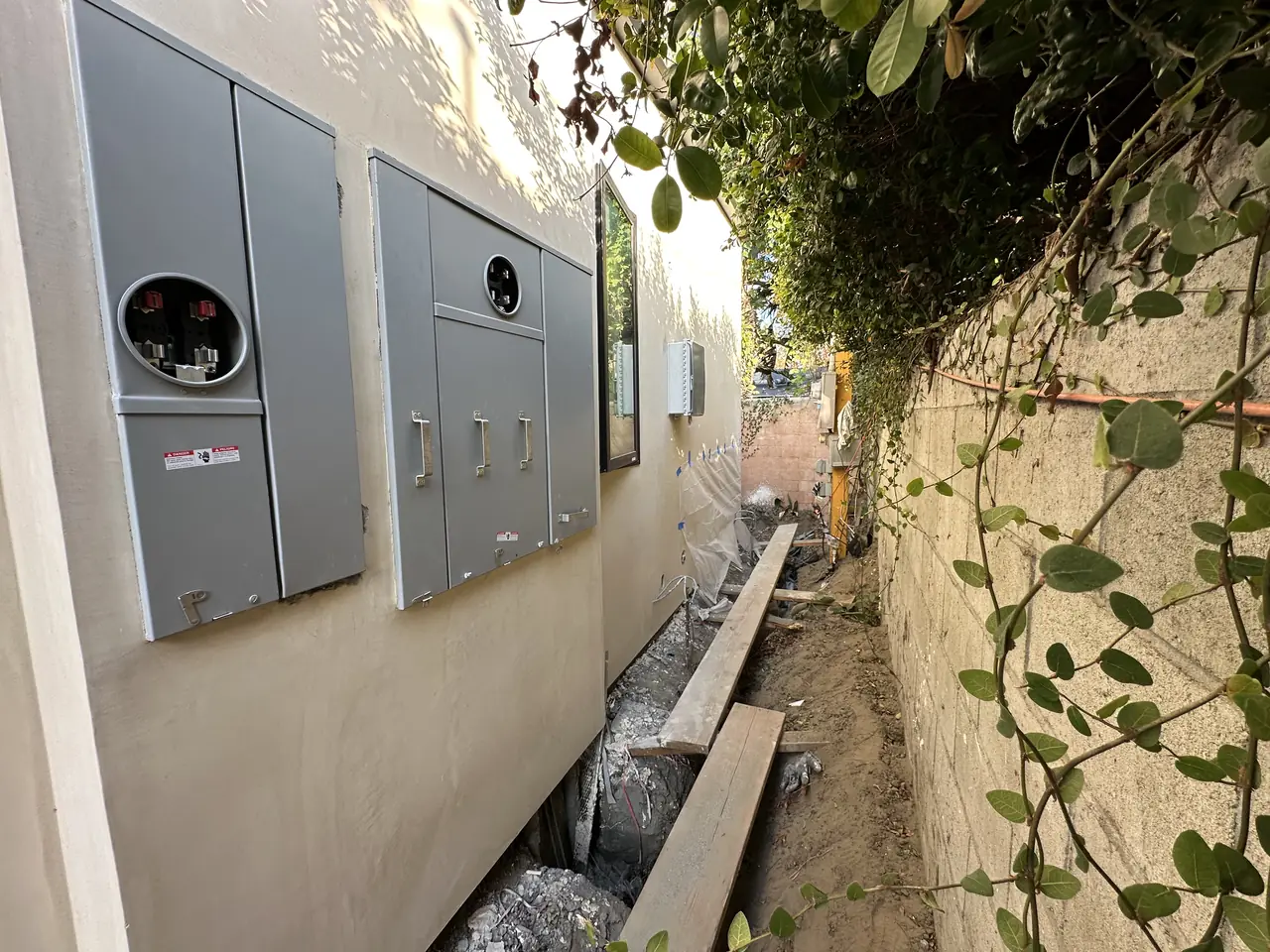
Then the project did what new builds do: it waited for a meter. In June we asked whether the meters had been set on either building and were told not yet, probably the following week. They were set later in the summer, and at the end of July the reviews, the site evaluations and the approvals landed on both requests. Permission to operate for both came on the sixth of August.
Ninety-three days from filing, of which the building department used three. The rest was metering and the ordinary pace of a house being finished — and the reason it was ninety-three rather than twice that is one shared inspection date, agreed three weeks before anybody booked it.
How it ran
| 2024 | Old house demolished; new two-story dwelling and a detached accessory dwelling built, with a pool |
|---|---|
| 15 May 2024 | First contact on the main dwelling |
| 25 November 2024 | Balance settled on the accessory dwelling |
| 17 April 2025 | Client asked to book the building final and the solar final for the same day |
| 5 May 2025 | Two interconnection requests filed; both charges paid same day |
| 6 May 2025 | Underground portion paid on both |
| 8 May 2025 | Building department final release on both — three days after filing |
| 6 June 2025 | Followed up on whether the meters had been set |
| 29 July 2025 | Reviews, site evaluations and approvals on both |
| 6 August 2025 | Permission to operate on both buildings |
Three days for the building department. The rest was metering.
What we did
- Asked the client in April to book the two finals on one date, and explained why.
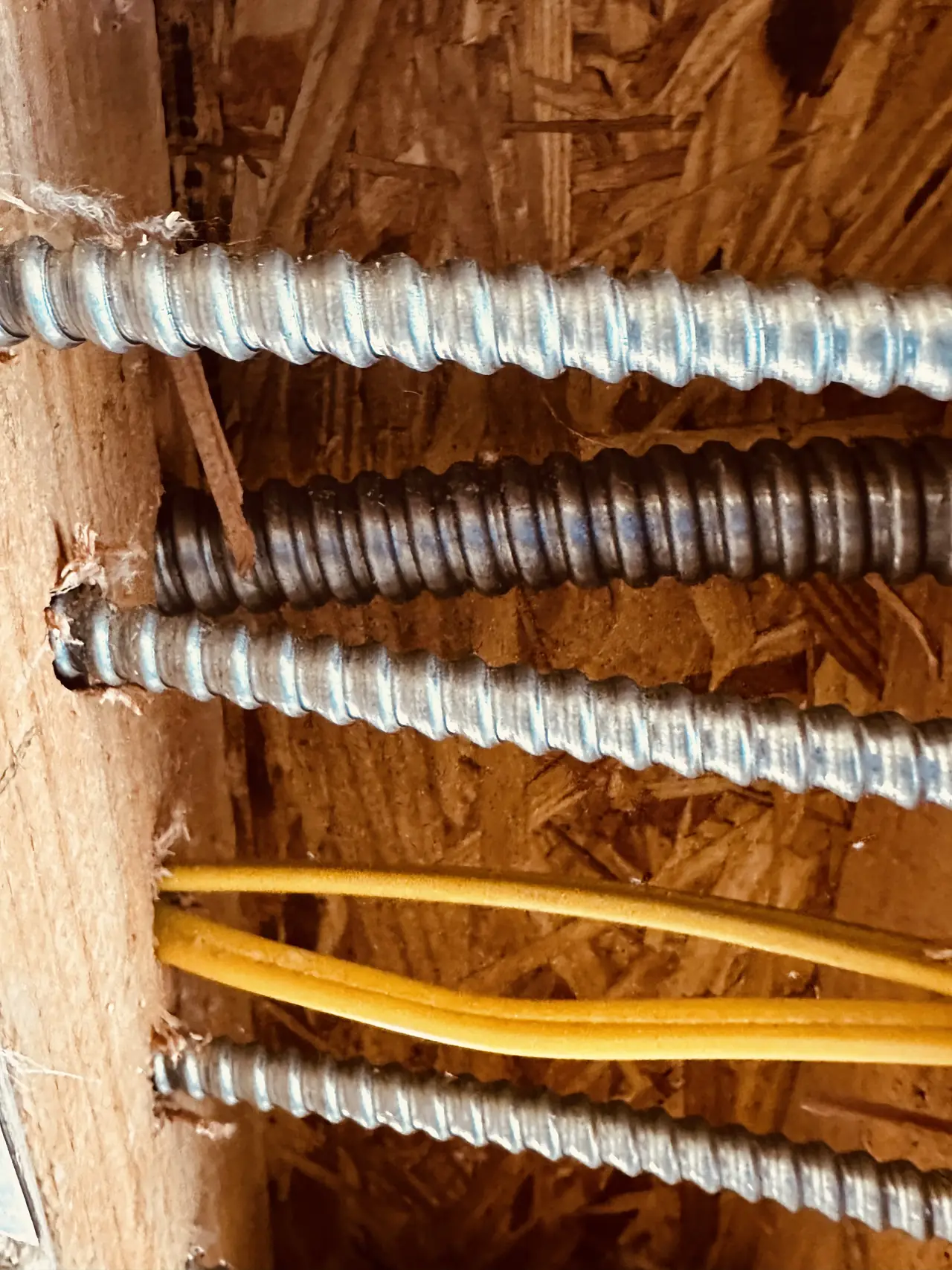
- Ran the conduit through open framing while the buildings were still being finished.
- Mounted both arrays on a standing-seam metal roof.
- Filed both interconnection requests on the same day and paid all four charges within two days.
- Carried both buildings to permission to operate on the same day.
System specifications
| Main dwelling | New two-story, NFPA 13D sprinklers throughout |
|---|---|
| Second dwelling | Detached single-story accessory unit |
| Recorded by the utility | 3.9 kW and 2.18 kW |
| Roof | Standing-seam metal |
| Racking | Rails running across the seams |
| Work requests | Two, filed the same day |
| Utility / AHJ | LADWP / LADBS |
Is your project like this one?
- You are building and the solar is one of several trades finishing at once.
- You have a standing-seam metal roof and want to know how an array attaches to it.
- Your solar final failed and you do not know why.
- You have a house and a separately metered accessory dwelling finishing together.
- Your builder is booking inspections and nobody has asked about the solar.
Cali Energy in Studio City
Studio City is inside City of Los Angeles boundaries: permits run through LADBS, interconnection through LADWP.
On a new build in Studio City the solar is one of several trades finishing at once, and the inspections are easier to choreograph than to simply book and hope.
This installation is on the Studio City projects page alongside the others, and what the work covers is set out on the Studio City service area page.
- License and classifications: CSLB #1032379
- Official reference for this process: LADBS — inspections
- Official reference for this process: LADWP interconnection requirements
Frequently asked questions
Do the building final and the solar final have to be on the same day?
No. There is no general requirement, and on many projects they happen separately without any problem. It is worth asking for on a house that is being finished, because the solar inspection wants a completed building and the building final will go ahead whether or not the array is ready. Ask your builder which day the building final is booked for, and put the solar final on it if you can.
What happens if they are booked separately?
Often nothing — they are simply two appointments. The risk is a missed or failed one, which costs a second visit and whatever the queue is at that moment. On a project where everything else is finished, that visit is the only thing standing between the owner and a working system.
How does an array attach to a standing-seam metal roof?
Usually by gripping the seam itself, because the seam is a raised rib standing above the water surface. That is what makes standing seam the friendliest roof for solar: the attachment does not have to go through the covering the way it does on shingle or tile.
Is a metal roof better for solar?
For the attachment, generally yes, and metal roofs also tend to outlast the array rather than needing replacement under it. They are less common here and the mounting hardware is specific, so it is worth asking a contractor whether they have done one.
Why did this take ninety-three days when the release took three?
Because the release is not the last step. After it the utility has to set or change the meters, and on a new build that depends on the site being ready. Here the meters were still outstanding in June and the approvals followed at the end of July.
What this would look like on your roof
Planning solar in Studio City? Tell us your utility, your roof and what your bill looks like now, and we will model what a system like this would do on your house before you commit to anything.
Or call +1 (323) 844-7777 · Cali Energy, Northridge · CSLB #1032379 (B, C-10, C-39) — design, permits, install and electrical under one licensed contractor.
Related
This timeline reflects this property and this permitting path. Updated September 2026.