

Santa Clarita, CA · December 2021 – January 2022 · Southern California Edison / City of Santa Clarita
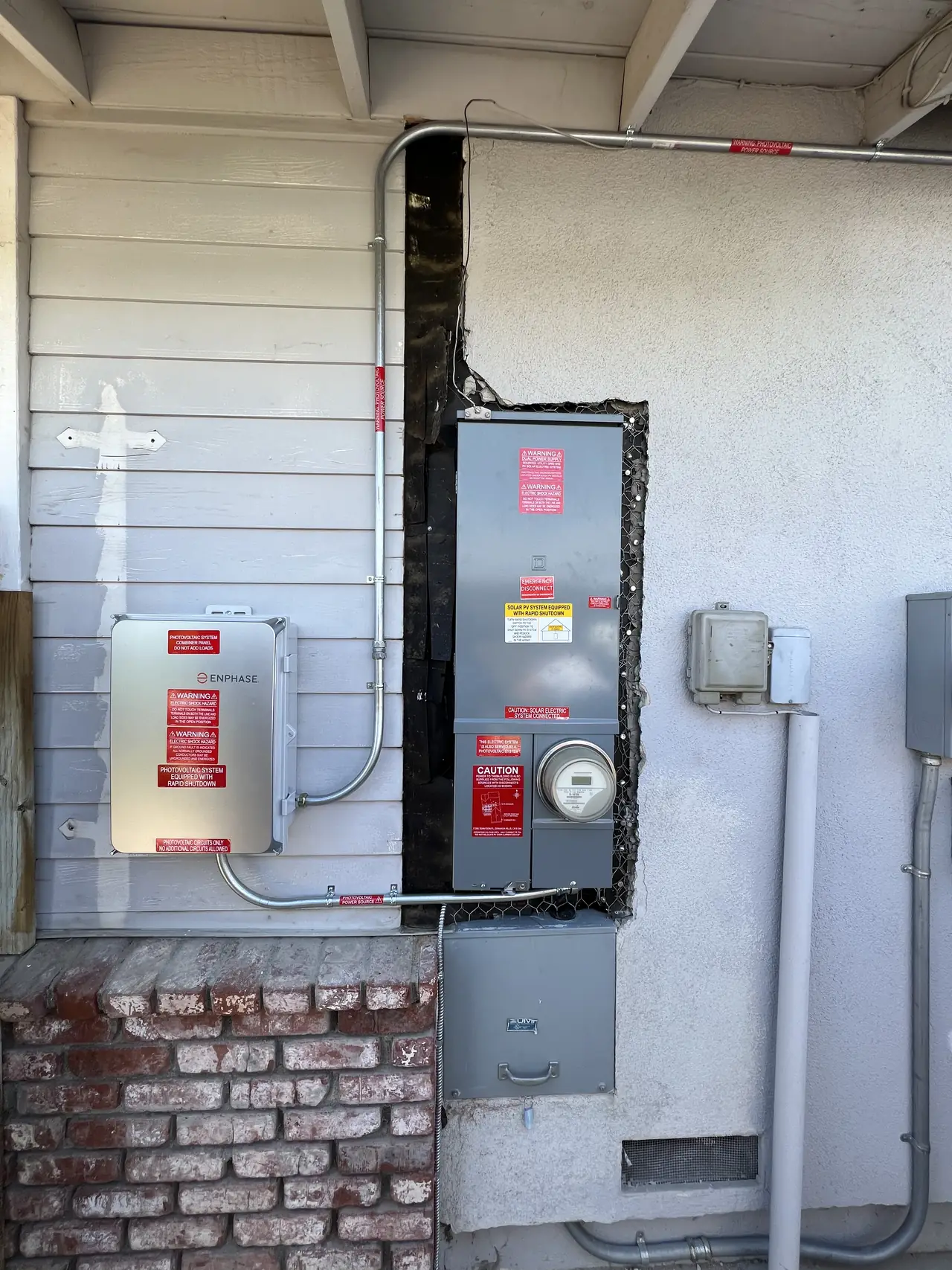
Santa Clarita: the main breaker did not need derating.
The rule is about the busbar, not the breaker. Read the wrong number and you replace hardware for nothing.
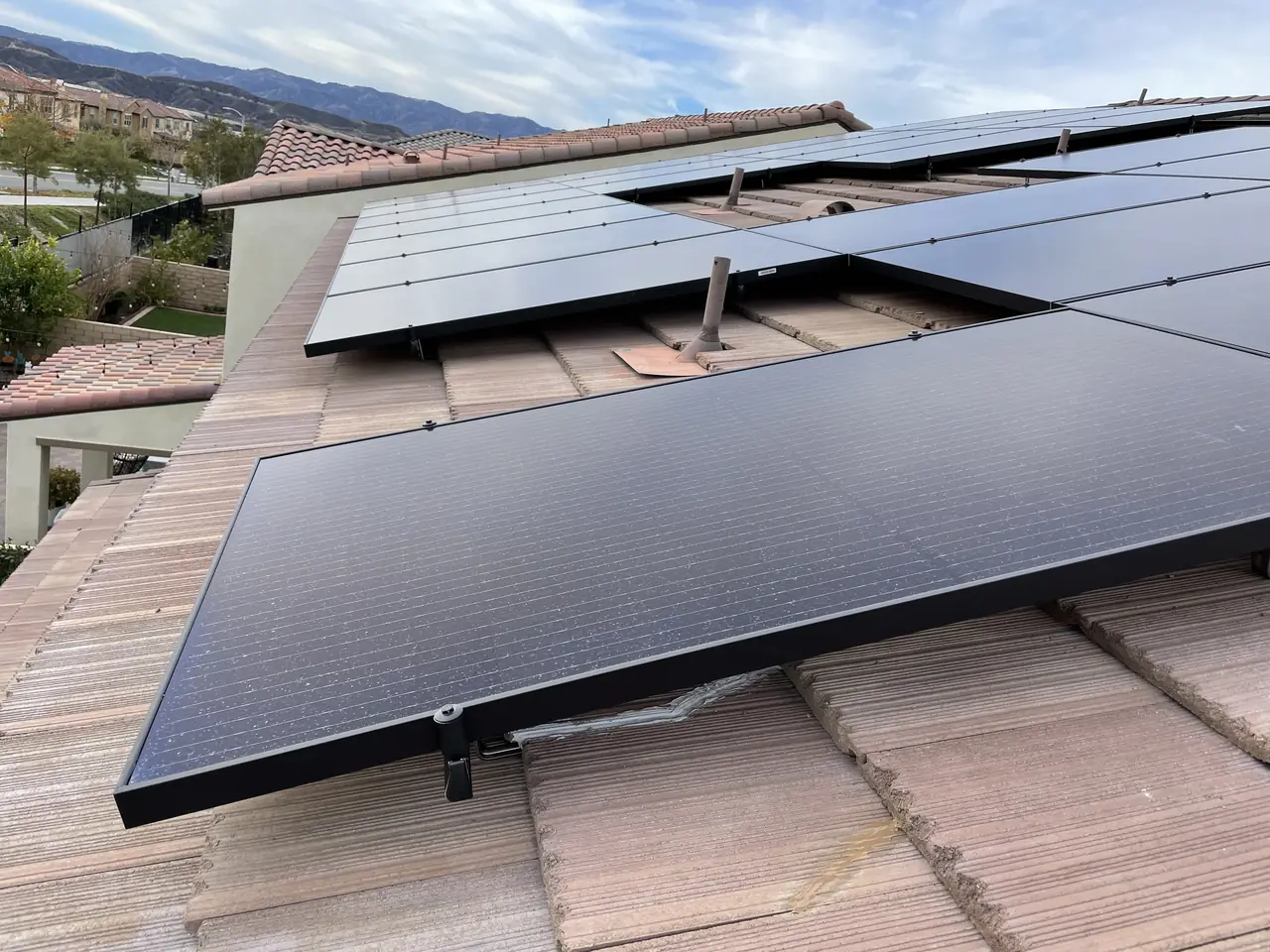
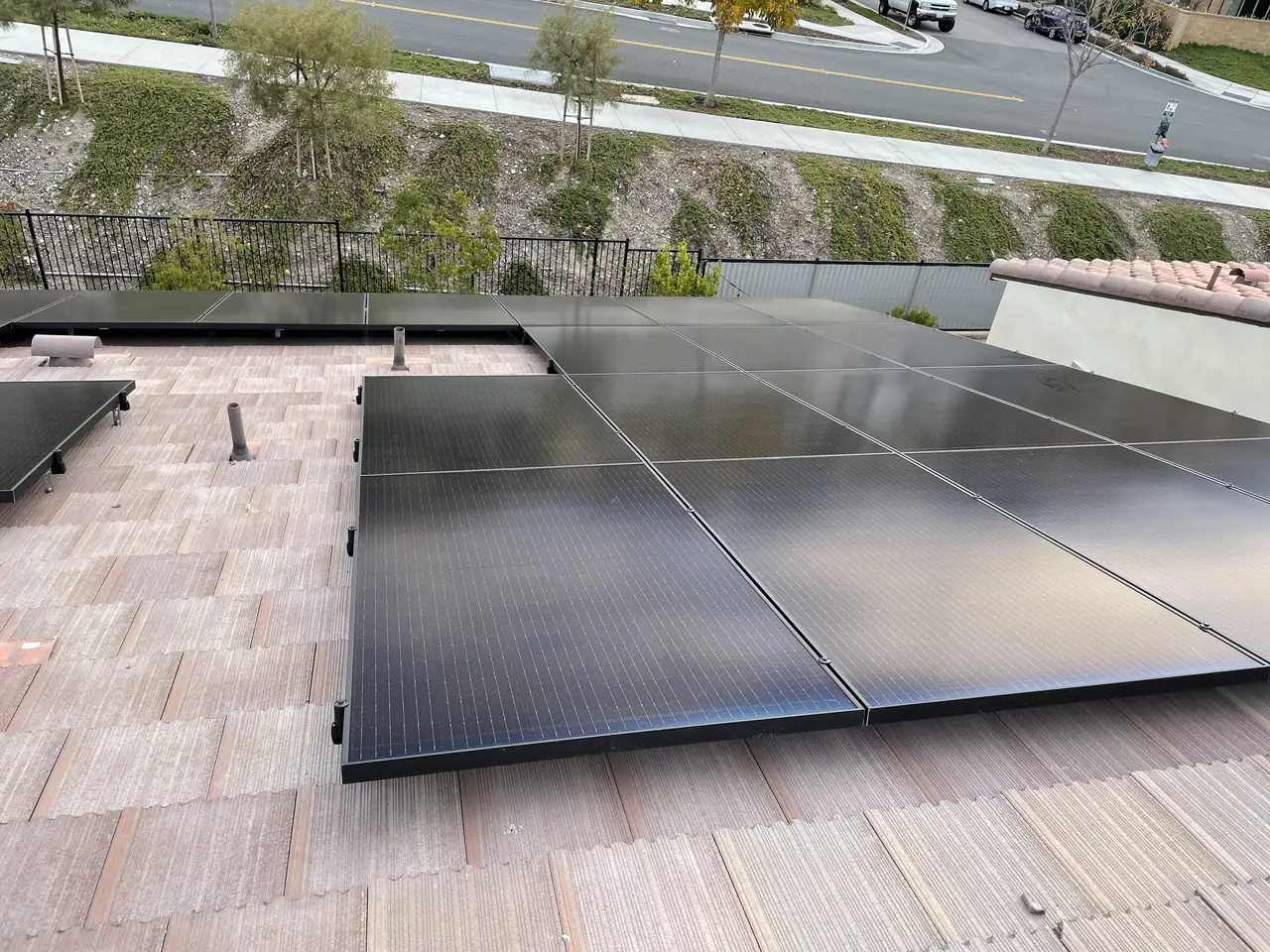
Adding solar to an existing panel is governed by what the panel's busbar can carry: the main breaker plus the solar backfeed together are limited to 120 percent of the busbar rating. Derating the main breaker is the standard way to make that sum fit — but only when it does not already fit. On this Santa Clarita project the revised plan proposed dropping the main breaker to 175 A; Cali Energy checked the panel and the busbar was rated 225 A, so no derate was required and the stamped set went to a final in January.
At a glance
- System
- 9.52 kW, 28 Q CELLS 340 W modules
- Inverters
- One Enphase IQ7+ per module
- Proposed
- Derate the main breaker to 175 A
- Actual busbar rating
- 225 A
- Derate required
- None
- Utility / AHJ
- Southern California Edison / Santa Clarita
The story
This project turned on reading the evidence that already exists — in this case, a label inside a panel door.
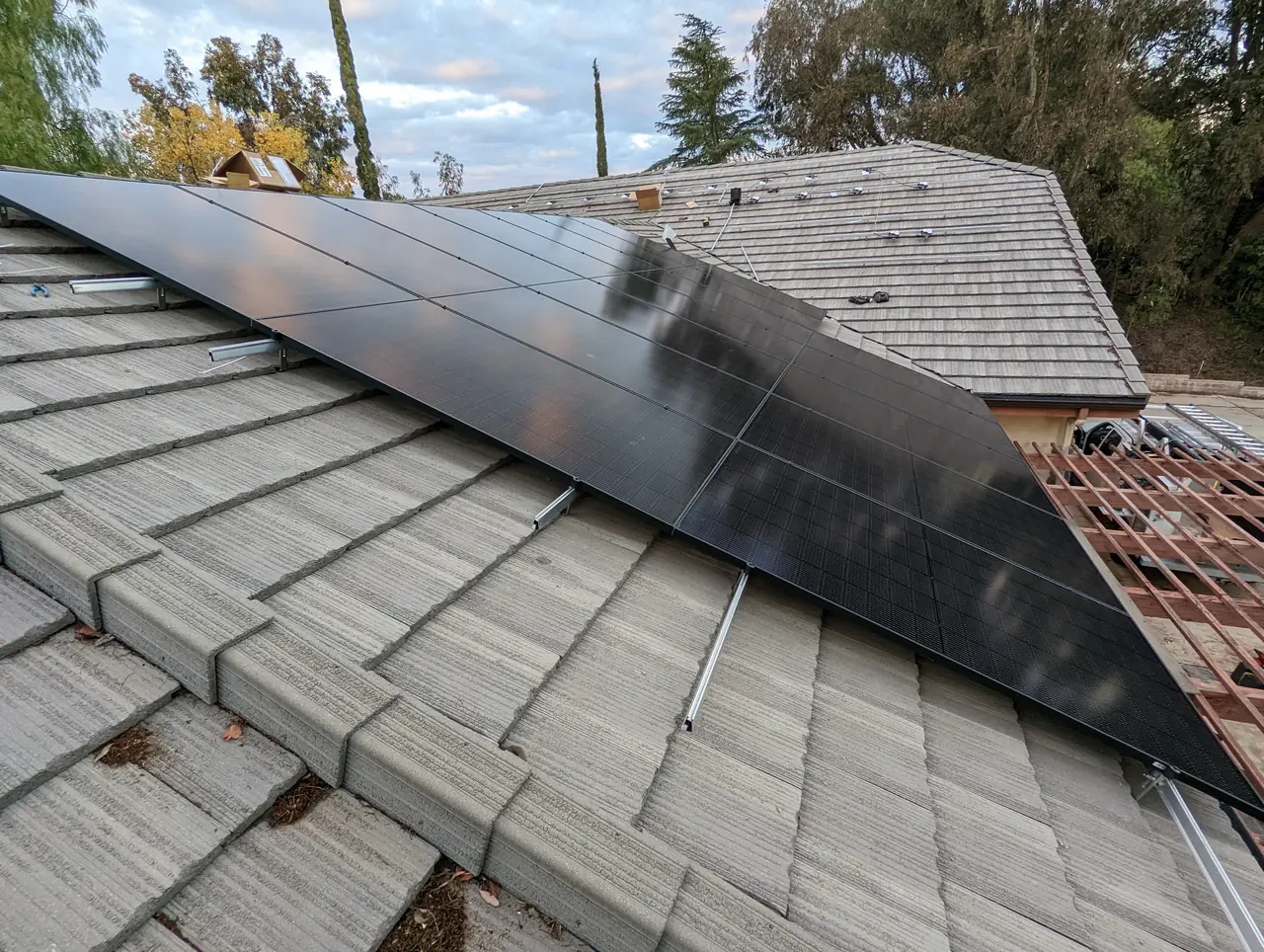
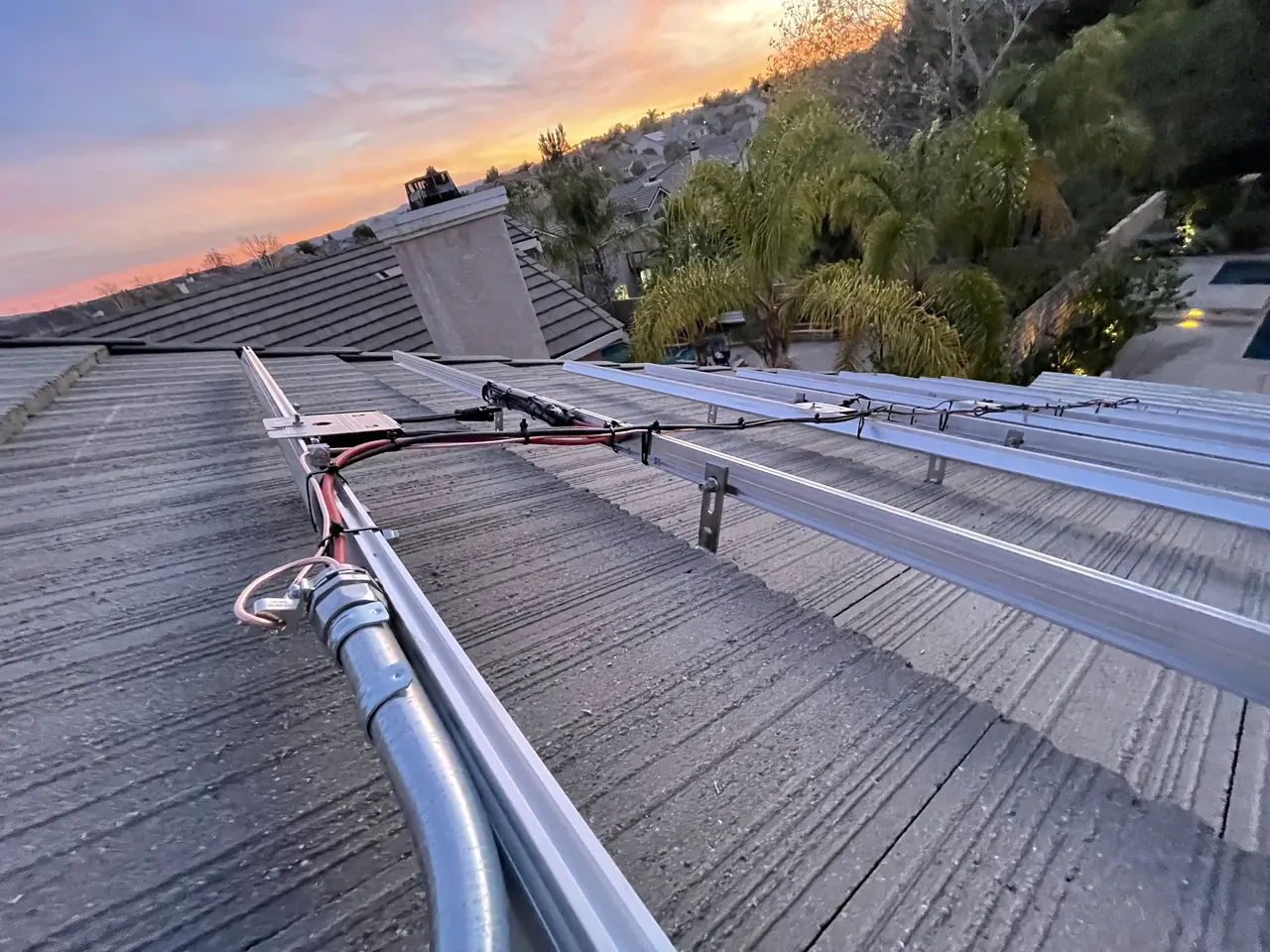
It started with the microinverters. The modules on the roof carried IQ7+ units factory-fitted to them, and the plan set was updated to say so — an inspector compares what is on the roof with what is on the stamped drawing, and the two have to match.
The update produced the useful part of the story.
A revised plan set came through in January proposing to derate the main breaker from its existing rating down to 175 A. That is a completely standard move and on most houses it is the right one. Here it was unnecessary, and the reason is a number people routinely read off the wrong component.
The rule works like this. When solar backfeeds an existing panel, the panel's busbar — the metal spine the breakers clamp onto — has a rating, and the main breaker plus the solar breaker together are allowed to reach 120 percent of it. Exceed that and the busbar could in theory be fed more current than it was built for, from two directions at once.
So there are two ways to make the sum work: shrink the main breaker, or have a busbar big enough that you do not have to.
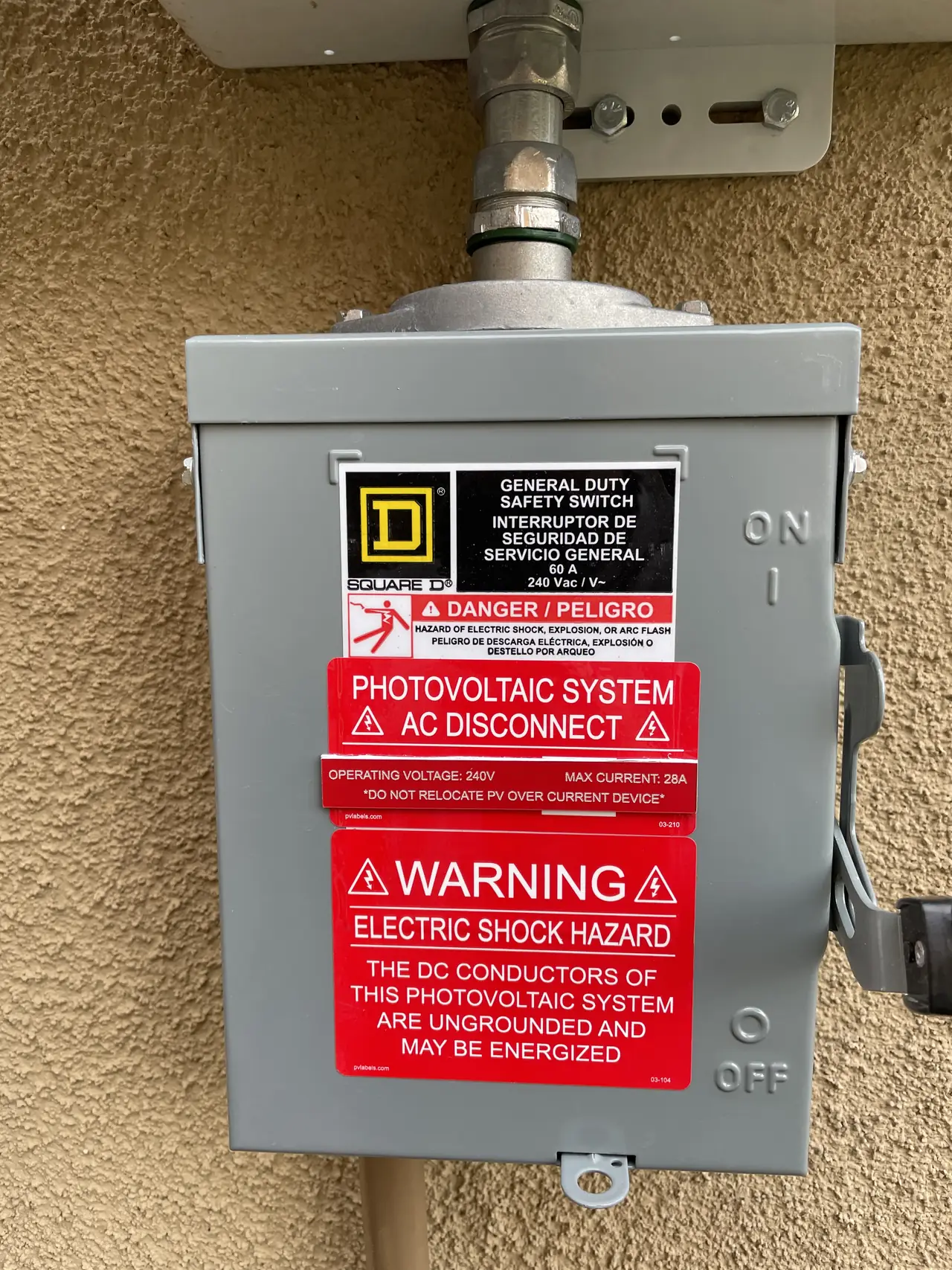
The trap is that people read the number stamped on the main breaker and assume the panel matches it. It often does not. A panel fitted with a 200 A main breaker can have a busbar rated at 225 A, and that extra headroom is exactly what decides whether a derate is needed.
On this panel the busbar was 225 A. Once that is on the table, the arithmetic comes out with room to spare and the derate has nothing left to do.
Why this is worth an owner's attention: derating the main breaker is not free. It lowers the ceiling on what the house can draw at once, which on a property that later adds a car charger, a heat pump or an induction range can become a real constraint. Doing it when it is genuinely required is fine. Doing it because nobody opened the panel door and read the busbar label is a permanent downgrade bought for nothing.
The final passed on the thirty-first of January against the updated set, and the project closed on the permit it started on — with the main breaker still at its original rating.
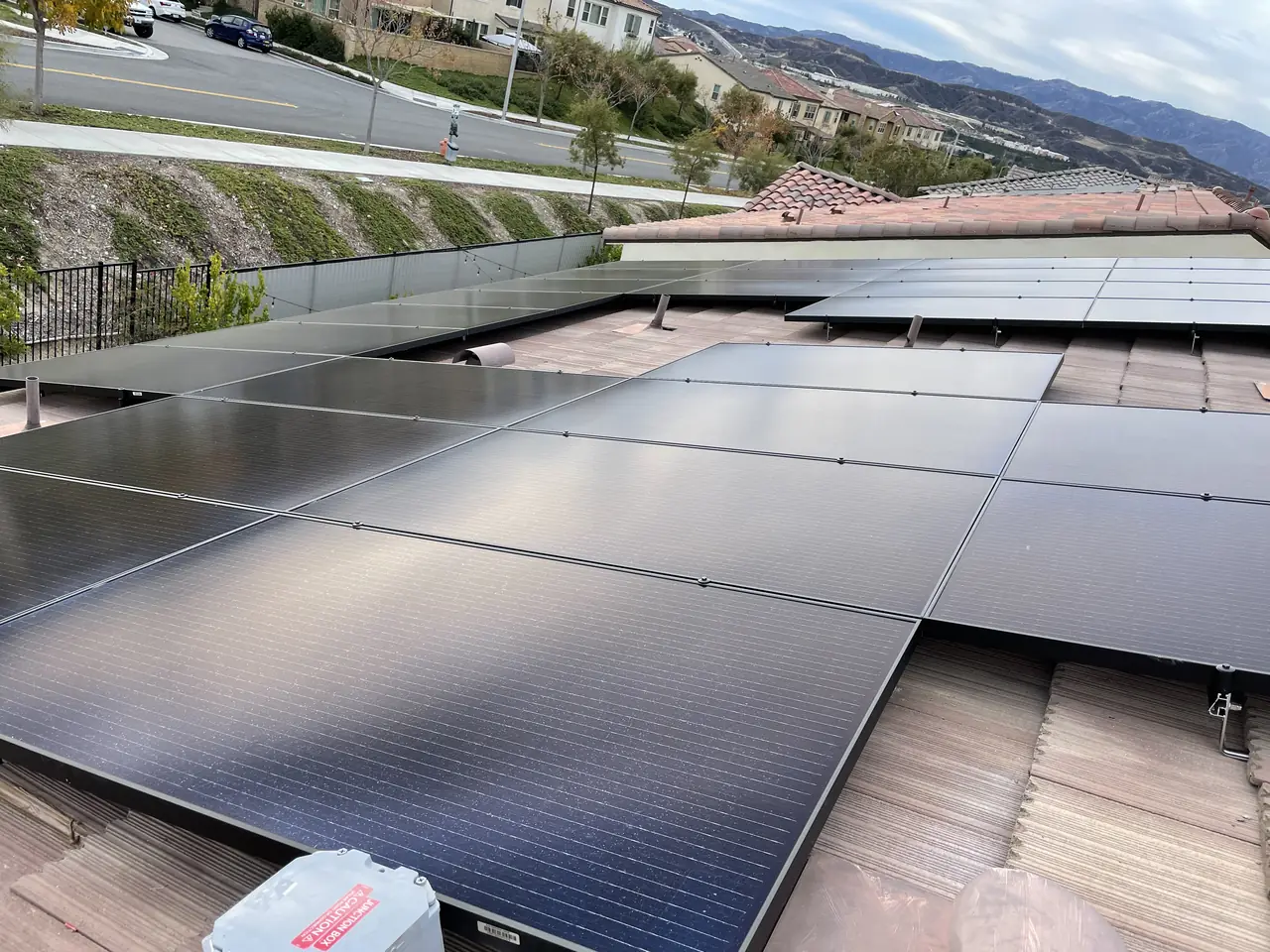
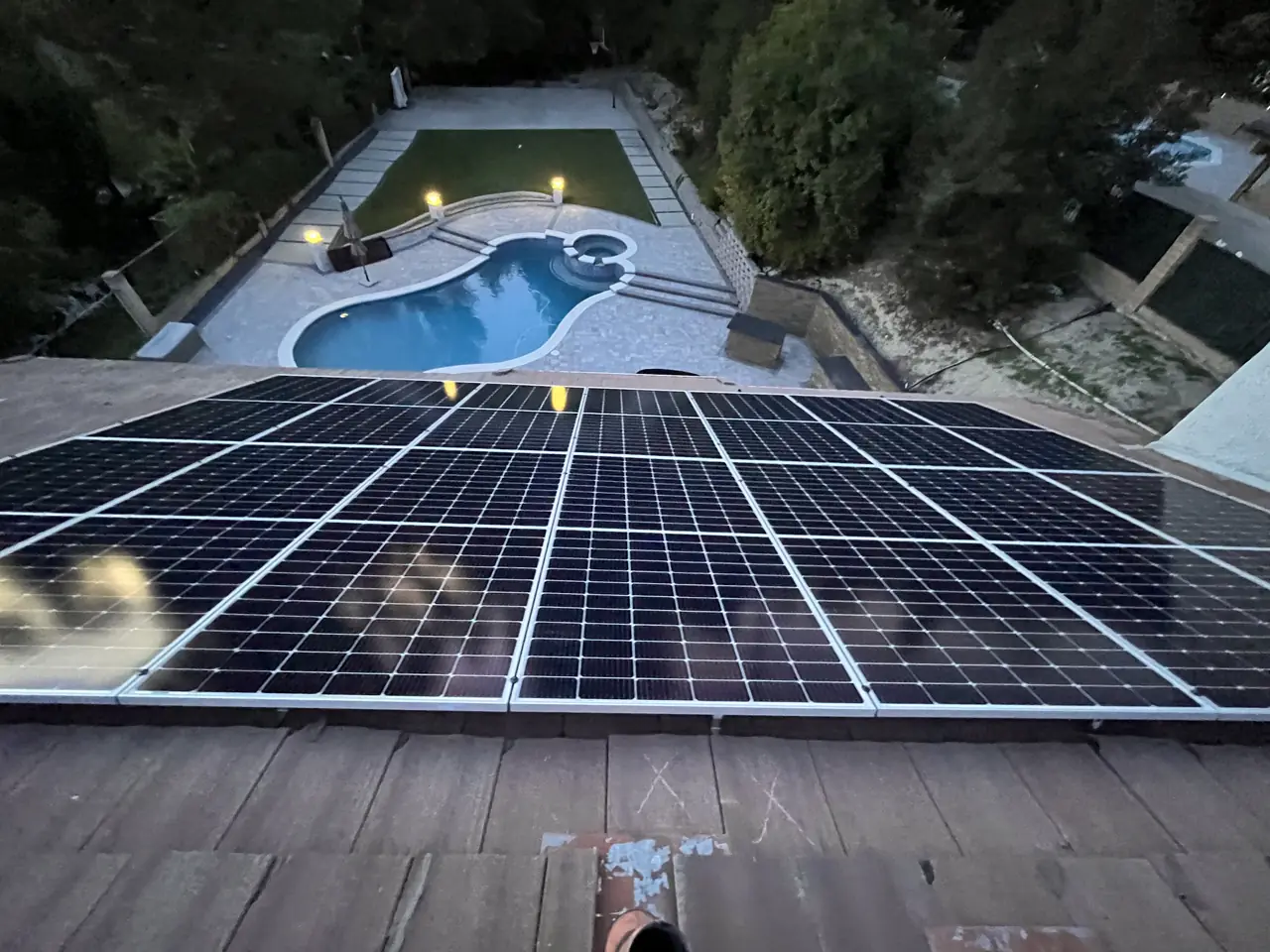
Cali Energy installed and finaled this 9.52 kW project in Santa Clarita; the house kept its full main breaker and has run on the array since.
How it ran
| 21 December 2021 | Installation — 28 modules, 9.52 kW |
|---|---|
| 11 January 2022 | Plan set to be updated for the IQ7+ units on the modules |
| 11 January 2022 | Revised plan set circulated, proposing a derate of the main breaker to 175 A |
| 12 January 2022 | Checked against the panel: busbar rated 225 A, so no derate needed |
| 28 January 2022 | Stamped revised plans issued |
| 31 January 2022 | Final inspection passed; main breaker unchanged |
Six weeks between an installed array and a final, and the decisive fact was a label inside a panel door.
What we did
- Read the busbar rating instead of assuming it matched the main breaker.
- Updated the plan set to the IQ7+ units actually on the modules.
- Declined an unnecessary derate that would have capped the house permanently.
- Took the updated set through to a stamp and a passed final.
System specifications
| Array | 28 × Q CELLS Q.PEAK DUO BLK-G6 340 W, 9.52 kW |
|---|---|
| Existing panel | Busbar rated 225 A |
| Proposed change | Main breaker derate to 175 A |
| Outcome | No derate; the 120 percent sum already fit |
| Plans | Revised and stamped in January |
| Utility / AHJ | Southern California Edison / Santa Clarita |
Is your project like this one?
- Your plan set says the main breaker will be derated.
- You are adding solar to a panel somebody else installed.
- You expect to add a car charger or a heat pump later.
Cali Energy in Santa Clarita
Santa Clarita is its own city in Los Angeles County, permitted through the City of Santa Clarita Building & Safety Division and interconnected through Southern California Edison. Tract housing of several eras, so the service equipment varies street by street.
This installation is on the Santa Clarita projects page alongside the others, and what the work covers is set out on the Santa Clarita service area page.
- License and classifications: CSLB #1032379
- Official reference for this process: NFPA — National Electrical Code (NFPA 70)
- Official reference for this process: City of Santa Clarita — Building & Safety
Frequently asked questions
What is the 120 percent rule for solar?
The main breaker and the solar backfeed breaker together may reach 120 percent of the busbar rating of the panel they share. It exists because the busbar can be fed from two directions at once — the utility through the main, the array through its own breaker.
Is the busbar rating the same as the main breaker rating?
Frequently not, and that is where the mistake happens. A panel fitted with a 200 A main breaker can carry a busbar rated 225 A. The rule is calculated on the busbar, so reading the breaker instead can produce a derate that was never necessary.
What does derating the main breaker cost me?
It lowers the maximum the house can draw at once. That is harmless until the property adds a car charger, a heat pump or an induction range, at which point the lowered ceiling is a real constraint — bought, in this case, for nothing.
How do I check my own busbar rating?
It is on the label inside the panel door, usually stated as a bus rating in amps and separate from the main breaker size. If a quote proposes a derate, that label is the first thing to look at.
Does Cali Energy install solar in Santa Clarita?
Yes. Projects here are permitted through the City of Santa Clarita Building & Safety Division and interconnected through Southern California Edison. The housing spans several eras, so the service equipment differs street by street and the panel label is worth reading before the design is fixed.
What this would look like on your roof
Planning solar in Santa Clarita? Tell us your utility, your roof and what your bill looks like now, and we will model what a system like this would do on your house before you commit to anything.
Or call +1 (323) 844-7777 · Cali Energy, Northridge · CSLB #1032379 (B, C-10, C-39) — design, permits, install and electrical under one licensed contractor.
Related
This timeline reflects this property and this permitting path. Updated September 2026.