

Reseda, CA · July 2024 · LADWP / LADBS
The installer was gone. The warranty was not.
The owners of a Reseda house had a new roof booked and an array on the old one. The company that installed it had stopped answering. What they needed was not a solar company; it was a solar company the module manufacturer recognized.
A module warranty belongs to the panels, not to the company that installed them, so it does not die when the installer does. What it does carry is a condition: a removal and reinstallation generally has to be performed by an installer the manufacturer authorizes, and letting the roofing crew lift the array off can void it. The owner's task, before the roofers arrive, is to find someone on the manufacturer's own authorized list. That list is how these owners found Cali Energy, which took the array down in a day, stored it through the re-roof, and set it back on new flashings when the roof was finished.
At a glance
- Work
- Detach and reset for a re-roof
- Array
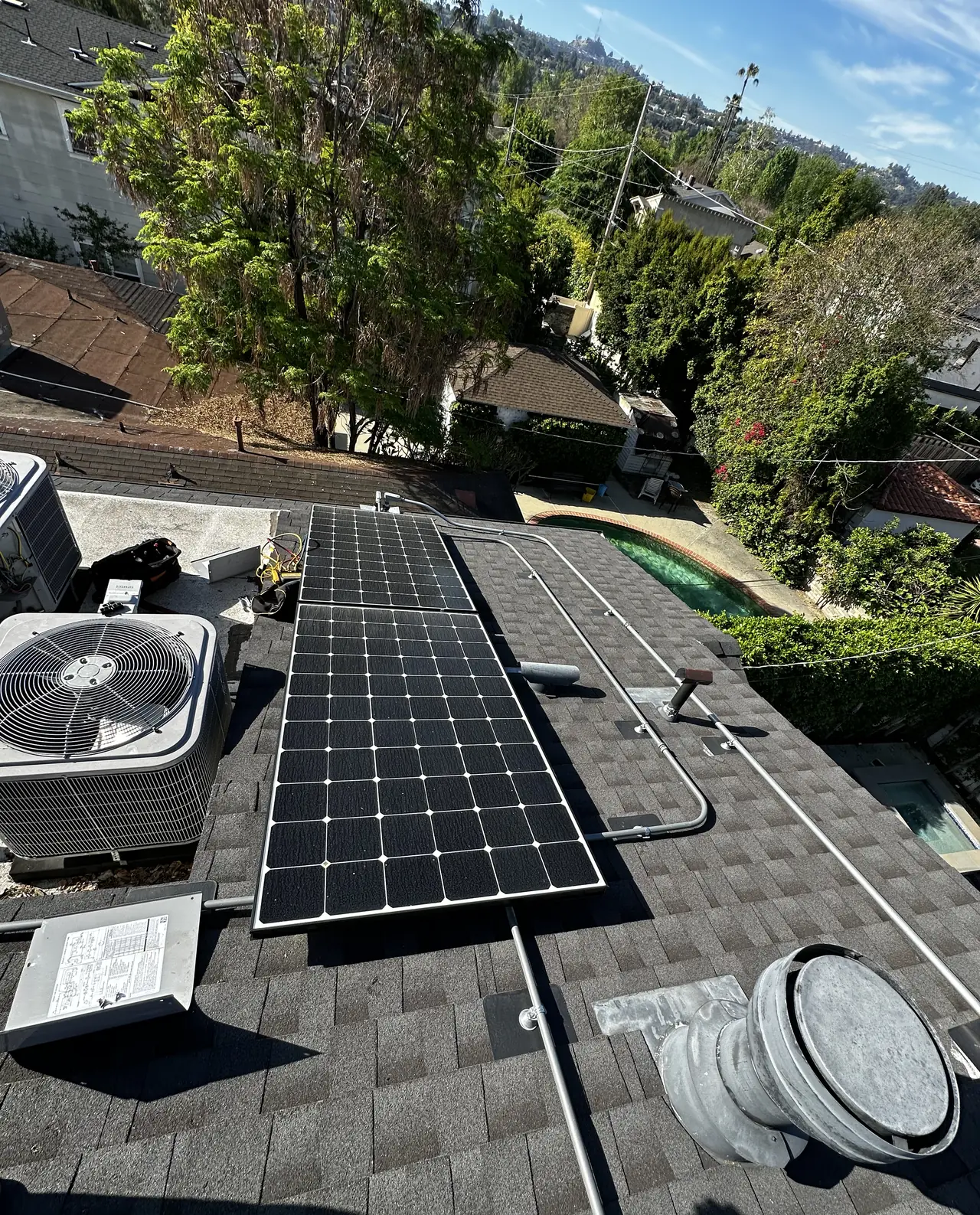
- 18 REC modules, already on the roof
- Removal
- One day
- Reinstallation
- One day, after the roof was finished
- Flashings
- All new
- Storage
- On site, in the owner's garage
- Original installer
- No longer answering
- Roofing permit
- Held by the owners' roofing contractor
The story
The message that started this came from the owners themselves, at the beginning of July. They had a new roof scheduled. On the old one sat an array of REC modules. The company that had installed it no longer answered, and they had read enough to know that letting just anyone take the panels off could cost them their warranty. So they went to the manufacturer's website, looked up who it authorized in Los Angeles, and wrote to one of them.
That instinct was the right one, and it is the whole point of this project. A module warranty is a promise from the manufacturer about the modules. It survives the contractor who installed them and it transfers with the house. But it comes with conditions, and one of the standard conditions is that removal and reinstallation be carried out by an installer the manufacturer recognizes. A roofing crew lifting panels off to get at the deck is exactly the scenario those terms are written for.
The work itself is not complicated, and we quoted it the way it is actually done: per module, one day to take the array off, one day to put it back. What mattered more was the sequencing, because a detach and reset only works if the two trades do not collide. We took the system down on a Tuesday. The modules, rails and hardware went into the owners' garage, out of the weather and out of the roofers' way. The roofing contractor had a clear deck from that afternoon.
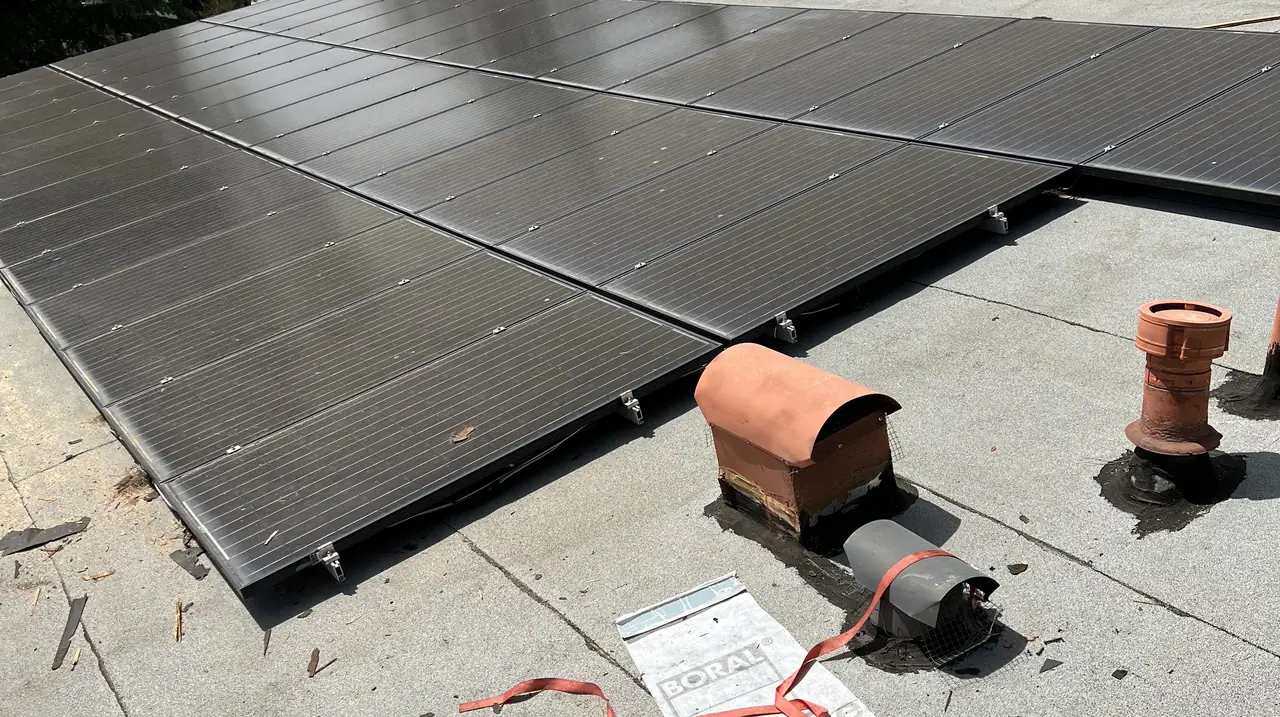
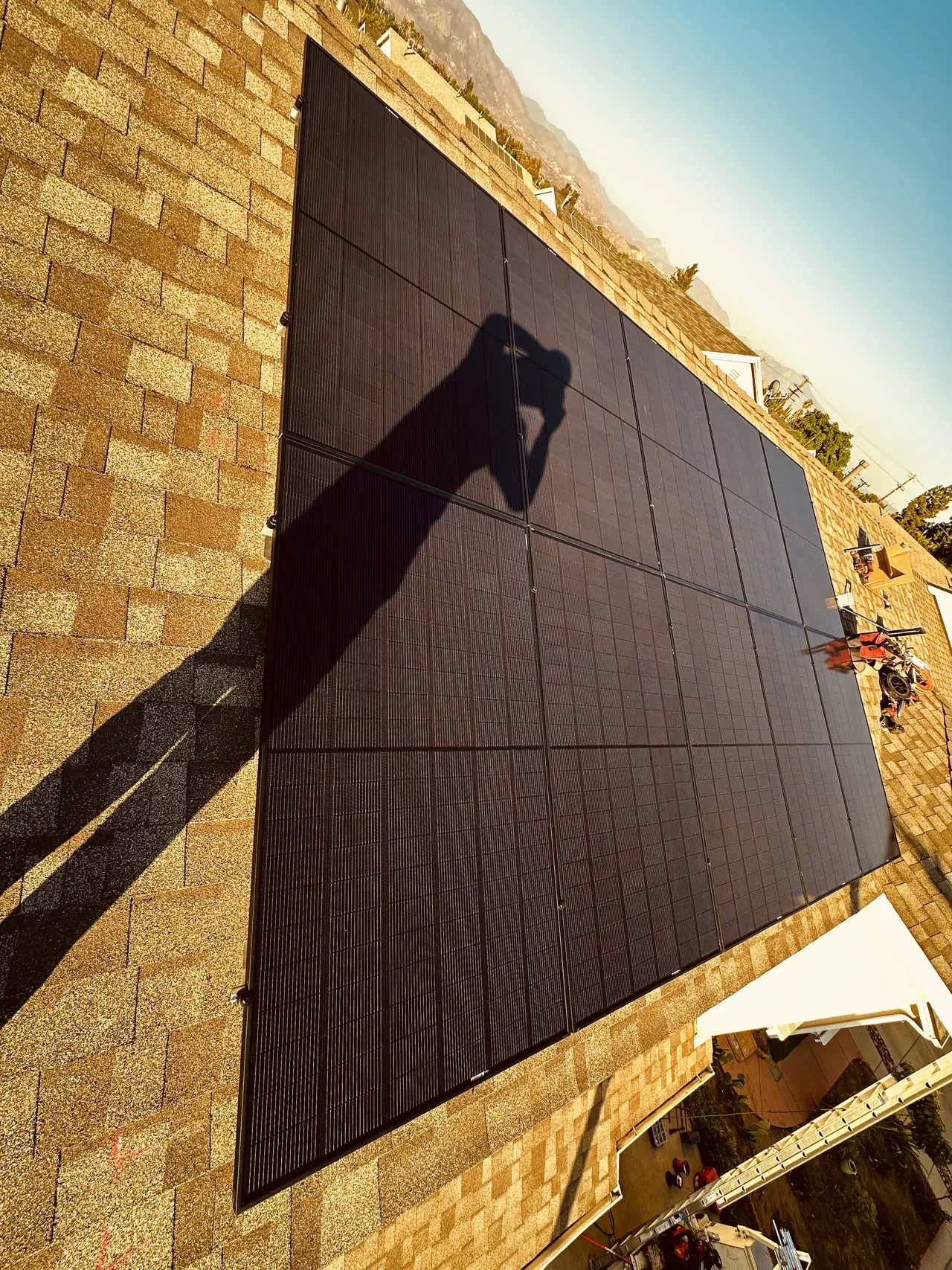
Six days later the roof was finished and the owners told us they were ready. We came back and reset the array on the new roof, with new flashings throughout. That last point is not a detail. Flashings are the waterproofing at every point where a mount penetrates the roof, they are sized and seated into the specific course of shingle they sit in, and they are the one component you never reuse. A new roof gets new flashings, every time, or you have put a fresh roof underneath a set of old holes.
One correction along the way went in the owners' favor. The array had been described to us as twenty modules. On the roof it was eighteen. We re-priced the job to the count we actually handled and told them so before the invoice went out.
The whole thing took three weeks from first contact to completion, most of which was the roof. The array is back up on a new deck, the flashings are new, and the warranty the owners were worried about is intact, because the work was done by hands the manufacturer accepts.
If you are planning a re-roof and you have solar on the house, do this in order. Check who made your modules. Look up that manufacturer's authorized installer list before you book the roofer. Get the detach and the reset quoted as one job with the roofing schedule in it, and confirm the flashings are new. If your original installer is unreachable, that is an inconvenience, not a loss.
How it ran
| Late June 2024 | Owners' roofing permit issued for a new Class A or B roof covering |
|---|---|
| 1 July 2024 | Owners make contact after finding an authorized installer on the module manufacturer's list |
| Early July 2024 | Detach and reset quoted per module, one day each way, with new flashings |
| 16 July 2024 | Array removed in one day; modules and hardware stored in the owners' garage |
| 22 July 2024 | Roof finished; owners confirm the deck is ready, and the array is reset on it with new flashings |
| 24 July 2024 | Module count corrected to eighteen, price adjusted down, job closed and paid |
This timeline reflects a detach and reset around a roofing contractor's own schedule. The solar side was two working days; the gap between them belongs to the roof.
What we did
- Quoted the detach and reset per module, with the roofing schedule built into the plan (C-10).
- Removed the array in a single day and stored the modules and hardware on site, out of the roofing crew's way.
- Reset the array on the new roof with new flashings at every penetration.
- Corrected the module count from the number quoted to the number actually on the roof, and reduced the price to match.
- Kept the work inside the module manufacturer's authorized-installer requirement, which is what preserved the owners' warranty.
System specifications
| Scope | Detach and reset of an existing array for a re-roof |
|---|---|
| Modules | 18 REC modules, existing, reinstalled |
| Flashings | New throughout |
| Roof | Composition shingle, replaced by the owners' roofing contractor |
| Storage between visits | Modules and hardware in the owners' garage |
| Days on site | Two, one for removal and one for reinstallation |
| Warranty position | Work performed by an installer authorized by the module manufacturer |
Is your project like this one?
- You are replacing a roof that already has solar on it.
- Your original solar installer has closed or stopped responding.
- You want your module warranty to survive the roofing work.
- Your roofer has asked who is taking the panels off.
- Your Reseda house is due for a new roof and the array is staying.
Cali Energy in Reseda
Reseda is inside City of Los Angeles boundaries: permits run through LADBS, interconnection through LADWP.
Reseda's single-story housing stock is mostly of an age where the composition shingle is due for replacement, and a good share of those roofs now carry arrays put up ten or more years ago. Detaching and resetting an existing system is quietly becoming one of the more common solar jobs in this neighborhood.
This installation is on the Reseda projects page alongside the others, and what the work covers is set out on the Reseda service area page.
- License and classifications: CSLB #1032379
- Official reference for this process: CSLB — check a contractor's license
- Official reference for this process: LADBS — inspections
Frequently asked questions
What happens to my solar warranty if the installer goes out of business?
The module warranty is unaffected. It is a promise from the manufacturer about the product, it runs for its full term, and it transfers with the house. What you lose is the installer's own workmanship warranty and whoever would have serviced the system. For anything that involves taking the array off and putting it back, the manufacturer still needs the work done by an installer it authorizes, and its website lists them.
Can my roofing crew take the panels off?
Do not assume so. Most module warranties require removal and reinstallation by an authorized installer, and a roofing company is rarely one. There is also a practical reason beyond the paperwork. Modules, rails, flashings and the wiring between them come apart in an order, the connectors are easy to damage, and the array has to be de-energized before anything is touched. The cost of doing it properly is small next to the cost of a voided warranty.
How long does a detach and reset take?
Two working days on a residential array of this size, one to remove and one to reinstall, with the roofing work in between. On this project the array came off on a Tuesday and the roof was finished six days later. The schedule is set by the roofer, not by the solar crew, so book the two together and agree who tells whom the deck is clear.
Do the flashings have to be new?
Yes. A flashing is the waterproofing at each point where a mount penetrates the roof, and it is seated into a specific course of shingle. Once it has been lifted it cannot be trusted again, and a new roof with old flashings is a new roof with old leaks waiting in it. New flashings throughout should be written into the quote for any detach and reset.
Does Cali Energy do detach and reset work for roofing jobs?
Yes, as a job of its own. The array comes off in a day, the modules and hardware are stored on site out of the roofing crew's way, and the system goes back on new flashings once the deck is finished. Check that whoever does it appears on your module manufacturer's authorized installer list, because that is the condition most product warranties attach to removal and reinstallation. That list is how the owners on this project found Cali Energy.
What this would look like on your roof
Planning solar in Reseda? Tell us your utility, your roof and what your bill looks like now, and we will model what a system like this would do on your house before you commit to anything.
Or call +1 (323) 844-7777 · Cali Energy, Northridge · CSLB #1032379 (B, C-10, C-39) — design, permits, install and electrical under one licensed contractor.
Related
This timeline reflects this property and this permitting path. Updated September 2026.