

Reseda, CA · October 2018 – September 2019 · LADWP / LADBS
The roof was fine. The problem was the meter cabinet downstairs.
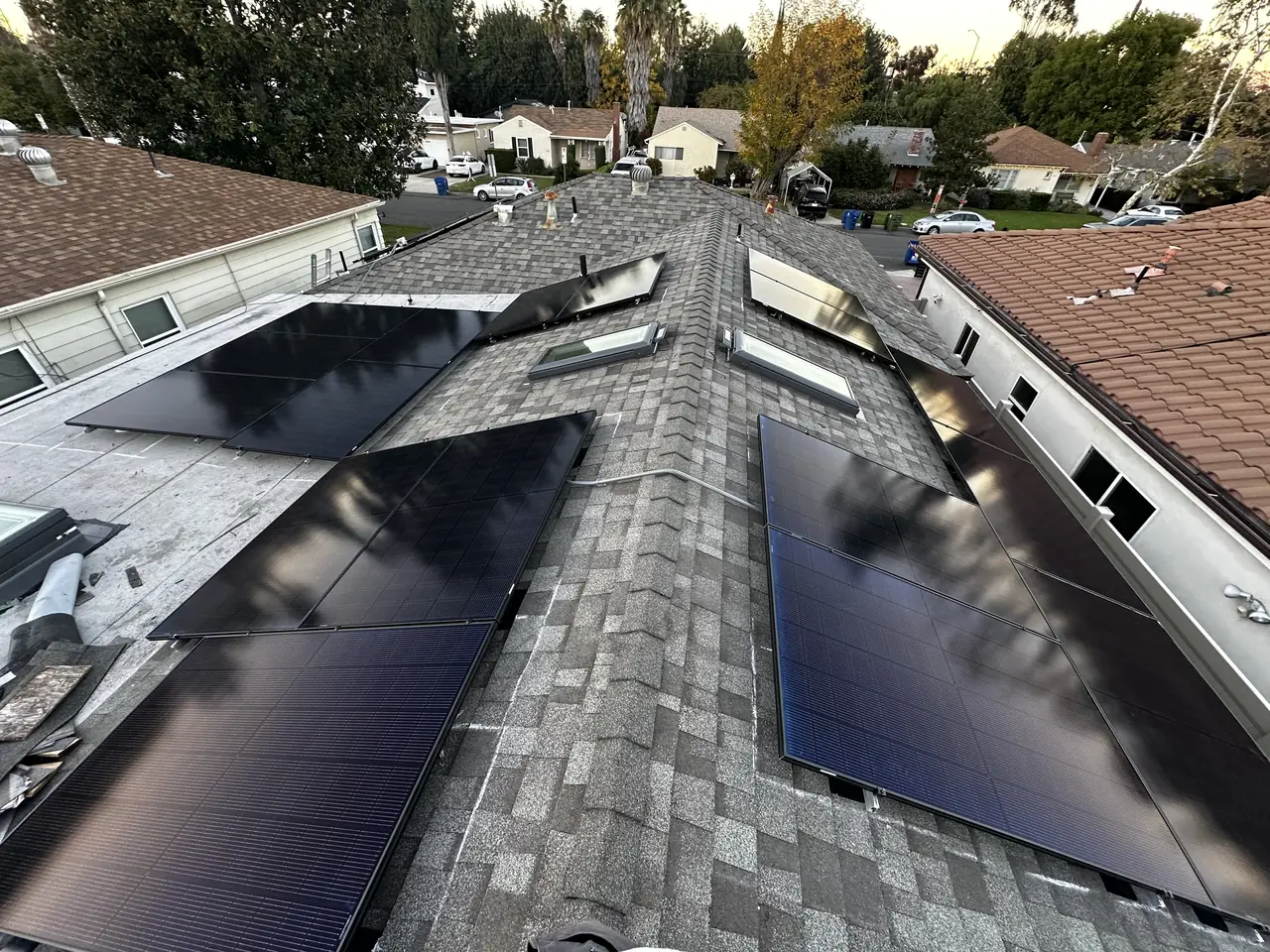
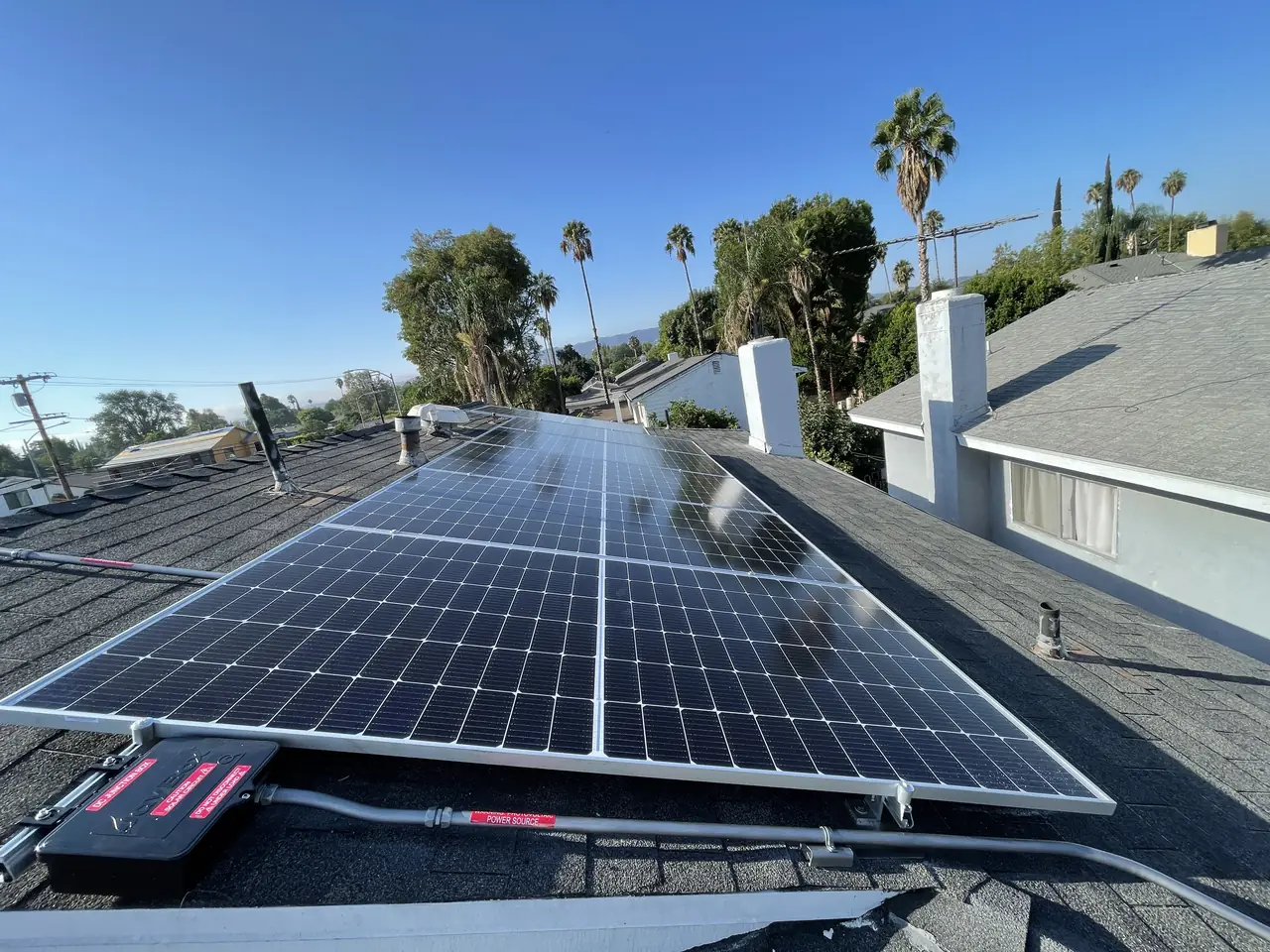
A 6-kilowatt array on one condominium in a six-unit Reseda building. The panels were installed and passed their city inspection in May. Permission to operate came in September, because a single owner's interconnection turned into a requirement to bring the building's shared electrical service up to current standards.
When one unit in a multi-unit building interconnects solar, the utility reviews the service that unit connects to, and that service is shared property. On this building the six-gang meter cabinet did not meet current clearance requirements and an air conditioning condenser stood in the working space in front of the meters. Cali Energy rebuilt the cabinet to the published standard and had the condenser relocated, and only then would LADWP energize one 6-kilowatt system.
At a glance
- Recorded by the utility
- 6.0 kW AC-CEC
- Building
- Six units, one shared roof, one six-gang meter cabinet
- Shared work
- Meter cabinet rebuilt; condenser relocated
- Meters upgraded
- None — only the enclosure and the working space
- Utility path
- Fast Track canceled; refiled as Standard Process
- Battery
- None
- Application to PTO
- About nine months
- Utility / AHJ
- LADWP / LADBS
The story
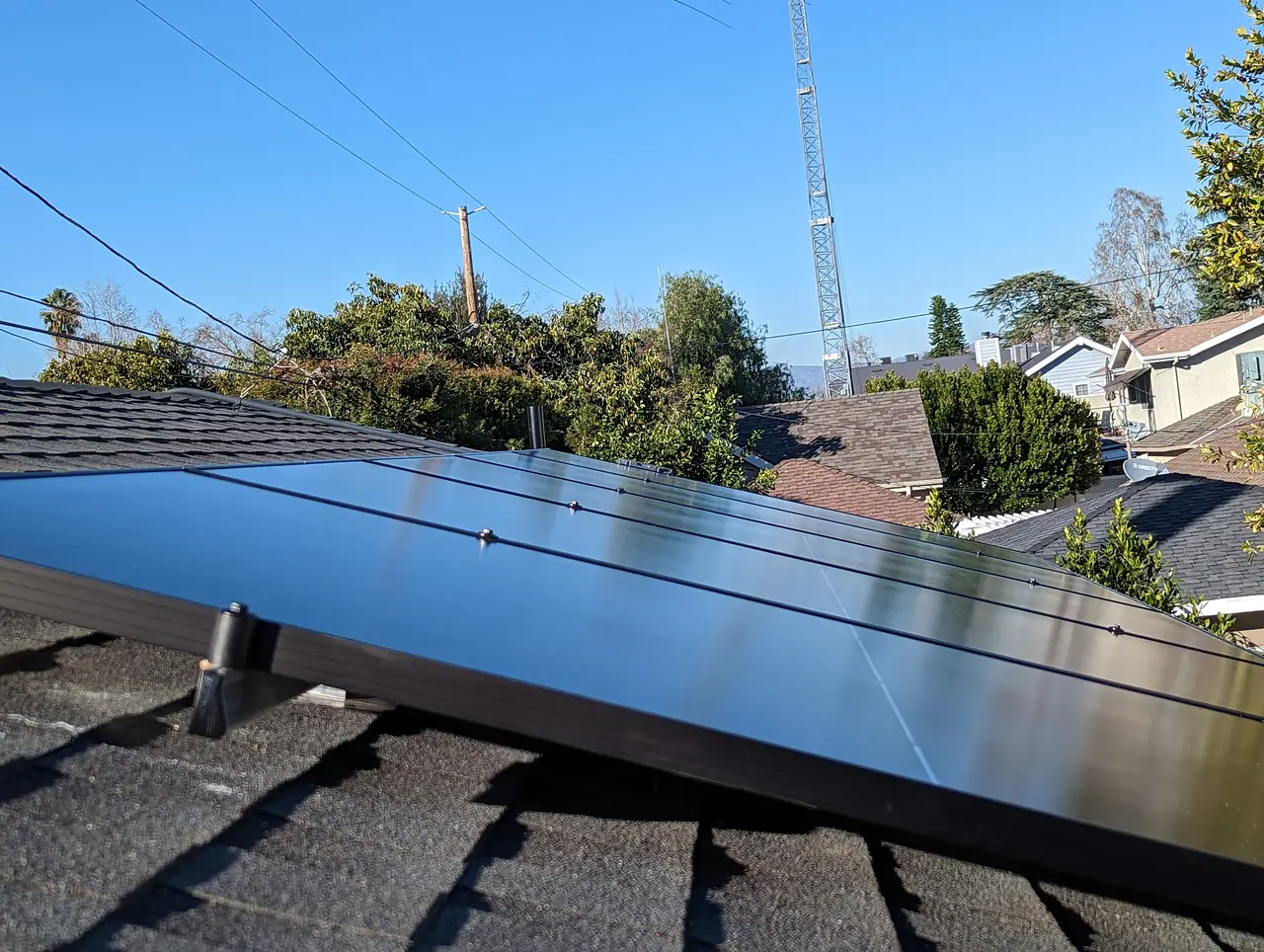
The array itself was never the hard part. One owner in a six-unit building wanted solar on the section of roof over their own unit, the plan set was drawn, the city permit was pulled, and the installation went in. It passed its final building inspection at the end of May 2019. Permission to operate arrived four months after that.
What happened in between is the part that matters. In a single-family house, the service you connect solar to belongs to you. In a small condominium building, it does not. The meters sit together in one cabinet on a common wall, the roof is common area, and the moment one owner asks the utility to interconnect, the utility looks at the whole installation.
It looked, and it found two things. The six-gang cabinet was an older enclosure that no longer met the clearance requirements the utility publishes in its Electric Service Requirements. And an air conditioning condenser had been installed, years earlier and by somebody else, standing in the code-required working space directly in front of the meters. Neither had anything to do with solar. Both had to be fixed before one 6-kilowatt system could be switched on.
The useful clarification, and it is worth knowing before anyone panics about cost, is that the utility did not ask for six new meters. It said so plainly: the meters themselves were fine. What it required was that the enclosure defects be cured and the working space be cleared. That is a much smaller job than replacing a building's metering, and the distinction is the difference between a project that proceeds and a project that dies at the homeowners association.
Cali Energy established in writing which standard applied — the clearance diagram on page 5-20 of the Electric Service Requirements — and confirmed that a new code-compliant cabinet was what the utility wanted. The cabinet was rebuilt, the condenser was moved, and both were photographed for the utility.
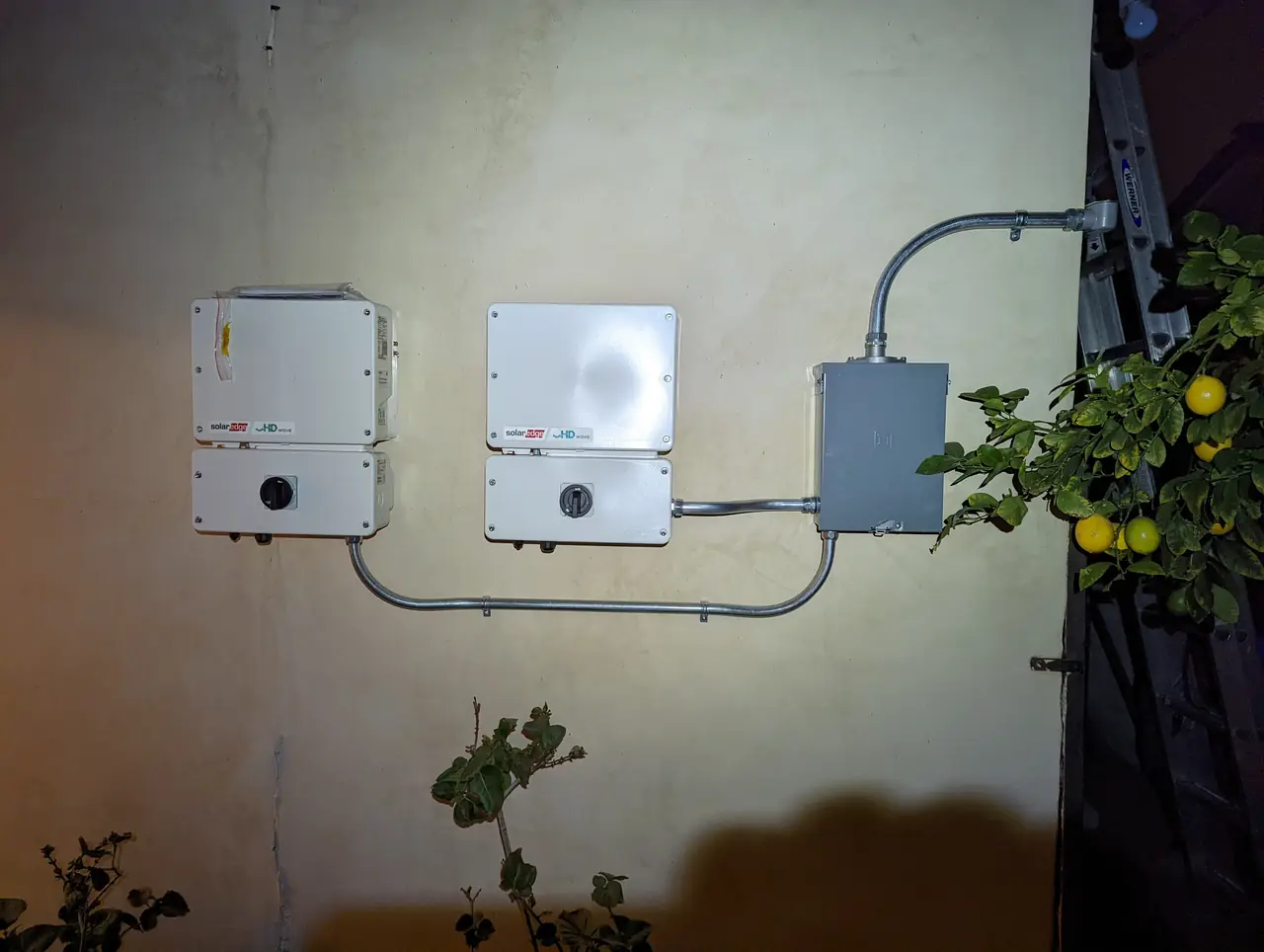
Two more things about a multi-meter address are worth carrying into your own project. First, the utility's fast-track review is not available: it was canceled here because a multi-meter location needs a representative to visit and decide where the photovoltaic disconnect goes, what signage it carries and where the map placard is mounted. The application was refiled on the standard path, which meant a new work request number. Second, the disconnect location is chosen in the field by the utility, not by the designer: the representative came out, photographed the wall, and marked the spot, with an engraved placard specified in white letters on red.
One smaller rule is worth knowing: the utility approves an interconnection agreement only with the account holder's own email and phone number in the customer contact fields, which on a rental or a second home takes arranging before anything is filed.
The cost of the approach is time: about nine months through the utility's planning review, most of it not construction. Cali Energy carried the file through each change of service planner and corrected the last punch item the day it was raised, and permission to operate was granted on the twenty-fifth of September 2019.
If you own a condominium and have been told solar is not possible, the question to put to an installer is not about your roof. It is whether they have taken a shared meter cabinet through a utility review before, and what they expect the common-area scope to be. This one has: the Reseda unit has run on its own array since September 2019, behind a meter cabinet rebuilt to the current standard.
How it ran
| October 2018 | Plan set and certificate of insurance issued for the unit |
|---|---|
| 19 December 2018 | Interconnection application filed at 6.0 kW AC-CEC on the fast-track path |
| 11 January 2019 | Fast track canceled: a multi-meter location requires a site visit. |
| 17 January 2019 | Refiled on the standard path under a new work request |
| 5 February 2019 | Utility requires full electrical plans and a written scope for the shared cabinet |
| 6 February 2019 | Utility confirms the six meters do not need upgrading — only the enclosure and the working space |
| 8 February 2019 | Standard identified: the clearance diagram in the Electric Service Requirements |
| February – March 2019 | Cabinet rebuilt and condenser relocated; work photographed for the utility |
| 24 April 2019 | Utility marks the photovoltaic disconnect location in the field and specifies the engraved placard |
| 23 May 2019 | Project approved by the building department |
| 31 May 2019 | Final building inspection passed |
| 20 September 2019 | Interconnection review completed; meter field order issued |
| 25 September 2019 | Permission to operate |
This timeline reflects this property and this permitting path: one unit of a multi-meter building, where the shared service had to be corrected before a single system could be energized.
What we did
- Pulled the city permit and installed the array on the roof section over the owner's unit.
- Established in writing which published standard the shared meter cabinet had to meet, then rebuilt it to that standard (C-10).
- Had the air conditioning condenser relocated out of the working space in front of the meters.
- Refiled the interconnection on the standard path after the fast-track review was canceled for the multi-meter address.
- Installed the photovoltaic disconnect at the location the utility marked in the field, with the engraved placard it specified.
- Carried the project through the utility's planning review, and every planner handoff in it, to permission to operate.
System specifications
| Recorded by the utility | 6.0 kW AC-CEC |
|---|---|
| Building | Six units sharing one roof and one six-gang meter cabinet |
| Shared equipment rebuilt | Meter cabinet, to the published clearance standard |
| Obstruction removed | Air conditioning condenser relocated out of the working space |
| Disconnect | Location set by the utility in the field; engraved placard, white on red |
| Meters replaced | None |
| Utility path | Fast Track canceled for a multi-meter address; refiled Standard Process |
| Battery | None |
| Utility / AHJ | LADWP / LADBS |
Is your project like this one?
- You own one unit in a condominium or small apartment building and share the roof.
- Your building has one bank of meters in a single cabinet.
- You have been told the building's electrical service is too old for solar.
- Something has been installed in front of your meters over the years.
- Your Reseda property is served by LADWP, while permits are handled by LADBS.
Cali Energy in Reseda
Reseda is inside City of Los Angeles boundaries: permits run through LADBS, interconnection through LADWP.
Reseda is a neighborhood in the west San Fernando Valley, inside the City of Los Angeles. Alongside its single-family blocks it has a large stock of small multi-unit buildings from the 1980s and 90s, where several owners share one roof and one bank of meters.
This installation is on the Reseda projects page alongside the others, and what the work covers is set out on the Reseda service area page.
- License and classifications: CSLB #1032379
- Official reference for this process: LADWP Electric Service Requirements
- Official reference for this process: LADWP interconnection requirements
Frequently asked questions
Can one owner in a condo building install solar?
Yes, and this project is a worked example. What is different from a house is that the service you interconnect to is common property, so the utility reviews the shared equipment as part of your application. Here that meant the building's meter cabinet and the working space in front of it, both of which had to be corrected before one 6-kilowatt system could be energized.
Does the whole building have to be upgraded?
Not necessarily, and it is worth getting that in writing early. On this building the utility stated plainly that all six meters did not need upgrading. What it required was that the enclosure defects be cured and that the code-required working space in front of the meters be cleared. That is a far smaller scope than re-metering a building, and the difference decides whether a project is affordable.
Why was the fast-track review canceled?
Because the address has more than one meter. On a multi-meter location the utility sends a representative to the site to decide where the photovoltaic disconnect is mounted, what signage it carries and where the map placard goes, and that decision cannot be made from photographs. The application was refiled on the standard path under a new work request number.
Whose contact details go on the interconnection agreement?
The account holder's own. The interconnection agreement is a document between the utility and the account holder, so the customer contact fields carry the account holder's email address and phone number rather than the installer's — on a rental or a second home that takes arranging before filing.
Does Cali Energy work on multi-unit buildings in Reseda?
Yes. Cali Energy holds B, C-10 and C-39 classifications under CSLB #1032379, which covers the electrical work on shared service equipment as well as the array itself. Reseda is inside City of Los Angeles boundaries, so permits run through LADBS and interconnection through LADWP.
What this would look like on your roof
Planning solar in Reseda? Tell us your utility, your roof and what your bill looks like now, and we will model what a system like this would do on your house before you commit to anything.
Or call +1 (323) 844-7777 · Cali Energy, Northridge · CSLB #1032379 (B, C-10, C-39) — design, permits, install and electrical under one licensed contractor.
Related
This timeline reflects this property and this permitting path. Updated September 2026.