

Porter Ranch, CA · August – November 2025 · LADWP / LADBS
Porter Ranch: they wanted the same system as the neighbor.
The request was a copy of a known system. The right answer came from their own electricity bill.
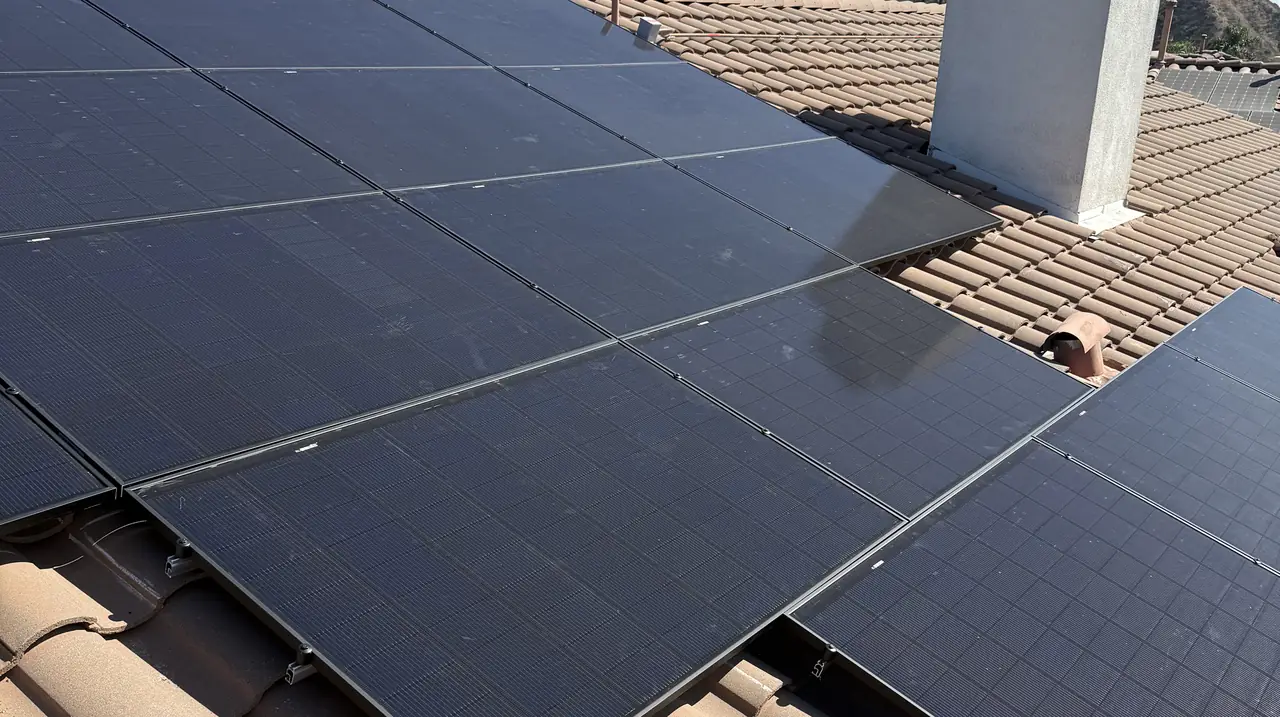
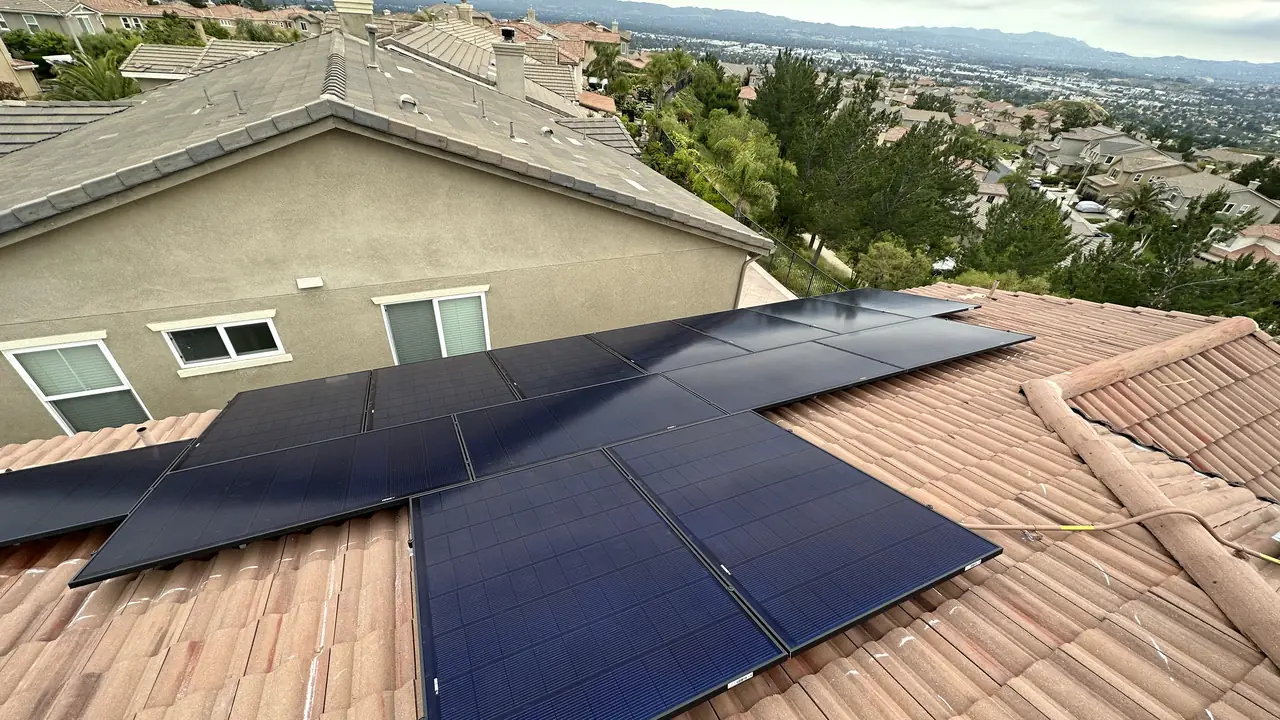
A request to copy a neighbor's system is a good starting point and a poor specification: two houses on the same street can use very different amounts of electricity. On this Porter Ranch project the household asked for the same equipment as a house Cali Energy had finished nearby, and the design started at twenty-four modules — until the actual bill showed annual use of about 9,600 kWh, which brought the array down to seventeen. The association approved the layout and the system was installed in the autumn.
At a glance
- How it started
- Same specification as a neighbor's system
- First layout
- 24 modules
- What the bill showed
- About 9,600 kWh a year
- What was built
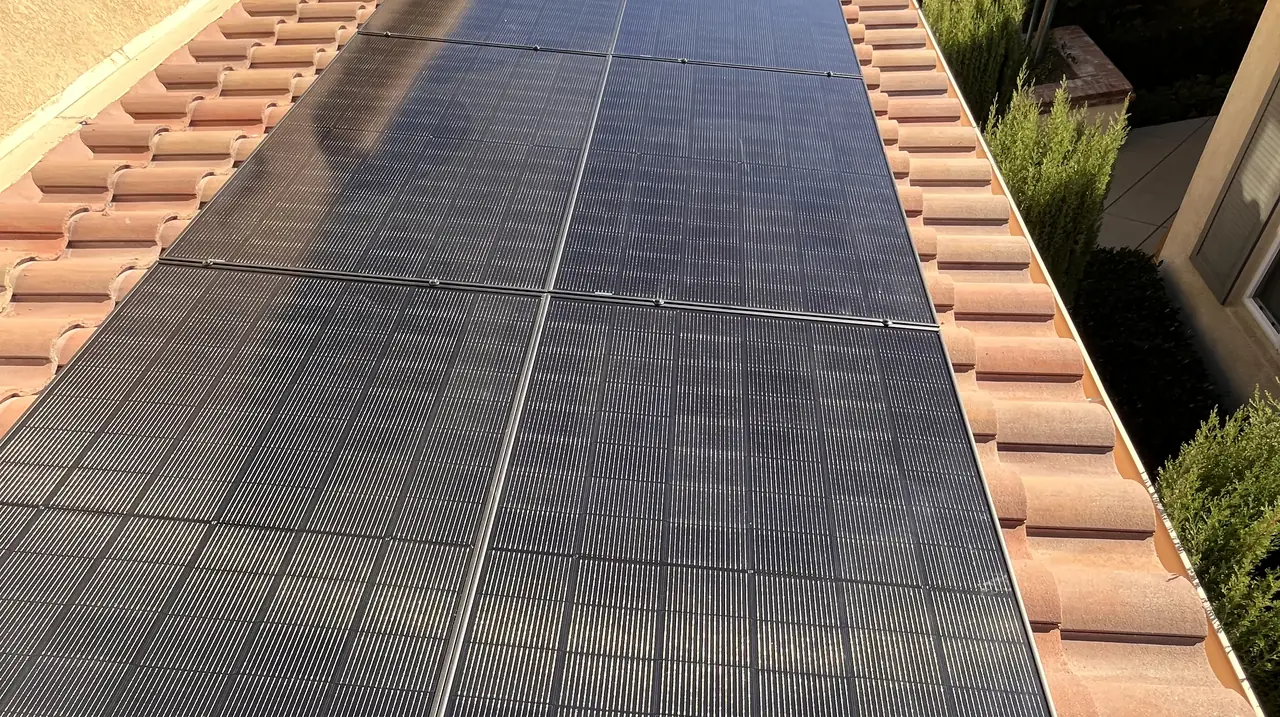
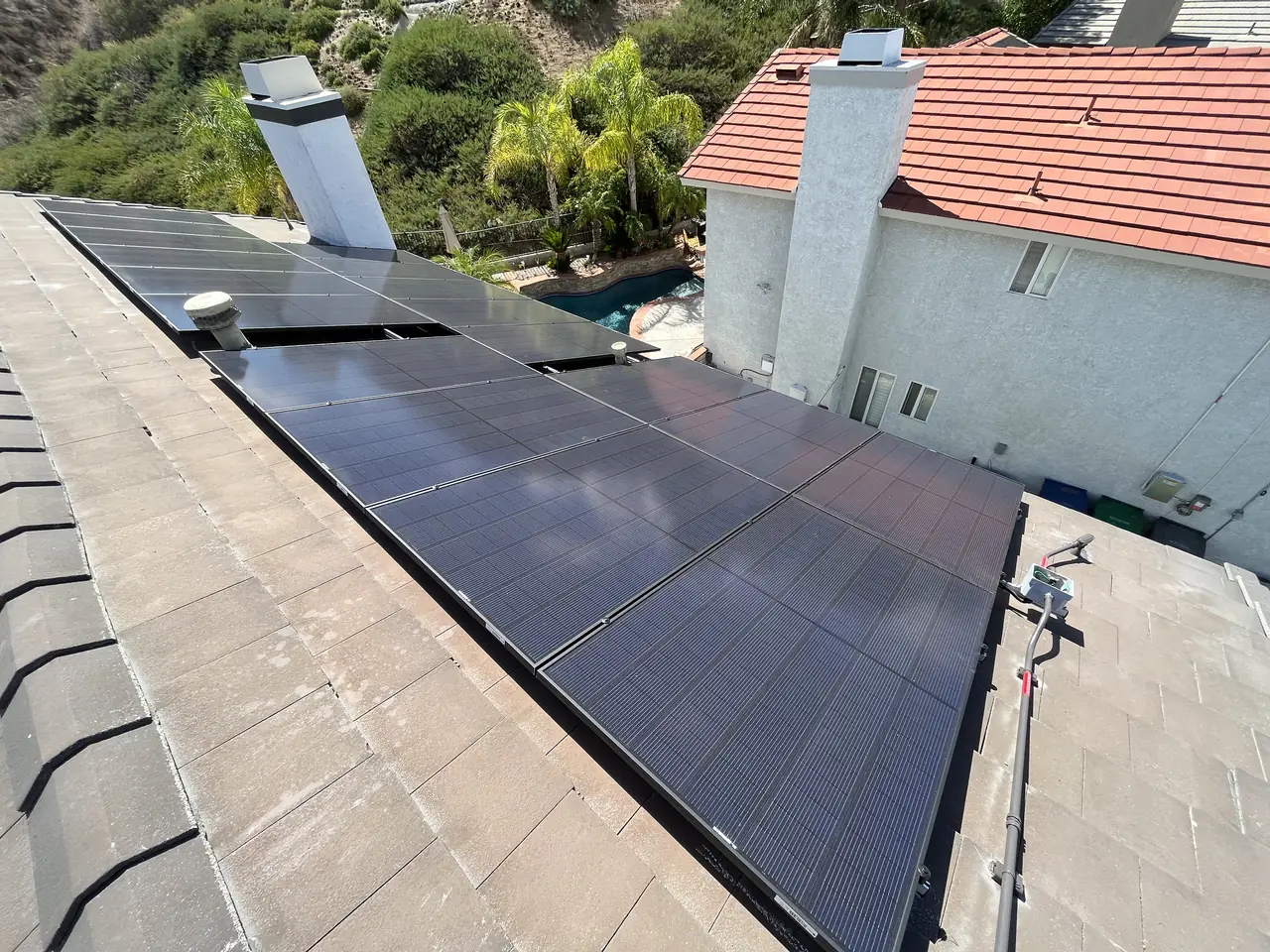
- 17 × REC 410 W Pure R
- Main panel
- 300 A; main breaker derated to 175 A
- Inverter
- SolarEdge 10 kW with S440 optimizers
- Permit route
- Express — which ruled out a power control system
- Utility / AHJ
- LADWP / LADBS
The story
The request came in with a reference attached: the household wanted the same system as a house we had finished nearby. On a tract where the roofs repeat, that is a reasonable place to start — and it is not a specification.
The first layout followed the reference: twenty-four modules of the same type, with a string inverter and module-level optimizers. Then the electricity bill arrived and the picture changed. This household used about nine thousand six hundred kilowatt-hours a year — well under what the reference system was built for.
So the array came down. Thirteen modules were priced, then seventeen, and seventeen is what went on the roof.
This is worth saying clearly because the industry rarely does: a system copied from a neighbor is sized for the neighbor's habits. Two identical houses on the same street can differ by a factor of two in consumption — one has a pool pump and two electric cars, the other does not. The roof tells you what fits. Only the bill tells you what to build.
The association approved the layout, which on this tract is its own track with its own calendar, and the first payment arrived in two transfers because a bank limit sat between the household and a single one.
One decision inside the drawings is worth spelling out, because it is the kind of thing that gets settled silently and then explains the price. The first plan set used an inverter with a power control system — electronics that limit what the array can push into the panel, so the main breaker does not have to be derated at all. Elegant, and unusable here: this project was going through the express permit route, and that route does not accept power control systems. So the drawings went back and the main breaker was derated the ordinary way.
The load calculation then came out at 174.9 A against a 175 A derate, which is close enough that the designer offered an alternative: upgrade the sub panel to a 200 A bus with a 100 A main and interconnect there instead. We took the derate — the arithmetic fits, and it keeps the house on one service panel — and both options were set out in writing first.
Two things happened after the installation.
The first: the inverter was online and producing, and the monitoring was not yet reporting, because the unit still had to be joined to the household's own wireless network — the one step of a solar installation that cannot be finished without the owners' credentials. We saw it on the portal, went back, and a technician had it reporting the same week. A system that runs but does not report is a system nobody can check, which is why that connection is on our handover list rather than in somebody's memory.
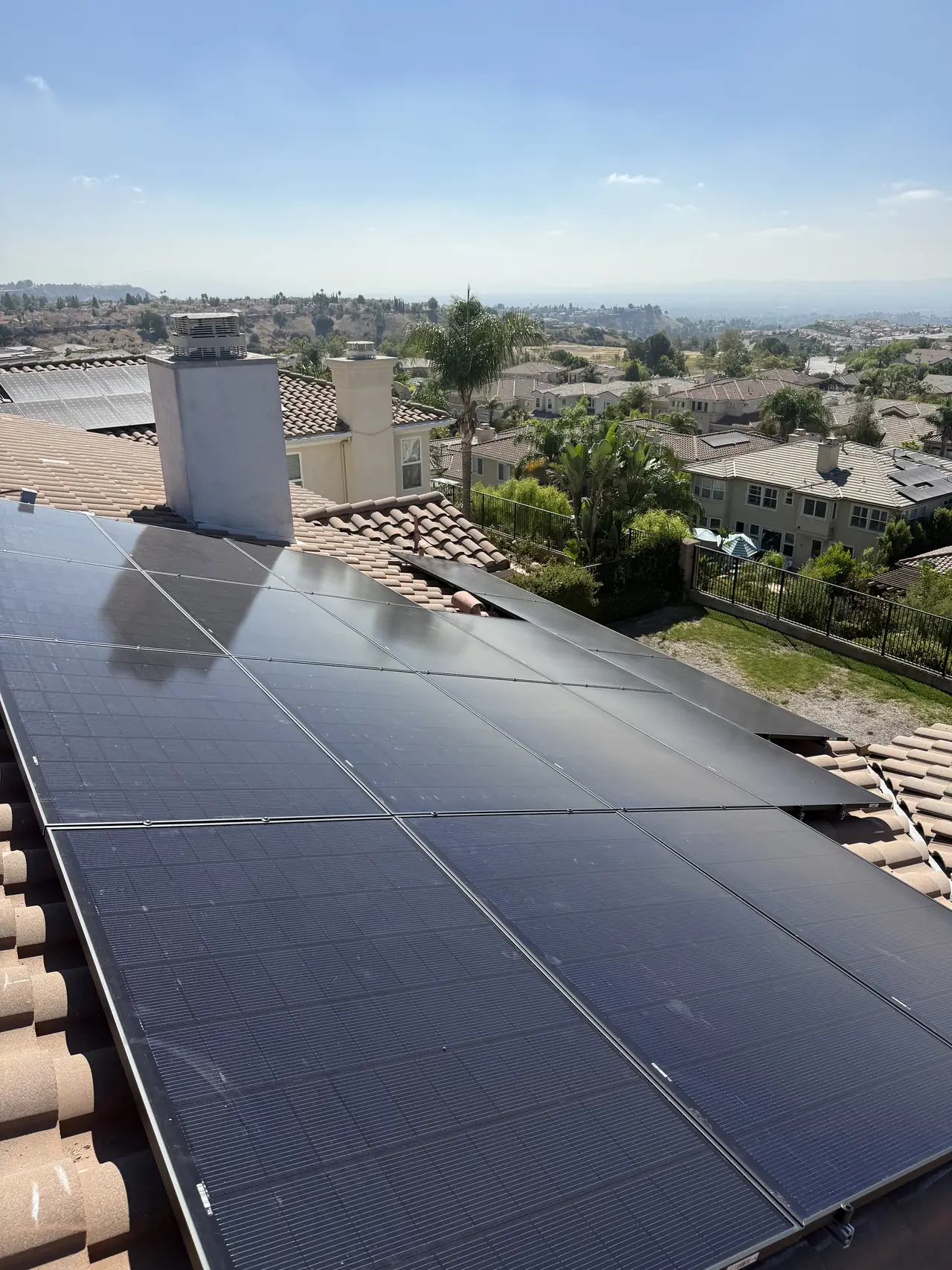
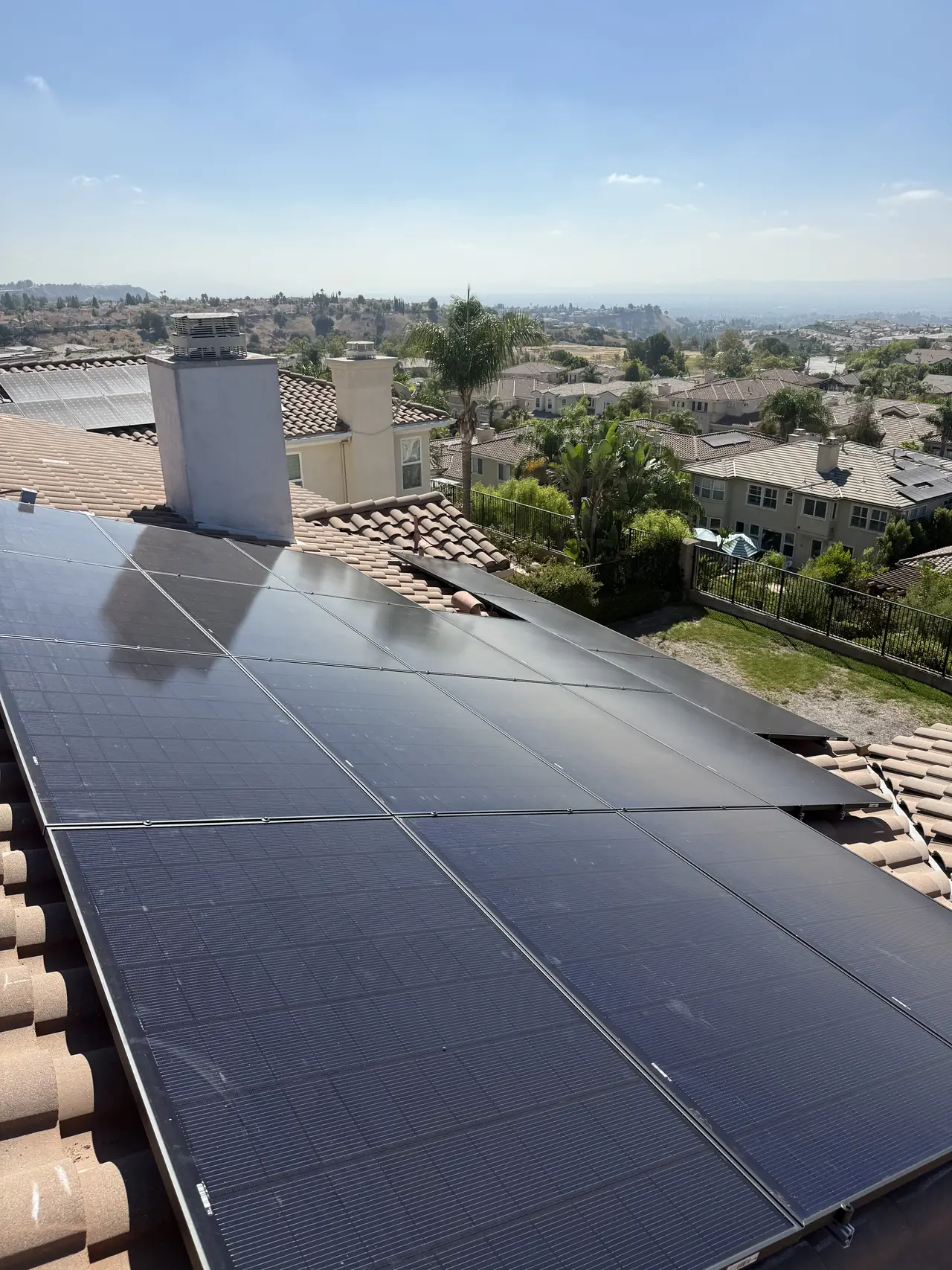
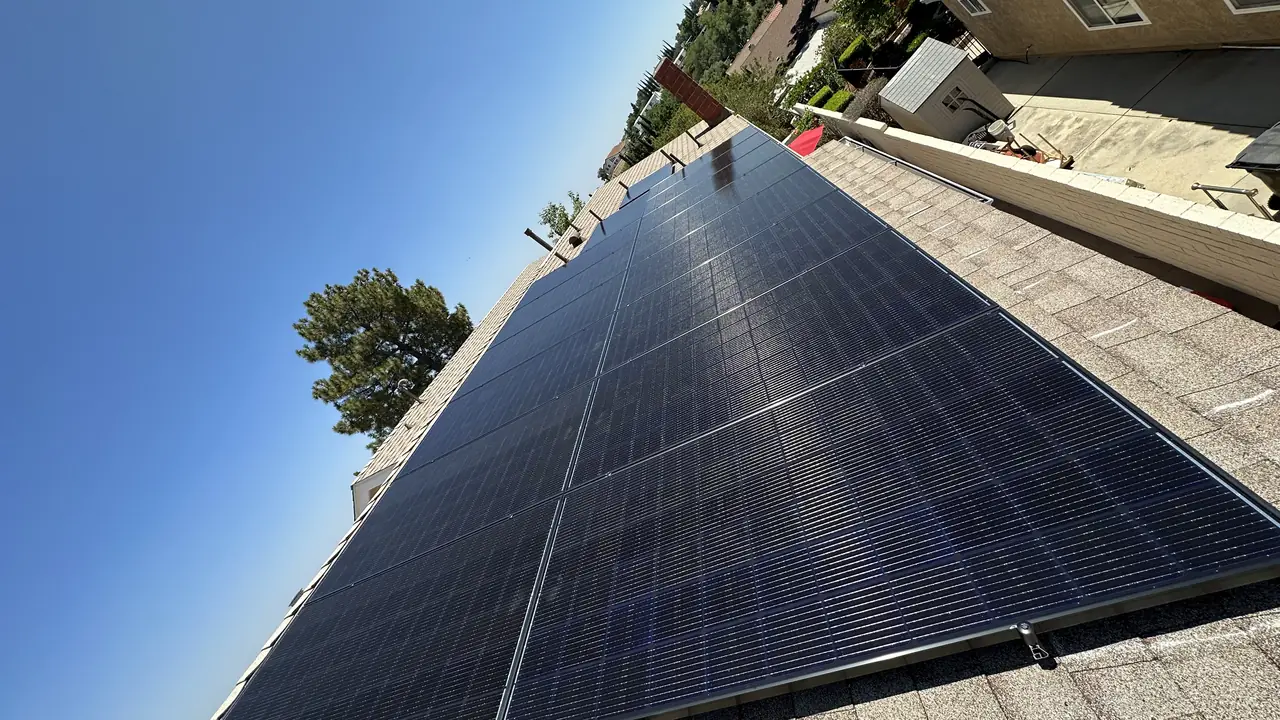
The second: after a windy night the household found a metal piece in the back yard and asked whether it had come off the array. We had photographs of the roof from before and after the installation, compared them, and could show the rails and clamps in place. The answer mattered less than the fact that it could be answered at all — which is the argument for photographing a roof properly on the day the work is done.
Seventeen modules sized against a real bill, monitoring reconnected on a follow-up visit, and a question about wind answered from photographs taken the day the work was done. The household got a system that matches its own house rather than the one down the street.
Cali Energy designed, permitted and installed this 17-module array in Porter Ranch.
How it ran
| 11 August 2025 | Request: the same system as a neighbor's installation |
|---|---|
| 12 August 2025 | Electricity bill reviewed — about 9,600 kWh a year |
| 15 August 2025 | Array resized; 17 modules priced |
| 22 August 2025 | Design plans issued |
| 25 August 2025 | Household and association both approve the layout |
| 9 September 2025 | Installation |
| 3 October 2025 | Inverter found online but not joined to the network |
| 6 October 2025 | Technician reconnects the monitoring |
| 9 November 2025 | Metal piece found in the yard after wind; checked against the installation photographs |
Three weeks from a neighbor's recommendation to an approved design, and the bill is what set the size.
What we did
- Started from the neighbor's system and then sized against this household's bill.
- Priced three layouts rather than defending the first one.
- Came back to join the monitoring to the household network and saw it report.
- Used before-and-after roof photographs to answer a question about wind damage.
System specifications
| Array | 17 × REC 410 W |
|---|---|
| Inverter | SolarEdge with module-level optimizers |
| Annual use | About 9,600 kWh |
| Association | Layout approved |
| Monitoring | Connected on a follow-up visit |
| Utility / AHJ | LADWP / LADBS |
Is your project like this one?
- You want the same system your neighbor has.
- Your quote was written before anyone looked at your bill.
- Your monitoring app shows nothing after installation.
- Something turned up in your yard after a storm.
Cali Energy in Porter Ranch
Porter Ranch is inside City of Los Angeles boundaries: permits run through LADBS and interconnection through LADWP. In a tract where the houses repeat, one installation is visible to every neighbor who drives past it.
This installation is on the Porter Ranch projects page alongside the others, and what the work covers is set out on the Porter Ranch service area page.
- License and classifications: CSLB #1032379
- Official reference for this process: CSLB — Solar Smart
- Official reference for this process: LADWP — interconnection requirements
Frequently asked questions
Can I just get the same solar system as my neighbor?
You can, and it is often a reasonable starting point on a tract where the roofs repeat. It is not a specification, though: consumption between two identical houses can differ by a factor of two, and the array should be sized against your own bill.
How many panels do I actually need?
Enough to cover the share of your annual consumption you want covered, within what the roof planes and the electrical panel allow. On this project the answer moved from twenty-four to seventeen once the bill was read.
My system is producing but the app shows nothing. What is wrong?
Usually the inverter or gateway is not yet joined to the household network — the step that needs the owners' own credentials. The array keeps working; only the reporting is missing, and a short visit finishes it. It belongs on the handover list, which is where we keep it.
Why do installation photographs matter after the job is finished?
Because they answer questions that come up later. When something is found in a yard after a storm, a photographed roof from the day of installation shows what was fitted and how — which settles the question instead of arguing it.
Does Cali Energy install solar in Porter Ranch tracts with associations?
Yes. Association review is treated as its own approval track alongside the LADBS permit and the LADWP interconnection, and the layout goes to the association before the permit rather than after it.
What this would look like on your roof
Planning solar in Porter Ranch? Tell us your utility, your roof and what your bill looks like now, and we will model what a system like this would do on your house before you commit to anything.
Or call +1 (323) 844-7777 · Cali Energy, Northridge · CSLB #1032379 (B, C-10, C-39) — design, permits, install and electrical under one licensed contractor.
Related
This timeline reflects this property and this permitting path. Updated September 2026.