

Porter Ranch, CA · June – September 2022 · LADWP / LADBS
Porter Ranch: one address, three different cities.
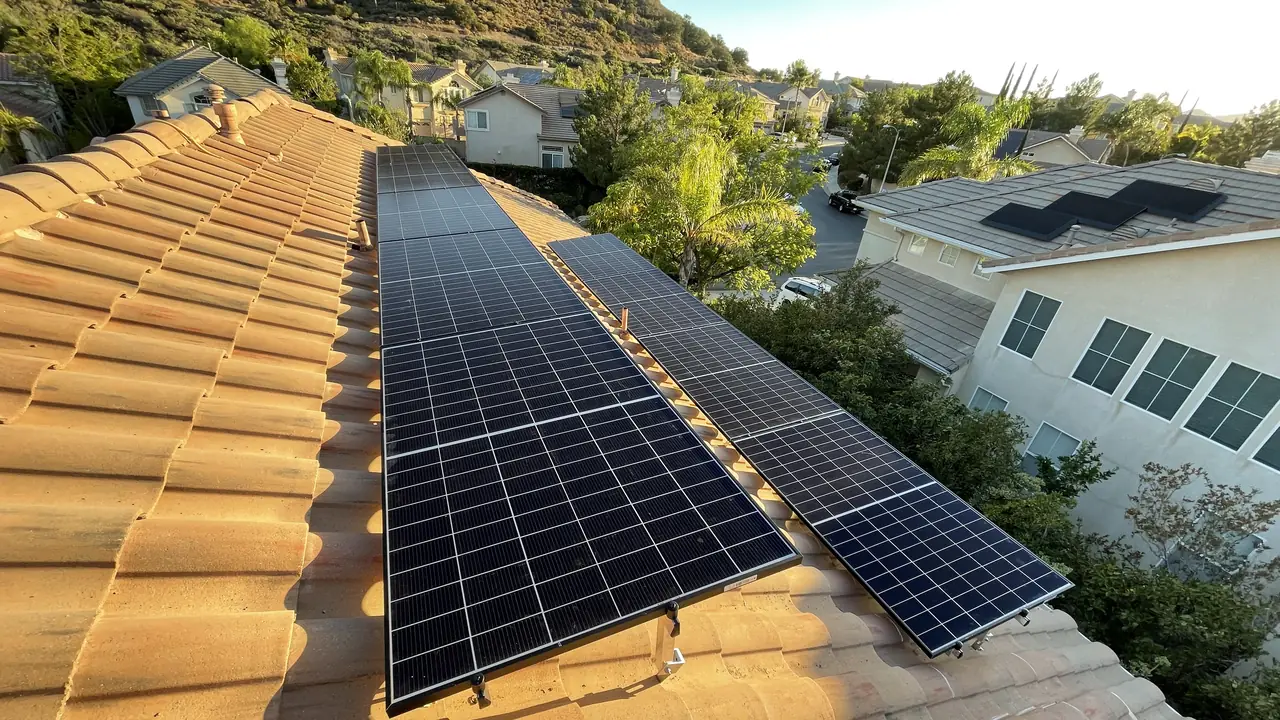
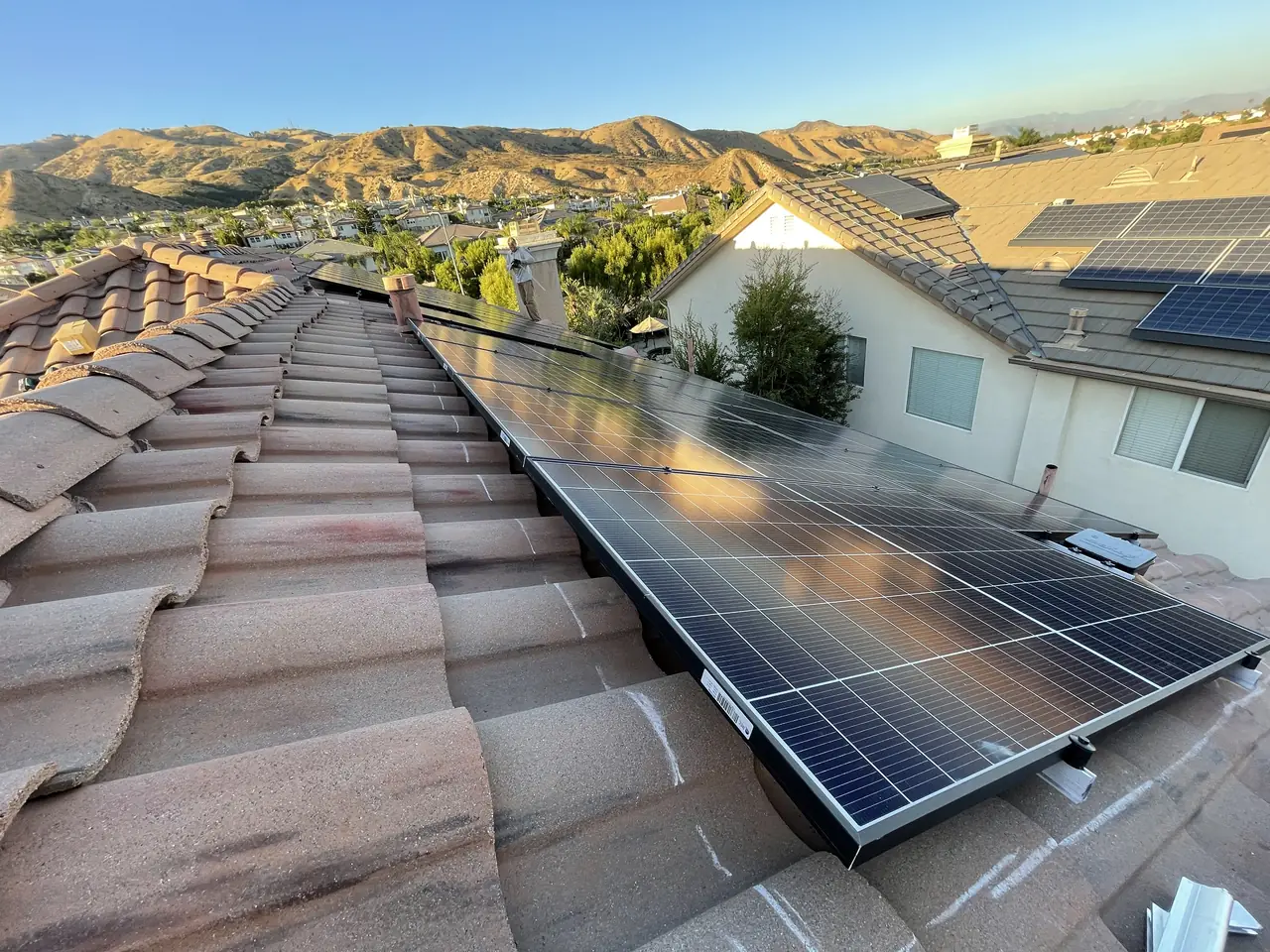
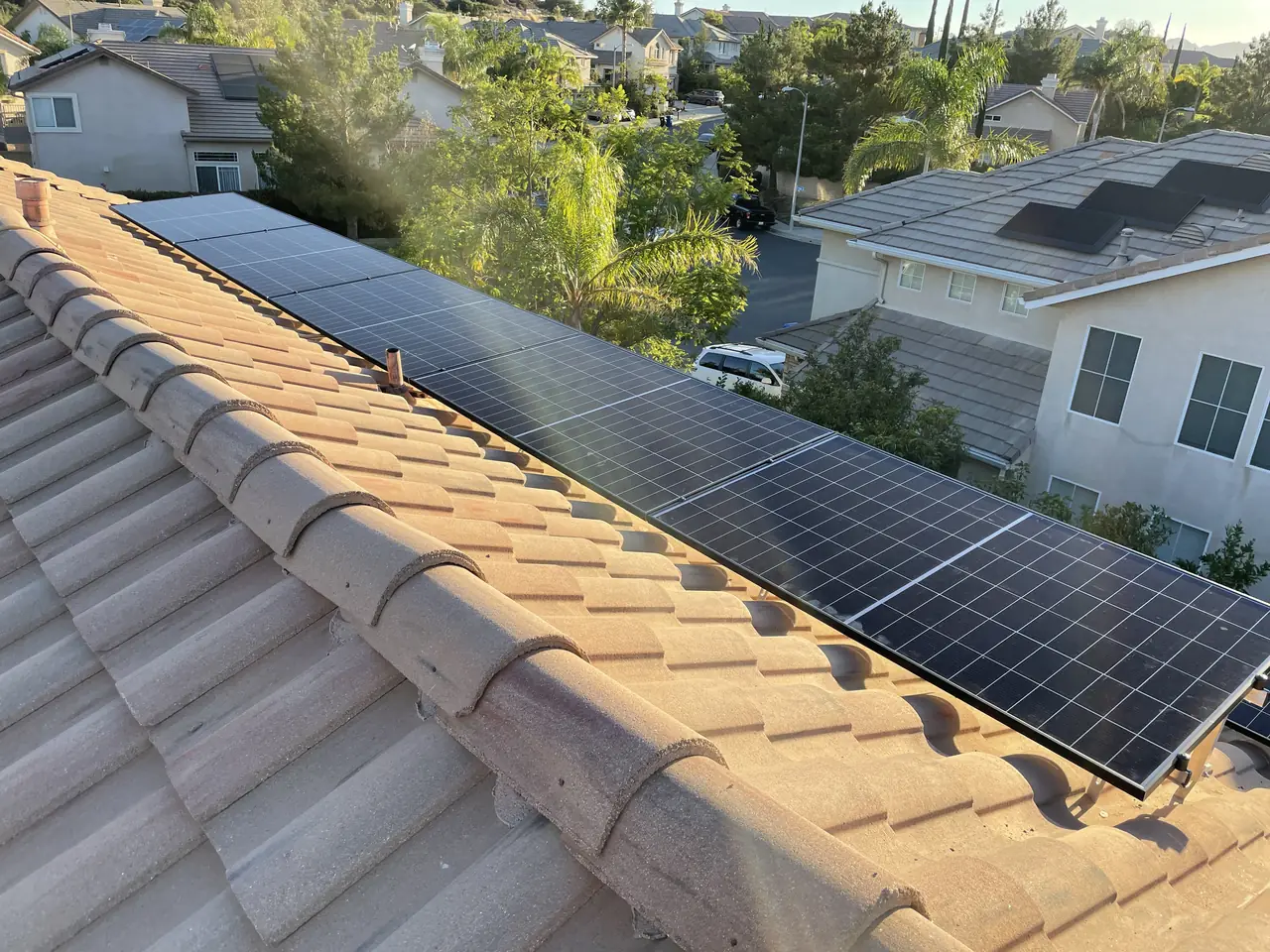
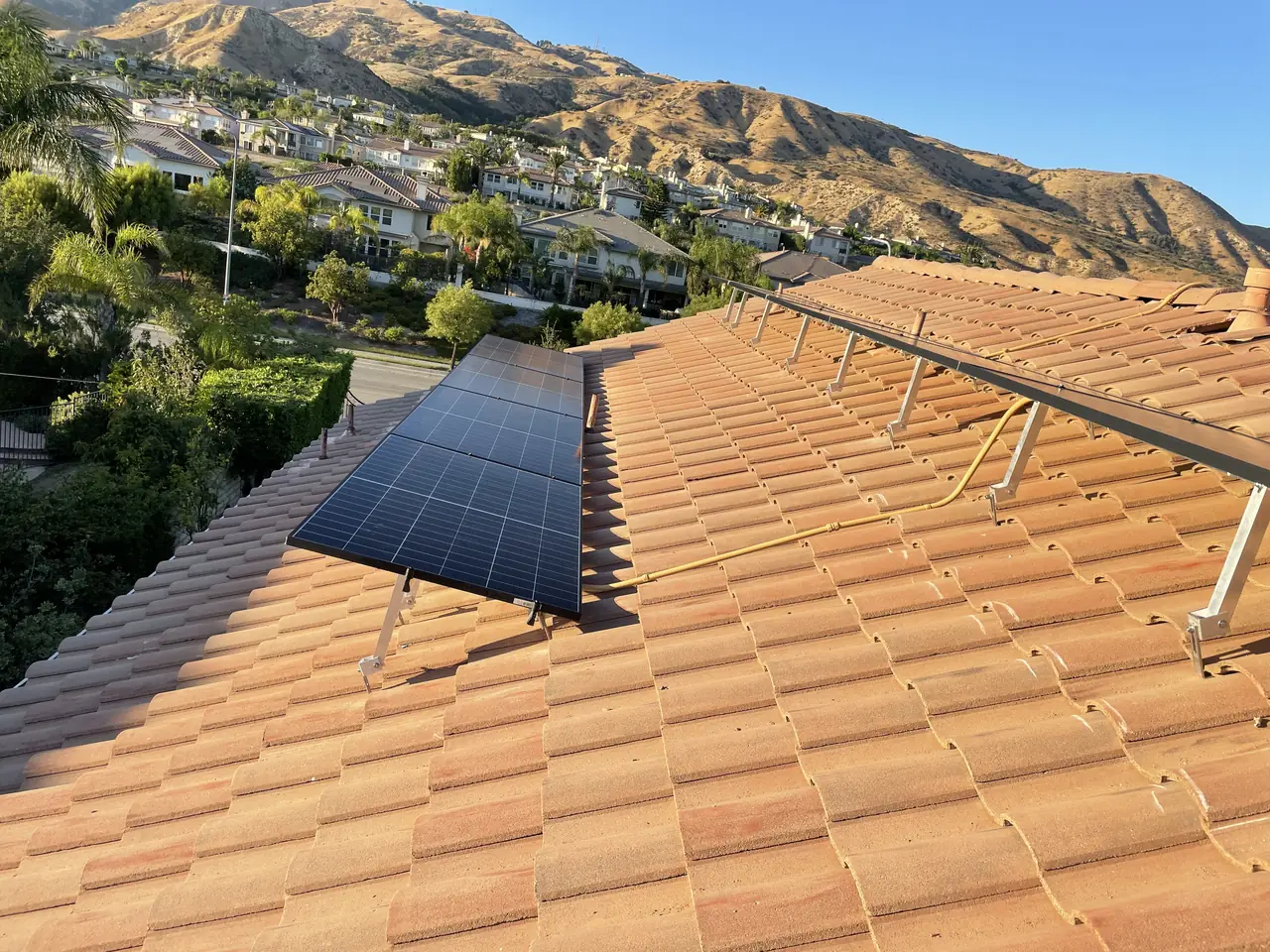
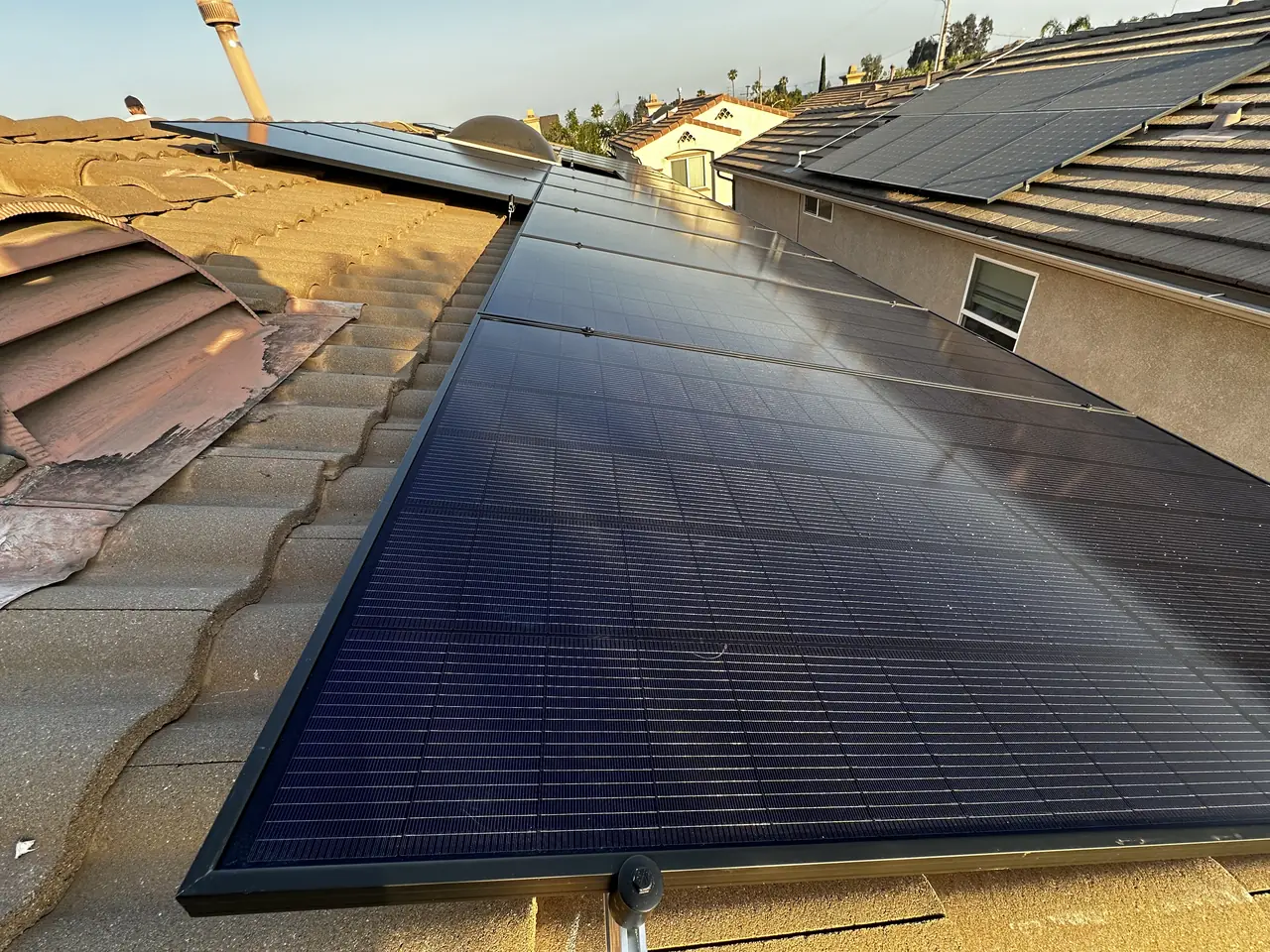
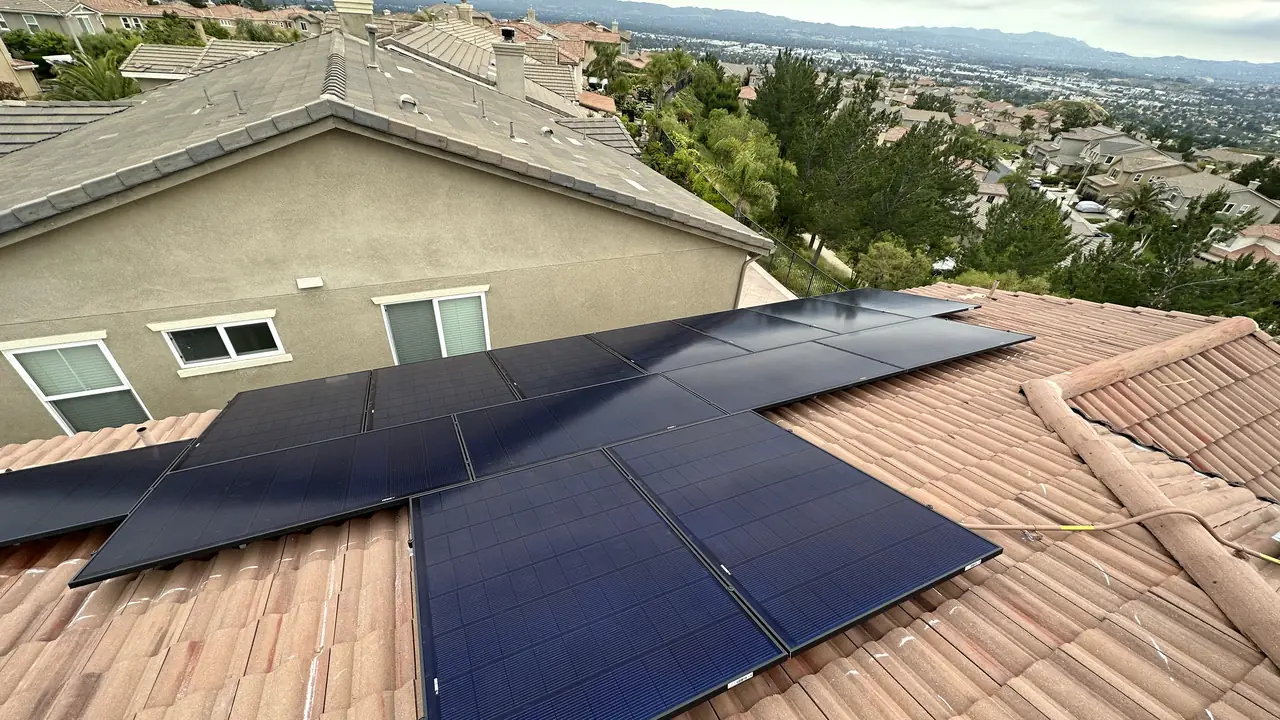
Thirty-nine modules and 14.4 kilowatts. The technical part was routine; the paperwork called the house three different things.
A Porter Ranch address can appear in utility records as Porter Ranch, as Northridge or as Los Angeles, because the neighborhood is inside the City of Los Angeles and shares a ZIP code with Northridge. On this 14.4 kW project the interconnection agreement came back showing one city, the permission to operate showed another, and the household asked for the correction — which is the right instinct, because the address on the interconnection record is what later ties the meter, the account and the permit together. Cali Energy carried the thirty-nine-module array from plan check to permission to operate in twelve weeks.
At a glance
- Array
- 39 × REC 370 W, 14.43 kW DC
- Inverters
- One Enphase IQ8+ per module
- Interconnection size
- 14.4 kW AC-CEC, fast track
- Plan check
- Returned for a stamp and signature
- Signature to permission
- About twelve weeks
- Utility / AHJ
- LADWP / LADBS
The story
Thirty-nine modules is a large residential array. That part of this project ran the way large arrays do: a full plan set, a load calculation on the drawings, and a plan check that came back asking for the designer's stamp and signature before it would go further.
What is worth the page is the address.
Porter Ranch is not a city. It is a neighborhood inside the City of Los Angeles, and it shares the 91326 ZIP code with part of Northridge. The practical result: on this one project the utility's own documents called the property Los Angeles on the interconnection agreement and Northridge on the permission to operate, while the household itself has only ever called the place Porter Ranch.
The owner noticed — the ZIP code was wrong as well as the city — and asked for both to be corrected. That instinct is right, and here is why it matters rather than being a curiosity.
The interconnection record is the spine of everything that comes after it. The net meter is issued against it. The utility account is tied to it. Years later, when a house is sold and somebody asks what was permitted and what was interconnected, the search is done on an address. If the array lives under one spelling and the permit under another, the two do not meet on their own — somebody has to know to look twice.
None of this is anybody's mistake exactly. It is what happens when a neighborhood name, a postal designation and a municipal boundary do not line up, which in this part of the valley is the normal condition rather than the exception.
The practical advice for an owner in a neighborhood like this one: keep a copy of the permit, the interconnection agreement and the permission to operate, and check that the address reads the same way on all three. It costs one email at the time and saves an afternoon of searching later.
The rest of the project had one more turn in it. At the end of August the utility moved the job off the standard route and onto fast track — the shorter process for systems with no service upgrade and no battery. We asked whether fourteen and a half kilowatts still qualified; the answer was that fast track runs to thirty kilowatts, and that above ten an interconnection agreement is required but the faster route still applies. The switch came with its own paperwork: fast track asks for a photograph the standard package does not, and the job waited a day while that one image was added. A shorter route is not a looser one, and the day it cost is the whole price of learning that.
The interconnection agreement was approved at the start of September, permission to operate came through on the twenty-second, and the system was switched on the following day.
Afterwards the household added consumption monitoring — a second pair of current transformers that measures what the house uses rather than only what the array makes. Worth knowing what that buys: without it the monitoring shows production alone, and the question owners actually ask — am I covering my usage — cannot be answered from production data by itself.
Twelve weeks from a plan check to permission to operate, thirty-nine modules producing, and a household that can now see its usage next to its output — and holds its own copies of the permit, the agreement and the notice, spelled the way it asked for them.
Cali Energy designed, permitted, installed and connected this 14.4 kW array in Porter Ranch.
How it ran
| 28 June 2022 | Project released — 39 modules, one microinverter each |
|---|---|
| 30 June 2022 | Plan set returned; load calculation added to the drawings |
| 22 July 2022 | Plan check correction: designer's stamp and signature required |
| 4 August 2022 | Interconnection request filed — 14.4 kW AC-CEC, 14.43 kW DC |
| 12–15 August 2022 | Installation |
| 30 August 2022 | Utility moves the job from the standard route to fast track |
| 31 August 2022 | Extra photograph the fast-track route requires sent in; the one-day hold released |
| 1 September 2022 | Agreement returned showing the city as Los Angeles and the wrong ZIP; correction requested |
| 1 September 2022 | Interconnection agreement approved |
| 22 September 2022 | Permission to operate granted — the notice names the city as Northridge |
| 23 September 2022 | System switched on |
| 30 September 2022 | Consumption monitoring kit received; fitted on a follow-up visit |
Twelve weeks from a released design to a running system, and the only thing that needed arguing was what to call the neighborhood.
What we did
- Added the load calculation to the drawings when plan check asked for it.
- Passed the address correction to the utility instead of letting it stand.
- Switched the system on the day after permission arrived.
- Fitted consumption monitoring so the household could see usage, not only output.
System specifications
| Array | 39 × REC 370 W |
|---|---|
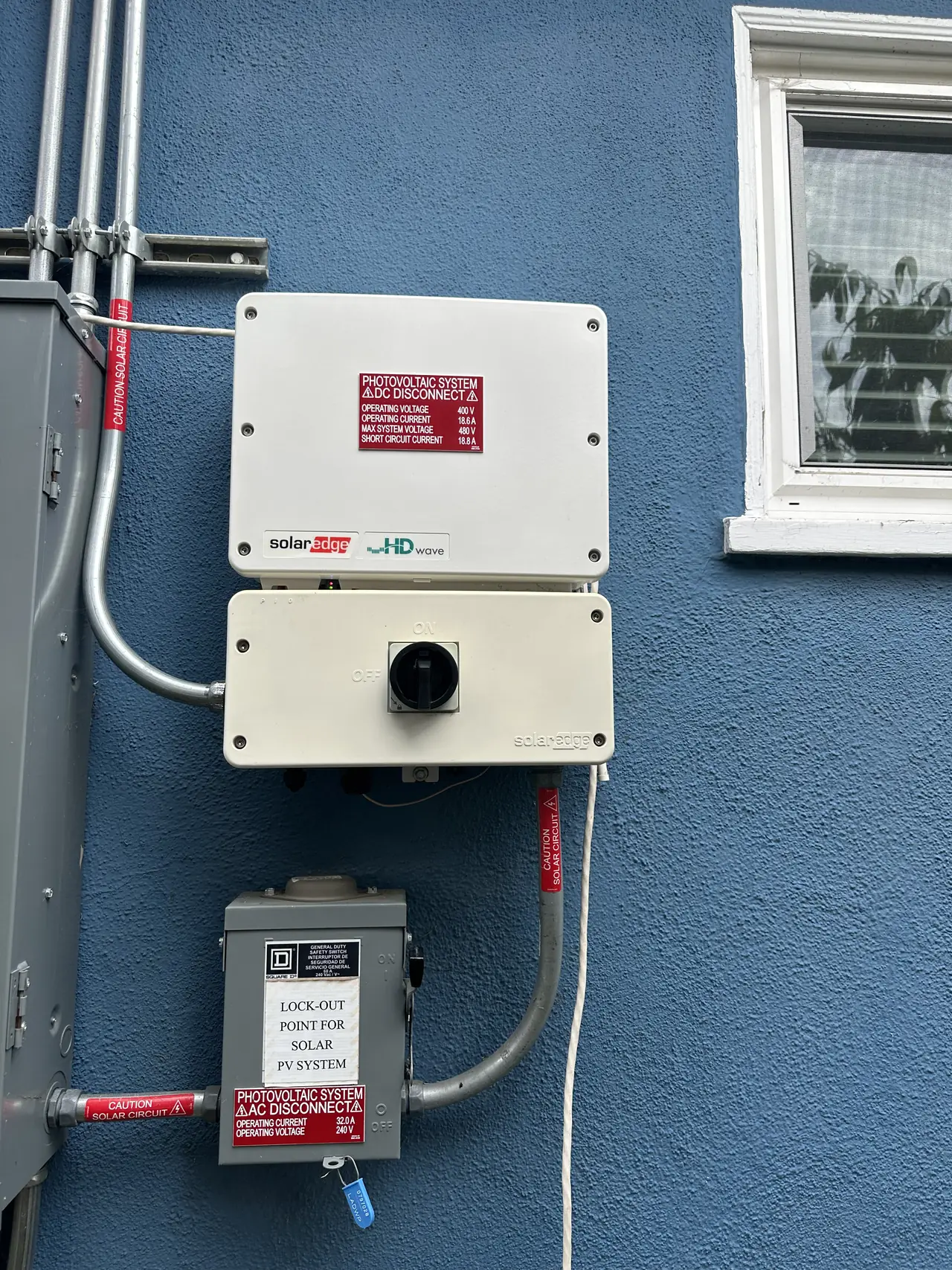
| Inverters | Enphase IQ8+, one per module |
| Interconnection | 14.4 kW AC-CEC |
| Monitoring | Production, with consumption added afterwards |
| Utility / AHJ | LADWP / LADBS |
Is your project like this one?
- Your neighborhood name and your ZIP code point at different cities.
- Your permit and your interconnection paperwork spell the address differently.
- You want to know what monitoring actually shows you.
- Your array is large enough to need a full plan check.
Cali Energy in Porter Ranch
Porter Ranch is inside City of Los Angeles boundaries: permits run through LADBS and interconnection through LADWP. The neighborhood shares a ZIP with Northridge, and the paperwork shows it.
This installation is on the Porter Ranch projects page alongside the others, and what the work covers is set out on the Porter Ranch service area page.
- License and classifications: CSLB #1032379
- Official reference for this process: LADWP — interconnection requirements
- Official reference for this process: LADBS — plan review and permitting
Frequently asked questions
Why does the utility call my Porter Ranch address Northridge?
Because Porter Ranch is a neighborhood inside the City of Los Angeles and shares the 91326 ZIP code with part of Northridge. Utility and permit records are built on postal and municipal data rather than on neighborhood names, so the same house can appear under three labels.
Does the wrong city on my paperwork cause a problem?
Not to the electricity. It matters later, when a permit record or an interconnection record has to be found by address — at a sale, at a refinance, or when anyone needs to know later what was approved. Matching spellings save that search.
What documents should I keep after a solar installation?
The permit, the approved plan set, the signed job card, the interconnection agreement and the permission-to-operate notice. Together they answer any question about what was built and what was authorized, without depending on anyone else's filing.
What is consumption monitoring and do I need it?
It is a second pair of current transformers that measures household usage alongside production. Without it the app shows only what the array makes, which cannot answer the question most owners actually have: how much of what I use is being covered.
Does Cali Energy work in Porter Ranch?
Yes, and in the rest of the northwest valley. Porter Ranch permits run through LADBS and interconnect through LADWP, and the address quirks in this ZIP are something we watch for on every project here.
What this would look like on your roof
Planning solar in Porter Ranch? Tell us your utility, your roof and what your bill looks like now, and we will model what a system like this would do on your house before you commit to anything.
Or call +1 (323) 844-7777 · Cali Energy, Northridge · CSLB #1032379 (B, C-10, C-39) — design, permits, install and electrical under one licensed contractor.
Related
This timeline reflects this property and this permitting path. Updated September 2026.