

North Hollywood, CA · February – March 2023 · LADWP / LADBS
Twenty-three days. Nothing was chased.
Interconnection filed on a Wednesday, three progress notices the following Saturday, installation released two days after that, and permission to operate three weeks later. Nobody had to chase anything.
A solar project has a fixed set of steps and almost none of them are negotiable. What varies is how many times each one has to be done. A project that goes through in three weeks is not a lucky one; it is one where the first submission was complete, the roof needed no decisions, and the service already had room.
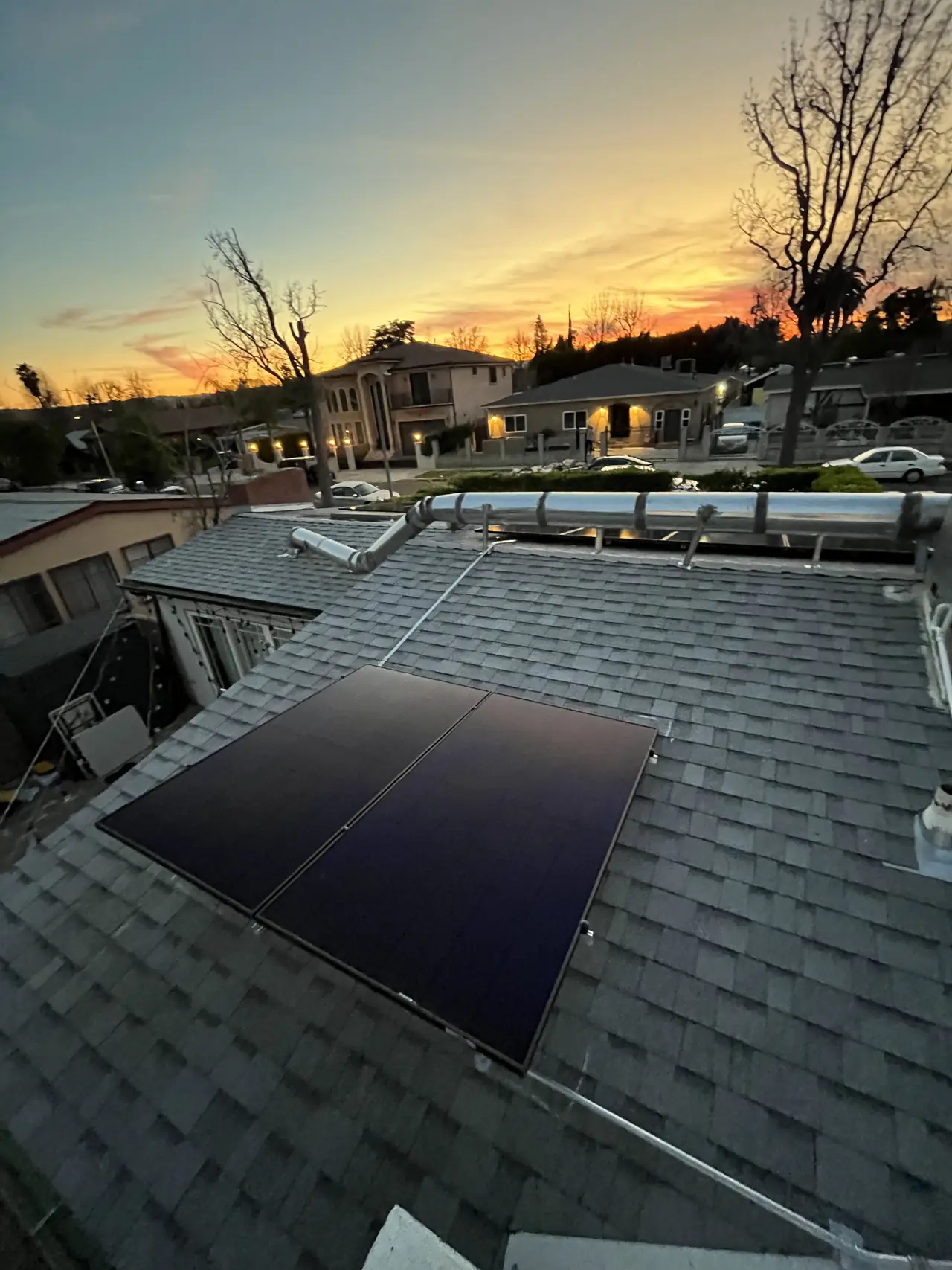
At a glance
- System
- 7.9 kW
- Filing to PTO
- Twenty-three days
- Notices in one day
- Three
- Emails needing a reply
- None
- Microinverters
- Enphase IQ8M, one per module
- Roof
- Composition shingle, single storey
- Corrections
- None
- Utility / AHJ
- LADWP / LADBS
The story
This is the shortest of our North Hollywood projects, and nothing about it was unusual. There was no clever trick and nobody was leaned on. Every step happened once.
The interconnection request went in on the eighth of February and the expenditure recovery charge was paid the same day — not the next week, the same day. Three days later the utility issued three notices together: the request confirmed, the details reviewed, and the solar site evaluation complete. Two days after that the installation was released. Permission to operate came on the third of March.
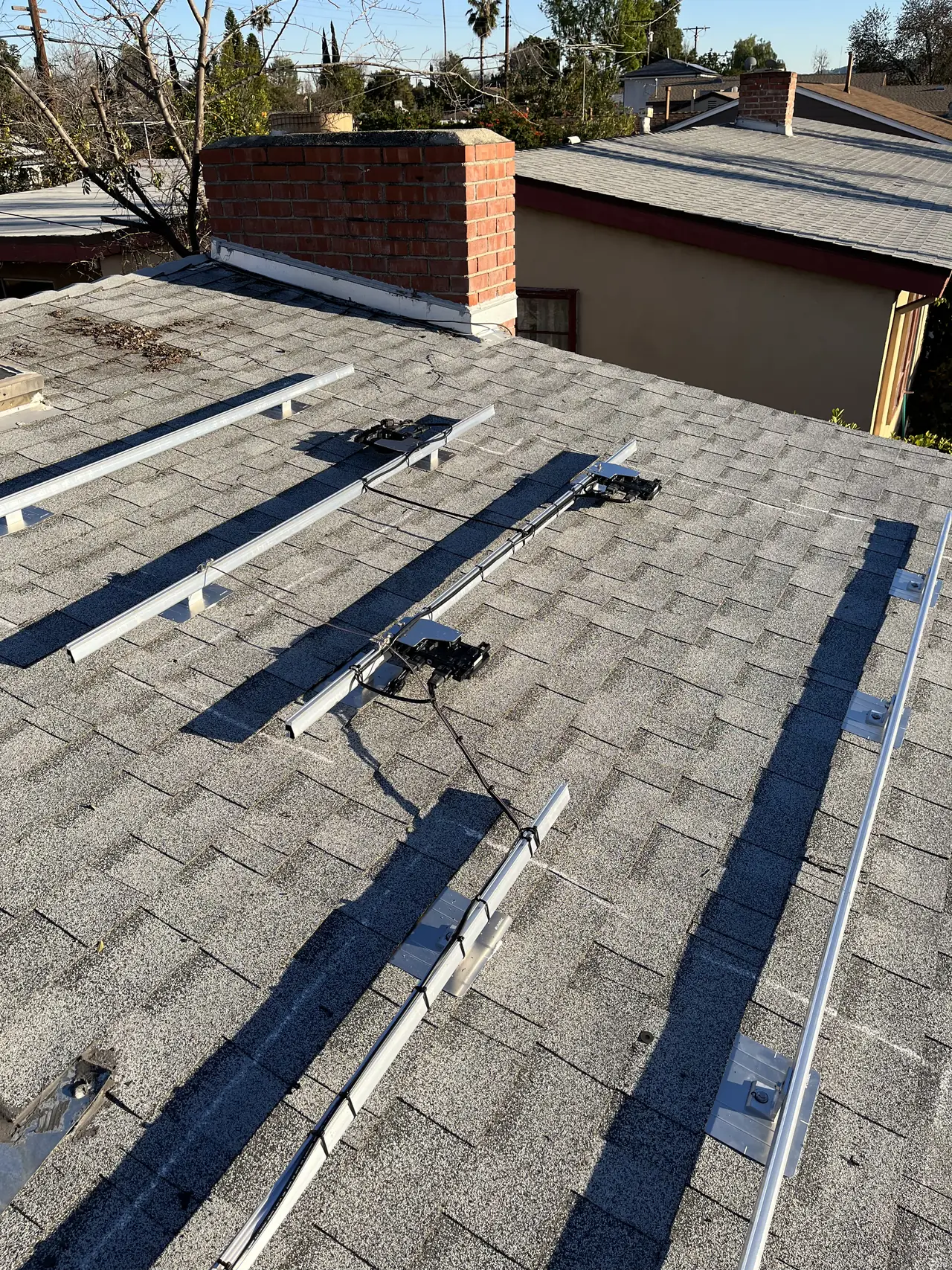
Twenty-three days from filing to switch-on, and not a single question to answer along the way — only confirmations, a receipt, progress notices and the permission to operate.
So what made it short? Three things, and only one of them is within a contractor's control.
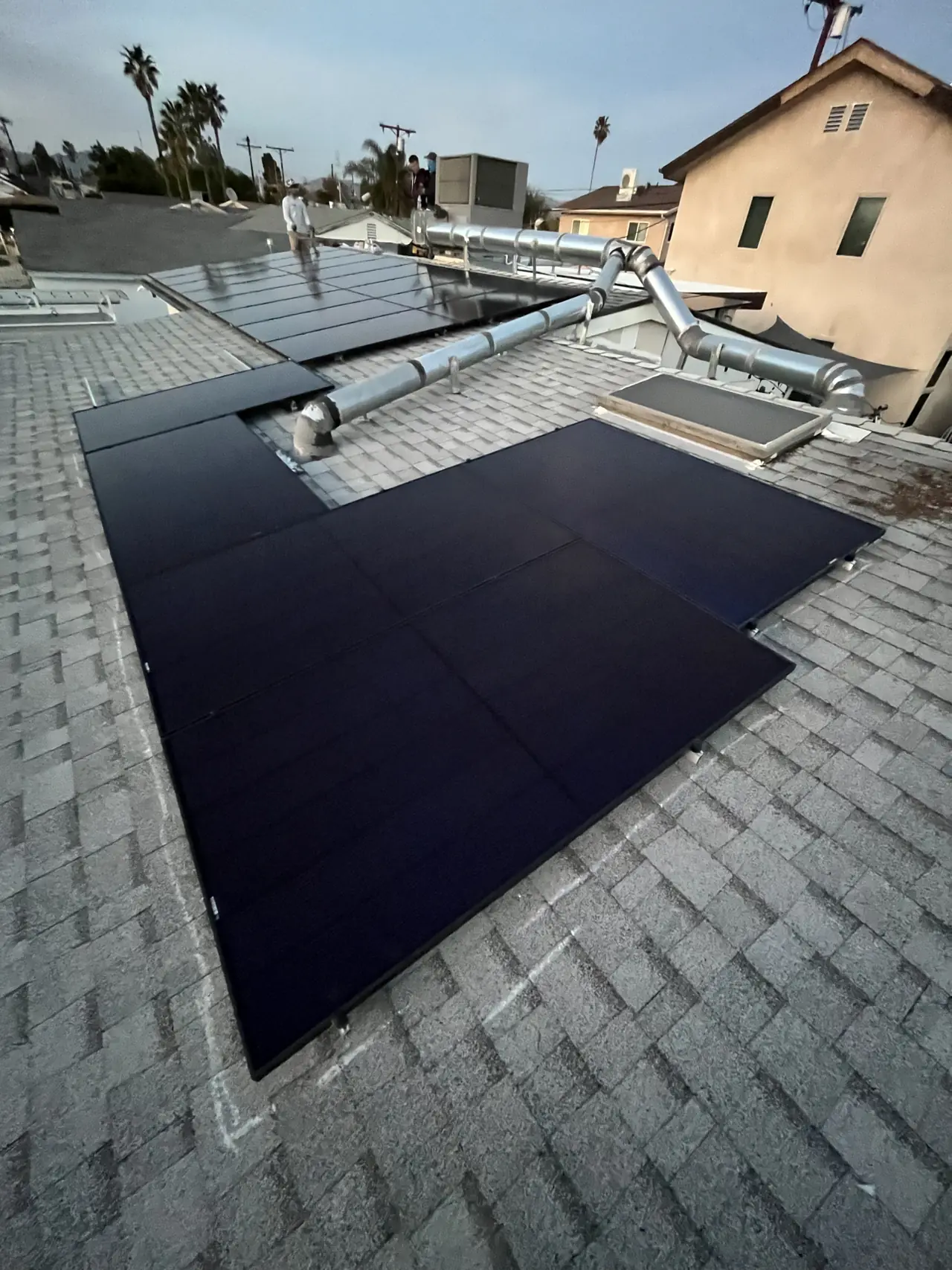
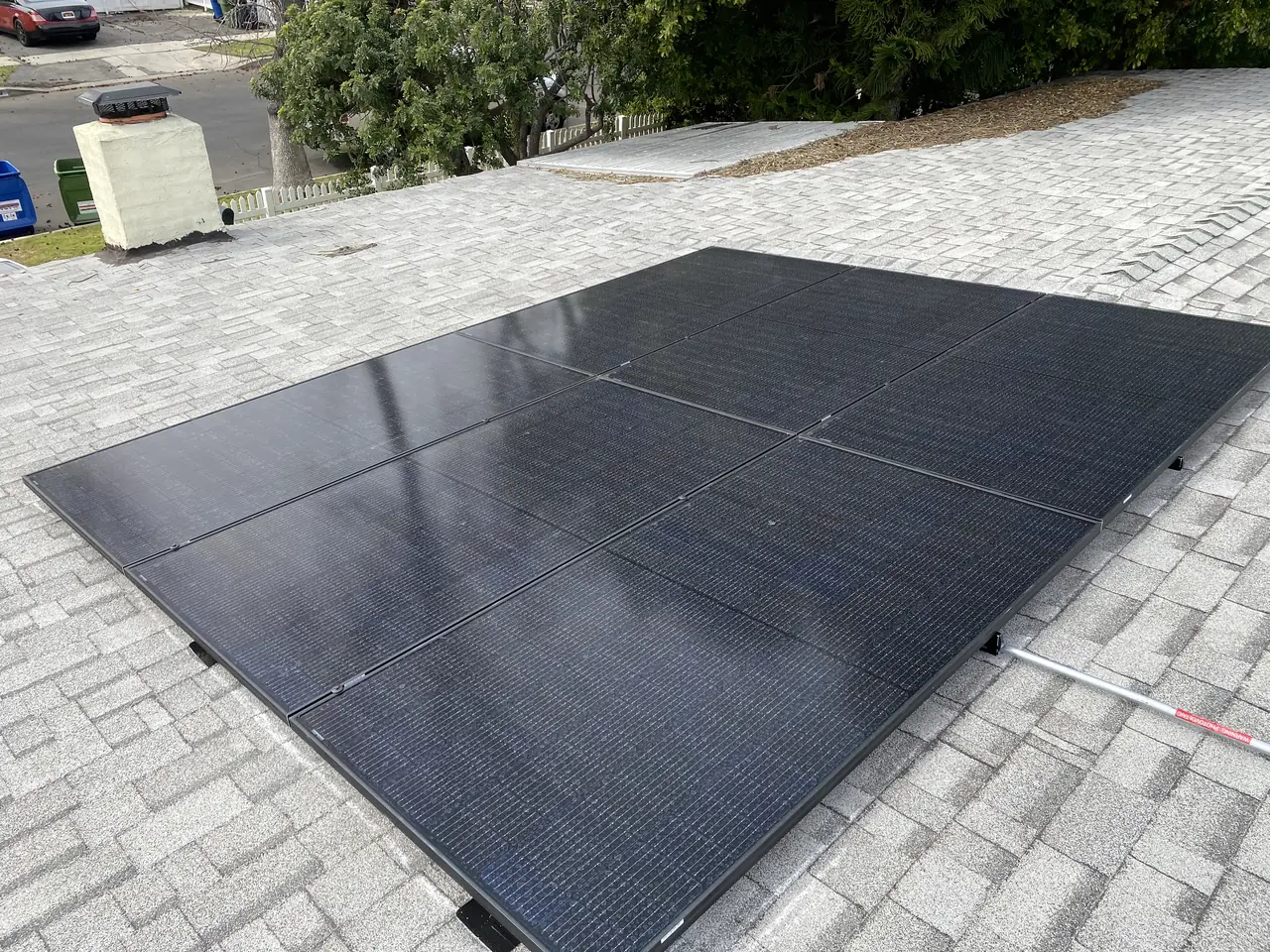
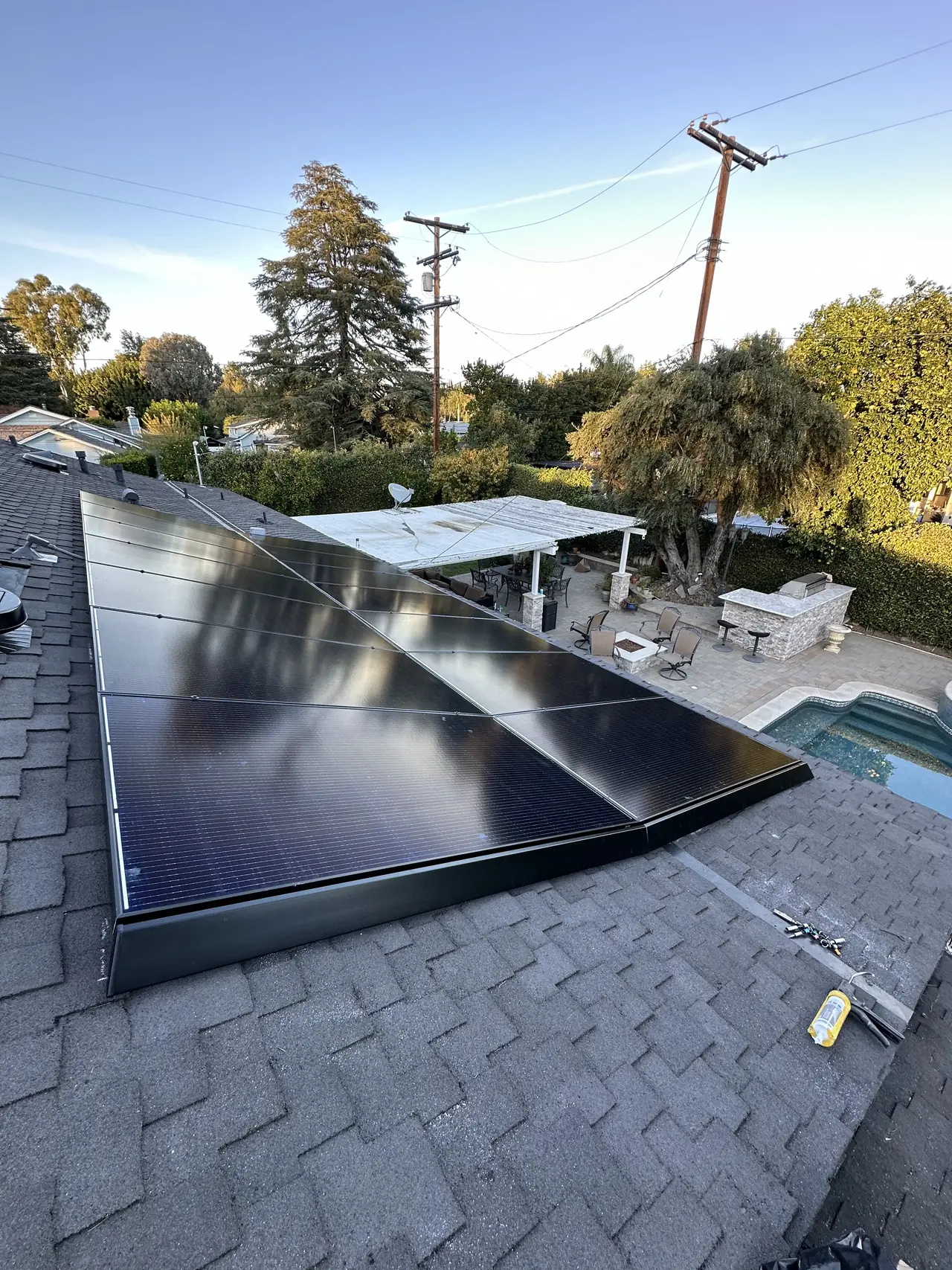
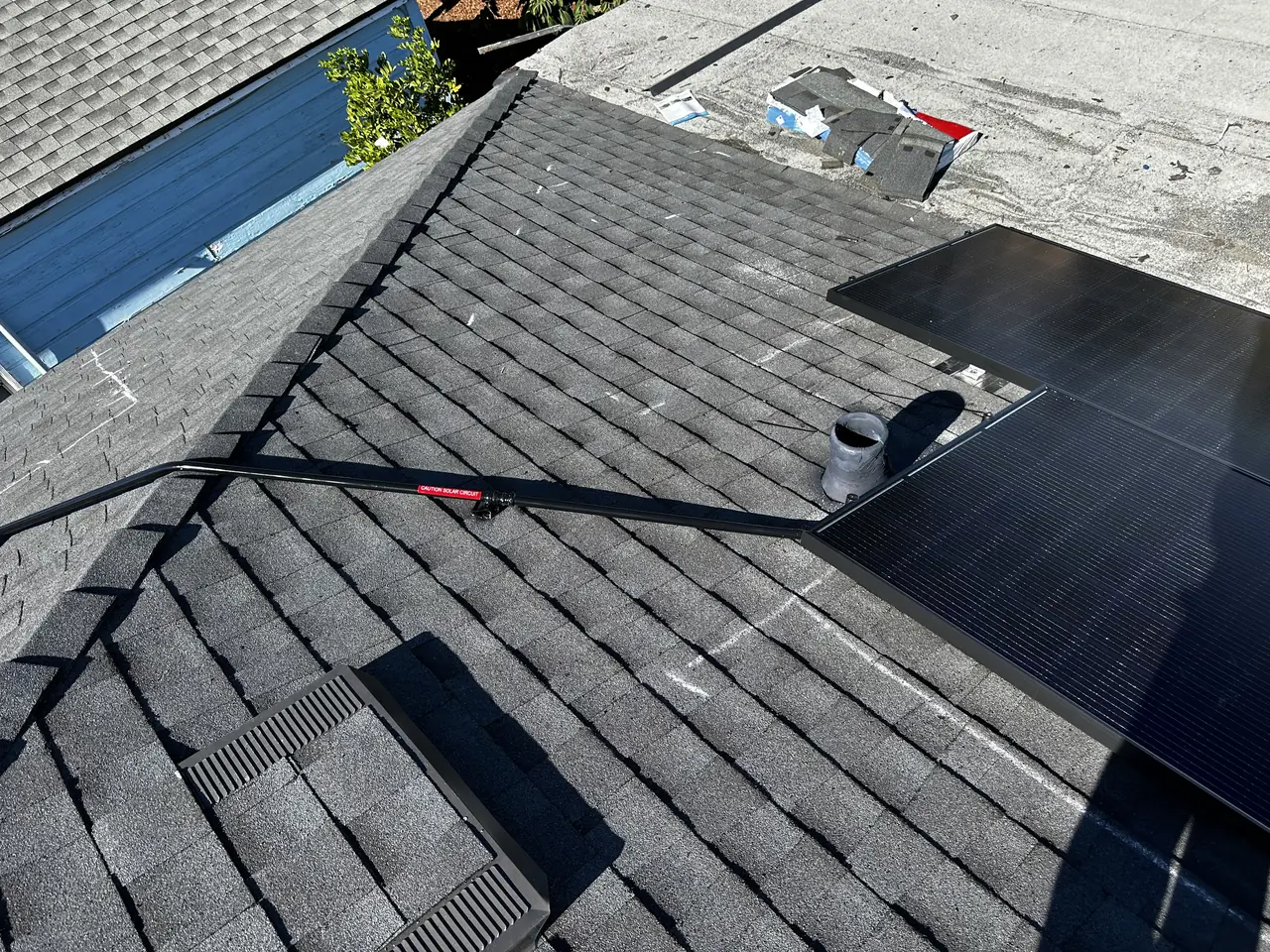
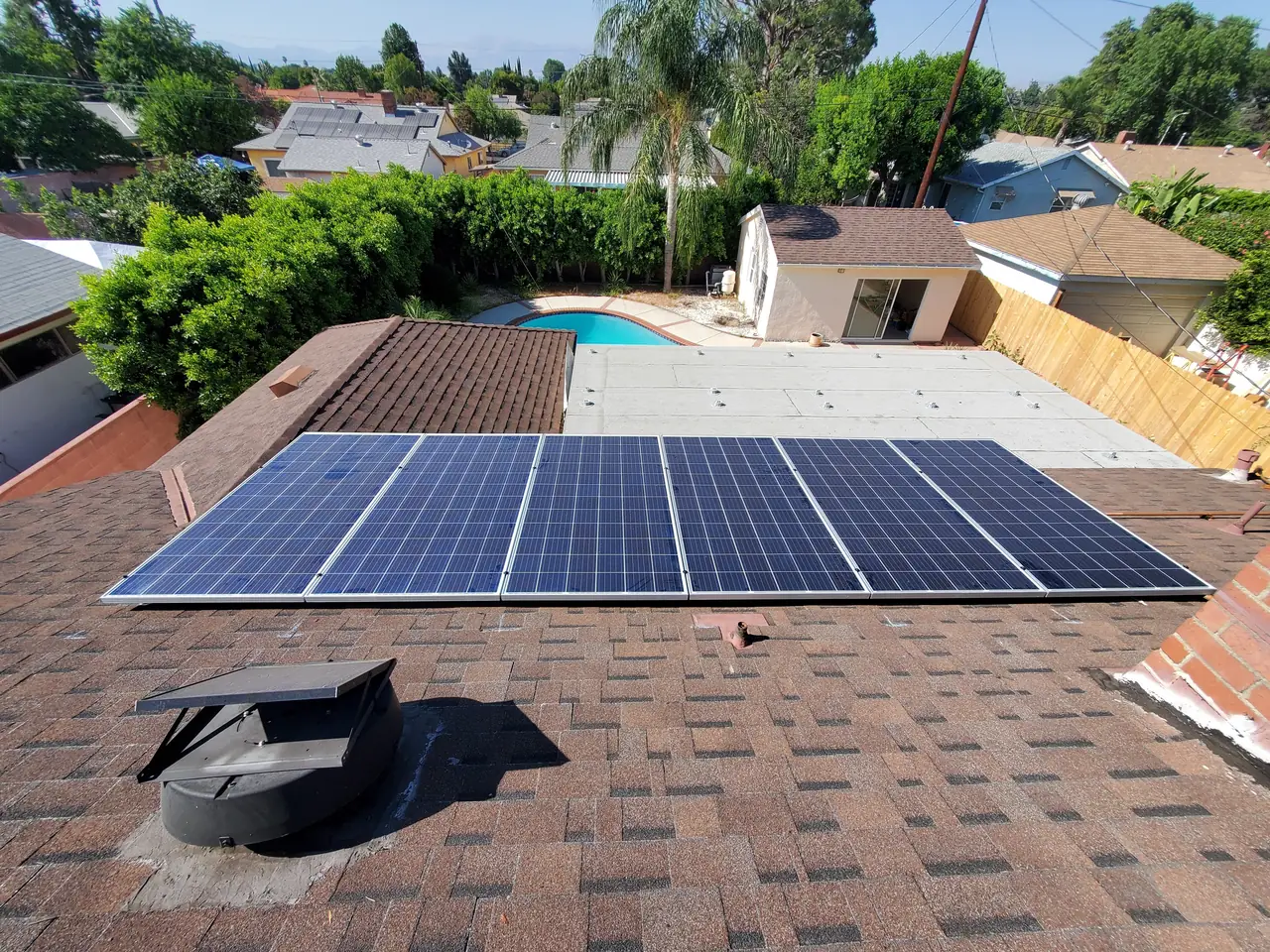
The roof was simple: a single-storey gable with one usable plane, no tile to lift and no shading to design out. There is a duct up there, and the array was laid clear of it — which is a layout decision, not a delay. The service already had room, so nothing had to be replaced before the array could connect. And the first submission was complete — no correction round, no request for photographs, no hold notice asking for seven items within two weeks.
The first two are the house. The third is the only one anybody chooses. A submission that is complete the first time is not faster because the utility is being generous; it is faster because there is no second pass. Every correction round on the other projects in this file cost somewhere between two and six weeks, and each one started with something missing from a document.
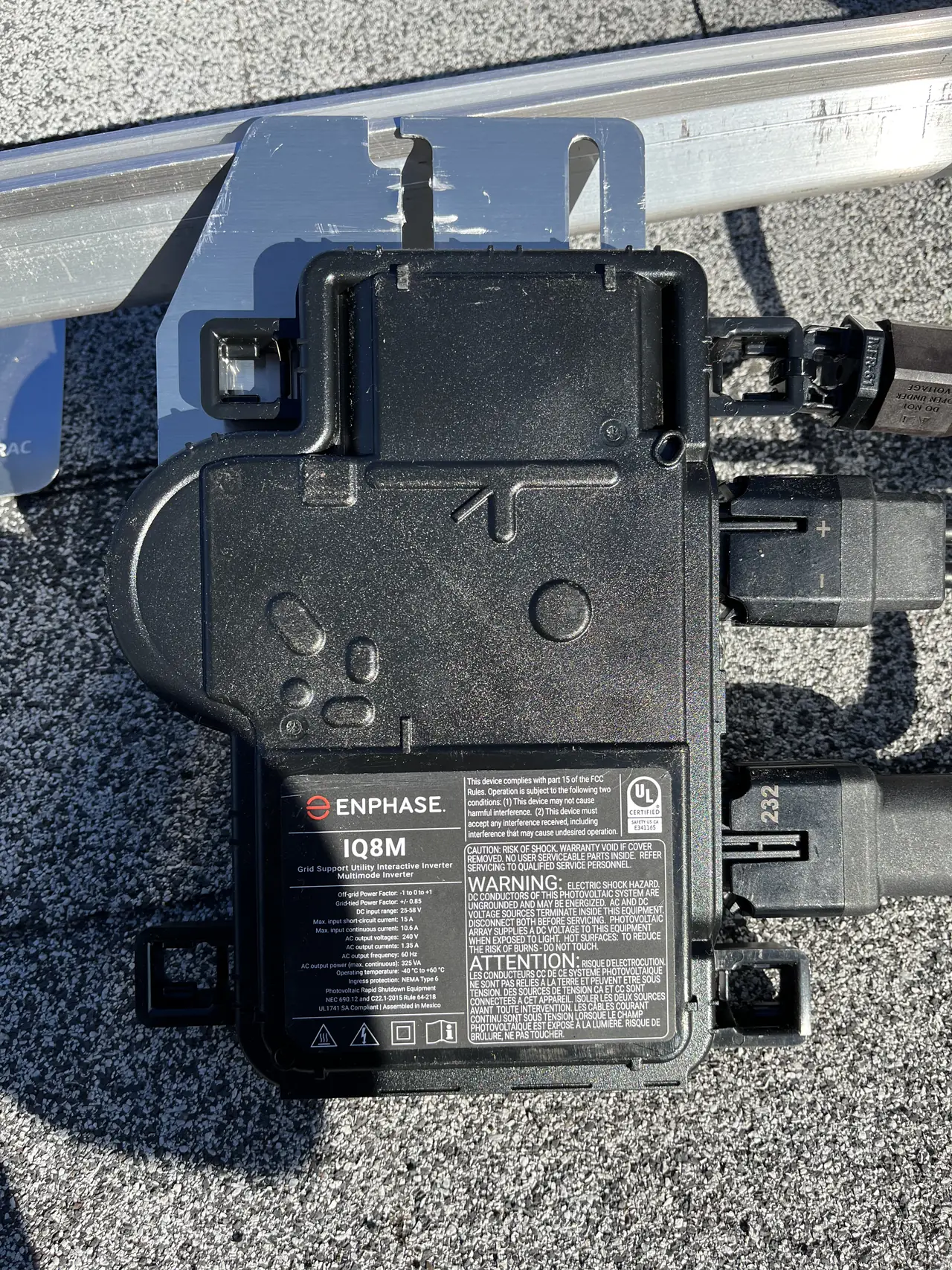
The array is on Enphase IQ8M microinverters, one under each module, on composition shingle. Seven point nine kilowatts.
Twenty-three days is our fastest run in this city, not a floor under the process and not a yardstick to judge anybody else's job by. A project that took three months may have had a roof to replace first, a service with no room in it, a correction round on the drawings, or a utility queue that was simply longer that month. None of those mean somebody was careless.
What is fair to take from it is narrower. One stretch of the timeline belongs to the contractor — the completeness of what gets filed and whether the fee goes in with it — and on this project that stretch was clean. When you are quoted a timeline, ask which parts of it the contractor controls and which they are guessing at. An honest answer separates the two.
How it ran
| 8 February 2023 | Interconnection request filed; fee paid the same day |
|---|---|
| 11 February 2023 | Three notices in one day — confirmed, reviewed, site evaluation complete |
| 13 February 2023 | Installation released |
| 3 March 2023 | Permission to operate |
Four dated events. That is the entire project.
What we did
- Filed the interconnection request and paid the fee on the same day.
- Submitted a complete application, so no correction round was needed.
- Designed to one clean roof plane with no obstructions to work around.
- Connected to the existing service without replacing it.
- Installed one Enphase IQ8M microinverter per module.
- Reached permission to operate twenty-three days after filing.
System specifications
| System | 7.9 kW |
|---|---|
| Microinverters | Enphase IQ8M, one per module |
| Roof | Composition shingle, single-storey gable, one usable plane |
| Service | Existing, unchanged |
| Correction rounds | None |
| Photo requests | None |
| Hold notices | None |
| Utility / AHJ | LADWP / LADBS |
Is your project like this one?
- You have been quoted a timeline and want to know what the floor actually is.
- Your roof is a simple single plane and you are wondering why quotes vary so much.
- You want to know which parts of the process a contractor controls.
- You are comparing companies and one of them is promising speed.
- You want a project with no surprises rather than an interesting one.
Cali Energy in North Hollywood
North Hollywood is inside City of Los Angeles boundaries: permits run through LADBS, interconnection through LADWP.
The flat streets east of the boulevard are single-storey tract houses on simple gabled roofs — the kind of job where the only thing that can slow you down is your own paperwork.
This installation is on the North Hollywood projects page alongside the others, and what the work covers is set out on the North Hollywood service area page.
- License and classifications: CSLB #1032379
- Official reference for this process: LADWP interconnection requirements
- Official reference for this process: LADBS — inspections
Frequently asked questions
How fast can solar be installed and switched on?
This project ran twenty-three days from the interconnection request to permission to operate, the fastest of our North Hollywood projects. It is not a floor under the process and not a target: it needed a simple roof, a service with room in it and a complete first submission, and a longer project is usually a different house rather than a worse contractor.
What usually makes a solar project take longer?
A correction round on the drawings, a request for photographs the utility has not received, a hold notice, a roof that needs replacing first, or a service that cannot take the connection. On this project none of those happened.
Which parts of the timeline can a contractor actually control?
One: the completeness of what gets filed. The roof and the electrical service are whatever the house already is. A submission that is right first time skips a second pass, and a second pass is where the weeks go.
Does a fast project mean corners were cut?
Not here. The steps are the same ones every project goes through — request, fee, review, site evaluation, release, inspection, permission to operate. Each happened once rather than twice.
Why does the fee matter on day one?
Because the review does not begin until it is paid. Filing and paying on separate days adds however many days sit between them, for no reason.
What this would look like on your roof
Planning solar in North Hollywood? Tell us your utility, your roof and what your bill looks like now, and we will model what a system like this would do on your house before you commit to anything.
Or call +1 (323) 844-7777 · Cali Energy, Northridge · CSLB #1032379 (B, C-10, C-39) — design, permits, install and electrical under one licensed contractor.
Related
This timeline reflects this property and this permitting path. Updated September 2026.