

Canoga Park, CA · April 2022 – June 2023 · LADWP / LADBS
Two dwellings on one lot. The array went with the meter.
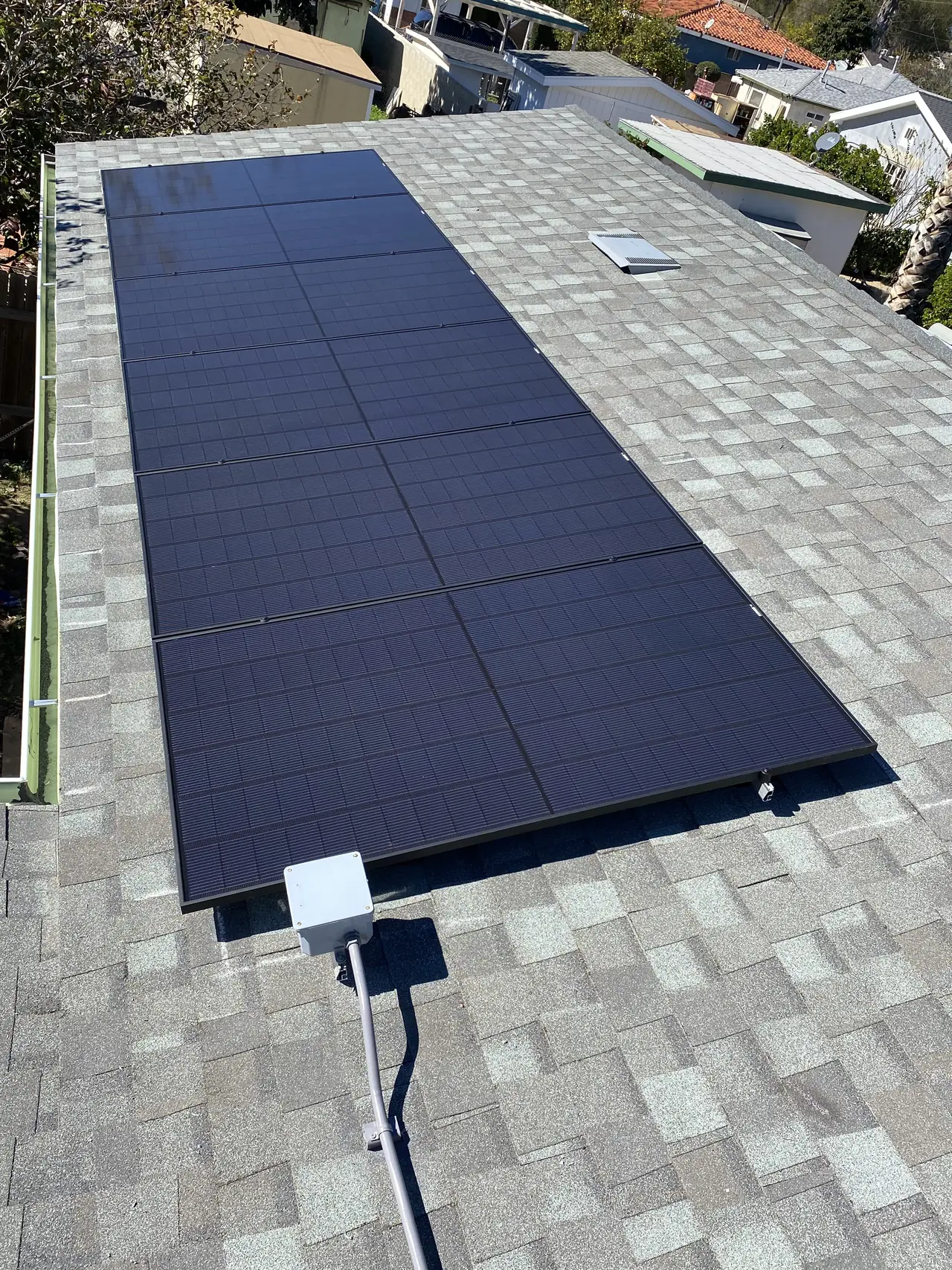
A detached accessory dwelling unit and a 584 square foot addition, permitted on the same day and both finished. The solar was connected to the new unit's own meter — one month from application to permission to operate.
On this lot the array belongs to a meter rather than to the property. The utility opened its work request against the address that meter serves, and that address appears on every notice through to permission to operate. Where a second dwelling shares the main meter instead, it is one system and one application.
At a glance
- System
- 1.74 kW AC-CEC
- New dwelling
- Detached ADU, 40 × 27 ft
- Addition
- 584 sq ft with covered patio
- Fire protection
- NFPA 13-D sprinklers throughout
- Roof
- Composition shingle
- Inverters
- Enphase microinverters
- Application to PTO
- One month
- Utility / AHJ
- LADWP / LADBS
The story
Two building permits were taken out on this lot on the same day in April 2022. One was for a new detached accessory dwelling unit, forty feet by twenty-seven. The other was for a 584 square foot addition with a covered patio on the existing house, which already had an attached single-car garage. Both were engineered, both required NFPA 13-D fire sprinklers throughout, and both ended with a certificate of occupancy.
That is the part that sets up everything else. On this lot each dwelling ended up behind its own meter, and a solar array has to pick one of them. It does not always work out that way — a second dwelling can share the main service instead — but when it does not, the array and the paperwork follow the meter.
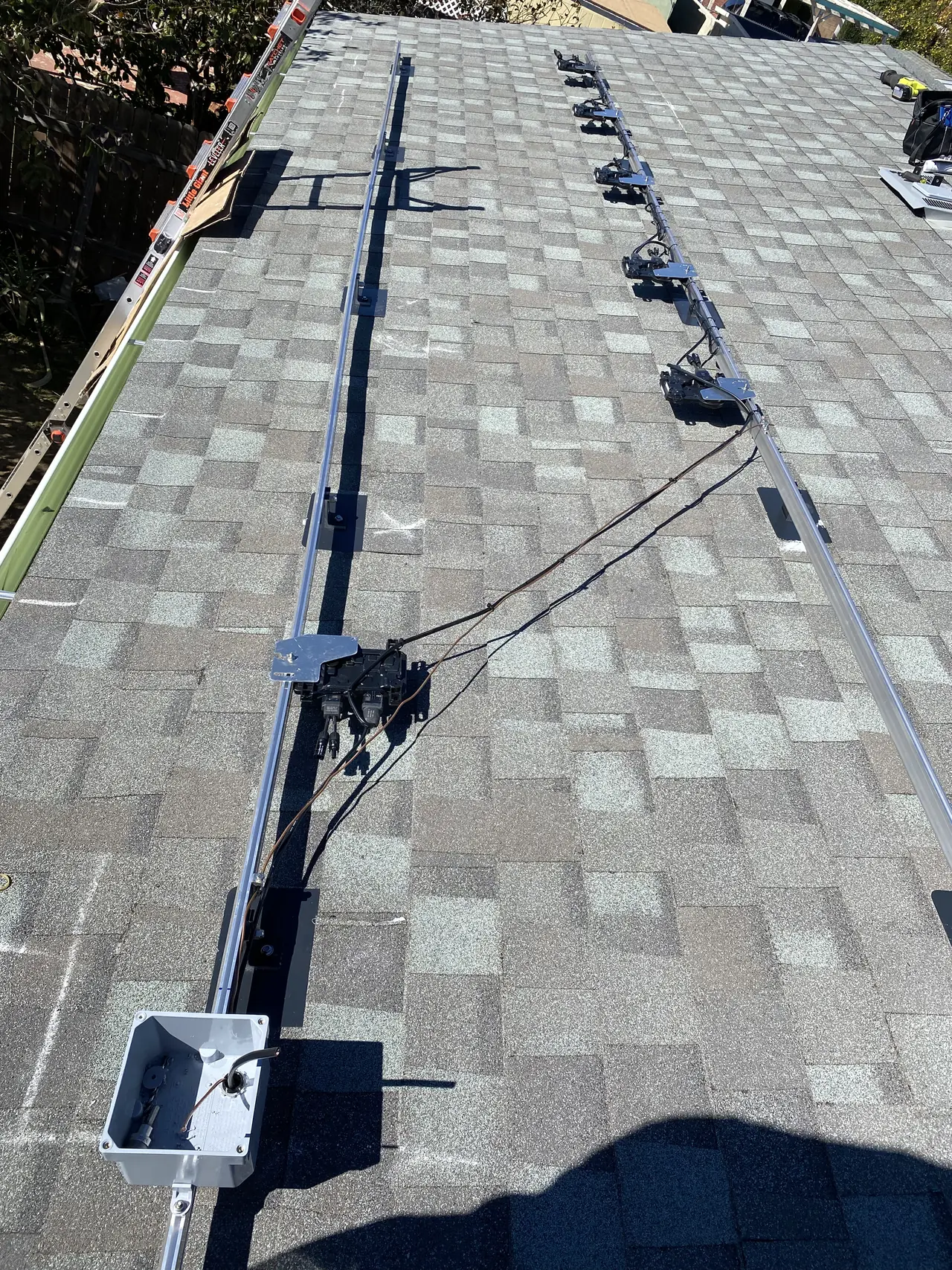
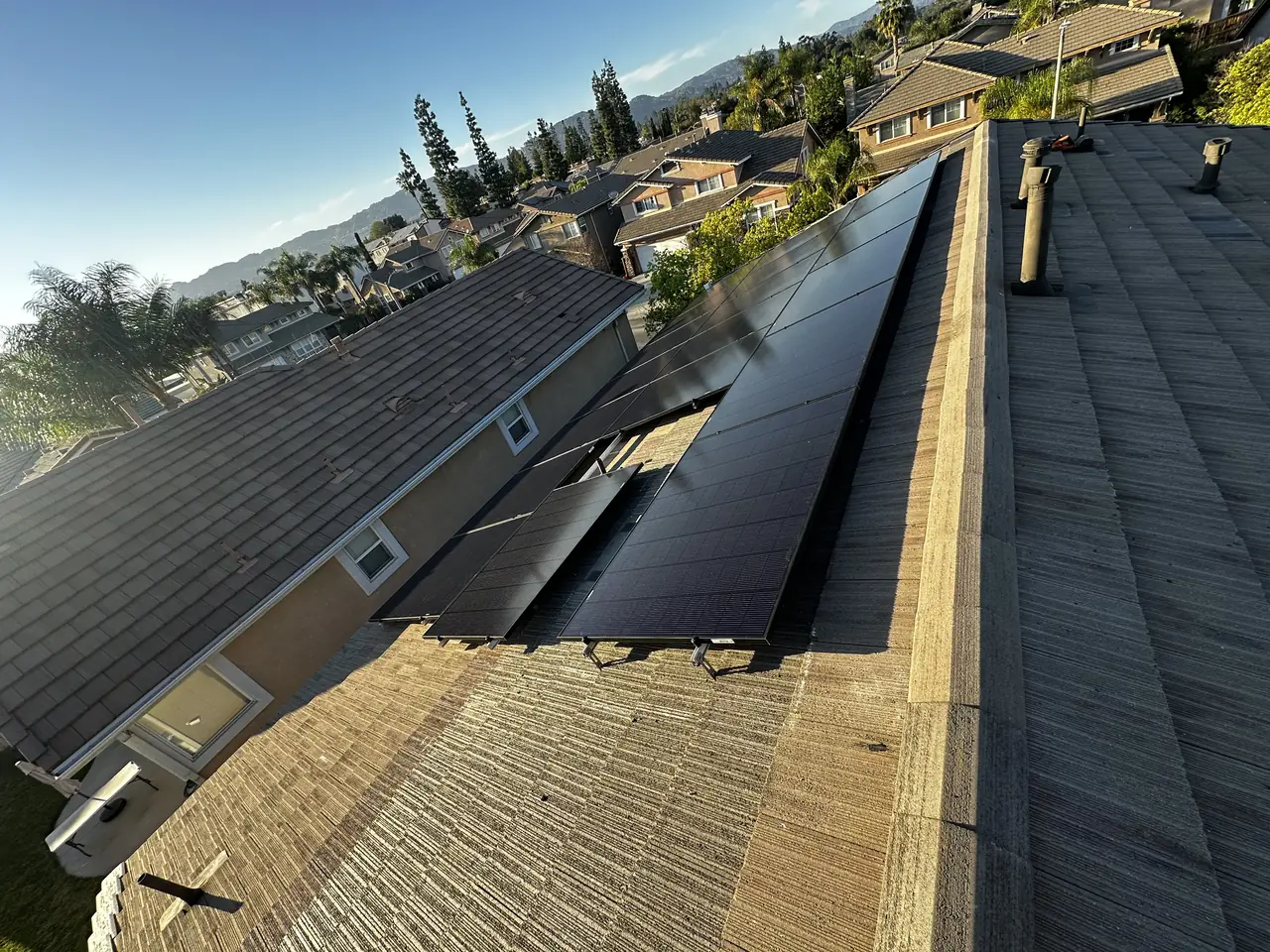
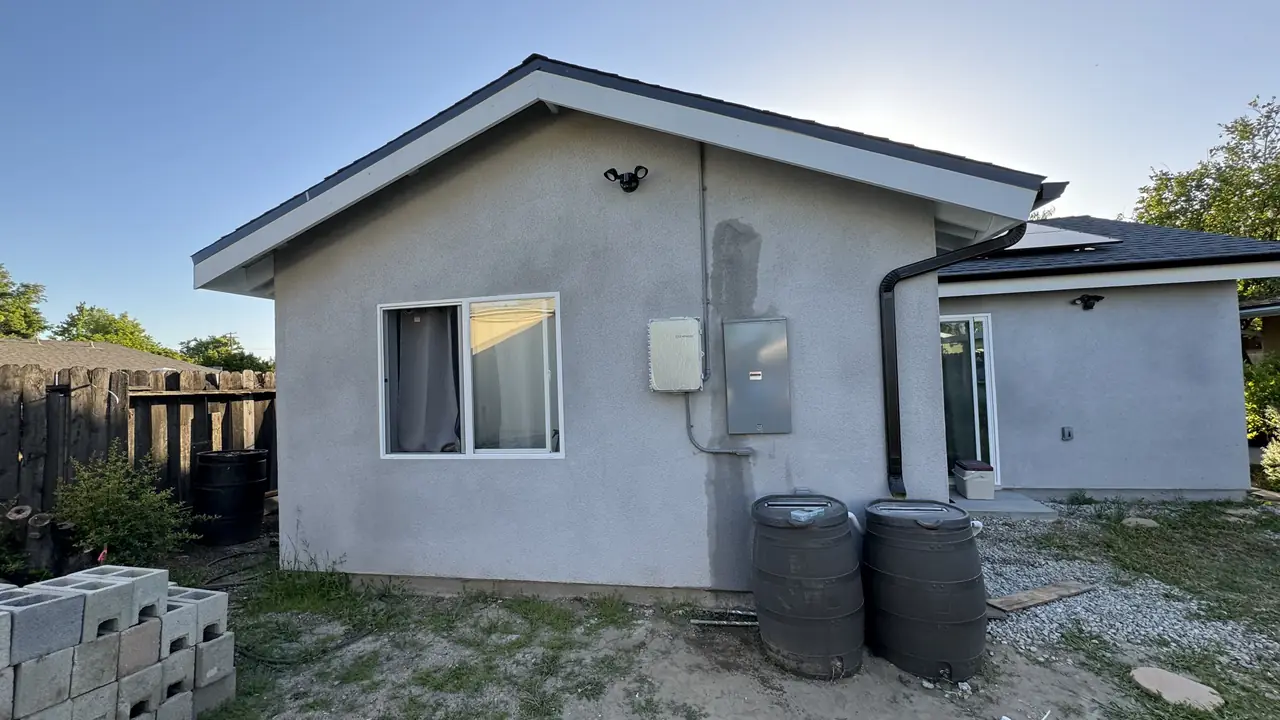
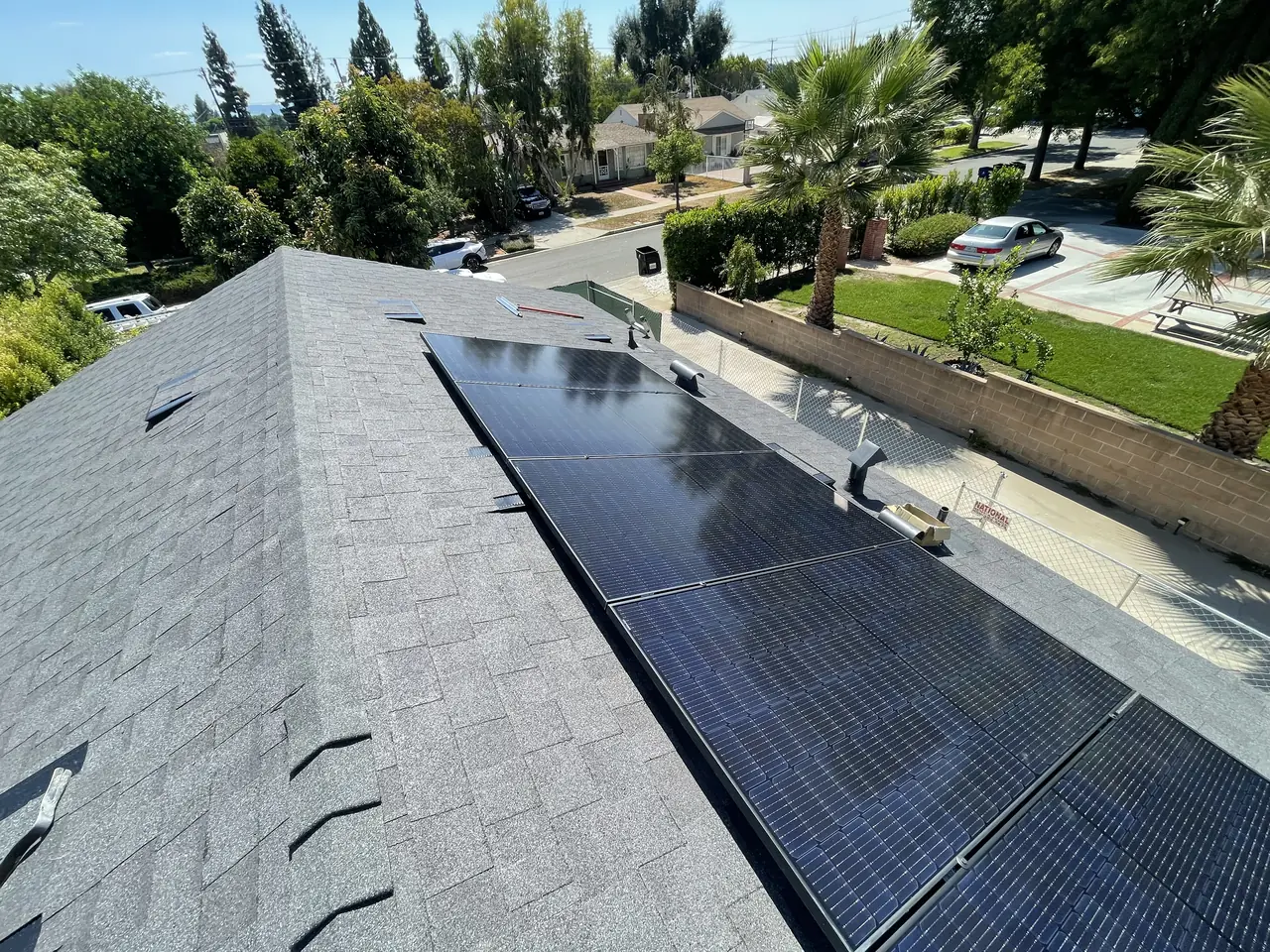
The array here is small — 1.74 kilowatts AC-CEC — and it is connected to the accessory dwelling unit. Not to the house. The utility opened its work request against the unit's own address, and the unit's existing meter was exchanged for a new one as part of the interconnection. Every notice from the first confirmation through to permission to operate carries that address, not the lot's main one.
This matters more than it sounds. When people ask whether they can put solar on an accessory dwelling unit, the practical answer is that they are not really asking about the building — they are asking about the meter behind it. If the unit is separately metered, its solar is its own interconnection on its own work request. If it shares a meter with the house, it is one system and one application.
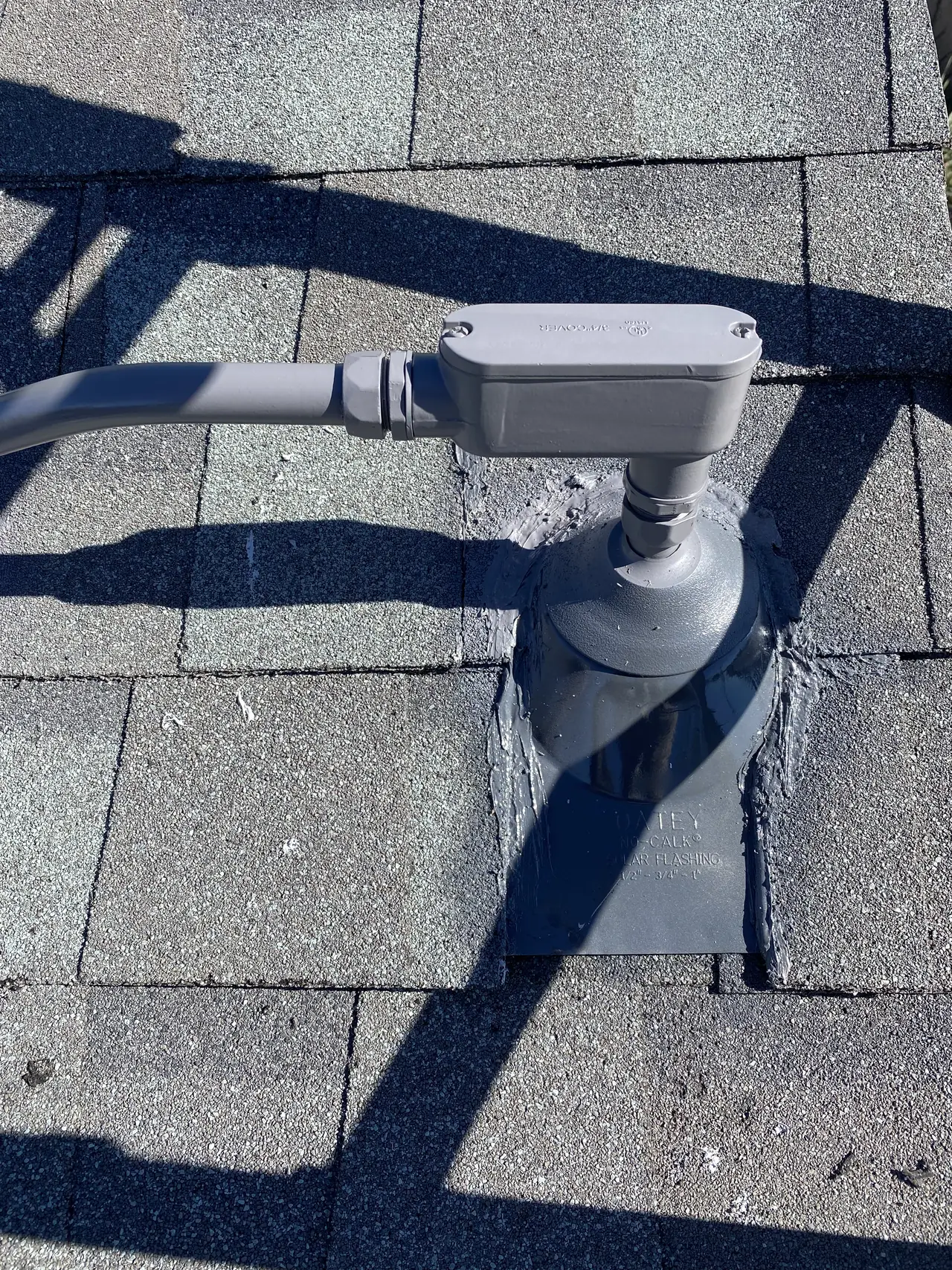
The rest was quick. The interconnection application went in on the ninth of May 2023 with the fees paid the same day. The utility's site evaluation was completed the following day. Permission to operate came through on the ninth of June — one month, start to finish.
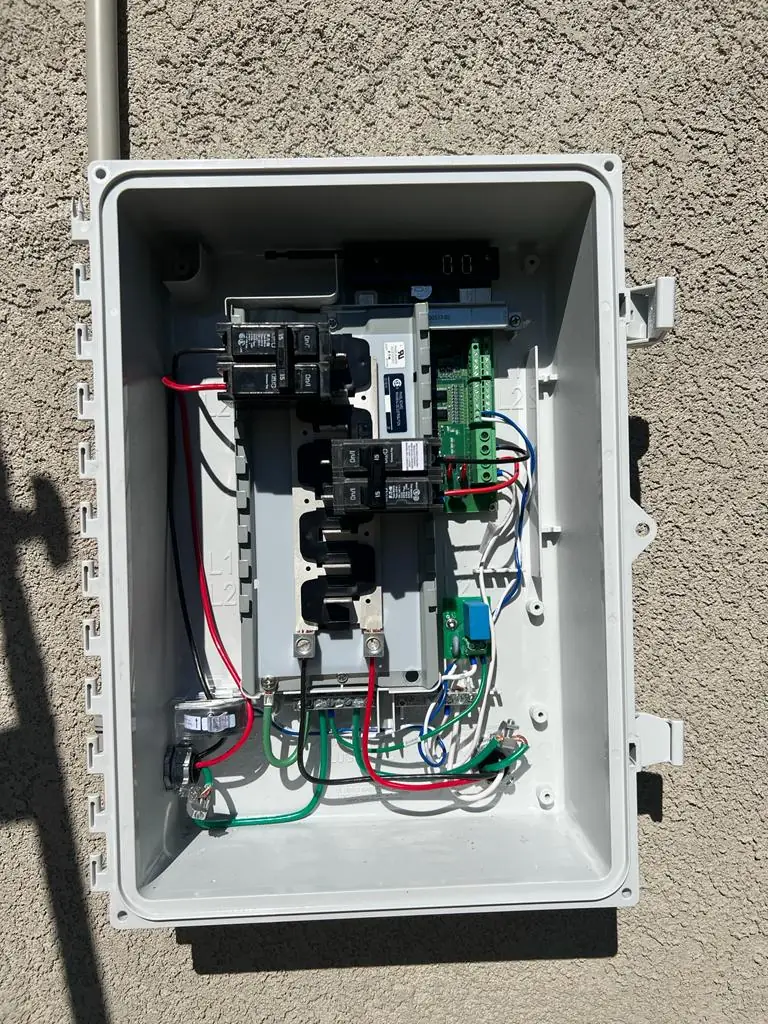
A 1.74 kilowatt array is not a headline number. It is the right number for a small dwelling with a small bill, and sizing it against the unit's own consumption rather than the whole property is the reason it moved through the utility in four weeks instead of four months.
How it ran
| 8 April 2022 | Both building permits taken out: detached ADU and 584 sq ft addition |
|---|---|
| 2022 | Both structures completed; certificates of occupancy issued |
| 9 May 2023 | Interconnection application filed; utility fees paid |
| 10 May 2023 | Utility site evaluation completed |
| 9 June 2023 | Permission to operate; meter exchanged on the unit's service |
The building work and the interconnection are a year apart: the unit had to exist and be occupiable before its solar could be connected.
What we did
- Sized the array against the accessory dwelling unit's own consumption rather than the whole property.
- Filed the interconnection against the address the unit's meter serves, so the work request matched the building.
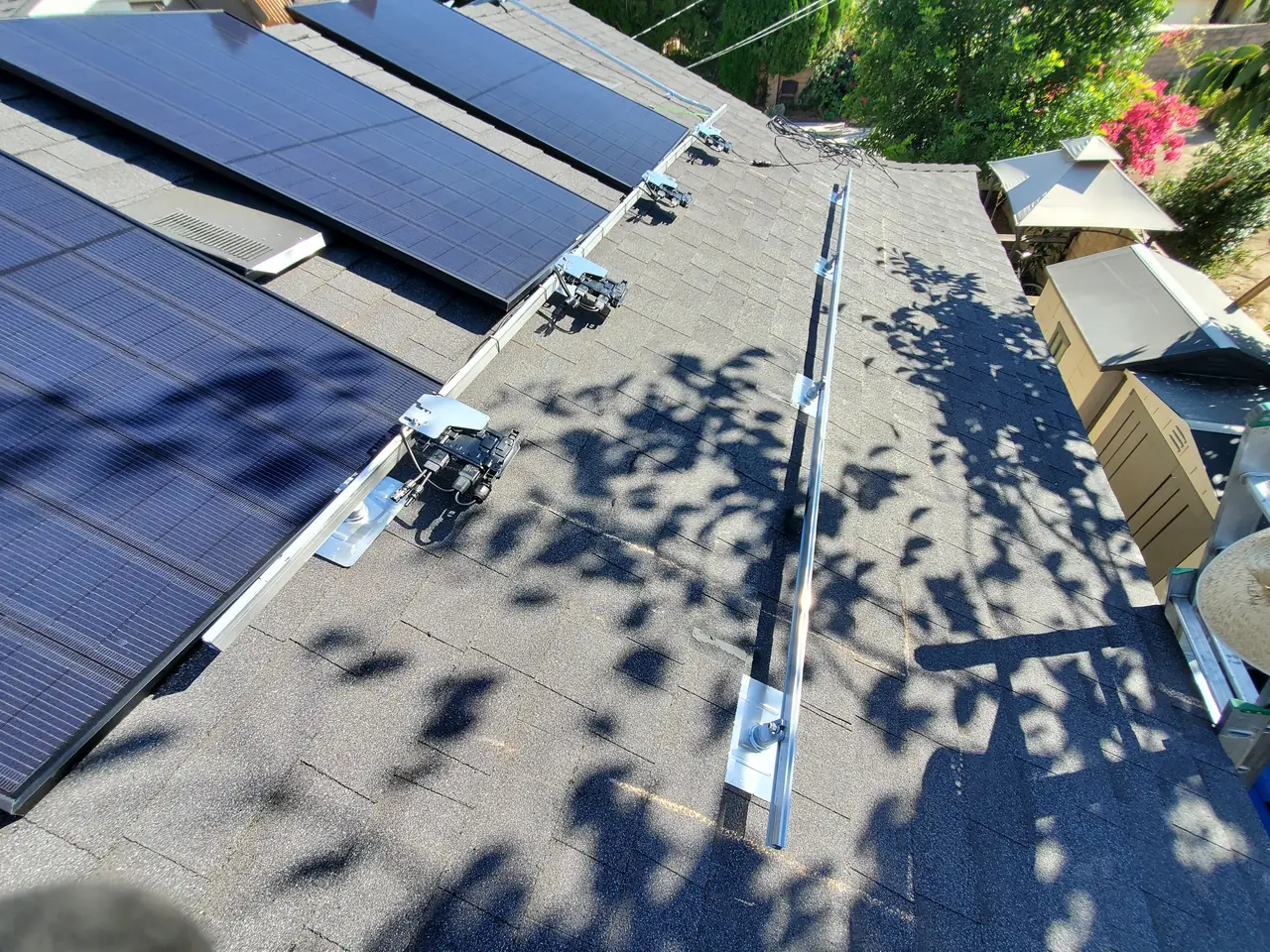
- Installed on composition shingle with every penetration flashed into the courses.
- Landed the microinverter circuits in a combiner beside the service.
- Carried the application through site evaluation to permission to operate in one month.
System specifications
| System | 1.74 kW AC-CEC |
|---|---|
| Connected to | The accessory dwelling unit's own meter |
| New dwelling | New detached ADU, 40 × 27 ft, certificate of occupancy issued |
| Addition | 584 sq ft with covered patio on the existing house |
| Fire protection | NFPA 13-D sprinklers throughout both structures |
| Roof | Composition shingle |
| Inverters | Enphase microinverters with a combiner |
| Battery | None |
| Permits | Two building permits, same day; solar on its own |
| Utility / AHJ | LADWP / LADBS |
Is your project like this one?
- You have built an accessory dwelling unit and want solar on it.
- Your lot has two dwellings and you do not know which one the array belongs to.
- You have been told a small system is not worth permitting.
- You are planning an addition and want to know when the solar conversation starts.
- Your Canoga Park property is served by LADWP, while permits are handled by LADBS.
Cali Energy in Canoga Park
Canoga Park is inside City of Los Angeles boundaries: permits run through LADBS, interconnection through LADWP.
Lots here are wide enough to take a second dwelling, and once there is a second dwelling there is a second meter — which changes where the solar can go.
This installation is on the Canoga Park projects page alongside the others, and what the work covers is set out on the Canoga Park service area page.
- License and classifications: CSLB #1032379
- Official reference for this process: Los Angeles City Planning — housing policies and ADUs
- Official reference for this process: LADWP interconnection requirements
Frequently asked questions
Can solar go on an accessory dwelling unit instead of the main house?
Yes, and on this lot that is exactly what happened. The question is really about the meter: if the unit is separately metered, the array is its own interconnection on its own work request. If the unit shares the house's meter, it is one system and one application.
Does a small system still need a full interconnection?
Yes. This array is 1.74 kilowatts AC-CEC and it went through the same sequence as a large one — application, fees, site evaluation, approval, permission to operate. Being small made it fast, not exempt.
Why was the meter changed?
The interconnection was processed as a change to the existing service rather than a new one, and the meter was exchanged as part of it. That is normal when a building already has a meter and is adding generation behind it.
Why do fire sprinklers come up on an ADU?
Both structures on this lot were permitted with NFPA 13-D residential sprinklers throughout. It is a building department requirement tied to the structure, not to the solar, but it is worth knowing before you budget an accessory dwelling unit — it is one of the costs people do not expect.
How long did the solar take?
One month. Application and fees on the ninth of May 2023, site evaluation the next day, permission to operate on the ninth of June.
Does Cali Energy work on ADUs in Canoga Park?
Yes. Cali Energy holds B, C-10 and C-39 classifications under CSLB #1032379, which covers the roof, the electrical and the array. Canoga Park is inside City of Los Angeles boundaries, so permits run through LADBS and interconnection through LADWP.
What this would look like on your roof
Planning solar in Canoga Park? Tell us your utility, your roof and what your bill looks like now, and we will model what a system like this would do on your house before you commit to anything.
Or call +1 (323) 844-7777 · Cali Energy, Northridge · CSLB #1032379 (B, C-10, C-39) — design, permits, install and electrical under one licensed contractor.
Related
This timeline reflects this property and this permitting path. Updated September 2026.