

Burbank, CA · September 2024 – May 2025 · Burbank Water and Power / City of Burbank
The permit was instant. The approval in front of it was not.
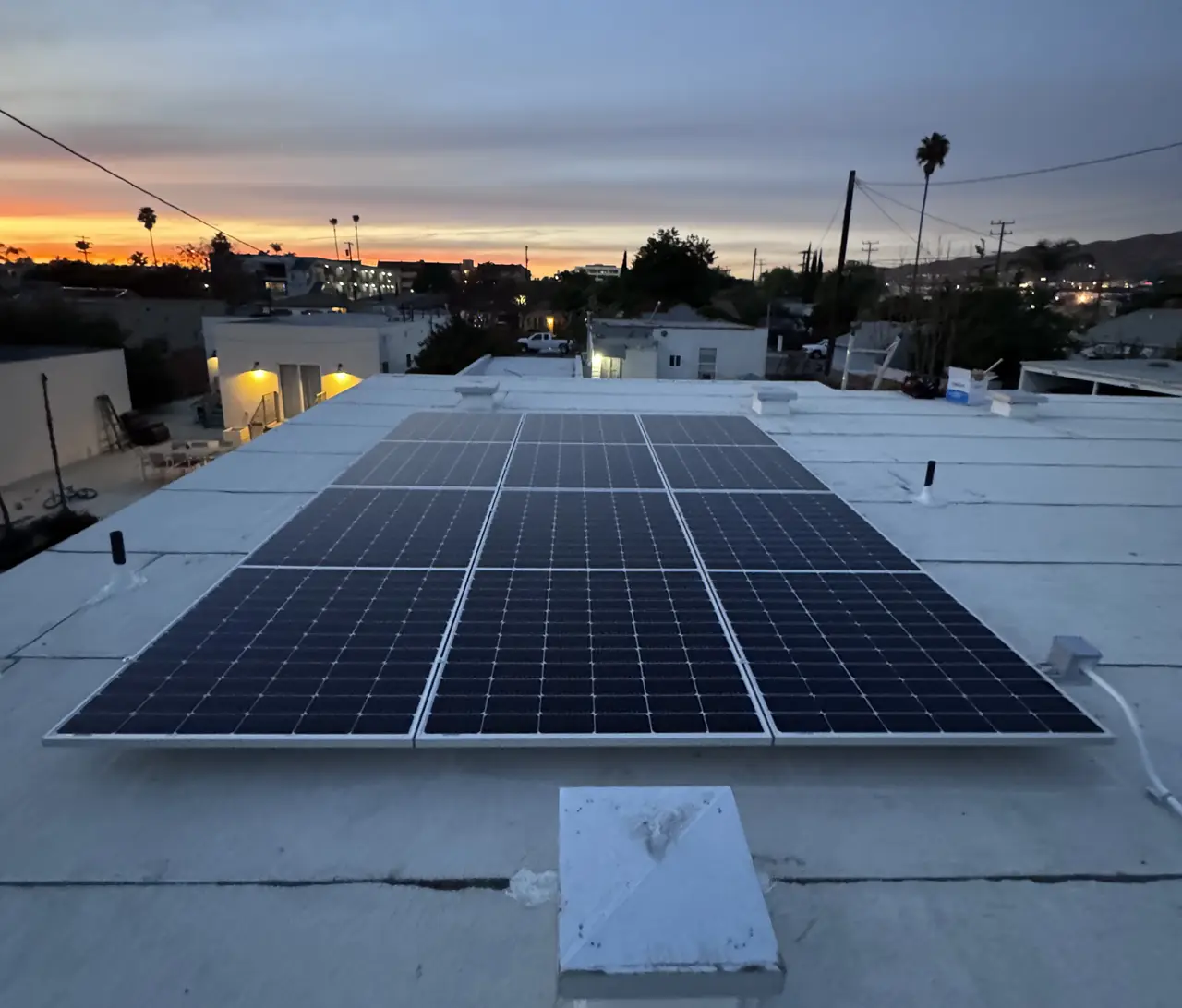
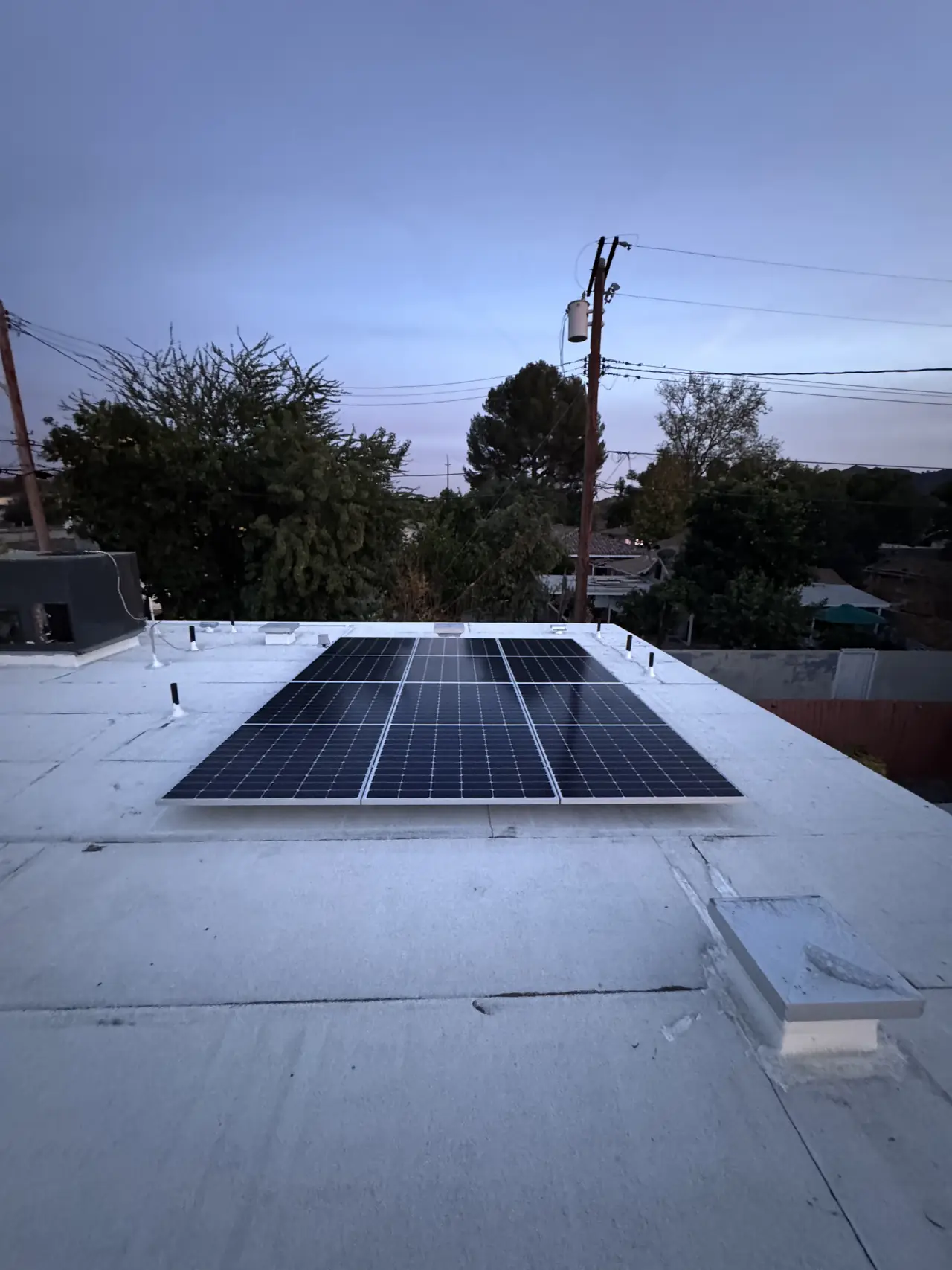
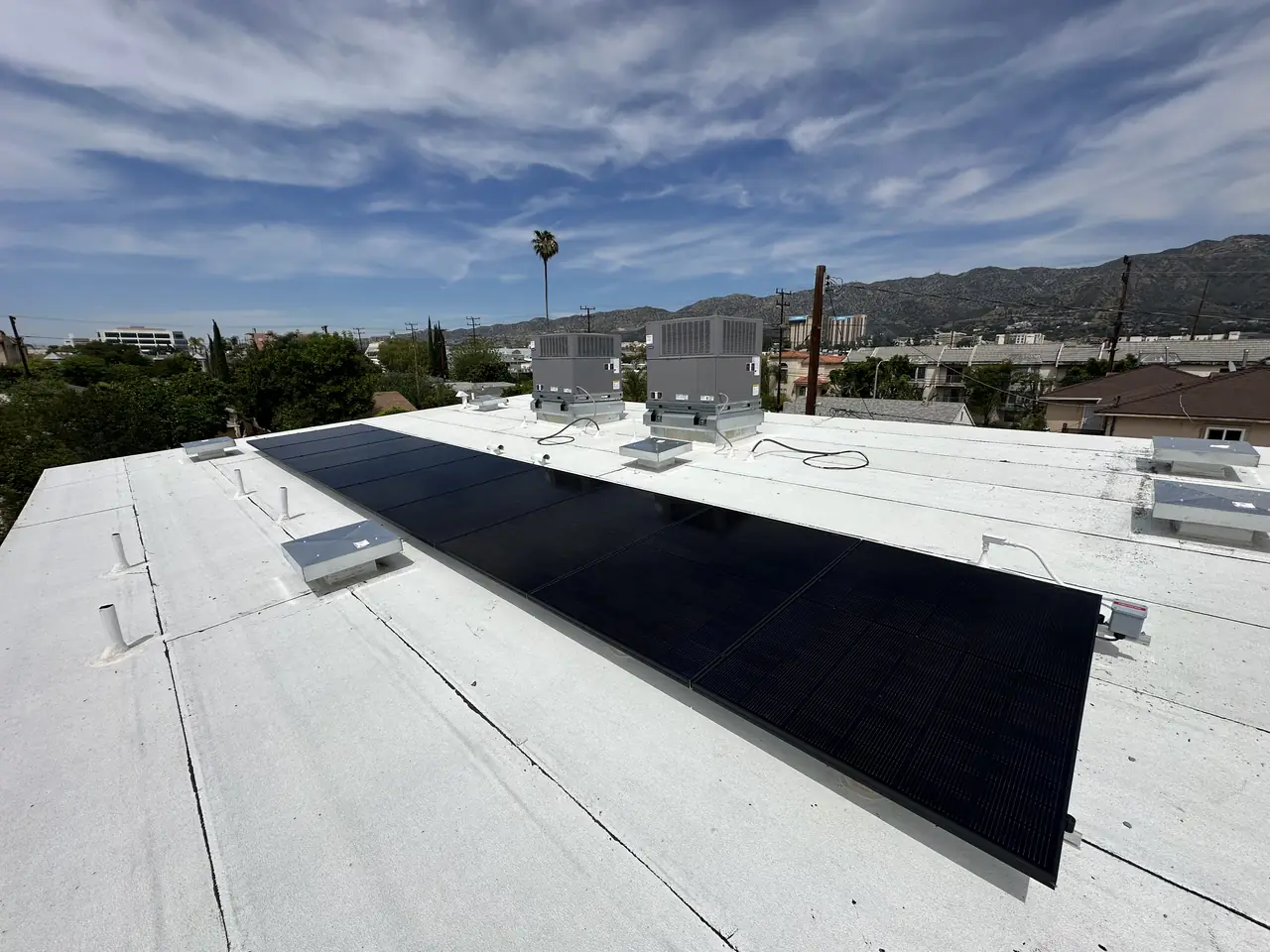
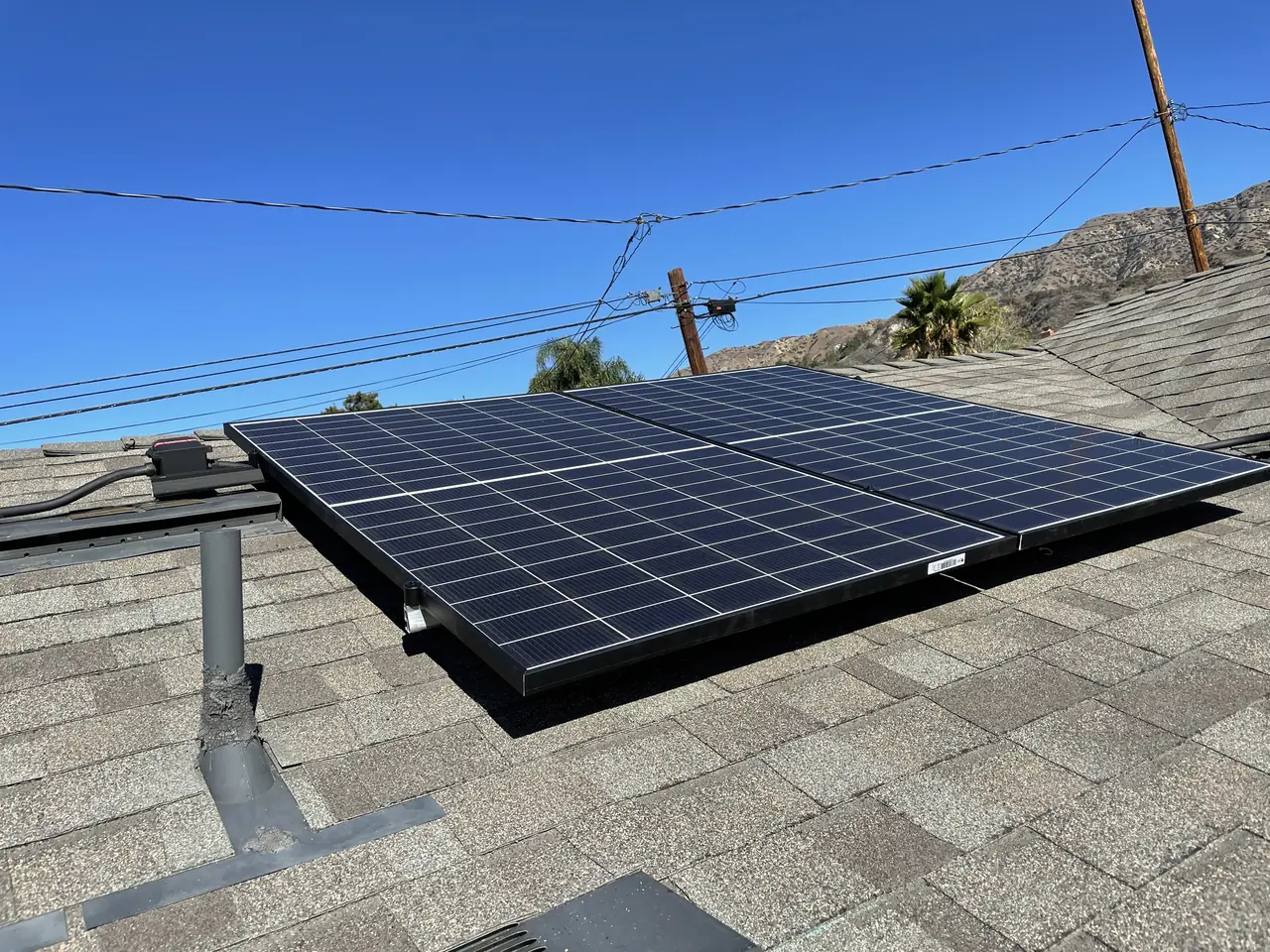
A six-module array on the flat roof of a new accessory dwelling in Burbank. The permit itself could be pulled online in minutes. Getting to the point where that was allowed took three months, and the whole project took eight.
An express or instant solar permit removes the plan check from the building department, not the approval from the utility. In Burbank the utility must review and approve the solar plans, and release a solar meter spot, before the express permit can be pulled at all. So the fast step sits at the end of a slow queue, and a project timed around the permit alone will be wrong by months. The order is: plans to the utility, size review, field visit, meter spot, then the permit.
At a glance
- Modules
- 6 x Canadian Solar CS3W-445MB-AG, 445 W each
- System size
- 2.67 kW DC
- Microinverters
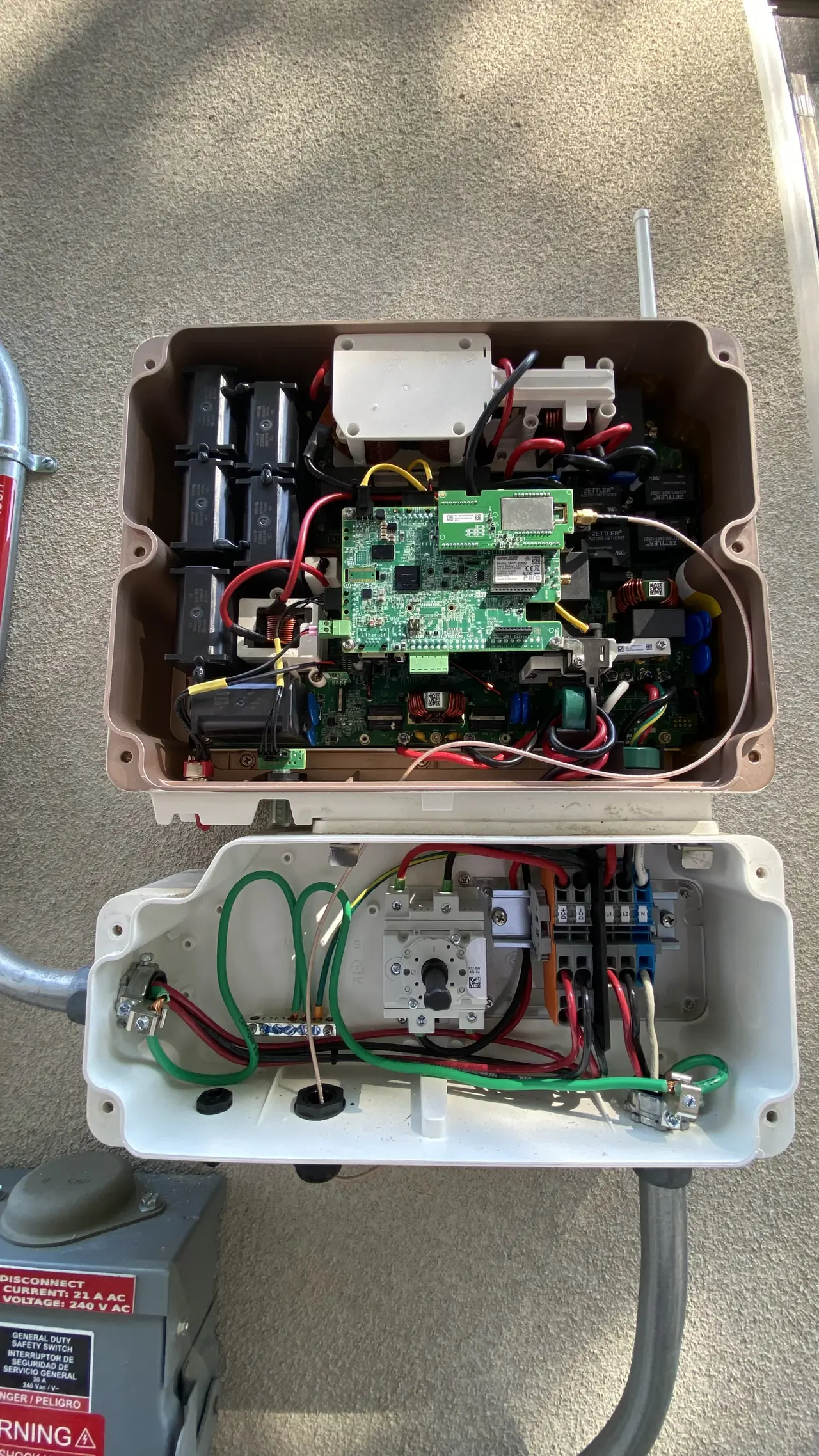
- Enphase IQ8A, one per module
- Building
- Newly built accessory dwelling
- Roof
- Flat, modules mounted flush without tilt frames
- Service
- 400 A dual-gang meter panel with 125 A breakers
- Permission to operate
- 9 May 2025
- Utility / AHJ
- Burbank Water and Power / City of Burbank
The story
This is a small system. Six modules, two and two-thirds kilowatts, flush on a flat roof, no tilt frames, no battery, no service upgrade. It is the kind of project people assume will be quick, and Cali Energy carried it for eight months from the first request to the permission to operate letter.
The reason is worth understanding, because it is structural rather than unlucky. Burbank, like a number of California cities, offers residential solar permits through an automated online platform: answer the questions correctly and the permit issues without a human plan check. What that platform does not do is speak for the utility. Asked directly whether plans were still needed if the permit was going to be pulled online, the utility's answer was unambiguous: it must review and approve the solar plans before releasing the solar meter spot and before the express permit is obtained.
So the sequence runs opposite to what the word express implies. Plans go to the utility first. The utility reviews the drawing and separately reviews the size of the system. A field visit is booked so that a technician can stand on the property with the plans and decide where the utility's meter will live. Only then does the meter spot issue, and only then is the online permit available.
Three rounds of corrections came back before the meter spot did. The last of them is the one worth repeating, because it is specific to a lot like this. The service here is a dual-gang meter panel: two meter positions, two addresses, one enclosure. The utility asked that the drawing label the meters so it was unmistakable which address and which meter the solar circuit was tying into. On a single-meter house nobody would ask that question. On a lot with a house and an accessory dwelling it is the whole question, because a solar circuit landed on the wrong meter is a wiring error nobody notices until the bills arrive.
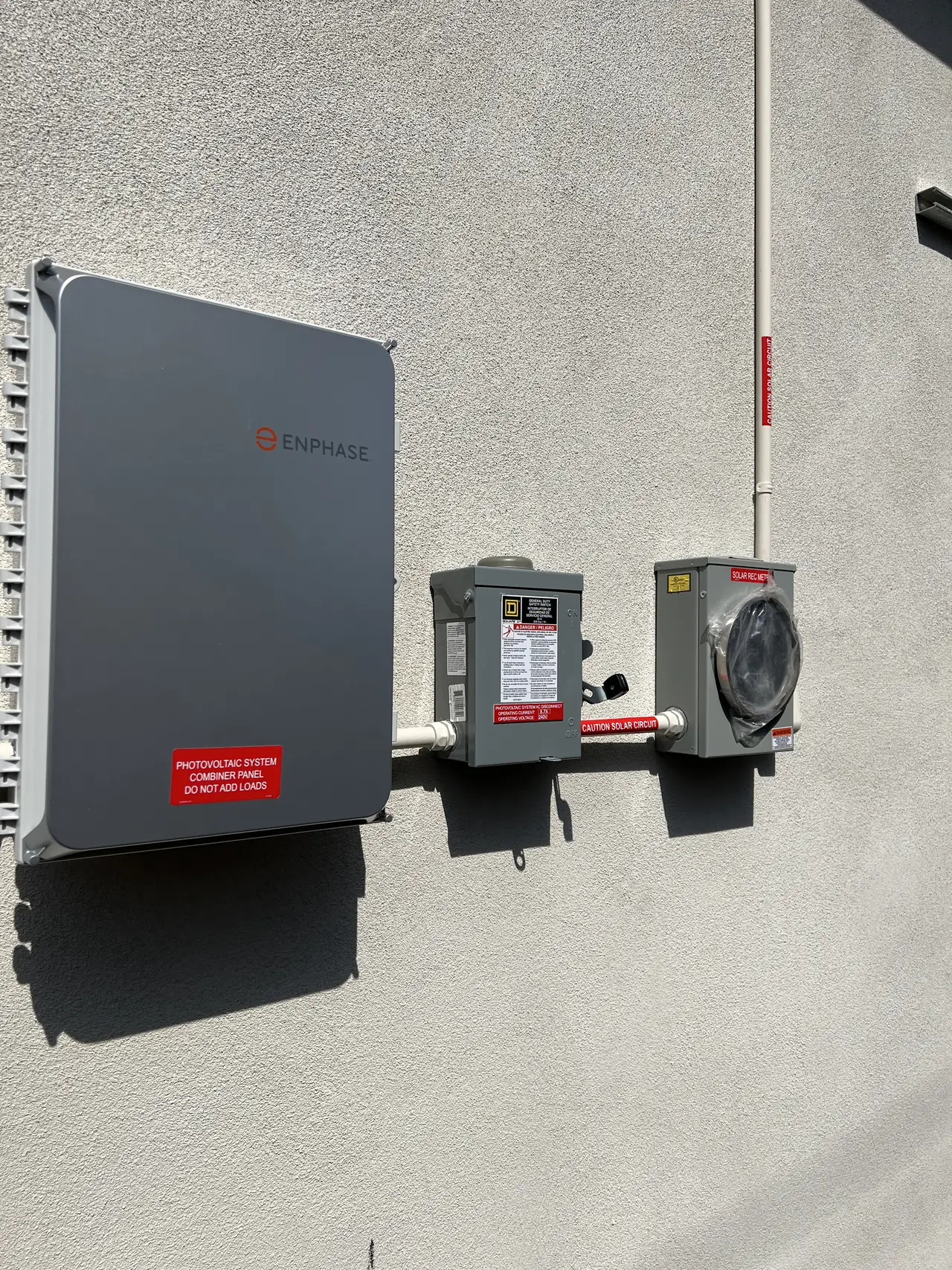
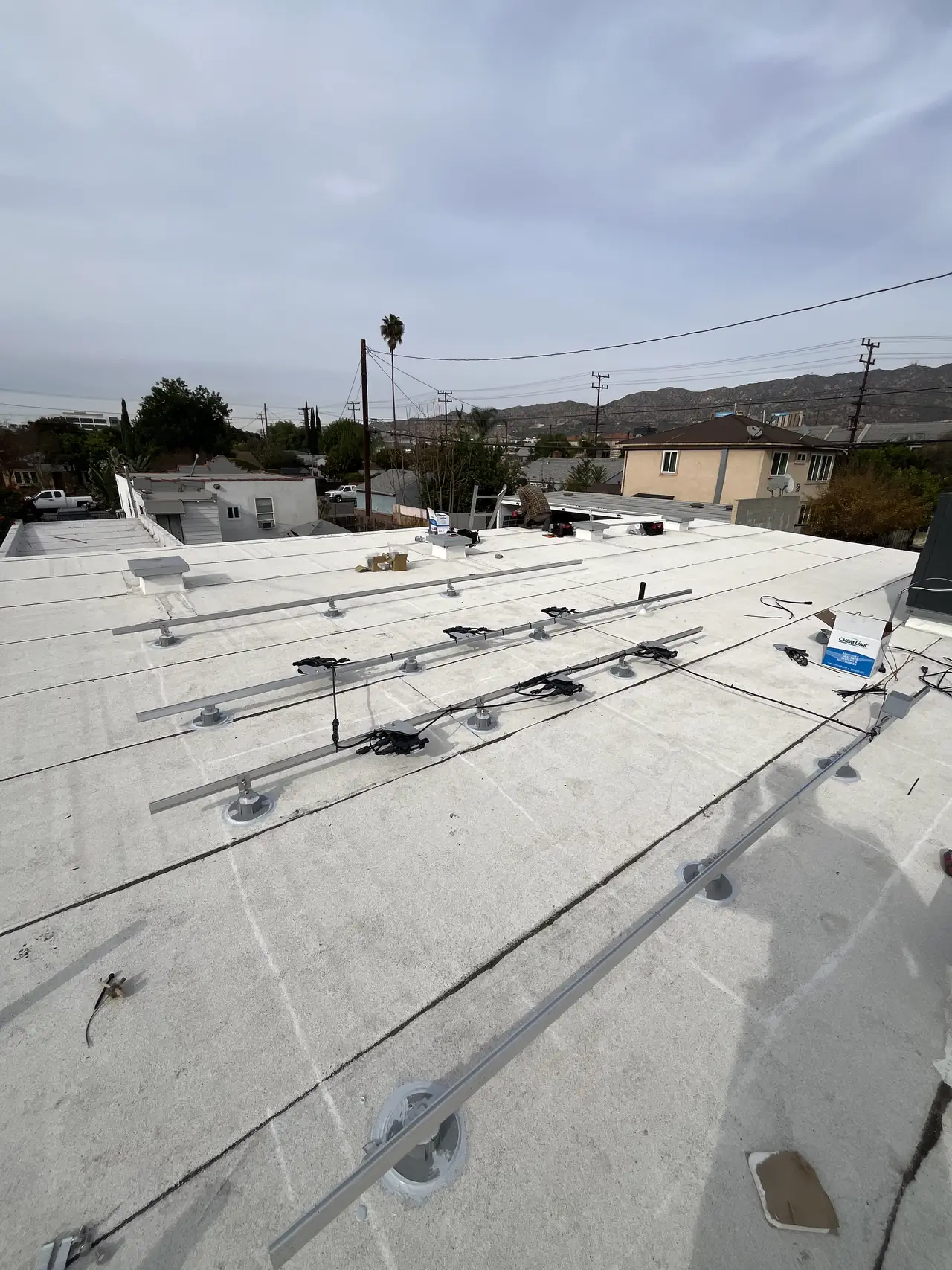
The meter spot issued in December 2024. The array itself went up, the city's final inspection passed in March 2025, and then the project hit the last dependency: the building had no permanent power yet. The utility cannot commission a solar system into a dead building, so commissioning waited until the service was released. The field acceptance completed in May, and the permission to operate letter followed the next day.
Two hundred and forty-five days for six modules. None of it was the roof.
How it ran
| 6 September 2024 | Solar confirmation number requested from the utility |
|---|---|
| 2 October 2024 | Utility confirms plans must be approved before an express permit |
| 8 October 2024 | First plan corrections returned |
| 14 November 2024 | Size review passes; further drawing corrections issued |
| 18 November 2024 | Correction to label the meters on the dual-gang panel |
| 10 December 2024 | Solar meter spot issued |
| 11 December 2024 | Array installed |
| 19 March 2025 | City final solar inspection passed |
| 1 April 2025 | System programmed; pre-commissioning checklist submitted |
| 8 May 2025 | Field acceptance complete |
| 9 May 2025 | Permission to operate letter issued |
Two hundred and forty-five days from request to letter on a six-module system. This timeline reflects this project and this period.
What we did
- Requested the solar confirmation number and established what the express permit route actually required (C-10).
- Carried three rounds of drawing corrections through to an approved plan set.
- Revised the single-line diagram to label the dual-gang meters and identify the circuit's address.
- Took the utility field visit and the meter spot conditions into the installed layout.
- Installed and flashed the roof attachments before the modules were set.
- Passed the city's final inspection and filed the pre-commissioning checklist.
- Followed the project through the service release to field acceptance and the permission to operate letter.
System specifications
| Modules | 6 x Canadian Solar CS3W-445MB-AG, 445 W each |
|---|---|
| System size | 2.67 kW DC |
| Microinverters | Enphase IQ8A |
| Roof | Flat, flush-mounted without tilt |
| Service | 400 A dual-gang meter panel, 125 A breakers |
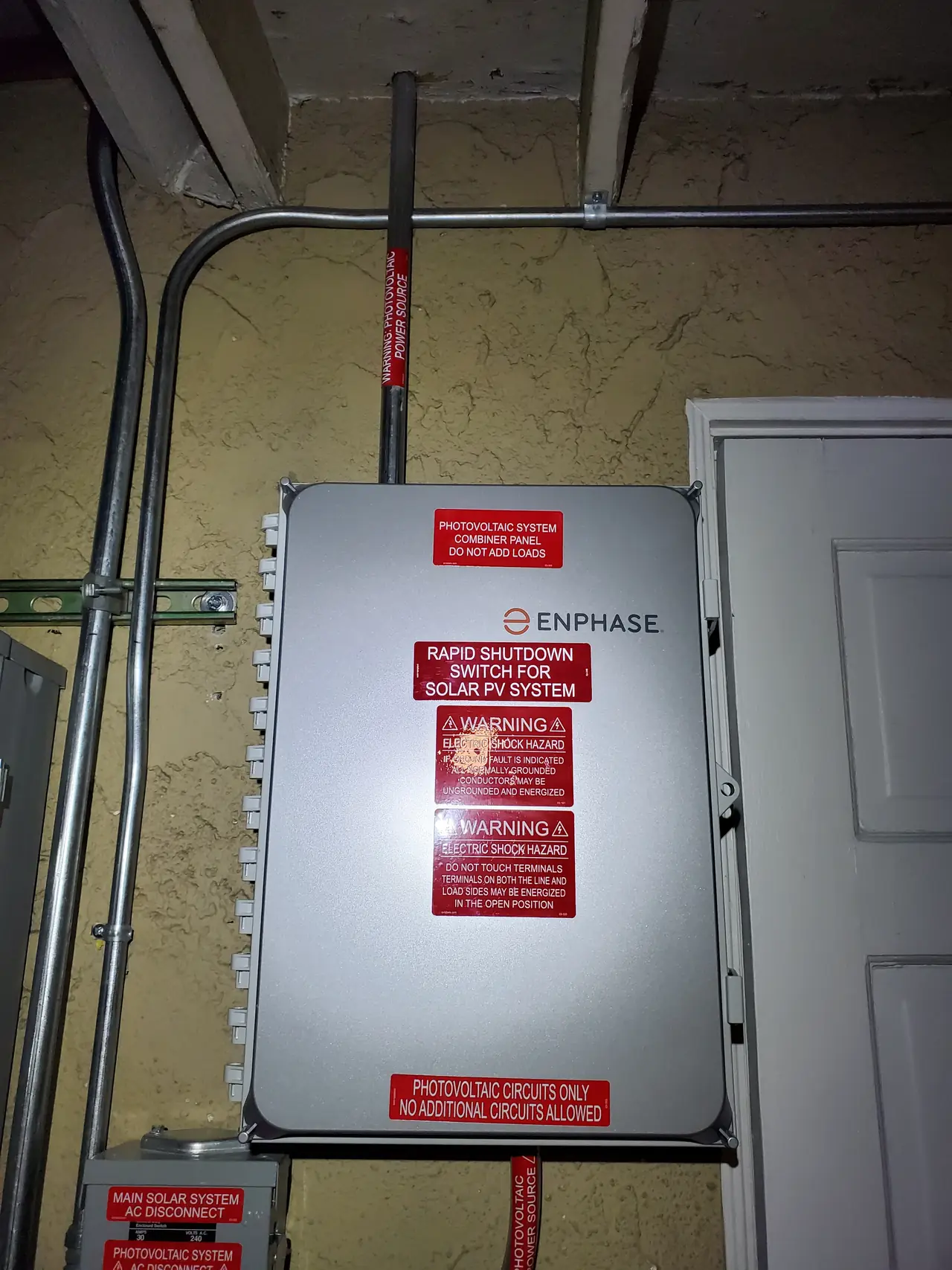
| Point of connection | Subpanel inside the dwelling |
| Permitting route | Online express permit, after utility approval |
| Utility / AHJ | Burbank Water and Power / City of Burbank |
Is your project like this one?
- You have been told your city issues solar permits instantly and are planning around that.
- Your project is a small array on a new accessory dwelling.
- Your lot has a dual-gang meter and two addresses.
- Your system is installed and waiting for the building to get permanent power.
- You want the Burbank sequence explained in the order it really runs.
Cali Energy in Burbank
Burbank is its own city with its own municipal utility: permits run through the City of Burbank Building & Safety Division, interconnection through Burbank Water and Power.
Burbank offers an online express permit for residential solar, which makes the building department the fast half of the process. The utility half runs on its own clock: plans reviewed, size reviewed, a field visit booked, and only then a meter spot.
This installation is on the Burbank projects page alongside the others, and what the work covers is set out on the Burbank service area page.
- License and classifications: CSLB #1032379
- Official reference for this process: Burbank Water and Power — Solar Power
- Official reference for this process: City of Burbank — Building & Safety
Frequently asked questions
Does an instant solar permit make the project faster?
It removes the building department's plan check, which on a simple residential array is rarely the slow part. The utility review in front of it is. On this project the permit itself was minutes and the approval sequence that allowed it took three months, so the realistic expectation is a shorter tail than a shorter project.
Does Cali Energy pull express solar permits in Burbank?
Yes, where the project qualifies. In Burbank the online permit is available only after Burbank Water and Power has reviewed and approved the solar plans and released a meter spot, so Cali Energy runs the utility review first and pulls the permit at the point it becomes available. Eleven completed Burbank projects are on our projects page. Our license is CSLB #1032379.
Why does the utility care which meter the solar ties into?
Because on a lot with two meters it determines whose account the generation is credited to. A dual-gang panel carries two services in one enclosure, and a drawing that does not label them leaves that open. The correction asked for here was simply to mark which address and which meter the solar circuit lands on, so the crew setting the meter is not guessing.
Why can a finished system sit unconnected?
Because the utility will not commission solar into a building with no permanent power. On new construction the service release is a separate milestone with its own queue, and until it happens the array is complete, inspected and idle. It is worth knowing before the schedule is promised to anyone.
What this would look like on your roof
Planning solar in Burbank? Tell us your utility, your roof and what your bill looks like now, and we will model what a system like this would do on your house before you commit to anything.
Or call +1 (323) 844-7777 · Cali Energy, Northridge · CSLB #1032379 (B, C-10, C-39) — design, permits, install and electrical under one licensed contractor.
Related
This timeline reflects this property and this permitting path. Updated September 2026.