

Brentwood, CA · February – September 2023 · LADWP / LADBS
Brentwood: five modules went on after the meter.
The utility set the meter on a Saturday and told the owner the system could run. Part of the system was not on the roof yet.
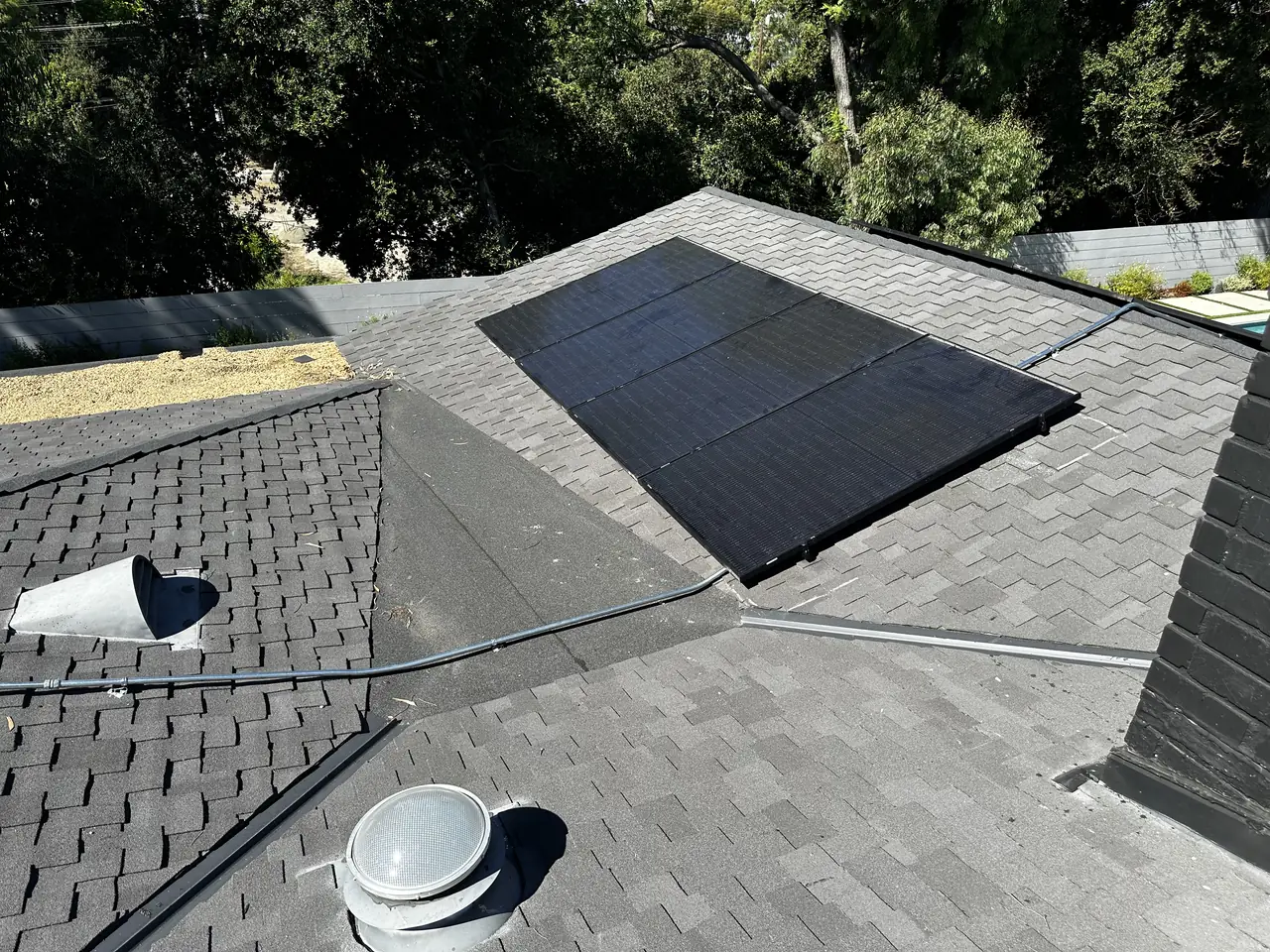
Permission to operate is granted against the approved design, not against a count of modules on the roof on the day. A system can therefore be energized while part of the approved array is still to be installed, provided what goes on afterwards is what the drawings already showed. On this 9.9 kW Brentwood project the meter was set and permission to operate issued on a Saturday, and Cali Energy installed the remaining five modules three days later.
At a glance
- System
- 9.9 kW AC-CEC
- Inverters
- One microinverter per module
- Permission to operate
- Before the array was complete
- Remaining modules installed
- Three days later
- Quote to permission to operate
- About six months
- Utility / AHJ
- LADWP / LADBS
The story
The message did not come from the utility. It came from the owner, on a Saturday: the crew had been out, the new meter was in, and they had been told to let the installer know the system could be connected.
That is worth noting on its own, because people assume the installer hears first. The utility notifies the account holder. On a project where the owner is not reading their email closely, permission to operate can sit unnoticed for days while everyone waits for a message that has already been delivered to somebody else.
The other half of the reply was the interesting part. The system was authorized. Five of its modules were not yet on the roof.
This surprises people and it should not. Permission to operate is granted against the design the utility approved — the system size, the equipment, the single-line diagram — not against a headcount taken on the roof that morning. The building department released the installation, the utility completed its review, the meter went on. What was outstanding was the last part of an array everybody had already agreed to.
So the remaining five went up the following Tuesday, onto mounts and rails that were already there, into microinverter positions the approved drawings already showed. Nothing about the system changed. It simply finished.
The line that matters, and it is a hard line: what goes on afterwards has to be what was approved. Adding modules beyond the approved design after the meter is set is a different act entirely — it is a new system size, and it needs its own application, its own review and its own permission. Finishing an approved array is housekeeping. Exceeding one is unpermitted work with a meter already on it.
If your system is energized and you can see that part of it is missing, the question to ask is whether what is still to come appears on the approved drawings. If it does, you are waiting on a crew. If it does not, you are waiting on a new application nobody has filed.
The calendar behind all this was long and unremarkable. The quote went out in February. The utility charge cleared at the beginning of May and the review notices — application received, details confirmed, site evaluation complete — all landed on the sixth. Then the summer, and on the twenty-second of August the building department release reached the utility and the installation was approved the same day. The meter was set on the twenty-sixth.
Handover happened the Monday in between: how the monitoring app works, how to see that the system is actually connected rather than merely switched on.
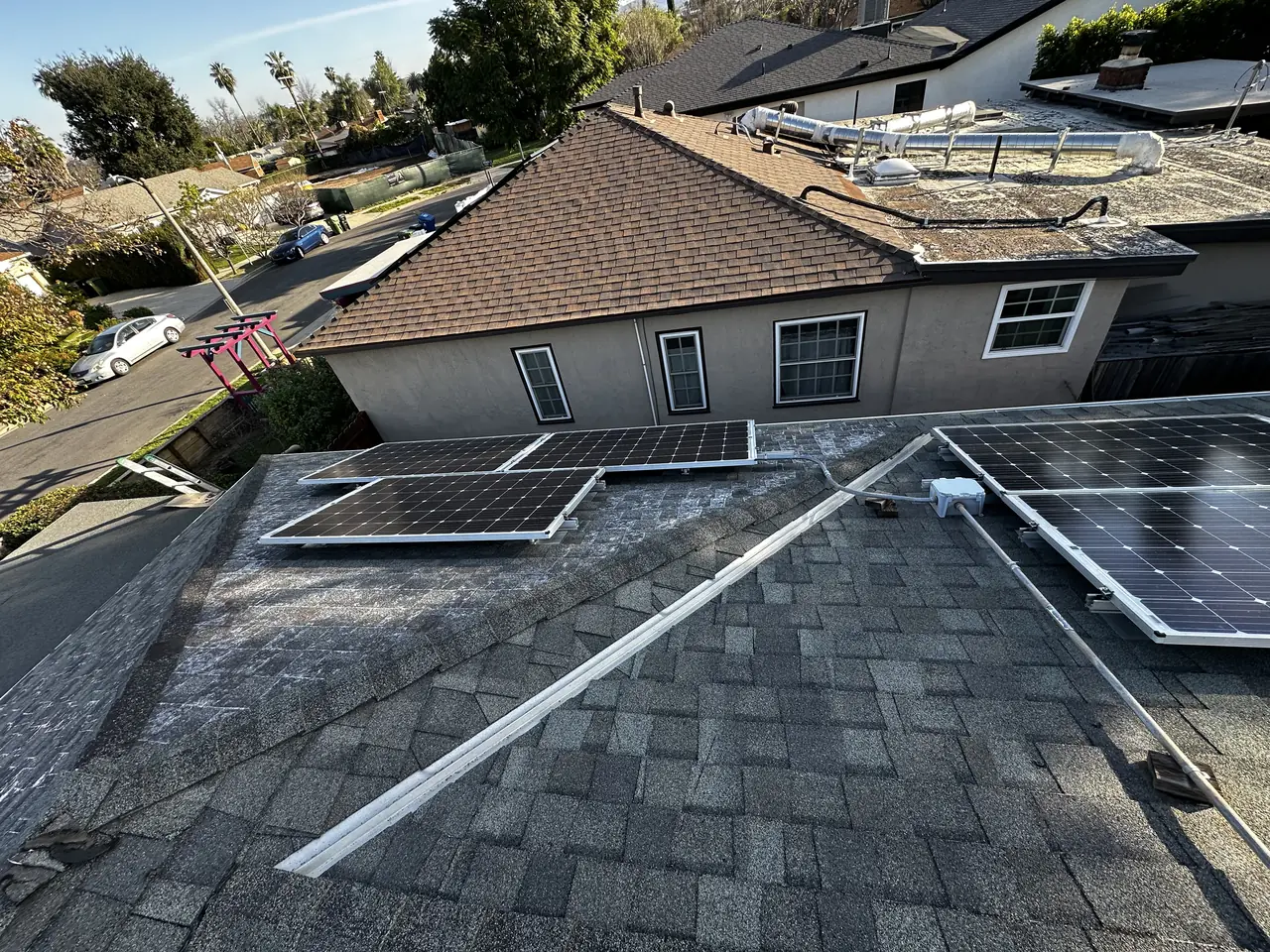
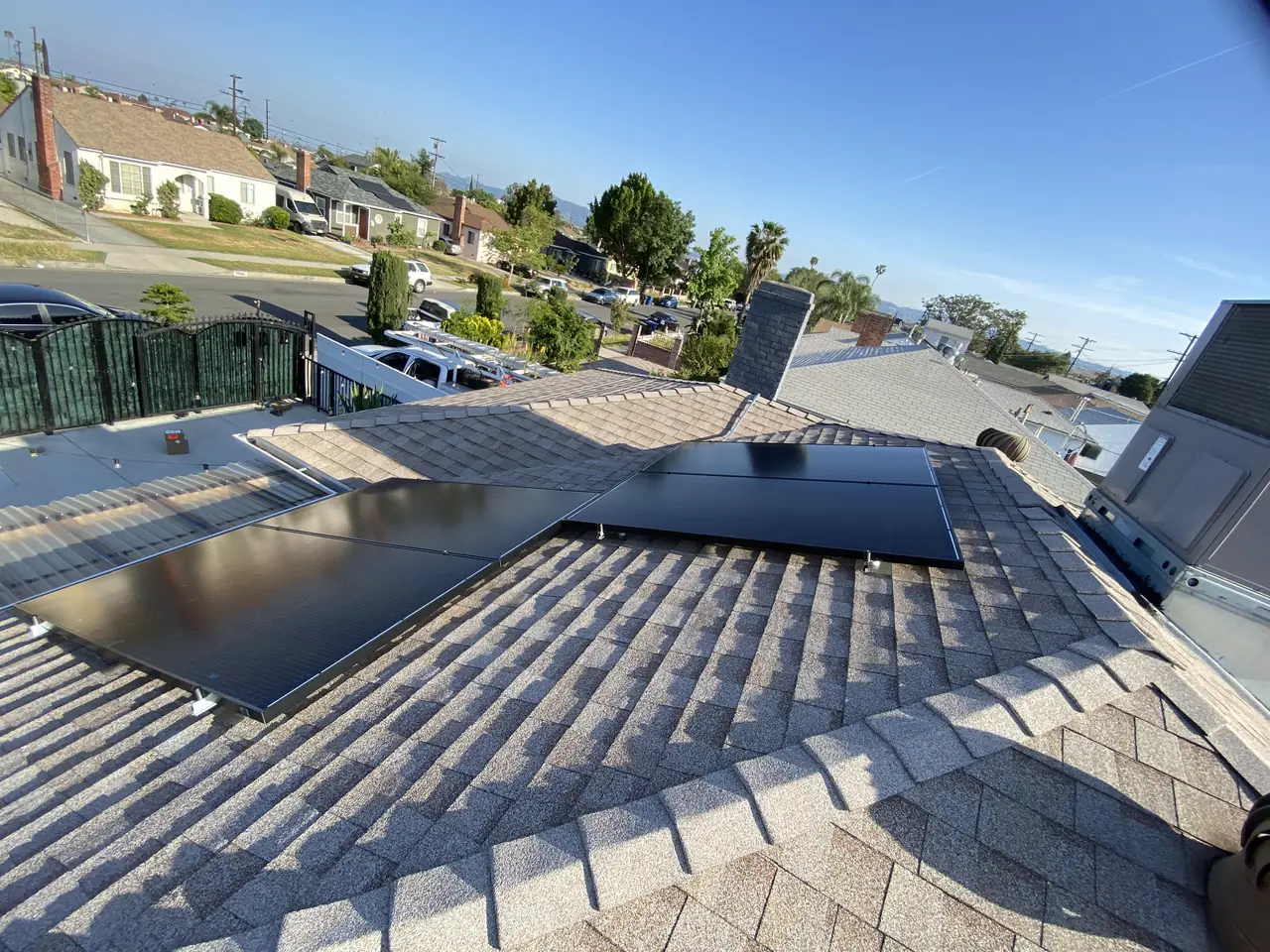
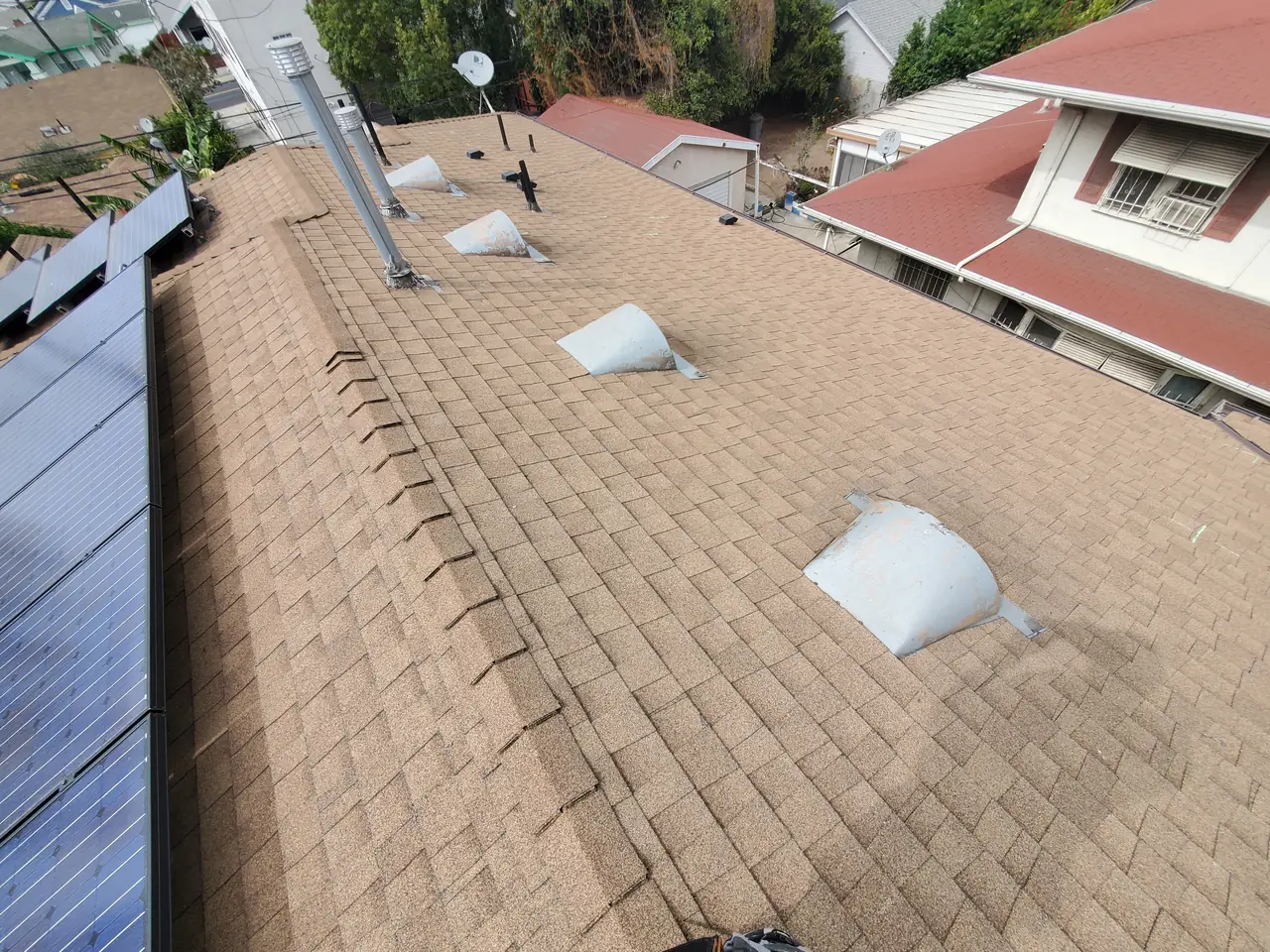
Cali Energy designed, permitted, installed and finished this 9.9 kW array in Brentwood, Los Angeles.
How it ran
| 6 February 2023 | Quote issued |
|---|---|
| 3 May 2023 | Utility charge cleared |
| 3 May 2023 | Array installed |
| 6 May 2023 | Application received, details confirmed and site evaluation complete — all recorded together |
| 22 August 2023 | Building department release reaches the utility; installation approved; meter requested |
| 26 August 2023 | Meter set and permission to operate; the owner passes the message on |
| 28 August 2023 | Handover — monitoring app and how to confirm the system is connected |
| 29 August 2023 | Remaining five modules installed |
Six months from quote to permission to operate, and three days from permission to operate to a finished array.
What we did
- Acted on a permission to operate that reached the owner rather than the office.
- Finished the approved array three days after the meter was set.
- Kept the added modules inside the approved design rather than beyond it.
- Walked the owner through the monitoring at handover.
System specifications
| System | 9.9 kW AC-CEC |
|---|---|
| Inverters | One microinverter per module |
| At switch-on | Five modules of the approved design still to fit |
| Installed afterwards | Onto existing mounts, within the approved drawings |
| Handover | Monitoring app and connection check |
| Utility / AHJ | LADWP / LADBS |
Is your project like this one?
- Your system has been switched on and part of the array is missing.
- Somebody has offered to add panels to a system that already has a meter.
- You are not sure whether permission to operate has arrived.
- You have an app and no idea how to tell whether you are connected.
Cali Energy in Brentwood
Brentwood is City of Los Angeles on the Westside, permitted through LADBS and interconnected through LADWP. Larger houses and larger arrays, where the last few modules of a design are often the ones waiting on something.
This installation is on the Los Angeles projects page alongside the others, and what the work covers is set out on the Los Angeles service area page.
- License and classifications: CSLB #1032379
- Official reference for this process: LADWP — interconnection requirements
- Official reference for this process: CSLB — Solar Smart
Frequently asked questions
Can a solar system be switched on before it is finished?
Yes, if what remains is part of the design the utility already approved. Permission to operate is granted against the approved system size, equipment and single-line diagram, not against the number of modules on the roof that morning. Fitting the rest afterwards, onto mounts the drawings already show, changes nothing about the approval.
Can I add extra panels after the meter is installed?
Not without a new application. Finishing an approved array is housekeeping; going beyond it is a different system size and needs its own review and its own permission to operate. The distinction is whether the additional modules appear on the approved drawings — if they do not, the work is unpermitted with a meter already on it.
Who is told first when permission to operate is granted?
The account holder. People assume the installer hears first, but the utility notifies the customer, and on this Brentwood project the owner passed the message on. Where an owner is not watching their email, an authorization can sit unnoticed for days while everyone waits on news that has already been delivered.
How do I know my solar is actually connected and not just switched on?
Through the monitoring, which should show production reaching the house rather than an inverter merely powered up. That is worth walking through at handover rather than reading about later — on this project it was covered the Monday before the array was finished.
Does Cali Energy install larger systems in Brentwood, Los Angeles?
Yes. This Brentwood project was 9.9 kW AC-CEC with a microinverter behind each module, permitted through LADBS and interconnected through LADWP. Westside houses carry larger arrays, and the last few modules of a design are often the ones waiting on something.
What this would look like on your roof
Planning solar in Brentwood? Tell us your utility, your roof and what your bill looks like now, and we will model what a system like this would do on your house before you commit to anything.
Or call +1 (323) 844-7777 · Cali Energy, Northridge · CSLB #1032379 (B, C-10, C-39) — design, permits, install and electrical under one licensed contractor.
Related
This timeline reflects this property and this permitting path. Updated September 2026.