

Beverlywood, CA · March 2022 · LADWP / LADBS
Beverlywood: the file a finished job leaves.
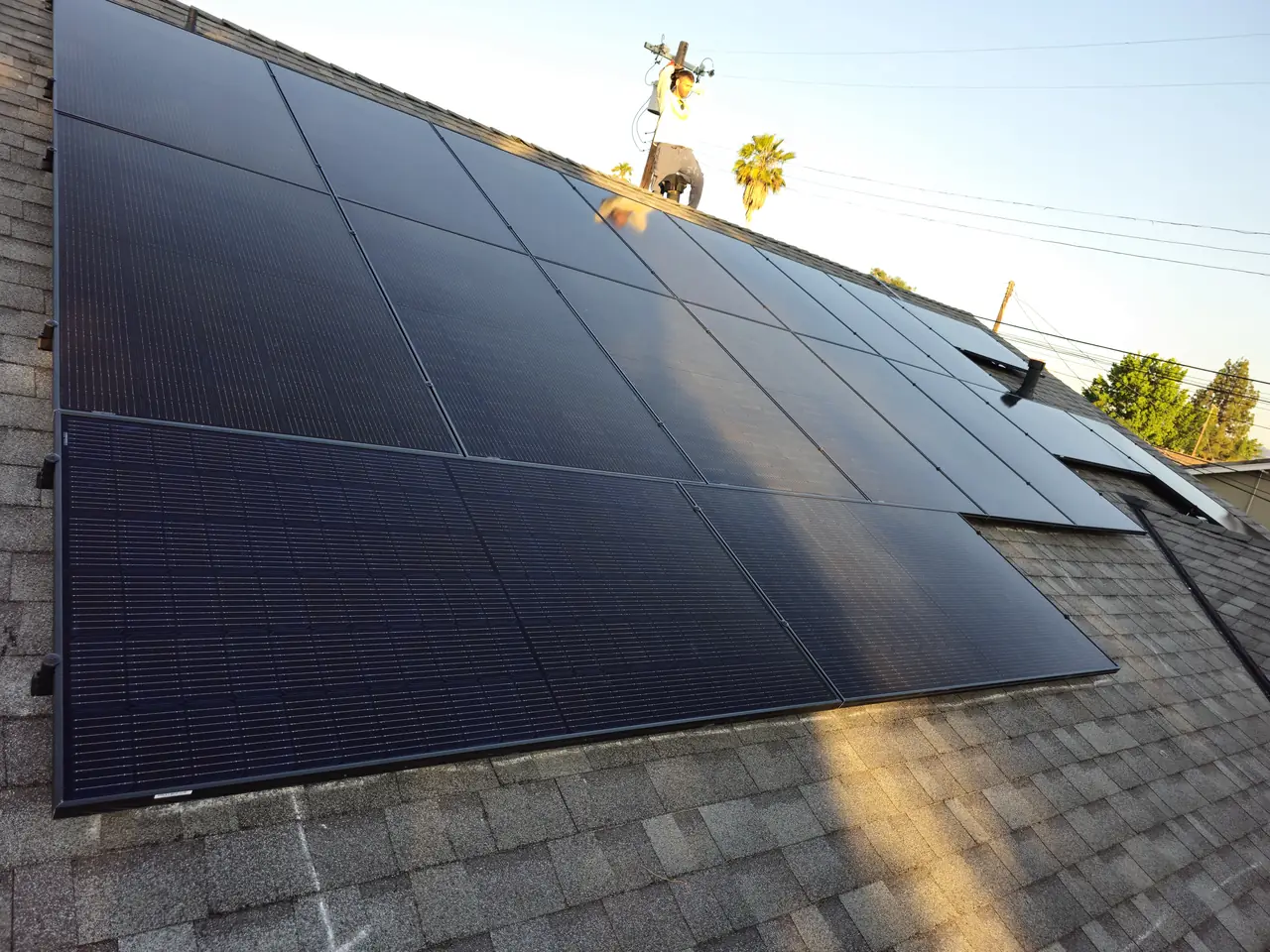
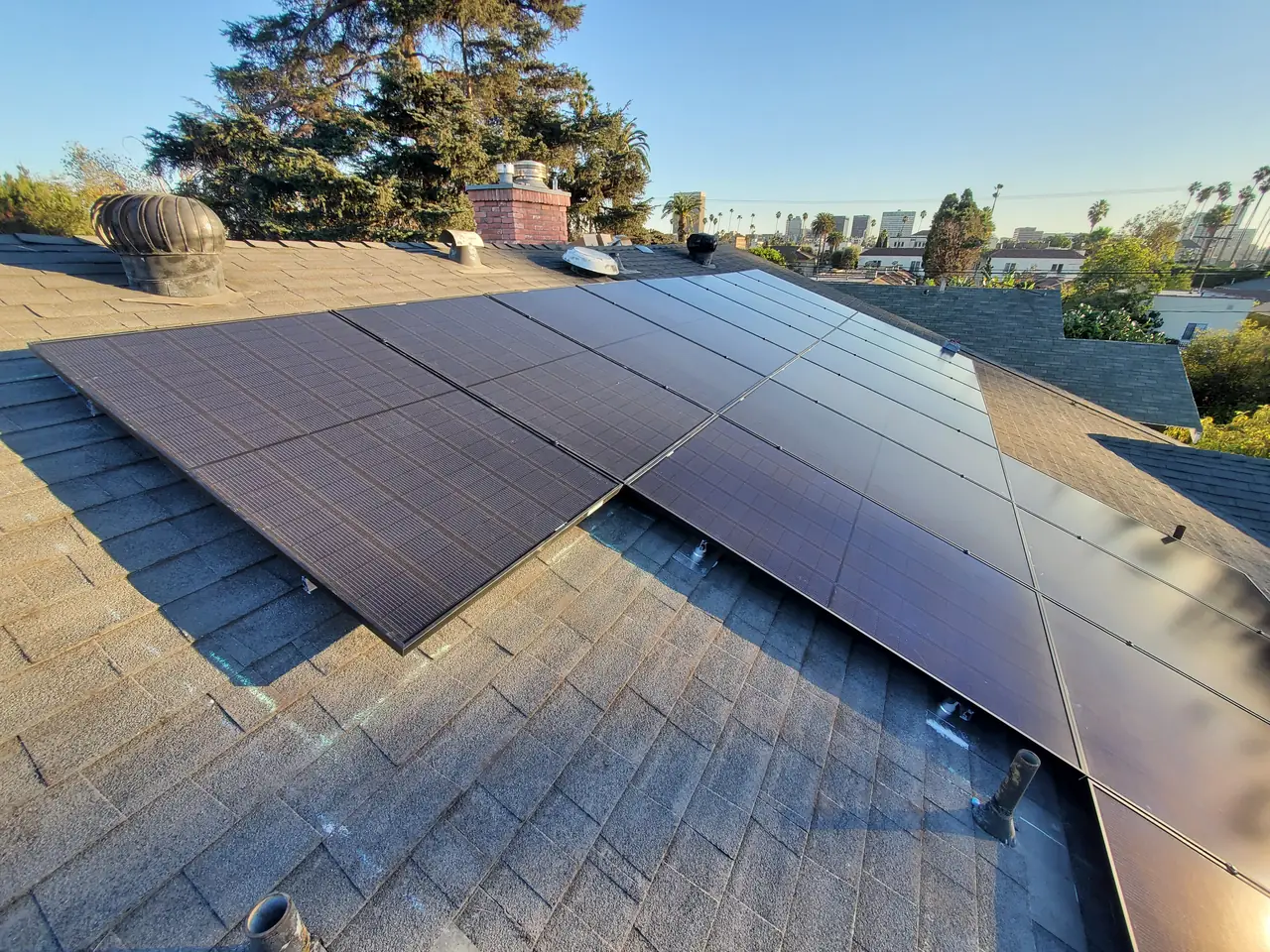
The array was on the roof. What was still outstanding was the record of it — and two photographs in particular.
A finished solar project leaves a documentary record as well as an array: the permit, the passed final inspection, and a set of post-installation photographs showing what was built where it can no longer be seen. Two of those photographs are asked for on almost every job — the service riser conduit and the meter area — because together they show how the system ties into the service. On this Beverlywood project Cali Energy closed the file in a week, and the final was passed on the twenty-third of March.
At a glance
- Array
- Residential rooftop
- Closing set
- Permit, passed final, post-installation photographs
- Always requested
- Service riser conduit and meter area
- Access
- Confirmed with the household before the inspection
- Intake to passed final
- About a week
- Utility / AHJ
- LADWP / LADBS
The story
By the middle of March the array was up and the interesting part of this project was over. What remained was the closeout file — the part of a project most owners never see in full and do not know to ask for.
Three things make up the record of a finished solar installation.
The permit, which says the work was allowed. The passed final inspection, which says the work was examined and accepted. And the post-installation photographs, which say what was actually built — and those matter more than they sound, because most of a solar installation becomes invisible the moment it is finished. Conduit is fixed to walls and painted around. Connections are closed into enclosures. Mounts go under modules nobody will lift again for twenty years.
Two photographs get asked for on nearly every job, and it is worth knowing why they are the two.
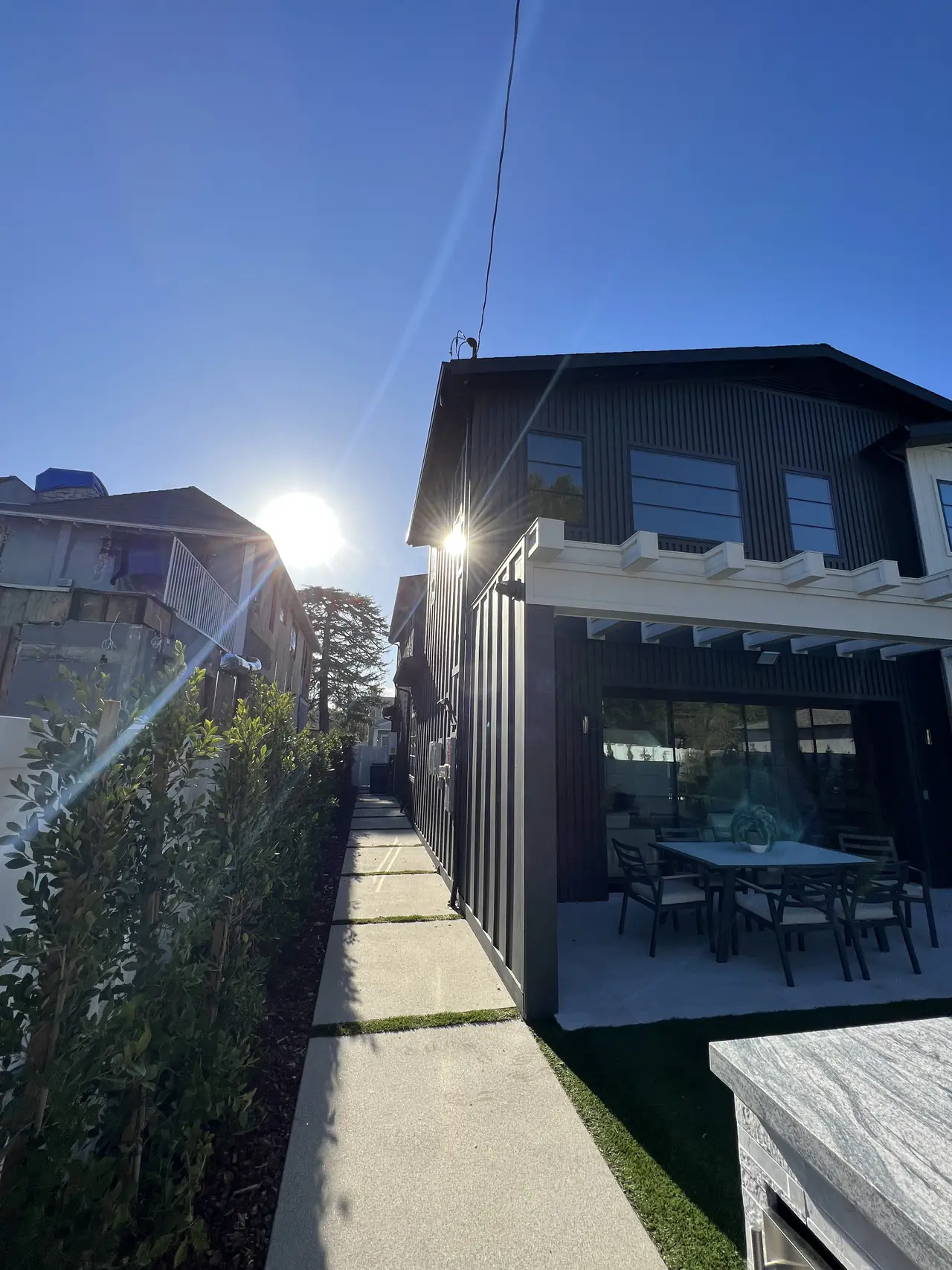
The service riser conduit — the run coming down to where the system meets the house's supply. And the meter area, the wall the meter and the associated equipment sit on.
Between them those two frames show how the array ties into the service: what route the conductors take, what equipment sits where, what the connection point actually looks like. Everything else on the roof is modules and rails, which are much the same everywhere. The tie-in is the part that is specific to this house, and it is the part that will be examined if anything is ever questioned later.
The fourth item in the closing sequence is not a document at all. It is access.
A final inspection needs somebody able to get to the equipment, and on a house where the service is down a side yard behind a gate, that means the household has to be expecting the visit. On this project the date was set and then confirmed with the household separately before anybody was booked. An inspection nobody can get into is not a delay of a day — it is a canceled slot and a rebooking, and the queue does not care why.
What an owner should take from this. When your project finishes, ask for the set: the permit, the record of the passed final, and the photographs. Keep them somewhere you will find them. The people who will want them are not you — they are a future buyer's inspector, a title company, an insurer, or whoever is standing in your side yard in eight years trying to work out what somebody did to your service equipment.
The sequence here ran in a week. The closing set was requested in the middle of March, access was confirmed with the household, the two specific photographs were supplied, the final was inspected on the twenty-third and the approval came through the following day.
Cali Energy installed, finaled and documented this array in Beverlywood, Los Angeles.
How it ran
| 9 March 2022 | Array installed |
|---|---|
| 17 March 2022 | Closing set requested — post-installation photographs and a date for the final |
| 17 March 2022 | Final booked for Wednesday the 23rd |
| 18 March 2022 | Access confirmed with the household for the inspection |
| 18 March 2022 | Two specific photographs requested: service riser conduit and meter area |
| 23 March 2022 | Photographs supplied; final inspection passed |
| 24 March 2022 | Final inspection approval issued |
A week from the first closing request to an approved final, with the access settled before anybody was booked.
What we did
- Produced the post-installation photograph set on request.
- Supplied the two specific frames that show the tie-in to the service.
- Confirmed household access before the inspection was booked.
- Passed the final and closed the file within a week.
System specifications
| Array | Residential rooftop |
|---|---|
| Roof | Composition shingle |
| Closing record | Permit, passed final, post-installation photographs |
| Required frames | Service riser conduit; meter area |
| Access | Confirmed with the household in advance |
| Utility / AHJ | LADWP / LADBS |
Is your project like this one?
- Your solar was finished and you were given nothing to keep.
- You are selling a house with an array on it.
- An inspector or insurer has asked how your system connects.
- Your service equipment is behind a gate nobody can open.
Cali Energy in Beverlywood
Beverlywood is City of Los Angeles south of Pico, permitted through LADBS and interconnected through LADWP. Compact single-family blocks where the service equipment is usually down a narrow side yard nobody looks at twice.
This installation is on the Los Angeles projects page alongside the others, and what the work covers is set out on the Los Angeles service area page.
- License and classifications: CSLB #1032379
- Official reference for this process: CSLB — Solar Smart
- Official reference for this process: LADBS — inspection
Frequently asked questions
What paperwork should I receive when my solar is finished?
Three things: the permit, the record of the passed final inspection, and the post-installation photographs. The first says the work was allowed, the second that it was examined and accepted, and the third shows what was actually built — which matters because most of an installation becomes invisible the moment it is done.
Why do installers photograph the service riser and the meter area?
Because between them those two frames show how the array ties into the house supply: the route the conductors take, what equipment sits where, and what the connection point looks like. The roof is modules and rails, much the same everywhere. The tie-in is the part specific to the house and the part examined if anything is questioned later.
Who will ever want these documents?
Not usually the owner. A future buyer's inspector, a title company, an insurer, or whoever is standing at the service equipment years later working out what was done to it. That is exactly why the set should be kept somewhere findable rather than left in an email thread.
Does someone need to be home for the final inspection?
Somebody has to be able to get the inspector to the equipment, which on a house with the service down a side yard behind a gate means the household has to be expecting the visit. An inspection nobody can get into is not a day lost — it is a canceled slot and a rebooking into the back of the queue.
Does Cali Energy install solar in Beverlywood, Los Angeles?
Yes. Beverlywood projects are permitted through LADBS and interconnected through LADWP. The blocks here are compact and the service equipment usually sits down a narrow side yard, which makes both the tie-in photographs and the access arrangements part of closing the job properly.
What this would look like on your roof
Planning solar in Beverlywood? Tell us your utility, your roof and what your bill looks like now, and we will model what a system like this would do on your house before you commit to anything.
Or call +1 (323) 844-7777 · Cali Energy, Northridge · CSLB #1032379 (B, C-10, C-39) — design, permits, install and electrical under one licensed contractor.
Related
This timeline reflects this property and this permitting path. Updated September 2026.