

Woodland Hills, CA · February – April 2022 · LADWP / LADBS
Woodland Hills: the load calculations, a subpanel and a passed final.
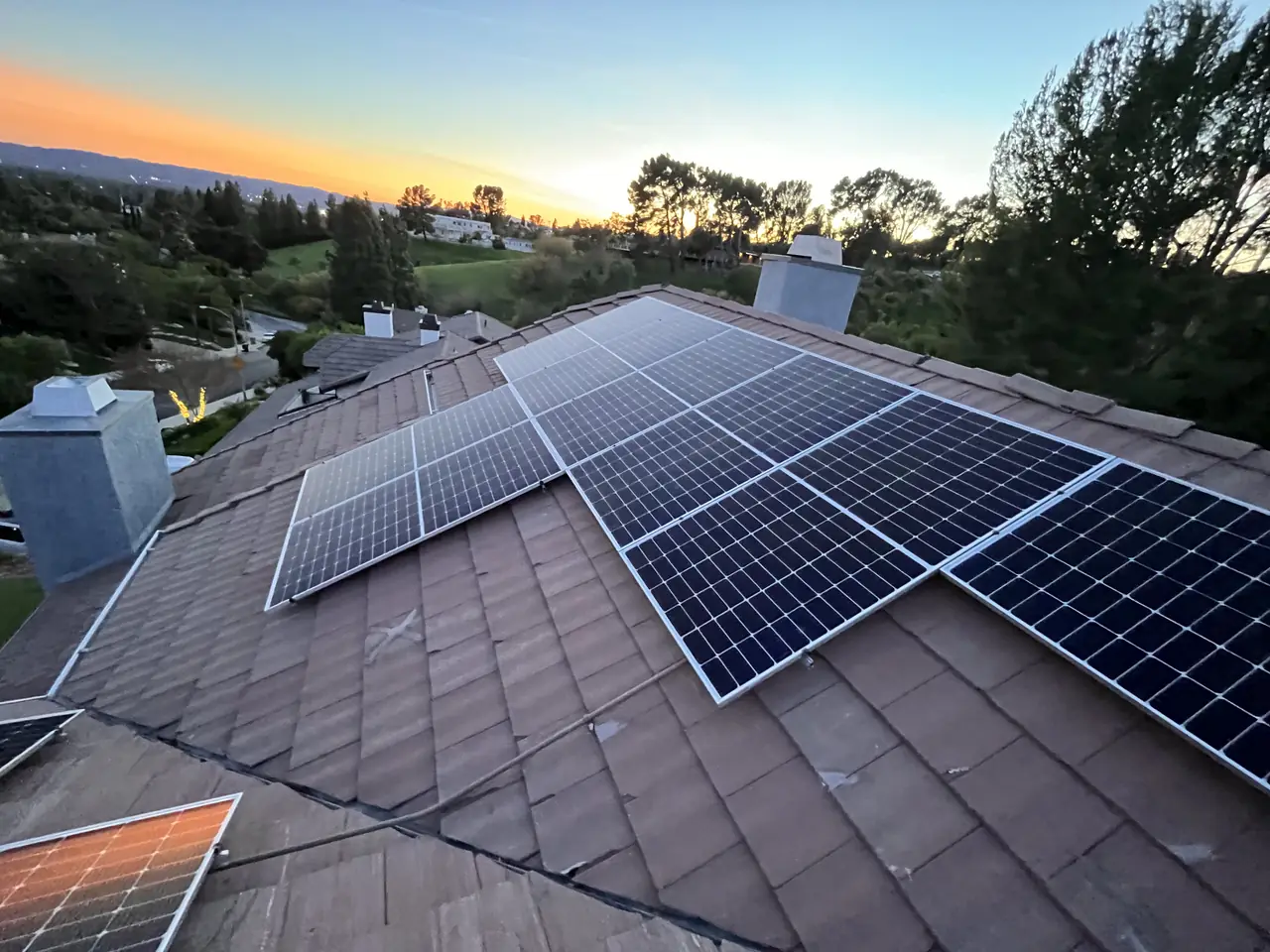
Fourteen kilowatts on a Woodland Hills roof, a plan set that needed its load calculations, and a main panel that needed help — all closed out at a passed final in April 2022.
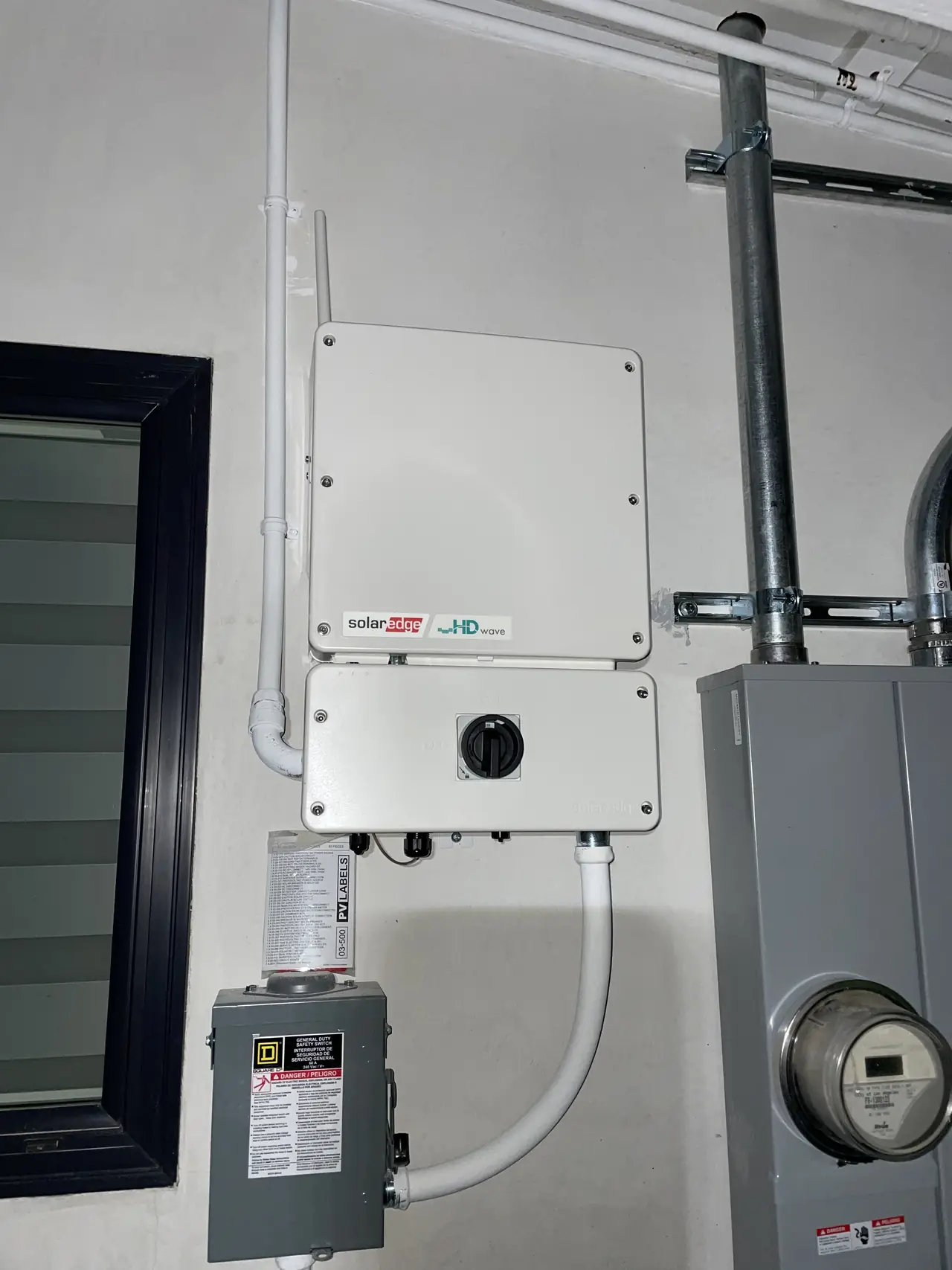
A permit is the approved design, and the inspector checks the installation against it — including whether the panel the array connects to can carry it. On this Woodland Hills project the plan set needed a load schedule, which Cali Energy produced, and the existing main panel could not carry the array, so a subpanel went in under an electrical permit of its own. Cali Energy installed the array and carried it to a passed final on 22 April 2022.
At a glance
- System size
- 14.4 kW DC
- Load calculations
- Produced by Cali Energy for the plan set
- Service work
- A subpanel added under its own express permit
- Permits
- Solar permit, then a separate express permit for the subpanel
- Final inspection
- Passed 22 April 2022
- Battery
- None
- Utility / AHJ
- LADWP / LADBS
The story
We were the installing contractor here. Another company held the customer, the design, the permit and the materials, and we had the roof and the crew.
In March the plans came back from the city's plan check with corrections.
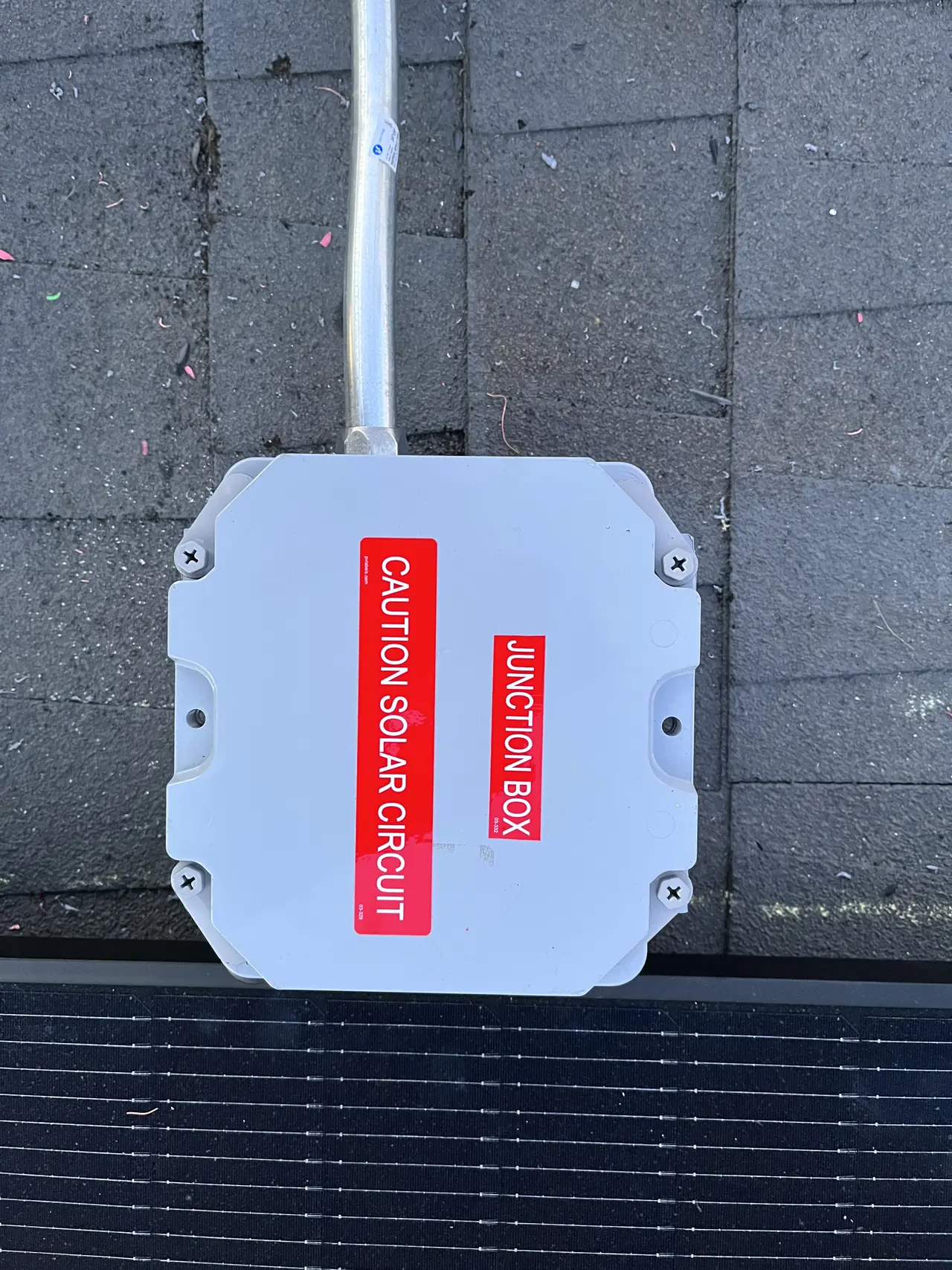
The city wanted the layout on the drawings brought into line with the site, and a load schedule that was not in the set at all. The engineer on the other side could not produce the load calculations, so Cali Energy produced them, explained that they had to go into the plan set as its final page and be submitted for stamping, and sent them over.
The permit was approved in the middle of April, and the final inspection was booked for three days later.
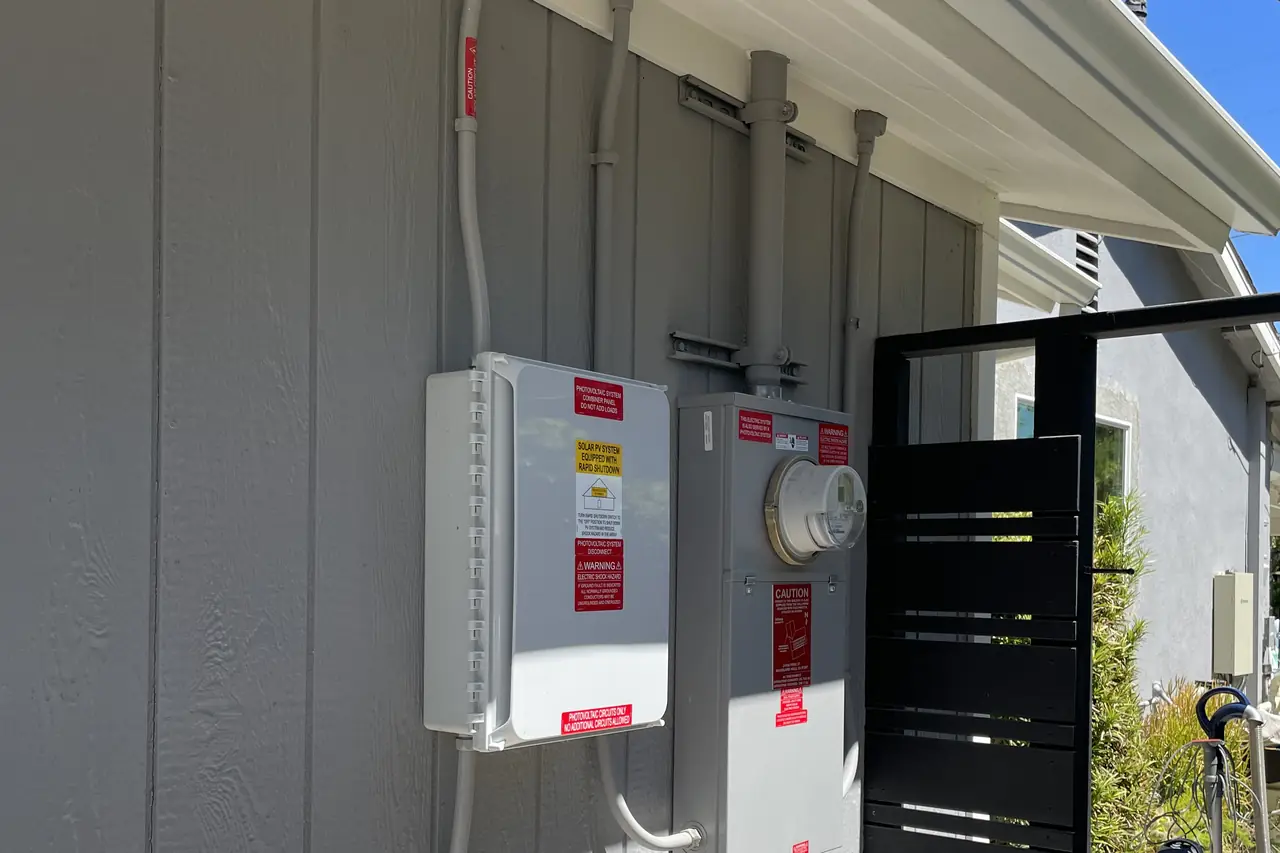
At the final the inspector's note was the most common one on a retrofit of this size: the panel the array was connected to could not carry it. The remedy was a subpanel rather than a full replacement — cheaper and faster, and still electrical work, so it needed its own permit.
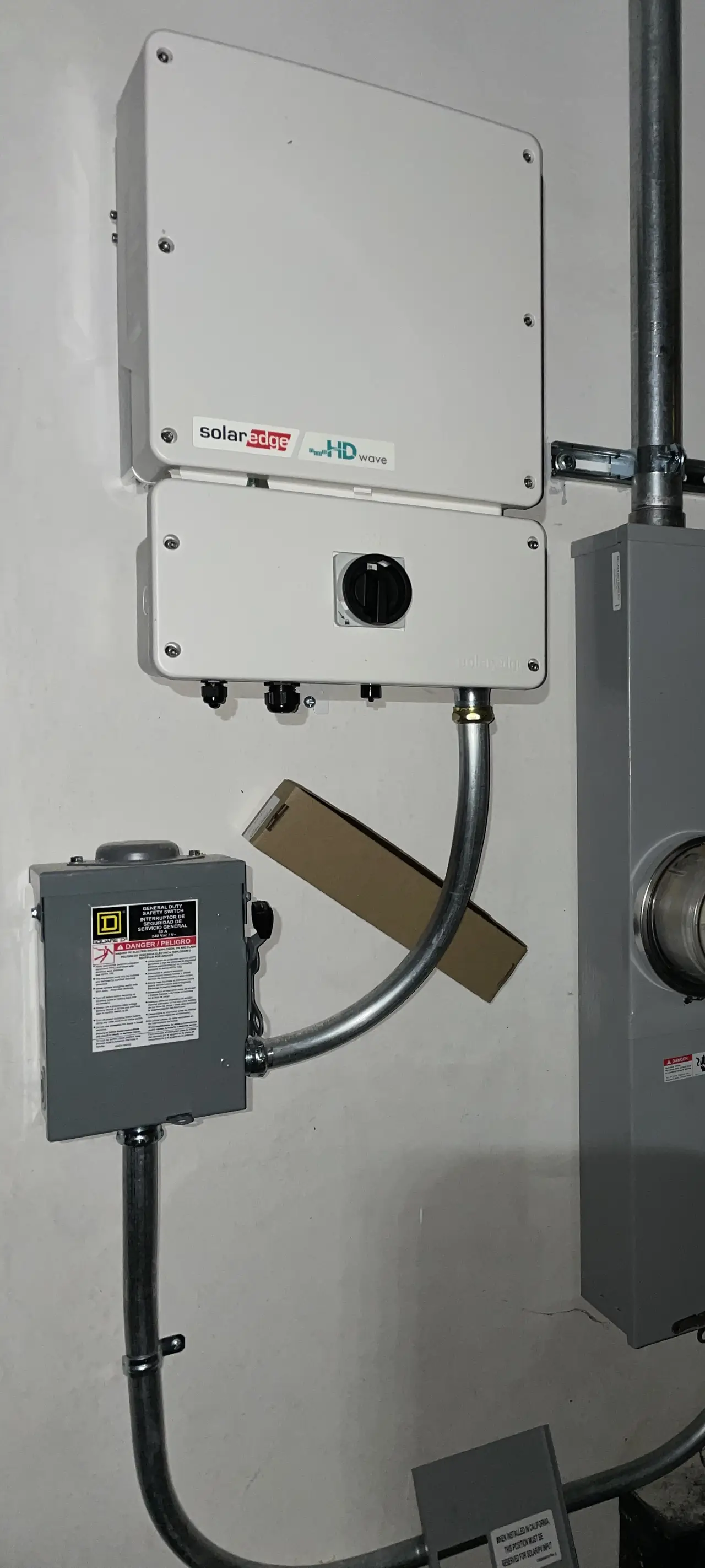
Any work, and electrical work above all, is permitted work, so an express permit was pulled within a few days, the subpanel went in along with an enclosure and the stucco made good around it, and the final was rebooked.
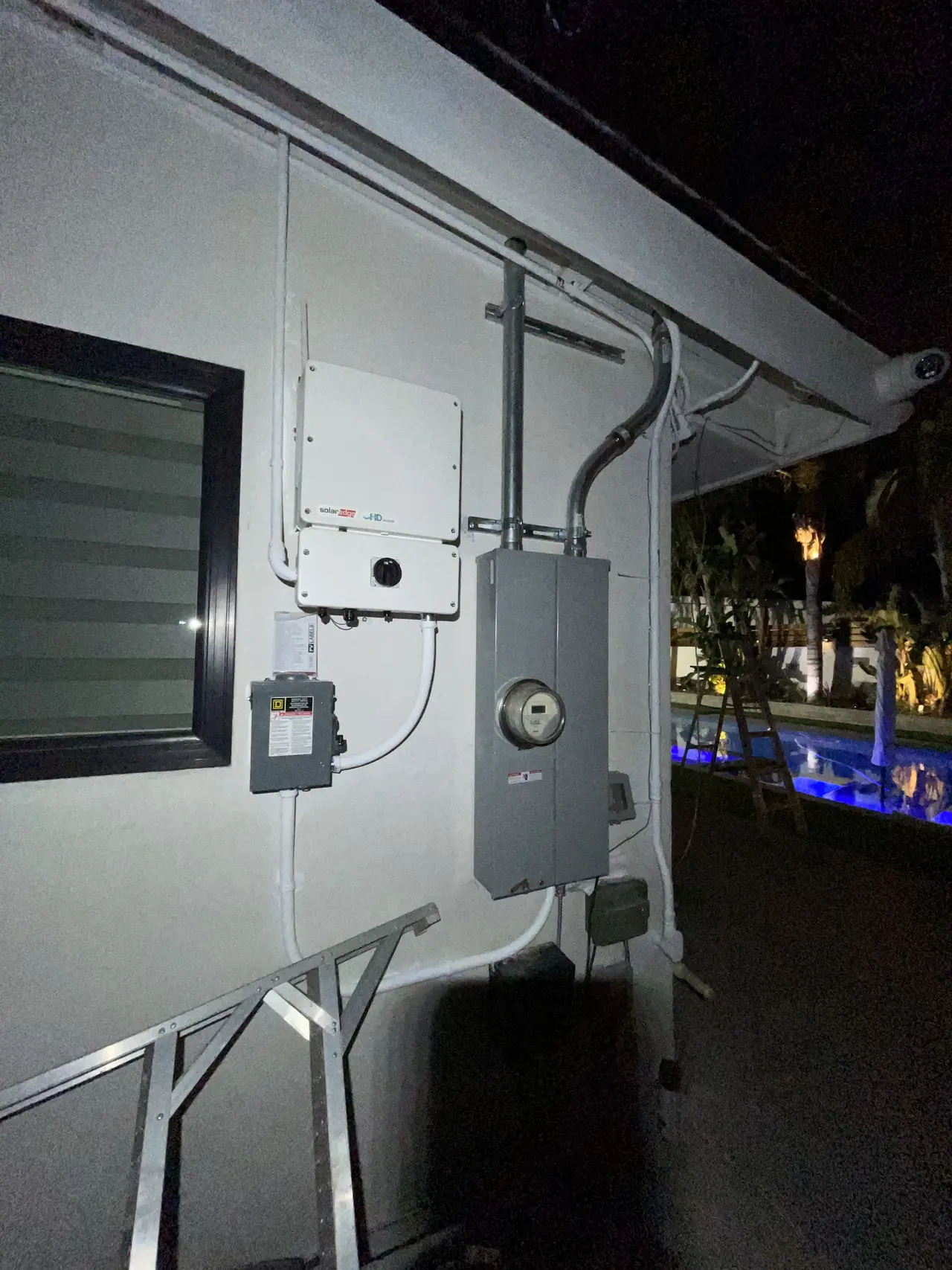
The final passed on the twenty-second of April and the job closed the same day, with one more thing caught on the way out: the monitoring card still needed registering, so that the owner would see production from day one.
The lesson applies to homeowners as much as to contractors: the permit is the design, and the panel an array connects to is part of it. If a plan set does not say what the panel can carry, ask, because that is the question an inspector answers at the final. Here it was answered with a subpanel, the 14.4 kW array closed on a passed final in April 2022, and the house has run on it since.
How it ran
| 11 March 2022 | Plans in correction with the city |
|---|---|
| 15 March 2022 | Corrections: layout to be updated, load schedule required |
| 15 – 23 March 2022 | Load calculations produced and returned for the stamped plans |
| 12 April 2022 | Permit approved; final inspection booked |
| 15 April 2022 | Final inspection: a subpanel required for the existing main panel |
| 19 April 2022 | Confirmed that the subpanel needs its own electrical permit |
| 21 April 2022 | Express permit obtained for the subpanel |
| 22 April 2022 | Subpanel installed with its enclosure and stucco made good; final inspection passed; monitoring registration flagged at close-out |
From plan check corrections to a passed final in six weeks, with the subpanel on its own express permit.
What we did
- Identified the layout update and the load schedule the city's corrections called for.
- Produced the load calculations the project needed when the engineering on the other side could not, and explained how they had to be submitted for stamping.
- Diagnosed the inspector's note at the final as a service capacity question rather than an installation defect.
- Established that the subpanel required its own electrical permit, rather than fitting it unpermitted.
- Installed the subpanel with its enclosure and made the stucco good, and passed the re-inspection.
- Flagged the monitoring registration at close-out so the owner would see production from day one.
System specifications
| System size | 14.4 kW DC |
|---|---|
| Main service panel | Retained; a subpanel added under its own permit |
| Added for the final | Subpanel, exterior enclosure and stucco repair |
| Permits | Solar permit and a separate express electrical permit |
| Battery | None |
| Utility / AHJ | LADWP / LADBS |
Is your project like this one?
- Your plan set came back with corrections asking for a load schedule.
- Your inspector has asked for a subpanel at the final.
- Your project is being run by one company and installed by another.
- You have been told a small electrical addition does not need its own permit.
- Your Woodland Hills property is served by LADWP, while permits are handled by LADBS.
Cali Energy in Woodland Hills
Woodland Hills is inside City of Los Angeles boundaries: permits run through LADBS, interconnection through LADWP.
In Woodland Hills every electrical scope needs a permit from LADBS and an inspection against the approved drawings. That sounds obvious until a job is planned by one company, drawn by another and installed by a third, at which point nobody is quite sure whose job it was to know.
This installation is on the Woodland Hills projects page alongside the others, and what the work covers is set out on the Woodland Hills service area page.
- License and classifications: CSLB #1032379
- Official reference for this process: LADBS — plan review and permitting
- Official reference for this process: NFPA 70, National Electrical Code — Article 705, interconnected power sources
Frequently asked questions
Why would a final inspection fail over the main panel?
Because the panel has to be able to carry the array as built, and on an older house it often cannot. The inspector is not objecting to the installation; he is objecting to what it is connected to. The usual remedies are a panel upgrade, a derate of the main breaker, or a subpanel. All three are electrical work and all three need to be on a permit.
Does adding a subpanel need its own permit?
Yes. Any electrical work needs a permit and an inspection, and a subpanel is not an exception because it is small or because it was added late. On this project an express permit was obtained within a couple of days, which is the fast route, but it was still a permit with its own inspection attached.
What is a load schedule and why did the city want one?
It is the table that sets out every circuit and load on the service, and it is what a plan checker uses to confirm the service can carry what is being added. A solar plan set without one is incomplete on any project that touches the main panel. Here it was one of two items the city's plan check asked for.
Does Cali Energy handle permits and inspections in Woodland Hills?
Yes, end to end, and on this Woodland Hills project it also produced the load calculations the plan set was missing, established that the subpanel needed an electrical permit of its own, and carried the job through to a passed final inspection. Permits here come from LADBS and the interconnection from LADWP. Cali Energy holds California contractor license number 1032379.
What this would look like on your roof
Planning solar in Woodland Hills? Tell us your utility, your roof and what your bill looks like now, and we will model what a system like this would do on your house before you commit to anything.
Or call +1 (323) 844-7777 · Cali Energy, Northridge · CSLB #1032379 (B, C-10, C-39) — design, permits, install and electrical under one licensed contractor.
Related
This timeline reflects this property and this permitting path. Updated September 2026.