

Panorama City, CA · November 2021 – January 2022 · LADWP / LADBS
Panorama City: switched on 38 days after the proposal.
Twenty-four microinverters went on in early December and reported the same afternoon. The utility's review ran alongside the city's inspection rather than behind it, and the system had permission to operate thirty-eight days after the proposal.
A solar project in the City of Los Angeles runs on two tracks: the building department's inspection and the utility's interconnection review. They overlap by design, and a project that runs them in parallel rather than as a queue saves weeks. On this Panorama City project the utility granted permission to install the day after installation, the city signed the work off in December, and permission to operate came on 6 January 2022 — thirty-eight days after the proposal.
At a glance
- Recorded by the utility
- 8.9 kW AC-CEC
- Array
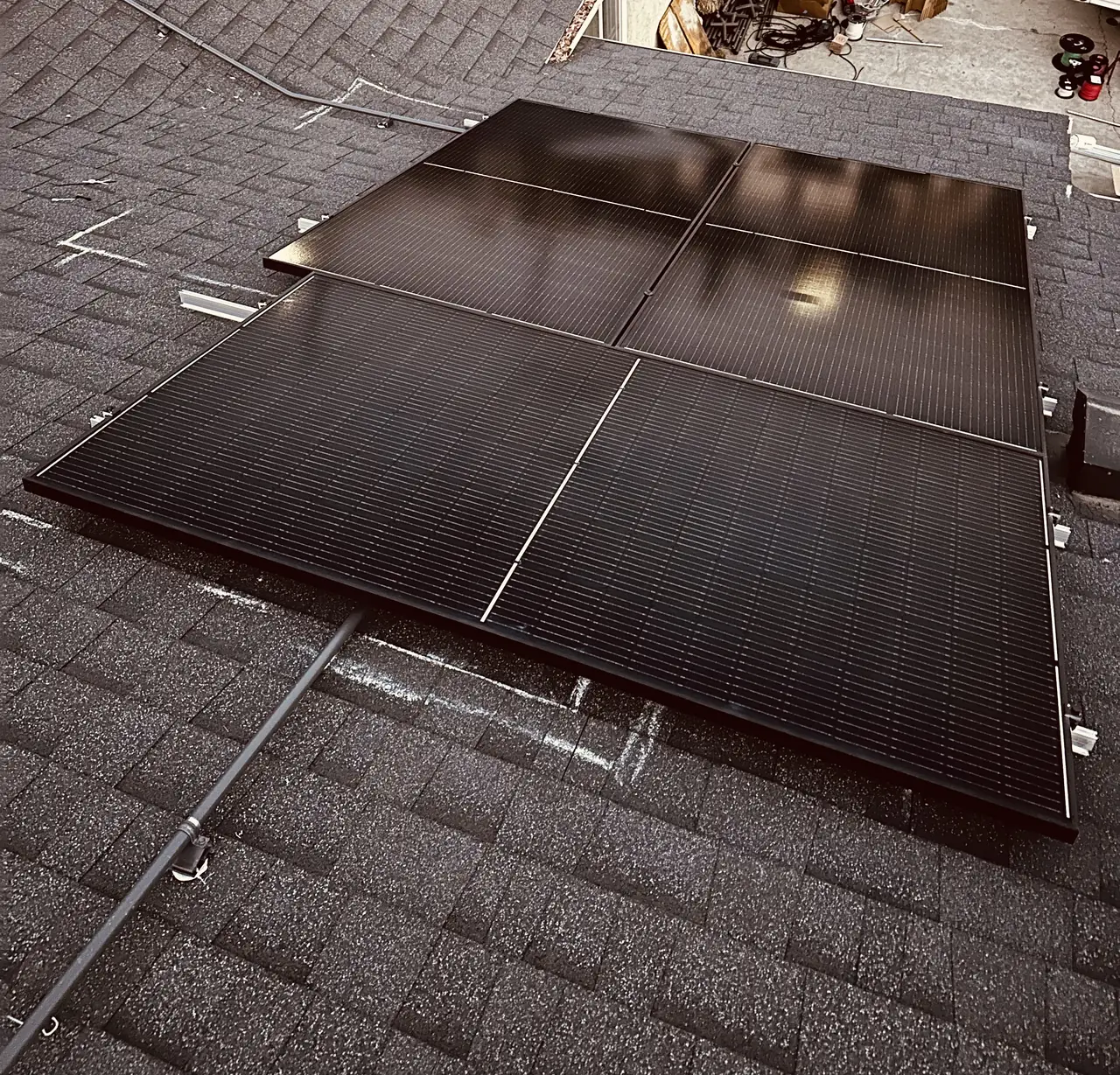
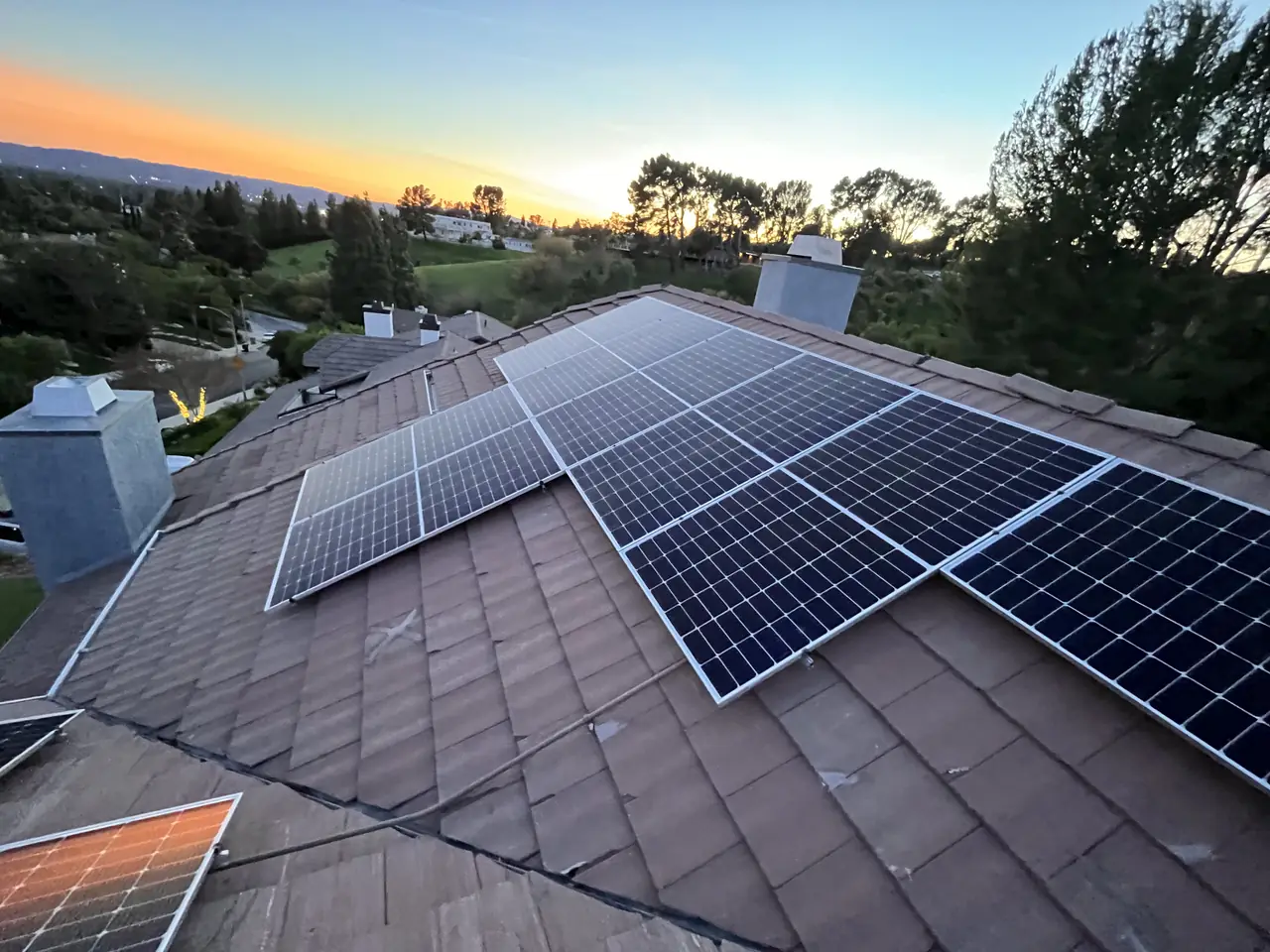
- 24 modules, one microinverter under each
- Main service panel
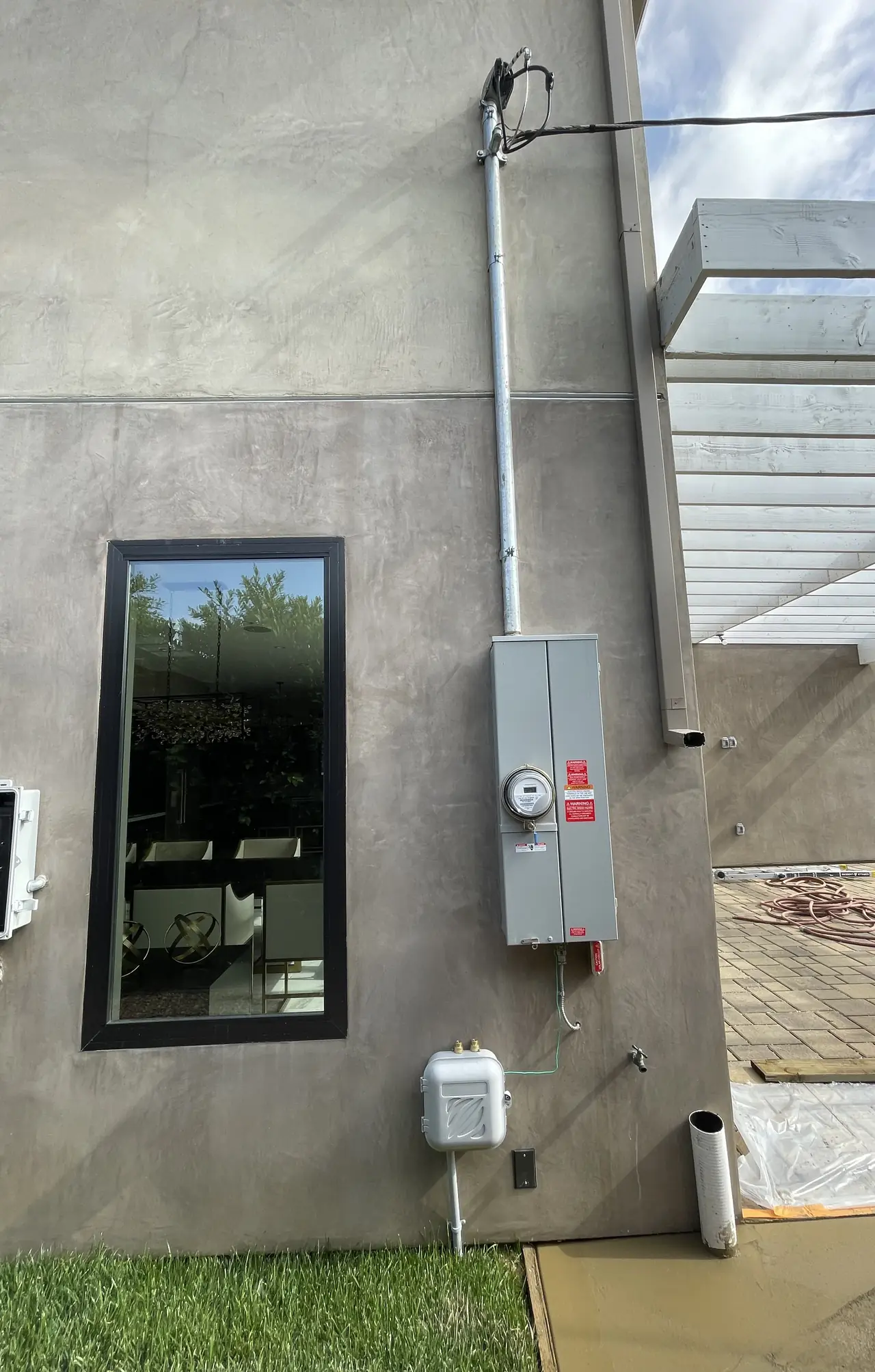
- Retained — 200 A combination meter and main
- Utility service
- Overhead; meter change only
- Battery
- None
- Final inspection
- Passed
- First contact to permission to operate
- 38 days
- Utility / AHJ
- LADWP / LADBS
The story
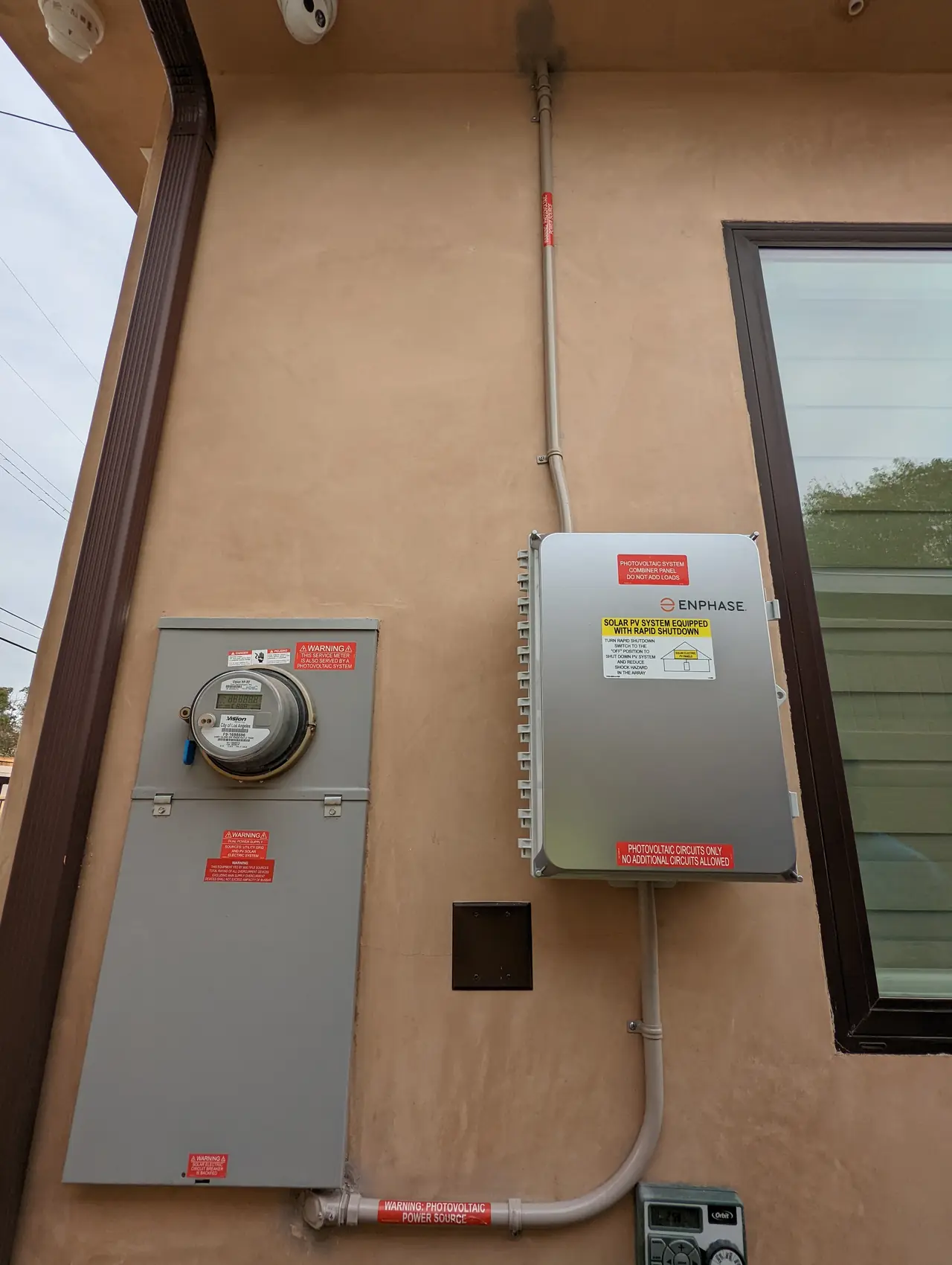
This project had no service upgrade in it, which is the first thing that made it fast. The house already carried a two hundred amp combination meter and main, the kind that puts the meter socket and the breakers behind one cover, and the utility classified the work as a meter change and nothing more. No new panel, no new mast, no trench.
That enclosure is worth a sentence of its own, because it is the reason this project had no service work in it. A combination meter and main carries a twenty-two thousand amp short-circuit rating and forty breaker spaces behind one cover, and its own label says it is suitable only for use as service equipment and only on an overhead service. Both of those were already true here. The solar breaker had somewhere to go, so nothing had to be torn off the wall and nothing had to be scheduled with the utility beyond the meter itself.
The proposal went out at the end of November. The interconnection application was filed on the first of December and the utility's recovery charge was paid the next morning, which is the step that moves an application from received to actually under review. The city inspection was requested on the third.
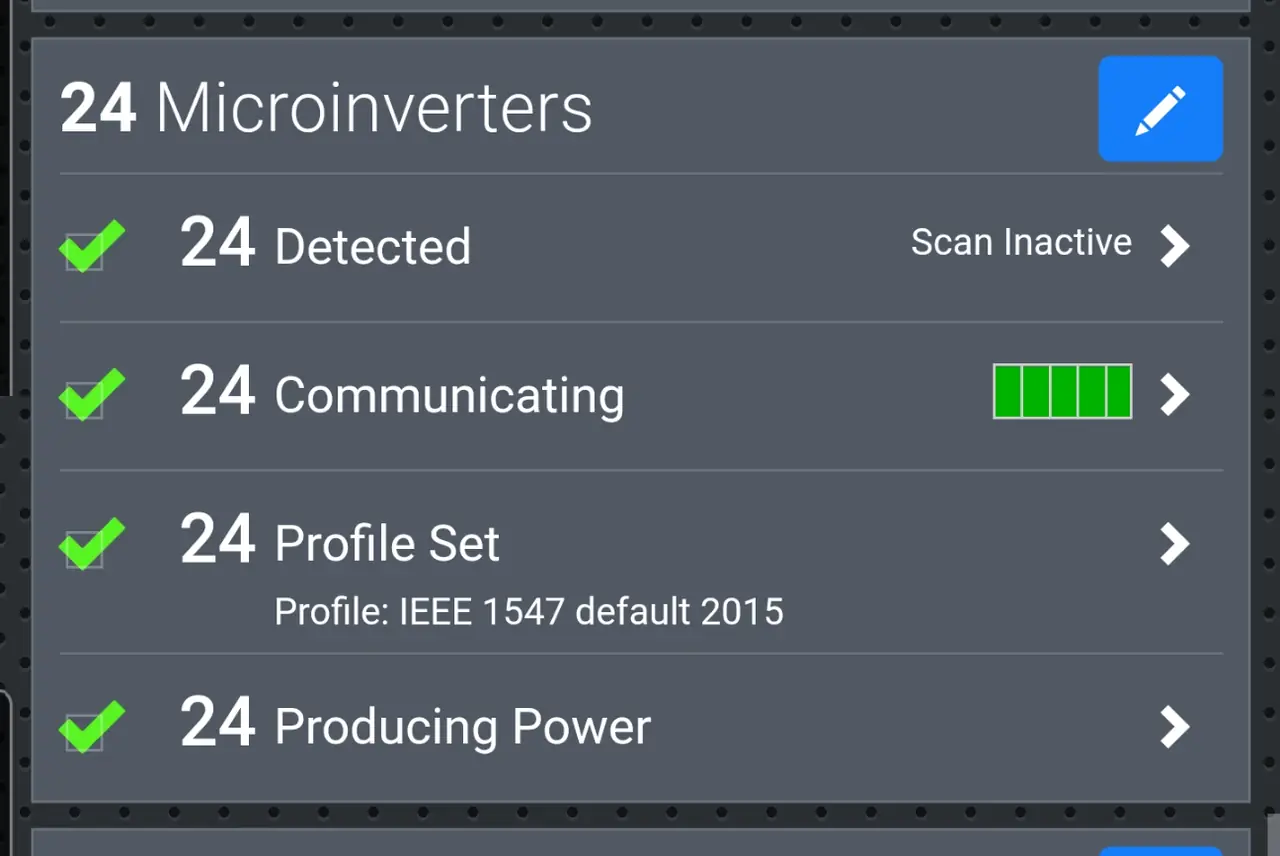
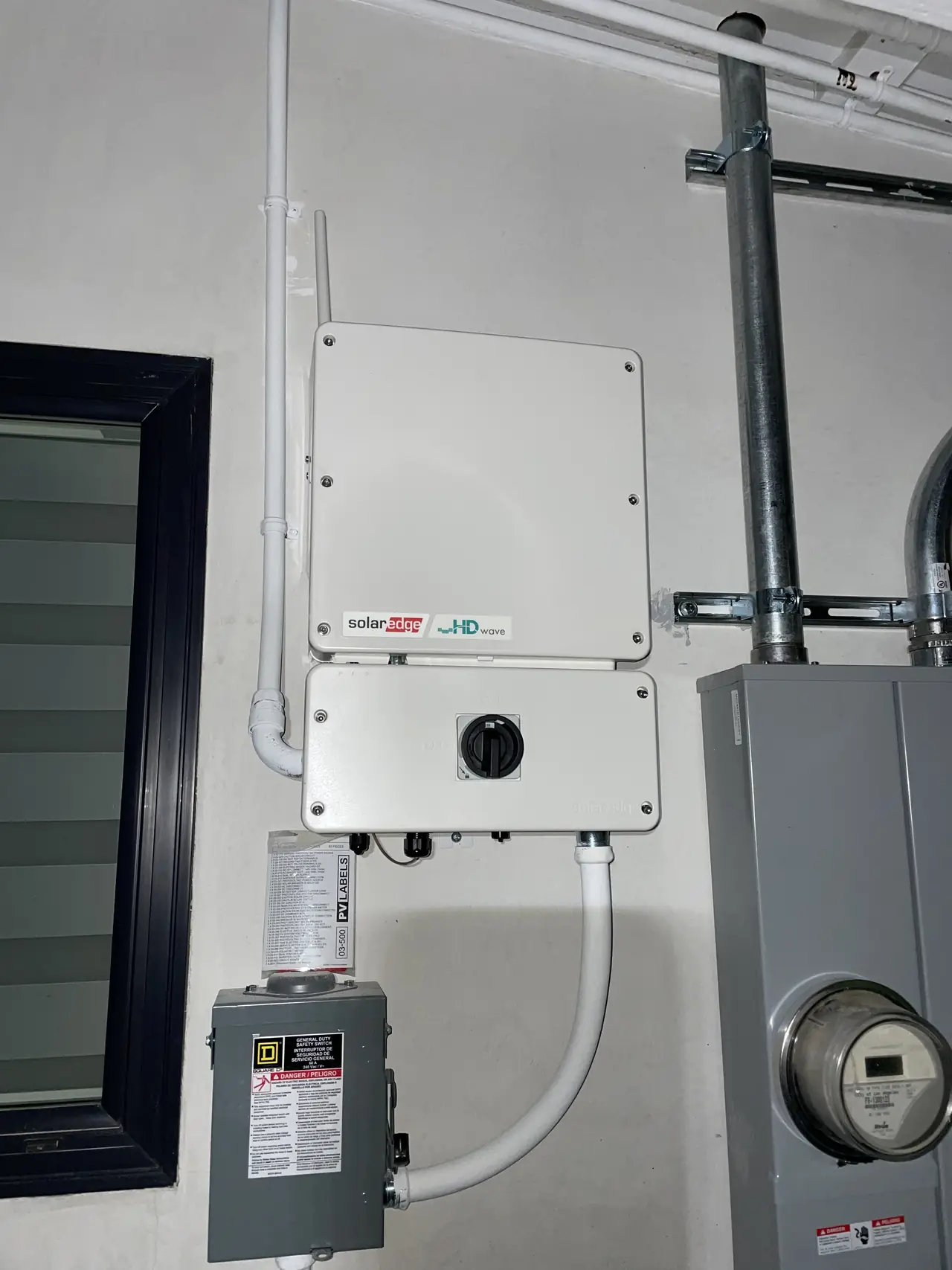
Installation was on the sixth. Twenty-four microinverters, one under each module, and by two o'clock that afternoon the monitoring gateway was reporting all twenty-four as detected, communicating, profiled and producing. That matters more than it sounds: a system that reports on installation day has no commissioning tail, and nothing later has to be scheduled to chase it.
The next day the utility did three things at once. It confirmed the application, waived the pre-construction site visit and granted permission to install — three notices, one date. On a project under twenty kilowatts that review is done from the photographs uploaded with the application, and when the photographs are complete it collapses into a single morning.
Those three notices are not a formality. The first says the application has been received and is under review. The second says the details have been confirmed and an assessment is either scheduled or waived. The fourth says an Electric Service Representative has cleared the site and the system may be built. A project waits on each of them in turn, and a complete photograph package is what lets all three land on the same morning instead of across three separate weeks.
Then the city inspector came for the final.
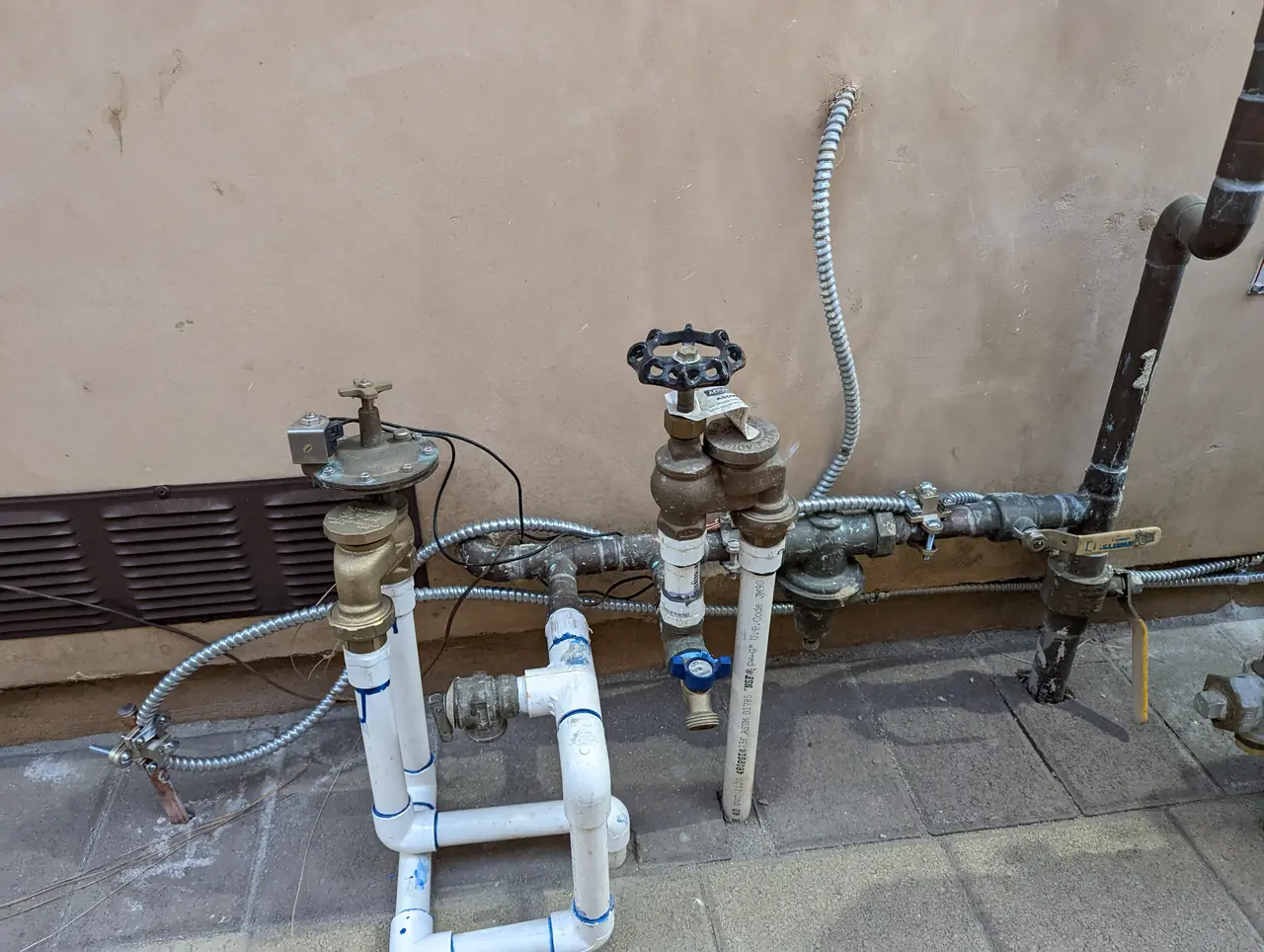
An inspector signs off a photovoltaic system against the electrical code, and the parts of that code an inspector looks at hardest are not about modules or rails at all. They are about grounding and bonding: the continuity of metal that is never meant to carry current, and the path it takes back to the service.
On this house that meant the gas service: flexible conduit and a bonding conductor crimped into place, completed on the thirteenth.
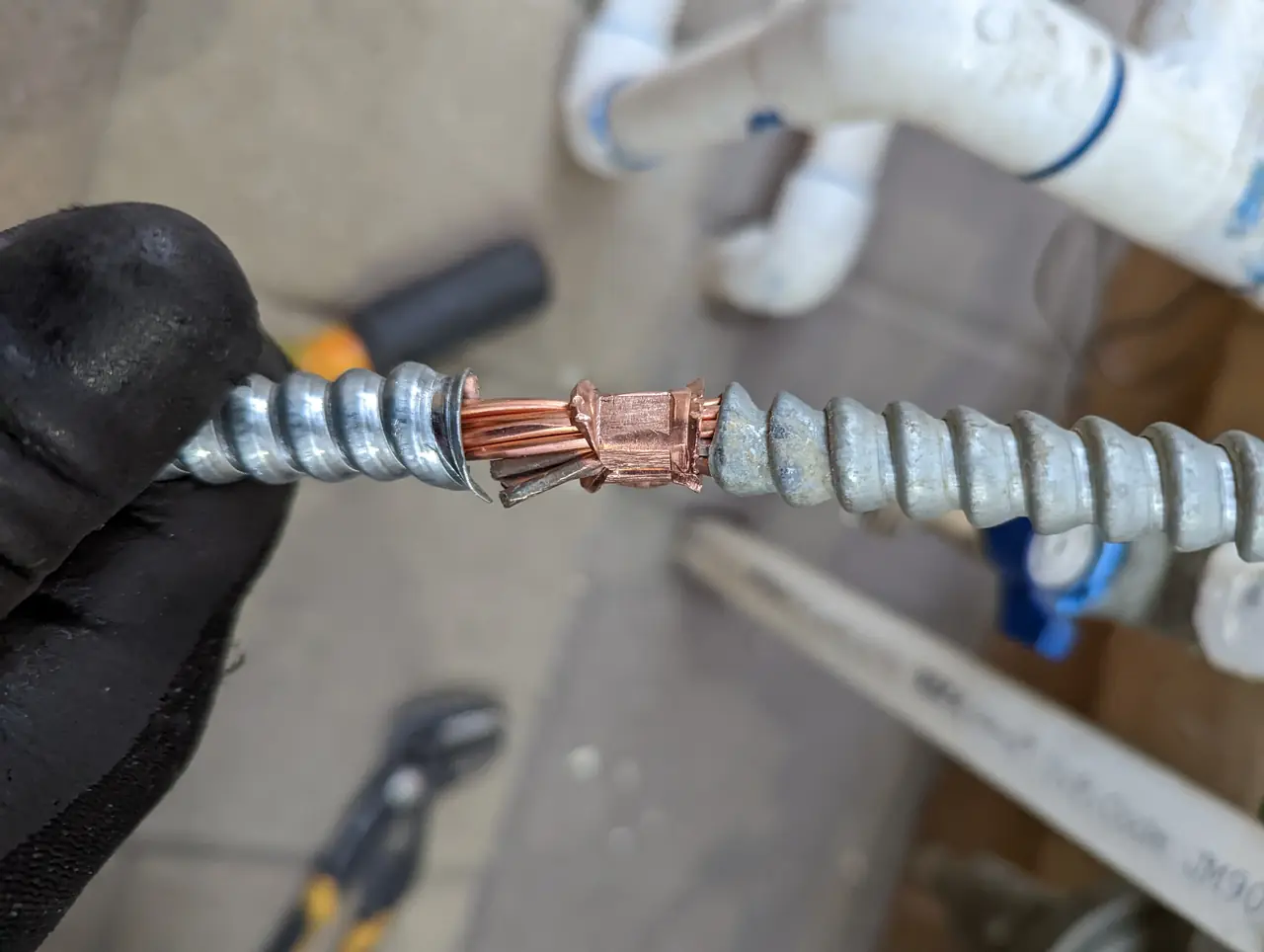
The city's sign-off followed, and on the twentieth the utility approved the installation, which is the notice that releases the meter order. The net meter went on and permission to operate was granted on the sixth of January.
The seventeen days between those two dates are the part nobody controls. A meter order goes into a construction district queue and a crew comes out when it comes out, and this particular queue ran across Christmas and New Year. Seventeen days over the holidays is a good outcome for that step, and it is the one stretch of the calendar where the only useful thing a contractor can do is have everything else already finished.
Thirty-eight days from the proposal to a running system. The reason it was that short is that the utility's review had never been waiting on the city in the first place: those two processes overlap by design, and a project that treats them as a queue instead of two parallel tracks loses weeks it never needed to lose.
If you are comparing installers, ask how they run the city and the utility — in parallel or in a queue. On this Panorama City house the answer was thirty-eight days, and the system has run since permission to operate on 6 January 2022.
How it ran
| 29 November 2021 | Proposal issued |
|---|---|
| 1 December 2021 | Interconnection application filed at 8.9 kW AC-CEC |
| 2 December 2021 | Utility recovery charge paid; the application moves into full review |
| 3 December 2021 | City inspection requested |
| 6 December 2021 | Installation; all twenty-four microinverters reporting by the same afternoon |
| 7 December 2021 | Utility confirms the application, waives the site visit and grants permission to install — three notices in one day |
| 13 December 2021 | Bonding at the gas service completed |
| 14 December 2021 | Final inspection requested |
| 20 December 2021 | Utility approves the installation and releases the meter order |
| 6 January 2022 | Net meter set; permission to operate granted |
Thirty-eight days from proposal to permission to operate, with the city and the utility running in parallel.
What we did
- Filed the interconnection the day after the proposal was accepted and paid the utility's recovery charge the following morning (C-10).
- Installed twenty-four modules and twenty-four microinverters in one day and commissioned the monitoring before leaving the site.
- Carried the interconnection through to the net meter and permission to operate on 6 January 2022.
System specifications
| System size | 8.9 kW AC-CEC as recorded by the utility |
|---|---|
| Array | 24 modules |
| Inverters | 24 Enphase microinverters, one per module |
| Combiner | Enphase IQ Combiner 3 ES |
| Service equipment | Existing 200 A combination meter and main, 22,000 A short-circuit rating, overhead service |
| Service work | None; the existing equipment was retained |
| Monitoring | Reporting from the afternoon of installation day |
| Battery | None |
| Utility / AHJ | LADWP / LADBS |
Is your project like this one?
- Your solar final came back with a correction and nobody has told you what happens next.
- Your contractor says the utility is waiting on the city, or the other way around.
- Your house already has a combination meter and main and you have been quoted a panel upgrade anyway.
- You want to know what grounding and bonding actually means on a solar permit.
- Your Panorama City property is served by LADWP, while permits are handled by LADBS.
Cali Energy in Panorama City
Panorama City is inside City of Los Angeles boundaries: permits run through LADBS, interconnection through LADWP.
Every solar project in this neighborhood answers to two counters that do not talk to each other on the homeowner's behalf: the building department for the permit and its inspection, the utility for the meter. A correction written by one of them does not pause the other, which is why the order in which they are cleared decides the calendar more often than the roof does.
This installation is on the Panorama City projects page alongside the others.
- License and classifications: CSLB #1032379
- Official reference for this process: LADBS — inspections
- Official reference for this process: NFPA 70, National Electrical Code — Article 250, grounding and bonding
Frequently asked questions
Is a correction on a solar final inspection a bad sign?
No. It is a normal step. The inspector lists what has to change, the contractor does it and asks for a re-inspection, and most permits close on the second visit. A correction becomes a problem only when nobody returns to clear it, which is why the question to ask a contractor is how quickly they get back, not whether they ever collect corrections.
What gets corrected most often on a residential solar final?
Grounding and bonding, by a wide margin. Modules and racking are visible and easy to build correctly; the continuity of metal that is never meant to carry current is easier to miss and quicker to check. It is also cheap to fix once identified, which is why these corrections usually cost days rather than weeks.
Does the utility wait for the city to finish?
Not for its own review. The interconnection review and the building department's inspection run in parallel, and the utility only needs the city's electronic release at the end, before it will set the meter. A project that treats the two as a single queue adds weeks to itself for no reason.
Can a solar project skip the main panel upgrade?
Often, yes. If the existing service equipment can accept the solar breaker within what the code allows to be fed into a busbar, nothing has to be replaced. Here the house had a two hundred amp combination meter and main already, the utility classified the job as a meter change, and no service work was done at all.
Does Cali Energy work in Panorama City?
Yes. On this Panorama City project Cali Energy filed the interconnection, installed twenty-four modules in a day, ran the city inspection and the utility review in parallel, and carried the job through to permission to operate thirty-eight days after the proposal. California contractor license number 1032379.
What this would look like on your roof
Planning solar in Panorama City? Tell us your utility, your roof and what your bill looks like now, and we will model what a system like this would do on your house before you commit to anything.
Or call +1 (323) 844-7777 · Cali Energy, Northridge · CSLB #1032379 (B, C-10, C-39) — design, permits, install and electrical under one licensed contractor.
Related
This timeline reflects this property and this permitting path. Updated September 2026.