

Reseda, CA · July 2024 – June 2025 · LADWP / LADBS
The array was done in two days. The sign-off took six months.
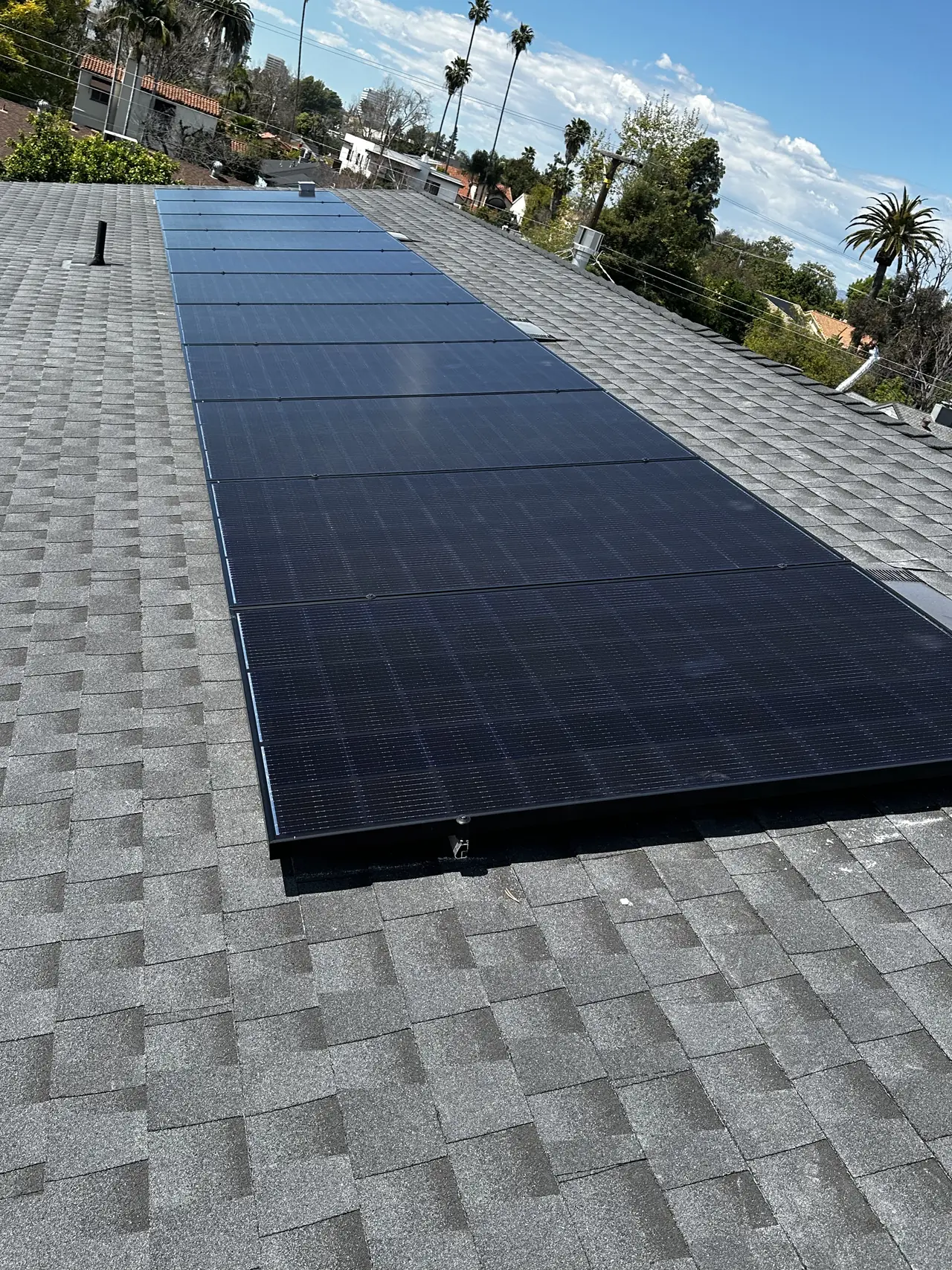
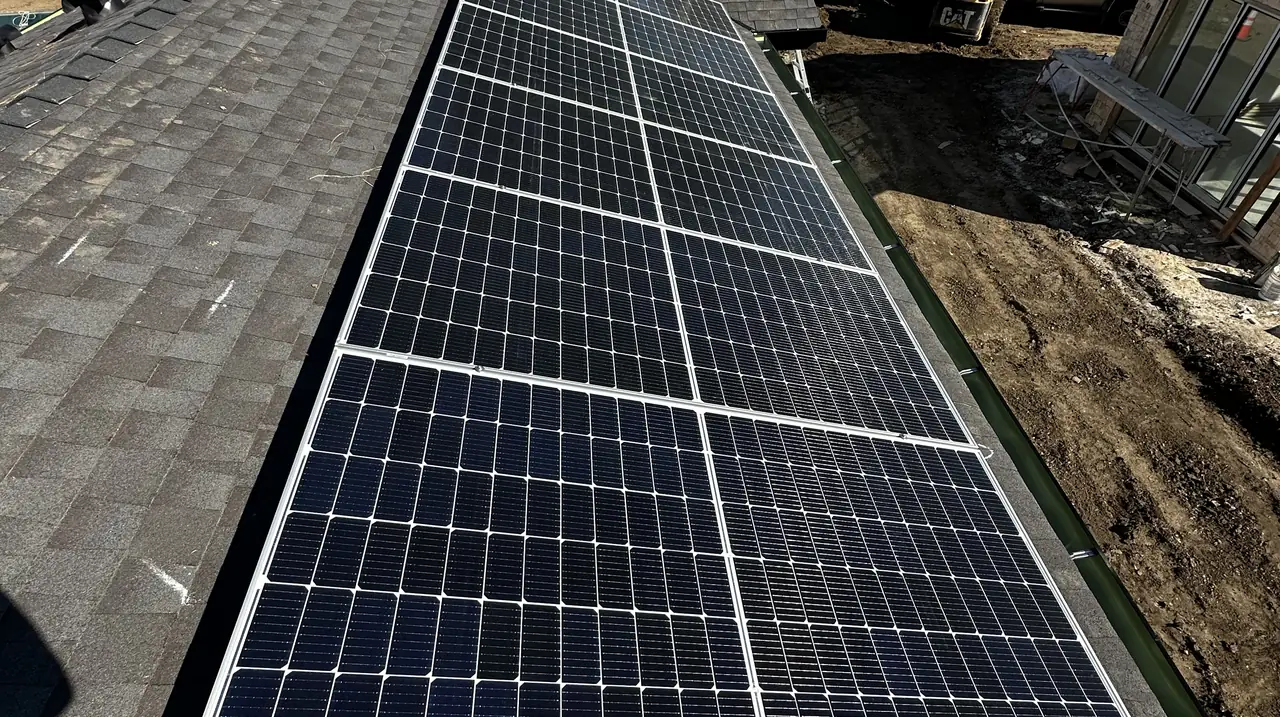
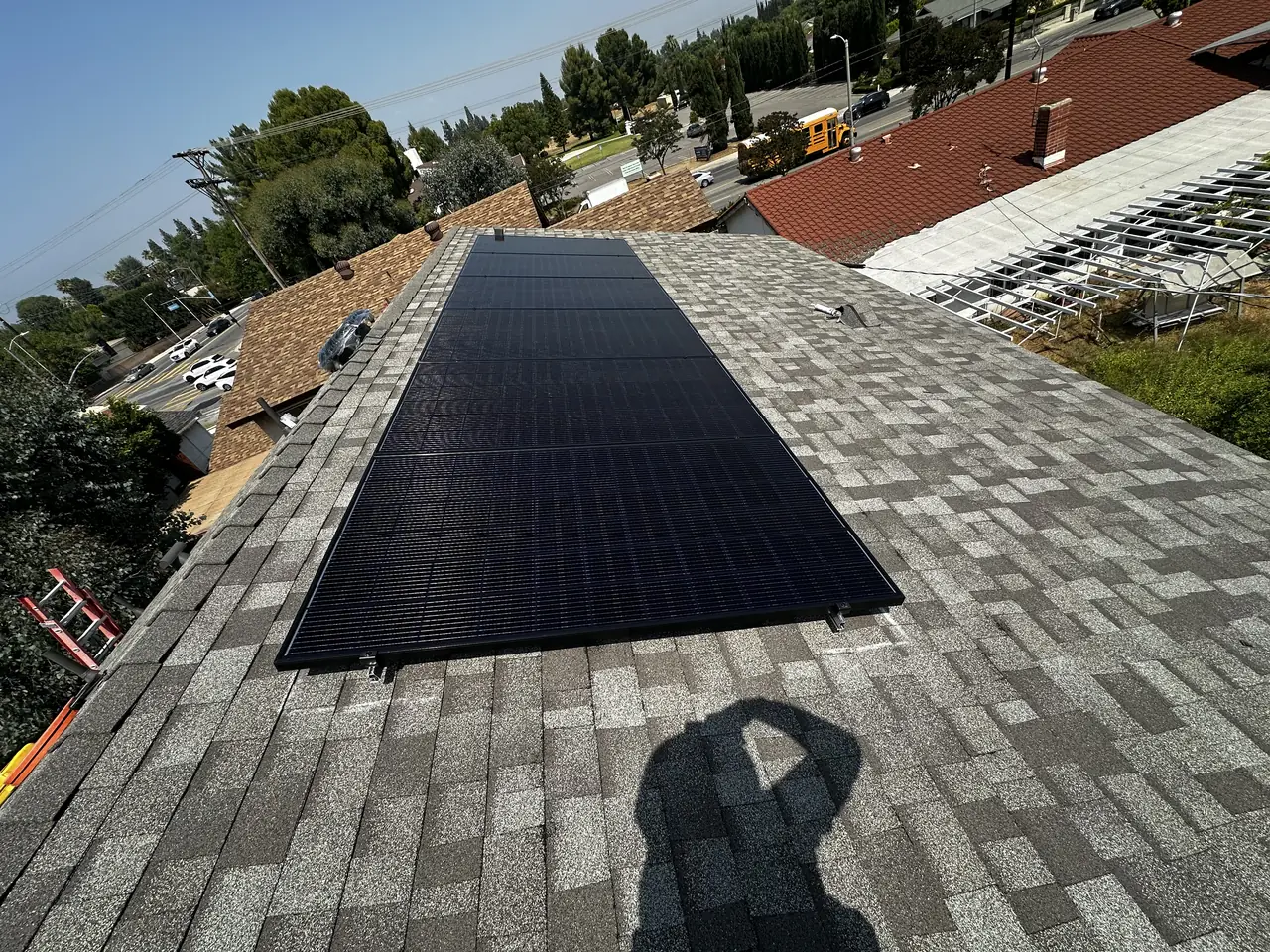
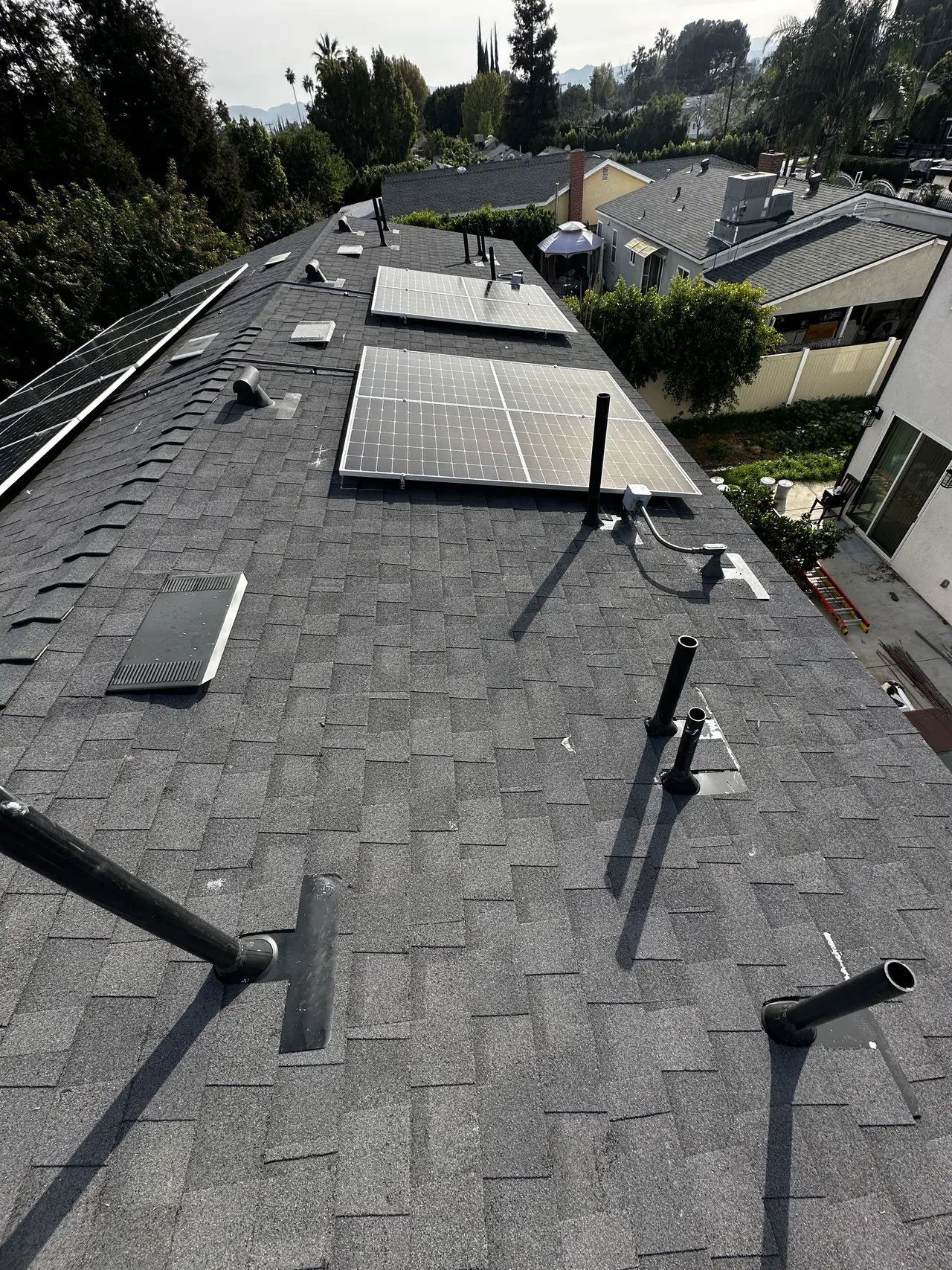
A brand-new four-bedroom second dwelling on a Reseda lot, built under California's SB9 two-unit law. Seven module positions, 2.78 kilowatts AC-CEC, no battery — the size the energy code asks for, not the size the household uses. The array was installed in late November and switched on the following June.
On new construction the solar permit is a passenger. It cannot be finaled ahead of the building permit it sits on, and the utility's clock does not start at installation — it starts when the building department posts a valid final release. Cali Energy installed this array in two days and it passed its own re-inspection inside five weeks, then waited on the house, which was itself waiting on a city clearance. File the interconnection application early so the utility queue overlaps the building delay instead of following it.
At a glance
- Recorded by the utility
- 2.78 kW AC-CEC
- Modules
- Q CELLS 405 W, seven positions
- Inverters
- Enphase microinverters with an IQ Combiner
- Dwelling
- New four-bedroom second home under SB9, about 1,900 sq ft
- Roof
- Composition shingle, new; flashed attachments
- Service
- Overhead, meter only — no panel upgrade
- Battery
- None
- Utility / AHJ
- LADWP / LADBS
The story
The lot already had a house on it. State law now lets an owner put a second one behind it, and that is what this is: a new four-bedroom dwelling of about nineteen hundred square feet, permitted as a two-unit development. Like every new dwelling in California it arrives with a solar requirement already written into its plan set.
That first point is worth dwelling on, because it changes what a correct design looks like. On a retrofit you size the array against a year of bills. On new construction you size it against the energy model in the plans, and the right answer is the smallest system that satisfies the model. Here that came to seven module positions and 2.78 kilowatts AC-CEC. A four-bedroom house will use more than that array makes, and it is still the compliant and correct system. If the owner wants to cover the whole load, that is a second conversation and a larger array, and it should be had before the roof is closed up rather than after.
The installation itself was ordinary. Material landed on site at quarter to nine in the morning, the array went on composition shingle over two days, and it was ready for inspection within a week. A section of roof needed repair once the array was up: we had it put right and credited the cost against the final bill the same day it was raised.
Then the project stopped, for six months, for reasons that had nothing to do with the solar.
The city's solar final in late December came back as a correction. The re-inspection passed nine days later — and the permit still showed only partial approval, because the inspector would not finalize the solar on a building that was not itself finaled. That is the rule to take away: a photovoltaic permit on new construction rides on the structure beneath it. There is no sequence in which the array signs off first.
The house, meanwhile, was held behind a parks and recreation clearance. It released in early March. The building final followed two days later. The building department posted its valid final release to the utility in the middle of March, and only at that point did the utility's own queue begin: application review, field assessment, final review, meter request. The net meter was set and permission to operate granted in the middle of June 2025.
Count it from the installer's side and the array took two days. Count it from the owner's side and it was seven months from panels on the roof to a system making power. Not one day of that was solar work. The practical response is not to hurry the install — it is to file the interconnection application early, so the utility's review runs alongside the building delay rather than starting after it.
One last step surprised everybody. The system had permission to operate and still could not be commissioned, because the unit was tenant-occupied and bringing the monitoring online needed the household's wireless network. That took another two weeks of relay through the owner's office before a technician got it connected in early July. On a rented second unit, plan the commissioning visit with the occupants the way you would plan the inspection.
How it ran
| July 2024 | Plan set received for a new SB9 second dwelling with its energy-code solar requirement |
|---|---|
| 22 October 2024 | Contract issued |
| 15 November 2024 | Site inspected; layout revised against as-built conditions |
| 27 November 2024 | Material delivered in the morning; installation begins |
| 2 December 2024 | System complete and ready for inspection |
| 20 December 2024 | Solar final returned as a correction |
| 30 December 2024 | Re-inspection passed; permit held at partial approval pending the building final |
| 5 March 2025 | City clearance released for the building permit |
| 7 March 2025 | Building final passed |
| 18 March 2025 | Valid final release posted to the utility |
| 13 June 2025 | Net meter set; permission to operate |
| 2 July 2025 | Monitoring commissioned once network access was arranged with the occupants |
This timeline reflects this property and this permitting path: a solar permit on new construction, which cannot be finaled ahead of the building it sits on.
What we did
- Sized the array to the energy model in the plan set rather than to the household's expected consumption, which is what new construction requires.
- Installed seven positions on the new shingle roof on flashed attachments, with an Enphase microinverter under each module landing in an IQ Combiner (C-10).
- Paid for the roof repair caused during installation by deducting it from the final invoice the day it was raised.
- Carried the solar permit through a correction and a passed re-inspection inside ten days.
- Arranged commissioning with the occupants once the unit was tenanted.
System specifications
| Recorded by the utility | 2.78 kW AC-CEC |
|---|---|
| Modules | Q CELLS 405 W, seven positions |
| Inverters | Enphase microinverters, one per module |
| Combiner | Enphase IQ Combiner |
| Dwelling | New four-bedroom second home under SB9, about 1,900 sq ft |
| Roof | Composition shingle, new construction |
| Attachments | Rail on flashed shingle attachments |
| Service | Overhead, meter only — no service upgrade |
| Battery | None |
| Utility / AHJ | LADWP / LADBS |
Is your project like this one?
- You are building a second dwelling on your lot under state two-unit law.
- Your plan set shows a solar system you did not ask for and you want to know why.
- Your array is finished but the city will not sign it off.
- You expected a new house's solar to cover the whole electricity bill.
- Your Reseda property is served by LADWP, while permits are handled by LADBS.
Cali Energy in Reseda
Reseda is inside City of Los Angeles boundaries: permits run through LADBS, interconnection through LADWP.
Reseda is a neighborhood in the west San Fernando Valley, inside the City of Los Angeles. Its deep single-family lots are well suited to the second dwelling that state law now allows, and every one of those new homes falls under the California energy code's solar requirement.
This installation is on the Reseda projects page alongside the others, and what the work covers is set out on the Reseda service area page.
- License and classifications: CSLB #1032379
- Official reference for this process: Los Angeles City Planning — SB 9 two-unit developments
- Official reference for this process: California Energy Commission — 2022 Building Energy Efficiency Standards (Title 24, Part 6)
Frequently asked questions
Why is the array smaller than the house needs?
Because on new construction the size comes from the energy model in the plan set, not from a consumption estimate. California's building energy standards set a required photovoltaic system for each new dwelling, and the compliant design is the smallest one that satisfies it. Here that was seven positions and 2.78 kilowatts AC-CEC on a four-bedroom house, which will not cover the full load and is not supposed to.
Can the solar permit be finaled before the house?
No, and this project is the clean illustration. The solar re-inspection passed at the end of December and the permit still sat at partial approval, because the inspector will not finalize a photovoltaic permit on a building that has not itself been finaled. The array is an accessory to the structure. Plan for the two sign-offs in that order.
When does the utility's clock actually start?
When the building department posts a valid final release, not when the panels go on the roof. Here the array was complete in early December and the release reached the utility in the middle of March, once the house cleared its own hold. Everything the utility does — application review, field assessment, meter order — happens after that. Filing the interconnection application early is what lets those two queues overlap.
What should a builder do differently?
File the interconnection application as soon as the design is settled rather than waiting for the building to finish, and book the solar final to ride with the building final rather than ahead of it. If the unit will be tenanted, also plan the commissioning visit with the occupants: monitoring needs access to the household network, and that step has stopped more than one finished system from reporting.
Does Cali Energy work on new construction in Reseda?
Yes, including lot splits and second dwellings permitted under SB 9. The difference from a retrofit is sequencing rather than hardware. The array can go on as soon as the roof is finished, but its permit does not final until the building permit does, and the utility will not start until the building department posts its release. Cali Energy plans these around the builder's inspection calendar and keeps the interconnection paperwork ready to file the day that release lands.
What this would look like on your roof
Planning solar in Reseda? Tell us your utility, your roof and what your bill looks like now, and we will model what a system like this would do on your house before you commit to anything.
Or call +1 (323) 844-7777 · Cali Energy, Northridge · CSLB #1032379 (B, C-10, C-39) — design, permits, install and electrical under one licensed contractor.
Related
This timeline reflects this property and this permitting path. Updated September 2026.