

Granada Hills, CA · November – December 2025 · LADWP / LADBS
The inspector wanted three feet.
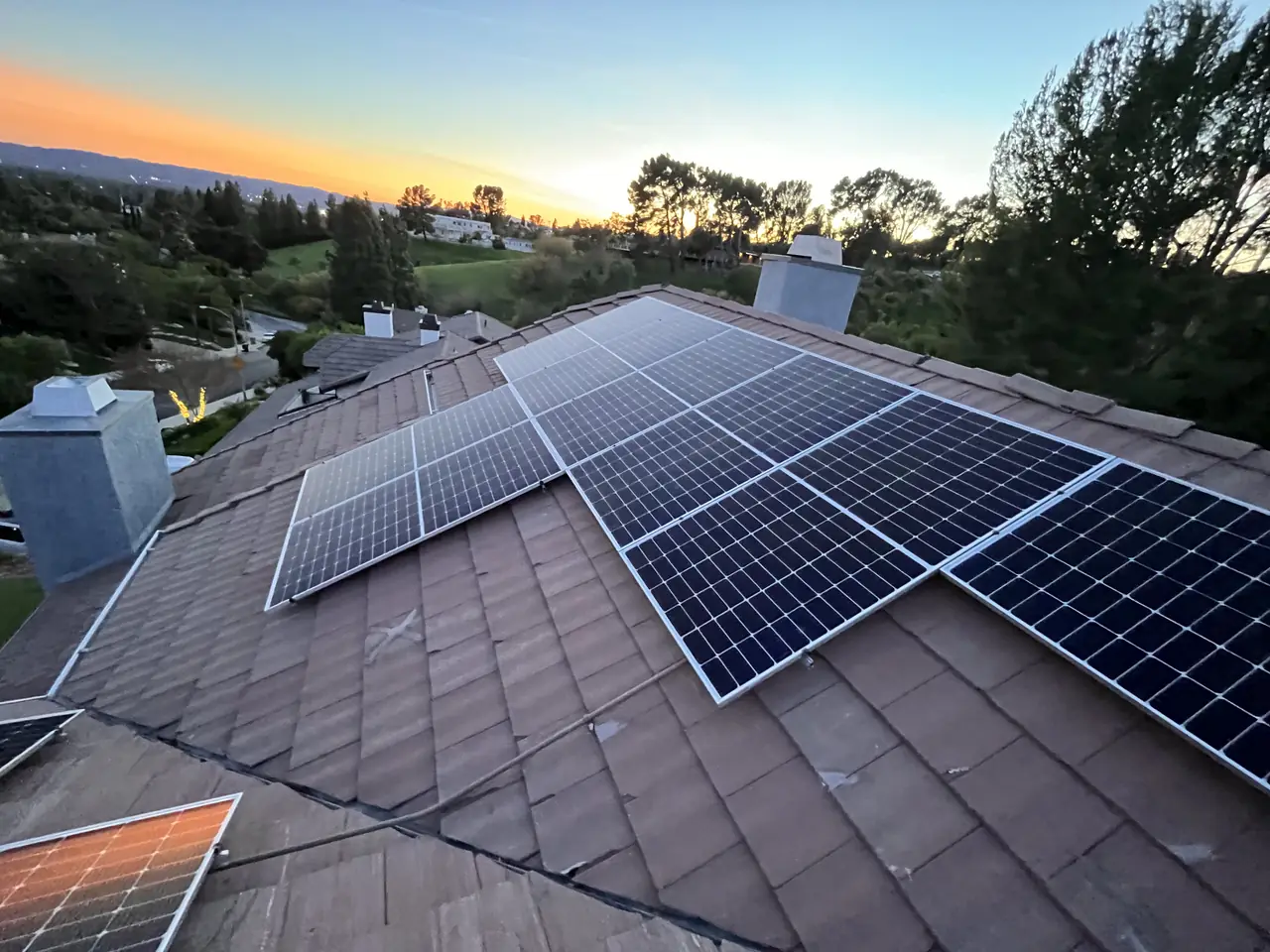
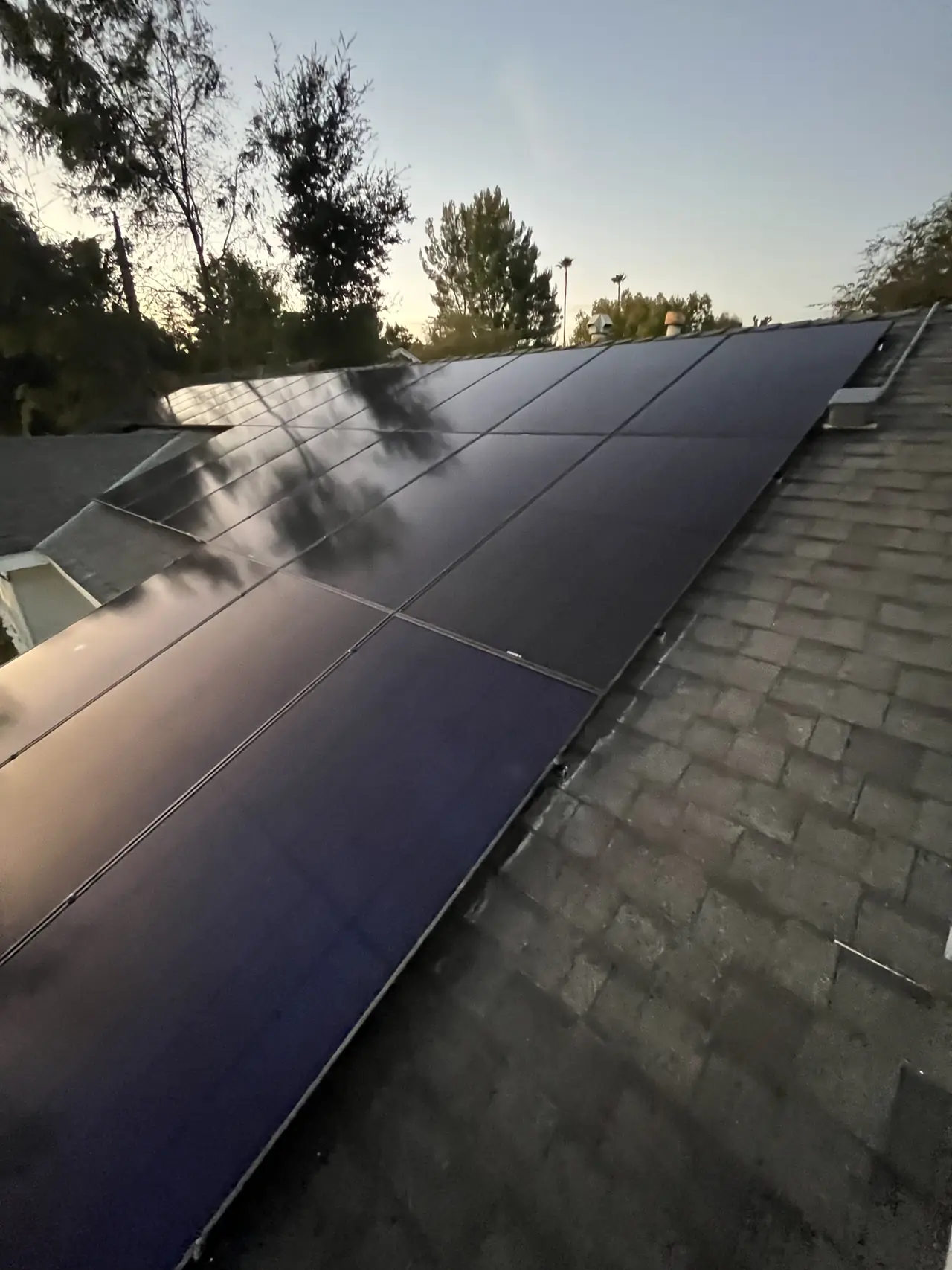
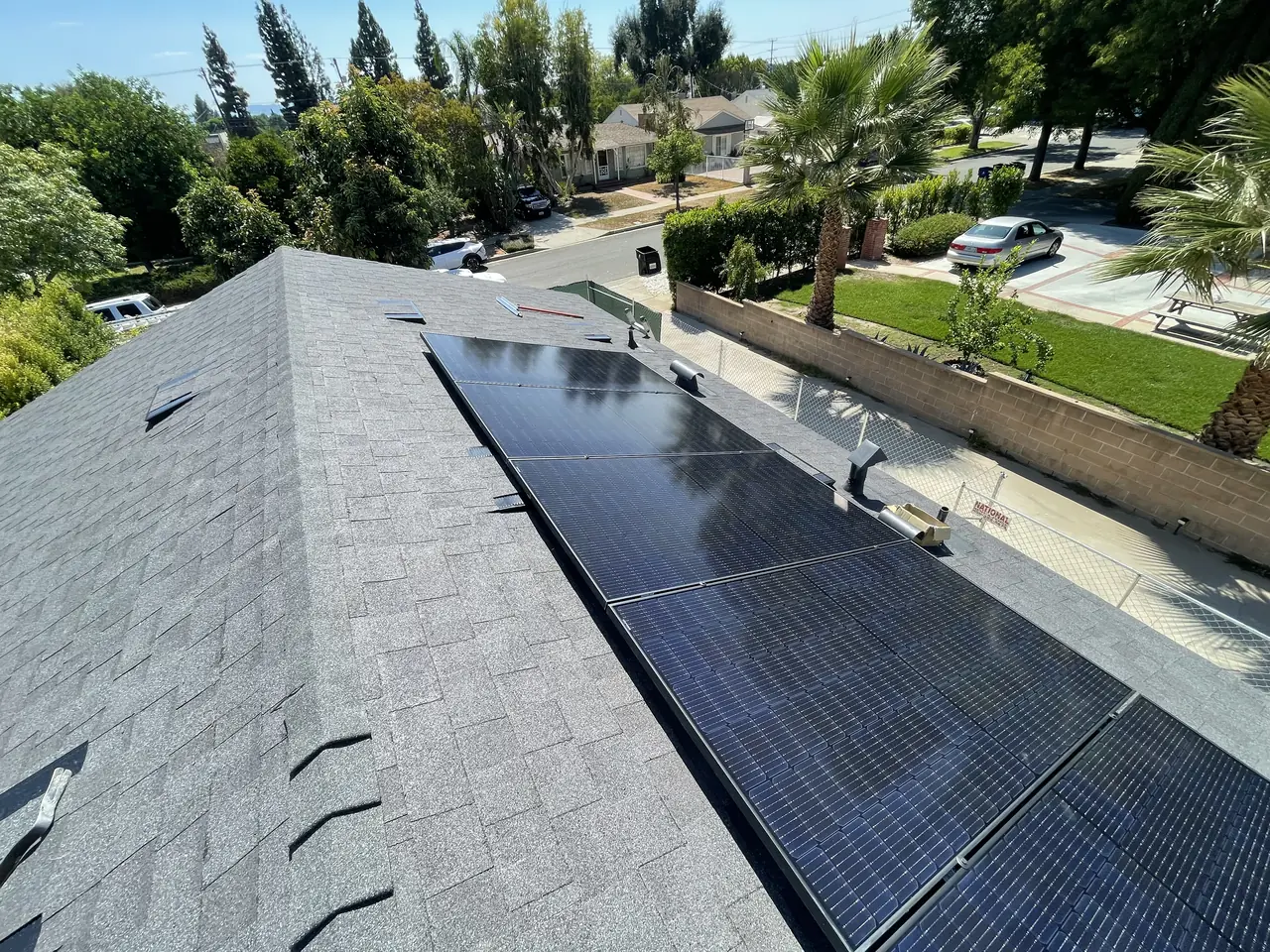
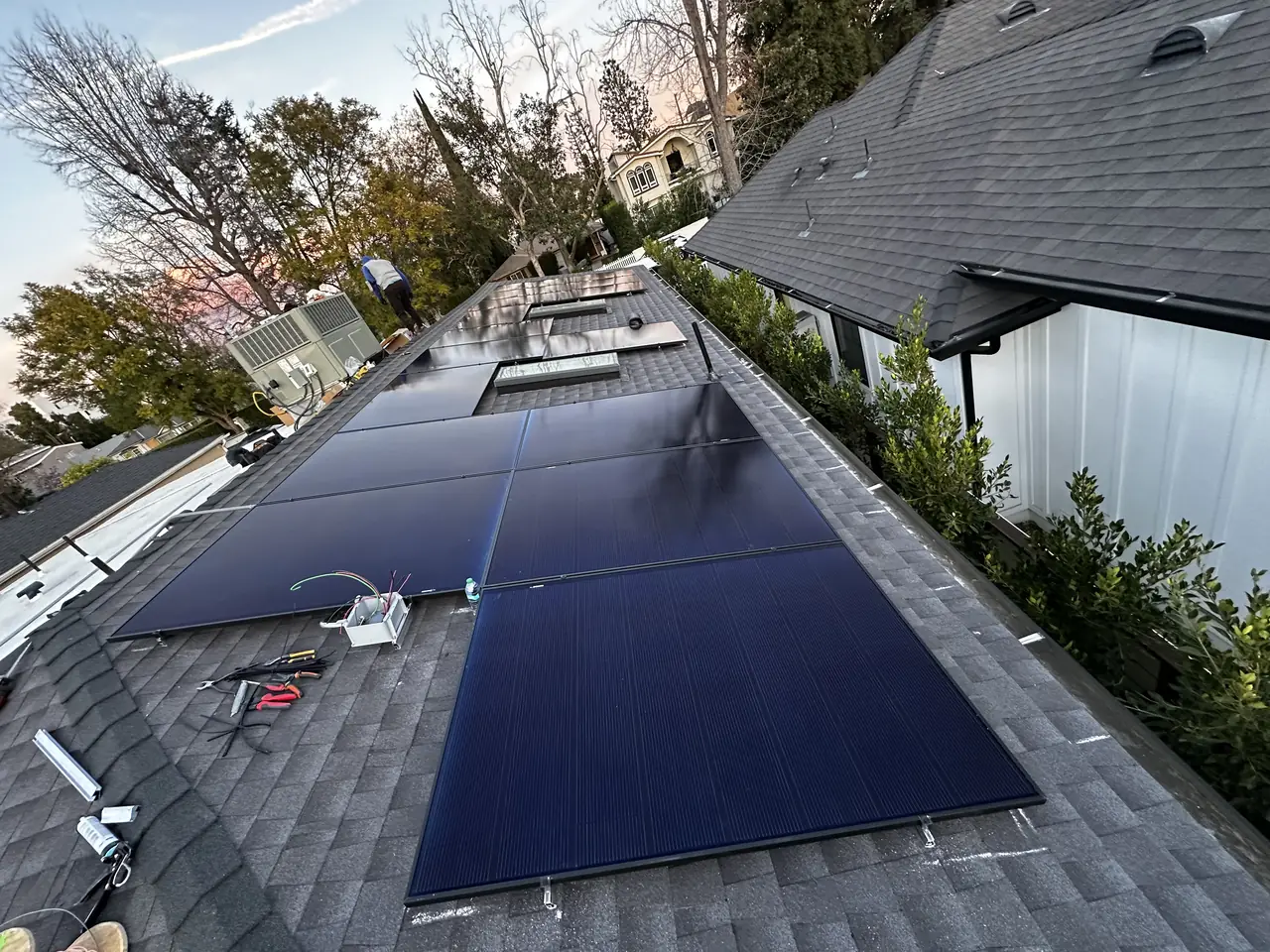
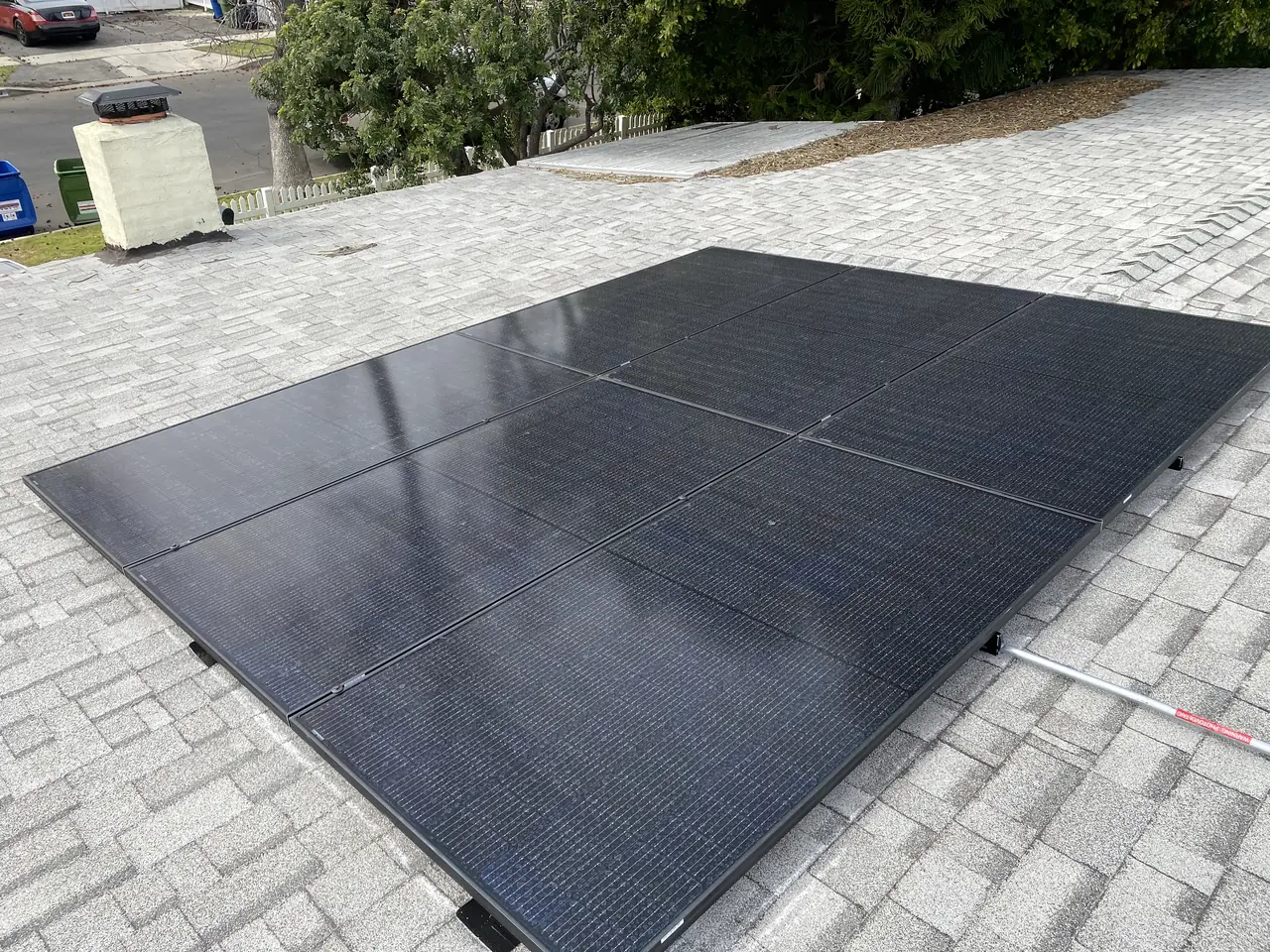
Thirty-one modules went on in a day. Then one group sat closer to the ridge than the inspector would accept, and moving three of them closed it.
A correction at final inspection is usually not a defect in the work. It is a disagreement about a dimension, and there are exactly two ways to close it: get the authority that owns the rule to accept what is built, or change what is built. The first is cheaper when the answer arrives. On this project it did not arrive, so after a week of writing to the fire department we moved three modules instead. The final passed ten days later.
At a glance
- Modules
- 31 × 445 W
- Inverter
- String inverter
- Main breaker
- De-rated to 175 A
- Permits
- Two — solar and the de-rate
- Installed
- 1 December 2025
- First final
- 10 December 2025 — correction
- Final passed
- 29 December 2025
- Utility / AHJ
- LADWP / LADBS
The story
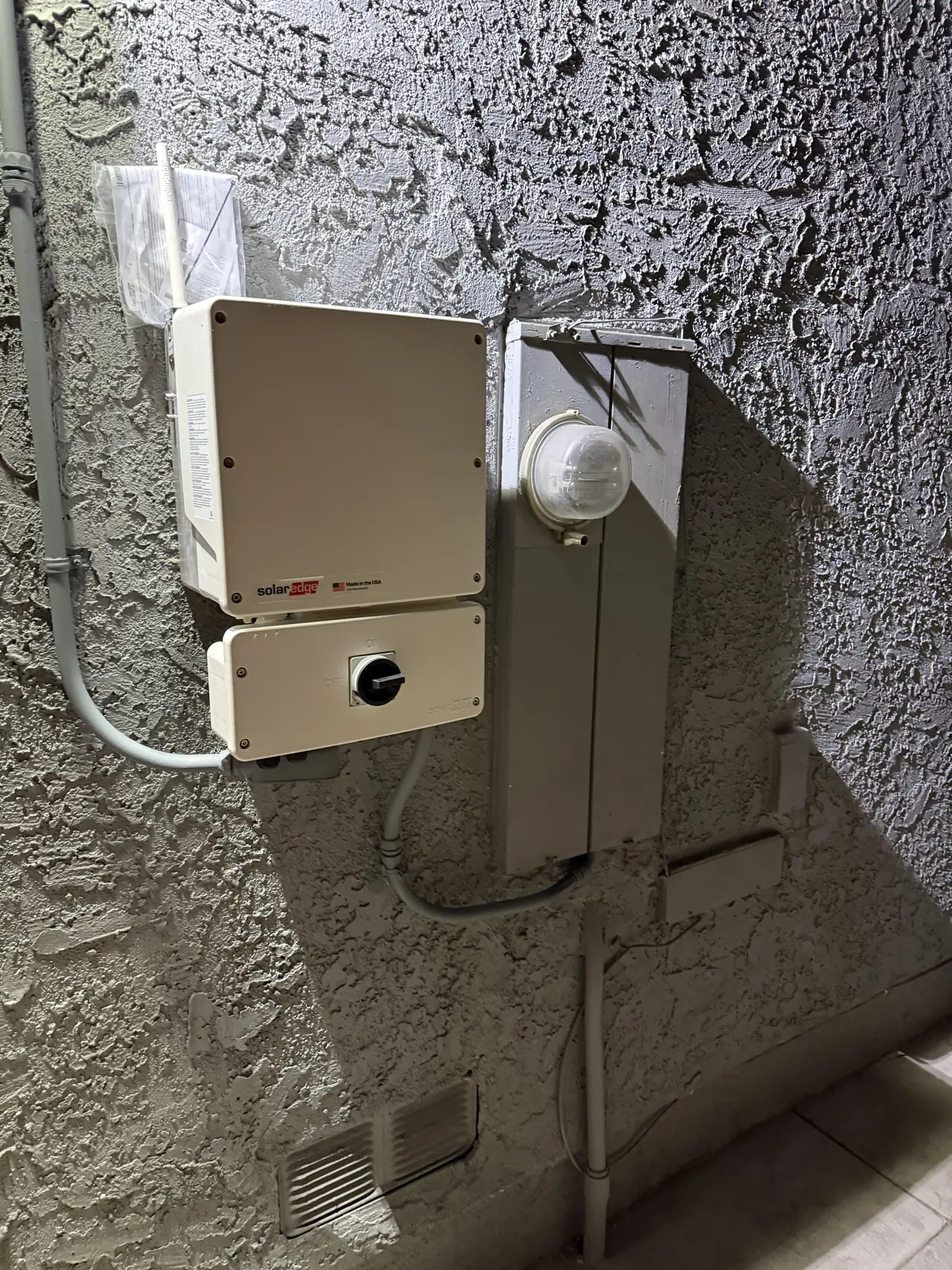
The installation was a day. Thirty-one modules at 445 watts on a string inverter, the main breaker de-rated to 175 amps so the array could back-feed the panel, two permits, one roof. Then the project spent nineteen days on a dimension.
On the tenth of December the final inspection came back as a correction. Not a defect in the wiring, not a mounting problem: a clearance. The inspector wanted three feet at one of the arrays, and what was on the roof did not have it.
Every correction of that kind puts you at the same fork. You can ask the body that owns the rule to accept what is built, or you can change what is built. On a fire-access clearance the body is the fire department. A sign-off from them and the array stays exactly where it is; no sign-off and modules move. Both routes are legitimate. They cost very different things, and not in the way people expect.
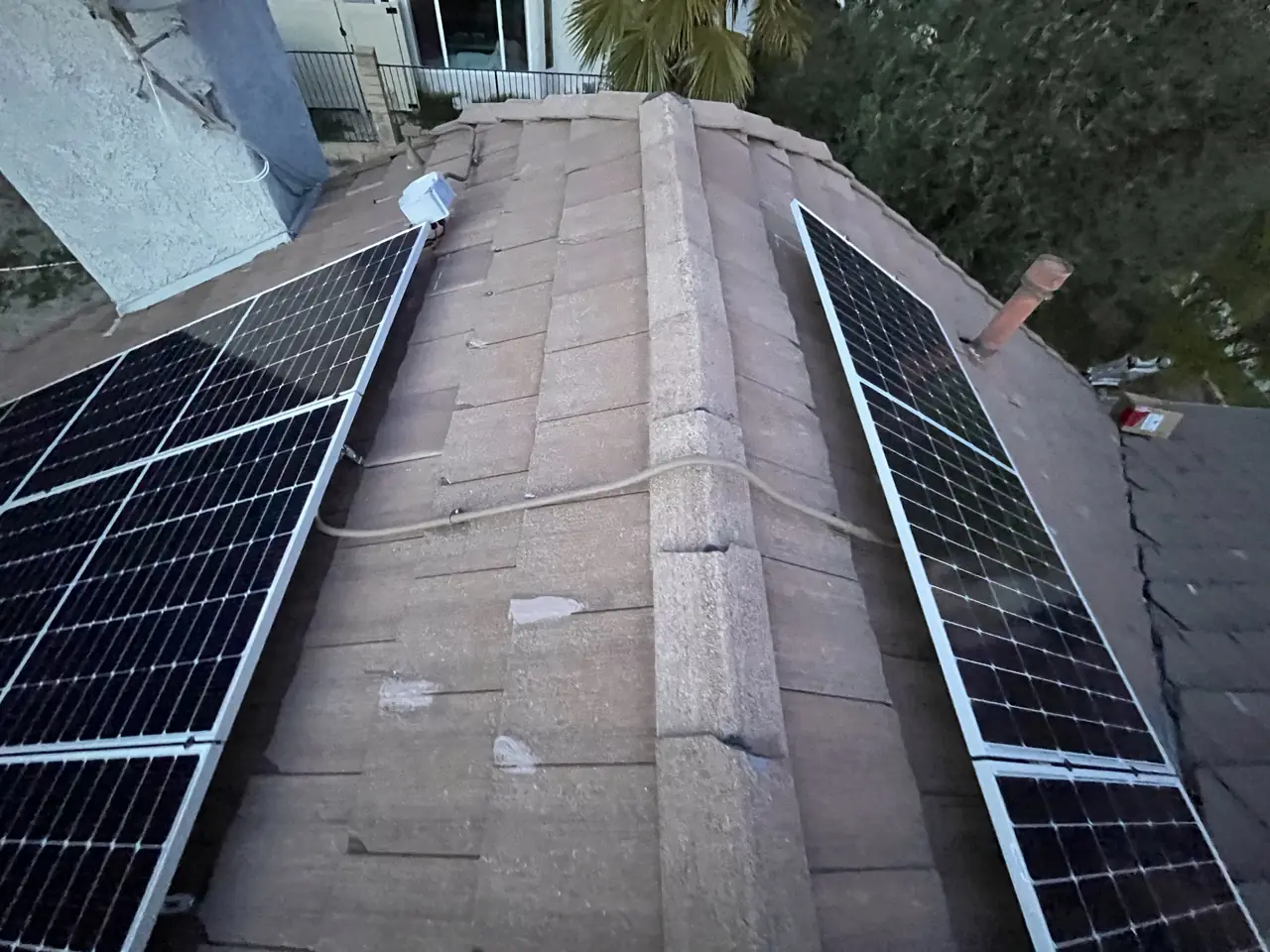
We put the question to the fire department first, because a sign-off there would have left the array where it was.
The thing to understand before you are standing in it is that the appeal route has no clock you control. A correction stays open for as long as it stays open, the permit behind it carries its own expiry, and the owner has a finished system on the roof that is not allowed to run.
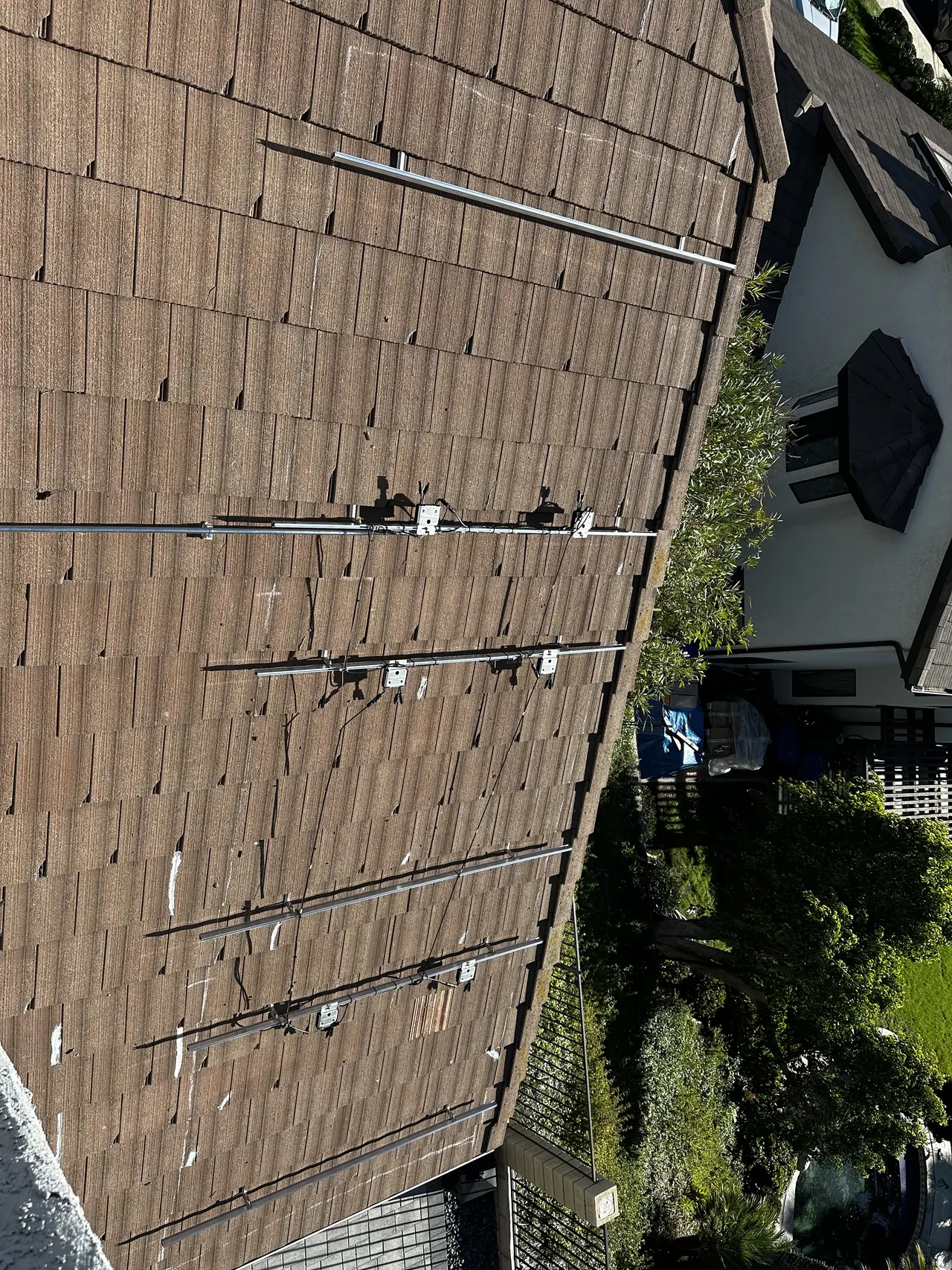
So on the seventeenth of December we moved three modules instead.
Two days later the array matched the clearance. We photographed it and sent the photograph to the inspector, who had already said he would release the permit remotely on the strength of one rather than make a second visit.
Then the weather. The city canceled the inspection booked for Christmas Eve and put it on the twenty-sixth. The final passed on the twenty-ninth of December.
What to take from it: when a correction hands you the appeal-or-rebuild fork, the question to ask is not whether you are right. It is whether the body you would be appealing to answers its mail, and how long that answer takes. Moving three modules is half a day of work you can book. A silent inbox has no upper bound.
The smaller lesson is about the camera. Photograph the work as it goes and ask the inspector, plainly, whether a photograph will do instead of a second visit. On this project it would, which is why the last step was a photograph rather than another appointment in a queue that had already lost a day to rain.
The final passed on the twenty-ninth of December, the interconnection followed, permission to operate was granted and the array has been running since. Cali Energy moved three modules rather than argue about them, which is why this Granada Hills project closed in December instead of in the spring. The service work on the same house is on de-rating the main breaker.
How it ran
| 4 November 2025 | Roof plan and module data sheet issued — 31 modules at 445 W on a string inverter |
|---|---|
| 1 December 2025 | Array installed |
| 5 December 2025 | Main breaker de-rate scoped; a separate electrical permit opened for it |
| 8 December 2025 | Both finals requested for the same date |
| 10 December 2025 | Final inspection returns a correction — three-foot clearance at one array |
| 12–17 December 2025 | Clearance question put to the fire department |
| 17 December 2025 | Decision to move the modules rather than wait on a sign-off |
| 19 December 2025 | Three modules moved; photograph sent to the inspector |
| 24 December 2025 | City cancels the booked inspection for weather |
| 29 December 2025 | Final passed |
Nineteen days from the correction to the pass, and the fix itself was half a day.
What we did
- Installed thirty-one modules and de-rated the main breaker to 175 amps.
- Opened a separate electrical permit for the de-rate and requested both finals for one date.
- Put the clearance question to the fire department in writing the day the correction came back.
- Moved three modules rather than let a finished system wait on a sign-off.
- Documented the change with photographs and closed the final without a second visit.
System specifications
| Modules | 31 × 445 W |
|---|---|
| Inverter | String inverter |
| Service | Main breaker de-rated to 175 A |
| Permits | Solar, plus a separate electrical permit for the de-rate |
| Correction | Three-foot clearance at one array |
| Resolution | Three modules relocated |
| Release | Remote, on a photograph |
| Utility / AHJ | LADWP / LADBS |
Is your project like this one?
- Your final came back with a correction and nobody has told you what the options are.
- You have been told an array needs a fire-access clearance and want to know who decides.
- Your permit is open, the system is on the roof, and nothing is moving.
- You are choosing between a contractor who will argue with the city and one who will fix it.
- You want to know what actually happens between installation and a passed final.
Cali Energy in Granada Hills
Granada Hills sits inside City of Los Angeles boundaries, so every project here is permitted through LADBS and interconnected through LADWP. Our work in Granada Hills runs from single-row arrays on accessory dwelling units to systems on underground services, on composition shingle and on concrete tile.
Every array in Granada Hills is inspected by the City of Los Angeles, and the fire-access clearances around the modules are part of that inspection. They are dimensions on a drawing until somebody stands on the roof with a tape.
This installation is on the Granada Hills projects page alongside the others, and what the work covers is set out on the Granada Hills service area page.
- License and classifications: CSLB #1032379
- Official reference for this process: LAFD Fire Prevention Bureau Requirement 96 — Solar Photovoltaic Systems
Frequently asked questions
What is a correction at a final inspection?
A written note from the inspector saying what has to change before the permit can be signed off. It is not a rejection of the work and it does not void anything. It leaves the permit open until the item is closed, either by changing the installation or by producing an approval for what is there.
Who decides the fire-access clearance around solar modules?
The fire authority. In the City of Los Angeles that is LAFD, whose requirement for photovoltaic systems sets the access pathways and clearances, and the building inspector checks against it on site. If you want to keep an array that does not meet the dimension, the sign-off has to come from the fire authority rather than from the inspector.
Should I appeal a correction or change the installation?
Ask how long the appeal will take before you ask whether you would win it. An approval keeps the array where it is and costs nothing but time; the problem is that the time is not yours to schedule. Here the appeal went unanswered for a week and moving three modules took half a day, so the slower-looking option was the faster one.
Can an inspector close a permit from a photograph?
Sometimes, for a small documented correction, and it is worth asking rather than assuming. On this project the inspector said he would release remotely once he saw the modules in their new position, which saved a second appointment in a queue that had already lost a day to rain.
Does moving modules after installation cause problems?
Not if it is done properly. The attachments come out, the holes are flashed into the covering rather than sealed over, and the modules go back on new mounts. What it costs is labor and a set of new flashings — which is why it is worth getting the layout right against the clearances before anything is bolted down.
Does Cali Energy install solar in Granada Hills?
Yes. Granada Hills is one of the Los Angeles neighborhoods we work in regularly, permitting through LADBS and interconnecting through LADWP. This project is a fair example of what that involves: a straightforward installation, a correction on the fire-access clearance at the final, and a decision about whether to appeal it or move the modules. We moved them. The permit closed two weeks later on a photograph.
What this would look like on your roof
Planning solar in Granada Hills? Tell us your utility, your roof and what your bill looks like now, and we will model what a system like this would do on your house before you commit to anything.
Or call +1 (323) 844-7777 · Cali Energy, Northridge · CSLB #1032379 (B, C-10, C-39) — design, permits, install and electrical under one licensed contractor.
Related
This timeline reflects this property and this permitting path. Updated September 2026.