

The battery incentive your installer may not file for you.
California's Self-Generation Incentive Program can cover a meaningful share of a home battery's cost. The build itself is quick — on this Agoura Hills project the roof was replaced and signed off six weeks after the first site visit. The incentive application is the long part: wet-ink signatures, an inspection run by the administering utility, and a program clock measured in seasons. Not every installer handles that filing. We did, and carried it through to inspection.
Get a free estimate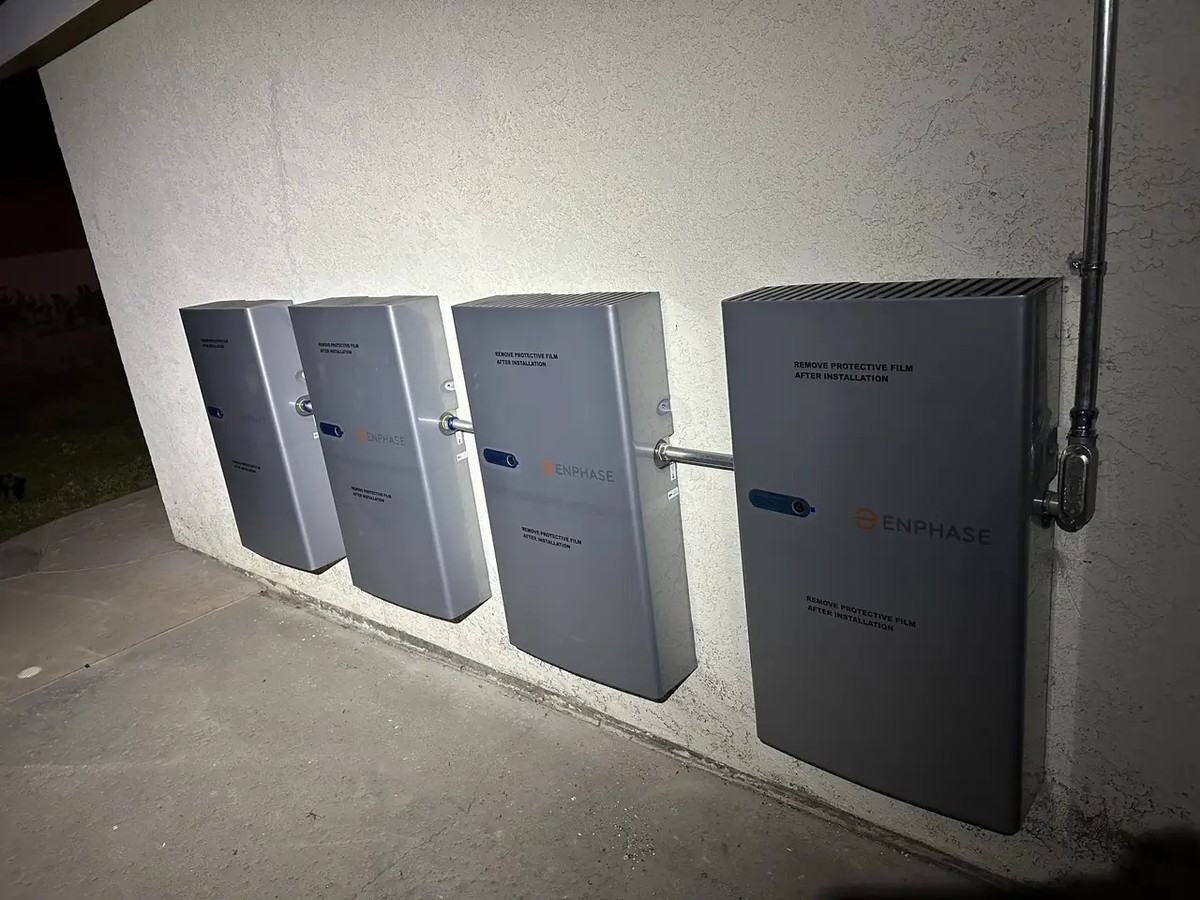
Program status, checked 2 September 2026. Southern California Edison states that SGIP's ratepayer-funded budgets are closed to new applicants, and that the state-funded Residential Solar and Storage Equity (RSSE) budget is exhausted and on a waitlist. What follows describes an application filed in 2025, while budgets were open. Check the current status with your administering utility before budgeting around an incentive.
What the process involved when it was open: documents requiring original ink signatures, a separate inspection organized by the administering utility, and roughly nine months from filing to that inspection. It is heavy enough that not every installer takes it on — some hand you a link instead.
Be clear about whose clock that is. The nine months belong to the program, not to the installation. On this project the roof was inspected and signed off six weeks after the first site visit, and the system was built, inspected and running long before the incentive file closed. The application then ran in the background — where we carried it, through extension requests and document chases, without the homeowners having to manage any of it.
If a contractor quotes you a battery with an incentive in the numbers, ask two direct questions: is the budget you are counting on open today, and will you file the application? A vague answer is an answer.
The system
| Item | Detail |
|---|---|
| Location | Agoura Hills, CA — SCE territory |
| System size | 10.25 kW DC / 8.795 kW AC (CEC) |
| Panels | REC410AA Pure-R, 410 W |
| Battery | Tesla Powerwall 3 with Expansion Pack, 27 kWh usable |
| Backup | Whole-home |
| Mounting | Flush, 22.62° tilt, west face |
| Estimated first-year production | 16,131 kWh |
| Consumption offset | 115% |
| Scope | Full re-roof, solar array, battery, incentive application |
What we found before anything went on the roof
The site inspection turned up something the homeowners did not know: the roof carried two layers of shingles — a newer layer laid over the original — with roughly five to six years of service life remaining.
Five years is long enough to feel fine and short enough to be a trap. Panels installed over that roof would have had to come off and go back on well inside the system's life. We re-issued the quote with a re-roof included and explained why.
Choosing the battery for storage and backup
The original specification was an Enphase battery; we moved the recommendation to a Tesla Powerwall 3 with an Expansion Pack — comparable pricing, more usable storage at 27 kWh, and an integrated inverter so no second inverter was needed. The configuration gave whole-home backup rather than selected circuits.
Filing it ourselves, not handing over a link
We took the application on as priced work rather than a favor, and said two things before the homeowners paid anything toward it: the incentive is not guaranteed, because approval rests with the program; and the program may levy its own fees depending on system size and scope.
The paperwork ran to a stack of documents, several needing original ink signatures rather than electronic ones. Where the homeowners preferred, they reviewed documents and authorized us to sign on their behalf, which removed weeks of postal round-trips.
Where the federal tax credit changed the arithmetic in 2025
One question inside the application changed the economics of the whole project: whether the applicant intended to claim the federal residential credit on the battery.
The two did not simply stack. How you answered affected the incentive the program would pay on the storage portion. We walked the homeowners through what each answer meant for their project before they decided, then filed accordingly.
This has since changed. For this application, filed in 2025, the homeowners' intended federal tax-credit treatment affected the SGIP calculation. The Section 25D residential clean energy credit is not available for residential installations completed after 31 December 2025 — the IRS treats the expenditure as made when the original installation is completed, not when it is paid for. Commercial and third-party-owned projects fall under different provisions. Confirm current treatment with a tax professional; we are not one.
Two things we told them they did not qualify for
They asked about adding a third battery under the incentive. We checked and said plainly: on the program's own calculation two batteries covered their consumption, and a third would not be funded.
Later a manufacturer rebate appeared and we forwarded it. The homeowners spotted before we did that the eligibility dates did not match their purchase and installation. We confirmed and dropped it.
Neither conversation earned us anything. Both are why a customer is still replying eleven months into a project.
Cleared, inspected, running
The re-roof cleared its final inspection on 2 September 2025, and the incentive application was signed and filed at the end of that month. Close-out then ran in a fixed order, each step gating the next: fire inspection, then city final sign-off, then submission to the utility for permission to operate. All three cleared by December 2025.
The incentive then ran on its own clock. The administering utility accepted the incentive claim documentation in June 2026 and scheduled its own site inspection days later — roughly nine months after filing, with extensions granted along the way and every deadline met.
When the final piece of the application came together in June, the homeowners wrote back the same morning to thank the team for carrying them through the process — and thanked us again a fortnight later when the confirmation landed. Their words for the stretch where we kept requesting extensions and chasing paperwork on their behalf were “we appreciate your patience.”
That August they asked us to review production against the original estimate after a summer dip. We walked them through how weather, shading and high temperatures move monthly output, went through the chart with them, and confirmed the system was performing as projected. Eleven months after the first site visit, they were still writing — and still pleased with it.
What we did
- Identified a two-layer roof at site inspection and re-quoted with a re-roof before install
- Moved the battery specification to a Powerwall 3 with more usable storage
- Filed the full incentive application, including documents requiring original ink signatures
- Explained how the federal tax credit interacts with the incentive before the decision
- Told the homeowners a third battery would not be funded, and why
- Checked a manufacturer rebate and confirmed they did not qualify
- Sequenced fire inspection, city final and utility submission in the required order
- Supported the program's own site inspection nine months after filing
Does this match your situation?
If any of these describe where you are, read on.
You are being quoted a home battery and the incentive was mentioned but not offered
You want the battery but the cost only works if the incentive comes through
Your roof is older than about five years and you are being sold panels anyway
You are trying to work out whether to claim the federal tax credit on your battery
Someone has told you the incentive is guaranteed money
What to check on your own project
Every property is different. These are the things worth confirming for yours.
- This was a 2025 application. Program rules, budget categories and handbook provisions change between program years — treat it as an account of one process, not as instructions.
- Eligibility depends on criteria specific to each household and property. Nothing here establishes that another household would qualify.
Check the numbers yourself
We analyzed 433 recent Google reviews across seven Los Angeles solar installers — our own included — and published the dataset so anyone can recompute the ranking. Cali Energy came out with the lowest adjusted complaint rate in the group, and we say plainly where that finding is and is not statistically separated.
Other situations we handle
A different problem each time.
Frequently asked
Can I still apply for the SGIP battery incentive in 2026?
Is the SGIP battery incentive guaranteed if I qualify?
Is the federal residential solar tax credit still available?
Did the federal tax credit affect the battery incentive?
Will my installer file the SGIP application for me?
Why re-roof before installing solar?
How long does the incentive process take?
Related reading
Sources & methodology
Figures come from the primary sources below and, where noted, from Cali Energy calculations using the stated assumptions. Rates, incentives, and program terms change; each was verified September 2, 2026.
Tell us what you are dealing with
Send us what you have — a bill, someone else's quote, a permit correction, or just the address. We will tell you what the project actually involves before anyone signs anything.
Get a free estimatePrepared by Cali Energy, September 2, 2026. This article is for general educational purposes only and is not legal, tax, financial, engineering, or utility advice. Rates, incentives, codes, permit requirements, equipment specifications, prices, and program terms may change; figures and timelines are estimates, not guarantees. Confirm current requirements with the applicable utility, AHJ, program administrator, manufacturer, or a licensed professional. See our Content Disclaimer. Cali Energy · 19201 Parthenia St, Unit E, Northridge, CA 91324 · CSLB #1032379 (B, C-10, C-39)