

North Hollywood, CA · June – July 2023 · LADWP / LADBS
North Hollywood: forty-two modules up, then commissioning device by device.
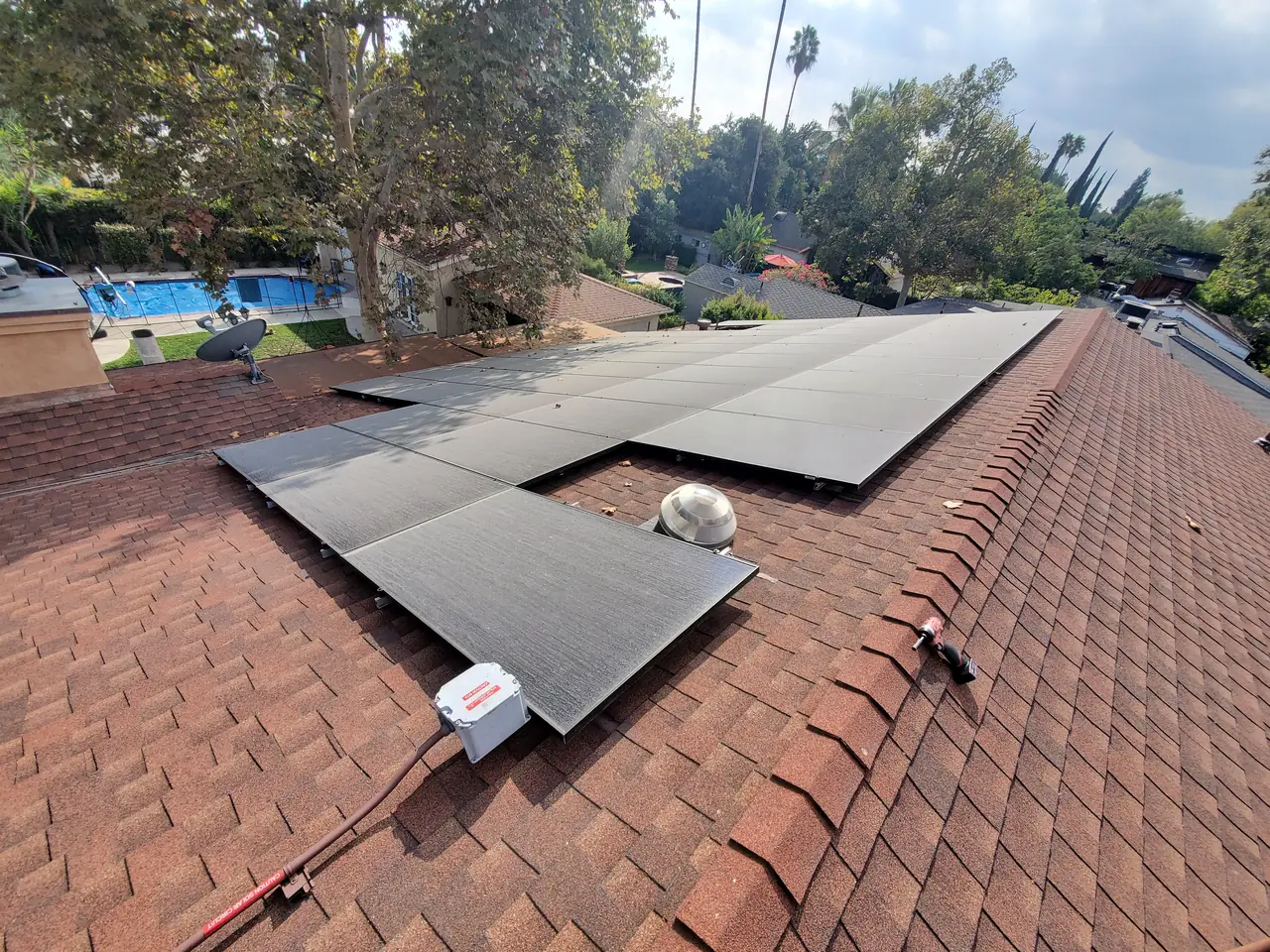
A 16.38 kilowatt array went up over a roof replaced the week before. Commissioning came next: every microinverter and the gateway registered by serial number before the monitoring could be built.
A system is not finished when the last module is bolted down. It has to be registered: every device identified by its serial number, the gateway online and reporting. If those numbers were never photographed, somebody drives back to the house to read them off the equipment — and that is time nobody quoted for.
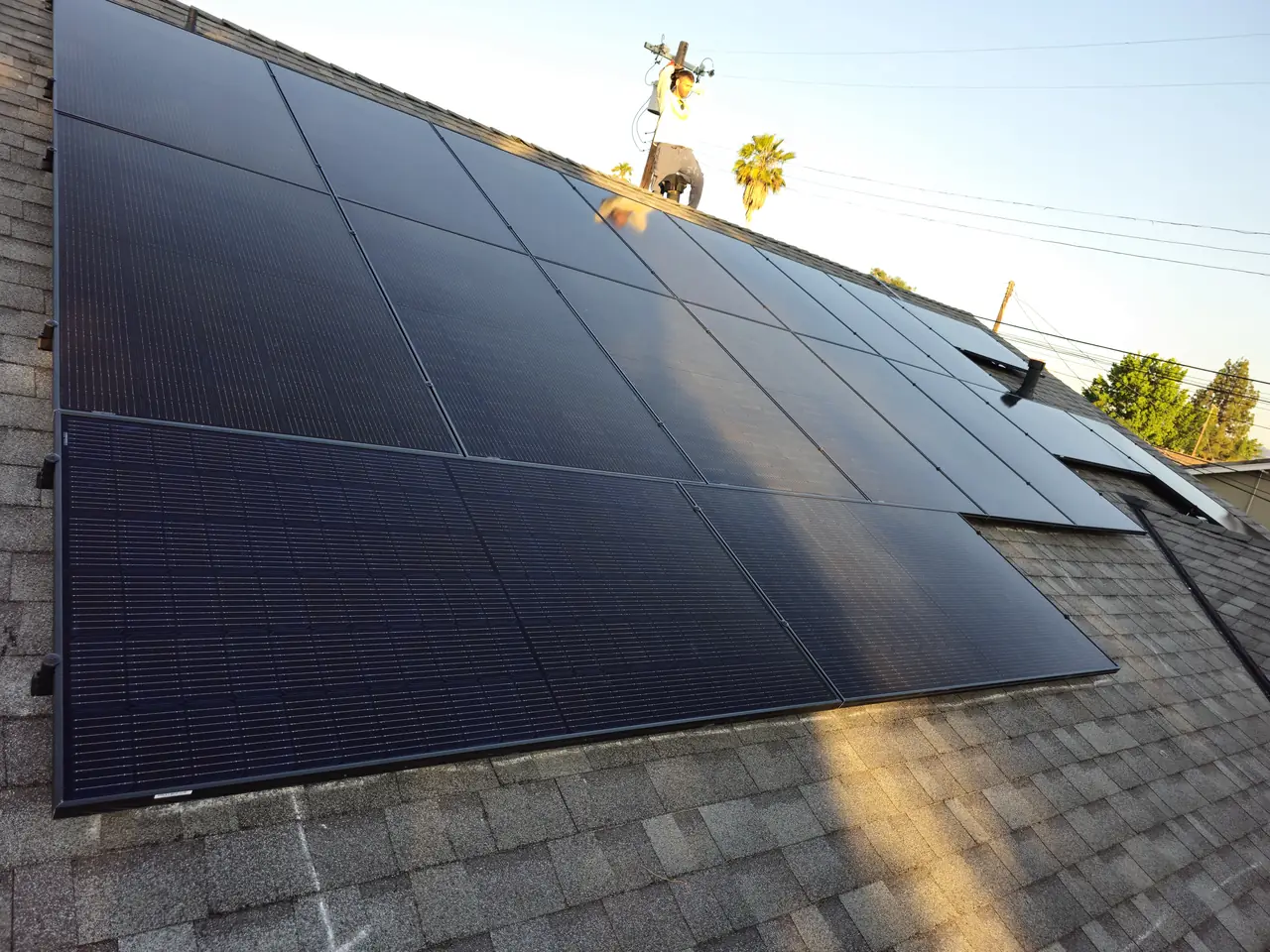
At a glance
- System
- 16.38 kW DC
- Modules
- 42 × 390 W
- Inverters
- One microinverter per module
- Roof
- Replaced first — 28 squares
- Main panel
- Upgraded with the install
- Meter position
- Set by the utility before the work
- Return visits
- One to read the gateway's label, another called for to activate it
- Utility / AHJ
- LADWP / LADBS
The story
The roof came first. A tear-off of twenty-eight squares went through the building department in the middle of June, was replaced the following week, and the array went on top of it at the start of July. That order is not a preference. Putting forty-two modules on a covering with a few years left in it means taking them all off again when it fails, and paying twice for the privilege.
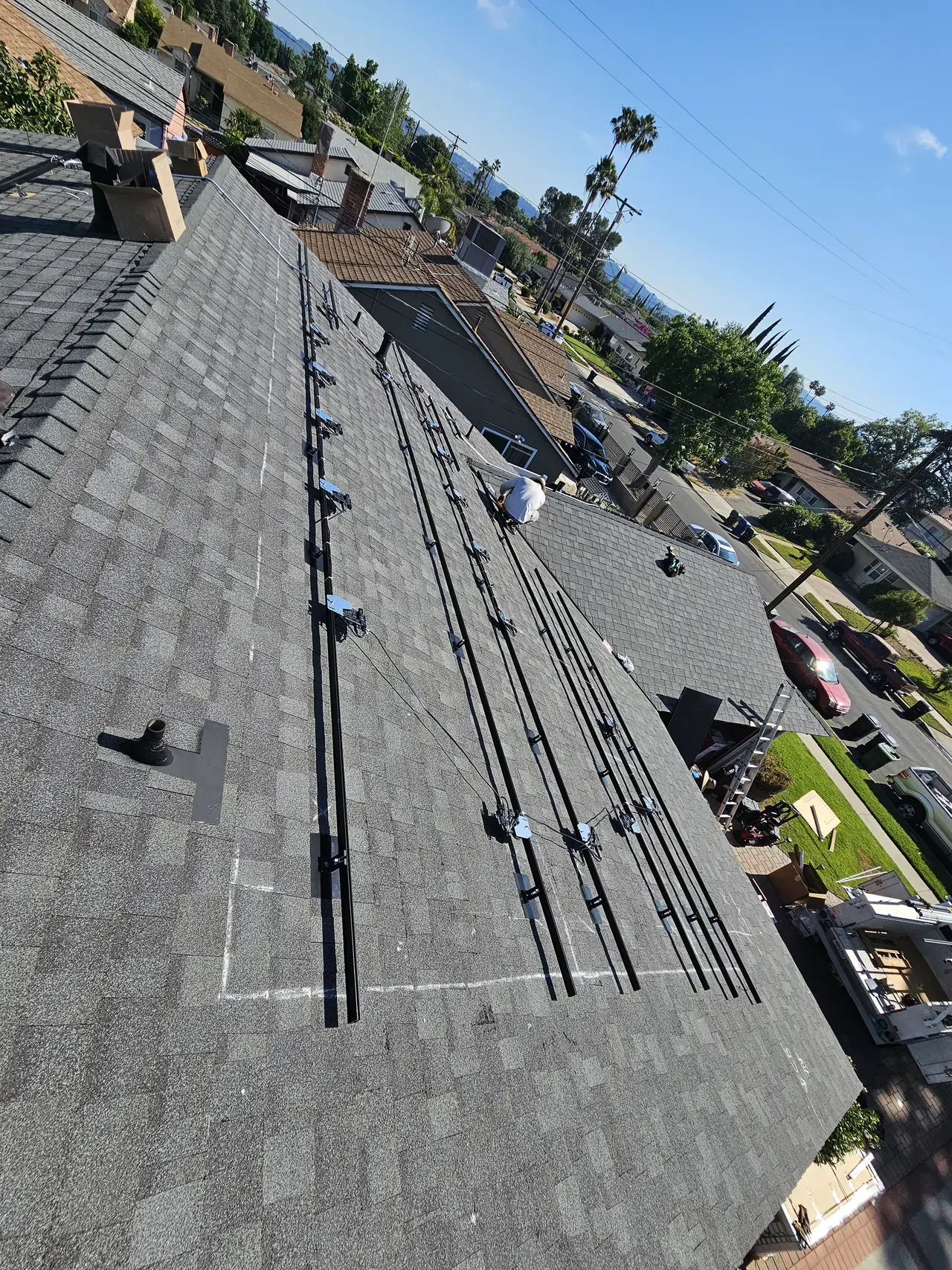
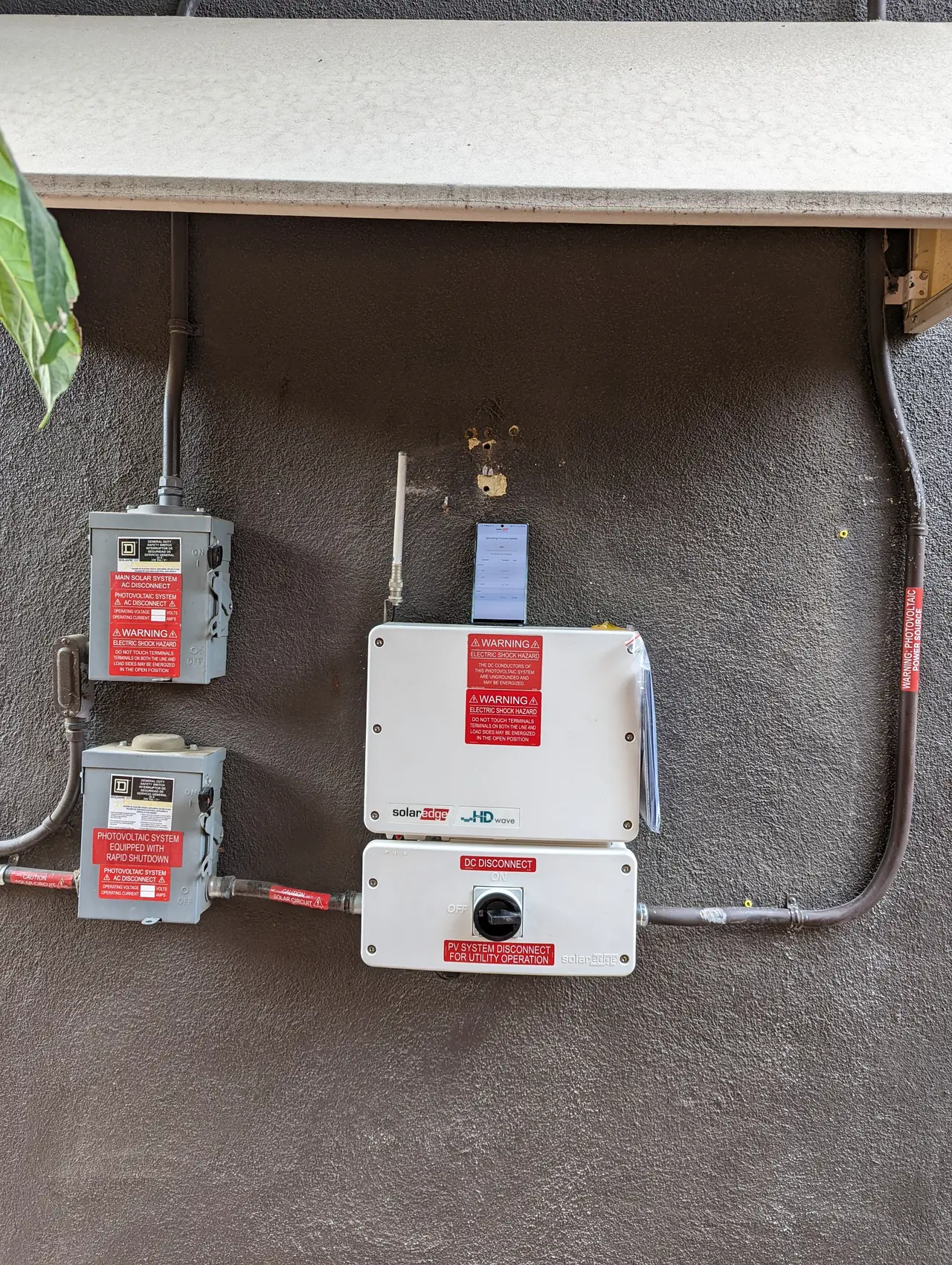
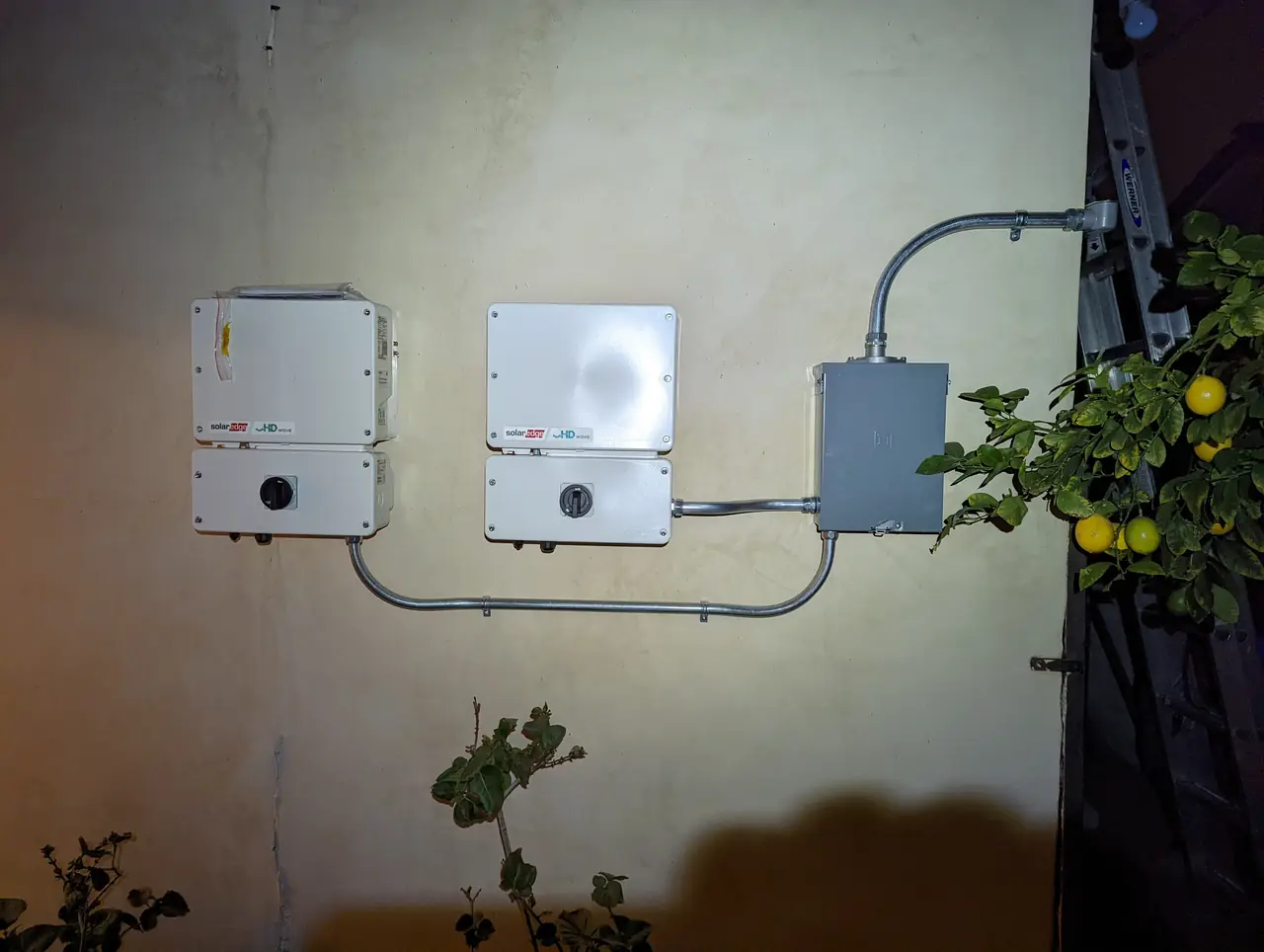
The system is a large residential one by any measure: forty-two modules of 390 watts, one microinverter behind each of them, and the main panel replaced as part of the same job because the existing service could not take the backfeed. The utility set the meter position before any of it was built, which is the step that decides where the electrical equipment ends up living on the wall.
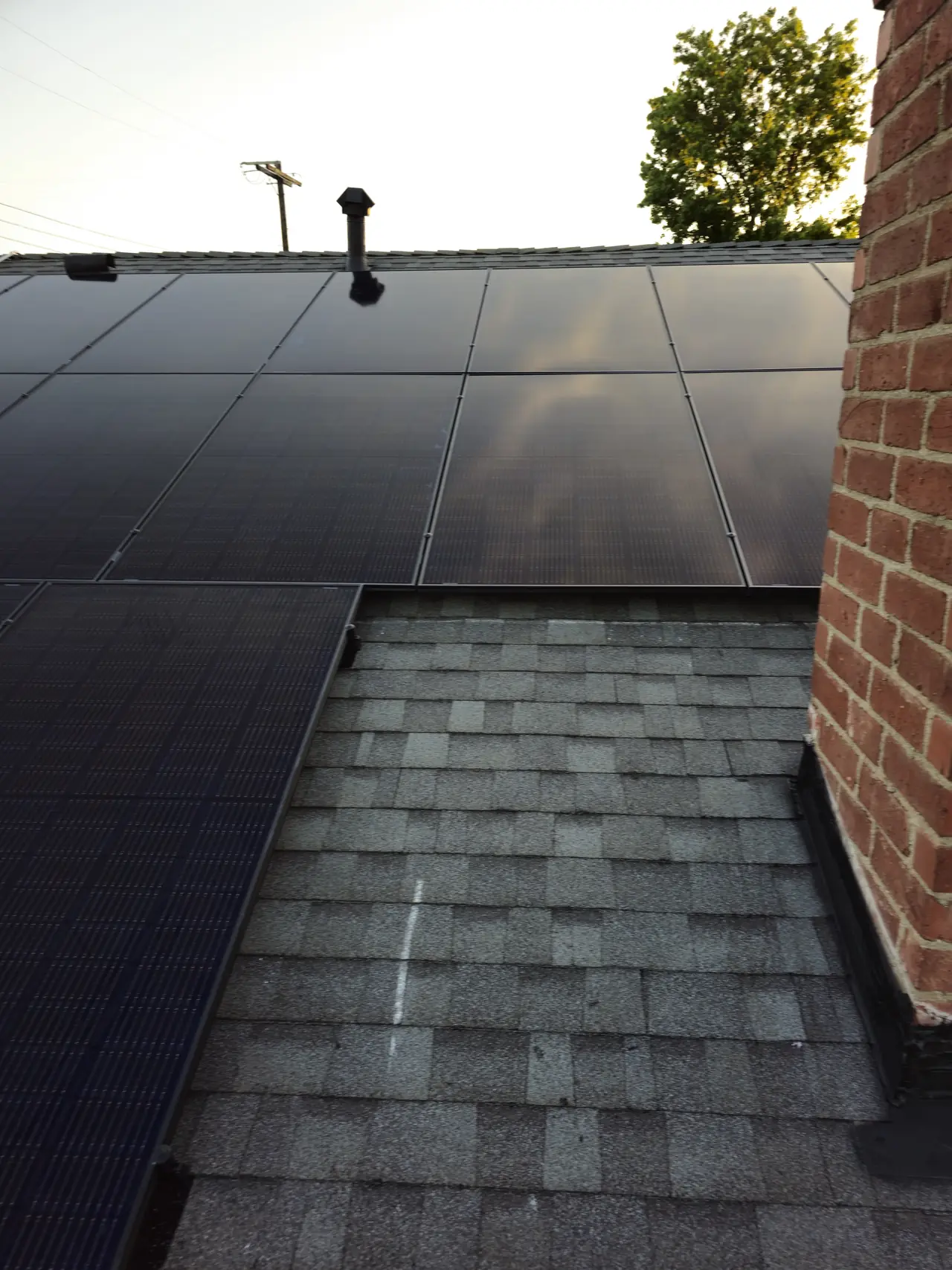
Then came the part nobody budgets for. Two weeks after the install, the monitoring still could not be built, because the gateway — the small enclosure that collects production from every microinverter and sends it onward — could not be identified. Its serial number was in none of the installation photographs.
Every device in a microinverter system has an identity, and the monitoring platform will not show a single kilowatt-hour until each of those identities has been entered against the right site. Forty-two microinverters had been scanned. The one box that ties them together had not.
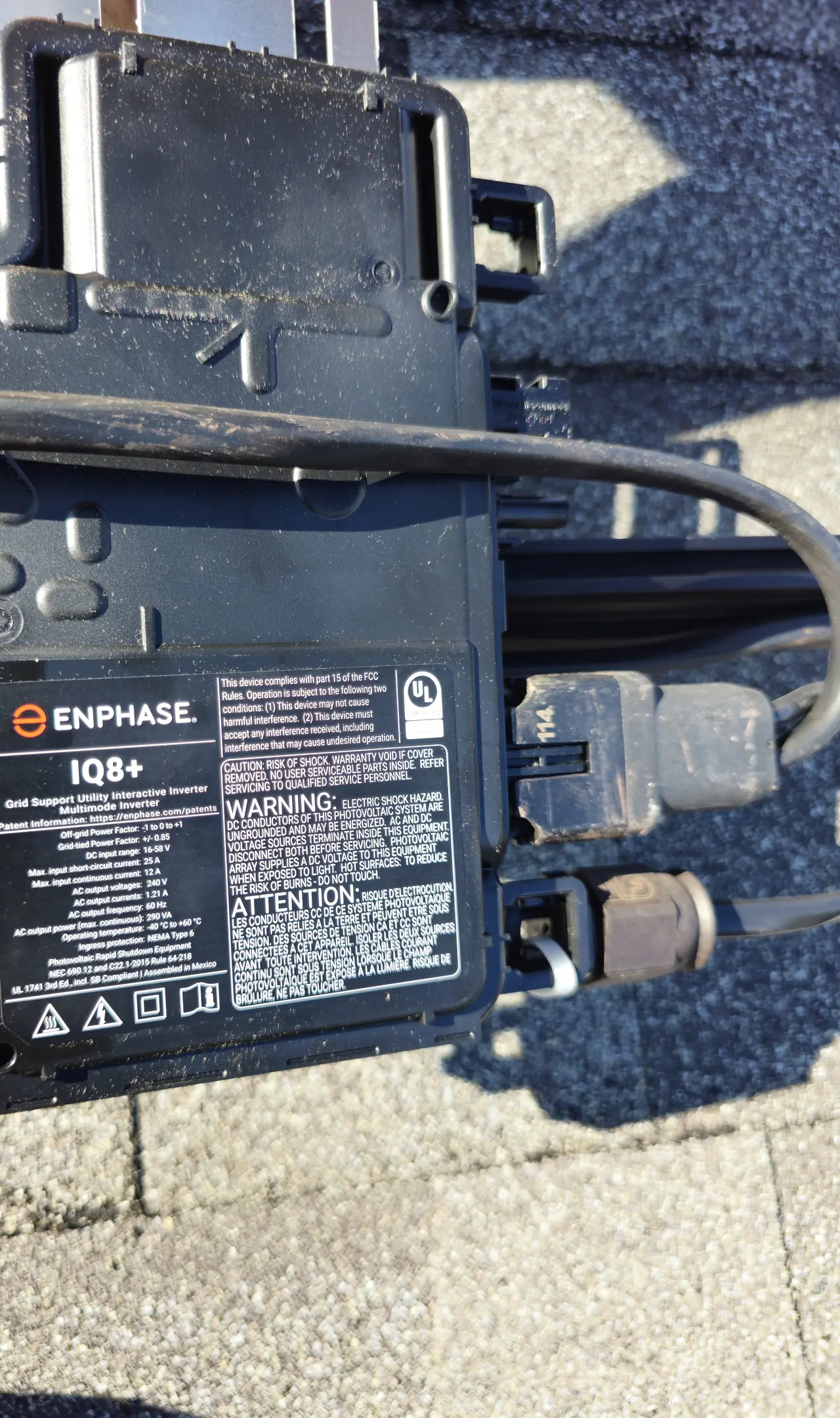
So somebody drove back to the house, opened the enclosure and photographed the label. That took a morning and cost nobody anything except the morning. But note what the calendar says: the array was finished at the start of July and the identifying number was still being chased at the end of it.
It did not end there either. Once the number was entered, the gateway was not reporting. A device can be correctly registered and still be offline, because reporting depends on a working connection back to the internet, and a house is full of reasons that connection fails: distance from the router, a network that changed, a gateway that never joined in the first place. Another visit was called for, to activate it on site.
None of this is exotic. It is the ordinary gap between installed and commissioned, and it is the part of a solar project that disappears from most accounts of how the work goes. The lesson for a homeowner is small and specific: before the crew leaves, ask whether the gateway has been photographed and whether it is reporting. Those are two different questions and they have two different answers.
Ask for the commissioning record as well — the list of devices registered against your address. If it exists, you can check your own system later. If nobody can produce it, you have a roof full of equipment that only somebody else can identify.
How it ran
| June 2023 | Re-roof filed — twenty-eight squares, tear-off to sheathing |
|---|---|
| Late June 2023 | Roof replaced |
| 30 June 2023 | Equipment delivered to site |
| 3 July 2023 | Array installed and main panel upgraded |
| 17 July 2023 | Monitoring blocked — the gateway's serial number was in none of the install photographs |
| 19 July 2023 | Return visit to photograph the label |
| 31 July 2023 | Number entered; site visit requested to bring the gateway online |
Four weeks after the array was finished, the monitoring chain was still being closed.
What we did
- Replaced the roof before the array went on it, rather than around it.
- Installed forty-two modules with a microinverter behind each one.
- Upgraded the main panel as part of the same job.
- Returned to site to photograph the gateway label when it was found missing from the install record.
- Called for a further site visit when the registered gateway still was not reporting.
System specifications
| System | 16.38 kW DC |
|---|---|
| Modules | 42 × 390 W |
| Inverters | One microinverter per module |
| Roof | Composition shingle, 28 squares, replaced before install |
| Main panel | Upgraded as part of the same job |
| Monitoring | Gateway with per-module reporting |
| Meter position | Set by the utility in advance |
| Utility / AHJ | LADWP / LADBS |
Is your project like this one?
- Your roof is near the end of its life and you are being quoted solar on top of it.
- Your system was installed weeks ago and your monitoring app still shows nothing.
- You want to know what commissioning actually involves.
- Your existing panel may not take the backfeed from a large array.
- You want a record of which devices are registered to your address.
Cali Energy in North Hollywood
North Hollywood is inside City of Los Angeles boundaries: permits run through LADBS, interconnection through LADWP.
Roofs in this part of North Hollywood are mostly composition shingle of a certain age, so a large array very often begins with a tear-off rather than with racking.
This installation is on the North Hollywood projects page alongside the others, and what the work covers is set out on the North Hollywood service area page.
- License and classifications: CSLB #1032379
- Official reference for this process: California Energy Commission — solar equipment lists
- Official reference for this process: LADBS — plan review and permitting
Frequently asked questions
Should the roof be replaced before solar goes on?
If the covering is near the end of its life, yes. Removing and refitting an array later costs more than re-roofing first. On this project a twenty-eight square tear-off went in weeks before the modules did.
What is the gateway in a microinverter system?
It is the enclosure that collects production data from every microinverter and sends it to the monitoring platform. Without its serial number the site cannot be built in the platform, and without a working connection it reports nothing even when it has been registered.
Why does a serial number matter so much?
Because monitoring is built from device identities. Each microinverter and the gateway are entered against one address. If a number was never recorded on site, somebody has to go back to the property and read it off the equipment.
How long after installation should monitoring be live?
It should be live at handover. On this project two weeks passed between a physically complete array and a system anyone could look at, because one label had not been photographed. Ask the question before the crew leaves.
Does a large array need the main panel replaced?
Often. What the existing service and busbar will carry decides whether the array can backfeed into the panel as it stands. Here the panel was upgraded as part of the same job rather than as a separate visit.
What this would look like on your roof
Planning solar in North Hollywood? Tell us your utility, your roof and what your bill looks like now, and we will model what a system like this would do on your house before you commit to anything.
Or call +1 (323) 844-7777 · Cali Energy, Northridge · CSLB #1032379 (B, C-10, C-39) — design, permits, install and electrical under one licensed contractor.
Related
This timeline reflects this property and this permitting path. Updated September 2026.